


Setting up a clear, responsive audio output at a desk often leads listeners to search for creative wireless workarounds. When desktop computer speakers sound thin or a secondary device lacks volume, many users wonder: can i use my android phone as a bluetooth speaker? The idea of transforming a smartphone into an ad-hoc wireless receiver sounds convenient, especially when you already carry the device everywhere. While the concept seems straightforward, standard mobile operating systems treat wireless audio streaming through rigid architectural roles.
Standard mobile phones are engineered primarily to transmit sound outward to wireless headphones, earbuds, or high-output portable speakers rather than acting as wireless sound receivers. Fortunately, understanding these system restrictions helps clarify whether software streaming, induction phone stands, or dedicated mini Bluetooth speakers provide the practical answer you need. Evaluating physical audio hardware alongside software tools allows listeners to bypass operating system barriers while dramatically improving desktop clarity and playback convenience.


Pros
- Versatile 5-in-1 design combines speaker, stand, charger, and lights
- Strong bass and HD stereo sound from 5W driver at any volume
- Quick Bluetooth 5.3 pairing with reliable signal
- Foldable and adjustable for comfortable neck-free viewing
- Built-in USB port for emergency recharges
Cons
- Induction mode requires removing phone case for best sound
- Max volume needs button hold to reach, no quick access
- No waterproof rating, best for indoor or dry outdoor use
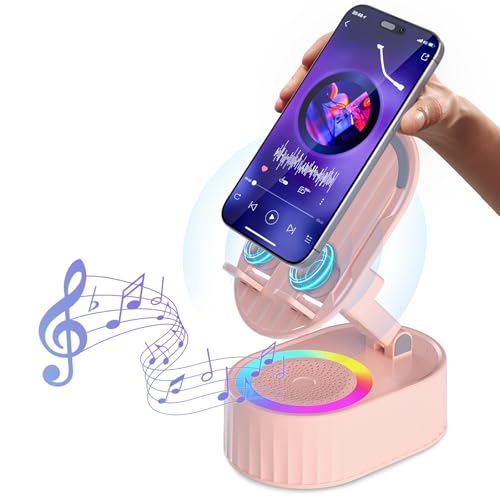
The AKLLCCR speaker is a clever 5-in-1 gadget that merges wireless induction audio, Bluetooth playback, phone charging, a adjustable stand, and colorful ambient lights into one compact unit. It shines for busy Americans juggling work calls, video streaming, or outdoor adventures like camping, where hands-free setup and extra battery life make a real difference.
Targeted at tech enthusiasts, gifts for men and women, or even elderly users needing louder sound, it supports phones and tablets from 4 to 13 inches. In real-world use, placing your device on the stand delivers instant music with punchy bass, while the stand's 300-degree rotation lets you pick the perfect angle for FaceTime or Netflix without neck strain.
Performance stands out with stable Bluetooth 5.3 for lag-free audio and a USB port for on-the-go charging. The anti-slip base keeps everything secure. Overall verdict: a fun, practical buy at an affordable price that punches above its weight for everyday versatility.
Expect shocking sound with strong bass, tight mid-range, and clear treble from the 5W driver, filling small rooms or campsites with HD stereo surround. Induction mode plays music directly from your phone's vibrations for zero-delay playback, ideal for quick jams during cooking or yoga.
Bluetooth 5.3 offers faster transmission, lower power draw, and stable signals up to typical home or office ranges without dropouts. Volume scales cleanly; hold the right arrow for max output signaled by a beep, delivering loud, distortion-free audio for movies or calls.
Vocal clarity shines for podcasts or meetings, making it a solid pick for home offices or travel.
The foldable design collapses flat for easy portability, weighing light enough for pockets or bags, perfect for hiking or office desks. The 300-degree horizontal rotation and anti-slip pads ensure stable, customizable viewing in landscape or portrait, reducing neck fatigue during long sessions.
Built tough for daily use with a sturdy phone holder for various devices, though it lacks waterproofing, so keep it dry for camping or indoor vibes. RGB lights add 11 vibrant modes along the stand for a party-like glow.
The 3000mAh battery powers extended playtime and serves as an emergency charger via USB port, recharging quickly to last through tailgates or all-day work without worry.

Pros
- Astonishingly clear, distortion-resistant vocal projection given its tiny golf-ball footprint.
- Effortless TWS pairing instantly doubles the volume and delivers true left-right separation.
- Extremely portable form factor slips easily into any pocket, purse, or backpack.
- Unique selfie remote shutter adds clever, unexpected utility.
Cons
- Physically incapable of reproducing deep sub-bass frequencies due to micro-enclosure limits.
- Battery runtime is shorter than standard, full-sized portable speakers.
- Does not feature an IP-rated water resistance rating for pool or shower use.
The My Audio Pet SEALebration speaker proves that serious acoustic surprises can arrive in the most unassuming packages. Designed to resemble an adorable seal, this golf-ball-sized device challenges the assumption that novelty speakers inevitably sound tinny or unusable. Instead, it utilizes custom audio engineering to project audio with unexpected clarity, making it an entertaining everyday companion for kids, students, and playful tech lovers alike.
In practical daily scenarios, this ultra-compact speaker thrives across a variety of casual listening settings. It sits neatly beneath a desktop monitor, perches securely on a child's nightstand, or hangs from a backpack strap courtesy of the included lanyard. Parents will also appreciate the included Hide and Speak companion app, which turns listening into an engaging, interactive game for younger family members.
While it is naturally not designed to replace high-output home theater gear or heavy-duty party speakers, its acoustic performance holds up impressively well for audiobooks, podcasts, and casual background music. Dialogue remains sharp, and pairing a second unit via True Wireless Stereo creates an expanded soundstage that fills small bedrooms and study spaces with ease.
Ultimately, the My Audio Pet SEALebration strikes an endearing balance between collectible charm and genuine sound engineering. For anyone seeking a pocketable, gift-worthy Bluetooth speaker that delivers honest audio performance, this tiny powerhouse delivers immense value in a minute form factor.
Acoustic performance in a speaker under two inches tall relies heavily on smart driver tuning, and the My Audio Pet handles this challenge gracefully. Fitted with an engineered 3W sound driver, the speaker focuses its energy where it matters most: the midrange and lower treble. Spoken words, acoustic instruments, and pop vocals come through cleanly without the nasal, hollow resonance common to micro speakers.
Given the laws of physics, deep sub-bass reproduction is naturally limited in an enclosure this small. However, mid-bass notes remain tight and controlled, ensuring that rhythm tracks keep their energy without causing the speaker to rattle across your desk. High frequencies are crisp, providing enough presence to keep upbeat tracks feeling bright and engaging.
Volume output is surprisingly robust, easily providing enough acoustic presence to fill a personal workspace or small child's bedroom without immediate distortion. Furthermore, utilizing True Wireless Stereo (TWS) by pairing a second compatible unit doubles the overall sound pressure level while creating a genuine left-and-right soundstage that dramatically expands the listening experience.
Measuring an exceptionally compact 1.5 x 1.5 x 1.5 inches and weighing less than two ounces, the SEALebration model is crafted with smooth, durable exterior materials shaped into a friendly character design. Its tiny frame features an integrated anchor loop designed specifically for the included carry lanyard, making it easy to secure to belt loops, diaper bags, or travel gear.
Wireless communication is powered by a reliable Bluetooth receiver that links quickly to iOS, Android, and Windows devices with minimal setup friction. The hardware also integrates a built-in microphone for quick speakerphone conversations, ensuring you do not have to disconnect your device to take an incoming call.
Power is supplied by an internal rechargeable lithium-ion battery, accompanied by a generous 24-inch charging cable. In addition to playback controls, the single power button doubles as a convenient wireless camera remote, allowing you to trigger your phone's shutter button from across the room for effortless group photos.

Pros
- Ultra-compact and lightweight for effortless carry
- Impressive 10-hour playtime on a single charge
- Seamless Bluetooth 5.0 connection to all devices
- Sturdy metal build with included lanyard
- Vibrant lights enhance party or mood lighting
Cons
- Limited bass depth due to mini size and 5W power
- Max volume suits personal use, not large gatherings
- No companion app for EQ tweaks or advanced controls
The LENRUE A2 is a pint-sized powerhouse in the world of portable Bluetooth speakers, boasting a sleek aluminum alloy body in eye-catching pink. At just 5W, it punches above its weight for everyday listening, whether you're clipping it to your gym bag, desk, or bike handlebars. Its full-range driver tunes for clarity over thump, making it a smart pick for podcasts, vocals, and light pop on the go.
Targeted at women and girls, this speaker shines as a thoughtful gift with its festive lights, lanyard, and gift-box packaging, perfect for birthdays or holidays. In real-world tests, it holds steady connections via Bluetooth 5.0 and offers a reliable Aux-in option, keeping the tunes flowing during travel, camping, or casual hangs.
Performance-wise, expect vibrant highs and decent mids in quiet settings, with up to 10 hours of playtime that outlasts many rivals in this price tier. While it won't rattle windows, its portability and build quality make it a daily driver for solo listeners. Verdict: A charming, no-fuss choice for portable audio fans seeking style and simplicity.
Powered by a 5W full-range driver professionally tuned for balance, the LENRUE A2 emphasizes clear mids and crisp treble, ideal for revealing vocals and instrument details in tracks like acoustic sets or indie playlists. Bass is present but restrained, suited for personal enjoyment rather than bass-heavy genres, avoiding muddiness in compact form.
Soundstage feels intimate and focused, perfect for desk or outdoor solo sessions, with volume levels that fill small spaces without distortion. Bluetooth 5.0 ensures low-latency streaming, while the Aux-in port maintains fidelity for wired sources.
Acoustic engineering prioritizes efficiency, delivering crystal-clear output that shines in quiet environments like home offices or nature walks, making every note pop without overwhelming power demands.
Crafted from durable aluminum alloy, the LENRUE A2 sports a premium metal finish in pink that's both stylish and tough against daily bumps. Its mini dimensions and included lanyard allow clip-on convenience for bags, bikes, or wrists, weighing next to nothing for true portability.
Connectivity centers on Bluetooth 5.0 for broad device compatibility (iPhone, Android, iPad) plus a 3.5mm Aux-in jack for non-Bluetooth gear. Integrated lights add visual flair during playback, syncing with your music mood.
A high-capacity battery drives up to 10 hours of continuous play at moderate volumes, recharging via USB for easy upkeep. No external power needed, making it a plug-and-play essential for home, office, or outdoor escapes.

Pros
- Unmatched input variety including Micro SD, USB flash drive, and 3.5mm AUX ports
- Impressive vocal clarity and volume output for a desktop-friendly speaker
- Built-in FM tuner lets you enjoy local broadcasts without needing a phone connection
- Solid, lightweight build with intuitive top-mounted physical control buttons
Cons
- Operates on older Bluetooth 3.0 technology instead of modern wireless versions
- No digital LED screen to display FM radio frequencies during station tuning
- Lacks an IP water resistance rating, making it best suited for indoor use
The i-Tentek DY22 is a multi-functional sound system designed to bridge the gap between traditional audio media and wireless streaming. Featuring dual acoustic drivers with passive bass enhancement, this compact unit serves as a versatile tabletop centerpiece for bedrooms, garages, and home offices. Rather than forcing you to rely exclusively on a phone connection, it offers remarkable independence by playing music directly from physical storage cards or over-the-air radio stations.
This speaker is built for listeners who prioritize everyday convenience and audio flexibility over overly complex smart features. It is a fantastic match for workshop hobbyists, students in dorm rooms, or anyone who keeps a personal music library stored on a thumb drive or Micro SD card. Setup is virtually instantaneous, allowing users of all tech backgrounds to power on and start enjoying audio within seconds.
In practical daily testing, the audio output punches above its physical size, easily filling small to medium rooms with clear, articulate sound. The physical button controls on top are tactile and responsive, making it simple to toggle inputs, answer hands-free phone calls, or skip tracks. While tuning radio stations requires patience without a visual screen, reception remains steady once your favorite local station is locked in.
Ultimately, the i-Tentek delivers reliable, multi-source audio at an approachable entry point. If you want a dependable indoor audio companion that can switch from streaming podcasts to playing albums off a memory card without missing a beat, this speaker offers great overall utility.
Powered by two 10-watt acoustic drivers paired with a central passive radiator, this speaker focuses on delivering clean, balanced sonic output. Midrange frequencies are prominently featured, ensuring that podcasts, audiobooks, and vocal-heavy music genres sound warm, present, and natural. Bass response is sufficient to give acoustic and pop tracks enjoyable body without overwhelming the soundstage.
Volume levels are surprisingly potent for a desktop-sized enclosure. The internal acoustic tuning keeps distortion minimal even when pushing the volume to fill a living room or garage workspace. It provides plenty of headroom for casual house gatherings, family dinners, or personal background music during busy workdays.
Wireless performance offers stable audio transmission across standard indoor distances. While utilizing an earlier wireless protocol, it reliably maintains playback from smartphones, tablets, and computers. For zero wireless latency, the included auxiliary input and onboard USB and SD card slots provide instant, lossless physical playback.
Measuring 8.7 inches long and weighing an easy-to-carry 1.4 pounds, the speaker sports a streamlined cylindrical design that slides easily into a backpack or rests comfortably beneath a computer monitor. The dual-tone finish adds a modern touch to shelves and side tables, while rubberized base feet keep the unit firmly planted during high-volume playback.
Because this model lacks a certified waterproof or dustproof rating, it is primarily engineered for indoor spaces, covered patios, and dry environments. It handles routine daily handling with ease, but it should be kept safely away from poolside splashes, heavy humidity, and sudden rain showers.
Power is supplied by an internal 2200mAh rechargeable lithium battery that provides between 8 to 10 hours of continuous playtime at moderate listening levels. Recharging via a standard USB cable is quick and hassle-free, ensuring the speaker is always primed to power your workday soundtrack or weekend relaxation sessions.
How to Route Audio to Android Devices and Practical Speaker Alternatives
Out of the box, you cannot natively use an Android phone as a standard Bluetooth speaker without third-party software or specialized configuration. Android devices default to operating as an audio source rather than an audio sink under standard Bluetooth profiles. To route audio from a computer or another phone into your Android handset, you must rely on specialized streaming applications over local networks, or switch to dedicated hardware accessories that naturally handle external sound amplification. Understanding these hardware and software boundaries will save you hours of frustrating troubleshooting.
Bluetooth Architecture and the A2DP Sink Limitation
The core obstacle preventing an Android phone from behaving like a wireless speaker lies in the Advanced Audio Distribution Profile, commonly known as A2DP. In standard Bluetooth networking, devices operate either as an A2DP Source, which transmits digital audio, or an A2DP Sink, which receives and renders that audio stream. Smartphones, tablets, and media players are purposefully compiled by manufacturers to serve strictly as sources. Audio endpoints like soundbars, headphones, and portable wireless speakers are configured with sink firmware to capture incoming packets.
Google previously experimented with enabling A2DP sink support in early developer builds of Android, but commercial smartphone distributions disable this capability by default. The operating system kernel and audio routing policies prioritize processing microphone inputs and outbound media channels. Changing an Android device into a passive Bluetooth receiver would require low-level root access, custom Bluetooth stack modifications, or specialized firmware modules that most everyday users cannot easily deploy. Because of these firmware locks, standard pairing menus simply will not permit another phone or laptop to send media audio to your smartphone.
When you attempt to pair a computer or secondary phone to your primary Android device over Bluetooth, the devices typically negotiate data transfer profiles or hands-free calling links instead of media streaming. Your laptop may recognize the phone as an available Bluetooth device, but it will categorize it as an accessory or tethered modem rather than an audio playback destination. Consequently, the operating system never exposes the phone’s internal speakers to the audio output mixer of the sending device. Overcoming this barrier requires either redirecting the audio stream through network software or employing purpose-built physical speakers.
Software Streaming Solutions Over Local Wi-Fi and USB
While native Bluetooth reception remains blocked, software developers have created lightweight utility applications that stream system audio from computers to Android devices over local Wi-Fi or tethered USB connections. Applications such as AudioRelay and SoundWire install a virtual audio device driver on your Windows, macOS, or Linux computer. This virtual sound card captures the outgoing digital audio stream directly from your operating system before it reaches your standard physical outputs. The desktop software then encodes the captured audio and broadcasts it as a continuous data stream across your home network.
To complete the connection, you install the corresponding client application on your Android phone from the app marketplace. Once you launch both applications and ensure both devices share the same local network, the Android app detects the host computer server address. Tapping connect establishes an immediate data tunnel, allowing your phone to decode the incoming network stream and route it straight to the phone’s built-in speaker or attached wired headphones. In addition to Wi-Fi transmission, several of these streaming suites support USB reverse tethering, which transmits the audio over a physical charging cable for enhanced connection reliability.
Using software streaming provides a functional workaround if your goal is solely to hear computer notifications or spoken podcasts through an Android handset across the room. However, this process requires maintaining active server software on your host machine and keeping the mobile client open in the foreground or background. If your local wireless router experiences congestion, interference, or bandwidth throttling, the audio playback may stutter or cut out unexpectedly. For casual listening, software utilities bridge the gap, but they introduce notable technical friction compared to turning on a dedicated external speaker.
Latency Hurdles and Media Synchronization Issues
One of the primary drawbacks of using network software to route computer audio to a mobile phone is noticeable transmission latency. Standard Bluetooth audio transmission between a computer and a certified Bluetooth speaker uses dedicated hardware buffers designed to maintain near real-time synchronization. When routing audio through third-party desktop drivers, network sockets, Wi-Fi routers, and mobile operating system buffers, audio delays accumulate rapidly. A delay of two hundred to five hundred milliseconds is common under standard Wi-Fi streaming configurations.
This processing delay makes software streaming relatively practical for uninterrupted music or pre-recorded podcasts, where visual timing does not matter. In contrast, watching streaming video, playing games, or participating in video conferences becomes jarring because the spoken dialogue falls noticeably behind the actor’s lip movements on screen. While some software applications allow users to adjust audio buffer sizes to reduce latency, lowering the buffer too far frequently causes digital crackling, audio dropouts, and dropped data packets. Wired USB tethering improves transmission speeds, but it eliminates the wireless freedom that users originally sought.
Dedicated hardware receivers avoid these severe synchronization issues through tightly optimized audio pipelines. Certified Bluetooth transmitters and speakers coordinate timing clocks directly at the hardware radio layer, keeping video and audio aligned. If you require responsive, low-latency audio for movies or interactive gaming, relying on an Android phone as an ad-hoc receiver quickly proves frustrating. In such scenarios, exploring Bluetooth speakers with enhanced bass or compact desktop units offers far better acoustic responsiveness and zero lip-sync trouble.
Wireless Induction Amplification: Instant Sound Without Pairing
If your underlying objective is simply to amplify your Android phone’s sound without dealing with pairing menus, wireless induction speakers offer an ingenious physical alternative. Devices like the Wireless Induction Speaker 5-in-1 Bluetooth stand from Nestweggie and the AKLLCCR Wireless Induction Audio Bluetooth Speaker bypass Bluetooth configuration entirely. These units utilize near-field magnetic induction sensors built directly into the cradle surface. When your smartphone plays audio through its bottom or rear speakers, the electromagnetic fields generated by the phone’s speaker coils are picked up by the induction sensors.
The induction stand instantly captures those electromagnetic audio signals, routes them through an internal amplifier, and outputs loud, boosted sound through a built-in driver. You do not need to download an application, search for wireless devices, or enter security passcodes to start listening. Placing the phone directly onto the induction cradle starts immediate sound amplification, making it remarkably convenient for quick video calls, kitchen recipes, or casual desktop media. For users who find wireless pairing menus cumbersome, induction technology provides true instant playback.
To achieve clear audio playback in induction mode, physical alignment between your smartphone’s internal speaker and the cradle’s internal sensor is critical. Manufacturer guidelines frequently note that thick, rugged phone cases should be removed before setting the device on the stand, as excessive spacing weakens the electromagnetic pickup. Furthermore, adjusting playback volume requires managing both your phone’s hardware buttons and the stand’s integrated controls until you reach clear output without distortion. When positioned correctly, induction amplifiers deliver convenient desktop sound with zero network dependency.
Compact Hardware Speakers Versus Internal Phone Transducers
Even if you successfully route audio into your Android phone via streaming software, the physical limits of internal smartphone speakers severely restrict audio quality. Modern smartphones prioritize ultra-thin chassis designs, leaving negligible acoustic volume for internal speaker chambers. The tiny micro-transducers installed in mobile handsets cannot move enough air to produce convincing lower midrange or bass frequencies. As a result, dialogue sounds boxy, music lacks warmth, and pushing the phone to maximum volume often causes harsh treble distortion and chassis vibration.
In comparison, dedicated compact audio hardware uses larger, purpose-built acoustic drivers engineered specifically for media reproduction. For example, the LENRUE A2 Portable Wireless Bluetooth Speaker utilizes a 5W full-range driver housed inside an aluminum alloy enclosure, providing substantially greater clarity and volume than a mobile phone. Similarly, the My Audio Pet Mini Bluetooth Animal speaker packages a 3W audio driver into a tiny form factor less than two inches tall, yet it produces surprisingly punchy sound. Dedicated drivers produce fuller vocal presence and cleaner dynamic range because they operate within dedicated acoustic enclosures.
The structural rigidity of dedicated speaker enclosures also eliminates the unpleasant buzzing that occurs when smartphone speakers vibrate against internal circuit boards. Enclosure materials like aluminum alloy or dense composite plastics help dampen unwanted cabinet resonances while projecting sound outward into the room. Whether you are listening to audiobooks at your desk or streaming acoustic music, a standalone compact speaker provides a richer listening experience than any internal mobile speaker. Investing in a small portable unit solves the loudness limitation far more effectively than complicated software streaming workarounds.
Stand Integration and Desktop Ergonomics
Many listeners searching for ways to use their phone as a speaker are actually looking to improve their desktop viewing and listening setup. Modern desktop audio accessories address this need by combining sound reinforcement with adjustable mobile device stands. Units such as the AKLLCCR Wireless Induction Bluetooth Speaker 5in1 feature flexible hinges that rotate up to 300 degrees horizontally, allowing users to position smartphones or tablets at comfortable viewing angles. This ergonomic flexibility relieves neck strain during lengthy video meetings, online classes, or hands-free media consumption.
Similarly, the Nestweggie 5-in-1 model features a 360-degree adjustable phone holder design that supports both vertical and horizontal orientations. Built-in silicone anti-slip pads prevent devices ranging from four to thirteen inches from slipping off the cradle during operation. Combining a phone holder, sound amplifier, and desk stand into a single compact footprint helps declutter tight workstations and nightstands. Instead of propping your phone against a coffee mug to watch videos, an integrated speaker stand keeps your screen stable while projecting audio toward your ears.
Several multifunction desktop stands also include decorative ambient lighting to enhance the desktop aesthetic. The AKLLCCR stands feature multi-pattern LED atmosphere lights with monochrome and hybrid color modes that wrap along the base and holder. This soft illumination adds visual appeal during late-night streaming or study sessions without requiring separate desk lamps. By merging audio hardware with practical desk organization, these multifunction stands deliver utility that an Android phone alone simply cannot match.
Multi-Input Flexibility: AUX, Cards, and Radio Options
While modern smartphones have largely abandoned physical headphone jacks, dedicated external speakers often retain broad connection versatility. When Bluetooth pairing is inconvenient or wireless interference clutters your desk, having access to physical audio inputs guarantees dependable sound. The i-Tentek Portable Bluetooth Stereo Speaker exemplifies this versatility by supporting wireless Bluetooth, traditional 3.5mm AUX-in connections, Micro SD card playback, USB flash drives, and built-in FM radio. If your laptop or desktop lacks reliable Bluetooth, a simple AUX cable delivers instantaneous, latency-free stereo audio.
Having physical playback slots for memory cards and flash drives allows a speaker to function as a self-contained audio station completely independent of any phone or computer. You can load audio tracks onto a Micro SD card and enjoy uninterrupted playback without receiving phone call interruptions or battery drain on your mobile device. The i-Tentek speaker also includes dual 10W acoustic drivers and passive vibration radiators designed to fill average living spaces without distortion. For listeners who want room-filling audio, stepping up to dedicated outdoor Bluetooth speakers or multi-input stereo units provides substantial power reserves.
Wired AUX inputs remain especially beneficial for audio editing, musical instrument practice, or real-time gaming where any wireless lag disrupts performance. Connecting an analog audio cable bypasses all digital encoding buffers, ensuring zero-latency transmission from your source device. Furthermore, integrated hands-free speakerphones on models like the i-Tentek allow you to take voice calls cleanly when paired over wireless connections. This combination of analog and digital inputs ensures that you never remain stranded when a specific wireless protocol fails to connect.
Battery Conservation and Thermal Management for Mobile Devices
Attempting to turn your Android phone into an audio receiver places significant continuous strain on the device’s internal battery and processor. Running background audio decoding software while constantly receiving wireless network packets keeps the phone’s CPU and Wi-Fi modem active in high-power states. If the screen remains awake simultaneously to display media controls or video, battery percentages drop precipitously. Over several hours of continuous playback, this sustained electrical load generates noticeable heat inside the phone’s sealed chassis.
Elevated operating temperatures accelerate lithium-ion battery degradation over time, reducing your smartphone’s overall lifespan and daily runtime. In contrast, offloading audio duties to an external speaker preserves your phone’s battery health and keeps your mobile device running cool. Dedicated speakers incorporate their own high-capacity rechargeable battery cells tailored specifically for prolonged audio playback. For instance, the AKLLCCR 5-in-1 model includes a robust 3000mAh battery providing up to eight hours of playtime, while the i-Tentek features a 2200mAh pack rated for eight to ten hours.
In addition to protecting phone battery reserves, select multifunction speaker stands can even supply power back to your mobile device in pinch situations. The AKLLCCR speaker stand features an integrated USB output port that functions as an emergency power bank when connected via cable. This allows you to top off your smartphone’s charge while continuing to stream your favorite podcasts or participate in hands-free calls. Delegating power management and acoustic amplification to dedicated hardware ensures that your phone remains charged and ready for daily travel.
True Wireless Stereo and Multi-Speaker Pairing
A significant acoustic limitation of single smartphones is their inability to create a wide, immersive stereo soundfield. Even smartphones equipped with dual stereo speakers place those drivers only a few inches apart, resulting in narrow acoustic separation. Dedicated portable Bluetooth speakers frequently overcome this barrier through True Wireless Stereo, commonly known as TWS pairing. TWS technology enables two identical Bluetooth speakers to link wirelessly, assigning one unit to the left audio channel and the other to the right.
The My Audio Pet Mini Bluetooth Animal speaker illustrates the fun and capability of TWS audio engineering. Despite its playful golfball-sized animal design, pairing two My Audio Pet speakers together generates true stereo separation that dramatically enriches sound depth across a room. This capability allows listeners to place one speaker on each side of a laptop or desk, creating an expansive acoustic sweet spot. Instead of flat, centralized mono sound, listeners enjoy dynamic panning effects and clearer instrument positioning across their workspace.
Furthermore, compact TWS speakers like the My Audio Pet include bonus convenience features such as a remote camera selfie shutter button and a built-in microphone for quick calls. Compact lanyard attachments also make these miniature speakers easy to secure to backpacks, bicycles, or desktop monitor arms. Having the option to use a single miniature speaker for lightweight travel or link two together for stereo listening offers remarkable flexibility. Exploring paired wireless audio unlocks a level of acoustic immersion that a lone smartphone simply cannot replicate.
Deciding Between Software Routing and Dedicated Audio Hardware
Determining whether to pursue software audio streaming or invest in a dedicated speaker ultimately depends on your primary listening environment and technical tolerance. If you only need an occasional, zero-cost method to check desktop audio alerts across the room, free streaming utilities over Wi-Fi provide a workable temporary fix. You must be willing to accept slight audio latency, periodic network buffering, and increased phone battery consumption during playback. For short-term convenience without extra gear, software streaming fulfills basic needs.
Conversely, if you regularly consume movies, stream high-fidelity music, participate in remote conference calls, or play games at your desk, a dedicated hardware accessory is well worth the investment. Options range from effortless induction stands like the Nestweggie and AKLLCCR models to compact metal speakers like the LENRUE A2 and versatile stereo drivers like the i-Tentek. A dedicated speaker provides instantaneous connection, zero lip-sync lag, richer acoustic fidelity, and practical ergonomic viewing stands. Most importantly, external speakers protect your phone’s battery health while delivering reliable volume whenever you sit down to listen.
Before setting up your workspace audio, inspect your daily listening habits and decide whether software configuration or dedicated hardware best fits your routine. If you choose an induction cradle or Bluetooth speaker, verify that the device dimensions, stand angles, and battery capacities match your desk space and daily workflow. Adopting the right dedicated audio accessory frees your Android phone from cumbersome software workarounds while delivering clear, dependable sound for all your media.


Write Your Review
No reviews yet. Be the first to share your experience!