


Connecting modern wireless audio devices to traditional home theater equipment often introduces unexpected setup hurdles. Many audio enthusiasts wonder if they can route sound from their primary home theater amplifier directly to wireless speakers placed in a nearby kitchen or outdoor patio. When evaluating whether can i use bluetooth speakers with denon receiver configurations function properly, the answer depends entirely on the specific receiver model and its internal transmission hardware. While home entertainment centers frequently rely on copper wiring to power traditional stereo loudspeakers, wireless convenience remains a popular goal for casual listening throughout different living spaces.
Select modern Denon audio-video receivers feature integrated Bluetooth transmitters that broadcast audio outward into the room, whereas older or purely analog units only receive incoming mobile signals. If a receiver lacks an onboard transmitter, bridging the connection to a portable Bluetooth speaker requires external hardware adapters or network streaming alternatives. Understanding the difference between audio inputs and audio outputs ensures you avoid unnecessary purchasing mistakes and configuration headaches. Exploring your equipment capabilities allows you to select the right wireless pathway for clean, synchronized playback in every room.
Pros
- Warm, punchy audio profile with clear highs and rich vocal presentation.
- Analog Mode eliminates digital circuit interference for pristine turntable playback.
- Generous connectivity suite with dual optical, coaxial, analog, and MM phono inputs.
- Sturdy vibration-resistant chassis with smooth, responsive control dials.
Cons
- Bluetooth connectivity relies on the standard SBC codec rather than aptX or LDAC.
- 45W per channel rating at 8 ohms may struggle with low-efficiency speakers in very large spaces.
- Does not include an onboard USB-DAC input for direct asynchronous PC audio.
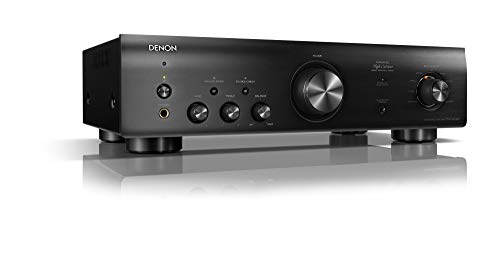
The Denon PMA-600NE stands as one of the most accessible entry points into genuine two-channel audiophile sound. Built to serve as the beating heart of a modern home stereo system, this integrated amplifier combines Denon century-long heritage of analog engineering with contemporary digital connectivity. Whether you are stepping up from a desktop soundbar or setting up a dedicated listening lounge, the PMA-600NE offers an engaging sound signature that brings your favorite music to life with weight, punch, and clarity.
Designed specifically for listeners who balance physical and wireless music collections, the PMA-600NE effortlessly switches between analog warmth and digital convenience. Turntable enthusiasts will appreciate the integrated high-gain MM phono equalizer, which yields an impressively low noise floor. Meanwhile, everyday streaming is made easy through stable Bluetooth connectivity and digital optical inputs that readily take feeds from a smart TV or network audio player.
In practical listening, the amplifier excels at rendering layered instruments and maintaining composure during energetic musical passages. The inclusion of an Analog Mode that shuts down high-frequency digital pathways proves that Denon prioritized sonic fidelity over mere convenience. For listeners seeking a versatile, robust, and musically rewarding integrated stereo amp, the PMA-600NE represents an outstanding balance of performance and practicality.
At the core of the PMA-600NE performance is Denon proprietary Advanced High Current (AHC) single push-pull circuit. This architecture allows the amplifier to handle demanding musical peaks with effortless control and lower distortion. Low frequencies arrive tight and punchy, providing ample foundation for rock, electronic, and orchestral pieces. Midrange tones, particularly male and female vocals, are projected with pleasing natural warmth and separation that never sounds congested.
High frequencies remain crisp and smooth without veering into harsh sibilance, even when paired with revealing metal-dome tweeters. The built-in 192kHz/24-bit DAC breathes spacious dimensionality into digital sources, expanding the stereo soundstage so that instruments occupy distinct, easily identifiable positions in the room. For those who crave additional low-end presence in larger rooms, the dedicated subwoofer output ensures seamless bass extension.
The Denon PMA-600NE is housed in a robust, vibration-resistant steel chassis built to isolate the delicate internal circuitry from external mechanical resonance. Measuring 17.1 by 12.1 by 4.76 inches and weighing a solid 18 pounds, it fits cleanly onto standard audio racks and console tables. The front fascia features tactile aluminum-accented dials for source selection, master volume, and precise adjustments for bass, treble, and balance.
On the rear panel, the amplifier provides two optical inputs, one coaxial digital input, four analog RCA inputs, and a dedicated MM phono input with a ground terminal. Output options include heavy-duty speaker binding posts, a mono subwoofer pre-out, and a front-mounted quarter-inch headphone jack. Delivering 45 watts per channel into 8 ohms and up to 70 watts into 4 ohms, it comfortably drives a wide variety of bookshelf and efficient tower speakers.
Pros
- Remarkable acoustic clarity and frequency balance from a compact form factor
- Broad streaming versatility including AirPlay 2, Wi-Fi, Bluetooth, and high-res audio playback
- Seamless multi-room audio synchronization through the mature HEOS platform
- Sleek modern design featuring proximity-activated touch controls on a glass top panel
Cons
- Requires a continuous AC wall outlet connection due to the lack of an internal battery
- No splash or water resistance rating, keeping it strictly an indoor speaker
- Initial setup through the companion HEOS application has a small learning curve
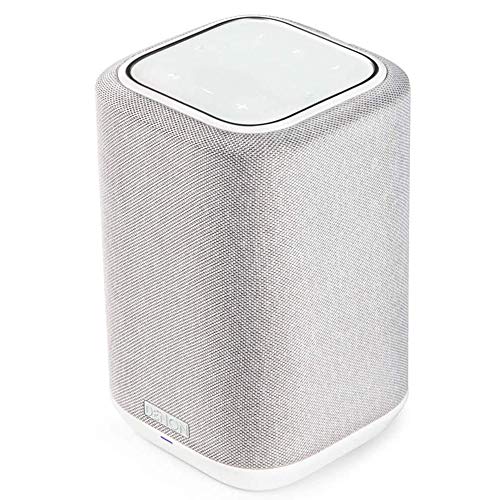
The Denon Home 150 is engineered to bring audiophile-grade acoustic fidelity into compact living spaces. Drawing upon Denon's century-long legacy in premium sound engineering, this smart wireless speaker manages to produce impressive sonic presence from a remarkably small footprint. It targets listeners who want the sophistication of a dedicated hi-fi sound system without sacrificing modern wireless convenience or cluttering up shelves with large receivers and speaker wire.
In everyday use, the speaker excels in versatility across home offices, bedrooms, and open kitchen spaces. Integration with Apple AirPlay 2 and Spotify Connect makes casual streaming practically instantaneous from an iPhone, iPad, or Mac, while native Bluetooth provides a handy backup for guest access. The proximity-sensing capacitive touch panel on top lights up cleanly as your hand approaches, allowing quick access to three customized station presets without reaching for your phone.
Where the Home 150 truly demonstrates its engineering pedigree is within a larger home audio ecosystem. Leveraging built-in HEOS technology, you can synchronize music playback seamlessly across multiple rooms or pair two units for dedicated left-and-right stereo separation on a desk. Furthermore, it easily integrates as wireless rear surround channels when paired with a Denon Home Soundbar 550, offering a scalable path toward cinematic home theater sound.
Ultimately, the Denon Home 150 represents an ideal blend of smart capabilities, refined aesthetics, and mature acoustic output. If you are searching for an elevated audio experience that easily fits on a credenza or kitchen island and ties directly into an advanced wireless multi-room ecosystem, this speaker stands as a premier indoor listening choice.
Acoustic performance is where the Denon Home 150 separates itself from standard smart speakers. Featuring a dedicated 1-inch tweeter paired with a 3.5-inch mid-bass woofer, the hardware is driven by two custom-tuned Class-D power amplifiers. High frequencies are crisp and airy without sounding harsh, while midrange vocals emerge with lifelike warmth and directness. The low end remains tight, rhythmic, and well-controlled, avoiding the muddy resonance often heard in compact plastic speakers.
Dynamic headroom is notably generous, allowing the speaker to output robust volume levels that easily fill small-to-medium rooms without introducing audible harmonic distortion. Thanks to support for high-resolution audio files including 192kHz/24-bit FLAC, WAV, and ALAC, discerning listeners can enjoy studio-quality detail over Wi-Fi. Wireless connectivity remains exceptionally stable with dual-band network support, ensuring uninterrupted high-fidelity playback whether streaming cloud services or local libraries.
Crafted with a minimalist architectural aesthetic, the Denon Home 150 features soft rounded corners, premium wrapped acoustic fabric, and a sleek glass-finish control surface. Measuring 7.3 by 7.9 by 11.2 inches and weighing just over 5 pounds, the speaker possesses a dense, premium heft that reduces mechanical vibration on furniture. The top panel utilizes capacitive touch sensors that remain subtle until illuminated by the proximity detector, preserving a clean visual profile on any nightstand or counter.
Designed primarily for stationary indoor deployment, this speaker operates on standard AC wall power and does not contain a built-in rechargeable battery. It also skips outdoor ruggedization and IP moisture ratings, meaning it is not intended for poolside exposure or on-the-go travel. In exchange for stationary power, you receive continuous, unthrottled amplifier performance and reliable network standby readiness without ever having to worry about battery degradation or charging cycles.

Pros
- Rich, room-filling stereo sound with deep, controlled bass from a single mid-sized unit
- Extensive wireless ecosystem supporting HEOS, AirPlay 2, and Bluetooth
- Plays high-resolution lossless audio files with outstanding dynamic range
- Flexible configuration options including stereo pairing and 5.1 home theater integration
Cons
- Requires continuous AC wall power with no built-in rechargeable battery for portable use
- HEOS companion app configuration can take some patience during the initial setup
- Lacks water resistance, making it strictly intended for indoor placement
The Denon Home 250 stands out as an audiophile-grade smart speaker engineered to deliver authentic stereo sound from a single, beautifully finished enclosure. Built for discerning listeners who refuse to compromise on sound quality, this unit bridges the gap between convenience and true high-fidelity audio. Whether positioned on a kitchen island, an executive desk, or a living room console, it fills medium to large living spaces with rich, nuanced acoustic reproduction.
Under the hood, Denon packed serious acoustic hardware into its mid-size footprint. With two high-frequency tweeters, two dedicated 4-inch mid-bass drivers, and a large passive radiator driven by discrete Class D amplification, the speaker handles dynamic orchestral arrangements, driving rock tracks, and delicate vocal jazz with effortless precision. Built-in HEOS functionality further allows you to link this speaker with other Denon devices throughout your home, crafting a synchronized multi-room setup controlled effortlessly from your mobile device.
Everyday usability is top tier thanks to flexible wireless options. You can stream directly via Apple AirPlay 2, connect over standard Bluetooth, or utilize Wi-Fi for uninterrupted high-resolution audio streaming. While the initial HEOS setup requires a few steps, once configured, the streaming stability is rock solid. The addition of quick-select preset capacitive buttons on the top panel makes jumping into your favorite radio stations or playlists instantaneous.
Overall, the Denon Home 250 represents an outstanding investment for music lovers looking to elevate their home soundscape. It outclasses typical compact smart units in sheer volume, bass authority, and spatial detail. If you want high-performance wireless audio that integrates effortlessly into a broader whole-home system, this speaker is an easy recommendation.
Audio performance on the Denon Home 250 is distinguished by its expansive stereo imaging and robust low-frequency output. Thanks to the dual angled tweeters and twin 4-inch bass drivers working in tandem with a rear passive radiator, the speaker reproduces kick drums and basslines with authoritative punch that avoids muddying the midrange. Acoustic guitars resonate naturally, and lead vocals stay front and center with crisp, lifelike clarity even when you push the volume to room-shaking levels.
Wireless playback stability is exemplary across both dual-band Wi-Fi and Bluetooth connections. Streaming lossless audio tracks over AirPlay 2 or HEOS maintains pristine dynamic range, allowing every subtle detail of high-resolution files to shine through. The speaker maintains a dependable connection without dropouts, ensuring seamless playback whether you are hosting a lively dinner party or enjoying an immersive late-night listening session.
The Denon Home 250 boasts an elegant, minimalist aesthetic that complements modern interior decor. Wrapped in a premium acoustic fabric with a sleek glass control panel, it features intuitive capacitive touch controls that illuminate via proximity sensor as your hand approaches. Weighing just over eight pounds with a stable footprint, it sits securely on countertops, credenzas, and bookshelves without rattling surfaces even during bass-heavy tracks.
As a stationary home entertainment centerpiece, the unit is powered exclusively via an included AC power cable rather than an internal rechargeable battery. This plug-in design ensures uncompromised continuous power delivery to the high-efficiency Class D amplifiers, guaranteeing maximum acoustic dynamic range without battery degradation or power-saving cutoffs. While it lacks water resistance and is built strictly for indoor use, its rock-solid construction ensures lasting reliability inside your home.

Pros
- Exceptional high-resolution sound quality when streaming via LDAC and aptX HD.
- Smooth multi-function control knob provides effortless physical volume and track control.
- Stable Bluetooth 5.3 link with reliable range across living spaces.
- Includes both RCA and 3.5mm AUX connectivity for wide stereo compatibility.
Cons
- Acts as a receiver only and cannot transmit audio to Bluetooth headphones.
- Requires a source device that natively supports LDAC or aptX to access high-res bitrate modes.
- Does not include optical or coaxial digital audio outputs.
The 1Mii B06T3+ Bluetooth Receiver is built for audio enthusiasts who appreciate the warm, authoritative sound of vintage stereo receivers and wired speaker setups but crave the convenience of wireless streaming. Rather than retiring a prized analog system, this compact adapter bridges the gap between classic electronics and modern smartphones. It effectively eliminates the clutter of aux cables while maintaining the fidelity your speakers were designed to reproduce.
In daily operation, the B06T3+ provides an immediate upgrade over standard wireless adapters thanks to its premium Qualcomm chipset and Bluetooth 5.3 foundation. Pairing is fast and painless, and the integrated auto-reconnect feature means your sound system is ready the moment you turn it on. The physical multifunction knob on top is a thoughtful touch, offering tactile resistance for granular volume adjustments and intuitive track skipping without needing to unlock your phone.
When paired with an LDAC-compatible Android device or high-resolution digital audio player, the audio transmission expands dramatically. You bypass the compressed, lifeless sound characteristic of basic SBC codecs and gain access to expansive dynamics and articulate instrumental separation. It delivers true high-fidelity listening directly to your existing amplifier setup.
Ultimately, the 1Mii B06T3+ represents an indispensable addition to any living room or listening room. It offers rock-solid connectivity, versatile output options, and audiophile-focused codec support that lets your favorite vintage speakers perform at their absolute best.
Performance on the 1Mii B06T3+ is defined by clarity, low noise, and acoustic transparency. Many budget Bluetooth adapters introduce an audible ground loop hiss or dull the sound signature, but the B06T3+ maintains an impressively low noise floor through both its RCA and 3.5mm analog outputs. Bass notes land with tight, controlled punch rather than muddy boominess, while midrange frequencies allow vocals and acoustic instruments to sit naturally forward in the mix.
Thanks to the inclusion of Sony's LDAC protocol alongside Qualcomm aptX HD, high-frequency response remains crisp and airy without introducing the harsh sibilance or digital artifacts typical of entry-level Bluetooth receivers. In addition, the aptX Low Latency mode keeps dialogue and musical cues tightly synchronized, making it an excellent bridge for home theater receivers when watching concert films or streaming video.
The 1Mii B06T3+ sports a clean, minimalist desktop footprint measuring approximately 4.9 by 1.7 by 5.7 inches and weighing under half a pound. Its low-profile chassis sits unobtrusively on top of an amplifier, turntable stand, or media console. The centerpiece of the design is the large rotary dial, which blends smooth analog volume control with click-based track navigation for a user-friendly physical interface.
On the rear panel, the adapter features dedicated stereo RCA jacks alongside a standard 3.5mm auxiliary output, ensuring straightforward integration with vintage preamps, modern powered monitors, and older car audio systems. Power is supplied through a reliable USB connection, maintaining steady digital-to-analog decoding across hours of continuous playback.

Pros
- Impressively wide stereo soundstage with powerful bass response from a single cabinet
- Flawless multi-room synchronization and high-resolution streaming support via HEOS and AirPlay 2
- Convenient touch-sensitive controls with proximity sensing and three instant radio presets
- Sophisticated, minimalist aesthetic with premium acoustic cloth that blends into any modern room
Cons
- Requires a continuous AC power outlet connection due to the lack of an internal rechargeable battery
- Substantial weight at over eight pounds makes it best suited for stationary countertop placement
- Hands-free voice control requires a separate Amazon Echo device or smart assistant hub
The Denon Home 250 is engineered to bring true high-fidelity audio into modern connected homes without the clutter of traditional multi-component stereo systems. Leveraging over a century of Denon acoustic mastery, this standalone wireless speaker fills medium to large living spaces with detailed, room-energizing sound. It serves as an ideal acoustic centerpiece for everyday listening, entertaining guests, or immersing yourself in high-resolution audio files.
Crafted for audio enthusiasts and smart home owners alike, the speaker integrates smoothly into daily routines. Setup is straightforward using the intuitive HEOS app, which unifies your streaming services, local network files, and multi-room speaker groupings under a single, fluid interface. You can stream Spotify, TIDAL, or Amazon Music HD over Wi-Fi, cast directly using Apple AirPlay 2, or quickly pair your smartphone via Bluetooth for spontaneous listening sessions.
In practical day-to-day use, the speaker shines with practical touches that enhance the listening experience. The capacitive top panel features a proximity sensor that illuminates controls as your hand approaches, including three physical quick-select buttons that let you jump straight into your favorite radio stations without ever unlocking your phone. You can also pair two Denon Home 250 units for a wider stereo configuration or link them into a broader Denon home theater environment.
Ultimately, the Denon Home 250 stands out as a sophisticated, future-proof audio investment. While it requires an external Echo device for hands-free voice commands, its acoustic refinement, high-resolution file handling, and reliable multi-room framework make it one of the most capable wireless smart home audio choices in its class.
Acoustic performance is where the Denon Home 250 truly distinguishes itself from typical compact smart speakers. It utilizes a true stereo driver configuration consisting of two angled 0.75-inch dynamic tweeters, two robust 4-inch mid-bass drivers, and a substantial 5.25-inch passive bass radiator. Sound Master tuning ensures that low-end frequencies hit with deep authority and impact without overwhelming the midrange or clouding delicate acoustic details.
Midrange vocals and high frequencies come through with exceptional clarity, rendering subtle guitar plucks, crisp percussion, and breathy vocals with lifelike precision. The speaker effortlessly handles complex high-resolution tracks up to 192kHz/24-bit, delivering a balanced frequency spectrum that remains composed and distortion-free even when pushed to room-filling volume levels.
Wireless performance is consistently rock solid thanks to dual-band Wi-Fi support and low-latency HEOS architecture. Music streams without dropouts or buffer delays across rooms, and the stable Bluetooth connection provides quick, reliable playback when guests want to share their playlists without joining the home Wi-Fi network.
The Denon Home 250 embraces a stationary, plug-in design powered directly by an included AC power cable. Because it does not run on battery power, you never have to worry about playtime limits, recharging cycles, or lithium battery degradation over time. It is always connected, primed, and instantly available to deliver high-output performance at a moment notice.
Visually, the speaker is understated and elegant, wrapped in a tactile white acoustic cloth that seamlessly integrates into contemporary kitchen counters, bookshelves, or bedside tables. Its water-resistant cloth wrap makes it durable enough for placement in high-traffic kitchens or dining areas, protecting the internal components from everyday dust and humidity.
Weighing in at 8.16 pounds with a sturdy, low-resonance chassis, the unit remains firmly anchored to surfaces to eliminate unwanted cabinet vibrations even during bass-heavy playback. While this solid build limits easy transport from room to room, it underscores the premium internal hardware and high-grade acoustic components packed inside.

Pros
- Massive 800W power handles large rooms with ease
- Seamless Bluetooth 5.0 for stable wireless connections
- Dual mics with independent volume and effects controls
- Multiple input options including USB/SD for flexible playback
- User-friendly front panel with digital LED display
Cons
- Requires separate speakers to produce sound
- AC-powered only, not suitable for portable use
- Lacks companion app for remote control
The Pyle PDA77BU is a robust 4-channel home stereo receiver amplifier boasting 800W peak power, designed to power your audio setup for everything from casual listening to full-blown parties. It combines Bluetooth streaming, built-in MP3 player via USB/SD, FM radio, and dedicated karaoke features with dual mic inputs, making it a versatile hub for home entertainment.
Ideal for party hosts, karaoke lovers, and home theater enthusiasts, this receiver shines in living rooms or game rooms where you need powerful amplification and easy connectivity. Connect your phone wirelessly, plug in external devices via RCA or AUX, or pop in a USB for instant playback, all while fine-tuning with front-panel knobs.
In real-world use, it drives dynamic sound across movies, music, and games, with customizable mic controls adding fun to gatherings. The intuitive layout ensures quick setup, though it pairs best with quality external speakers for optimal performance.
Overall, the PDA77BU delivers exceptional value for home audio amplification, earning high marks for power and features. It's a solid choice if you're building an affordable, feature-packed sound system.
With 800W peak power across 4 channels, this amplifier pushes high volume levels without distortion, filling large spaces with punchy bass and clear highs when paired with capable speakers. It excels in delivering dynamic sound for music and movies, making every session engaging.
Bluetooth 5.0 provides stable connectivity up to 30+ feet, ensuring lag-free streaming from devices. Vocal clarity shines through the dual mic inputs, enhanced by reverb and delay effects for professional-sounding karaoke performances.
FM radio and digital inputs maintain consistent audio quality across sources, with precise front-panel EQ adjustments allowing tailored sound signatures for any content.
The PDA77BU features a sturdy, compact chassis with an intuitive front-panel control center and bright LED display, making it easy to navigate inputs, volume, and mic settings during use. Its professional layout suits home setups without cluttering space.
Built for stationary home use, it lacks portability but offers reliable AC-powered operation for continuous playback. No battery means unlimited runtime when plugged in, ideal for long parties or movie marathons.
While not ruggedized for outdoors, the solid construction and accessible rear RCA/USB ports ensure dependable connectivity and durability in everyday indoor environments.
Understanding Bluetooth Speaker Compatibility with Denon Receivers
Direct compatibility between wireless audio equipment and home theater gear requires understanding how your receiver handles radio frequency signals. If you are asking whether can i use bluetooth speakers with denon receiver configurations work, the direct answer is yes, provided your Denon unit includes an integrated Bluetooth transmitter or you connect an external transmission adapter. Many listeners assume that any receiver with a Bluetooth logo can broadcast sound outward to portable speakers, yet entry-level and older models often restrict wireless functionality to incoming smartphone streams. Knowing how your receiver processes outbound audio signals helps you build a versatile system without unnecessary frustration.
The Difference Between Bluetooth Transmission and Reception
Most traditional stereo amplifiers incorporate Bluetooth technology strictly as an input channel, technically known as a receiver mode or RX function. In this configuration, the Denon component captures incoming wireless audio from a phone, tablet, or laptop and passes that digital data to its internal converter. The amplified signal then powers physical, wired speakers connected directly to the binding posts on the back panel. A component like the Denon PMA-600NE Bluetooth Stereo Amplifier demonstrates this design, using Bluetooth to welcome mobile streams while driving traditional wired cabinets with analog power.
Bluetooth transmission, commonly called TX mode, operates in the opposite direction by capturing audio processed inside the receiver and broadcasting it wirelessly into the room. A receiver equipped with a transmitter broadcasts digital signals outward to external wireless speakers, soundbars, or headphones. Because adding transmission hardware and licensing requires additional processing power and software integration, manufacturers historically omitted outbound Bluetooth from entry-level hardware. Assuming a receiver transmits audio simply because it displays a Bluetooth symbol on the chassis remains one of the most frequent misconceptions among home audio buyers.
Native Bluetooth Transmitter Features in Modern Denon AVRs
Denon addressed customer demand for outbound wireless flexibility by introducing an integrated Bluetooth Transmitter function on select AV receivers released after late 2019. Modern models in the Denon AVR-S and AVR-X series often provide this dedicated transmitter setting directly within their system firmware. When enabled, this feature allows the receiver to output audio directly to compatible Bluetooth speakers or wireless headphones without requiring any third-party adapters. This capability makes it convenient to listen to music or television sound in an adjacent room without running physical cables through walls.
One valuable aspect of Denon native transmitter implementation is the selectable output configuration found within the graphical user interface. Listeners can choose between sending audio exclusively to the Bluetooth device or playing sound simultaneously through the main wired surround system and the wireless speaker. Simultaneous playback allows someone with hearing difficulties to use a nearby wireless speaker or personal headphones while others enjoy the main speakers at a moderate volume. The receiver also permits independent volume adjustment for the Bluetooth stream, preventing accidental volume spikes in either listening zone.
How to Set Up and Pair a Wireless Speaker on Denon AVRs
Configuring a wireless speaker on a transmitter-capable Denon receiver requires navigating through the primary setup menu displayed on your television monitor. Begin by placing your wireless speaker into active pairing mode, which generally involves pressing and holding its dedicated Bluetooth button until an indicator light flashes rapidly. Ensure that no other nearby devices, such as your smartphone or tablet, automatically connect to the speaker while it searches for a new pairing host. Keeping the speaker within close physical proximity to the receiver during initial setup simplifies connection discovery.
Using your Denon remote control, press the Setup button to open the main system configuration overlay. Navigate down to the General category, select the Bluetooth Transmitter menu, and toggle the transmitter setting from Off to On. Once active, highlight the Output Mode option to decide whether you want sound directed only to the wireless speaker or shared with your wired speaker array. After selecting your preferred audio routing, open the Device List option to prompt the receiver to scan for nearby discoverable equipment.
Select your speaker name from the detected device list and confirm the pairing request using the enter key on your remote. The receiver will establish a secure handshake with the speaker, and the television screen will display a confirmation message indicating a successful link. You can then test audio playback by streaming a familiar music track or playing a television program through the receiver. If you plan to connect active desktop monitors or secondary powered units in another room, verifying signal stability across household walls ensures continuous performance.
Connecting Bluetooth Speakers to Older Denon Units Using Adapters
If you own a Denon integrated stereo amplifier, such as the PMA-600NE, or an older home theater receiver that lacks transmitter capability, you can still use wireless speakers by adding an external adapter. External Bluetooth transmitters are compact hardware accessories that connect directly to physical audio output jacks on the back or front of your receiver. These devices capture analog or digital audio signals generated by the receiver and convert them into an outbound Bluetooth radio transmission. Adding a dedicated transmitter offers an affordable way to modernize older audio equipment without replacing your central amplifier.
Connecting an external transmitter requires identifying an appropriate line-level output jack on your receiver rear panel. Ideal connection points include Zone 2 pre-outs, dedicated tape monitor outputs, or standard stereo RCA record-out jacks, which supply consistent audio signals regardless of main volume adjustments. Simply connect a pair of RCA audio cables from the receiver outputs into the analog inputs on the Bluetooth transmitter. If your receiver lacks secondary RCA pre-outs, you can plug the transmitter into the front headphone jack using a standard 3.5mm or 6.35mm stereo adapter cable.
While hardware such as the 1Mii B06T3+ LDAC Bluetooth Receiver for Home is primarily engineered to receive mobile streams for vintage systems, dedicated transmitter units convert analog feeds into wireless signals. Keep in mind that using a front headphone jack automatically mutes the primary wired speakers on most traditional receiver chassis. This physical muting prevents simultaneous dual-zone listening, making pre-out connections far superior whenever you want shared playback between different areas. Selecting a transmitter that draws steady power via a USB port or dedicated wall transformer prevents unwanted battery depletion during long listening sessions.
Audio Latency, Codecs, and Lip-Sync Timing Challenges
Wireless transmission inevitably introduces minor timing delays, technically known as audio latency, between the source player and your wireless speakers. Latency occurs because the receiver or external transmitter must digitally encode the analog audio signal, broadcast the data packets over radio frequencies, and allow the speaker to decode the signal before moving its physical driver cones. Standard Bluetooth codecs like SBC often introduce delays exceeding 150 milliseconds. While this slight delay remains virtually unnoticeable when listening to background music, it creates jarring synchronization discrepancies when watching movies or television dialogue.
When audio lags behind video, actors lips move noticeably before you hear their voices, creating a frustrating disconnect during cinematic scenes. To mitigate this issue, specialized audio codecs such as aptX Low Latency compress and transfer sound packets in under 40 milliseconds, maintaining imperceptible synchronization. To benefit from low-latency performance, however, both the transmitting hardware and the receiving Bluetooth speaker must support the exact same advanced codec. If either device defaults back to baseline SBC transmission, higher latency returns regardless of overall equipment quality.
Modern Denon receivers feature built-in Lip Sync and manual Audio Delay adjustment options inside their audio setup menus to help address timing mismatches. These settings allow you to delay the main audio channel to match slow video displays, though they rarely accelerate an already lagging Bluetooth feed. For critical home theater applications, wired surround speakers or proprietary low-latency wireless systems remain far more reliable than generic Bluetooth connections. Reserving Bluetooth speakers for casual music listening rather than primary movie channels avoids persistent lip-sync frustrations.
Denon HEOS vs. Bluetooth: Choosing the Superior Wireless Option
Listeners seeking true whole-home wireless audio often find that Denon proprietary HEOS wireless ecosystem provides substantial advantages over standard Bluetooth technology. Unlike Bluetooth, which relies on direct, short-range point-to-point radio communication, HEOS devices communicate over your existing home Wi-Fi network. Smart wireless speakers, including the Denon Home 150 Wireless Smart Speaker and the larger Denon Home 250 Wireless Smart Speaker, integrate seamlessly with HEOS-enabled AV receivers. This architecture allows complete synchronization across multiple rooms without the physical range boundaries that restrict conventional Bluetooth equipment.
Operating over Wi-Fi enables HEOS speakers to stream uncompressed high-resolution audio files that exceed the limited bandwidth capabilities of basic Bluetooth protocols. Through the centralized HEOS mobile app, you can command your Denon receiver and multiple remote speakers to play the exact same album simultaneously, or assign completely different streaming services to individual rooms. Unlike typical battery-powered units, such as compact portable audio units designed primarily for on-the-go utility, Denon Home speakers plug into household power outlets and maintain permanent network standby for instant streaming. This reliable power and network connection ensures consistent audio output without unexpected battery drain.
Another significant advantage of HEOS integration involves surround-sound adaptability. Compatible Denon receivers allow users to pair two Denon Home 150 or 250 speakers as dedicated wireless rear surrounds in a complete home theater configuration. Bluetooth speakers cannot function as true synchronized surround channels within an AV receiver ecosystem due to latency and channel assignment limits. If your primary goal involves expanding clear, multi-room sound throughout your residence, investing in network-based HEOS hardware generally yields far better results than trying to stretch Bluetooth connections beyond their intended limits.
Troubleshooting Signal Drops, Volume Levels, and Pairing Conflicts
Troubleshooting wireless speaker connections on a Denon receiver begins by identifying common environmental interference sources. Because Bluetooth operates within the crowded 2.4 GHz radio frequency spectrum, home Wi-Fi routers, microwave ovens, and cordless home equipment can disrupt the wireless audio stream. Physical barriers such as masonry walls, large metal appliances, or dense furniture also attenuate radio waves, leading to stuttering audio or unexpected dropouts. Position your wireless speaker within clear line-of-sight of the receiver or transmitter whenever possible, keeping overall operational distance well within thirty feet.
Unexpected volume level mismatches present another frequent hurdle when integrating wireless speakers with an existing amplifier. When using external transmitters connected to RCA outputs, verify whether the selected output provides fixed or variable signal levels. A fixed line-level output delivers a constant signal voltage, requiring you to control listening volume entirely on the wireless speaker itself. If you connect an adapter to a variable output or front headphone jack, setting the receiver output volume too low results in weak, hissing audio, while setting it too high causes harsh digital clipping and audible distortion.
Pairing conflicts frequently occur when a Bluetooth speaker previously linked with a mobile phone attempts to reconnect to that device instead of your receiver. To resolve connection confusion, disable Bluetooth on nearby smartphones, tablets, and laptops before placing your speaker into pairing discovery. If your Denon receiver fails to locate the speaker in its device list, power-cycle both units and clear any stored pairing memory from the speaker processor. Resetting connection caches clears corrupted handshake data, allowing the receiver to re-establish a stable, clean link with your wireless speaker.
Practical Considerations for Multi-Room Audio Expansion
Planning an expanded audio footprint requires evaluating how you intend to use secondary speakers in everyday scenarios. If your primary goal involves extending audio out onto an uncovered deck or patio, portable Bluetooth speakers provide convenient weather resistance and easy portability that traditional indoor equipment cannot match. However, relying on Bluetooth for permanent outdoor sound often results in disappointing signal dropouts as family members walk between rooms or move past thick exterior walls. Multi-channel receivers, such as a Pyle Home Stereo Receiver with Bluetooth or dedicated multi-zone Denon amplifiers, can power rugged wired outdoor speakers while offering basic wireless convenience.
Balancing equipment capabilities against listening habits helps you avoid overcomplicating your entertainment setup. A listener who simply wants casual background music while preparing dinner in an adjacent kitchen will find an external Bluetooth transmitter or native receiver pairing perfectly adequate. Conversely, an audio enthusiast who demands pristine sound quality, zero latency, and seamless whole-home integration will quickly outgrow standard Bluetooth limitations. Identifying whether your room needs casual portable sound or permanent architectural coverage guides your investment toward the most satisfying audio equipment.
Before purchasing new hardware, carefully inspect the connection jacks on the rear of your current Denon receiver and test its software menus. Identifying whether your receiver already supports outbound Bluetooth transmission saves you the expense of buying redundant adapters or unnecessary cabling. When hardware upgrades are necessary, choosing between an inexpensive transmitter adapter and a comprehensive network system like HEOS depends on your budget, room layout, and long-term entertainment plans. Taking a deliberate, informed approach ensures your audio system delivers dependable, enjoyable performance throughout your living space.


Write Your Review
No reviews yet. Be the first to share your experience!