


Small flat-panel televisions often produce thin, boxy sound because compact cabinets leave very little physical room for dedicated acoustic drivers. If you find yourself asking can i add speakers to my 40 hisense roku tv, the answer is a definitive yes, and you have several distinct ways to achieve richer audio. Many viewers struggle to catch dialogue or feel cinematic depth through the integrated television speakers alone. Fortunately, adding external audio gear can dramatically clarify spoken lines and introduce dynamic punch to movies, music, and sports broadcasts.
Your 40-inch television provides multiple hardware ports alongside specialized wireless integration designed specifically for the Roku smart platform. You can connect everything from compact soundbars and powered stereo monitors to dedicated wireless pairs without complex wiring runs across your room. Learning how these audio paths function helps you choose the right setup while avoiding unnecessary adapter purchases. Investing in immersive home audio setups transforms casual viewing into an engaging home theater experience without requiring advanced installation skills.
Pros
- Near-instant, guided on-screen setup with automated firmware upgrades
- Speech Clarity mode noticeably rescues muffled movie and television dialogue
- Stable low-latency wireless connection eliminates messy audio cables across the room
- Direct Bluetooth pairing works independently of the television display
Cons
- Strict ecosystem lock-in; entirely incompatible with standard non-Roku TVs or generic streaming players
- Each speaker requires access to its own AC wall outlet for power
- Limited deep low-end rumble on bass-heavy soundtracks unless paired with an external subwoofer
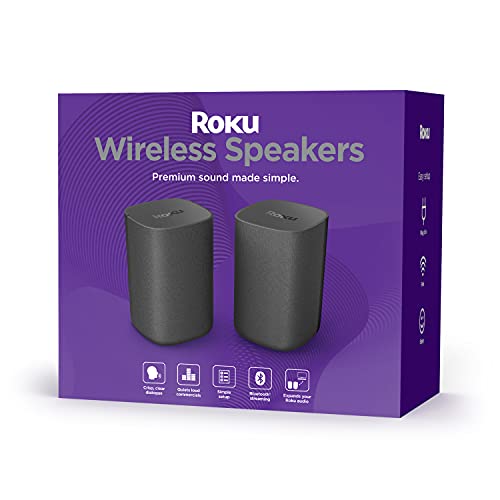
The Roku Wireless Speakers offer an accessible, clutter-free path to upgraded television sound. Engineered exclusively for Roku TV displays, the Roku Streambar, and the Roku Smart Soundbar, this renewed pair eliminates the complexity typically associated with multi-channel audio. Instead of wrestling with a traditional AV receiver and running spools of speaker wire across the living room, users can establish a capable stereo or surround sound stage in minutes.
Setup is managed directly through the familiar Roku operating system. Once plugged into wall power, the television automatically detects the speakers and guides you through an intuitive pairing process. From there, you can choose whether to assign the speakers as front stereo drivers to replace weak built-in television speakers, or stage them behind your seating area as dedicated rear surround satellites. Regular over-the-air firmware updates ensure seamless wireless stability without requiring manual maintenance.
In everyday use, the system shines during dialogue-driven programming, streaming series, and evening movie sessions. Roku includes dedicated sound profiles, most notably Speech Clarity and Volume Leveling, which actively prevent the common frustration of riding the volume control between quiet conversations and loud sound effects. Night Mode further softens sharp audio peaks, making the setup well-suited for apartments or late-night entertainment.
While audiophiles seeking an elaborate component system with analog inputs will look elsewhere, Roku users receive exceptional convenience and performance here. The renewed certification brings this hardware in at a practical price point while preserving full audio functionality. If your home entertainment centers on the Roku platform, this pair delivers an immediate, wire-free audio enhancement.
Acoustically, the Roku Wireless Speakers prioritize vocal intelligibility and cohesive mid-frequency reproduction. Built-in drivers produce clean, articulated highs that remain pleasant without becoming harsh or fatiguing at higher listening volumes. By lifting the dialogue out of the cabinet and into dedicated stereo enclosures, voices gain natural separation from musical scores and ambient background effects.
The stereo imaging creates a wider and more dynamic soundfield than any standard flat-screen TV can achieve on its own. Sound pans accurately across the room, providing a palpable sense of direction during movies and gaming. When used as rear satellites alongside a Streambar, ambient environmental noises such as rainfall and distant engines surround the listener effectively.
Lower frequencies are punchy and responsive through the mid-bass range, providing satisfying weight to male vocals and standard action sequences. However, because these are compact bookshelf units, the sub-bass shelf naturally tapers off before reaching subterranean theater depths. Listeners who demand visceral room-shaking impact during blockbusters can round out the system by pairing it with the dedicated Roku Wireless Subwoofer.
Each speaker stands 7.7 inches tall with a footprint of 4.9 by 4.9 inches, finished in a clean, non-reflective matte black. Weighing 4 pounds each, the enclosures are solid and well-damped, which effectively minimizes unwanted internal resonance during louder scenes. Their compact, vertical tower profile blends easily onto end tables, bookshelves, or dedicated speaker stands without dominating the room decor.
Hardware interfaces on the rear are intentionally streamlined. There are no physical HDMI, optical, or auxiliary ports; all TV audio signal transmission is handled over a dedicated, low-latency Wi-Fi protocol managed by the host Roku device. This proprietary link keeps audio and video strictly synchronized, preventing distracting lip-sync delays.
Each unit is powered by its own detachable AC power cord, meaning you will need two open electrical outlets near your chosen speaker locations. For versatility beyond television content, internal Bluetooth hardware allows you to connect your phone or laptop directly, streaming music and audiobooks with the TV screen turned off.
Pros
- Seamless audio-video sync with Roku TV and Streambar
- Automatic software updates for optimal performance
- Bluetooth connectivity for versatile music playback
- Night Mode for quiet viewing without disturbing others
- Simple plug-and-play wireless pairing
Cons
- Requires compatible Roku TV or Streambar (SE not supported)
- Needs nearby power outlets as they are not battery-powered
- Best performance limited to Roku ecosystem devices
The Roku Wireless Speakers come as a set of two, designed exclusively to elevate audio for Roku TV, Streambar, or Streambar Pro owners. They transform standard TV sound into a cinematic experience, filling rooms with immersive audio that syncs perfectly with on-screen action. Ideal for cord-cutters and movie lovers who want surround sound without the hassle of complex wiring.
In real-world use, these speakers excel at delivering clear dialogue during fast-paced scenes and rich soundscapes for music or streaming content. Pair them via Bluetooth for personal tunes or use built-in tuning like Speech Clarity to make voices stand out. Setup is straightforward: plug into power and connect wirelessly to your Roku device.
While they shine in home entertainment setups, they require a compatible Roku base system. Overall, they offer premium sound upgrades at an accessible level, making them a smart add-on for anyone deep in the Roku ecosystem. Verdict: Highly recommended for immersive TV audio without breaking the bank.
Roku Wireless Speakers provide powerful audio with high frequencies for detailed highs and dynamic bass that adds depth to explosions and music. Vocal clarity is a standout, enhanced by Speech Clarity which boosts dialogue over background noise, ensuring you never miss a line in movies or shows.
Volume handles room-filling levels without distortion, and Volume Leveling keeps commercials from blasting. Bluetooth streaming offers stable connectivity for music from phones, with range suitable for typical living rooms. Night Mode tames peaks for late-night viewing.
Performance peaks in surround configurations, moving sound with the action for true immersion. Expect consistent, high-quality output synced flawlessly to your Roku display.
These speakers feature a sleek, unobtrusive design that blends into home setups, with wireless connectivity eliminating audio cables across floors. They require standard power outlets for operation, ensuring reliable performance without battery concerns.
Build quality supports easy placement behind or beside your seating area, and the compact form allows stacking sets for full surround. No rugged or waterproof ratings, so they suit indoor living rooms best.
Automatic software updates keep firmware current via your Roku device, maintaining peak sound without manual intervention. Focus on simplicity makes them lightweight on maintenance for everyday TV use.
How to Connect and Configure Speakers on a 40 Hisense Roku TV
Connecting external speakers to your 40-inch Hisense Roku television is entirely possible and requires only a basic understanding of your TV physical ports and wireless capabilities. Most Hisense models powered by Roku OS offer several audio paths ranging from digital optical connections to seamless wireless pairings. You do not need complex equipment to accomplish this task. Choosing the right path simply depends on whether you prefer a clean wireless environment, an integrated soundbar, or a traditional stereo arrangement.
Your television includes built-in software developed to handle audio routing without requiring secondary conversion boxes in typical scenarios. Because the TV runs Roku OS, it bridges the gap between hardware connectivity and automated software configuration. You can output sound directly through HDMI ARC, an optical Toslink jack, a standard headphone port, or specialized wireless transmission. Each option presents distinct benefits regarding volume control convenience, cable clutter, and sound clarity.
Understanding the Physical Audio Ports on Your Television
Inspecting the connection panel of your 40 Hisense Roku TV reveals several physical jacks that support external audio equipment. The most versatile connection is the HDMI ARC port, which sends digital sound from the TV to an external audio receiver or soundbar. HDMI Audio Return Channel also communicates with connected devices via Consumer Electronics Control protocols. This connection allows your existing Roku remote control to manage system volume and power without requiring a separate remote.
Alongside the HDMI connections, your Hisense television includes an optical digital audio output, commonly known as Toslink or S/PDIF. This fiber optic port transmits multichannel audio signals using light pulses, keeping the sound isolated from electrical interference. Optical connections work well with older soundbars, dedicated digital-to-analog converters, and stereo receivers lacking HDMI ports. However, optical audio cannot pass volume commands from the TV remote, meaning you must control volume using the audio device remote.
Most 40-inch models also retain a 3.5mm analog headphone output jack on the rear panel. This analog port provides an immediate stereo feed for computer speakers, desktop monitors, or older stereo amplifiers equipped with auxiliary inputs. While analog audio lacks the advanced surround sound metadata found in digital signals, it remains a simple, zero-latency connection. When you plug a cable into this jack, the TV routes audio directly while allowing you to control output levels.
The Roku Wireless Speaker System
For owners seeking a wire-free setup, Roku manufactures proprietary wireless speakers designed specifically to integrate with Roku OS televisions like your Hisense model. Both the Roku Wireless Speakers – Set of 2 (Pack of 1) and the renewed Roku Wireless Speakers bypass external audio cables by establishing a direct, low-latency wireless connection to the television. These speakers do not function with standard TVs from other brands or standalone streaming players, making their compatibility strictly focused on the Roku hardware ecosystem.
These wireless speakers deliver clear audio reproduction with dynamic bass while maintaining automatic audio and video synchronization. The setup process eliminates the need to route speaker wire across your baseboards, as each speaker only requires a connection to a standard wall power outlet. Once paired, the speakers unlock dedicated Roku OS audio modes directly inside your TV menu. You gain immediate access to Speech Clarity for highlighting spoken dialogue, Volume Leveling to subdue loud commercials, and Night Mode to quiet dynamic peaks.
In addition to television sound, these wireless speakers feature onboard Bluetooth streaming functionality for mobile audio. This allows you to stream podcasts, playlists, or audiobooks directly from a smartphone or tablet even when the television screen is powered off. The speakers receive automatic background software updates through your home Wi-Fi connection, ensuring audio decoding performance stays current. Choosing between new or renewed sets gives buyers flexible hardware choices without altering core technical features or software compatibility.
Active Powered Speakers vs. Passive Audio Systems
Understanding the distinction between active and passive speaker designs is essential before purchasing new audio hardware for your television. Active speakers feature internal power amplifiers built directly into the cabinet, allowing them to accept direct audio signals from TV optical, HDMI, or 3.5mm ports. These self-contained units plug into a wall outlet and receive sound straight from the television without intermediary hardware. For a compact 40-inch television setup, powered stereo monitors offer an uncluttered, high-fidelity solution.
Connecting traditional passive speakers requires an external stereo amplifier or dedicated audio video receiver. Passive speakers lack internal power circuits and rely entirely on amplified speaker level signals delivered through copper speaker wire. Because your Hisense Roku TV only outputs low-level line audio signals, attempting to wire passive speakers directly to the television will produce no sound and could damage the audio circuitry. An external receiver bridges this gap by decoding television audio and driving the passive cabinets safely.
Matching the correct amplifier power handling and speaker impedance ensures reliable acoustic output when assembling a passive audio system. Most home audio receivers comfortably power speakers rated between four and eight ohms without overloading their output stages. If you already own quality stereo speakers, adding a compact stereo amplifier equipped with an optical or HDMI input gives those speakers new life alongside your Hisense TV. This modular approach allows for future hardware upgrades without replacing the entire speaker collection.
Bluetooth Realities on Roku OS Televisions
A common point of confusion among television owners involves connecting standard Bluetooth speakers directly to the Hisense Roku TV. Many listeners expect that portable Bluetooth speakers can pair directly to the TV for wireless living room playback. However, standard Roku TVs do not feature an open Bluetooth transmitter capable of broadcasting TV audio directly to third-party Bluetooth speakers or wireless headphones. The native Bluetooth hardware on Roku wireless audio accessories is designed primarily to receive mobile device audio streams.
If you wish to use standard Bluetooth hardware for private listening or audio playback, you can utilize the free Roku mobile app on your smartphone. The app Private Listening feature streams television audio directly over Wi-Fi to your mobile device, which can then output sound to your paired Bluetooth headphones or speakers. Alternatively, you can connect an inexpensive external Bluetooth audio transmitter to the television 3.5mm headphone jack or optical output. This hardware adapter converts the wired audio signal into a broadcast signal compatible with any Bluetooth receiver.
Step-by-Step Pairing for Roku Wireless Speakers
Pairing official wireless speakers to your 40 Hisense Roku TV is straightforward and completed entirely through the on-screen Roku menu. Position your speakers on either side of the television, ensuring they sit at roughly ear level when seated. Plug both speakers into standard electrical wall outlets, and wait for the status lights on the rear panels to begin flashing, which indicates pairing readiness. Power on your Hisense TV and ensure the system is connected to your primary home wireless network.
Press and hold the Home button on your Roku remote control for approximately five seconds to launch the automated quick setup menu. Select the Speakers option from the on-screen prompt, or navigate manually to Settings, select Remotes and devices, and choose Set up a new device. The television will search for nearby active Roku audio devices and establish a direct secure wireless link. During this discovery phase, keep the speakers within clear wireless range of the television to prevent signal dropouts.
Once detected, the television plays an audible chime through each speaker to help you assign appropriate left and right stereo audio channels. Follow the voice prompts to confirm speaker placement, completing the initial acoustic handoff. After channel confirmation, the TV automatically disables its internal speakers to ensure clean, phase-aligned playback through the external wireless pair. You can then test audio levels and verify that volume changes registered by your standard Roku remote adjust both speakers simultaneously.
Optimizing Audio Settings in the Roku OS Menu
Configuring internal audio output settings properly ensures your Hisense television sends the cleanest possible signal to your external speakers. Navigate to the main TV Settings menu, select Audio, and inspect the Audio output selection. If you connect speakers via optical or analog cables, you should manually turn the internal TV speakers off. Leaving internal speakers active while external hardware plays creates an unpleasant acoustic delay or hollow echo effect caused by slight processing differences.
Next, examine the Digital audio format options, which dictate how the television processes digital bitstreams sent over HDMI ARC or optical cables. Setting this option to Auto allows the TV to negotiate the best compatible format with your soundbar or receiver. However, if your external speakers or older DAC only support two-channel audio, switch this setting manually to Stereo or PCM. Forcing PCM eliminates loud static bursts or silent playback that can occur when an incompatible Dolby Digital signal is sent to stereo hardware.
For HDMI ARC setups, verify that System Audio Control and CEC functions are active in the TV System settings under Control other devices. Enabling 1-Touch Play and System Standby synchronizes power commands between your television and sound system. When properly engaged, powering on your Hisense television automatically wakes your external speakers and routes all sound immediately through the external hardware. This integration creates a seamless viewing routine that feels completely integrated into the television operating system.
Troubleshooting Sound Delay and Audio Sync Issues
Audio synchronization issues occasionally occur when external digital processing takes slightly longer than television video rendering. If dialogue appears out of sync with actors mouth movements, open the advanced audio settings menu while video is playing. You can adjust the speech sync or audio delay slider in small millisecond increments until visual action matches audio output perfectly. Making minor adjustments while watching close-up dialogue scenes offers the quickest visual cue for achieving accurate timing.
If you experience complete silence after connecting an optical or HDMI cable, begin by testing basic hardware integrity. Ensure the optical cable protective plastic tips have been removed, as these transparent caps prevent the fiber optic connector from seating fully into the jack. For HDMI ARC, confirm the cable is plugged into the specific HDMI port labeled ARC, as auxiliary HDMI ports only receive incoming video and cannot return sound. Power cycling both the television and audio equipment often forces a fresh digital handshake.
Wireless audio dropouts or intermittent popping sounds typically stem from local radio frequency interference. Position your home Wi-Fi router at least several feet away from both the television and wireless speakers to reduce channel congestion. If interference persists, check your Roku network settings to confirm the television maintains a strong signal connection to your home network. Keeping your TV firmware updated guarantees you benefit from recent driver stability improvements released by Hisense and Roku.
Room Placement and Practical Layout Strategies
A 40-inch television is frequently installed in bedrooms, home offices, dormitories, or cozy living rooms where floor space remains limited. Placing your external speakers symmetrically on either side of the screen creates an equilateral listening triangle with your primary seating location. This physical positioning establishes a broad, coherent stereo image that anchors dialogue firmly to the center of the display while widening ambient effects. Avoid pushing speakers directly into room corners, which can cause boomy, uncontrolled bass reflections.
Securing speaker wiring along baseboards or behind media furniture prevents accidental cable snags and maintains a tidy entertainment area. If you use wall mounts for your television, consider mounting compact bookshelf speakers on matching wall brackets at identical heights. For tabletop setups, placing small isolation pads beneath speaker cabinets decouples vibrations from hollow dressers or TV stands. These simple mechanical adjustments yield immediate improvements in midrange clarity and overall speech intelligibility without requiring costly room acoustic treatments.
Practical Takeaways for Your Audio Setup
Upgrading the acoustic performance of your 40 Hisense Roku TV is a practical investment that substantially improves daily entertainment enjoyment. Whether you select dedicated Roku wireless speakers, an HDMI ARC soundbar, or versatile powered stereo monitors, your television provides the necessary hardware interfaces to support your preference. Taking a few moments to verify physical connections, select the correct digital output format, and position your speakers thoughtfully ensures exceptional performance. With proper configuration, your new audio arrangement delivers crisp dialogue, rich dynamics, and effortless daily operation.


Write Your Review
No reviews yet. Be the first to share your experience!