


Listener fatigue often starts with an overly aggressive top end, which causes many audio enthusiasts to ask, are polk speakers bright? High-frequency performance dictates how cymbals crash, how dialogue articulates, and whether prolonged listening sessions remain enjoyable or turn grating. While vintage audio lore sometimes characterized American speaker design as forward and energetic, modern Polk Audio models feature distinct engineering tailored across different driver technologies. Whether exploring compact bookshelf monitors or high-end audio systems, understanding the relationship between tweeter materials and room interaction remains essential.
A listener evaluating audio components needs reliable expectations rather than vague generalizations. Polk designs incorporate varied high-frequency elements ranging from soft silk dome tweeters to rigid aluminum domes and specialized Terylene materials. Deciding whether a pair feels lively, neutral, or overly sharp usually depends as much on room acoustics and amplification as the cabinet itself. Comparing these nuances with setups like dedicated speakers for music playback provides helpful context for shaping a well-balanced acoustic environment.

Pros
- Exceptional high-fidelity sound with powerful bass for outdoor enjoyment
- Rugged all-weather build withstands extreme conditions effortlessly
- One-handed Speed-Lock mounting simplifies installation
- Versatile orientation for optimal sound in any setup
- Premium components like anodized aluminum tweeter ensure clarity
Cons
- Requires external AVR or amplifier for power
- Optimized for small-to-medium areas, not massive outdoor venues
- Wired design limits flexibility compared to wireless options
The Polk Audio Atrium 4 are a pair of compact, weatherproof outdoor speakers designed for mounting in exposed areas like patios, poolsides, or backyards. They connect via wired gold-plated binding posts to any modern AVR or amplifier, delivering high-fidelity sound without the hassle of batteries or Bluetooth pairing.
Perfect for American homeowners who love hosting outdoor gatherings, these speakers shine in small-to-medium spaces, providing broad sound coverage that turns a simple deck into a concert venue. Real-world performance impresses with their ability to handle heavy rain, extreme temperatures, and daily exposure while maintaining premium audio quality.
Installation is a breeze thanks to the one-click Speed-Lock system, allowing one-handed mounting vertically or horizontally. Whether for backyard barbecues or evening movies under the stars, they offer reliable, powerful bass and clarity that outperforms typical outdoor audio solutions.
Verdict: A top pick for durable, easy-to-install outdoor sound that elevates everyday living spaces with professional-grade performance.
Powered by a 4.5-inch dynamic balance polypropylene woofer and 0.75-inch anodized aluminum dome tweeter, the Atrium 4 produce powerful bass with impressive depth for outdoor environments. Vocals and highs remain clear even at high volumes, ensuring every detail cuts through ambient noise like pool splashes or backyard chatter.
Broad sound dispersion covers patios and decks evenly, making them ideal for group listening without hot spots. Volume levels scale effortlessly from background music to party-thumping bass, all while maintaining fidelity when connected to a capable amp.
Placement flexibility enhances performance, with horizontal or vertical mounting optimizing coverage for your specific outdoor layout.
Built with rugged, all-weather certification, these speakers withstand heavy rain, extreme temperatures, and seasonal elements, making them a set-it-and-forget-it choice for US backyards and patios. The ultra-compact housing measures just right for wall mounting without dominating your space.
At a lightweight design, they are easy to handle during the one-handed Speed-Lock installation, with anti-slip brackets ensuring stability on various surfaces. No IP rating is specified, but premium construction proves reliable in real outdoor abuse.
As wired speakers, there is no battery to charge or worry about runtime; they deliver unlimited playback powered directly by your AVR or amplifier, perfect for all-day pool parties or weekend gatherings.
Pros
- Balanced sound reproduction with excellent depth and detail
- Rubber seal prevents moisture ingress for humid environments
- Simple, fast installation in three steps
- Aimable tweeter directs high frequencies precisely
- Discreet design with paintable grilles
Cons
- Requires ceiling cutout for installation
- Best paired with an existing amplifier or receiver
- Limited to covered outdoor use, not fully exposed weather
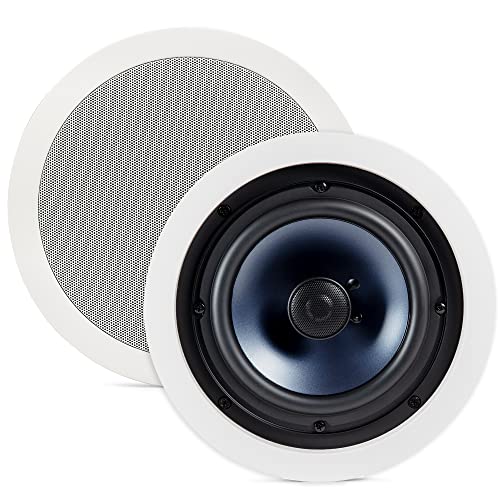
The Polk Audio RC80i is a pair of premium 2-way in-ceiling speakers featuring 8-inch round drivers, designed for seamless integration into home audio systems. With a moisture-resistant rubber seal, they thrive in damp locations such as bathrooms, kitchens, and covered porches, making them perfect for American homeowners wanting high-quality sound without visible speakers.
These speakers deliver excellent audio reproduction thanks to the Dynamic Balance woofer and 1-inch aimable tweeter, providing balanced, lifelike sound for music and movies. Installation is straightforward in three steps, with paintable grilles that disappear into your decor. Polk Audio's 50-year legacy ensures reliability and innovation.
In real-world use, the RC80i elevates everyday listening in humid spaces, offering full-bodied sound that rivals traditional bookshelf speakers. While they require an amp, their versatility and durability make them a smart upgrade. Verdict: Highly recommended for discreet, weather-resistant home audio enhancement.
The RC80i shines with its 8-inch woofer delivering full-bodied bass and midrange, complemented by a 1-inch aimable tweeter for crisp highs and detailed vocals. This setup creates a balanced sound signature ideal for everything from podcasts in the kitchen to movie nights on the porch.
Volume levels fill rooms evenly without distortion, and the mineral-filled polymer cone enhances damping for natural reproduction. Bluetooth connectivity allows wireless streaming, with stable performance when added to home systems. Expect reliable range in typical indoor setups.
Built for durability, the RC80i features a robust rubber seal that prevents moisture leaks, making it rugged for humid indoor/outdoor use like showers or patios. The 8-inch round design with paintable aluminum grilles ensures a sleek, invisible look that matches any decor.
Weighing in at a manageable size for ceiling mounts, these speakers prioritize easy handling during install. As wired in-ceiling models, they draw power from your home audio system, eliminating battery concerns for continuous playback without recharging interruptions.

Pros
- Exceptional clarity and balance from Dynamic Balance drivers
- Strong bass performance for passive bookshelf speakers
- Versatile mounting options for custom home setups
- Reliable build from a renowned audio brand
- Easy integration into expanding surround systems
Cons
- Requires an AV receiver or amplifier - not powered standalone
- Best performance in smaller rooms or as part of a full system
- No wireless connectivity - wired setup only
The Polk Audio T15 bookshelf speakers are a fantastic entry point for anyone diving into home theater or stereo audio. This pair features a 0.75-inch tweeter and 5.25-inch Dynamic Balance driver, delivering rich, immersive sound with deep bass that's surprising for their size. Wall-mountable and compact, they slot perfectly as front, surround, or stereo speakers.
Ideal for beginners or those refreshing their setup, the T15 shines in living rooms or apartments where space is at a premium. Connect them to your AV receiver with basic speaker wire, and enjoy clear vocals, detailed highs, and punchy lows during movies or music. Polk's 50-year legacy ensures reliability and quality you can trust.
In real-world use, they handle Dolby and DTS surround formats effortlessly, making action scenes come alive with balanced audio. While great standalone, they invite expansion to a full 5.1 system with T50 towers or a subwoofer for even more impact. Overall verdict: A smart, affordable choice for high-quality home audio without complexity.
Expect clear, balanced sound from the T15's precision drivers, with the 5.25-inch woofer providing deep bass response that fills rooms without distortion, even at moderate volumes. Vocals stand out crisp and natural, making dialogue in movies easy to follow during home theater sessions.
These speakers excel in surround setups, handling Dolby and DTS formats for immersive audio experiences. Volume levels scale well for apartments or family rooms, delivering detailed highs from the 0.75-inch tweeter without harshness. As passive units, performance shines when paired with a quality AV receiver.
Low-volume listening retains bass depth and clarity, perfect for late-night movies or background music. They maintain stability across frequencies, offering a neutral sound signature that adapts to various genres from rock to classical.
The T15 boasts a sleek black finish and compact bookshelf design, measuring ideally for shelves or stands without dominating space. Wall-mountable brackets make installation flexible for front, rear, or height channels in home theaters.
Built with durable materials from Polk's proven engineering, these speakers withstand everyday home use. Lightweight construction simplifies setup, though exact weight suits easy handling by one person.
As passive speakers, they require no battery or charging - power comes directly from your AV receiver for unlimited playback. This wired design ensures consistent performance without recharges, focusing energy on pure audio delivery.


Pros
- Exceptional clarity and open mid-range for vocals and details
- Compact size fits bookshelves or stands without sacrificing performance
- High-resolution audio from streaming services like Tidal and Amazon Music HD
- Dynamically balanced woofer delivers punchy, controlled bass
- Modern design enhances any living room aesthetic
Cons
- Requires external amplifier or AV receiver for operation
- Bass depth benefits from pairing with a subwoofer for movies
- No built-in power, limiting standalone use
The Polk Monitor XT15 is a pair of compact bookshelf speakers designed for versatile home audio use, excelling as surrounds or rears in a Dolby Atmos setup or as standalone music speakers on a shelf. With a 1-inch Terylene tweeter and 5.25-inch dynamically balanced woofer, they deliver Hi-Res Audio certified performance that's punchy and detailed without breaking the bank.
Ideal for American homeowners building an affordable home theater or upgrading their stereo, these speakers shine in living rooms during movie nights, gaming sessions, or casual streaming. Their 4- and 8-Ohm compatibility ensures they pair well with popular AV receivers, creating an immersive soundstage that pulls you into the action.
In real-world use, the XT15 provides open mid-range for natural vocals and instruments, making music from Spotify or Apple Music feel alive. Placement flexibility allows bookshelf or stand mounting, fitting small spaces while maintaining strong output.
Verdict: A smart choice for entry-level audiophiles seeking quality sound on a budget. Pair with other Monitor XT series for a cohesive system that rivals pricier options.
The Polk Monitor XT15 excels with punchy bass from its 5.25-inch woofer, providing tight low-end that's engaging for action movies and bass-heavy tracks without muddiness. Vocal clarity shines through the open mid-range, ensuring dialogue in films and lyrics in music stand out naturally.
Highs are crisp and extended thanks to the 1-inch Terylene tweeter, delivering Hi-Res detail from sources like Tidal or Amazon Music HD. Volume levels scale impressively with adequate amplification, filling medium rooms with immersive Dolby Atmos and DTS:X height effects when used as surrounds.
Performance remains stable across inputs, supporting high-resolution streaming for fatigue-free listening sessions that elevate everyday entertainment.
Polk Monitor XT15 boasts premium build quality with a modern Midnight Black finish that seamlessly blends into contemporary US home decor, from apartments to family rooms. The compact footprint allows versatile placement on bookshelves or stands, making it easy to integrate without dominating space.
Rugged construction ensures durability for long-term use in home environments, resisting everyday wear while maintaining acoustic integrity. No battery is needed, enabling continuous playback as long as powered by an AV receiver, perfect for all-day movie marathons or parties.
At under typical bookshelf weights, these speakers are simple to position and rearrange, offering hassle-free setup for home theater enthusiasts focused on performance over portability.
Understanding Polk Audio Sound Signatures and Treble Response
Directly answering whether are polk speakers bright requires looking beyond a simple yes or no label. Most contemporary Polk Audio speakers lean toward a balanced, slightly warm, or neutral sound profile with clear dialogue reproduction. Older vintage models sometimes earned a reputation for energetic highs, yet modern engineering emphasizes smoother high frequencies. The exact tonal balance changes depending on the specific product family, driver materials, and room acoustics.
Treble perception depends heavily on how high-frequency energy interacts with room boundaries and driving electronics. A speaker that sounds warm in a carpeted room can sound harsh in an open space with hardwood floors. Polk intentionally voices different product lines for distinct listening contexts, ranging from outdoor speakers to discreet in-wall installations. Understanding these hardware distinctions allows listeners to dial in their systems for fatigue-free entertainment.
The Acoustic Definition of Brightness in Loudspeakers
Audio terminology often uses the word bright to describe sound reproduction with an emphasis on upper midrange and high frequencies. In technical terms, brightness generally refers to an elevated frequency response between 4 kilohertz and 10 kilohertz. When this band is pushed forward, instruments like cymbals, acoustic guitar strings, and violin overtones can dominate the acoustic presentation. If balanced correctly, this emphasis creates a vivid sense of clarity and spatial openness.
Problems occur when excessive high-frequency output crosses over into harshness, sibilance, or listener fatigue. Harsh treble makes vocal sounds like s, sh, and t sound piercing or sharp during dialogue and singing. Listeners experiencing high-frequency fatigue often feel the urge to turn the volume down after brief listening periods. Distinguishing between resolving detail and genuine brightness is critical, since a well-engineered driver reveals musical texture without exaggerating upper octaves.
Tweeter Materials Across the Polk Audio Lineup
The mechanical composition of a tweeter dome plays a major role in determining how smoothly it reproduces high frequencies. Soft dome tweeters, commonly constructed from silk or treated textile fabric, naturally dampen unwanted resonances and harmonic distortion. The Polk Audio 265-RT 3-way In-Wall Speaker and the Polk Audio RC55i 2-Way Premium in-Wall 5.25″ both utilize silk dome tweeters to maintain relaxed treble. Silk domes rarely exhibit the sharp breakup frequencies found in budget rigid materials, making them ideal for treble-sensitive listeners.
Modern Polk bookshelf designs often feature specialized synthetic materials designed to extend frequency range while suppressing harshness. The Polk Audio Monitor XT20 Bookshelf Surround and Polk Monitor XT15 Pair of Bookshelf or Surround utilize one-inch Terylene dome tweeters capable of reaching high frequencies with low distortion. Terylene is a lightweight polyester fabric that offers the structural rigidity of a stiff cone with the natural damping of a soft dome. This construction yields clean treble that highlights breath sounds and room ambiance without metallic ringing.
Outdoor and specialty speakers frequently employ stiffer metal domes to handle extreme environments and broader dispersion requirements. The Polk Audio Atrium 4 Weatherproof Outdoor Speakers incorporate an anodized aluminum dome tweeter paired with a polypropylene woofer. Aluminum tweeters provide outstanding acoustic efficiency and projection, which is necessary when projecting sound into open yards without reflecting walls. In an outdoor setting, this energetic treble ensures vocal intelligibility against ambient noise, though placing such a speaker in a small reflective room could sound bright.
How Model Series Dictate Frequency Balance
Each Polk Audio product line is engineered with a specific target application and sonic voicing. The entry-level Polk Audio T15 Home Theater and Stereo Bookshelf models feature a forward-facing bass port and driver configuration designed primarily for surround duties. Because the T15 is voiced to deliver punchy vocal projection in movie setups, its upper midrange can sound forward if set up without boundary support. Positioning these cabinets near a rear wall reinforces bass response, which naturally balances the upper frequencies.
Moving into the Monitor XT family demonstrates Polk modern approach to broad-bandwidth, balanced home audio. Both the Monitor XT15 and Monitor XT20 provide a relatively neutral tonal profile supported by robust Dynamic Balance woofers. The larger 6.5-inch woofer on the XT20 delivers deeper bass extension, which acoustically anchors the high frequencies produced by the Terylene tweeter. This balance prevents the speaker from sounding top-heavy, ensuring that movie soundtracks and musical passages feel grounded.
Architectural options like the Polk Audio RC80i 2-Way Premium In Ceiling Speakers use large eight-inch woofers alongside aimable tweeters to fill entire rooms evenly. In-ceiling and in-wall speakers benefit from substantial boundary reinforcement because the drywall acts as an infinite baffle. This physical mounting arrangement boosts lower-midrange and bass output substantially, naturally offsetting high frequencies. Consequently, architectural Polk speakers rarely sound bright unless the installer aims the swiveling tweeter directly at an ear-level reflective surface.
The Critical Role of Room Acoustics and Boundary Surfaces
Room acoustics often exert a greater influence on perceived brightness than the speakers themselves. Hard surfaces like polished hardwood floors, large glass patio doors, and bare drywall reflect high-frequency sound waves repeatedly across the listening area. When these reflections bounce back into your ears slightly out of phase with direct sound, they create flutter echo and perceived treble spikes. A loudspeaker with a flat bench response can sound unpleasantly bright when operated in a room devoid of soft furnishings.
Absorptive and diffusive elements inside the room restore proper acoustic equilibrium without requiring new audio gear. Placing a thick wool rug between the listening position and the speakers absorbs initial floor bounce reflections. Drawing fabric curtains across large glass windows similarly eliminates one of the most common causes of high-frequency glare. Listeners fine-tuning speakers for gaming setups or compact entertainment spaces can achieve dramatic tonal improvements simply by introducing plush furniture and soft wall hangings.
Ceiling height and wall angles also determine how sound waves disperse and decay over time. Low ceilings tend to trap high frequencies near seated ear level, while vaulted ceilings allow treble energy to dissipate more evenly. In rooms with severe flutter echoes, targeted acoustic foam panels placed at primary reflection points on side walls can absorb harsh reflections. Evaluating your room acoustics first prevents the mistake of blaming a speaker for treble spikes caused by environmental reflections.
Speaker Placement and Toe-In Adjustments
Physical placement and speaker orientation provide powerful tools for shaping high-frequency balance. High-frequency sound waves travel in directional, beam-like patterns, whereas low-frequency waves radiate outward in all directions. When a speaker is angled inward so the tweeter points directly at the listener, a technique known as toe-in, you receive maximum direct treble energy. If your Polk speakers sound slightly too bright, reducing the toe-in angle so the speakers face straight forward immediately softens treble response.
Vertical alignment relative to your seated ear height also alters perceived brightness. Tweeters are designed to deliver optimal linearity along their direct horizontal and vertical axes. Positioning bookshelf speakers on stands so that tweeters sit slightly above or below ear level causes a natural high-frequency roll-off. For wall-mounted or in-ceiling installations, utilizing aimable tweeters allows you to bounce sound subtly off adjacent boundaries rather than firing directly into the listening chair.
Distance from surrounding walls shifts the acoustic balance between high frequencies and low frequencies. Placing a bookshelf speaker out in the middle of a room away from rear walls minimizes bass boundary reinforcement, making treble stand out prominently. Moving the cabinet within six to twelve inches of a rear wall increases lower-frequency reinforcement through boundary gain. This added low-end weight restores a warm, full-bodied foundation that prevents the high end from dominating the soundstage.
Receiver Pairing, Amplification, and Tone Controls
The electronic equipment powering your loudspeakers directly influences the resulting sonic character. Modern audio-video receivers and integrated stereo amplifiers possess their own subtle tonal tendencies, often categorized as warm, neutral, or analytical. Pairing a neutral or lively speaker with an analytical, high-feedback solid-state amplifier can push high frequencies into sharp territory. Conversely, pairing Polk speakers with warm-leaning amplification components often produces a rich, relaxed presentation with smooth highs.
Amplifier power ratings and electrical impedance compatibility also play a major role in high-frequency distortion. The Monitor XT20 and XT15 feature compatibility with four-ohm and eight-ohm loads, which demands adequate current from your receiver. When an underpowered amplifier is driven near its limits, it enters clipping, where waveform tops are sheared off into harmonic distortion. This harmonic distortion dumps harsh electrical energy directly into the tweeter, creating an agonizingly bright sound that can damage delicate voice coils.
Most modern receivers include tone controls and automated digital room correction systems like Audyssey, YPAO, or Dirac Live. Running room calibration software analyzes your specific acoustic environment and applies equalization filters to tame reflective treble peaks. If a calibration tool overcorrects and creates artificial brightness, switching to a manual equalizer curve allows you to roll off treble gently above 6 kilohertz. A minor adjustment of minus one or two decibels on the receiver treble knob often resolves subjective brightness quickly.
Source Material and Audio Mastering Factors
The quality and mastering style of your source audio files frequently dictate whether your playback system sounds bright or balanced. Low-bitrate streaming tracks and heavily compressed digital audio files often introduce digital compression artifacts that manifest as high-frequency graininess. These digital imperfections concentrate around cymbal crashes and high vocal registers, mimicking the sound of an aggressive tweeter. Testing your system with uncompressed physical media or lossless streams reveals whether harshness originated in the recording itself.
Production eras also feature vastly different audio engineering standards and target curves. Many pop and rock recordings from the late 1980s and early 1990s were mastered with elevated treble to compensate for cassette playback and car audio systems. Playing these tracks on transparent modern speakers like the Monitor XT series exposes that aggressive mastering choice immediately. Evaluating multiple recordings across diverse genres prevents jumping to premature conclusions, as a capable speaker simply communicates the information present in the mix.
Practical Troubleshooting for Harsh or Fatiguing Treble
When a loudspeaker system sounds unexpectedly thin, piercing, or lacking in weight, systematic troubleshooting isolates the underlying issue. The first check should always involve verifying speaker wire polarity across every terminal. If positive and negative leads are swapped on one speaker, the pair operates out of phase, causing significant cancellation of bass frequencies. With the low end missing, the high frequencies become overwhelmingly prominent, creating the false impression of an intensely bright speaker.
Loose wire strands or improper physical connections at the binding posts can also generate subtle electrical noise that corrupts sound quality. Inspecting gold-plated five-way binding posts ensures that bare copper wires are clamped firmly without shorting against adjacent chassis metal. For architectural speakers equipped with boundary toggle switches or tweeter attenuation settings, ensure the switches are not set to treble boost modes. Simple adjustments to these physical switches often flatten the frequency curve immediately.
Mechanical suspension compliance changes slightly during the initial hours of playback as driver surrounds settle. While speaker break-in does not radically transform a bright speaker into a dark one, woofer suspensions loosen gradually, slightly increasing bass compliance. As lower frequencies develop their full dynamic impact, the subjective balance of the speaker shifts subtly toward warmth. Even listeners evaluating portable audio equipment like portable audio equipment observe similar acoustic settling periods over the first few days of regular listening.
Selecting the Right Polk Lineup for Your Ears
Choosing the ideal Polk loudspeaker depends on your personal sensitivity to high frequencies and your room conditions. Listeners who prefer a rich, warm, and forgiving presentation should prioritize models equipped with silk dome tweeters, such as the Vanishing series or the RC architectural family. These models provide plenty of musical detail for movie dialogue and acoustic instruments while maintaining a forgiving roll-off that prevents ear fatigue. Their smooth nature works exceptionally well in rooms with hard flooring and minimalist furnishings.
Those seeking high-resolution clarity, expansive soundstages, and crisp surround sound will appreciate the Monitor XT series with its Terylene dome architecture. These speakers deliver exceptional dynamic range, Dolby Atmos compatibility, and precise imaging that brings movie soundtracks and modern video games to life. By pairing them with appropriate amplification and avoiding extreme toe-in angles, you achieve an engaging, open sound signature without crossing into abrasive brightness. Understanding how design elements, placement, and room acoustics interact ensures you achieve the exact acoustic balance your ears crave.


Write Your Review
No reviews yet. Be the first to share your experience!