


Setting up home audio often leads to questions about wireless convenience and cabinet size. Many music lovers researching an are floor speakers bluetooth guide want to know whether large floor-standing towers can stream audio directly from a smartphone or television without tangled cords. While small desktop units and portable wireless speaker options routinely come with built-in Bluetooth chips, full-size floor speakers present a very different engineering reality. Understanding how wireless connectivity interacts with cabinet design, internal amplification, and external audio gear helps prevent costly setup mistakes.
Traditional floor-standing towers are typically passive units that require an external amplifier, but modern home audio provides multiple ways to enjoy wireless streaming from the floor. Listeners can choose between powered towers with integrated wireless receivers, passive towers paired with modern Bluetooth amplifiers, or elevated bookshelf speakers mounted on heavy-duty floor stands. Each setup carries distinct advantages regarding acoustic dynamics, room aesthetics, and future component upgrades. This practical guide breaks down the core distinctions, hardware requirements, and placement methods so you can build the ideal floor audio system for your living space.

Pros
- Superior swivel adjustment improves sound directionality and stereo imaging
- Heavy-duty construction with glass base minimizes vibrations for clearer audio
- Integrated wire channels keep setups tidy and professional-looking
- Universal compatibility fits most popular bookshelf speaker brands
- Floor-protecting feet enhance versatility across room types
Cons
- Weight capacity capped at 22lbs limits use with extra-heavy speakers
- Glass base adds some weight, making relocation less convenient
- 7.8-inch top plate may not accommodate oversized speaker bases fully
Rfiver Upgraded 45° Swivel Speaker Stands are a pair of 28-inch heavy-duty floor stands crafted to elevate your bookshelf speakers off desks and shelves for better room-filling surround sound. Ideal for home theater buffs, music lovers, and anyone building a 5.1 or stereo setup in living rooms, bedrooms, or dedicated media spaces.
These stands shine in real-world use by freeing up desk space while positioning speakers at ear level. The unique 45° swivel glass top plate lets you angle drivers precisely toward your listening spot, creating a wider soundstage and more engaging 3D audio for movies and tracks.
Built with premium alloy steel poles and a stable one-piece molded glass base, they handle up to 22lbs each without wobble, reducing vibrations that muddy sound. Cable management holes keep wires hidden, delivering a polished look.
Overall verdict: A smart upgrade for cleaner, more immersive audio without complex mounts. Highly recommended for US homes chasing pro-level setups on a budget.
The 45° adjustable top plate transforms speaker placement, directing highs and mids straight at listeners for sharper vocal clarity and deeper surround immersion. Elevating to 28 inches aligns tweeters perfectly, expanding the sweet spot across your couch or seating area.
Stability from the weighted glass base cuts vibrations, preserving bass punch and detail even at high volumes. Users report noticeable improvements in stereo imaging for home theater nights or music sessions.
Compatible with any wired or wireless speaker system, these stands enhance overall performance by optimizing angles and height without signal interference.
Crafted from durable alloy steel and featuring an 11.81-inch one-piece molded glass base, these stands offer rugged elegance that fits modern lofts or classic dens. The sleek 27-inch pole with large cable holes maintains a minimalist vibe while hiding clutter.
At 22lbs capacity per stand, they securely hold substantial speakers, with a 7.8-inch square glass top and rubber pad to dampen resonances. Two foot pad choices, metal or rubber, safeguard floors from hardwood scratches to carpet indents.
No battery required for these passive stands; their robust, weather-resistant materials suit indoor use in any home environment, promising years of reliable support without recharges.

Pros
- Superior stability reduces vibrations for clearer audio
- Wide height range optimizes speaker positioning easily
- Integrated cable management for professional look
- Strong 11lbs capacity per stand handles most home speakers
- Quick assembly with included hardware and ties
Cons
- Metric screws incompatible with some Samsung Q-series rear speakers
- Heavy base requires firm floor placement
- Keyhole compatibility demands checking speaker holes first
Mounting Dream MD5401 speaker stands are a pair of heavy-duty floor mounts designed to elevate your speakers off the ground for better sound dispersion and a tidier setup. Crafted with cast iron bases and steel tubes, they support up to 11lbs per stand, making them ideal for bookshelf speakers or small floor-standing models in home theaters or living rooms.
Perfect for audiophiles and casual listeners who want to improve acoustics without wall mounts, these stands adjust from floor level up to 39 inches, letting you fine-tune height for the sweet spot in any room. The triangle-shaped base ensures they stay put, even during lively movie nights or music sessions.
In real-world use, the stands create a clean, organized look by hiding cables through built-in channels, and their multiple attachment options accommodate various speaker designs. While compatibility checks are key, they transform cluttered floors into polished audio zones effortlessly.
Overall verdict: A smart, affordable upgrade for anyone serious about home audio positioning, delivering stability and versatility that punches above its weight.
By raising speakers to optimal heights up to 39 inches, these stands enhance acoustic performance with better sound staging and imaging, directing highs and mids straight to your listening position for a wider, more immersive soundstage in home setups.
The heavy-duty construction minimizes vibrations and wobbles, preserving bass depth and vocal clarity without muddying the output from your speakers. Stable even at max extension, they maintain consistent volume levels across rooms.
Bluetooth or wired speakers mounted here benefit from secure, rattle-free positioning, with extendable tubes allowing precise adjustments for balanced frequency response tailored to your space.
The rugged cast iron base and black-finished steel tubes give these stands a durable, industrial design built to last through years of daily use, with a heavy footprint that anchors firmly on carpets or hard floors for ultimate safety.
Weighing in with substantial heft for stability, they feature a 0.6 by 1.2-inch cable hole and included ties for seamless wire management, creating a minimalist aesthetic that blends into modern American homes without drawing attention.
No batteries needed means zero charging downtime; these maintenance-free stands assemble quickly and stay ready, focusing on timeless build quality over gadgets for reliable, everyday performance.
Pros
- Wide compatibility with most bookshelf and satellite speakers
- Adjustable angle optimizes sound direction and imaging
- Vibration isolation reduces resonances for purer audio
- Generous cable routing holes for neat home theater installs
- Durable construction protects floors with metal or rubber feet
Cons
- Not compatible with round or irregularly shaped speakers
- Fixed 27.56-inch height may not suit all room layouts
- Glass top requires careful handling during setup
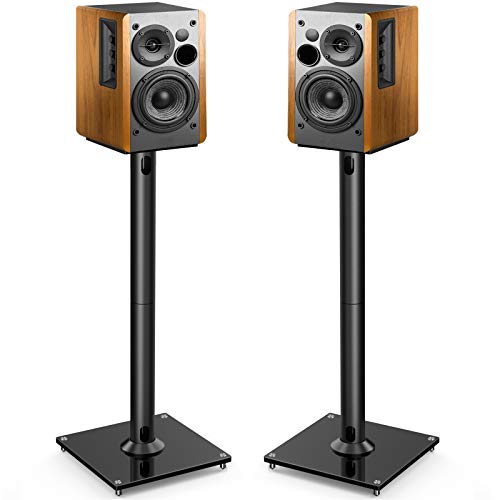
The PERLESMITH Universal Speaker Stands Pair is designed for audiophiles building or upgrading home theater systems. Standing at 27.56 inches tall, these stands support bookshelf and satellite speakers up to 22lbs from brands like Klipsch, Polk, Yamaha, Bose, and more, positioning them at optimal ear level for true surround sound.
Ideal for American consumers setting up living room cinemas or dedicated media rooms, they address common issues like floor-level speakers muddying bass or poor imaging. The 45° adjustable top plate lets you angle drivers toward your listening position, while rubber isolation pads minimize vibrations.
In real-world use, these stands transform flat soundstages into immersive experiences, with cable management keeping setups professional-looking. Easy tool-free assembly means quick deployment for movie nights or gaming sessions.
Verdict: A smart, sturdy investment for cleaner, more directed audio without breaking the bank. Highly recommended for surround sound enthusiasts.
By raising speakers to ear height, PERLESMITH stands enhance bass depth and stereo imaging, preventing floor reflections that blur low-end response. The adjustable 45° top plate fine-tunes directionality, ensuring vocals cut through clearly in movies or music.
Volume levels benefit from stable positioning, delivering full dynamics without wobble-induced distortion. Vibration-dampening pads further refine clarity, making dialogue crisp and effects punchy in surround setups.
While passive, their design supports reliable performance with any connected source, optimizing whatever speakers you pair them with for home theater excellence.
Built from high-quality metal with an 11.81-inch glass base, these stands offer rugged stability on carpet or tile, protected by optional metal or rubber feet. At 27.56 inches, the sleek black finish blends into modern US living spaces.
Cable management via 1.57 x 0.79-inch holes in the 28-inch post keeps AV setups organized and dust-free. Weighing in sturdy for their capacity, they handle 22lbs effortlessly without tipping.
No battery required; these passive stands deliver endless performance, focusing on durable design for long-term home use without recharges.

Pros
- Powerful punchy bass in a bass reflex cabinet
- Detailed, non-harsh treble from large silk dome
- High 150W power handling for dynamic volumes
- Real hi-fi crossovers for balanced frequency response
- Sturdy build with quality binding posts
Cons
- Requires a capable amplifier for full potential
- Bass depth benefits from a subwoofer addition
- Large size suits medium to large rooms best
The Dayton Audio Classic T65 is a pair of full-size floor-standing tower speakers in a handsome wood finish, standing over 39 inches tall to position the tweeter at perfect ear level. Designed for true hi-fi enthusiasts on a budget, these speakers excel in home theater systems or dedicated music listening rooms, delivering versatile performance from explosive movie soundtracks to nuanced tracks.
With dual 6.5-inch poly bass drivers in a bass reflex cabinet, the T65 produces punchy, room-filling lows that bring energy to every scene. The 1-inch silk dome tweeter adds stunning detail to highs without harshness, while real crossovers ensure seamless signal distribution for a cohesive soundstage. Gold-plated binding posts support high-quality cables, making setup straightforward for optimal audio transfer.
In real-world use, these towers handle 150W effortlessly, scaling from intimate sessions to lively gatherings. They shine for American families upgrading their AV setup without breaking the bank, offering pro-level sound at entry prices. Verdict: A smart pick for immersive home audio that punches above its weight.
Bass depth comes alive with dual 6.5-inch drivers and a large bass reflex port, generating punchy lows that fill rooms without muddiness, ideal for bass-heavy genres or cinematic rumbles. The cabinet's ample volume ensures tight, controlled response that keeps up with fast-paced content.
Vocal clarity shines through the silk dome tweeter's accurate treble reproduction, rendering lyrics and dialogue with stunning detail and smoothness. True hi-fi crossovers blend mids seamlessly, creating a wide soundstage for realistic imaging during concerts or films.
Volume levels scale impressively up to 150W handling, maintaining composure at high outputs for party vibes or intense action. Stability is rock-solid with proper wiring, delivering consistent performance across sessions.
The T65 boasts a classic wood cabinet finish that blends into any home decor, with a towering 39-inch height for stable floor placement and ear-level listening. High-quality gold-plated binding posts ensure secure, optimal connections for banana plugs or spades.
Build feels sturdy and premium, with no rattles during heavy play, though its size demands space in living rooms or dens. As passive speakers, they draw power directly from your amplifier, offering unlimited playback without battery concerns.
No charging downtime means continuous audio whenever your system is on, perfect for all-day movie marathons or weekend music binges. Weight provides solid footing, enhancing bass resonance without portability trade-offs.
Pros
- Magnetic auto-sync makes splitting and recombining effortless with zero app setup
- Genuine physical stereo soundstaging across up to five separate satellite placements
- Sleek and lightweight cylindrical body travels easily between rooms or outdoor patios
- IPX4 splash-resistant build safely handles bathroom humidity and outdoor mist
Cons
- Frequency response bottoms out around 88Hz, lacking deep sub-bass impact
- IPX4 rating protects against water splashes but cannot withstand full submersion
- Individual satellite outputs are modest when dispersed across large, open outdoor spaces
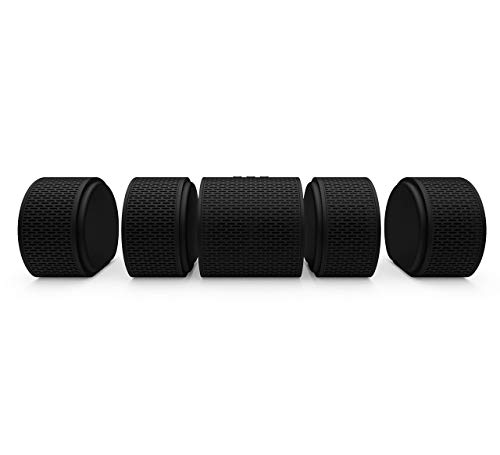
The Hover-1 Air Audio redefines versatile home audio with an inventive pull-apart architecture that transforms from a single sound cylinder into five distinct satellite speakers. Engineered for apartment dwellers, patio entertainers, and everyday listeners, it removes the clutter of typical multi-room audio installations. Instead of configuring complicated Wi-Fi mesh networks or syncing third-party mobile applications, this speaker relies on integrated magnetic contacts that link the satellites together instantly.
In real-world use, this modular construction changes how you experience casual background audio and dinner music. You can keep the unit assembled as a centralized 24-watt soundbar for a focused soundstage, or detach the magnetic units and scatter them around your kitchen, living room, and deck to keep the tunes playing seamlessly as you move around. The lack of software friction is refreshing, allowing any standard Bluetooth playback source to broadcast simultaneously across all separated modules without lag or dropped connections.
While individual satellite modules are tuned for ambient coverage rather than high-decibel outdoor parties, their ability to create true spatial separation is remarkably effective indoors. If you love clever engineering, minimal setup times, and adaptable soundscapes for social gatherings, the Air Audio delivers unmatched versatility that standard single-enclosure speakers simply cannot replicate.
When unified into a single chassis, the speaker combines its drivers to generate 24 watts of power, producing a well-balanced acoustic signature focused on clear mids and clean highs. The AirBase driver operates across an 88Hz to 17kHz frequency range, providing crisp vocal articulation for podcasts and acoustic tracks. While you will not feel bone-rattling sub-bass on heavy electronic or hip-hop tracks, the low-end remains tight and punchy without distorting upper-register details at medium-to-high volumes.
The true performance standout is the channel separation. By physically pulling the magnetized satellites apart, you achieve authentic physical stereo staging that artificial digital signal processing cannot mimic. Bluetooth wireless transmission remains stable throughout typical indoor footprints, maintaining synchronization across the dispersed satellites without audio drift or annoying echo effects.
Sporting a minimalist cylindrical silhouette finished in sleek black, the speaker measures 12.5 inches in length and weighs a manageable 2.6 pounds. Built with IPX4 water resistance, the chassis safely shrugs off errant water drops, bathroom humidity during hot showers, and surprise rain drizzles on the patio. Its magnetic docking mechanisms are surprisingly robust, snapping together with a tactile, satisfying click that feels engineered to survive repeated daily use.
Charging and power distribution are simplified via internal contacts when the device is assembled as one column. USB charging ensures you can easily juice up the entire array from standard power banks or wall adapters. For weekend hangouts or moving from room to room through a normal workday, the battery supply provides reliable cord-free playback, though keeping the satellites docked together maximizes overall stamina for all five internal cells.
Understanding Wireless Capabilities in Floor-Standing Audio Systems
The straightforward reality of floor-standing audio is that most traditional tower speakers do not have Bluetooth built into their enclosures. Floor speakers historically belong to the passive category, housing acoustic drivers and crossovers while lacking internal amplification and wireless receivers. While listeners accustomed to smartphones expect wireless connectivity in every speaker, large towers operate on different electrical principles. Determining whether a floor speaker can stream wirelessly requires understanding the distinction between passive designs, active systems, and hybrid setups.
Passive Floor Towers Versus Active Wireless Speakers
A classic floor-standing tower speaker is a passive component engineered to receive amplified audio signals through physical speaker wire. For example, models like the Dayton Audio Classic T65 Floor-Standing Tower feature dual poly woofers, a silk dome tweeter, and gold-plated binding posts, but they house no wireless pairing circuitry. These speakers rely entirely on an external receiver or integrated stereo amplifier to generate sound and manage input sources. Because passive towers have no power cords connecting to a wall outlet, they cannot power an internal Bluetooth receiver on their own.
Active or powered floor-standing speakers contain built-in amplification modules, line-level inputs, and digital processing chips inside the main cabinet. These powered towers plug directly into a standard household electrical outlet, which allows manufacturers to include integrated Bluetooth receivers. A powered pair often houses all electronics in one master speaker, which then feeds the second passive companion speaker through an included cable. While active floor speakers deliver the convenience of immediate wireless streaming, they represent a smaller segment of the floor-standing speaker market compared to traditional passive towers.
Choosing between passive and active architectures involves weighing convenience against long-term flexibility. Passive speakers can last for decades because their physical driver cones, surrounds, and crossovers rarely experience digital obsolescence. If a wireless communication protocol becomes outdated, owners of passive towers simply replace an external streaming component rather than the entire speaker system. Active speakers eliminate standalone amplifiers, but an electronic failure inside the internal amplifier board can render the entire system unusable.
How to Connect Bluetooth to Traditional Floor Speakers
Connecting a passive floor speaker to a smartphone or tablet requires introducing a wireless receiver into the signal chain before audio reaches the drivers. The most reliable method is using a modern stereo receiver or AV receiver that comes equipped with native Bluetooth capability. The receiver captures the wireless stream from your phone, decodes the digital signal, and amplifies the sound to drive the tower binding posts. This approach allows high-power speakers, such as towers with substantial 150-watt power handling capacities, to perform at their full dynamic potential.
Listeners with older legacy receivers that lack wireless features can add an external Bluetooth audio adapter or dedicated streamer. These standalone converter boxes connect to an available auxiliary or RCA input on the amplifier using standard stereo patch cables. When your phone pairs with the adapter, the unit outputs an analog line-level signal that the amplifier treats like a CD player or turntable input. This practical upgrade brings wireless convenience to vintage audio gear without sacrificing the dynamic sound of full-size tower cabinets.
Another popular solution involves using compact desktop amplifiers that feature integrated Bluetooth receivers. These miniature digital amplifiers fit neatly onto a media console while providing enough clean wattage to drive efficient floor-standing towers. While smaller than full-size audio components, these micro-amplifiers bridge the gap between minimalist wireless living and traditional hi-fi acoustic fidelity. Selecting an amplifier with compatible impedance and sufficient continuous wattage ensures your passive towers deliver punchy bass and clean high frequencies without distortion.
The Floor Stand Solution for Wireless Audio Systems
Many homeowners searching for floor-standing Bluetooth speakers are actually looking for a floor-based setup that elevates compact wireless speakers to optimal listening height. Standalone bookshelf speakers and smart wireless monitors often include excellent wireless functionality, but placing them flat on low tables compromises their acoustic output. Dedicated floor stands provide a stable platform that positions the tweeter close to seated ear level, which noticeably sharpens vocal clarity and stereo imaging. This combination gives listeners the visual presence and acoustic benefits of floor positioning alongside the technological perks of active wireless audio.
Hardware accessories like the Mounting Dream Height Adjustable Speaker Stands allow listeners to customize the exact elevation of compact satellite or rear surround speakers up to 39 inches. This stand model employs a heavy-gauge triangular cast iron base that supports up to 11 pounds per side while maintaining stability on hard floors and carpet. By elevating wireless satellite speakers to ear level, users avoid audio obstruction caused by furniture or room decor. Similar to how listeners optimize Bluetooth PC audio systems for nearfield clarity, elevating wireless speakers on adjustable tubes creates an unobstructed acoustic path to the primary listening position.
Heavier active bookshelf speakers require wider top plates and higher load ratings, making designs like the PERLESMITH Universal Speaker Stands Pair or the Rfiver Upgraded 45° Swivel Speaker Stands Pair practical choices. Both of these floor stand models accommodate speakers weighing up to 22 pounds and incorporate tempered glass bases with interchangeable metal carpet spikes and rubber feet. A standout acoustic feature found on these stands is a 45-degree adjustable top plate, which allows listeners to toe in their wireless speakers toward the central seating sweet spot. Fine-tuning speaker orientation dampens cabinet vibrations through rubber isolation pads while maximizing spatial depth and surround envelopment.
Managing Cables and Power for Floor-Standing Setups
A common misconception among first-time audio buyers is that wireless speakers eliminate all physical wires completely. In truth, wireless transmission refers strictly to the audio signal path traveling from the playback source to the speaker or amplifier. Active speakers placed on floor stands still require physical power cords running to wall outlets to operate their internal power supplies. Passive floor towers require traditional speaker wire running back to a central amplifier or receiver, meaning physical cables remain an inevitable part of high-performance sound systems.
Managing these essential wires is critical for maintaining an attractive living room aesthetic and preventing accidental tripping hazards. Quality floor stands address this challenge by incorporating hollow central columns with dedicated cable routing entry and exit ports. For instance, both the Rfiver and PERLESMITH floor stand designs provide internal post openings measuring roughly 1.6 inches high by 0.8 inches wide to route thick speaker cables out of sight. Concealing cords inside steel tubes preserves the clean, minimalist appearance that inspires many people to seek out wireless audio hardware in the first place.
When running cables along baseboards or under rugs to reach floor speakers, proper gauge selection protects overall sound fidelity. Thicker 14-gauge or 16-gauge oxygen-free copper wire minimizes signal resistance over long runs, ensuring the amplifier maintains tight control over heavy woofer excursions. Using quality banana plugs to terminate speaker wires at both the amplifier terminals and speaker binding posts provides secure contact and prevents stray wire strands from shorting out the equipment. Clean cable routing also makes it much easier to vacuum, rearrange furniture, or adjust speaker positioning over time.
Modular Wireless Options Versus Dedicated Floor Towers
Beyond traditional towers and stand-mounted bookshelf monitors, recent innovations in consumer audio have introduced modular, battery-powered wireless sound systems. Unique designs such as the Air Audio The Worlds First Pull-Apart speaker demonstrate how wireless tech can be deployed flexibly across living spaces without permanent furniture or floor mounts. This distinctive magnetic cylinder can function as a single 24-watt mono or stereo unit, or separate into multiple independent satellite speakers placed in different rooms. With an IPX4 water resistance rating and magnetic auto-pairing, modular units prioritize portability and versatile casual listening over stationary hi-fi fidelity.
Comparing modular battery-operated speakers against stationary floor towers highlights distinct audio philosophies and lifestyle priorities. Portable multi-piece speakers offer tremendous convenience for outdoor gatherings, backyard patios, or impromptu listening sessions where running physical power cords is impractical. However, small battery-powered drivers naturally struggle to reproduce the deep sub-bass frequencies, wide dynamic headroom, and room-filling volume generated by large wooden tower cabinets. Enthusiasts seeking realistic home theater explosions or authentic concert-level music reproduction will consistently find superior acoustic depth in dedicated floor-standing cabinets.
Recognizing how you spend your listening time determines whether modular wireless hardware or dedicated floor towers offer the best return on investment. If your primary goal is background music while moving from the kitchen to the patio, lightweight portable hardware satisfies that need effortlessly. If your focus is dedicated movie nights, immersive gaming, or critical music appreciation in a primary living room, permanent floor-standing towers paired with a wireless-capable receiver provide far superior soundstage width and acoustic impact.
Wireless Codecs, Latency, and Acoustic Performance
When utilizing Bluetooth to stream audio to full-size floor speakers, the underlying compression codec plays a noticeable role in overall sound quality. Standard Bluetooth transmission relies on the Subband Coding (SBC) codec, which compresses digital audio data to ensure stable transmission across limited bandwidth. On compact portable speakers, the loss of high-frequency detail and subtle reverberation caused by SBC compression often goes unnoticed due to small driver limitations. On resolving tower speakers equipped with 1-inch silk dome tweeters and dedicated crossovers, compressed audio artifacts like flattened dynamics and brittle treble can become audible.
Upgrading your wireless signal path to higher-quality codecs like AAC, aptX, or LDAC significantly preserves musical resolution and harmonic richness. Modern external Bluetooth receivers and integrated amplifiers frequently support these advanced streaming protocols to deliver near-lossless wireless transmission. For listeners building high-end stereo setups, adding Wi-Fi network streaming or AirPlay alongside Bluetooth allows direct transmission of uncompressed 24-bit audio files over home network routers. Wi-Fi streaming bypasses Bluetooth bandwidth bottlenecks entirely and prevents playback interruptions when your phone receives calls or notifications.
Latency is another critical technical variable to evaluate when pairing wireless audio hardware with television displays or gaming systems. Standard Bluetooth connections can introduce an audio delay ranging between 100 and 200 milliseconds, causing noticeable lip-sync mismatch during movies and television dialogue. If your floor speakers form the front soundstage for your living room media center, look for Bluetooth receivers that feature aptX Low Latency support or connect your TV to the amplifier using an optical or HDMI eARC cable instead. Reserving Bluetooth strictly for casual music listening while using wired digital connections for video content delivers the best balance of convenience and synchronized precision.
Room Placement and Practical Audio Decision Steps
Maximizing the acoustic performance of any floor-standing speaker system requires careful attention to physical room boundaries and boundary reinforcement. Tower speakers utilizing rear bass reflex ports need adequate breathing room away from back walls and room corners to avoid muddy, boomy bass reproduction. Placing towers at least 12 to 24 inches away from rear drywall allows the port to vent properly, producing tight, punchy low-frequency transients. The substantial internal cabinet volume of a full-size tower, such as a 39-inch wooden enclosure, generates deep acoustic resonance that sounds cleanest when the speaker interacts predictably with room geometry.
Achieving a balanced stereo soundstage requires positioning your left and right floor speakers in an equilateral triangle with your primary listening seat. Angling or toeing the speakers inward slightly toward your ears focuses the high frequencies produced by the tweeters, creating a tangible center phantom image where vocals seem to float between the two cabinets. When using stand-mounted wireless speakers, the 45-degree swivel functionality found on premium stands allows you to dial in this toe-in angle without moving the heavy base plate. Proper alignment ensures that subtle stereo panning effects and wide orchestral arrangements translate accurately across your room.
Mechanical decoupling from the floor surface is the final physical factor that directly shapes audio clarity and bass definition. Hardwood, laminate, and tile floors can rattle or transmit vibrational energy into the room structure if speakers sit directly on bare materials without damping pads. Utilizing dense rubber feet protects delicate flooring while absorbing unwanted cabinet resonance before it muddies the acoustic presentation. On plush carpeted surfaces, installing sharp metal spikes couples the speaker mass directly to the solid subfloor beneath the rug, preventing the cabinet from rocking during intense bass passages.
Selecting the right path toward floor-standing wireless sound depends on your existing home equipment, room layout, and personal listening habits. If you already own an AV receiver or stereo amplifier, adding passive tower speakers and an external Bluetooth adapter is the most modular and acoustically robust upgrade route. If floor space or budget favors compact gear, pairing active wireless monitors with adjustable floor stands delivers clean ear-level sound without bulky component racks. Taking a methodical approach to your equipment matching, cable management, and room placement ensures you achieve dynamic, room-filling sound with complete wireless convenience.


Write Your Review
No reviews yet. Be the first to share your experience!