
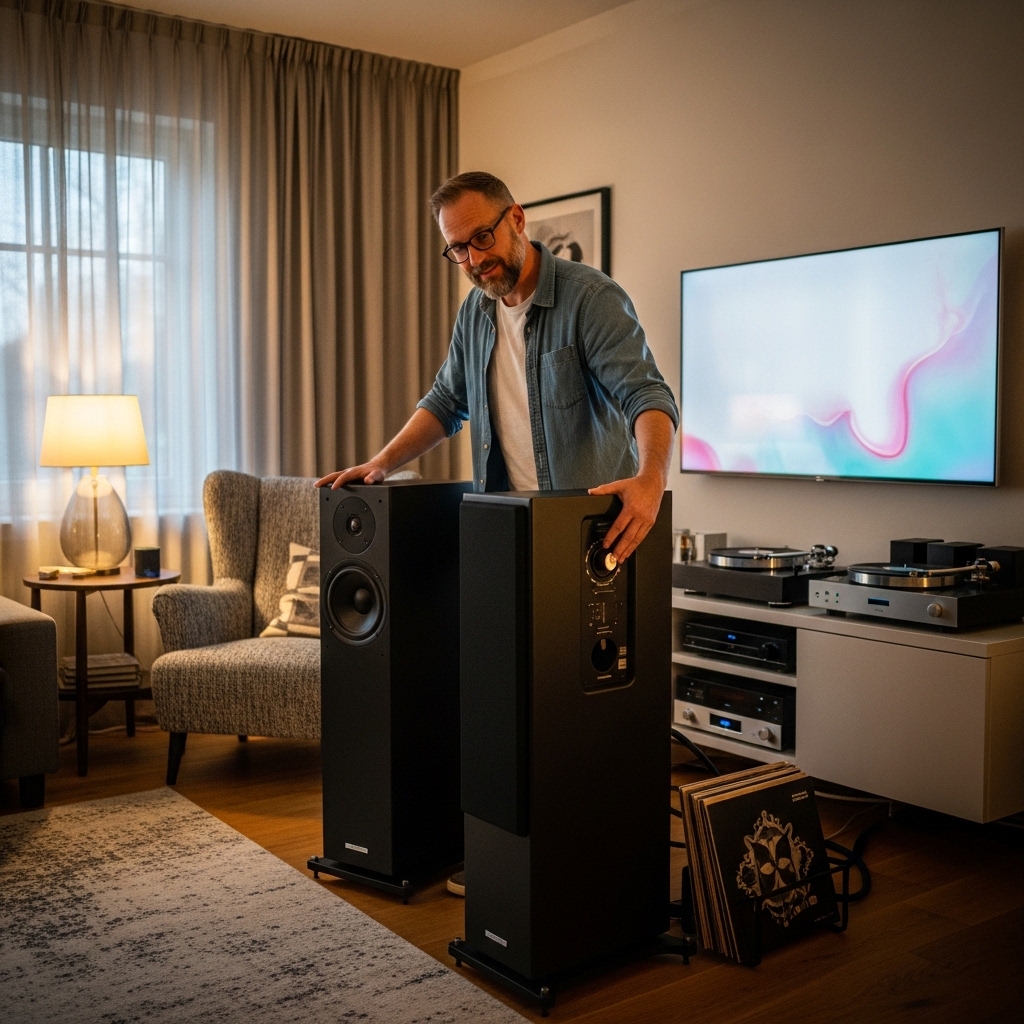

Off-grid travel, beach trips, and remote camping often raise practical questions about whether your portable sound gear can function without a home router or cellular data. The short answer to whether can you use a bluetooth speaker without wifi is an unequivocal yes. Bluetooth technology operates as an independent, short-range radio link that pairs your source device directly with the speaker enclosure. Because this connection communicates peer-to-peer across the 2.4 GHz spectrum, your playback does not rely on a local network, internet access, or external router hardware.
Listeners who venture into state parks or open water frequently choose rugged gear like outdoor Bluetooth speaker with subwoofer options to secure deep bass and reliable playback beyond the reach of standard broadband. Knowing how your speaker functions away from Wi-Fi helps you prepare playlists in advance and pick the right enclosure for your listening habits. Some speakers offer dedicated offline Bluetooth pairing alongside hybrid home streaming capabilities. Understanding these core wireless distinctions guarantees dependable music playback wherever your daily routine takes you.

Pros
- Incredible portability with a lightweight, golf-ball-sized aluminum chassis
- Fascinating acoustic versatility that brings hollow surfaces and instruments to life
- Supports wireless dual-pairing for enhanced stereo imaging
- Premium unboxing experience packaged in an elegant presentation gift box
Cons
- Modest 3-hour battery life requires frequent recharging during long listening sessions
- Acoustic fullness and bass output depend entirely on the resonant quality of the surface
- Lacks water resistance ratings for poolside or outdoor splash hazards
The Anything Speaker reimagines personal audio by discarding traditional speaker cones in favor of an acoustic bone conduction vibration transducer. Instead of pushing air through an internal diaphragm, this miniature puck transfers sonic energy directly into whatever physical surface it rests upon. It targets mobile listeners, tech enthusiasts, and minimalist travelers who want to enjoy casual background music without lugging around heavy gear.
In real-world use, exploring your acoustic environment becomes half the fun. Placing the unit against a hollow wooden desk creates a rich, warm tone with noticeable midrange presence, while attaching it to an empty cardboard box unlocks surprisingly loud, room-filling sound. The acoustic profile shifts dramatically depending on whether you place it on a glass tabletop, a guitar body, or a plastic cooler, giving listeners a uniquely hands-on audio experience.
For those looking to expand their listening stage, the speaker includes built-in wireless dual-pairing functionality. Connecting two units simultaneously establishes true left and right stereo channels, effectively doubling the acoustic output and providing an engaging three-dimensional soundstage. It works wonderfully on hotel nightstands, office desks, or quiet patio setups where ambient sound is desired.
While it is not designed to replace high-power bookshelf speakers or deep-bass boomboxes, the Anything Speaker serves as an exceptionally fun, pocket-friendly acoustic gadget. Its solid metallic craftsmanship and interactive sound generation make it a memorable travel companion and a creative audio gift.
Because the Anything Speaker operates via surface induction, its frequency response is dynamic and fundamentally tied to the physical properties of the contact medium. Solid, dense surfaces like marble or thick granite emphasize crisp upper mids and bright treble while yielding minimal bass. Conversely, hollow wooden enclosures, acoustic guitars, and thin-walled cardboard act like passive soundboards, producing warm lower-mid resonance and respectable body.
Volume output scales directly with surface area. Placed on an expansive hollow plane, the vibration motor drives 360-degree omnidirectional sound that fills a small-to-medium room with crisp podcast dialogue and acoustic melodies. While extreme sub-bass frequencies are naturally limited by the laws of physics, pairing two units together in stereo mode creates genuine depth and spatial dimension that outperforms standard micro-speakers.
The Anything Speaker features an aerospace-grade aluminum enclosure finished in clean silver, measuring an ultra-portable 1.5 x 1.5 x 1 inches. Its rigid metallic body provides the mass and structural stiffness necessary to direct vibration downward into surfaces rather than dampening it internally. Despite being smaller than a standard golf ball, it feels reassuringly solid and well-machined.
Wireless connectivity is handled via standard Bluetooth, offering quick pairing and stable streaming across Android, iOS, and computer platforms. Power is delivered by an internal rechargeable lithium-ion battery engineered for approximately three hours of continuous playback per charge, making it ideal for compact travel packs, desktop use, and spontaneous listening sessions.

Pros
- Powerful bass and detailed highs from dual tweeters and large passive radiator
- Versatile connectivity including Bluetooth, Wi-Fi, and multi-room support
- Intuitive controls and app for personalized sound adjustments
- Stylish retro build with premium materials and comfortable handle
Cons
- No waterproof or dustproof rating, best for indoor or dry outdoor use
- 8-hour battery may require recharging for extended all-day events
- Larger size limits ultra-portability compared to smaller Bluetooth options
The JBL Authentics 300 is a portable speaker that blends retro styling with modern audio tech, featuring a cast-aluminum handle, leather-like enclosure, and Quadrex grille for a premium look that complements any home decor.
It's designed for music lovers who want powerful sound for house parties, casual gatherings, or moving audio from room to room. With stereo output, Wi-Fi streaming, and voice assistant support, it shines in multi-room setups via Alexa or Google Home apps.
In real-world use, it fills medium to large spaces with balanced audio, where the woofer and passive radiator provide thumping bass without muddiness, and tweeters ensure clear vocals. Bluetooth pairing is quick, and the JBL One app adds EQ tweaks for tailored listening.
Overall, this speaker excels for those prioritizing style, connectivity, and home-focused performance, earning high marks for its versatile, crowd-pleasing sound.
Expect deep, room-shaking bass from the 5.25-inch woofer paired with a 6.5-inch passive radiator, delivering punchy lows perfect for bass-heavy genres like hip-hop or EDM without overpowering mids.
Vocal clarity shines through 25mm tweeters, keeping details crisp even at high volumes, with stereo sound filling spaces evenly for an immersive experience during parties or movie nights.
Bluetooth offers stable pairing up to 30 feet, while Wi-Fi options like AirPlay and Chromecast ensure glitch-free streaming over longer distances, supporting high-res audio from services like Spotify.
The retro-inspired design uses durable materials like a leather-like enclosure and metal handle, making it sturdy for home use but not ruggedized with any IP rating for water or dust exposure.
Weighing in as a mid-sized portable unit, the integrated handle makes carrying simple for short trips around the house or patio, though it's better suited for semi-stationary setups than backpacking.
Battery life hits 8 hours on a charge, ideal for full-day home sessions, with quick recharging to minimize downtime; pair multiple units for synchronized playback across rooms.
Essential Guide to Operating Bluetooth Speakers Without Wi-Fi
Listeners can operate any standard Bluetooth speaker completely without an active Wi-Fi network. Bluetooth creates an autonomous direct wireless link between your phone, tablet, or laptop and the playback hardware. This protocol transmits digital audio packets locally through 2.4 GHz radio waves, bypassing routers, modems, and internet infrastructure entirely. As long as your source device has stored media or a cellular signal, you can enjoy seamless playback in remote cabins, public parks, or daily commutes.
Understanding Point-to-Point Bluetooth vs. Local Wi-Fi Streaming
Direct Bluetooth audio relies on a point-to-point wireless transmission standard designed for short-range personal area networks. When you pair a smartphone with a wireless speaker, both chips establish an exclusive master-slave connection called a piconet. This transmission transfers digital audio data directly across high-frequency radio bands without touching any central hub or local area network. In contrast, Wi-Fi audio systems require a shared local area network router to pass music data between devices or pull audio directly from internet servers.
Because Wi-Fi streaming depends on local network topography, a dropped broadband connection or weak router signal halts playback entirely. Bluetooth eliminates that point of failure by removing network gateways from the playback path. The transmitter in your phone compresses the audio stream, sends the data across the airwaves, and the speaker receiver decodes it in real time. This technical independence makes Bluetooth the primary standard for mobile audio, backyard gatherings, and travel.
What Works and What Fails During Completely Offline Playback
Using a Bluetooth speaker without Wi-Fi does not automatically mean you have access to every audio feature. Stored audio files, such as MP3 tracks, downloaded audiobooks, and offline podcast episodes, play without any interruptions. Major streaming platforms allow paid subscribers to download albums directly to device memory, which enables high-quality local playback off the grid. As long as the playback source resides inside your phone storage, the speaker will reproduce it flawlessly.
Cloud-dependent features, however, cease functioning once you move beyond Wi-Fi or cellular range. Live internet radio stations, online streaming libraries that have not been cached, and web-connected smart assistants cannot respond without an active internet gateway. If your speaker features built-in voice assistance like Amazon Alexa or Google Assistant, voice commands requesting weather updates or online searches will fail offline. Recognizing the difference between local radio pairing and cloud connectivity helps prevent frustrating playback surprises in remote areas.
Hybrid Home Speakers: How Models Like the JBL Authentics 300 Balance Both Modes
Certain home audio systems combine robust local Bluetooth connectivity with integrated Wi-Fi streaming to provide flexible listening options. The JBL Authentics 300 Portable Wireless Bluetooth illustrates how a hybrid speaker functions across different environments. Within range of a home network, this speaker connects through built-in Wi-Fi to support AirPlay, Chromecast built-in, Alexa Multi-Room Music, and Spotify Connect. These internet-based protocols stream audio directly from network services with high resolution while leaving your smartphone free to take calls.
When you carry this retro-styled speaker outside your home, the unit seamlessly shifts to direct Bluetooth mode. Its integrated cast-aluminum handle and built-in rechargeable battery providing up to eight hours of playtime make it fully portable for outdoor use. The internal acoustic architecture, featuring dual 25mm tweeters, a 5.25-inch woofer, and a down-firing 6.5-inch passive radiator, continues to deliver rich stereo sound regardless of whether internet access exists. On-speaker rotary knobs allow you to adjust volume, treble, and bass directly without opening mobile applications or connecting to a router.
Ultra-Portable Audio: Pure Bluetooth Engineering in the Anything Speaker
At the opposite end of the spectrum, specialized mini audio devices strip away heavy network hardware entirely to maximize portability. The Anything Speaker – Portable Mini Bluetooth operates exclusively through point-to-point Bluetooth, measuring a mere 1.5 inches across. Instead of relying on traditional speaker cones and magnetic diaphragms, this device uses bone conduction induction vibration technology to transform physical surfaces into acoustic soundboards. Placing this compact unit on a hollow wooden table, an acoustic guitar, or an empty cardboard box turns that surface into a resonating speaker.
Because it contains no complex Wi-Fi radios or cloud-dependent firmware, pairing and operating this travel-sized unit remains straightforward anywhere on earth. The internal battery provides up to three hours of continuous playback on a single charge, making it ideal for hotel rooms, camping setups, or desktop use. Its diminutive size allows travelers to slip the speaker into a pocket or travel bag without adding noticeable bulk. For listeners seeking audio playback away from wall outlets and home networks, this vibration design demonstrates the sheer versatility of dedicated Bluetooth hardware.
Step-by-Step Bluetooth Pairing Away From Home Networks
Pairing a Bluetooth speaker when you are away from home follows a simple and predictable sequence. First, turn on your speaker and activate its pairing mode, which is typically indicated by a flashing LED indicator or a distinct audio chime. Next, open the settings menu on your smartphone or source device and ensure that Bluetooth is toggled on. Your phone will scan the local 2.4 GHz spectrum and display the speaker name under available devices.
Select the speaker name on your screen to authorize the initial handshake between both chipsets. Once paired, the speaker LED usually turns solid, confirming that a stable piconet connection is established. This pairing profile remains stored in your phone memory, allowing the speaker to reconnect automatically whenever both devices power on within range. You can execute this complete process in an open field, on a boat, or inside an airplane cabin without transmitting a single byte of internet data.
Managing Mobile Playback and Power Consumption Off the Grid
Operating audio gear in the wilderness or on the road requires deliberate management of your source device battery and media files. Transmitting audio via Bluetooth consumes a moderate amount of power from your phone battery, while cellular data searching drains energy rapidly in weak signal areas. Switching your phone into airplane mode while leaving the Bluetooth radio active prevents constant tower searching, significantly extending battery life. This operational tactic keeps your music playing for hours longer during remote excursions.
Downloading your playlists at standard or high quality prior to leaving home also prevents unexpected buffering and excessive battery drain. High-resolution streaming over poor cellular connections creates stuttering playback and generates excess heat inside your mobile device. Pre-caching music ensures that your phone processor only has to read local storage and feed the Bluetooth codec. Taking a few minutes to organize offline albums before leaving Wi-Fi coverage guarantees uninterrupted music throughout your trip.
Multi-Speaker Linking Without a Central Wi-Fi Network
Many listeners assume that connecting two speakers simultaneously requires a Wi-Fi multi-room audio system. While Wi-Fi protocols like Apple AirPlay or Google Home allow multi-room synchronization inside a house, dedicated Bluetooth speakers can link directly to each other without network hardware. Through True Wireless Stereo (TWS) or proprietary wireless bridging, one primary speaker receives the Bluetooth audio stream and rebroadcasts the signal to a secondary unit. Exploring a dual speaker setup guide reveals how direct wireless pairing creates true left-and-right channel separation off the grid.
The Anything Speaker platform provides a clear example of dual wireless connectivity functioning completely independent of Wi-Fi. Users can wirelessly connect two of these vibration speakers simultaneously to build an immersive 3D stereo soundstage in any setting. Both mini speakers synchronize their vibration frequencies automatically, doubling acoustic volume and dispersion without requiring any router or mobile app configuration. This peer-to-peer linking capability proves that expanded stereo sound is fully achievable in remote outdoor locations.
Sound Coverage and Output Limitations in Open Environments
Moving audio gear outside of enclosed rooms alters sound wave propagation and bass perception. Walls and ceilings normally reflect acoustic energy back toward the listener, reinforcing low frequencies and maintaining perceived loudness at lower amplifier outputs. In open outdoor settings, acoustic energy dissipates rapidly, requiring larger drivers and dedicated passive radiators to produce satisfying volume. Reviewing recommendations for a Bluetooth speaker for large spaces helps buyers understand how driver displacement impacts outdoor coverage.
A hybrid speaker like the JBL Authentics 300 handles outdoor spaces effectively because its 5.25-inch woofer and dual tweeters push significant acoustic volume into open air. Conversely, miniature vibration speakers like the Anything Speaker rely heavily on the density and internal volume of the surface beneath them. Setting a bone conduction unit on a large hollow storage container or a wooden picnic table creates broader acoustic output than placing it on dense concrete. Matching your speaker hardware to the physical acoustic environment ensures clear sound without pushing amplifiers into audible distortion.
Bluetooth Codecs, Transmission Range, and Physical Obstacles
Bluetooth transmissions operate across short distances, with standard devices maintaining reliable connections up to roughly 30 feet under clear conditions. Physical barriers like solid concrete walls, metal partitions, and dense tree cover absorb radio signals, reducing operational distance. Water also absorbs 2.4 GHz radio frequencies efficiently, meaning that human bodies standing between the phone and speaker can induce momentary audio dropouts. Keeping an unobstructed line of sight between your phone and speaker prevents signal interruption.
Audio fidelity over Bluetooth is shaped by compression codecs such as SBC, AAC, or higher-bitrate alternatives supported by your hardware. While Wi-Fi streaming can deliver uncompressed 24-bit high-resolution audio over local bandwidth, Bluetooth compresses audio packets to fit narrower radio channels. For everyday outdoor listening, casual gatherings, and travel podcasts, standard Bluetooth codecs provide clean and dynamic audio that satisfies the vast majority of listeners. The minor difference in raw fidelity is a practical tradeoff for total independence from network cables and routers.
Battery Maintenance and Outdoor Durability for Off-Grid Audio
Relying on Bluetooth speakers away from power outlets demands consistent battery care to preserve internal lithium-ion cells. Operating rechargeable speakers in direct sunlight or leaving them locked inside hot vehicles accelerates thermal degradation and reduces overall cycle life. Extreme cold weather temporarily slows chemical reactions inside lithium batteries, causing reported runtime to drop faster than expected. Storing and operating your portable speakers within moderate temperature ranges protects battery health across multiple seasons.
To keep playback running during multi-day camping trips, pairing your speaker with an external USB power bank provides reliable charging support. Always verify that your charging cables match the manufacturer voltage specifications and inspect ports for dirt or moisture before plugging in. If your speaker lacks an explicit dust or water resistance rating, keep it shielded from rain, splashing water, and fine sand. Following basic protective precautions ensures that your portable sound gear remains ready for every off-grid adventure.
Operating your portable sound equipment without a Wi-Fi connection offers the ultimate freedom to enjoy music anywhere. Whether you rely on the bone-conduction innovation of miniature travel units or the robust acoustic power of hybrid home speakers, Bluetooth delivers direct, dependable wireless playback. By downloading your favorite audio files in advance, monitoring device battery levels, and maintaining a clear line of sight between paired devices, you can create a dependable personal soundtrack wherever your journey leads.


Write Your Review
No reviews yet. Be the first to share your experience!