


Anyone browsing architectural or patio audio has likely encountered Earthquake Sound alongside legacy hi-fi brands. Listeners often wonder if are earthquake sound speakers any good for daily home entertainment or if the brand focuses strictly on sheer bass volume. Earthquake Sound built its reputation around car audio subwoofers and high-impact home theater bass transducers, which gives their architectural and outdoor lines a distinct emphasis on durability and full-range presence. Integrating these models with quality passive speakers for dedicated amplification allows homeowners to assemble reliable distributed sound systems across backyards and living spaces without overcomplicating hardware.
Evaluating whether these speakers fit your project requires looking beyond raw volume output. Architectural in-ceiling pairs and weatherized outdoor cabinets demand proper amplifier pairings, clean source equipment, and thoughtful placement to deliver balanced acoustics. Buyers who prioritize clean dialogue, weather resistance, and solid low-frequency coverage will find that Earthquake Sound delivers practical engineering tailored to specific installation goals. Exploring their driver designs, cabinet construction, and real-world system requirements reveals where these speakers excel and where different audio gear might suit your needs better.




Evaluating Earthquake Sound Speakers: Performance, Build Quality, and Real-World Value
Earthquake Sound speakers are dependable investments for listeners who need robust audio across patios, backyards, and distributed ceiling setups. They deliver dynamic sound with punchy bass, sturdy weather-resistant enclosures, and clean architectural designs that blend smoothly into home decor. Their real-world reliability and energetic tuning make them formidable performers in everyday residential installations.
The Direct Verdict on Earthquake Sound Performance
Determining whether are earthquake sound speakers any good comes down to matching the brand’s sonic strengths with your listening goals. Earthquake Sound designs equipment that prioritizes durability, dynamic power handling, and clean acoustic projection over sterile laboratory neutrality. If you want outdoor speakers that overcome backyard noise or in-ceiling speakers that provide rich sound without distortion, this manufacturer delivers consistent results. Their lineup focuses on practical audio needs.
The brand does not build fragile audiophile monitors that require pinpoint acoustic room treatment. Instead, Earthquake Sound builds components capable of handling environments where walls, furniture, wind, and open space absorb audio energy. Their speakers maintain solid clarity when driven by standard multi-zone amplifiers or receivers. Listeners who value balanced bass, rugged exterior housings, and straightforward wiring will appreciate these models.
Engineering Heritage and Audio Voicing
Earthquake Sound established its reputation in mobile audio and home theater subwoofers before expanding into architectural and outdoor speakers. This foundation in low-frequency reproduction heavily influences how the brand engineers its full-range drivers. Their woofers feature reinforced cone structures, resilient rubber surrounds, and heavy motor assemblies designed to control cone excursion. Even in compact ceiling speakers or outdoor brackets, this low-end heritage provides a warmer, fuller sonic foundation.
The company also emphasizes passive loudspeaker design across its primary architectural and all-weather lines. Avoiding built-in digital amplifiers inside the speaker cabinets ensures that the physical hardware can last for years outdoors or inside walls. Homeowners maintain complete control over their amplification source, streaming hardware, and processing components. Wide dispersion patterns further ensure that listeners sitting off to the side still hear crisp dialogue and balanced musical cues.
The AWS All-Weather Series for Outdoor Spaces
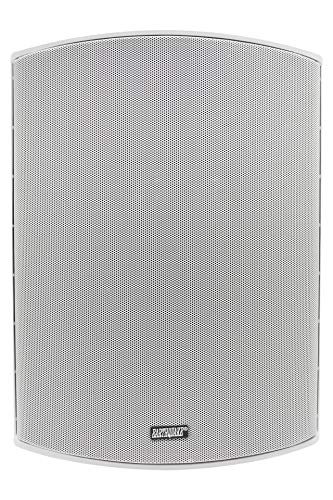
The All-Weather Series represents a recognized segment of the Earthquake Sound catalog. Models like the AWS-502B, AWS-602B, and AWS-802B in matte black, alongside white options like the AWS-602W and AWS-802W, cater directly to outdoor patios, pool decks, and porches. These cabinets use sealed composite polymer materials formulated to resist UV degradation and rain exposure. Installing dedicated outdoor cabinets lets you enjoy music outside reliably.
Driver diameter plays a crucial role when selecting within the AWS family. The smaller AWS-502 models utilize a 5.25-inch woofer, making them ideal for compact balconies or modest covered porches where space is tight. Moving up to the AWS-602 series provides a 6.5-inch driver that strikes an excellent balance between cabinet size and low-frequency depth. For expansive backyards, the AWS-802 series steps up with an 8-inch woofer that moves substantial air.
Buyers should pay close attention to packaging when planning an outdoor layout. While the AWS-502 and AWS-602 models commonly ship as stereo pairs, larger units like the AWS-802 are frequently sold as single cabinets. For a standard stereo setup in a large entertaining area, you must purchase two single units to achieve a balanced soundstage. Verifying packaging ensures you order the right quantity for your amplifier.
The finish choices also give homeowners flexibility when matching exterior siding, trim, or porch rafters. Matte white enclosures blend discreetly against painted white fascia boards, while matte black blends into dark siding or pergolas. If you are comparing exterior audio options, reviewing our guide on outdoor waterproof speakers can provide helpful perspective on portable versus permanently mounted configurations. The AWS line gives homeowners permanent mounting with powder-coated brackets.
Architectural Integration with R800 and ECS In-Ceiling Speakers
Architectural speakers solve visual clutter by mounting flush into drywall, and Earthquake Sound addresses this category with distinctive solutions. The Earthquake Sound R800 8-inch in-ceiling pair is engineered for listeners who want serious low-end presence from an overhead location. The generous 8-inch woofer delivers authoritative bass response that smaller ceiling speakers struggle to match. Equipped with magnetic paintable grilles, the R800 blends flush into ceiling surfaces for multiroom audio or surround channels.
On the opposite end of the physical spectrum, the Earthquake Sound ECS 3.0 Edgeless Ultra represents a micro-architectural design. These compact 3-inch ceiling speakers require minimal cutout space, making them ideal for hallways, soffits, and bathrooms where large grilles look intrusive. The edgeless magnetic grille design sits almost flat against the ceiling plane, providing a modern appearance. They work exceptionally well for distributed vocal background music.
Choosing between these two architectural designs requires evaluating room purpose and acoustic requirements. The R800 pair easily anchors a large living room without demanding an external subwoofer for casual listening. In contrast, the compact ECS 3.0 pair is built specifically for speech clarity and gentle ambient background playback. Matching driver size to your room dimensions prevents acoustic mismatch.
Proper ceiling placement also affects sound dispersion and stereo separation. Installing ceiling speakers too close to adjacent walls can introduce unnatural bass booming due to acoustic boundary loading. Spacing in-ceiling speakers roughly six to ten feet apart creates a cohesive sound blanket across seating areas. Paintable grilles allow you to match your exact ceiling paint, ensuring the hardware remains practically invisible once installed.
Tonal Balance, Bass Output, and Dialogue Clarity
Understanding the sonic signature of Earthquake Sound helps buyers align expectations with reality. The brand typically voices its speakers with an energetic profile featuring punchy upper bass and crisp treble. This voicing works exceptionally well for rock, pop, hip-hop, and movie soundtracks. The bass response from their 8-inch drivers provides tactile punch that brings drums and action scenes to life.
Midrange frequencies, which handle human speech and vocal harmonies, remain clear and intelligible. In home theater setups where ceiling speakers handle surround or height duties, dialogue pans naturally across the soundstage. Podcasts and acoustic tracks come through with natural articulation, preventing voices from getting lost under ambient household noise. The crossover design smoothly transitions frequencies between the woofer and the tweeter dome.
High frequencies are tuned for sparkle and projection, which is particularly beneficial in outdoor or high-ceiling environments where high notes degrade quickly over distance. Silk dome or treated tweeters maintain dispersion without turning overly harsh under clean power. If you are comparing various driver setups for detailed indoor listening, reading about balanced room-filling sound offers great insight into how driver construction shapes tonal harmony. Earthquake Sound hits a sweet spot that feels engaging across varied media.
Amplifier Requirements and Electrical System Matching
Because the Earthquake Sound AWS and architectural lines are passive speakers, your choice of amplifier directly dictates overall audio performance. These speakers rely on standard multi-channel AV receivers, dedicated power amplifiers, or smart streaming amps to drive their voice coils. Matching speaker nominal impedance with amplifier specifications prevents overheating and unexpected shutdowns. Most Earthquake Sound models feature standard 8-ohm nominal impedance, making them compatible with modern receivers.
Power handling is another critical consideration for maintaining clean audio at higher volume levels. Providing adequate, clean wattage allows the woofers to move effortlessly through complex bass passages without clipping the signal. An underpowered amplifier pushed to its maximum volume ceiling will produce harmonic distortion that can easily damage delicate tweeter voice coils. Choosing an amplifier that matches the manufacturer’s recommended continuous power rating ensures healthy dynamic headroom.
Multi-zone setups require extra caution when wiring multiple pairs of speakers to a single amplifier channel. Connecting two pairs of 8-ohm speakers in parallel drops the total impedance load down to 4 ohms, which can overheat amplifiers not rated for low-impedance operation. Using an impedance-matching speaker selector or dedicated multi-zone distribution amplifier keeps the electrical load safe for continuous operation. Proper system planning protects your amplifier hardware and speaker drivers.
Modern streaming amplifiers pair exceptionally well with Earthquake Sound architectural and outdoor models. Devices that support Wi-Fi streaming, AirPlay, or Bluetooth inputs can be housed centrally inside an equipment closet while feeding long speaker wire runs to the rooms. Adding subtle equalization adjustments on your streaming app helps compensate for bright patio acoustics or reflective drywall. Quality amplification brings out the best dynamics these speakers offer.
Installation Planning, Mounting, and Cable Management
Proper installation ensures you achieve the best possible sound while keeping your home structure secure. When installing all-weather models like the AWS-602 or AWS-802 outdoors, mounting them under eaves provides vital protection against direct, heavy downpours. Even weather-resistant speakers last longer when shielded from excessive rain pooling and relentless sun exposure. Angling the mounting brackets slightly downward prevents water droplets from gathering around the speaker cone or rear binding posts.
In-ceiling installations like the R800 or ECS 3.0 require careful pre-cut preparation inside the room. Always use a dependable stud finder to locate ceiling joists, plumbing pipes, and electrical conduit before cutting circular openings into drywall. Using the included cutout cardboard template guarantees an accurate hole diameter, allowing the dog-ear mounting clamps to grip securely. Tightening the mounting screws evenly ensures the speaker basket seats firmly without warping the ceiling board.
Selecting the right gauge and rating of speaker wire is essential for long-term safety and performance. For outdoor runs or in-wall runs through living areas, building codes mandate CL2 or CL3 fire-rated speaker cables. Long wire runs exceeding fifty feet should use thicker 14 AWG or 12 AWG copper conductors to prevent signal loss and maintain proper amplifier damping factor. Outdoor wire runs traveling across flowerbeds must use direct-burial rated conduit.
Homeowners unfamiliar with cutting drywall or routing cables through attic crawlspaces should consider consulting a licensed low-voltage contractor. Professional installers possess the right fish tape tools, drills, and code knowledge to route wires cleanly behind walls. Doing so preserves the architectural integrity of your home while ensuring electrical connections remain safe and compliant. Clean installation results in a polished system that looks professional.
Maintenance, Weather Resilience, and Component Care
Maintaining Earthquake Sound speakers requires minimal effort, but routine inspections help preserve audio fidelity over many seasons. Outdoor AWS models benefit from occasional gentle rinsing with a damp cloth to remove pollen, dust, and spider webs. Never use high-pressure garden hoses or abrasive chemical solvents on the speaker grilles or cones, as harsh water pressure can compromise internal gaskets. Periodically checking the bracket thumb screws ensures wind has not loosened the angle.
In-ceiling models require even less maintenance once seated inside the ceiling cavity. Occasionally wiping the magnetic grilles with a microfiber duster prevents dust buildup from clogging the fine acoustic perforations. If you decide to paint the grilles to match a new ceiling paint scheme, always remove the grilles from the speakers first and use light spray coats. Applying thick latex paint with a roller will fill the grille holes, severely muffling sound.
Inspecting terminal connections every few years prevents oxidation from degrading audio signals. Outdoor binding posts exposed to high humidity can occasionally develop surface tarnish that increases electrical resistance. Applying a small dab of non-conductive dielectric grease on clean wire ends can help seal outdoor connections against moisture intrusion. These quick, periodic maintenance checks ensure that your audio investment continues performing smoothly year after year.
Final Considerations for Smart Audio Buyers
Deciding if Earthquake Sound speakers fit your home audio plan requires balancing their punchy sound profile against your room requirements. These speakers deliver exceptional value for homeowners outfitting patios, covered decks, multiroom background systems, and casual home theater spaces. Their rugged build quality, generous low-end capability, and discreet architectural options make them reliable workhorses that perform consistently across varied musical genres. They provide high-energy entertainment that easily fills open spaces.
Listeners seeking surgical acoustic precision for critical nearfield recording or dedicated audiophile rooms may prefer specialized reference monitors. However, for practical residential applications where durability, room coverage, and fun sound matter most, Earthquake Sound stands out as a dependable contender. Their outdoor AWS series withstands harsh weather conditions, while their architectural in-ceiling models hide cleanly inside walls and ceilings. Choosing the right driver size and pairing them with adequate clean power guarantees a rewarding listening experience.





Write Your Review
No reviews yet. Be the first to share your experience!