


Building a Dependable Audio Rig for Your Amp
Weak connections between an amplifier head and an external cabinet can compromise sound quality and risk hardware damage. High-output amplifiers push significant electrical current, meaning an ordinary guitar instrument cable is not safe or suitable for handling cabinet power. Setting up an efficient guitar speaker setup requires heavy-gauge wiring designed specifically for speaker-level signals rather than line-level instrument audio. Selecting purpose-built cables with proper shielding and secure quarter-inch plugs helps preserve audio clarity and hardware integrity.
Heavy-gauge conductor cores, such as true 12 AWG copper, lower electrical resistance over short distances so that your amplifier delivers its rated wattage cleanly to the cabinet. Much like pairing high-grade audio gear with passive speakers, cabinet wiring demands durable insulation like flexible rubber jackets to resist crimping during transport. The GLS Audio Speaker Cable 1/4 inch to 1/4 inch is designed specifically for this purpose, featuring a 10.5mm rubber jacket and heavy copper wiring. Evaluating your cable length, connector quality, and gauge will keep your stage or studio setup reliable during every performance.
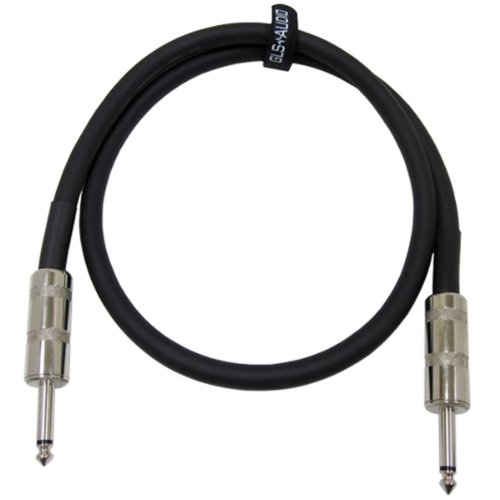
Pros
- Premium copper ensures zero signal loss for full-range sound
- Ultra-flexible jacket for hassle-free coiling and setup
- Convenient hook-and-loop strap for organized storage
- Heavy-duty 12 AWG build supports pro-level power demands
- Short 3 ft design ideal for pedalboard or amp head connections
Cons
- 3 ft length too short for longer stage runs without extensions
- 1/4-inch ends limit use with modern XLR or combo inputs
- Rubber jacket may stiffen in extreme cold conditions
Frequently Asked Questions
Can I use an instrument cable instead of a speaker cable for an amp cabinet?
No, you should never substitute an instrument cable for a dedicated speaker cable. Instrument cords carry low-voltage shielded signals with very thin wire, which can overheat or melt when carrying high amplifier output to a cabinet. A proper speaker cable uses unshielded, thick conductors, such as 12 AWG copper, to manage heavy current safely.
What wire gauge is recommended for a guitar speaker setup?
A wire gauge between 12 AWG and 16 AWG is standard for connecting an amplifier to a speaker cabinet. Thicker wire like 12 AWG lowers resistance and manages higher electrical currents over typical run lengths. This ensures that power from your amplifier arrives at the drivers without unnecessary heat buildup or signal loss.
How does cable length affect your guitar speaker setup?
Shorter runs are generally ideal because they minimize electrical resistance between the amplifier output and the speaker cabinet. A 3-foot cable is typically sufficient for stacking an amp head directly on top of a cabinet. Longer runs can introduce slight resistance, though heavy 12 AWG wiring helps mitigate signal drop over distance.
Why does a speaker cable need a thick rubber jacket?
A thick rubber jacket, like the 10.5mm outer layer on professional speaker cables, guards the internal copper conductors against pinching, kinks, and stage wear. Rugged jackets provide strain relief at the quarter-inch connectors while remaining flexible enough for quick teardown. This physical protection helps maintain reliable contact and prevents short circuits.
How do impedance ratings factor into your speaker connections?
You must always match the output impedance of your amplifier to the total impedance of the connected cabinet, typically 4, 8, or 16 ohms. Mismatched impedance can strain the power tubes or output transformer, leading to equipment failure. Checking your manufacturer specifications before powering on ensures safe operation alongside the best sounding speakers or cabinets in your collection.
Does using a thicker speaker cable improve audio clarity in 2026?
A thicker cable preserves signal integrity by reducing resistance, but it does not artificially boost tone. It allows the true output of your amplifier to reach the cabinet drivers without choking current during loud volume spikes. High-grade copper wiring simply ensures that your equipment operates at its intended performance level.




Write Your Review
No reviews yet. Be the first to share your experience!