


Pushing a smartphone volume slider all the way up during noisy outdoor gatherings or media playback often leads to noticeable crackling, buzzing, or sudden volume drops. While modern mobile devices feature onboard digital signal processing to limit extreme peaks, many users wonder whether prolonged exposure or boosted media tracks can actually ruin their hardware. Investigating whether can loud sounds damage phone speakers reveals that physical strain on miniature transducers is a genuine mechanical risk when drivers face extreme volume levels or clipped source audio over extended periods.
Smartphone drivers rely on microscopic voice coils and ultrathin flexible membranes that lack the robust heat dissipation found in larger sound systems. When users demand louder volume for music or conference calls, shifting the workload to external gear like compact notebook speakers or dedicated wireless sound units protects delicate phone electronics from avoidable stress. Understanding how acoustic drivers operate under heavy loads helps mobile owners preserve clear sound reproduction and prevent irreversible hardware distortion over the lifespan of their handsets.

Pros
- Instant audio boost via induction without needing to pair Bluetooth menus
- Sturdy 360-degree rotating phone cradle supports both vertical and horizontal orientations
- Multi-functional 3500mAh battery doubles as an emergency device charger
- Articulate midrange makes podcasts and video calls exceptionally clear
Cons
- Compact driver size limits deep sub-bass reproduction on heavy tracks
- Requires precise phone alignment over the induction sensor for optimal output
- Lacks water resistance, making it strictly intended for indoor desk use
The MILOUZ Wireless Induction Speaker is an innovative hybrid audio solution engineered specifically for modern workstations, nightstands, and kitchen counters. By integrating a full-range speaker, an adjustable device holder, vibrant ambient lighting, and an internal battery bank into a single compact unit, it eliminates tabletop clutter. It is aimed directly at remote professionals, students, and everyday smartphone users who want enhanced audio without dealing with complicated setups.
In daily operation, the standout feature is the dual audio input capability. Users can connect through standard Bluetooth for extended wireless range, or simply place their phone directly into the cradle to activate instant magnetic induction sound. The articulated 360-degree rotating mount securely holds smartphones and small tablets, allowing you to transition between portrait video calls and landscape movie watching effortlessly.
Audio performance is tuned for clear, direct personal listening. While it will not shake a large living room, it offers significant volume headroom and clarity over built-in phone speakers, ensuring voices cut through ambient room noise clearly. The integrated 8-mode RGB ambient light adds a stylish, customizable atmosphere to any workspace, serving as both an aesthetic centerpiece and a practical desktop dock.
Ultimately, this device represents great utility for anyone seeking a multifunctional media station. Its combination of clear vocal reproduction, hands-free ergonomics, and backup charging makes it a practical desk enhancement and an appealing gift for casual listeners.
The acoustic profile of the MILOUZ speaker is tuned primarily for direct, nearfield desktop listening with an emphasis on the vocal range. Dialogue, podcasts, and acoustic instrumentation are reproduced with clean separation and articulate midrange presence. High frequencies remain smooth and fatigue-free, preventing the harsh, tinny treble that frequently plagues standard smartphone speakers.
Due to the compact physical dimensions, low-end bass is tuned for tight punch rather than deep sub-bass rumble. It delivers sufficient low-mid weight to keep music sounding full and engaging, though bass-heavy hip-hop and electronic tracks will naturally lack deep sub-bass impact. Volume output easily fills a personal workspace, small office, or bedroom without audible clipping or distortion at moderate-to-high listening levels.
Constructed in a clean, modern white housing, the MILOUZ speaker measures 5.83 by 6.02 by 3.94 inches and weighs an ultra-portable 0.75 pounds. The heavy-duty folding hinge and 360-degree rotating bracket provide solid friction resistance, securely holding modern smartphones and lightweight tablets in place without slipping.
Under the hood, the device is powered by a rechargeable 3500mAh lithium-ion battery. This power reserve drives both the internal audio drivers and the RGB ambient light array, while also functioning as a portable power bank to charge external devices via USB. Input options include high-speed Bluetooth for wireless streaming alongside built-in electromagnetic induction sensors for instant plug-and-play mobile audio.

Pros
- HD stereo delivers detailed, loud audio even outdoors
- Long 4000mAh battery powers extended play sessions
- IPX5 rating handles water splashes and rough handling
- Bluetooth 5.3 ensures quick, reliable pairing with phones or laptops
- RGB lights and FM radio add versatile party vibes
Cons
- Bass lacks deep punch compared to premium models
- No companion app for sound customization
- Range drops behind obstacles despite 66-foot claim
The PEICHENG speaker is a budget-friendly portable powerhouse designed for music lovers who want reliable sound on the go. With its clear stereo audio, IPX5 waterproofing, and vibrant RGB lights, it shines at home parties, beach outings, or camping trips. Compact enough to toss in a backpack, it pairs two units for true 360-degree sound that elevates any gathering.
In real-world use, it handles outdoor chaos like splashes and drops while delivering loud, detailed music without distortion at high volumes. The multifunctional buttons make skipping tracks or switching to FM radio effortless, and TF card or AUX support keeps the tunes flowing even without Bluetooth. It's a smart gift for anyone craving fun, durable audio without breaking the bank.
Overall verdict: This speaker nails value for casual listeners and party hosts. It won't rival audiophile gear, but for beach blasts or backyard barbecues, its long battery and lively features make it a winner that punches above its weight.
Expect clear, loud stereo sound from high-quality drivers that capture music details sharply, making vocals and highs stand out during outdoor sessions. While bass is punchy for the size, it won't thunder like larger speakers, but TWS pairing two units creates immersive 360-degree audio perfect for filling backyards or beaches.
Bluetooth 5.3 provides stable connections up to 66 feet in open spaces, reading playlists seamlessly from smartphones, TVs, or laptops. Volume reaches party levels without muddiness, and the built-in mic handles calls clearly. Versatile inputs like TF card and AUX ensure non-stop playback even in spotty signal areas.
Rugged and compact, this speaker withstands bumps, drops, and everyday abuse, with an IPX5 rating that shrugs off rain, spills, and pool splashes. Its black finish looks sleek, and RGB lights add a dynamic light show that pulses with your music, turning any spot into a party zone. Easy-carry size fits lifestyles from biking to barbecues.
The 4000mAh battery delivers extended playtime on a single charge, powering full days of tailgating or hiking without interruptions. Quick charging gets you back in action fast, and multifunctional buttons control volume, lights, and FM effortlessly. It's built for reliability in wet, wild outdoor adventures.

Pros
- Massive volume without distortion for crowd-pleasing events
- Easy Bluetooth connectivity for quick setup
- Portable design with wheels simplifies moving heavy power
- Includes wireless mic for instant karaoke fun
- Multiple inputs support diverse music sources
Cons
- Battery life limited to 2.5 hours for shorter events only
- Bulky size may challenge solo transport despite wheels
- Basic Bluetooth lacks advanced codecs for hi-res audio
The Pyle PWMA1099A is a rugged 10-inch portable PA speaker system designed for parties, karaoke nights, and small events. With 600 watts of power driving a 10-inch mid-bass woofer and 3-inch tweeter, it pumps out full-range stereo sound that cuts through crowds. Bluetooth connectivity, USB/SD card playback, and FM radio make it versatile for any setup, while the included wireless mic turns it into an instant karaoke machine.
Perfect for backyard bashes, tailgates, or community gatherings, this speaker suits mobile DJs, event planners, and casual hosts who want pro-level volume without complex gear. In real-world use, it handles upbeat tracks with punchy bass and clear vocals, keeping energy high even outdoors. The rechargeable battery frees you from cords, though recharges are needed for longer gigs.
Build quality shines with a heavy-duty cabinet and transport features like wheels and a handle. While not a hi-fi audiophile choice, its raw power and portability deliver great value for lively occasions. Verdict: A solid pick for fun-focused buyers seeking portable party power.
Powered by 600 watts, the PWMA1099A excels in bass depth from its 10-inch driver, delivering thumping lows that shake patios during dance tracks. Midrange stays clear for vocals and instruments, avoiding muddiness at high volumes, while the 3-inch tweeter adds crisp highs without harshness.
Soundstage widens for immersive party vibes, with stereo imaging that fills open spaces. It reaches ear-splitting levels cleanly, ideal for 50-100 person events. Bluetooth streaming ensures low-latency playback from phones, though it sticks to standard codecs.
Overall, expect energetic, crowd-hyping audio tuned for fun over critical listening, with strong projection that outperforms smaller portables.
The heavy-duty plastic cabinet withstands rough handling at events, measuring 16.34 x 11.22 x 22.44 inches for a compact yet powerful footprint. Integrated wheels and a carry handle enable easy rolling transport, even loaded.
Connectivity includes Bluetooth for wireless streaming, USB and Micro SD slots for direct playback, FM radio tuner, and a wireless mic input powered by AA batteries. The digital LED display shows track info and settings clearly.
A built-in 12V 4.0Ah rechargeable lead-acid battery offers up to 2.5 hours of playtime, recharging via AC. No app control, but straightforward buttons keep operation simple for on-the-fly use.
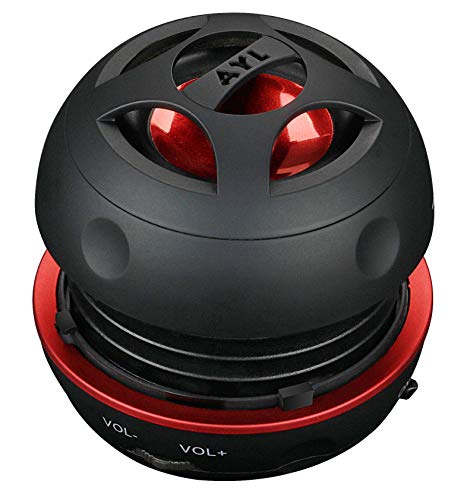
Pros
- Exceptional portability at just 3 ounces for effortless carrying
- Surprisingly loud 3W output with clear, high-fidelity sound
- Up to 10 hours of playback on a single charge
- Simple plug-and-play setup with universal 3.5mm aux compatibility
- Reliable USB charging and 3-year manufacturer warranty
Cons
- Wired aux connection limits wireless freedom
- Mini size means limited bass depth for bass-heavy music
- No waterproofing for outdoor use near water
The AYL Mini Speaker System is a compact, wired portable speaker designed for users who need reliable audio boost without complexity. Weighing just 3 ounces, it connects via 3.5mm aux to laptops, iPhones, iPads, MP3 players, and more, making it perfect for students, travelers, and remote workers seeking affordable sound enhancement on a budget.
In real-world use, it shines during work calls, casual listening sessions, or weekend trips where Bluetooth isn't needed. The built-in amplifier pushes 3W of clear, loud sound that punches above its size, ideal for small rooms or personal spaces like desks and hotel rooms.
With up to 10 hours of battery life at medium volume and simple USB recharging, it fits seamlessly into mobile lifestyles. Backed by a 3-year warranty, this speaker delivers consistent performance for everyday portable needs.
Verdict: A solid choice for wired audio fans wanting portability and value, though it skips wireless features for simplicity and reliability.
Engineered for clarity, the AYL mini speaker produces high-fidelity audio with crisp vocals and detailed mids, making it great for podcasts, audiobooks, and light music listening. The 3W output delivers surprisingly loud volume without distortion at moderate levels, filling small spaces like offices or cars effectively.
Bass response is light due to the compact size, favoring balanced sound over deep thumps, which suits acoustic tracks or spoken word better than heavy beats. Volume scales well for personal use, ensuring clear playback even in mildly noisy environments.
As a wired aux speaker, it offers stable, lossless audio transmission with no dropouts, outperforming wireless options in reliability for close-range setups.
The sleek black design is ultra-compact and lightweight at 3 ounces, with a simple plug-in form factor that prioritizes portability over ruggedness. No IP rating means it's best for indoor or dry outdoor use, like picnics or travel, rather than wet environments.
Built-in rechargeable lithium battery provides up to 10 hours of continuous play at medium volume with random music, perfect for all-day desk sessions or long commutes. Charging takes a few hours via the included USB cable, compatible with laptops or adapters.
Overall build feels sturdy for daily pocket carry, emphasizing ease and endurance for mobile users who value lightweight reliability.
Phone Speaker Vulnerabilities and Loud Sound Risks
Pushing audio output to absolute maximum levels can cause permanent physical and electrical harm to mobile hardware. Smartphone speakers are marvels of micro-engineering, but their miniature components operate under tight mechanical tolerances. Prolonged exposure to severe volume, heavily distorted audio tracks, and artificial amplification can cause irreversible sound degradation. Understanding the physical boundaries of these tiny transducers helps mobile device owners protect their equipment from crackling, muffled reproduction, and complete driver blowout.
The Miniature Anatomy of Smartphone Drivers
Traditional audio drivers use large voice coils, substantial magnets, and wide cones housed inside spacious cabinets. In contrast, smartphone speakers rely on micro-electrodynamic transducers that measure only a fraction of an inch across. These micro-speakers feature ultra-thin polymer diaphragms suspended by flexible surrounds over miniature copper voice coils. The entire mechanism sits inside a compact acoustic chamber engineered to fit into an ultra-slim chassis alongside batteries, processors, and antennas.
Because space inside a phone chassis is extraordinarily limited, acoustic back-volume chambers rarely exceed one cubic centimeter. Manufacturers rely on specialized tuning ports and acoustic meshes to direct sound waves through external phone grilles. These tiny driver diaphragms must oscillate at rapid rates to generate audible high frequencies while attempting to push enough air for recognizable mid-range frequencies. When high volume levels demand excessive physical movement from such tiny assemblies, mechanical stress increases across every individual component.
Mechanical Over-Excursion and Diaphragm Fatigue
Audio transducers generate sound through physical displacement, moving back and forth to create sound pressure waves in the surrounding air. When users play media with intense volume, the voice coil drives the diaphragm toward its maximum physical travel limit, a phenomenon known as excursion. Micro-speakers possess extremely narrow excursion envelopes compared to full-sized bookshelf or desktop speakers. Forcing a smartphone diaphragm beyond its intended travel envelope leads to mechanical over-excursion, which strains the flexible suspension surround.
Repeated over-excursion frequently causes microscopic tears, wrinkles, or permanent creasing in the thin plastic diaphragm membrane. Once the suspension loses its structural elasticity, the voice coil can drift off its central magnetic axis. A misaligned voice coil rubs against the surrounding pole piece or permanent magnet during movement. This physical friction produces a persistent scraping or rattling sound that remains audible even when listening at modest volume levels later on.
Thermal Buildup and Voice Coil Breakdown
Electrical power entering a speaker is not converted entirely into acoustic sound energy. Dynamic speakers convert the vast majority of incoming electrical power directly into heat. In large loudspeaker assemblies, substantial metal frames and circulating air currents actively dissipate this thermal energy. Smartphone micro-speakers, however, operate inside tightly sealed, stagnant enclosures surrounded by insulating glass and metal frames.
Sustained high-volume playback forces continuous electrical current through the microscopic copper wire of the voice coil. If thermal buildup exceeds the temperature rating of the coil insulation, the protective enamel coating begins to degrade or melt. Adjacent wire windings can short-circuit together, lowering the voice coil impedance and drawing even more current from the phone audio amplifier. In extreme cases, thermal stress burns through the delicate wire entirely, causing an open electrical circuit that results in total speaker failure.
Signal Clipping and Digital Distortion Hazards
Harmful damage does not always stem from raw decibel levels alone; audio waveform shape plays a critical role in driver longevity. When an audio signal exceeds the voltage limits of a smartphone amplifier, the peaks of the sound wave are flattened off, creating severe clipping distortion. Instead of receiving smooth, oscillating sine waves, the micro-speaker is subjected to harsh, squared-off waveforms. Clipped audio signals force the voice coil to pause abruptly at its extreme positions while continuous direct-current energy pours into the circuit.
Square waves deliver twice the average power of a clean sine wave of equivalent peak amplitude. This rapid increase in continuous thermal energy overwhelms the micro-transducer within a short timeframe. Heavily compressed modern pop tracks, distorted social media clips, and poor microphone recordings are notorious for driving audio circuits into clipping. Playing these compromised audio tracks at top volume creates an ideal environment for rapid voice coil overheating and diaphragm fatigue.
Digital Signal Processing and Hardware Limiting
Modern mobile operating systems incorporate sophisticated digital signal processing, often abbreviated as DSP, to safeguard internal micro-speakers. Device manufacturers design proprietary software algorithms that monitor output levels in real time to prevent dangerous excursion. These protection routines apply dynamic range compression, automatically attenuating bass frequencies and curbing transient spikes as the volume slider approaches maximum. Because low frequencies demand the most physical cone movement, modern phones roll off sub-bass tones to keep the tiny driver safe.
These factory software safeguards mean that playing factory media through the stock operating system at full volume rarely blows a healthy speaker instantly. However, factory limiters cannot completely eliminate long-term material fatigue caused by constant thermal expansion and contraction. Pushing a phone speaker to maximum volume continuously over hours of daily use gradually degrades internal adhesives and flexes plastic membranes toward eventual failure. Factory protection algorithms provide a useful safety net, but they cannot rewrite the physical laws of material wear.
The Severe Risks of Third-Party Volume Boosters
App stores contain dozens of third-party utility apps that promise to boost smartphone volume beyond factory limits. These applications achieve higher loudness by artificially increasing digital pre-amp gain or manipulating internal audio equalization profiles. By forcing the internal amplifier past calibrated system safety thresholds, volume booster apps intentionally introduce severe digital clipping. What sounds like increased volume is often just heavy harmonic distortion that fills the acoustic spectrum with harsh, destructive frequencies.
Bypassing hardware safety limits places the internal micro-transducer under immense electrical and mechanical distress. Users who install software boosters often report immediate buzzing, distorted treble, or sudden permanent silence during heavy playback. Smartphone manufacturers calibrate volume limits specifically to balance driver safety with clear acoustic clarity. Overriding those engineered boundaries eliminates the primary software layer protecting the voice coil from catastrophic thermal breakdown.
Can External Environmental Sounds Harm Mobile Speakers?
Mobile users frequently ask whether loud ambient noises, such as fireworks, gunshots, or loud concert sound systems, can physically damage their phone speakers. While loud external acoustic shockwaves can damage sensitive smartphone microphones, speaker diaphragms are far more durable against incoming air pressure. A speaker diaphragm is designed to project sound outward from an internal acoustic cavity rather than capture incoming vibrations like a delicate microphone foil.
An ambient sound wave would need to reach catastrophic sound pressure levels to physically distort an unpowered speaker membrane through narrow chassis ports. In practical real-world environments, external sounds rarely exert sufficient localized pressure to tear the speaker suspension. The internal electronics and audio amplifier also remain completely de-energized unless the phone is actively playing media during the event. Consequently, self-generated internal amplification poses a far greater risk to mobile speakers than ambient external noise.
Diagnosing Physical Damage Versus Dirt and Software Bugs
When a phone speaker sounds quiet, scratchy, or muffled, physical component damage is not the only potential culprit. Accumulated pocket lint, dust, and dried moisture frequently clog the fine acoustic mesh covering phone speaker ports. Foreign particles trapped inside the speaker grille absorb high frequencies and produce an annoying buzz that closely mimics a blown driver diaphragm. Cleaning the exterior port with a soft-bristled brush or dry microfiber cloth often resolves the issue without requiring hardware replacement.
Tiny metallic dust particles pose a particularly deceptive hazard for mobile hardware. Because dynamic micro-speakers contain powerful permanent neodymium magnets, airborne iron shavings or metallic grit can be pulled directly into the speaker port. These metallic fragments settle directly against the moving diaphragm or inside the voice coil gap, creating loud buzzing vibrations whenever sound plays. Distinguishing between magnetic debris, foreign lint, and genuine mechanical tearing ensures you pursue the correct corrective action.
Step-by-Step Diagnostic Routine for Distorted Mobile Audio
Systematic troubleshooting helps determine whether distorted sound stems from software glitches, contaminated audio files, or permanent hardware failure. Begin your diagnosis by restarting the device to clear temporary audio daemon conflicts and reset operating system audio caches. Next, play several different audio sources, including clean studio recordings, spoken-word podcasts, and system ringtones, across multiple applications. If distortion occurs solely on a single streaming video or social media clip, the problem lies in source audio compression rather than your hardware.
If persistent buzzing remains across every audio source, inspect the operating system accessibility and equalizer menus. Check whether mono audio modes, vocal boosters, or aggressive third-party equalizer presets are artificially distorting the output signal. Water expulsion audio tones can also help displace trapped droplets if the handset was recently exposed to moisture. If high-quality audio files continue to rattle and buzz after thorough cleaning and software resets, the driver diaphragm or voice coil likely suffered irreversible mechanical damage.
Transitioning Demanding Audio to External Sound Hardware
Demanding room-filling volume from a miniature smartphone speaker is an inefficient approach that rapidly exhausts internal components. Mobile users seeking louder sound for outdoor gatherings, home entertainment, or hands-free calls should connect dedicated external speakers. For casual desktop listening or video streaming, pairing your mobile device with dedicated PC speakers for music provides superior dynamic range while saving your phone hardware from thermal strain. Proper external drivers deliver authentic bass depth and clear vocal reproduction that tiny phone enclosures cannot physically achieve.
Multiple versatile options exist to handle heavy audio playback without stressing mobile hardware. Induction audio accessories like the MILOUZ Wireless Induction Speaker 5-in-1 Bluetooth amplify smartphone sound magnetically without complex pairing setups, while offering an integrated phone stand and a 3500 mAh battery. For active outdoor activities or travel, compact options like the PEICHENG Bluetooth Speaker provide IPX5 water resistance, Bluetooth 5.3 connectivity, and a 4000mAh battery for extended playtime. Listeners wanting ultra-compact auxiliary connectivity can utilize the AYL Mini Speaker System, Portable Plug-in Speaker with its standard 3.5mm input and rechargeable battery. When hosting large events or karaoke parties, rolling cabinets like the Pyle 10” Portable Wireless Bluetooth Speaker deliver robust projection through a 10-inch driver and 3-inch tweeter, leaving delicate phone speakers completely safe from harm.
Connecting external hardware allows your mobile device to act strictly as a digital audio source rather than a strained acoustic transducer. Investing in a standalone Bluetooth audio gear setup ensures your favorite music retains rich fidelity across all volume ranges. External speakers feature dedicated power supplies, engineered acoustic enclosures, and larger voice coils capable of dissipating high heat loads easily. Offloading the physical acoustic workload protects your phone trade-in value, extends battery longevity, and preserves built-in speaker clarity for vital phone calls.
Safe Daily Habits to Maximize Smartphone Speaker Lifespan
Preventing driver degradation requires only a few sensible playback adjustments during daily smartphone operation. Keep standard media volume around seventy to eighty percent of maximum capacity whenever relying on internal phone speakers for long listening sessions. Avoid playing heavily distorted audio files, low-resolution voice memos, or extreme bass-boosted tracks through internal drivers. If an environment is too loud to hear your phone comfortably at moderate volume, switch to headphones or dedicated wireless speakers instead of cranking mobile sliders to the ceiling.
Protecting acoustic grilles from environmental hazards is equally important for maintaining crisp mobile audio. Keep your phone stored away from industrial workspaces, metal fabrication areas, or dusty pockets where ferromagnetic particles gather. Never use compressed air canisters or sharp metal pins to clean delicate speaker ports, as high-pressure gas can instantly rupture thin diaphragms. Establishing sensible volume boundaries and practicing gentle maintenance keeps smartphone micro-speakers sounding clean and articulate throughout the entire life of your handset.


Write Your Review
No reviews yet. Be the first to share your experience!