


Vehicle cabins subject audio equipment to severe operating conditions, enduring sweltering summer heat, freezing winter temperatures, and constant road vibration. Over time, these harsh elements take a heavy toll on delicate audio components, leaving many drivers wondering whether are 10 year old car speakers too old. Factory-installed audio drivers rarely use resilient materials, which often leads to dry rot, cracked surrounds, and muddy reproduction after a decade on the road. If you are experiencing muffled highs, rattling bass, or quiet distortion, your vehicle speakers might be reaching the end of their functional lifespan.
While some well-maintained aftermarket units survive for years, factory paper cones and treated foam edges inevitably break down under daily stress. Evaluating your setup helps determine whether minor audio adjustments can restore your listening enjoyment or if installing modern replacement drivers is necessary. Exploring proper truck speaker replacements or universal coaxial drivers can often bring back dynamic range without requiring an entirely new audio overhaul. Understanding the exact mechanical and electrical failure points will save you both time and unnecessary installation headaches.

Pros
- Eye-catching retro car replica stands out in any room
- True Wireless Stereo capability for expanded sound
- Versatile inputs including Bluetooth, FM, USB, and TF card
- LED lights add fun party atmosphere
- Headphone output for private listening
Cons
- Small 3-inch drivers limit deep bass for large venues
- No waterproof rating for poolside or rainy use
- Battery life unspecified, best for shorter sessions
The QFX BT-1965-BLU is a Bluetooth speaker shaped like a classic 1965 car, blending vintage aesthetics with modern audio features like dual 3-inch speakers and True Wireless Stereo. It includes LED party lights, FM radio, USB/TF card ports, and a built-in microphone for hands-free calls, making it a playful addition to any setup.
Ideal for nostalgia-loving Americans who enjoy tailgating, desk decor, or small house parties, this speaker brings retro charm to everyday listening. Its portable design and headphone output suit casual users seeking fun over audiophile precision.
In real-world use, it shines for background music at gatherings, with stable Bluetooth connectivity and easy controls. The LED lights enhance party vibes without overpowering the sound.
Overall verdict: A high-value pick for retro enthusiasts wanting affordable, feature-packed audio that cruises through playlists in style.
Dual 3-inch speakers produce clear mids and vocals with a balanced stereo signature, perfect for classic rock or pop playlists. Bass is punchy for its size but not booming, suiting indoor parties or car dashboards over bass-heavy genres.
Volume reaches room-filling levels for small spaces without distortion, and Bluetooth range stays stable up to 30 feet. FM radio tunes local stations crisply, while USB/TF playback handles high-quality files smoothly.
True Wireless Stereo lets you pair two units for immersive sound, elevating tailgate or home office sessions with reliable performance.
The iconic 1965 car replica boasts a durable plastic shell in striking blue, with LED party lights that pulse to the beat for eye-catching appeal. At under 2 pounds, it's highly portable for road trips or shelf display, though not ruggedized for rough outdoor drops.
No IP rating means keeping it away from water, but the compact size fits easily in bags for beach-adjacent picnics. Headphone jack adds versatility without bulk.
Rechargeable via included USB cable, it offers hours of playback for weekend vibes, with quick top-ups keeping the retro journey going strong.

Pros
- Exceptional power handling at 150W RMS for distortion-free volume
- Piezo tweeters and neodymium midrange provide crisp, balanced sound
- Easy vehicle door and side panel mounting with included hardware
- Robust construction with rubber suspension for vibration resistance
- Universal compatibility for cars, boats, motorcycles, and RVs
Cons
- Wired design requires professional installation for some vehicles
- Larger 4x10 inch size may not fit compact door panels without mods
- No wireless connectivity, relies on car stereo head unit
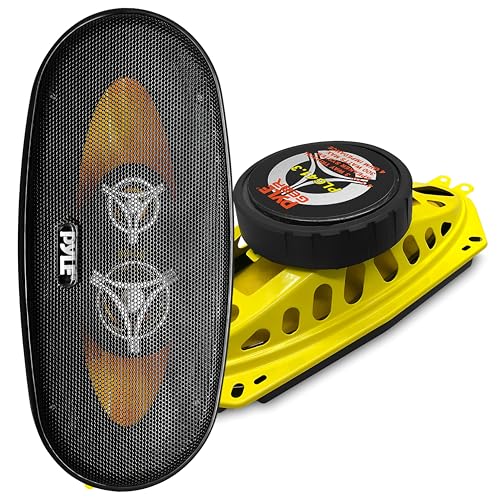
The Pyle PL410BK is a pair of 4x10 inch 3-way triaxial car speakers designed as a direct OEM replacement for vehicle door or side panel mounts. With 300W peak power and 150W RMS, they upgrade factory audio systems in cars, boats, motorcycles, or RVs, delivering pro-level sound without breaking the bank.
Perfect for daily commuters or road trippers wanting louder, clearer music on the go, these speakers feature a poly injection cone, piezo tweeters, and neodymium midrange for resonant bass, detailed vocals, and sparkling highs. The ASV voice coil and butyl rubber surround ensure durability against road vibrations and heat.
In real-world use, they transform muffled stock speakers into a powerful setup that handles highways or tailgates effortlessly. Installation is straightforward with a 2.52 inch mounting depth and included grills, cables, and hardware.
Verdict: A top budget pick for anyone craving high-impact car audio that punches above its weight, ideal for American drivers prioritizing value and performance.
Powered by 300W peak and 4 ohm impedance, the PL410BK speakers produce deep, resonant bass from the high-density 25oz magnet, filling cabins with authority during long drives. The 3/4 inch piezo tweeters deliver crisp highs, while the 1 inch neodymium film dome midrange ensures vocal clarity and instrument separation.
Volume levels stay clean even at max, thanks to the dual 1 inch high-temperature ASV voice coil that prevents distortion. The non-fatiguing rubber suspension maintains tight response over extended play, making them reliable for commutes or weekend getaways.
Paired with any car stereo, they excel in balanced, powerful output without needing an amp, outperforming basic factory units in every metric.
Built tough with a black poly injection cone, massive butyl rubber surround, and corrosion-resistant ASV coil, these speakers shrug off daily wear from vibrations and weather exposure in open vehicles. The 9.92 x 4.33 x 2.87 inch dimensions and 2.52 inch mounting depth fit standard door panels securely.
No battery needed as they draw power directly from your vehicle's audio system, ensuring unlimited runtime on road trips without recharges. Weight is optimized for easy handling during installs.
Included grills, cables, and hardware make setup plug-and-play for most setups, with universal compatibility emphasizing rugged, no-fuss design for active lifestyles.
Pros
- Powerful 150W RMS handling for distortion-free volume
- Standard 4x10 size drops into most vehicle doors
- High 22kHz frequency response captures every detail
- Includes grills, wires, and hardware for quick setup
- Non-fatiguing surround extends speaker life
Cons
- Requires amplifier for maximum 300W potential
- Large 4x10 size may not fit compact cars
- Wired setup lacks wireless convenience

Pros
- Versatile multimedia playback including FM radio, USB, TF card, and AUX
- Fun vintage automobile aesthetic with integrated decorative LED illumination
- True Wireless Stereo (TWS) pairing support for genuine dual-speaker separation
- Extremely lightweight and portable footprint under 1.5 pounds
Cons
- Compact dual 2-inch drivers lack sub-bass extension on heavy electronic tracks
- Plastic retro car body lacks water-resistance certification for heavy outdoor use
- No companion mobile application for custom EQ tuning
The QFX BT-1968 brings an unmistakable dose of automotive nostalgia to the portable audio realm. Styled after a classic retro car, this speaker is built for listeners who appreciate distinctive novelty styling just as much as functional music playback. It serves as an entertaining accent piece for garages, home offices, man caves, and workbenches, offering everyday utility that goes well beyond standard generic rectangular speakers.
In real-world use, versatility is where this compact sound machine excels. Instead of locking you strictly into Bluetooth streaming, the unit is packed with physical playback alternatives. You can dial in your favorite local stations using the built-in FM tuner, plug in a flash drive or microSD card loaded with your favorite MP3s, or hardwire legacy audio gear through the auxiliary port. Onboard controls let you navigate tracks, adjust volume, and take hands-free telephone calls with ease.
Ultimately, the QFX BT-1968 succeeds as a charming, gift-worthy audio unit that punches above its weight class in features. While it is not designed to replace high-end audiophile monitors, it delivers cheerful, satisfying sound and unmatched vintage personality for hobbyists, car lovers, and casual listeners alike.
Acoustically, the QFX BT-1968 relies on dual 2-inch full-range drivers engineered alongside a passive bass radiator. This configuration yields a crisp, midrange-focused sound signature that brings vocals, acoustic guitars, and talk radio right to the forefront. The passive radiator gives the low end just enough presence to avoid the hollow, tinny sound typical of small novelty radios.
For personal listening on a desk or background tunes during a weekend garage project, volume levels are more than adequate to fill your immediate surroundings without excessive harshness. If you want a wider sound field, the True Wireless Stereo (TWS) functionality lets you wirelessly connect a second matching speaker, instantly transforming the audio into a broader two-channel soundstage with distinct left and right channel separation.
While the speaker performs admirably with classic rock, podcasts, country, and pop music, listeners should note that deep sub-bass frequencies below 70Hz naturally roll off due to the cabinet dimensions. Highs remain clear and intelligible, making it great for following conversational broadcasts or singing along to vintage oldies.
The exterior of the QFX BT-1968 is sculpted into a classic vintage automobile shape, finished in sleek black with chrome-accented details. Measuring 10.63 inches long, 4.02 inches wide, and 3.15 inches tall, it carries a balanced footprint that fits neatly on bookshelves, side tables, or workshop counters. Integrated LED lighting accents the front design, adding a lively visual flair during playback.
Hardware connectivity is remarkably robust on this compact frame. It houses a modern Bluetooth receiver for wireless devices, an analog FM radio tuner, a standard 3.5mm stereo AUX input, a full-sized USB port, and a TF (microSD) card slot. It also incorporates a sensitive built-in microphone for hands-free telephone conversations when connected to your smartphone.
Weighing in at just 1.3 pounds, the speaker is completely portable and powered by an internal rechargeable lithium battery. The included USB charging cable makes replenishing the battery straightforward, whether you plug into a wall adapter, a desktop computer, or a portable power bank during outdoor gatherings.

Pros
- Massive 1000W power handling for full-range bass response
- Dual voice coil boosts performance and heat resistance
- Rubber suspension and foam surround for reliable long-term use
- Spring-loaded terminals simplify wiring
- Standard 10-inch size with 4.7-inch depth for easy vehicle fit
Cons
- Requires proper enclosure for optimal bass performance
- Installation may need basic tools or pro help
- Best paired with amplifier for maximum power output
The Pyle PLPW10D is a 10-inch component subwoofer designed for car audio upgrades, delivering 1000 watts peak power and 500W RMS for impressive bass in vehicles. It features a non-press paper cone, rubber suspension, and a 50 oz magnet structure, making it a solid choice for drivers wanting to enhance their sound system without breaking the bank.
Ideal for car enthusiasts, daily commuters, and road trippers who crave deep lows during long drives or tailgating sessions. Its dual 4 ohm impedance and 90 dB sensitivity ensure compatibility with most factory head units, reducing distortion even on undersized car wiring.
In real-world use, it provides punchy bass that fills the cabin, handling extended play without fatigue thanks to vented motor construction and high-temperature voice coils. Mounting is straightforward with a 4.7-inch depth fitting most trunks or under seats.
Verdict: A high-value subwoofer for bass lovers seeking power and reliability in their ride. Perfect upgrade if your stock system lacks rumble.
Bass depth is the star here, with 1000W handling and a 2-inch 4-layer dual voice coil producing tight, powerful lows that shake the cabin on bass-heavy tracks. The 90 dB sensitivity ensures high volume levels from modest amps, ideal for rock, hip-hop, or EDM during drives.
Distortion stays low thanks to dual 4 ohm impedance, compensating for thin car wires to keep sound clear at high volumes. While focused on sub-bass, it integrates well with full-range speakers for balanced car audio.
Performance shines in motion, maintaining stability on bumpy roads due to rugged suspension, delivering consistent output for hours of playback.
Built rugged with non-fatiguing rubber suspension, specially treated foam surround, and bumped vented motor for safe extended excursions. The 50 oz magnet and rubber boot protect against vibration, ensuring longevity in daily vehicle use.
Mounting-friendly at 10 inches overall diameter and 4.7-inch depth, it slots into standard car spots. Spring-loaded push terminals make connections secure and simple.
As a corded electric unit powered by your vehicle's system, it offers unlimited runtime without recharges, perfect for non-stop road trips. Handles higher temperatures effortlessly for reliable performance.
Assessing the Lifespan, Wear, and Performance of Aging Car Speakers
In most driving situations, ten-year-old car speakers have reached the end of their optimal operational lifespan, especially when dealing with original factory equipment. Automotive audio drivers endure extreme thermal shifts and mechanical stress that degrade delicate internal components far faster than home stereo units. While an aging speaker may still emit audible sound, its dynamic range, tonal accuracy, and sensitivity decline steadily over a decade of use. Drivers who wonder whether are 10 year old car speakers too old are usually noticing sound issues like muddy bass, muffled speech, or mechanical buzzes that indicate degrading hardware.
The Short Answer: When a Decade of Use Catches Up to Automotive Audio
Speaker lifespan in vehicles depends primarily on the quality of materials used during original manufacturing. Standard factory-installed speakers are typically built from inexpensive paper diaphragms and bonded foam surrounds that have a realistic lifespan of five to eight years. Higher-grade aftermarket speakers often feature treated cones and synthetic rubber suspensions that resist aging much longer under comparable driving conditions. Even with durable materials, ten continuous years of road vibration, seasonal moisture, and electrical heat will cause measurable wear across any speaker assembly.
A car speaker does not need to fail completely or go silent to be considered worn out. Over ten years, physical suspensions stiffen or tear, changing the driver mechanical resonance and skewing frequency response across the spectrum. Listeners often compensate for this gradual loss of performance by pushing head unit volume higher or boosting tone controls, which introduces amplifier clipping. When you replace a decade-old set of speakers, the immediate restoration of acoustic detail often reveals just how much sound quality had slipped away.
How Automotive Cabin Environments Accelerate Speaker Degradation
Vehicle doors and rear decks subject audio components to some of the most destructive operating environments found in consumer electronics. Direct sunlight streaming through automotive glass creates intense ultraviolet exposure while pushing interior temperatures well past one hundred and forty degrees in warm seasons. These high thermal cycles dry out the flexible damping materials that keep speaker components supple, leaving surrounds brittle and prone to micro-cracking. During freezing winter conditions, stiffened cone suspensions become even more vulnerable to tearing under sudden volume surges.
Moisture inside door cavities represents an equally damaging factor that constantly threatens aging vehicle audio equipment. Rainwater naturally slips past exterior window weatherstripping, trickling through the hollow interior of the door before escaping through bottom drain holes. Factory paper speaker cones readily absorb this humid air, causing the diaphragm fibers to swell, soften, and lose structural stiffness over repeated seasons. This relentless damp cycle also attacks internal adhesives, eventually loosening the joint between the voice coil former and the cone itself.
Physical Signs of Speaker Aging: From Foam Rot to Spider Sag
Removing a vehicle door panel or speaker grille often reveals obvious physical damage that explains degraded sound reproduction. The outer suspension ring, known as the surround, is consistently the first component to fail on an aging automotive driver. Traditional foam surrounds undergo chemical breakdown known as foam rot, turning into a brittle, crumbling mess that disintegrates upon light contact. Once this suspension separates, the cone flops uncontrollably during play, causing immediate audio distortion and eliminating any proper acoustic seal.
Underneath the visible speaker cone sits the spider, a corrugated resin-treated cloth disc that centers the voice coil within the magnetic gap. Just like mechanical automotive springs, the spider loses its original elasticity and tension after millions of back-and-forth cycles, causing the coil to drop below its center position. When this spider sag occurs, the voice coil former rubs against the magnetic pole piece during normal excursion, creating a distinct raspy sound. Inspecting the assembly for torn paper cones, separated dust caps, or distorted spiders confirms whether the speaker has suffered irreversible mechanical wear.
Acoustic Symptoms: Identifying Distortion, Voice Coil Rub, and Loss of Range
Acoustic symptoms frequently alert drivers to speaker deterioration long before anyone takes the time to unclip door trim panels. The most common warning sign is a persistent buzzing or crackling noise that accompanies vocal passages and acoustic bass notes. When voice coil formers warp or collect road grit within the tight magnetic gap, they generate an audible scraping sensation during low-frequency excursion. Playing familiar test tracks to evaluate speaker clarity makes it easy to confirm whether harsh buzzes come from damaged drivers or poor audio files.
A noticeable drop in low-frequency output and midbass punch is another classic sign of tired vehicle audio components. Damaged surrounds prevent the speaker cone from building acoustic pressure inside the door cavity, leaving your favorite tracks sounding hollow, thin, and lifeless. In addition, aging crossover capacitors in factory tweeters drift in value, cutting off clear high frequencies and causing the entire soundstage to sound muffled. If boosting your stereo bass control only produces flapping sounds and high notes sound dull, your drivers have lost their functional frequency range.
Bench Testing and Multimeter Checks for Electrical Integrity
When physical inspection and listening tests leave room for doubt, testing with an inexpensive digital multimeter provides conclusive electrical data. Start by disconnecting the speaker wiring harness to isolate the driver terminals completely from the head unit and vehicle electrical system. Switch the multimeter to its lowest direct current resistance setting and place the red and black probes against the positive and negative terminals. A typical four-ohm car speaker should show a resting direct current resistance reading somewhere between 3.2 and 3.8 ohms.
A multimeter reading showing zero ohms indicates an internal short circuit where melted voice coil insulation has fused adjacent wire turns together. Operating a shorted speaker places dangerous electrical strain on your vehicle head unit or amplifier, which can lead to permanent amplifier damage or thermal shutdown. Conversely, a reading that displays infinite resistance indicates an open circuit where the voice coil wire has burned completely through or snapped. You can also press gently on the center cone to check for scraping sounds, which quickly verifies whether the voice coil has suffered mechanical distortion.
Factory Paper Drivers Versus Modern Aftermarket Upgrades
Upgrading past decade-old audio equipment is easier when you understand how modern aftermarket speaker construction differs from original factory designs. Current replacement options often incorporate durable poly-injection cones and non-fatiguing butyl rubber surrounds designed specifically to handle extreme vehicle climates. For vehicles using legacy rectangular cutouts, models like the Pyle 3-Way Universal Car Stereo Speakers provide a 4×10-inch form factor rated for 150 watts RMS and 300 watts peak. Moving to a three-way triaxial configuration brings dedicated neodymium dome midranges and piezo tweeters, delivering far better frequency separation than simple factory paper drivers.
Other versatile choices like the Pyle Car Three Way Speaker System feature rigid yellow poly-injected cones paired with robust 45-ounce magnet assemblies engineered to fit standard OEM spaces. These drivers use high-temperature aluminum voice coils that dissipate heat effectively, preventing the coil burnouts common in aging factory units. If your vehicle dashboard or rear pillars require smaller drivers, integrating compact four inch car speakers can help build a balanced soundstage across the front cabin. For vehicles with dedicated bass enclosures, adding a sturdy option like the Pyle 10″ Car Audio Speaker Subwoofer with a dual voice coil offloads strenuous low-frequency work from smaller door speakers.
Door Fitment, Mounting Depth, and Power Handling Considerations
Selecting replacement speakers for a vehicle that has reached the ten-year mark requires careful verification of physical dimensions. Aftermarket drivers frequently incorporate larger motor assemblies and stamped steel baskets that need adequate clearance behind the mounting surface. Many 4×10-inch replacement speakers require a mounting depth of approximately 2.45 inches to 2.52 inches to sit flush against the factory bracket. Measuring the available clearance behind the door baffle with the window rolled completely down ensures the new magnet will not block your power window mechanism.
Electrical impedance matching represents another vital factor when choosing replacements to pair with your existing car stereo. The majority of aftermarket car speakers use a nominal four-ohm impedance rating, which compensates for undersized factory wiring while protecting head unit circuitry. Installing replacement speakers with lower impedance than your car stereo is designed to handle can overload the internal amplifier and trigger protect mode. Matching your head unit power delivery to the sensitivity and RMS ratings of your new speakers ensures clean volume without distortion.
Alternative Audio Solutions for Vintage and Project Vehicles
Replacing door speakers is not always the best path forward for every classic, vintage, or older project automobile. Many vehicle owners hesitate to take apart fragile aged door clips, remove glued vinyl upholstery, or alter original interior trim. In situations where factory preservation matters, standalone portable audio gear can provide modern music streaming without disturbing vintage door panels. These devices bypass aged factory wiring harnesses entirely, offering an easy alternative for weekend cruisers and classic car displays.
Options such as the QFX Bluetooth 1965 Retro Car Replica Speaker combine vintage automotive visual styling with Bluetooth wireless streaming, FM radio, and hands-free phone integration. Because these units operate on rechargeable internal batteries, you do not need to splice into older vehicle wiring or risk draining a classic battery. For listeners seeking greater bass presence, the QFX BT-1968 Rechargable Portable Bluetooth Speaker features dual two-inch drivers, an integrated bass radiator, and True Wireless Stereo pairing. These self-contained units provide an appealing blend of period-correct looks and modern wireless convenience for owners of older vehicles.
Practical Steps Before Replacing Your Aging Vehicle Speakers
Before investing in replacement hardware, take a few minutes to confirm that external audio system settings are not causing your distortion. Check your head unit equalizer to make sure bass boost functions and tone sliders are not set to excessive levels that overdrive the amplifier. Use your stereo fader and balance controls to listen to each speaker independently, which helps isolate whether one driver is failing or if all channels sound muddy. If all speakers distort equally at low volume, the underlying problem might be a failing head unit or poor ground connection rather than rotted cones.
Inspecting the wiring running between your vehicle chassis and door frame is another valuable troubleshooting measure for older vehicles. Thousands of door opening and closing cycles can pinch, work-harden, or sever copper conductors inside the flexible rubber door jamb boot. Loose terminal connectors at the speaker basket can also create intermittent crackling sounds that mimic the symptoms of a blown voice coil. Inspecting these connections and tightening any loose spade lugs ensures you only replace parts that have genuinely reached mechanical failure.
When you determine that your speakers need replacement, proper installation techniques will help your new drivers perform at their absolute best. Clean any accumulated road dirt from the metal mounting flange and apply a bead of closed-cell foam tape to create an airtight seal around the cutout. Sealing the speaker baffle prevents rear acoustic waves from canceling front waves, preserving essential midbass punch and dynamic impact. Taking these careful steps ensures that your audio upgrade delivers crisp vocals, punchy bass, and dependable performance across every drive.






Write Your Review
No reviews yet. Be the first to share your experience!