


Setting up a functional home office, desktop workstation, or compact conference space often brings up questions about where to buy reliable audio gear and cable accessories. That is why looking into a does staples sell speakers review helps clarify what audio hardware you can actually find at the office retail giant. While people primarily recognize the retailer for paper and desk supplies, they also stock computer speakers, portable wireless models, and essential cable management hardware. If you are comparing basic office setups against dedicated home music speakers, understanding the retail catalog prevents wasted trips and mismatched expectations.
Shoppers also frequently stumble across dual meanings when searching for audio supplies, since the term can refer to the retail chain or physical fasteners used to secure speaker wire along baseboards. Fastening hardware like insulated cable tacks and low-voltage plastic clips keeps speaker runs neat and prevents tripping hazards across a finished floor. In this guide, we break down the retail audio inventory, examine low-voltage speaker wire staples from brands like Gardner Bender and Tandefio, and explain how to route your speaker cables safely. Knowing what audio equipment and installation hardware to expect will help you decide whether your local office store or an online order fits your audio project.


Audio Hardware and Speaker Wire Management at Staples
Direct Answer: What Speakers and Accessories Does Staples Sell?
Staples does sell audio speakers, but their stock focuses heavily on office productivity, computer audio, and small conference setups. You will find desktop computer speakers, USB-powered soundbars, portable Bluetooth models, and conference speakerphones. The retailer does not cater to high-end home theater systems needing separate AV receivers or floorstanding tower speakers. Their catalog serves customers who want clear vocal dialogue for virtual meetings or clean desktop playback.
Many people searching for this topic also look for physical fasteners to secure speaker wire. Staples carries office supplies alongside light hardware, creating confusion between paper fasteners and low-voltage wiring staples. Running speaker cables around a room requires purpose-built fasteners such as insulated wire tacks or polyethylene staples with zinc-plated nails. Using an improper fastener can puncture cable jackets, creating short circuits that damage connected amplifiers.
Reviewing Staples’ Audio Speaker Selection for Home and Office
The core audio selection at Staples consists of compact 2.0 and 2.1 channel computer speaker systems. These powered stereo speakers connect directly to a computer headphone jack or USB port, upgrading basic monitor sound instantly. Many 2.1 systems feature a compact subwoofer that rests under a desk, delivering modest low-frequency response for multimedia playback. These units are simple to set up because they contain integrated amplification and require no external receiver.
Portable Bluetooth speakers represent another common category found in stores and online listings. These wireless units emphasize convenience, offering rechargeable battery power and quick pairing for mobile devices. While these models work well in a small office or bedroom, listeners seeking deeper bass often compare them against budget-friendly Bluetooth speakers designed with larger acoustic enclosures. Staples models prioritize portability and compact dimensions over massive volume.
Staples also stocks dedicated conference room audio gear, including omnidirectional speakerphones and USB conference pucks. These units include integrated microphone arrays with echo cancellation for clear group calls. While they are tuned for speech clarity rather than musical fidelity, they provide dependable intelligibility for remote meetings. If your main objective is vocal clarity during video calls, these conference speakers perform reliably and integrate easily with standard computers.
Why Standard Office Staples Must Never Secure Speaker Wire
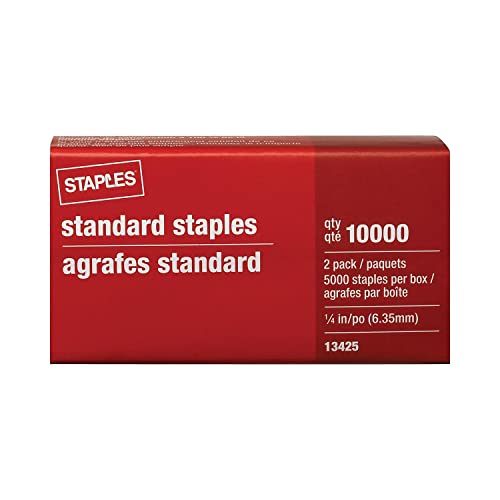
A frequent mistake during home audio setup involves grabbing an office stapler to secure loose speaker wire. Standard office staples, such as Staples 648695 standard paper staples, are engineered strictly for binding paper sheets. These fine-wire metal fasteners have sharp chisel points and narrow crowns designed to penetrate paper reams. They lack the width, structural depth, and protective clearance needed to route any insulated electrical conductor.
Driving a standard paper staple over speaker wire almost always cuts through the outer protective jacket. Once the sharp metal leg breaches the plastic insulation, it contacts the copper strands inside the cable. If both positive and negative conductors touch the metal staple, an electrical short circuit occurs. When you turn on your audio receiver, that short circuit can trip protection circuits or damage amplifier channels.
Even if a standard staple does not sever the wire immediately, ongoing physical pressure leads to insulation breakdown. Natural room temperature shifts and foot traffic along baseboards cause cables to rub against the sharp metal edges. That repeated friction cuts into the conductor jacket, causing crackling audio or signal loss over time. Keep standard desk staples in the office supply drawer and use dedicated low-voltage clips for audio cables.
Low-Voltage Fasteners: Gardner Bender PSB-160 Plastic Staples Analysis
Dedicated low-voltage fasteners provide the mechanical support and electrical safety required for clean audio installations. The Gardner Bender PSB-160 Low-Voltage Plastic staple is designed specifically to secure bell wire and low-voltage speaker cable to wood surfaces. Featuring a 3/16 inch saddle width, this fastener accommodates standard two-conductor speaker lines without pinching the copper core. The curved saddle cradles the wire gently, allowing the cable to maintain its structural integrity over time.
The construction utilizes UV-resistant polyethylene plastic that will not crack, splinter, or conduct electricity. Dual zinc-plated drive nails sit on either side of the plastic bridge, isolating the steel fasteners from the audio wire. When driving the nails into wood trim or wall studs, the plastic body acts as a positive depth stop that prevents over-hammering. This design ensures that you cannot accidentally drive a nail through the audio conductor.
The black finish of the Gardner Bender PSB-160 blends cleanly into dark baseboards, stage platforms, or entertainment centers. Spacing these clips roughly two feet apart along straight runs keeps the line neat and secure. Their splinter-free design allows for quick handling during room wiring projects. By holding the wire firmly without crushing the jacket, they maintain consistent electrical performance across the entire run.
Insulated Wire Tacks: Tandefio Insulated Wire Staples Analysis
For setups where smaller fasteners are desired, Tandefio 200 Pcs Insulated Wire Staples offer a compact alternative. These U-type cable tacks feature an insulated bridge with a 1/8 inch arch designed for thin gauge wiring. They are well suited for lightweight speaker wire, bell wire, thermostat lines, and small intercom cabling. Their subtle brown finish makes them particularly discreet when attached to natural wood baseboards or darker trim.
The insulated coating across the crown of the tack serves as a vital protective barrier between the metal fastener and wire insulation. This buffer prevents bare metal from wearing away the cable jacket if the wire experiences slight movement. Because the arch width measures 1/8 inch, these tacks match thin eighteen or twenty gauge wire runs. Forcing thick fourteen gauge cable under a 1/8 inch tack will pinch the jacket, so size matching is critical.
Installation requires gentle tapping with a small tack hammer rather than heavy strikes from a framing tool. Spacing the tacks every eighteen to twenty-four inches maintains straight cable lines without placing excessive tension on any single point. The two-hundred piece pack provides enough fasteners to complete multiple room setups or long baseboard runs. Installing each tack straight ensures a professional appearance that keeps audio wiring secure.
Safe Installation Practices for Running Speaker Wire on Walls and Trim
Routing speaker wire cleanly requires thoughtful planning before driving fasteners into a wall or baseboard. Always map out the cable path from your audio amplifier or desktop system to each speaker location. Avoid running speaker lines parallel to 120-volt household electrical wiring inside wall cavities. Running unshielded audio wire directly alongside high-voltage power lines can induce electromagnetic interference, causing an audible 60-hertz hum through your speakers.
When running cables upward toward elevated speakers, such as wall hanging speakers or surround mounts, secure the wire along the inside corners of door frames or trim. This technique conceals the wire naturally and minimizes visual clutter without cutting holes in drywall. When fastening into drywall, ensure the nails reach wood framing, or use appropriate light-duty anchors so the clips stay firm. Loose clips allow cables to sag, creating loops that can snag on passing objects.
Leave a small amount of slack at both ends of the cable run rather than pulling the line completely taut. A tight cable places continuous strain on speaker terminals and increases the risk of pinching at the fastener. Extra slack also lets you reposition speakers slightly or access equipment connections during routine maintenance. Once the wire is secured, check all connections to confirm that polarity remains consistent between your amplifier and speaker terminals.
Audio Quality and Electrical Considerations in Cable Management
Maintaining good audio quality involves preserving the physical geometry and electrical properties of your speaker wire. Speaker wire consists of stranded copper or copper-clad aluminum insulated by flexible polyvinyl chloride. When a wire is crushed by an improper staple or bent tightly around a sharp edge, internal strands can fracture. Severing copper strands reduces the effective conductor gauge, which increases electrical resistance along the wire run.
Higher resistance along a speaker cable reduces the damping factor of your amplifier and can cause subtle loss in high-frequency detail. On wire runs exceeding thirty feet, using sixteen-gauge or fourteen-gauge wire paired with suitably sized fasteners like the Gardner Bender PSB-160 prevents resistance buildup. Thicker wire requires a wider staple saddle so the plastic bridge holds the jacket without cutting into the outer insulation. If the saddle is too narrow, pressure can degrade the jacket over time.
Before securing cable runs permanently, test your audio system at moderate volume levels. Confirm that both audio channels reproduce sound cleanly without distortion, crackling, or unexpected volume drops. You can also use a digital multimeter to check continuity across each conductor before final hookup. Verifying your wiring path beforehand ensures that no hidden shorts exist, saving you the trouble of pulling staples out of finished trim later.
Staples Versus Specialized Audio Retailers: Choosing the Right Source
Deciding where to purchase audio hardware depends entirely on your specific listening goals and system needs. Staples is a convenient destination when you need quick access to desktop PC speakers, USB conference pucks, or basic cable management supplies. If you work from home and need a reliable audio upgrade for online meetings or basic video playback, the retail store offers readily accessible options. Their inventory is tailored for straightforward plug-and-play operation with minimal setup complexity.
However, if you are building an immersive multi-channel home theater or a high-fidelity listening room, specialized audio retailers remain the better choice. Dedicated audio stores offer a broader selection of passive speakers, discrete power amplifiers, subwoofers, and architectural in-wall hardware. They also stock specialized in-wall rated speaker wire designed to meet local building codes. Recognizing these retail differences helps you choose the right store for your specific audio project.
Summary of Practical Steps for Your Audio and Wiring Setup
Understanding what Staples offers allows you to separate desktop audio convenience from dedicated home audio projects. While the retail store provides dependable computer speakers and office conference gear, installing speaker wire safely demands specialized low-voltage plastic staples rather than ordinary paper fasteners. Using insulated fasteners like Gardner Bender or Tandefio clips protects your cables from short circuits and preserves clean amplifier performance. By matching your equipment selection to your listening space and routing cables carefully, you ensure reliable sound and a clean installation.


Write Your Review
No reviews yet. Be the first to share your experience!