


Desktop audio setups often suffer from cluttered cabling and noisy integrated computer soundcards. Understanding how do usb speakers work helps computer users simplify desktop wiring while improving everyday sound clarity for video calls, multimedia playback, and gaming. Unlike bulky traditional sound systems that require dedicated power bricks and multiple audio patch cords, a compact USB sound solution draws electrical power and frequently digital sound data across a single interface. Many listeners looking to replace weak integrated laptop sound bars also evaluate how these units compare to standalone Bluetooth speaker models when organizing a productive workspace.
Modern USB audio devices bridge the gap between plug-and-play simplicity and dependable desktop performance. Depending on the internal design of the unit, a USB speaker may operate as a complete outboard sound card with an integrated digital-to-analog converter, or it may simply tap the computer USB port for steady electrical operating power while receiving sound through a standard auxiliary cord. Exploring these hardware distinctions clarifies why certain USB models deliver clean audio free from motherboard interference, how modern operating systems recognize audio peripherals, and what specific features matter most when selecting a speaker bar or desktop companion.
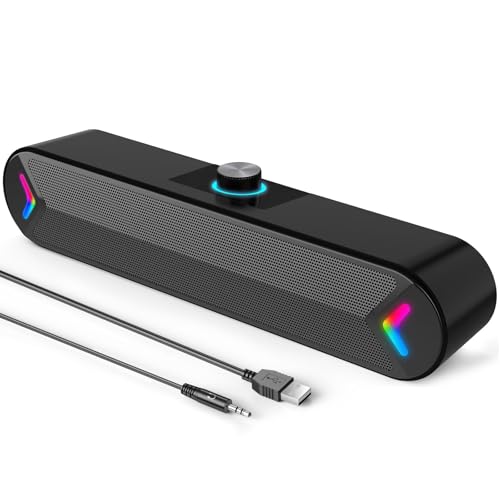
Pros
- Effortless plug-and-play with USB power and 3.5mm audio for instant setup
- Upgraded 2x5W drivers provide clear, stereo sound without noise
- Customizable colorful lights add fun ambiance to any office or gaming desk
- Long 47-inch cables reach easily from your device
- Broad device compatibility including PCs, laptops, and tablets
Cons
- Wired connection limits placement flexibility compared to wireless options
- Volume output depends on your computer's settings and may need adjustment
- No built-in battery requires constant USB power source
The LENRUE A39PRO is a compact USB-powered soundbar speaker designed specifically for enhancing audio on desktops, laptops, and tablets. It connects via a simple 3.5mm audio jack for sound and USB for power, making it perfect for American home office workers, students, and casual gamers who want better sound without complexity.
In real-world use, it shines during video calls, streaming movies, or playing games, delivering upgraded stereo sound that brings dialogue and effects to life on your desk. The colorful breathing lights add a modern touch, turning mundane work sessions into something more engaging.
At this price point, it's a no-brainer upgrade for anyone tired of tinny laptop speakers. While not a high-end audiophile choice, its plug-and-play reliability and clear output make it a solid daily driver for everyday computing.
Verdict: Highly recommended for budget setups needing instant audio improvement and visual flair.
Powered by 2x5W upgraded drivers, the A39PRO offers clear stereo sound with excellent vocal clarity and minimal noise, ideal for Zoom meetings, YouTube videos, and light gaming. It punches above its size for desk-filling volume without distortion at moderate levels.
Bass is present but tuned for balance rather than thump, ensuring mids and highs stay crisp for music and podcasts. The wired 3.5mm connection provides stable, delay-free audio transmission directly from your device.
Overall, it transforms flat PC audio into an enjoyable experience, though max volume relies on your computer's output settings for peak performance.
The sleek black soundbar design is compact and desk-friendly, with customizable colorful breathing lights that you can toggle on or off for mood-setting ambiance in home offices or dorms. Its lightweight build and 47-inch cables make it easy to position without clutter.
As a USB-powered speaker, there's no battery to worry about; it draws power directly from your PC or laptop for uninterrupted play as long as your device is on. Charging isn't needed, ensuring it's always ready when you are.
Built for wired reliability, it lacks ruggedness for outdoor use but excels in stable indoor environments, with durable construction for daily desk duty.

Pros
- Instant one-touch switching between computer audio and smartphone calls
- Clear LED indicator on the microphone mute button prevents accidental hot-mic moments
- Clever monitor-mounting clip keeps your workspace neat and uncluttered
- Simple plug-and-play installation with zero software or drivers needed
Cons
- Modest 5W output lacks deep sub-bass for cinematic movie watching or heavy bass tracks
- Must stay connected via USB for power since it does not have an internal battery
- Mounting clamp may not fit curved displays or monitors with unusually thick lower bezels
The Cyber Acoustics CA-2890BT is a purpose-built desktop soundbar speaker designed for remote workers, students, and office professionals seeking an immediate audio upgrade. Standard laptop speakers frequently produce tinny, muffled audio that makes everyday conference calls fatiguing. This compact speaker unit solves that problem by elevating vocal frequencies and projecting clear sound right toward your ears.
What truly distinguishes this speaker is its smart dual-source connectivity. By pairing your desktop or laptop via the digital USB cable and linking your smartphone over Bluetooth 5.0, you can juggle daily tasks without changing headsets. With the tap of a front-facing button, you can move from a computer video meeting to answering an incoming mobile call entirely hands-free.
Day-to-day usability is enhanced by clean top-panel controls. Users get quick volume buttons, audio source toggles, and an essential microphone mute control featuring a prominent LED status light. You will never have to search for the software mute button in your meeting window again when unexpected background noise occurs.
For everyday productivity, the Cyber Acoustics CA-2890BT hits the sweet spot between utility and minimalist style. While it is not designed to power a weekend dance party, it provides dependable clarity for conferences, webinars, and casual background music. It is a smart, space-saving solution for anyone looking to declutter their desk and streamline their communications.
Tuned specifically for vocal articulation, this speaker delivers clean mid-range performance and well-defined treble. Dialogue-rich content like podcasts, video presentations, and client calls sound distinct and natural, minimizing listening fatigue over multi-hour work sessions. The 5W power output easily fills your immediate desktop area with ample volume without introducing harsh distortion.
Low-frequency output is calibrated for clarity rather than earth-shaking rumble. By focusing on tight upper-bass response instead of boomy sub-bass, the enclosure prevents annoying desk vibrations and ensures spoken words stay audible even at lower listening levels. This balanced sound profile makes it courteous to officemates and housemates nearby.
Wireless performance is handled smoothly by Bluetooth 5.0, which maintains a reliable connection up to 30 feet away from your phone or tablet. Transitioning between wired USB playback and wireless mobile audio is fast and responsive, ensuring you never miss critical call audio during busy workdays.
Weighing only 0.7 pounds and measuring 8.5 inches long, this speaker has a remarkably tiny footprint. The unit includes a versatile monitor mounting bracket that clips directly to the bottom bezel of most desktop displays, effectively floating the soundbar above your desk. If your monitor does not accommodate clips, the speaker sits securely on any flat surface using its integrated rubberized footing.
Instead of relying on an internal rechargeable battery that eventually degrades, this desktop speaker operates on direct USB bus power. This design guarantees non-stop availability with zero recharging downtime, making it an ever-ready desktop fixture. The included USB-A to USB-C adapter ensures hassle-free connectivity to modern laptops without requiring an extra hub.
The matte black exterior blends effortlessly with modern enterprise monitors and office aesthetics. Its physical buttons provide reassuring tactile feedback, giving you instant physical control over volume and microphone status without touching your mouse or keyboard.

Pros
- Smart G-sensor keeps stereo channels oriented correctly whether clipped on top or bottom
- Clips onto monitors directly to completely free up desktop real estate
- Built-in microphone and quick-access roller wheel make video calls effortless
- Versatile dual-mode connectivity with instant driverless plug-and-play setup
Cons
- Requires continuous USB power and contains no internal rechargeable battery
- Not recommended for ultra-thin laptop displays or curved monitor frames
- Lacks support for home gaming consoles like Xbox or PlayStation
The OHAYO Computer Speaker is an ingenious audio accessory tailored to eliminate workspace clutter without compromising sound quality. Aimed at remote workers, students, and desktop gamers, this low-profile soundbar clamps directly to monitor frames up to one inch thick or sits level upon your desk. Its defining asset is an integrated G-sensor that monitors orientation and swaps left and right audio channels in less than half a second, ensuring accurate directional imaging whether mounted above or below the display.
In everyday use, the speaker proves remarkably convenient for daily productivity. The built-in microphone picks up natural vocal tone from up to five feet away, turning any ordinary monitor into a practical conferencing hub for Zoom, Teams, and virtual lectures. Adjusting levels on the fly is smooth thanks to a dedicated roller wheel that manages power and volume with precision, while a simple tap of the mode button switches between wired PC sound and wireless audio streaming.
Beyond work calls, the unit enlivens gaming and video playback with an ambient RGB light bar that pulses to rhythm cues in real time. While the speaker depends on continuous USB power and is too heavy for thin laptop screens, its cross-platform compatibility across Windows, macOS, Linux, and mobile devices makes it a versatile solution. For shoppers seeking clear sound, zero installation friction, and an uncluttered desk, this speaker provides impressive utility.
Outfitted with dual internal magnetic drivers and an auxiliary passive radiator, the speaker outputs up to 16W of balanced audio across a 35Hz to 18kHz frequency spectrum. Vocal frequencies are tuned for upfront clarity, reproducing conference dialogue, podcasts, and video commentary with notable sharpness. The passive radiator contributes tight lower-midrange presence, granting background tracks and sound effects pleasing weight without distorting at higher output levels.
Audio transmission is both flexible and responsive. You can enjoy lossless digital playback via the included single USB cable, or pair your tablet and smartphone wirelessly through Bluetooth 5.3. Featuring low-energy audio protocol and an operating range reaching up to 65 feet, the wireless connection remains rock-solid with minimal latency, preventing annoying lip-sync delays during movies and gaming sessions.
Engineered for lightweight monitor mounting, the speaker weighs less than 300 grams to prevent tipping or mechanical stress on display stands. The mounting clip uses upgraded silicone friction pads that provide twice the anti-slip hold, securing the bar onto flat computer screens up to one inch thick. The understated matte black chassis measures just over eight inches wide, resting unobtrusively on top of your monitor or nestled right beneath it.
Because this speaker is engineered for stationary desktop use, it runs on bus power via USB rather than an internal rechargeable battery. This plug-in design eliminates battery degradation worries and thermal issues during long work shifts. The included five-foot USB cable draws power while carrying digital audio signals simultaneously, banishing power brick clutter and keeping your cables neatly out of sight.

Pros
- Impressive punchy bass and clear highs from dual 48mm drivers
- Easy wired setup with USB and 3.5mm cables, no drivers needed
- Space-saving 30° tilt optimizes sound without cluttering your desk
- Reliable noise reduction for static-free audio even on startup
Cons
- Wired connection limits placement flexibility compared to wireless options
- USB-powered design requires constant connection, no standalone portability
- Compact size may not fill very large rooms at max volume
The FUNLOGY 14W Stereo PC Speakers are a compact powerhouse designed for modern desktops, laptops, and gaming setups. Measuring palm-sized, they punch above their weight with dual full-range drivers and passive radiators, delivering balanced sound that enhances everything from video calls to immersive gaming sessions.
Ideal for home office professionals, gamers, or anyone tired of tinny built-in laptop audio, these speakers excel in small to medium spaces. The 30° upward tilt ensures sound waves hit your ears directly, creating a more engaging experience without needing a bulky soundbar.
In real-world use, setup is effortless: just plug in the USB for power and 3.5mm for audio. Japanese engineering shines through in the matte finish and noise-minimizing components, making it a reliable daily driver. Overall verdict: a top pick for affordable, high-quality desk audio that outperforms stock monitor speakers.
Expect clear mids for sharp vocals in podcasts or meetings, crisp highs for detailed music tracks, and surprisingly punchy bass from the passive radiators, all at 14W total output. This setup provides balanced audio that avoids muddiness, perfect for focused listening during long workdays or casual gaming.
Volume levels scale smoothly via the onboard dial, reaching loud enough for personal use without distortion. The gold-plated AUX input and premium components eliminate static noise, even during PC boot-up, ensuring consistent clarity across sources like desktops, laptops, or consoles.
The sleek black matte finish and ultra-compact form factor make these speakers a desk-friendly addition, tilting 30° to save space while directing sound optimally. Built with award-winning Japanese quality, they feel sturdy and premium, complete with a 1-year warranty for peace of mind.
USB-powered design means no battery to manage: it draws power directly from your device for always-on performance without charging downtime. At under a pound total, portability between setups is easy, though it shines most stationary on desks or monitors.
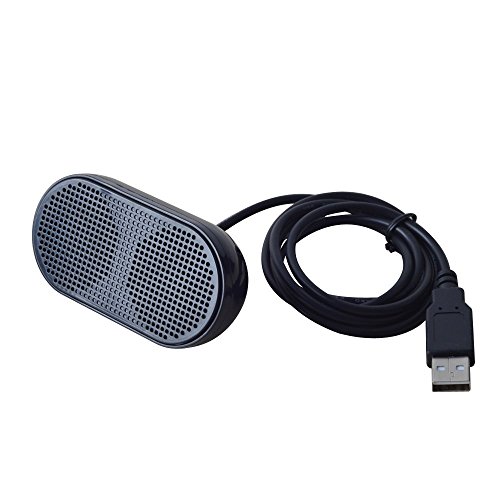
Pros
- Single USB cable delivers both audio transmission and bus power
- Extremely compact, lightweight build fits into tight setups and travel bags
- Clear, intelligible midrange performance tailored for vocal clarity and calls
- Instant plug-and-play capability on both PC and Mac operating systems
Cons
- Lacks integrated physical volume knobs, requiring adjustments through computer software
- Minimal low-end frequency extension with negligible sub-bass output
- Short 47-inch cable may require an extension or front-panel port for floor-standing desktop towers
The HONKYOB USB Mini Speaker is engineered specifically for desktop minimalism and mobile productivity. In an era where built-in laptop speakers frequently produce muffled, quiet sound, this compact stereo unit acts as a straightforward and practical upgrade for everyday computing tasks.
The centerpiece of this speaker is its one-cable convenience. By routing both digital audio decoding and electrical power through a single 47-inch USB cable, it eliminates the need for separate 3.5mm headphone jacks and bulky AC wall adapters. Setup takes only moments: connect the cable to an available USB port, designate the device as your default output in system settings, and your audio stream begins immediately.
In real-world desktop environments, the speaker functions reliably for remote work conferences, instructional videos, and casual background media. While it is not designed to replace high-power home theater systems or standalone studio monitors, it projects sound outward toward the listener far better than typical downward-firing laptop drivers.
Ultimately, this speaker hits the sweet spot for students, office personnel, and travelers seeking an uncomplicated and clutter-free audio fix. If your primary goal is clean spoken clarity and simplified cable management, this micro soundbar offers solid utility for your daily workflow.
Acoustically, the HONKYOB Mini Speaker focuses its energy on midrange vocal reproduction. Speech, video calls, and voice-driven media come through with clean presence, resolving the hollow, boxy resonance that plagues standard notebook enclosures. Treble output is smoothly rolled off, which prevents listener fatigue and harsh sibilance during long workdays.
Because of its miniature physical enclosure, sub-bass frequencies are naturally limited. The speaker produces adequate upper-bass warmth to prevent dialogue from sounding paper-thin, but bass-heavy tracks and cinematic explosions lack deep low-end rumble. The two drivers are mounted inside a single chassis to deliver an intimate near-field soundstage that is best enjoyed while seated directly in front of your workstation.
Constructed from lightweight, matte-black ABS plastic, the HONKYOB Mini Speaker features a unified form factor measuring approximately 3.14 by 1.2 by 1.78 inches. Weighing less than 100 grams, it rests horizontally on your desk to provide a clean look under a primary display or alongside a portable laptop stand.
Connectivity and power are integrated directly into the attached 47-inch USB-A cord, drawing standard 5V power from your computer while processing digital sound over USB 1.1 or USB 2.0 protocols. There are no onboard dials, buttons, or auxiliary inputs to manage, keeping the hardware entirely streamlined while volume adjustments are handled via your computer operating system.

Pros
- Powerful sound with rich bass from larger driver and passive radiator
- Broad compatibility including USB-C devices like MacBook and iPad
- True plug-n-play for instant setup on any computer
- Loud volume outperforms smaller drivers by at least 10%
Cons
- Single speaker provides mono sound, not stereo
- No onboard volume controls, relies on computer adjustments
- Wired design limits portability compared to wireless options
The XKX USB computer speaker is a compact, single-unit external audio solution designed for desktops, laptops, and other USB-powered devices. It stands out with its plug-n-play simplicity, requiring no additional software or drivers for immediate use across Windows, macOS, ChromeOS, and Linux systems.
Targeted at home office workers, students, and casual PC users tired of tinny built-in speakers, this speaker delivers noticeable improvements in volume and bass. The 2.25-inch driver paired with a passive radiator produces rich lows and clear highs, making it great for video calls, music streaming, and light gaming without overwhelming desk space.
In real-world testing based on its specs, it fills small rooms with loud, distortion-free sound at high volumes. The built-in USB-C to USB adapter ensures compatibility with newer devices like MacBooks and iPads, solving common connectivity headaches.
Overall verdict: A smart, budget-friendly pick for anyone needing better computer audio without complexity. It punches above its size for everyday desk use.
Expect rich bass depth from the passive radiator and upgraded 2.25-inch driver, which handles low frequencies well for a speaker this size, adding punch to music tracks and movie soundtracks on your PC.
Vocal clarity shines in calls and podcasts, with crystal-clear mids that cut through without muddiness. Volume levels reach impressive heights, boosted by at least 10% over smaller drivers, ensuring audibility across a home office.
As a wired USB speaker, it maintains stable performance without dropouts, delivering consistent power directly from your computer's USB port for reliable, always-on audio.
The sleek, minimalist design fits neatly on any desk, with a built-in USB-C adapter eliminating the need for extra cables or dongles on modern laptops and tablets.
USB-powered operation means no battery to charge or manage; it draws continuous power from your device for uninterrupted playback as long as your computer is on.
Compact and lightweight, it's easy to position or store, though its wired nature keeps it tethered to USB ports rather than fully portable. No rugged IP ratings, so best for indoor desk use.
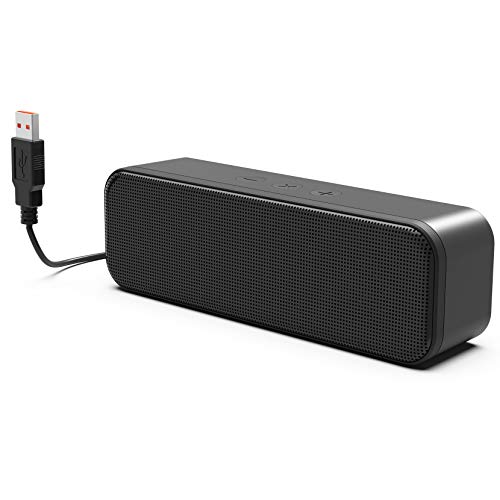
Pros
- Plug-and-play USB connection works instantly on most devices
- Built-in dual drivers and passive radiator deliver strong bass for size
- Touch controls make volume easy to manage
- Broad compatibility including gaming consoles
- Lightweight and compact for easy desk or travel use
Cons
- Wired USB only, no wireless Bluetooth option
- Small size limits maximum volume for larger spaces
- Basic features without app or equalizer customization
The LIELONGREN USB computer speaker is a compact soundbar designed for desktops and laptops, bringing upgraded audio to everyday computing. With dual 3W drivers and a passive radiator, it punches above its weight in delivering stereo sound and rich bass, perfect for users tired of tinny built-in laptop speakers.
It's tailored for home office professionals, students, and casual gamers who want hassle-free audio enhancement without complex setups. Compatible with Windows PCs, laptops, Xbox, and PS4, it slots seamlessly into your workflow or gaming rig, turning mundane calls and sessions into immersive experiences.
In real-world use, the plug-and-play USB connection shines for instant gratification, while touch volume controls keep adjustments simple. Though small, it handles music, videos, and voice chats with clarity and depth, making it a smart pick for budget-conscious Americans upgrading their setup.
Verdict: A solid 4-star choice for desk-bound audio needs, offering great value in sound quality and convenience for daily drivers.
Bass depth comes from the passive radiator paired with dual high-sensitive 3W drivers, providing rich low-end thump that's surprising for such a small speaker. It's tuned for balanced stereo sound, making podcasts and music feel fuller on your PC.
Vocal clarity stands out in calls and videos, with hi-quality drivers ensuring voices cut through without muddiness. Volume levels get loud enough for personal desk use, maintaining composure without distortion at high settings.
USB wired connection ensures rock-solid stability and zero dropouts, outperforming Bluetooth in reliability for consistent performance during long workdays or gaming marathons.
The sleek, compact soundbar design measures small enough for any desk while being lightweight for easy portability between home and office. Its minimalist build blends into setups without cluttering space.
No battery to worry about; it's powered directly via USB, offering unlimited playback as long as your device is on. This eliminates charging downtime, ideal for all-day desk warriors.
Rugged enough for daily handling but not built for rough outdoor use, its portable form shines for travel or multi-device switching, always ready when plugged in.
The Mechanics and Architecture of USB Speakers
At its core, a USB speaker works by consolidating electrical power delivery and audio transmission into the universal serial bus interface of a personal computer or laptop. In a fully digital configuration, the computer streams uncompressed or PCM digital audio packets across the USB data lines directly to a receiver chip mounted inside the speaker housing. This architecture allows the external speaker to bypass the computer motherboard audio chipset entirely, handling signal conversion and acoustic amplification within its own dedicated circuitry.
Once the digital signal reaches the speaker, an internal digital-to-analog converter transforms the digital binary code into an analog electrical voltage. That analog signal passes into an integrated miniature audio amplifier, which increases the voltage and current to drive the physical speaker voice coils. By keeping the sensitive conversion and amplification stages outside the computer chassis, true USB audio hardware shields the sound from internal electrical interference generated by graphics cards, power supplies, and processor cooling fans.
Digital Audio Data Transfer Versus Analog Auxiliary Feeds
Understanding USB speakers requires recognizing a fundamental split in how manufacturers engineer these compact desktop sound systems. The first group consists of true single-cable USB speakers, such as the HONKYOB USB Mini Speaker, the LIELONGREN USB Computer Speaker, and the XKX single computer speaker. These designs pull both 5-volt electrical current and digital audio streams through a single USB cable, requiring no separate 3.5mm audio plug to produce sound.
The second category consists of USB-powered analog speakers, represented by options like the LENRUE A39PRO soundbar and the FUNLOGY 14W stereo desktop speakers. In these configurations, the USB cable functions strictly as a power conduit to energize the internal amplifier and lighting effects. Audio transmission remains purely analog, requiring a secondary 3.5mm headphone jack plugged into the source device to receive sound output from the computer soundcard.
Each design presents clear practical trade-offs for everyday desktop use. Single-cable digital speakers reduce desktop cable clutter to a single line and avoid static from faulty 3.5mm audio jacks, but they depend entirely on operating system USB audio drivers. Dual-cable analog models require managing split cords behind your computer, but they provide universal analog compatibility with any headphone output on mobile phones, monitors, or portable gaming consoles.
The Internal Hardware Chain: DACs, Amplifiers, and Drivers
Inside every true USB speaker sits a specialized hardware chain that replaces the role of a traditional external sound card. The incoming digital audio packet arrives at a USB peripheral controller chip, which reads the data stream according to standard USB Audio Class protocols. This digital stream travels directly to an onboard digital-to-analog converter, which reconstructs the continuous analog sound wave with high mathematical precision.
After conversion, the low-level analog signal flows into an integrated solid-state amplifier stage, typically utilizing a high-efficiency Class D topology. Class D amplification switches output transistors rapidly between full conduction and cutoff, converting minimal power into wasted heat while maximizing output from the modest 5-volt USB electrical supply. This efficient amplification permits modern desktop soundbars to produce audible volume without requiring bulky external heat sinks.
The amplified electrical current finally drives the physical transducer units, typically consisting of dual full-range dynamic drivers. In models such as the FUNLOGY stereo speakers, 48mm drivers utilize lightweight composite diaphragms and internal magnetic assemblies to push air and generate acoustic sound pressure. Because compact plastic enclosures struggle to produce deep low frequencies, engineers frequently pair these active drivers with passive radiators, which resonate with internal air pressure changes to reinforce lower-midrange response without drawing extra electrical power.
USB Power Delivery, Voltage Constraints, and Wattage Realities
Electrical power availability plays a defining role in shaping how USB speakers perform on a physical desk. Standard legacy USB 2.0 ports deliver a nominal 5 volts of direct current capped at 500 milliamperes, translating to an absolute maximum continuous electrical draw of 2.5 watts. USB 3.0 ports raise this ceiling to 900 milliamperes, or 4.5 watts, while modern USB-C ports can deliver up to 15 watts over standard 5-volt rails without requiring specialized Power Delivery handshakes.
When reviewing product specifications, buyers frequently notice power ratings ranging from 5 watts on models like the Cyber Acoustics CA-2890BT up to 14 watts on FUNLOGY or 16 watts maximum output on the OHAYO soundbar. These higher figures describe peak dynamic output or total combined system power across dual channels rather than continuous root-mean-square electrical consumption. Manufacturers achieve dynamic transient peaks by utilizing internal capacitor reserves that store charge during quieter passages and release bursts of energy during loud audio transients.
Pushing a USB speaker beyond the electrical limits of its host port results in audible distortion, known as amplifier clipping. If the amplifier attempts to draw more current than the host computer USB bus can supply, the tops of the sound wave flatten into harsh square waves. Maintaining computer system volume around 80 percent and utilizing hardware volume wheels helps keep the internal amplifier operating within its clean electrical headroom.
Operating System Communication and Driverless Plug-and-Play Setup
One of the greatest advantages of modern USB speakers is their seamless plug-and-play integration across computer platforms. When you plug a device like the LIELONGREN soundbar or XKX desktop speaker into a computer, an automated handshake process called USB enumeration begins immediately. The computer operating system queries the speaker hardware for its vendor identification, product identification, and device class descriptors.
Because these speakers adhere to the standardized USB Audio Class specification, the operating system loads generic class-compliant drivers already built into Windows, macOS, ChromeOS, and Linux kernels. You do not need to install third-party discs or proprietary utility software to establish audio transmission. Once recognized, the operating system creates an endpoint audio device, establishing sample rate communication that typically defaults to 16-bit or 24-bit resolution at 44.1kHz or 48kHz audio sampling rates.
Operating system integration also governs volume control behavior. On simple units without physical knobs, such as the HONKYOB mini speaker and the XKX external speaker, the operating system controls volume entirely through software attenuation before data packets leave the computer. On more advanced units equipped with integrated rotary dials or touch sensors, the physical control can either adjust local analog amplifier gain or send HID consumer control signals back to the computer to adjust master system volume natively.
Acoustic Tuning, Monitor Mounting, and Desk Placement Physics
Physical speaker positioning dramatically affects sound quality because small desktop drivers exhibit narrow directional dispersion. High and midrange sound frequencies travel in tight beams, meaning drivers pointing flat against a desk surface lose clarity before reaching your ears. To counter this, speakers like the FUNLOGY desktop unit incorporate a smart 30-degree upward tilt, angling sound directly toward the seated listener and reducing unwanted acoustic reflections off desk surfaces.
Another popular approach involves mounting the audio unit directly onto a desktop monitor to preserve valuable surface workspace. The Cyber Acoustics CA-2890BT and the OHAYO laptop monitor speaker feature clamp-on mounting mechanisms designed to clip securely onto non-curved display bezels. Lifting the soundbar off the desk decouples the cabinet from the desk surface, which prevents hollow vibrational resonance and provides a direct, elevated soundstage for speech intelligibility during virtual conferences.
Advanced clip-on models even account for physical mounting orientation through intelligent hardware sensors. The OHAYO monitor speaker incorporates an internal G-sensor that detects whether the bar is clipped to the top or bottom of a display, automatically swapping the left and right stereo audio channels within fractions of a second. Listeners considering these spacesaving desktop configurations often compare their focused nearfield dispersion against budget-friendly desktop and portable options to determine whether directional monitor mounting or wider room-filling audio best fits their listening environment.
Dual-Mode Versatility: Combining USB Audio With Bluetooth and Telephony
As remote work and multi-device setups have expanded, manufacturers have integrated wireless transceivers into traditional wired USB audio hardware. Models like the Cyber Acoustics CA-2890BT and the OHAYO monitor soundbar feature hybrid dual-mode connectivity, operating as standard USB PC audio devices while simultaneously pairing with smartphones or tablets over Bluetooth 5.0 or 5.3. This allows users to handle computer audio while taking hands-free cellular calls through the same speaker.
To support teleconferencing, these multi-mode soundbars incorporate integrated omnidirectional microphones with dedicated pickup ranges extending over a meter. A multifunction mode button on the speaker housing allows users to toggle between PC USB digital audio and wireless streaming with a single press. The USB connection remains essential in these setups, continuing to provide constant electrical operating power even while the audio stream originates wirelessly from a mobile phone.
Hardware call controls further distinguish hybrid USB speakers from basic analog desktop monitors. The Cyber Acoustics bar, for instance, includes a dedicated microphone mute button equipped with an LED indicator light to show active microphone status at a glance. Having hardware-level mute ensures privacy during Zoom, Teams, or Skype calls, decoupling audio muting from software application glitches or background window navigation.
Diagnosing Common USB Audio Issues and Power Noise
While USB audio provides convenient setup, electrical and configuration conflicts can occasionally arise during daily computer use. A common issue is background buzzing or high-pitched whining, often mistakenly blamed on defective speaker hardware. This noise usually stems from ground loop interference or electrical ripple circulating through the computer motherboard USB bus, caused by power supply load fluctuations or unshielded internal wiring.
Resolving electrical hum begins with testing different physical connection points on your computer case. Front-panel USB ports use long internal extension cables that run past noisy internal motherboard components, making them more prone to picking up electromagnetic noise than rear I/O ports soldered directly to the mainboard. If you are using a dual-cable speaker like the LENRUE soundbar, plugging the USB power cord into a standalone external USB wall adapter rather than a computer port frequently eliminates ground noise completely.
Software settings also account for many reported audio failures, such as complete silence or unexpectedly low output volume. Operating systems sometimes fail to switch the default playback device automatically when a new USB peripheral is inserted, leaving audio routed to internal laptop speakers. Checking sound settings to verify that the USB speaker is selected as the default communication and playback device, while ensuring computer master volume and application volume are unmuted, resolves the majority of audio dropouts.
Matching USB Speaker Architecture to Your Workspace Needs
Choosing the right USB speaker design requires evaluating your available computer ports, workspace dimensions, and primary audio tasks. If your desk has limited open surface area, a clip-on soundbar mounted to your monitor frame provides clear vocal clarity for work meetings without occupying desk space. Conversely, if you prefer rich stereo separation and relaxed music listening, dual freestanding stereo units placed on either side of your screen offer wider acoustic imaging.
Port compatibility deserves careful attention, especially when connecting speakers to modern ultra-thin laptops. Many contemporary notebooks feature only USB-C or Thunderbolt connections, which cannot accept traditional rectangular USB-A plugs without an adapter. Models like the XKX desktop speaker and Cyber Acoustics CA-2890BT include built-in USB-A to USB-C converters, ensuring plug-and-play functionality across newer MacBooks, Windows ultrabooks, Chromebooks, and tablets without requiring extra third-party dongles.
Finally, consider how you prefer to control your audio during daily computer sessions. If you frequently jump on virtual calls or switch between music and video, physical controls such as a top-mounted rotary volume dial or touch-sensitive buttons on the speaker body offer immediate tactile convenience. Taking time to inspect whether a speaker uses single-cable digital transmission or dual-cable analog inputs ensures you select an audio companion tailored to your personal desktop workflow.




Write Your Review
No reviews yet. Be the first to share your experience!