

Audio enthusiasts and everyday listeners often ask what are best speakers for listening to music when designing a personal audio space or upgrading an existing home entertainment setup. Clean sound reproduction depends primarily on balanced acoustic engineering, low harmonic distortion, and accurate driver damping rather than exaggerated marketing claims. Acoustic reflections from walls and furnishings also alter the listening experience before sound reaches your ears. Choosing the right hardware requires matching your daily playback habits with equipment that renders vocals, percussion, and melodic bass lines cleanly.
Playback priorities dictate whether you need neutral reference monitors for critical audio analysis or compact wireless units for spontaneous listening across different rooms. Some listeners prefer high-resolution desktop configurations that integrate smoothly into home work spaces, as explored in our guide to computer Bluetooth sound systems. Other listeners enjoy unconventional portable designs that turn everyday hollow objects into resonant soundboards for casual background audio. Assessing technical attributes like wireless latency, driver extension, and enclosure materials ensures your chosen equipment delivers satisfying musical fidelity.
Pros
- Versatile bone conduction creates fun, instrument-like sounds on everyday objects
- True wireless stereo elevates solo play to full surround experience
- Compact portability fits any bag for on-the-go creativity
- Strong Bluetooth compatibility with major phones and tablets
- Powers up to 115dB for room-filling volume on ideal surfaces
Cons
- Sound quality shines brightest on hollow surfaces, less impressive standalone
- Volume and tone vary by object thickness and material
- Requires two units for full stereo, single unit is mono only
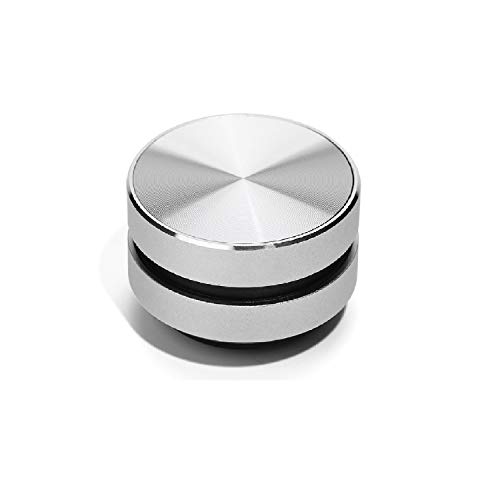
The Bigvapor Bone Conduction Speaker redefines portable audio by using vibration technology to turn any hollow object into a speaker. Stick it on a plastic box, guitar body, or even a dashboard, and enjoy a spectrum of sound effects that mimic different instruments. It's a game-changer for inventive users who want customizable audio without bulky gear.
Ideal for party hosts, travelers, or home tinkerers, this mini speaker pairs via Bluetooth with iPhones, Samsung devices, and tablets for music, calls, games, or podcasts. Two units connect automatically for true wireless stereo, delivering a surround experience perfect for tailgates or casual hangouts.
In real-world tests, it punches up to 115dB on thin hollow surfaces, creating lively vibes for small groups. While surface-dependent, its creativity factor makes it stand out from standard speakers. Verdict: A must-buy for fun-loving audio explorers seeking portable innovation.
Bone conduction tech vibrates surfaces for a dynamic sound signature that shifts from bassy thumps on buckets to crisp highs on glasses. Vocals stay clear for podcasts and calls, while volume hits 115dB on optimal thin objects, filling rooms without distortion.
Bluetooth range holds steady for stable streaming indoors or out, with TWS pairing two speakers for balanced 2.0 stereo. No companion app needed, but expect playful experimentation to dial in the best tone for movies or games.
FM radio adds versatility for live tunes, making it reliable for workouts where traditional speakers falter.
This ultra-mini design weighs next to nothing, making it the ultimate pocketable companion for hikes, beach days, or desk setups. Its rugged build handles daily tosses, though no official IP rating means keeping it dry during pool parties.
Portability reigns supreme, with a form factor that clings to surfaces via vibration alone, no clips required. Pair it with hollow finds like storage bins for extended play without bulk.
Battery life supports hours of vibes on a single charge, quick top-ups keep the party going. Focus on its lightweight freedom for all-day creativity without drain worries.

Acoustic Design Principles and Speaker Selection for Music Playback
Finding what are best speakers for listening to music starts by understanding how transducer designs reproduce recorded signals without coloring the original performance. High-quality music reproduction demands controlled driver response, transparent frequency separation, and stable amplification across dynamic musical passages. A neutral audio system reveals subtle details in rhythm, vocal warmth, and instrumental separation that compressed speakers often smear. Selecting the proper audio equipment requires balancing room size, physical placement, connection methods, and personal sonic expectations.
Sound Signatures and Linear Frequency Response
Accurate music playback relies heavily on a speaker’s ability to reproduce sound evenly across the audible human hearing range. Studio monitors often aim for a flat, uncolored frequency curve so that every instrument sits exactly where mixing engineers placed it. The AIAIAI Unit-4 Wireless+ Portable Studio Monitor exemplifies this approach by delivering neutral acoustic output with low-end bass extension reaching down to 40Hz. This linear response prevents boomy mid-bass frequencies from masking delicate midrange details like acoustic guitar plucks or vocal harmonies.
Consumer speakers frequently use a V-shaped sound profile that boosts upper treble and lower bass frequencies to sound exciting at low volumes. While that boosted profile can make electronic beats sound punchy, it often pushes lead vocals and acoustic instruments into the background. Critical music listeners generally prefer linear tuning because it preserves realistic instrument timbre and prevents listening fatigue during extended sessions. Evaluating how a speaker balances lower bass, delicate midrange frequencies, and airy highs remains central to selecting music-focused hardware.
Low-end extension determines how fully a speaker handles deep synthesizer notes, orchestral timpani, and electric bass fundamentals. Speakers that roll off sharply above 70Hz or 80Hz often sound thin unless paired with external subwoofers or placed close to wall boundaries. Dedicated nearfield monitors achieve extension through optimized woofer excursion, port venting, and digital signal processing tuned specifically to small enclosures. Verifying stated frequency boundaries helps listeners identify whether compact bookshelf monitors can deliver satisfying bass weight on their own.
Comparing Reference Studio Monitors and Consumer Wireless Speakers
Studio monitors and consumer wireless speakers serve distinctly different listening priorities despite using similar underlying physical components. Reference studio monitors prioritize signal honesty, stereo imaging, and tight transient control over synthetic bass enhancements. Listeners exploring balanced options often compare studio monitors against affordable deep bass speakers to see how consumer tuning contrasts with analytical engineering. Evaluating your primary use case helps determine whether reference accuracy or casual musical convenience fits your daily routine.
Active studio monitors house dedicated internal amplifiers paired directly to individual driver units through active electronic crossover networks. This bi-amplified architecture ensures that woofers and tweeters receive tailored power levels without passive component phase shifting. The AIAIAI Unit-4 Wireless+ Portable Studio Monitor demonstrates this engineering philosophy by integrating specialized amplification inside a portable, lightweight structure. Dedicated internal power matching reduces distortion spikes when complex instrumental passages demand rapid dynamic swings.
Consumer wireless units emphasize quick connectivity, durable portable enclosures, and multi-user accessibility for informal environments. These speakers often incorporate dynamic equalizers that automatically adjust tonal balance based on output volume to prevent driver clipping. Casual listeners benefit from this protective tuning during outdoor gatherings or kitchen chores where acoustic precision matters less than room-filling volume. Serious music appreciation, however, usually favors the uncompromising precision and wider soundstage separation that dedicated stereo monitoring pairs deliver.
Novel Transducer Technologies and Surface Conduction
Traditional audio equipment relies on cone woofers and dome tweeters pushing air directly inside tuned wooden or plastic enclosures. Emerging sound designs take unconventional approaches by using mechanical resonance to turn everyday hollow objects into functional acoustic enclosures. The Bigvapor Bone Conduction Speaker operates through this alternative principle by transmitting sound waves directly into physical surfaces. Placing such a transducer onto hollow plastic boxes, cardboard containers, or glass tables transforms those items into vibrating sound generators.
Surface resonance creates distinct tonal shifts depending on the density, stiffness, and internal volume of the contact medium. Thin cardboard boxes produce warm acoustic midrange tones, while rigid acrylic panels emphasize crisper high frequencies. The Bigvapor Bone Conduction Speaker can reach high sound levels up to 115dB when coupled with thin hollow buckets or plastic storage boxes. This experimental sound reproduction gives listeners an engaging DIY method for exploring basic acoustic physics and portable sound generation.
While surface conduction creates entertaining sound dispersion for mobile playback, it naturally lacks the flat frequency response of conventional speaker cones. Material resonance points introduce uneven frequency peaks that color complex musical arrangements unpredictably. Unconventional transducers work wonderfully for casual podcasts, novelty sound experimentation, and travel convenience where carrying traditional wooden speaker cabinets proves impractical. Discerning music playback, in contrast, continues to depend on rigid driver diaphragms mounted inside acoustically inert enclosures.
Room Placement, Nearfield Positioning, and Acoustic Reflections
Physical speaker placement shapes perceived audio quality just as significantly as raw amplifier specifications or driver cone materials. Sound waves reflect off side walls, bare floors, and desk surfaces, creating interference patterns that muddy vocals and blur stereo imaging. Nearfield listening positions place the user roughly three to five feet away from speaker baffles, minimizing indirect wall reflections before sound hits your ears. This tight listening geometry allows compact monitors to present crisp instrumental localization without requiring heavy acoustic wall treatments.
Corner placement significantly increases perceived bass volume through an acoustic phenomenon known as boundary loading or room gain. While extra bass might seem desirable at first listen, boundary loading often creates flabby, boomy bass resonance that overwhelms subtle musical details. Pulling speakers at least eight to twelve inches away from rear boundaries tightens low-end punch and cleans up lower vocal registers. Experimenting with small distance adjustments changes how bass frequencies distribute throughout your specific room layout.
Angling speakers toward your primary listening position creates an accurate stereo sweet spot where sound appears to originate from a centered soundstage. Aligning tweeter heights directly with ear level preserves delicate upper treble frequencies that disperse in narrow, directional beams. Listeners building expansive multi-channel setups often consult guides on dedicated spatial audio setups to understand multi-directional speaker angles. Proper alignment ensures that stereo mixes present a cohesive three-dimensional sonic image rather than two detached sound sources.
Desk decouplers, isolation pads, and floor stands prevent cabinet vibrations from transferring into resting furniture and resonant tabletops. Mechanical vibration bleeding into a hollow wooden desk creates distracting rattles and colors lower midrange clarity noticeably. Simple high-density foam wedges or silicone footers isolate speaker housings effectively from supporting structures. Decoupling your speakers ensures that you hear only the driver diaphragms moving air rather than structural desk vibrations.
Wired Connections and Wireless Transmission Protocols
Signal transmission between audio sources and speaker drivers directly dictates dynamic range preservation and background noise floor levels. Wired connections provide uncompressed, zero-latency signal paths that protect the integrity of high-resolution digital master files. Professional studio monitors frequently provide balanced analog inputs to reject electrical interference over longer cable runs. Connecting directly to dedicated audio interfaces or external digital-to-analog converters ensures clean signal flow for demanding listening tasks.
Standard Bluetooth audio connections rely on lossy digital compression algorithms that discard subtle high-frequency musical details to fit available wireless bandwidth. Advanced wireless architectures overcome this restriction by utilizing dedicated high-frequency RF transmission bands for uncompressed, ultra-low latency audio delivery. The AIAIAI Unit-4 Wireless+ Portable Studio Monitor features proprietary ultra-low latency wireless technology alongside standard Bluetooth connectivity. This uncompressed wireless link allows music producers and listeners to reposition speakers freely without suffering noticeable timing delays or muffled high frequencies.
Wired auxiliary cables and USB audio interfaces remain valuable options when connecting older analog turntables, dedicated DAP players, or studio mixers. Physical cable connections avoid radio frequency interference, pairing drops, and battery drain associated with continuous wireless handshakes. Having multiple input choices on your speakers ensures compatibility with diverse audio sources ranging from mobile smartphones to professional audio interfaces. Checking your source device connections before purchasing prevents the frustration of mismatched audio cables.
Stereo Imaging and Two-Channel Soundstage Depth
Music recordings are almost universally mixed and mastered to be experienced through two independent audio channels. A single monophonic speaker sums left and right channels into a single point source, collapsing panoramic stereo depth completely. True stereo setups generate phantom center imaging, allowing lead singers to sound anchored midway between two separate physical enclosures. Creating that dimensional acoustic space requires two synchronized speaker units positioned symmetrically relative to your listening seat.
Modern wireless speakers often support True Wireless Stereo pairing, allowing two individual mono units to link wirelessly into discrete left and right channels. The Bigvapor Bone Conduction Speaker provides TWS pairing functionality, allowing users to pair two small units together for expanded stereo sound. Distributing two vibrating transducers across separate resonant surfaces creates unique spatial separation for casual listening. True wireless pairing gives listeners a flexible way to expand soundstage coverage without running cumbersome physical interconnect cables between units.
Dedicated studio monitor pairs, such as the AIAIAI Unit-4 setup, maintain precise acoustic matching between left and right channels to eliminate phase smearing. Precise component matching ensures that instruments panned across the stereo field transition smoothly without unexpected volume dips. Phase coherence between stereo channels allows listeners to perceive depth, hearing drums situated behind guitar amplifiers on realistic acoustic recordings. Experiencing true two-channel stereo imaging elevates music listening far beyond basic background sound reinforcement.
Audio File Resolution and Amplification Headroom
High-performance speakers reveal flaws in low-bitrate streaming files that budget hardware often conceals behind muddy frequency response. Low-resolution MP3 files often display raspy cymbals, collapsed dynamic range, and hollow mid-bass artifacts during intricate orchestral crescendos. Feeding uncompressed FLAC files, Apple Lossless streams, or direct analog vinyl signals provides the dynamic detail that transparent speakers require to shine. Upgrading your source file quality often produces dramatic audio improvements without changing a single piece of speaker hardware.
Amplifier headroom describes an audio system’s ability to handle sudden musical peaks without driving internal circuitry into clipping distortion. A clean drum strike or orchestral crash requires momentary bursts of amplifier power that exceed average conversational listening wattage significantly. Systems with insufficient power headroom clip wave peaks, producing harsh harmonic distortion that fatigues ears and risks damaging sensitive tweeters. Integrated active monitors tune amplifier output precisely to voice coil thermal limits, ensuring clean headroom across reasonable playback volumes.
Volume management also affects perceived frequency balance due to human ear sensitivity curves across different decibel levels. Lower listening levels naturally de-emphasize bass and upper treble perception, prompting some listeners to assume their speakers lack low-end performance. Setting comfortable listening volumes between 70dB and 80dB SPL generally reveals the most natural tonal balance without risking hearing fatigue. Mindful volume selection lets you appreciate the full acoustic dynamics engineered into your favorite music albums.
Battery Operation, Modular Construction, and Enclosure Longevity
Portability has expanded beyond cheap outdoor bluetooth boxes into professional-grade monitoring equipment designed for creators on the move. Internal battery packs eliminate power tether constraints, allowing music creation and critical listening in hotel rooms, backyard studios, or temporary workspaces. The AIAIAI Unit-4 Wireless+ Portable Studio Monitor provides up to 20 hours of battery life from a single charge, facilitating long listening sessions away from wall outlets. Reliable battery performance lets audio lovers relocate their listening sweet spot without untangling power cables.
Enclosure build quality directly affects cabinet resonance damping and long-term environmental sustainability. Traditional glued plastic speaker enclosures end up in landfills whenever internal battery cells inevitably degrade after years of daily cycling. Modern eco-conscious designs focus on modular assembly and recyclable materials to extend hardware lifespans significantly. The AIAIAI Unit-4 incorporates 100% recycled plastics and features glueless disassembly architecture for straightforward component replacement over years of ownership.
Selecting modular equipment protects your audio investment against premature obsolescence when individual internal components wear out. Replaceable battery packs, accessible driver mounting screws, and swappable wireless transmitter modules ensure prolonged product utility. Choosing sustainably built audio gear aligns responsible manufacturing practices with high-performance music reproduction. Durable enclosure construction guarantees that mechanical vibrations remain tightly controlled, preserving pure sonic clarity throughout the life of your sound system.
Practical Verification Steps for Building Your Music Setup
Determining the ideal speaker configuration comes down to matching your primary listening environment with the correct acoustic hardware class. Critical listeners prioritizing flat acoustic monitoring, zero-latency wireless transmission, and balanced frequency extension benefit most from dedicated studio monitor pairs like the AIAIAI Unit-4. Casual listeners seeking playful portability, high volume potential on hollow objects, and budget-friendly novelty will find unique versatility in the Bigvapor Bone Conduction Speaker. Defining whether your focus centers on analytical accuracy or portable entertainment clarifies your buying journey immediately.
Before finalizing your setup, verify connection compatibility between your audio playback sources and the speaker’s available inputs. Ensure that your mobile devices, audio interfaces, or turntables provide matching output jacks or compatible wireless protocols. Position your speakers in an equilateral triangle relative to your seating location to maximize stereo soundstage width and center vocal imaging. Taking time to adjust speaker distance from rear walls guarantees tight, punchy bass response that complements your favorite musical genres.
Carefully evaluating frequency extension, driver architecture, connection latency, and room acoustics ensures long-term musical enjoyment. Quality speakers serve as transparent windows into the original artistic intent behind your favorite music recordings. Start with clean source material, place your speakers thoughtfully within your listening room, and enjoy the rich musical details your system reveals.





Write Your Review
No reviews yet. Be the first to share your experience!