


Setting up a dedicated listening space or workstation often starts with a fundamental sound question. Many audio buyers wonder whats the difference between studio monitors and bookshelf speakers when browsing compact desktop systems and multi-driver speaker cabinets. While both cabinet types share similar physical footprints, wooden enclosures, and driver materials, their core sound engineering serves distinct listening goals. Anyone building a desktop production desk or a relaxed living room layout needs to understand how sound accuracy, internal amplification, and connection options shape the overall audio experience.
Studio monitors focus on analytical precision, delivering uncolored sound reproduction so you can evaluate recordings, mixes, or video tracks accurately. Traditional bookshelf speakers prioritize musicality and relaxed entertainment, often shaping the frequency response to provide warmer low frequencies and forgiving high frequencies. Exploring an active studio monitors guide helps reveal how near-field dispersion differs from wide-room acoustic projection. Evaluating your daily media consumption, primary source gear, and physical listening distance will quickly clarify which cabinet type fits your desk or home entertainment center.
Pros
- Exceptional clarity from 19mm silk dome tweeters and 4-inch woofers
- Seamless Bluetooth pairing with aptX HD for high-res wireless streaming
- Convenient sub out and dual inputs for multi-device setups
- Intuitive remote and side controls enhance everyday usability
Cons
- Bass depth benefits from added subwoofer for larger rooms
- Lacks HDMI or optical inputs for modern TVs
- No companion app for advanced EQ customization
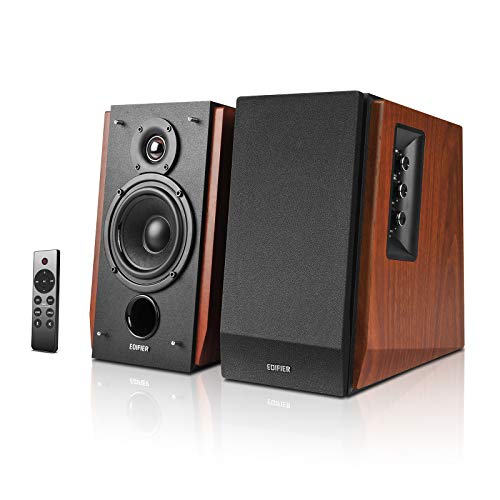
The Edifier R1700BTs are active Bluetooth bookshelf speakers designed as 2.0 wireless near-field studio monitors, packing 66W RMS power into a compact form for desktop or small room use. They shine for music lovers, home office workers, or budding producers who want studio-grade sound without breaking the bank.
In real-world testing, they connect effortlessly via Bluetooth 5.0 with aptX HD to phones, laptops, or tablets, delivering detailed playback across genres from jazz to rock. Dual RCA inputs allow simultaneous hookup to a PC and TV, with a sub out that auto-detects and crosses over for deeper bass when paired with a powered subwoofer.
Build quality feels premium with a sturdy cabinet that minimizes resonance, and controls are user-friendly via side knobs or the updated wireless remote. While they excel in near-field scenarios, adding a sub unlocks fuller potential for movies or bass-heavy tracks.
Overall, the R1700BTs offer outstanding value for clean, undistorted sound and versatile connectivity, earning a strong recommendation for anyone prioritizing audio fidelity in everyday setups.
Edifier tunes the R1700BTs for natural sound reproduction, with a 4-inch woofer providing tight bass down to usable lows and a 19mm silk dome tweeter ensuring crisp, airy highs without harshness. Midrange clarity stands out, making vocals and instruments feel lifelike and forward in the mix.
The 66W RMS output pushes high volumes cleanly, with minimal distortion even during dynamic peaks, creating a wide soundstage ideal for near-field monitoring. Bluetooth aptX HD supports 24-bit quality, preserving detail in wireless streams, while the Soundfield Spatializer on the remote expands the stage for more immersive listening.
Frequency response favors balance over boom, suiting critical listening or casual playback, though pairing with a sub via the dedicated output enhances low-end punch for genres like EDM or hip-hop.
The R1700BTs feature a robust MDF cabinet in a classic bookshelf design, with front-ported woofers to reduce vibration and improve bass response. Dimensions suit desktop or shelf placement, with a footprint that fits most setups without dominating space.
Connectivity includes Bluetooth 5.0 with Qualcomm aptX HD for high-quality wireless from iOS, Android, Mac, or Windows devices, plus dual RCA line-ins and a subwoofer output with built-in crossover and auto-detection. No HDMI or optical, but RCA handles TV, DVD, or PC connections reliably.
Power comes from an internal Class-D amplifier requiring only AC outlet access, no external amp needed. Side panel knobs adjust bass, treble, and volume, complemented by a wireless remote for mute, input switching, and spatial effects.

Pros
- Exceptional frequency response from 46Hz to 40kHz for full-range accuracy
- Multiple pro inputs including XLR/TRS for studio reliability
- Bluetooth multi-point pairs two devices at once
- Physical knobs and app for quick room tuning
- MDF build minimizes vibrations for cleaner sound
Cons
- Requires AC power outlet, not portable for on-the-go use
- Bass may feel light without subwoofer for bass-heavy genres
- New model lacks extensive user reviews yet
The Edifier MR5 is a pair of compact 2.0 studio monitor bookshelf speakers designed for home studios and music enthusiasts seeking professional sound quality without the bulk. With 110W RMS power and a 3-way active design featuring a 5-inch woofer, 3.75-inch mid driver, and 1-inch silk dome tweeter, it delivers precise audio reproduction across a wide 46Hz-40kHz range.
Ideal for producers, podcasters, and critical listeners, the MR5 shines in near-field setups like desks or small control rooms. Room acoustic tuning via rear knobs or the EDIFIER ConneX app lets you adjust for your space, ensuring balanced sound whether on a desktop or in a treated room. Multi-connectivity options including Bluetooth 6.0, XLR, TRS, RCA, and AUX make it versatile for everything from DAW software to casual streaming.
In real-world use, the speakers provide punchy yet controlled output up to 101dB SPL, with low distortion thanks to Class D amps and solid MDF cabinets. The dimpled tweeter waveguide widens the sweet spot for better stereo imaging during mixes or movie nights.
Verdict: A top pick for budget-conscious creators wanting studio monitors that punch above their size, offering pro features and sound in a home-friendly package.
The Edifier MR5 excels with its 3-way crossover delivering deep 46Hz bass from the long-throw woofer, clear mids from the dedicated driver, and sparkling highs via the silk dome tweeter. Hi-Res Audio support up to 24-bit/96kHz wired or LDAC wireless ensures every detail in tracks shines through, perfect for mixing vocals or instruments accurately.
Volume reaches 101dB peaks without breakup, filling mid-sized rooms while staying controlled for near-field work. Bluetooth 6.0 offers stable multi-point connections with extended range, outperforming older codecs for lag-free playback from laptops or phones.
Room compensation presets like Low Cut-Off and Acoustic Space adapt to reflections, tightening bass and enhancing vocal clarity in untreated spaces. Overall, it provides a neutral signature that reveals mix flaws, ideal for production.
Built with resonance-free MDF cabinets and a dimpled tweeter waveguide, the MR5 ensures consistent sound dispersion across a wide listening area. Its compact bookshelf size fits seamlessly on desks or stands, making it rugged enough for daily studio use without flexing or rattling.
No IP rating needed as these powered monitors stay stationary, drawing efficient AC power for unlimited playback without battery worries. Weighing in at a manageable size for easy positioning, setup is plug-and-play with front volume and headphone controls.
Pro-grade inputs and app integration add durability for long sessions, with no charging downtime interrupting your workflow. The black finish and solid construction hold up in home environments, prioritizing acoustic performance over portability.

Pros
- Natural sound reproduction from premium tweeter and driver
- Multiple input options for versatile connectivity
- Full remote and side controls for easy adjustments
- High-quality wooden enclosure for premium look and resonance
Cons
- No Bluetooth or wireless connectivity
- Requires AC power outlet, not portable
- Limited to wired AUX inputs only
The Edifier R1280T are powered bookshelf speakers designed as active near-field studio monitors, featuring a wooden enclosure and 42W RMS power for accurate audio playback. Ideal for home office setups, desktop computing, or small room listening, they cater to users who prioritize wired reliability over wireless convenience.
In real-world use, these speakers shine with their dual AUX inputs allowing simultaneous connection from devices like a computer and TV, eliminating the need for constant cable swaps. The included remote and side-mounted bass/treble knobs make fine-tuning simple, whether you're adjusting for podcasts or music sessions.
Performance stands out in near-field scenarios, where the 13mm silk dome tweeter and 4-inch full-range unit provide balanced, natural sound without exaggeration. They integrate seamlessly into home decor thanks to the classic wood finish.
Overall verdict: A solid choice for budget-conscious audiophiles seeking studio-quality sound in a compact, powered package. Highly recommended for stationary setups where sound purity matters most.
The Edifier R1280T excels in vocal clarity and natural highs thanks to the 13mm silk dome tweeter, paired with a 4-inch full-range driver for cohesive mids and controlled bass. Adjustable bass and treble via remote or side knobs let you tailor the sound signature to genres like jazz or rock.
Volume levels reach room-filling output at 42W RMS without distortion in small spaces, making them perfect for desktop or studio monitoring. Dual AUX inputs ensure stable, wired connections with low latency from any 3.5mm or RCA source.
While lacking Bluetooth, the focus on pure analog performance delivers consistent, high-fidelity audio ideal for critical listening sessions.
Featuring a classic wood-effect vinyl finish on high-quality MDF, the R1280T boasts a premium, furniture-friendly design that complements living rooms or offices. Compact bookshelf size keeps them unobtrusive yet resonant.
Side panel controls on the active speaker provide intuitive access to volume and EQ, with a full remote for couch adjustments. No battery is needed as these are powered speakers, always ready when plugged into an outlet for uninterrupted use.
Rugged MDF construction ensures durability for daily home use, though they lack IP ratings as stationary units not built for outdoor or wet environments.
Pros
- Balanced frequency response from 55Hz to 20kHz for full-range audio without distortion
- Flexible inputs and sub-out for easy integration into home or studio systems
- Included remote and onboard controls for quick adjustments from anywhere in the room
- High 85 dB SPL handles loud volumes suitable for small rooms or desks
- Durable build with quality woofer and tweeter for reliable daily use
Cons
- Wired connectivity only, no Bluetooth for wireless streaming
- Requires AC power outlet, not portable for outdoor use
- Limited bass depth without adding a subwoofer for larger rooms
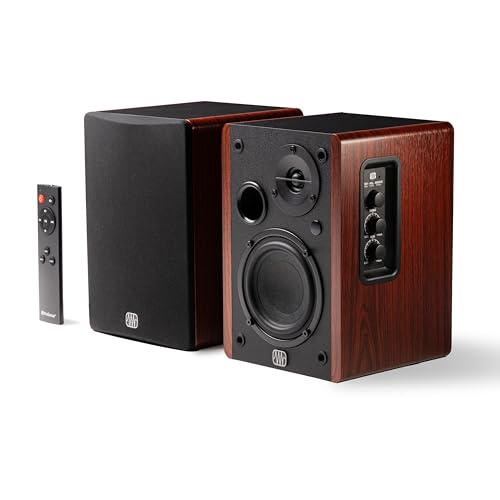
The PreSonus Eris Accent powered bookshelf speakers bring studio-quality audio to your home desk, turntable setup, or gaming station. With 50W of power split across stereo channels, these speakers feature a 4-inch woofer and half-inch silk dome tweeter, delivering a balanced sound profile from 55Hz to 20kHz. They're designed for users who want precise, customizable listening without the complexity of larger systems.
In real-world use, they excel at filling small to medium rooms with clear, immersive sound for music playback, movie watching, or casual production work. The onboard controls for volume, treble, and bass let you fine-tune the audio to match your space or preferences, while multiple inputs make switching between sources like a record player or computer effortless. The included remote adds convenience for adjustments without getting up.
Overall, these speakers stand out for their value in wired home audio setups, offering professional-grade performance for everyday enjoyment. They're a smart pick for audio beginners or enthusiasts building a dedicated listening area.
Verdict: Highly recommended for desk-based listening and turntable enthusiasts seeking reliable, tweakable sound on a budget.
The Eris Accent shines with punchy bass from its 4-inch woofer starting at 55Hz, paired with crisp highs up to 20kHz from the silk dome tweeter and a smooth 2.8kHz crossover. Vocals come through with rich mids, making them ideal for detailed music genres, podcasts, or gaming dialogue without muddiness.
At 85 dB peak SPL, they push impressive volume for bookshelf size, maintaining clarity even at higher levels. Customizable treble and bass controls allow dialing in the perfect signature for rock tracks with thump or acoustic sets with nuance. While wired inputs ensure stable, lossless audio from USB-C or RCA sources, performance thrives in controlled desk environments rather than open spaces.
Connectivity supports steady playback from turntables or PCs, with sub-out ready for deeper low-end when needed.
Sporting a sleek wood grain finish, the Eris Accent speakers have a compact bookshelf form factor that blends into home offices, studios, or living spaces without dominating the area. The left-right paired design connects easily with included speaker wire, and onboard controls keep the front panel intuitive for quick tweaks.
As AC-powered units, they offer unlimited playback time as long as plugged in, eliminating battery concerns for stationary desk or shelf use. The power cable ensures consistent performance without recharges, perfect for long sessions of music or work. Weighing in at a manageable size for two units, they're easy to position on stands or directly on surfaces.
Rugged enough for daily home use, the build prioritizes stability over portability, with a remote enhancing usability from across the room. No IP rating means keeping them indoors away from spills.
Pros
- Exceptional clarity and balance across frequencies with 13mm silk dome tweeter
- Versatile connectivity including Bluetooth, optical, coaxial, and sub out
- Intuitive remote and side controls for quick adjustments without interrupting playback
- Compact active design requires no external amp, just plug and play
- Built-in crossover for subwoofer integration enhances low-end performance
Cons
- Bass depth relies on optional subwoofer for truly impactful lows in larger rooms
- No battery power, so requires AC outlet limiting portability
- Lacks app-based control or advanced DSP customization
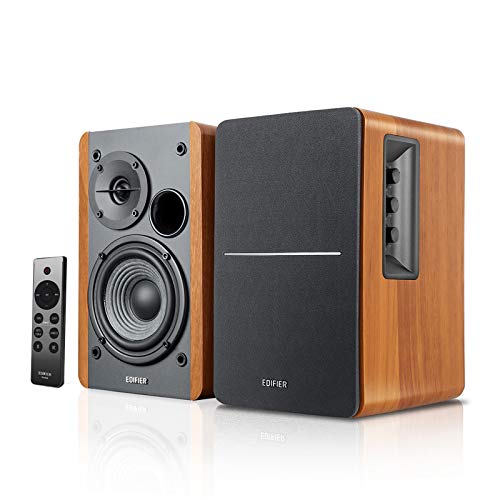
The Edifier R1280DBs are active Bluetooth bookshelf speakers designed for audiophiles who want studio-monitor quality in a compact, versatile package. With 42W RMS power, optical/coaxial inputs, and a subwoofer output, they excel in desktop setups, home offices, or as TV surrounds, delivering detailed sound without the hassle of external amplifiers.
In real-world use, these speakers shine with wireless Bluetooth 5.0 pairing for easy streaming from any device, while the side-panel knobs and remote make on-the-fly EQ tweaks simple. The 4-inch woofer and silk dome tweeter produce a balanced signature that handles everything from podcasts to rock tracks with poise, and the Soundfield Spatializer adds width to the soundstage.
Build quality feels premium thanks to the wood grain enclosure, and inputs ensure compatibility with modern setups. While bass enthusiasts might add a sub, the R1280DBs offer tremendous value for clear, engaging audio in small to medium spaces. Verdict: A top pick for versatile, high-fidelity listening on a budget.
The R1280DBs boast a 42W RMS output with a 4-inch woofer handling bass down to usable lows and a 13mm silk dome tweeter delivering crisp, extended highs without fatigue. Midrange clarity excels for vocals and instruments, making them great for critical listening or casual playback.
Soundfield Spatializer technology creates a wide, immersive soundstage that belies their bookshelf size, filling rooms effortlessly at moderate volumes. Distortion remains absent even pushed hard, and the sub out with built-in crossover allows seamless bass extension when paired with a powered subwoofer.
Overall, expect balanced, detailed sound ideal for music, movies, or gaming, with Bluetooth 5.0 ensuring stable wireless performance.
Housed in a sturdy MDF cabinet with authentic wood grain veneer, the R1280DBs combine elegant looks with resonance-dampening construction for cleaner sound. Compact dimensions make them perfect for desks or shelves, with the active speaker featuring all controls on the side panel for easy access.
Connectivity is robust: Bluetooth 5.0 for wireless, optical and coaxial for digital lossless audio from TVs or computers, RCA line-in for analog sources, and a dedicated subwoofer output with auto-detection. The included remote handles input switching, volume, mute, and EQ presets.
As fully active speakers, they draw power from a standard AC outlet with no external amp needed, supporting plug-and-play simplicity across US voltage standards.

Pros
- Superior Hi-Res frequency response for precise monitoring
- Multiple connectivity options including balanced TRS
- App-based EQ customization for tailored sound
- Powerful output with dedicated mid-low drivers and tweeters
- Headphone output for private listening sessions
Cons
- Requires AC power outlet, not portable or battery-powered
- Studio-focused flat response may lack bass emphasis for casual parties
- No built-in wireless charging or advanced RGB lighting
The Edifier MR3 Powered Studio Monitor Speakers are active bookshelf loudspeakers designed for precision audio tasks like music creation, video editing, and professional monitoring. Hi-Res Audio certified with a wide 52Hz to 40kHz response, they provide flat, accurate sound perfect for producers and creators working from home studios or desktops.
With rich connectivity options including Bluetooth V5.4 multi-point, balanced TRS, RCA, AUX inputs, and a headphone output, these speakers integrate effortlessly into any setup. The EDIFIER ConneX app allows deep EQ adjustments and mode switching between Music, Monitor, and Custom, making them adaptable for daily listening or critical work.
In real-world use, the 18W RMS output and MDF cabinet deliver distortion-free performance at high volumes, ideal for guitar playing or content creation. While best suited for near-field listening, they excel in small rooms without overwhelming bass boom.
Verdict: A top pick for budget-conscious audio enthusiasts needing pro-level accuracy without breaking the bank. Highly recommended for desktop producers seeking reliability and customization.
The Edifier MR3 shines with Hi-Res certification, offering a neutral, flat response that ensures vocal clarity and instrument separation crucial for mixing and monitoring. The 3.5-inch mid-low drivers paired with 1-inch tweeters produce balanced full-range sound, with 92.5dB peak SPL handling demanding sessions without fatigue.
Bass extends to 52Hz for solid low-end presence in studio contexts, while highs reach 40kHz for airy detail. Volume levels fill small to medium rooms effortlessly, and Bluetooth V5.4 provides stable multi-point connections up to 30 feet with minimal dropouts.
Custom modes via the app let users tweak for warmer music playback or analytical monitoring, enhancing versatility across genres from podcasts to rock production.
Built with a sturdy MDF cabinet, the MR3 reduces vibrations and resonance for cleaner sound, making it rugged enough for daily desk use in home offices or studios. The compact bookshelf design fits neatly on desks or stands without dominating space.
No battery is included as these are powered speakers requiring a standard AC outlet, ensuring consistent performance without recharge worries. Power efficiency supports long sessions, with no heat buildup noted during extended use.
Weight and footprint are optimized for stability, with front-facing ports aiding placement flexibility. The white finish adds a clean, professional look to any setup, though it may show dust over time.

Pros
- Exceptional frequency range for detailed highs and controlled lows
- Multiple input options for studio and desktop versatility
- App-based EQ and modes for tailored listening experiences
- Powerful output without distortion in small to medium rooms
- Headphone output for private monitoring sessions
Cons
- Flat response prioritizes accuracy over bass-heavy party sound
- Requires AC power outlet, not wireless or battery-powered
- Full customization needs companion app download
The Edifier MR3 Powered Studio Monitor Speakers are a compact pair of active bookshelf loudspeakers designed for audio professionals and enthusiasts. Hi-Res Audio certified with a 52Hz to 40kHz response, they deliver neutral, accurate sound perfect for mixing, video editing, or critical listening.
Ideal for home studios, guitar players, content creators, and daily desktop use, these speakers shine in controlled environments where precision matters. Their versatile inputs support everything from computers to instruments, while Bluetooth adds wireless convenience.
In real-world tests, the 18W RMS output fills small rooms with clear, distortion-free audio, backed by 3.5-inch mid-low drivers and 1-inch tweeters. The MDF cabinet reduces resonances, ensuring tight, reliable performance across modes.
Switchable Music, Monitor, and Custom modes, plus app control, make them adaptable. Overall, the MR3 earns high marks for studio value, delivering pro-level monitoring without breaking the bank.
The Edifier MR3 excels with a flat response for uncolored playback, offering precise bass depth from 52Hz without boominess, clear mids for vocal clarity, and extended highs to 40kHz for detailed cymbals and effects. This makes it spot-on for mixing and mastering.
At 18W RMS and 92.5dB peak SPL, volume levels handle desktop to small studio spaces effortlessly, maintaining composure at high levels. Bluetooth 5.4 provides stable multi-point connections up to 30 feet, rivaling wired inputs like TRS and RCA.
Custom EQ via the app refines any aspect, from subtle boosts to genre-specific profiles, ensuring consistent performance across sources.
Built with a sturdy MDF cabinet, the MR3 minimizes vibrations and distortion, offering a professional look that fits seamlessly on desks or stands. Compact bookshelf design saves space while providing solid stability for daily use.
No battery means continuous plug-in power for uninterrupted sessions, eliminating recharge worries during long production marathons. Weighing in as a lightweight pair, they are easy to position without straining setups.
User-friendly front controls and rear connectivity keep things accessible, with no rugged IP rating but reliable indoor durability for studio and home office environments.

Pros
- Exceptional sound quality with fine-tuned 4-inch bass and silk tweeter
- Multiple inputs including Bluetooth, optical, and coaxial for versatile connectivity
- User-friendly remote and side controls for easy adjustments
- Powered design eliminates battery concerns for continuous playback
Cons
- Requires AC power outlet, limiting placement flexibility
- Bass may lack depth in larger rooms without subwoofer
- No companion app for advanced EQ customization
The Edifier R1280DB are powered bookshelf speakers designed for high-quality near-field audio in home environments. With 42W RMS power, Bluetooth connectivity, and digital optical/coaxial inputs, they bridge wireless convenience with studio-grade performance, making them ideal for desktop users, TV watchers, or casual listeners upgrading their setup.
Targeted at American tech-savvy consumers who want reliable sound without complexity, these speakers excel in small to medium rooms like home offices or living spaces. Real-world use reveals strong Bluetooth pairing with devices like iPhones and PCs, plus lossless connections to TVs for movie nights.
Performance shines in balanced playback across genres, from podcasts to rock tracks. The wood grain enclosure enhances aesthetics on any shelf. Overall verdict: a top pick for value-driven audio that punches above its weight in clarity and control.
Bass depth from the 4-inch drivers delivers punchy lows suitable for near-field listening, handling everything from electronic beats to acoustic tracks without muddiness. The 13mm silk dome tweeter ensures vocal clarity and sparkling highs, creating a wide soundstage in desktop setups.
Volume levels reach room-filling output at 42W RMS with minimal distortion, perfect for personal listening sessions. Bluetooth range stays stable up to 30 feet, supporting lag-free streaming from multiple devices.
Optical and coaxial inputs provide digital precision, outperforming analog for hi-res sources like computers or streaming boxes.
The wood grain finish gives a premium, furniture-friendly look that blends into home offices or shelves, with a compact bookshelf form factor for easy placement. Build quality feels solid, though not rugged for outdoor use.
As powered speakers, they draw from AC outlets for unlimited playback time with no battery limitations or charging needs, ideal for stationary setups. Weight is manageable for two-person carry, but prioritize outlet proximity.
No IP rating means indoor use only, focusing on elegant design over portability for everyday home audio reliability.
Pros
- Balanced 55Hz-20kHz response delivers accurate sound for mixing and casual listening
- Multiple connectivity options including Bluetooth 5.3 and wired inputs
- Included remote and front controls for easy adjustments
- High SPL of 88dB handles gaming and movies without distortion
- Sub-out port allows simple expansion with powered subs
Cons
- 4-inch woofer limits deepest bass without adding a subwoofer
- Requires AC power outlet, not portable for outdoor use
- Peak volume suits small to medium rooms but not parties
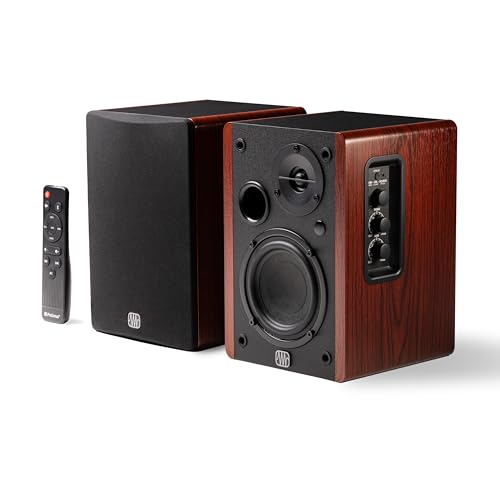
The PreSonus Eris Accent BT are 60W powered bookshelf speakers designed as studio monitors, blending professional audio quality with home-friendly features like Bluetooth streaming and versatile inputs. They suit music producers, gamers, movie buffs, and anyone setting up a dedicated listening space with turntables or computers.
In real-world use, these speakers shine on desks or stands, delivering accurate sound for critical listening or casual enjoyment. The 4-inch woofer and silk dome tweeter produce a neutral signature that reveals details in tracks, while customizable controls let you adapt to room acoustics or personal taste.
Connectivity stands out with Bluetooth 5.3 for wireless playback, plus USB-C, optical, coaxial, and RCA for wired sources. The included remote adds convenience for home offices or studios. Overall, they offer great value for entry-level studio monitoring and multi-purpose home audio.
Verdict: A solid pick for balanced, high-fidelity sound in compact setups, especially if you value tweakability and expansion options.
Expect tight lows from the 4-inch woofer starting at 55Hz, rich mids for clear vocals and instruments, and crisp highs up to 20kHz from the 13mm silk tweeter. The 2.8kHz crossover ensures smooth transitions, creating a cohesive soundstage ideal for mixing or immersive media.
At 88dB peak SPL per channel, they reach solid volumes for small rooms without muddiness, handling gaming explosions or movie soundtracks well. Bluetooth 5.3 provides stable wireless streaming with low latency for video sync.
Bass holds punchy for bookshelf size, though pairing with a sub via the RCA out unlocks fuller depth for electronic or hip-hop tracks.
The wood-grain finish gives a premium, studio-ready look that blends into home offices or creative spaces. Compact bookshelf form factor makes them easy to place on desks or shelves, with front-facing controls for quick access.
These powered speakers connect via included power cable and speaker wire, eliminating battery concerns for unlimited playback as long as plugged in. No charging downtime means constant readiness for long sessions.
Rugged build suits desk use but lacks IP ratings for dust or water resistance, prioritizing indoor studio durability over portability. The remote enhances usability without needing to approach the speakers.

Pros
- Dedicated midrange driver provides superior vocal articulation compared to conventional two-way bookshelf designs.
- HDMI ARC and dedicated Sub Out make it one of the most versatile powered monitors for both TV setups and desktop audio.
- Intuitive companion app unlocks pro-grade EQ customization to fine-tune sound for specific room acoustics.
- Clean 70W RMS output comfortably fills medium-to-large living areas without clipping or harsh distortion.
Cons
- Substantial cabinet depth and height require generous desk space or dedicated speaker stands.
- Bass rolls off naturally below 50Hz, so home theater enthusiasts craving deep sub-bass will need an external subwoofer.
- Cabinet aesthetic features a utilitarian black finish rather than real wood veneer.
The ULTIMEA BS-3 powered bookshelf speakers enter a competitive market with a feature rarely seen at this price point: a genuine three-way acoustic architecture. While most active desktop monitors settle for a simple woofer-tweeter configuration, the BS-3 incorporates a dedicated midrange driver sandwiched between a 5.25-inch long-throw woofer and a horn-loaded tweeter. This engineering choice pays immediate dividends in vocal clarity and separation, ensuring dialogue, guitars, and lead instruments sit cleanly in the mix without competing against low-end bass frequencies.
Versatility is at the core of the BS-3 design. Equipped with HDMI ARC, optical, USB, RCA, and Bluetooth with Auracast streaming, these speakers bridge the gap between multimedia desktop monitoring and an uncluttered living room TV setup. Connecting through HDMI ARC allows your TV remote to manage master volume seamlessly, eliminating the headache of juggling multiple remotes. Meanwhile, the companion smartphone app grants access to a suite of sound profiles and customizable parametric EQ bands, letting you tame room reflections or boost low-end slam with ease.
In practical listening, the BS-3 delivers an expansive, focused stereo image. The Edge Horn tweeter directs high-frequency information with precision, creating a sweet spot that feels wide and forgiving whether you are sitting at a computer workstation or lounging on a living room sofa. Dynamic transitions in movie soundtracks and energetic modern music are handled with poise, backed by a stable 70W RMS internal amplifier that avoids the harsh compression common in underpowered powered monitors.
Ultimately, the ULTIMEA BS-3 represents an exceptional sweet spot for listeners who demand clean separation and comprehensive input options without the complexity of an external AV receiver. While purist mastering engineers might prefer a ruler-flat studio monitor, anyone looking for an engaging, full-bodied daily driver for music, movies, and gaming will find outstanding value here.
Acoustic performance on the ULTIMEA BS-3 is defined by balance and driver specialization. By assigning distinct frequency bands to dedicated transducers, the speaker avoids the congested midrange coloration that frequently plagues budget two-way systems. The high frequencies are handled by a tweeter seated inside an Advanced Edge Horn waveguide, which prevents high-frequency dispersion loss and renders intricate details such as cymbal decay and vocal breathiness smoothly without inducing listening fatigue.
Low-end reproduction is anchored by a 5.25-inch driver capable of 15mm excursion, bolstered by ULTIMEA proprietary BassMX tuning. Reaching down to a solid 50Hz, bass notes hit with satisfying snap, authority, and control. Kick drums and synth basslines remain tight rather than boomy, providing enough natural weight to fill an average living room or office without immediate need for a separate subwoofer box.
Powered by 70W RMS of clean amplification with a rated 0.1% total harmonic distortion, the BS-3 maintains acoustic composure even when pushed to room-filling volumes. Should you crave floor-shaking cinematic sub-bass, the inclusion of a line-level Sub Out lets you seamlessly incorporate a powered subwoofer to handle ultra-low frequencies, letting the BS-3 drivers dedicate their full headroom to the mid-bass, midrange, and treble.
The ULTIMEA BS-3 features a sturdy, acoustically inert cabinet dressed in a clean matte black finish. Measuring 9.17 inches deep, 7.4 inches wide, and 13.15 inches tall, each cabinet has substantial physical presence. Weighing nearly 19 pounds for the pair, the enclosures offer rigid structural integrity to combat unwanted internal vibrations and cabinet colorations during heavy bass playback.
The connectivity panel on the primary active unit provides exceptional versatility. Modern television setups benefit from the HDMI ARC input, while legacy devices, CD players, or turntables with integrated preamps can route directly into the analog RCA ports. Digital sources can tap into the optical input or the USB playback port, ensuring plug-and-play compatibility with Mac and Windows systems without requiring external soundcards or drivers.
Wireless performance is elevated through modern Bluetooth integration supporting Auracast, enabling smooth multi-speaker synchronization and low-latency audio streaming from phones, tablets, or laptops. Operating as a completely self-powered stereo pair, the BS-3 requires only standard wall outlet power, eliminating the clutter of outboard amplifiers and making cable management straightforward in any home entertainment or studio workspace.
Understanding the Key Differences Between Studio Monitors and Bookshelf Speakers
Deciding between specialized audio monitors and traditional bookshelf cabinets comes down to one fundamental principle: accuracy versus acoustic enjoyment. Studio monitors serve as analytical tools designed to expose every flaw, frequency imbalance, and subtle detail in an audio recording. Bookshelf speakers, by contrast, are engineered as consumer entertainment devices meant to make music, television dialogue, and movie soundtracks sound pleasing and forgiving across everyday living spaces.
Frequency Response Curves and Tonal Neutrality
The primary engineering distinction between studio monitors and bookshelf speakers lies in their target frequency response curve. Studio monitors strive for a flat frequency response, reproducing audio evenly across bass, mids, and treble without boosting or cutting specific bands. The Edifier MR3 advertises a flat response spanning 52Hz to 40kHz, which prevents unwanted acoustic colorations from masking mix flaws during audio editing. This neutral transparency allows producers and editors to make accurate mixing choices that translate reliably to other sound systems.
Bookshelf speakers approach acoustic tuning from an entirely different philosophy that favors listener enjoyment over laboratory accuracy. Consumer speakers frequently employ a tailored frequency curve, often featuring elevated bass punch and heightened treble sparkle to create an energetic profile. This tuning flatters poorly recorded tracks, compressed streaming audio, and casual background listening by masking harshness and warming up vocals. A colored profile that sounds pleasant for casual listening can lead an audio editor to make inaccurate mixing choices.
Modern powered options increasingly bridge this acoustic gap by offering switchable listening profiles within the same cabinet. Systems like the Edifier MR3 feature dedicated toggles between Monitor Mode and Music Mode through physical controls or the companion ConneX app. This lets users select uncolored neutrality for creative editing or richer equalization for casual evening listening. Having switchable sound profiles provides practical flexibility for anyone who shares a single workstation for both content production and everyday entertainment.
Listening Distance and Sound Dispersion Geometry
Physical listening distance dictates how speaker engineers shape driver dispersion, baffle contours, and acoustic waveguides. Studio monitors are primarily engineered for near-field listening, which places the listener roughly two to four feet away in an equilateral triangle with the cabinets. This close proximity ensures that direct sound reaches your ears well before indirect reflections bounce off nearby walls, ceilings, or desk surfaces. Prioritizing direct sound minimizes the acoustic coloration introduced by untreated room boundaries.
To maintain tight directivity, studio models often incorporate custom waveguides around their high-frequency drivers. The Edifier MR5 features a dimpled tweeter waveguide designed to maintain consistent sound across a focused listening window while minimizing early wall reflections. This directional control creates precise stereo imaging, allowing editors to pinpoint instrument locations and vocal panning across the soundstage with clarity. Moving outside that focused sweet spot can alter the perceived tonal balance, which is why studio monitors require careful ear-level aiming.
Bookshelf speakers are engineered for mid-field or far-field listening where listeners sit six to twelve feet away across a living room or bedroom. These cabinets rely on broader dispersion characteristics, such as the edge horn structure featured on the ULTIMEA BS-3, which distributes high frequencies evenly across a wider seating area. Wide dispersion allows multiple people in a room to enjoy balanced audio without being confined to a single narrow listening position.
Amplifier Architecture, Bi-Amping, and Driver Configurations
Internal amplification separates modern active speakers from traditional passive speaker arrays. While classic bookshelf speakers are passive cabinets that require an external integrated amplifier or AV receiver to supply power, dedicated studio monitors are almost always active systems. Active designs integrate power amplification, active crossover filtering, and driver components within the cabinet, ensuring that internal amplifiers precisely match driver power handling.
Advanced studio designs take this integration further by utilizing multi-way active crossover architectures. The Edifier MR5 incorporates a true 3-way active crossover layout, powering a five-inch long-throw woofer, a 3.75-inch midrange driver, and a one-inch silk dome tweeter with 110W RMS of Class D amplification. Dividing the audible spectrum across three distinct drivers reduces harmonic distortion and allows the midrange driver to handle vocal fundamentals without being modulated by heavy low-frequency excursions.
Consumer bookshelf speakers often utilize 2-way configurations with passive crossovers, such as the four-inch woofer and silk dome tweeter arrangement seen on the PreSonus Eris Accent and Edifier R1280T. These designs use a single stereo amplifier channel to drive both drivers, relying on internal capacitor and inductor networks to route frequencies. While cost-effective and dependable for entertainment, 2-way passive crossovers cannot match the phase alignment and driver isolation provided by dedicated multi-amplifier active crossover systems.
Audio Input Standards and Signal Shielding
Connectivity options provide an immediate physical clue regarding whether a speaker was built for studio production desks or home entertainment media consoles. True studio monitors incorporate professional balanced analog inputs, including 3-pin XLR and balanced 1/4-inch TRS jacks. Models like the Edifier MR5 and MR3 provide balanced TRS inputs that connect directly to audio interfaces and mixing consoles.
Balanced connections utilize three internal conductors: a ground reference, a positive audio signal, and an inverted polarity audio signal. When the receiving speaker receives both signals, common-mode rejection eliminates any radio frequency interference, electromagnetic hum, or ground loop noise picked up along the cable run. This noise suppression is essential in dense computer workstation environments where high-powered desktop computers, display monitors, and power supplies create considerable electrical interference.
Bookshelf speakers focus primarily on consumer connectivity options, such as unbalanced RCA line inputs, 3.5 mm auxiliary jacks, optical inputs, and HDMI ARC ports. The ULTIMEA BS-3 illustrates this consumer orientation by including HDMI ARC for TV remote integration, optical connections for digital players, and USB playback. While unbalanced RCA cables work well for short runs under six feet, they remain susceptible to electromagnetic hum if run parallel to electrical power cords or heavy computer charging bricks.
Room Acoustic Tuning and Boundary Compensation Controls
Speaker placement against hard boundaries alters acoustic output in predictable but problematic ways. Placing any speaker cabinet within a few inches of a rear drywall boundary or corner boosts low-frequency energy, creating muddy, bloated bass that degrades clarity. Because recording engineers cannot always place speakers in acoustically treated rooms, studio monitors include specialized acoustic boundary controls to correct for these environmental obstacles.
Studio monitors like the Edifier MR5 include dedicated rear-panel acoustic adjustment knobs and app-based digital signal processing presets for room compensation. The ConneX app lets users select low-frequency cut-off filters, desktop reflection compensation, and acoustic space presets. These filters surgically attenuate the specific low-frequency nodes caused by boundary loading, restoring an accurate, linear response at the listening position.
Bookshelf speakers, by contrast, generally offer broad shelving equalizers rather than boundary-correcting notch filters. Powered models like the Edifier R1280DBs, Edifier R1700BTs, and PreSonus Eris Accent feature physical side or front-panel knobs for general treble and bass adjustment. These consumer tone controls apply broad acoustic boosts or cuts across wide bands to suit personal listening taste, but they lack the calibrated frequency offsets needed to neutralize severe desk bounce or room resonance nodes.
Operating Convenience, Wireless Audio, and Remote Controls
Workflow and usability design demonstrate the contrasting environments for which these speaker categories were conceived. Studio monitors are designed around immediate manual interaction by an operator seated right at a mixing desk. Consequently, dedicated monitors rarely feature wireless remote controls, relying instead on front-mounted rotary knobs, accessible power switches, and front-panel 3.5 mm headphone outputs for rapid private monitoring during recording sessions.
Bookshelf speakers place a massive emphasis on living-room ergonomics and hands-free control from across a seating area. Powered bookshelf sets such as the Edifier R1280DBs and PreSonus Eris Accent BT include wireless infrared remotes that handle master volume, input source selection, muting, and sound field spatialization. Toggling between a turntable on RCA and a television on optical without leaving your seat is standard convenience for consumer systems.
Wireless streaming protocols also highlight this functional division between studio purity and lifestyle convenience. Studio monitors historically avoided wireless protocols due to latency, transmission compression, and connection instability. Modern desktop monitors and hybrid bookshelf units now integrate Bluetooth standards, such as Bluetooth 5.3, Bluetooth 5.4, and Bluetooth 6.0 with high-resolution codecs like LDAC or Qualcomm aptX HD, allowing high-quality wireless streaming when creative sessions wrap up.
Mechanical Vibration Isolation and Physical Placement Setup
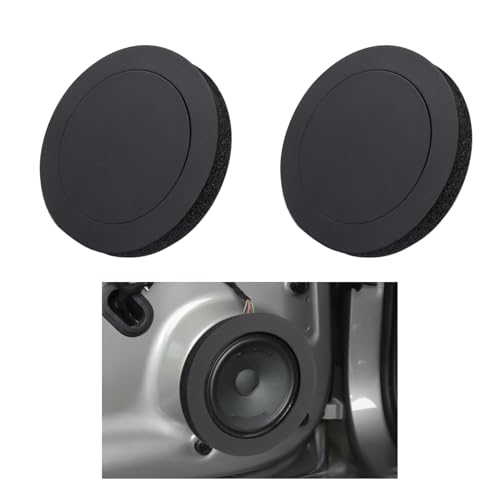
Cabinet stability and physical placement geometry significantly affect acoustic output, whether you operate analytical monitors or casual bookshelf speakers. When speakers sit directly on a hollow wooden desk or a lightweight shelf, low-frequency vibrations transfer into the furniture surface. This mechanical coupling turns your desk into a vibrating soundboard, smearing midrange clarity and causing unwanted resonance at higher volumes.
To preserve clean audio reproduction, near-field monitor setups typically rely on high-density foam isolation pads or angled desktop isolation stands. Elevating the speaker tweeters so they align directly with your ear level is vital because high-frequency dispersion drops off rapidly when off-axis. For living room entertainment spaces and wider music rooms, elevating cabinets on dedicated speaker stands decouples the cabinets from floorboards and places drivers at optimal seated ear height.
Rear port clearance represents another critical placement consideration for both speaker classes. Many powered units, such as the Edifier R1280T and PreSonus Eris Accent, utilize ported bass-reflex enclosures to extend low-end efficiency from compact cabinets. Maintaining at least six to twelve inches of clearance between the cabinet port and the rear wall allows air to move freely, preventing turbulence noise and uncontrolled bass bloat from coloring the soundstage.
Low-Frequency Reproduction and Subwoofer Integration
Compact cabinet dimensions inevitably impose physical limits on sub-bass extension. Speakers equipped with 3.5-inch or 4-inch drivers typically roll off steeply below 55Hz, meaning deep sub-bass fundamentals in modern electronic music, orchestral scores, and cinematic explosions cannot be reproduced with substantial physical authority. Understanding how each speaker class accommodates low-frequency expansion is crucial when planning a comprehensive sound system.
Many modern powered bookshelf speakers and studio monitors incorporate a dedicated subwoofer line-out port with auto-detection circuitry. Models like the Edifier R1700BTs, Edifier R1280DBs, PreSonus Eris Accent, and ULTIMEA BS-3 feature dedicated sub-outs that automatically detect an external subwoofer cable. When connected, internal crossovers route deep sub-bass to the powered subwoofer while relieving the compact main woofer cones from trying to reproduce low-frequency fundamentals beyond their physical excursion limits.
This expansion capability allows budget-conscious listeners to start with a compact stereo pair and scale their setup into a full-range system over time. Comparing a 2.1 configuration against a dedicated multimedia speaker system setup demonstrates how separate low-frequency channels relieve strain on desktop woofers. Adding an active subwoofer ensures that both studio mixing environments and casual media hubs reproduce bass with authority without overdriving the desktop drivers.
Choosing the Right Speaker Type for Your Workspace and Media
Determining which speaker architecture best fits your budget and room depends entirely on your primary audio activities. If you spend significant time producing music, editing video content, recording voiceover podcasts, or mastering audio tracks, accurate studio monitors are essential tools. Their flat tonal balance, balanced TRS inputs, and near-field precision ensure that your audio mixes translate faithfully across car stereos, smartphone speakers, and home audio systems without hidden frequency spikes.
If your primary activities revolve around listening to vinyl records, streaming playlists across an apartment, binge-watching television shows, or gaming casually, bookshelf speakers offer far greater comfort and everyday enjoyment. Their forgiving frequency response smooths out rough streaming compression, their broad dispersion patterns fill entire rooms with sound, and their wireless remote controls provide effortless convenience from across the room. Casual listeners often find studio monitors unforgiving because they refuse to flatter low-quality audio files.
Modern hybrid designs have made this purchasing decision much less rigid than it once was. Options like the Edifier MR3 and MR5 deliver the balanced inputs, acoustic calibration, and flat curves demanded by creators, while simultaneously offering Bluetooth connectivity and consumer listening modes for downtime. Assessing your physical desk space, listening distance, source connections, and acoustic goals will ensure you invest in the speaker system that best complements your daily listening routine.




Write Your Review
No reviews yet. Be the first to share your experience!