


A home theater or multi-channel listening space relies on a careful division of labor between multiple audio channels. When setting up an entertainment area, many listeners naturally wonder how much sound does a rear speaker have compared to the main front stage. In most modern surround mixes, the center and front speakers handle the overwhelming majority of direct audio, including dialogue, main musical themes, and primary on-screen effects. Rear channels exist specifically to generate atmospheric depth, spatial orientation, and directional transitions that place the listener inside the scene. Understanding the acoustic role of rear channels helps homeowners build balanced surround sound speaker systems without creating artificial distractions.
Because rear channels operate dynamically, many first-time system owners mistakenly assume their surround speakers are broken or underpowered. In quiet film scenes, rear speakers may produce almost zero audible sound for minutes at a time. When a jet passes overhead, an explosion echoes, or rainfall begins, those same speakers suddenly deliver substantial volume and sharp transient details. Tuning the rear sound stage requires understanding this ebb and flow rather than forcing the speakers to play loudly all the time. Proper calibration ensures that rear channels support the visual presentation without overpowering the primary narrative on screen.
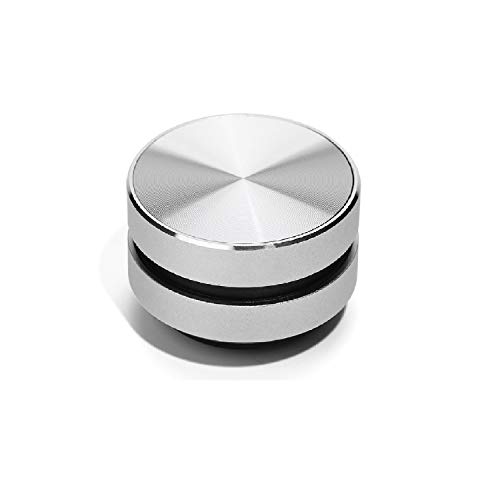
Pros
- Versatile bone conduction creates fun, instrument-like sounds on everyday objects
- True wireless stereo elevates solo play to full surround experience
- Compact portability fits any bag for on-the-go creativity
- Strong Bluetooth compatibility with major phones and tablets
- Powers up to 115dB for room-filling volume on ideal surfaces
Cons
- Sound quality shines brightest on hollow surfaces, less impressive standalone
- Volume and tone vary by object thickness and material
- Requires two units for full stereo, single unit is mono only
The Bigvapor Bone Conduction Speaker redefines portable audio by using vibration technology to turn any hollow object into a speaker. Stick it on a plastic box, guitar body, or even a dashboard, and enjoy a spectrum of sound effects that mimic different instruments. It's a game-changer for inventive users who want customizable audio without bulky gear.
Ideal for party hosts, travelers, or home tinkerers, this mini speaker pairs via Bluetooth with iPhones, Samsung devices, and tablets for music, calls, games, or podcasts. Two units connect automatically for true wireless stereo, delivering a surround experience perfect for tailgates or casual hangouts.
In real-world tests, it punches up to 115dB on thin hollow surfaces, creating lively vibes for small groups. While surface-dependent, its creativity factor makes it stand out from standard speakers. Verdict: A must-buy for fun-loving audio explorers seeking portable innovation.
Bone conduction tech vibrates surfaces for a dynamic sound signature that shifts from bassy thumps on buckets to crisp highs on glasses. Vocals stay clear for podcasts and calls, while volume hits 115dB on optimal thin objects, filling rooms without distortion.
Bluetooth range holds steady for stable streaming indoors or out, with TWS pairing two speakers for balanced 2.0 stereo. No companion app needed, but expect playful experimentation to dial in the best tone for movies or games.
FM radio adds versatility for live tunes, making it reliable for workouts where traditional speakers falter.
This ultra-mini design weighs next to nothing, making it the ultimate pocketable companion for hikes, beach days, or desk setups. Its rugged build handles daily tosses, though no official IP rating means keeping it dry during pool parties.
Portability reigns supreme, with a form factor that clings to surfaces via vibration alone, no clips required. Pair it with hollow finds like storage bins for extended play without bulk.
Battery life supports hours of vibes on a single charge, quick top-ups keep the party going. Focus on its lightweight freedom for all-day creativity without drain worries.

Pros
- Transforms almost any hollow or rigid surface into a vibrant soundboard
- Ultra-portable footprint slips easily into a pocket or travel pack
- Aux-in and Aux-out jacks allow easy multi-unit daisy chaining
- Quick, stable Bluetooth 5.0 connection with smartphones and tablets
Cons
- Audio quality and bass depth vary wildly depending on the surface material used
- Lacks an official IP waterproof rating for wet poolside or rainy conditions
- Requires smooth, flat contact points to generate clean resonance without buzzing
The Anything Speaker PRO transforms the conventional portable listening experience by turning everyday items into high-output acoustic drivers. Instead of relying purely on standard internal drivers to push air, this compact audio device utilizes bone conduction vibration technology. When placed on a tabletop, a cardboard delivery box, a cooler, or a guitar case, it transfers sonic energy directly into the material, using the physical surface as a giant soundboard.
This innovative design makes the speaker a standout gadget for mobile workers, frequent travelers, campers, and curious audio enthusiasts. Whether you are working at an outdoor picnic table or relaxing in a hotel room, finding different hollow objects to test becomes half the fun. It is especially handy for individuals who want an ultra-portable audio companion without hauling around a hefty boombox.
In real-world testing, performance varies delightfully based on your surroundings. Placing the unit against a hollow wooden cabinet produces a warm, rich tone with surprising presence, while sticking it to an empty cardboard box delivers an unexpectedly punchy low-end kick. Flat glass surfaces generate crisp highs that emphasize vocals and acoustic strings. Furthermore, the inclusion of dedicated auxiliary input and output ports allows you to daisy-chain multiple units together, creating a connected network of resonant surfaces.
Ultimately, the Anything Speaker PRO is an inventive, highly entertaining travel companion that punches well above its tiny dimensions. While it requires mindful surface selection to achieve optimal audio reproduction, its sheer versatility and pocket-friendly footprint make it a compelling choice for adventurous listeners.
Acoustic performance with this vibration speaker is intimately tied to the medium you choose. Dense, solid surfaces such as thick stone countertops offer minimal resonance, resulting in quieter output. However, hollow surfaces like acoustic instruments, cardboard packaging, plastic storage bins, or wooden desks act as massive soundboards, delivering impressive volume levels and 360-degree omnidirectional audio dispersion that fills an entire room.
Vocal clarity remains clean across podcasts and acoustic tracks, while lower frequencies gain body when paired with large hollow chambers. The unit avoids harsh distortion at moderate to high volumes as long as the base maintains solid, flush contact with the host surface. Connecting multiple units via the onboard auxiliary jacks expands the sound field significantly, making group gatherings and workspace listening setups much more immersive.
Wireless performance is driven by Bluetooth 5.0, which ensures rapid pairing and solid signal stability with both iOS and Android smartphones. The wireless range easily handles typical room distances without audio stuttering or dropouts, allowing you to control playback and stream playlists effortlessly while keeping your device within hand's reach.
Crafted with a sleek Onyx Black finish, the Anything Speaker PRO boasts an ultra-compact form factor measuring roughly 2.25 inches on all sides. Despite its diminutive footprint, it carries a solid heft of just over one pound, which provides the necessary downward pressure to maintain solid physical contact against resonant surfaces and prevent rattling during intense bass playback.
In terms of durability, the solid exterior is well-suited for travel bags, backpacks, and glove compartments. Because the speaker relies on physical contact rather than traditional open grilles, it presents a streamlined profile. However, it does not carry a formal IP waterproof or dustproof rating, so users should take care to keep it dry and protected during outdoor adventures or poolside gatherings.
Power is supplied by an efficient internal rechargeable battery that keeps the music playing across your travel days. Recharging is straightforward via standard USB, bringing the speaker back to full power quickly so you can continue experimenting with new acoustic surfaces on the go.

Pros
- Exceptional clarity and volume for PA applications
- Adjustable bracket allows flexible aiming
- Compact and lightweight design enhances portability
- Durable ABS construction withstands regular use
- Complete with mounting hardware for immediate use
Cons
- Frequency range limited to 500Hz-5kHz, missing deeper bass
- Peak power rating only, with no specified RMS for continuous use
- May not suffice for very large venues due to 101dB max output
The Pyle 8-inch PA horn speaker is a rugged, portable audio solution designed for amplifying voice or music in indoor and outdoor settings. Ideal for DJs, event organizers, coaches, or anyone needing reliable public address capabilities without complex setups, it excels in gyms, parks, warehouses, or parties.
Standout features include 65 watts peak power and 101dB output at 8 ohms impedance, ensuring loud, intelligible sound across its 500Hz to 5kHz frequency response. In real-world use, it projects clearly over moderate distances, making announcements crisp and music energetic without distortion at normal volumes.
Build quality shines with a durable ABS horn body, weighing just 2.75 lbs and measuring 8 x 4.5 x 9 inches for easy handling. The included 180-degree swiveling bracket and hardware allow secure, adjustable mounting on walls, poles, or stands, promoting versatility.
Potential drawbacks include the narrower frequency range, which skips low bass for fuller music playback, and reliance on peak power specs without RMS details for prolonged high-volume operation. It suits targeted amplification rather than hi-fi audio.
Overall, this Pyle horn speaker offers excellent value for portable PA needs, earning strong recommendation for budget-conscious users prioritizing clarity, ease, and power in practical scenarios.
Key Specs:
- Driver Size: 8 inches
- Impedance: 8 ohms
- Peak Power: 65 watts
- Max SPL: 101 dB
- Frequency Response: 500 Hz - 5 kHz
- Weight: 2.75 lbs
- Dimensions: 8" H x 4.5" W x 9" D
- Material: ABS horn with adjustable bracket
- Includes: Mounting bracket and hardware

Pros
- Compact 3.5x3.5x4.5-inch size fits anywhere without dominating space
- High-quality polypropylene woofers for reliable full-range sound
- Mountable with included brackets for versatile home installs
- Handles 20-200W per channel for powerful output
- Spring-loaded connectors make wiring hassle-free
Cons
- Requires separate amplifier or receiver - no built-in power
- Wired setup only, lacks wireless Bluetooth convenience
- Limited low-end bass due to 150Hz frequency start and small woofers
The Acoustic Audio AA321B is a pair of mountable indoor bookshelf speakers designed for traditional passive audio systems. These compact black units connect via raw speaker wire to any amplifier or receiver, delivering up to 400 watts of total power handling for enhanced home listening.
Perfect for American homeowners seeking affordable upgrades to bedrooms, home offices, or small living areas, they offer full-range sound from 2.5-inch polypropylene woofers. With 88dB sensitivity at 8 ohms, they punch above their size when paired with a capable amp.
In real-world use, expect clear mids and highs suitable for music, podcasts, or TV audio in intimate spaces. The sealed ABS cabinets and mounting brackets allow secure wall or shelf placement, making them a smart choice for clutter-free setups.
Overall verdict: A budget-friendly entry into quality bookshelf audio that shines in powered home environments, though best for those already owning an AV receiver.
These speakers provide full-range coverage from 150Hz to 20kHz, emphasizing clear vocals and highs with decent midrange from the 2.5-inch woofers. Bass is present but not deep, suiting casual listening over bass-heavy genres.
Volume levels scale well with 20-200 watts per channel, reaching room-filling output without distortion in small areas thanks to 88dB sensitivity. Ideal for steady performance in home offices or kitchens.
As wired passive units, they excel with stable amp connections, avoiding Bluetooth dropouts for consistent playback during long sessions.
Built with rugged black ABS sealed cabinets, these speakers endure indoor placement with a compact 3.5 x 3.5 x 4.5-inch footprint per unit, keeping them lightweight and unobtrusive.
Included mounting brackets and spring-loaded raw wire connectors ensure durable, secure installs on walls or shelves. No IP rating, but sealed design protects against dust in home settings.
No battery required - they run continuously as long as your amp is powered, eliminating charge times and offering unlimited playback for all-day home use.
Understanding Rear Speaker Output and Surround Sound Dynamics
A rear speaker typically delivers between 10 percent and 20 percent of the total acoustic energy across an entire film soundtrack. During conversation-heavy sequences, rear channels frequently fall completely silent to keep spoken dialogue crisp and centered on the screen. However, when an action scene erupts or environmental ambiance surrounds the viewer, the rear channels provide crucial sound bursts that match the volume of the front stage. Deciding how much sound does a rear speaker have in practice comes down to audio channel allocation, source material encoding, room calibration, and the physical capabilities of your equipment.
The Channel Distribution of Surround Sound Tracks
Professional audio engineers mix multi-channel soundtracks with clear separation between primary narration and ambient space. In a standard 5.1 or 7.1 surround mix, the center-channel speaker handles approximately 60 percent to 70 percent of all dialogue and direct narrative information. The left and right front speakers produce the primary musical score, panning effects, and on-screen movements, accounting for another 20 percent to 25 percent of the audible content. This intentional structure leaves the rear and side surround speakers responsible for the remaining ambient envelope.
Rear surround channels are not designed to duplicate what happens in front of you. Instead, audio directors populate rear channels with atmospheric reflections, subtle room reverberations, rustling leaves, distant gunfire, and off-screen vehicular movement. If a sound engineer placed continuous music or heavy dialogue into the rear speakers, the acoustic imaging would collapse and confuse the listener. By restricting rear speakers to localized effects and ambient cues, the soundstage maintains realistic three-dimensional depth.
This distribution model means that measuring rear speaker sound by continuous volume alone creates a misleading impression. Over a two-hour movie, the actual sound output from rear drivers represents only a modest fraction of the total soundtrack run time. Yet, the emotional impact of those brief acoustic moments often defines the entire cinematic immersion. When a discrete audio cue pans seamlessly from front to back, the realism depends entirely on the precision of that momentary rear channel engagement.
Decibel Calibration Versus Active Audio Content
A common misconception among audio enthusiasts is confusing channel calibration levels with total continuous volume. During initial receiver setup, every speaker in the room is calibrated to output the same reference sound pressure level from the primary listening position. When an AV receiver sends an internal test tone or pink noise burst, each channel, including the rear speakers, is typically tuned to hit an identical target level such as 75 decibels. This matching ensures that when a sound effect pans across the room, it maintains consistent perceived intensity.
Although rear speakers are calibrated to play at equal volume potential as the front speakers, the audio track rarely calls on them to do so. The sound mix instructs the rear speakers to remain quiet until a specific directional cue or atmospheric layer occurs in the program material. When those intended effects do arrive, the rear speakers fire at full intended amplitude without distortion or volume loss. If you turn up the rear speaker trim levels artificially to hear them constantly, you disrupt the balance and pull dialogue away from the screen.
Listeners who want to verify that their rear speakers produce sufficient sound can use automated calibration software or a standalone sound pressure meter. Running an automated receiver setup measures speaker distance and room acoustics automatically. The receiver compensates for speaker sensitivity and listening distance by adjusting individual channel gain settings. Once calibrated, listeners should resist the urge to boost rear gain merely because background dialogue scenes sound relatively quiet.
How Source Formats Dictate Rear Sound Output
The exact quantity of sound delivered to rear speakers depends heavily on the format of the media you are playing. Native multi-channel streams encoded in modern digital surround formats contain discrete channels specifically dedicated to the rear speakers. In these discrete formats, the sound mixer precisely controls when each rear driver receives an electrical signal. Modern action blockbusters and video games make aggressive use of these discrete channels to track moving objects across the listening space.
Older television programs, broadcast news, sports broadcasts, and casual streaming videos frequently broadcast in basic two-channel stereo or legacy matrix formats. When playing stereo content, the source file contains no native rear channel information whatsoever. If your AV receiver remains in straight stereo mode, the rear speakers will produce zero sound because no data exists for those channels. Many listeners assume their wiring has failed when the true limitation is simply a standard two-channel broadcast format.
When you encounter two-channel material, modern audio processors can synthesize artificial surround sound using matrix upmixers. Algorithms analyze the stereo signal, route shared in-phase audio to the center speaker, and send out-of-phase ambient sound to the rear speakers. While matrix decoding can extract subtle crowd noise or background reverberation, it cannot match the dynamic punch of a genuine multi-channel mix. Knowing the native format of your media prevents unnecessary troubleshooting when rear channels remain subdued.
Two-Channel Stereo Versus Multi-Channel Upmixing
Music reproduction introduces another layer of complexity when evaluating rear speaker sound levels. Traditional studio music is recorded and mixed for two-channel stereo playback, featuring a defined left and right soundstage designed for front-facing speakers. Audiophiles generally prefer listening to stereo tracks with rear channels completely muted to maintain authentic stereo imaging and tonal purity. In pure direct or standard stereo listening modes, your rear speakers remain silent by design.
If you prefer an encompassing musical presentation throughout a living room, receivers offer all-channel stereo and specialized party modes. These modes duplicate the front stereo signal and route it directly to the rear speakers at full continuous volume. Under all-channel playback, rear speakers output just as much sound, music, and energy as the front pair, creating a full wall of sound. While this configuration works wonderfully for social gatherings, it sacrifices precise instrument positioning and vocal localization.
For whole-home setups or multi-room routing, many users incorporate external hardware to distribute audio between secondary zones. Installing stereo speaker selector units allows listeners to route continuous music signals across several pairs of speakers without overloading their main amplification receiver. Switching between dedicated surround sound processing and full-range multi-room playback lets homeowners choose whether rear speakers provide subtle ambiance or continuous musical drive.
Passive Satellite Speakers and Power Handling Realities
The physical construction of rear speakers plays a direct role in how much acoustic volume and low-frequency energy they can reproduce. Most home theater setups employ compact satellite or bookshelf speakers in rear positions due to space and mounting limitations. For instance, the Acoustic Audio AA321B Mountable Indoor Speakers illustrate typical passive surround architecture with compact 3.5-inch sealed cabinets and 2.5-inch polypropylene woofers. Because these drivers are engineered for compact wall mounting, their physical excursion limits low-end bass output.
Compact passive speakers feature specific electrical requirements that dictate how effectively they respond to receiver power. The Acoustic Audio AA321B models carry an 8-ohm nominal impedance and a rated frequency response of 150 Hz to 20 kHz, designed for amplifiers delivering between 20 and 200 watts per channel. With standard spring-loaded raw wire connectors, they connect directly to external receiver channels rather than housing built-in amplifiers. Because these satellite units roll off bass below 150 Hz, low-frequency sound is redirected to the active subwoofer.
Directing low frequencies away from rear satellite speakers protects smaller drivers from thermal overload and mechanical clipping. In your AV receiver bass management settings, setting rear speakers to small engages a digital high-pass crossover. This configuration routes deep cinematic rumbles to the subwoofer, allowing compact rear drivers to focus exclusively on midrange and treble clarity. This power distribution ensures rear speakers deliver clean, undistorted sound even during demanding movie action scenes.
The Impact of Speaker Sensitivity on Rear Channel Output
Sensitivity ratings fundamentally determine how much sound a speaker generates from a single watt of amplifier power. The Acoustic Audio AA321B satellite pair features a sensitivity of 88 dB measured at 8 ohms, representing a moderate efficiency typical of home indoor speakers. A speaker with 88 dB sensitivity requires double the electrical power to reach the same acoustic volume as a speaker rated at 91 dB. When rear speakers have lower sensitivity than front floorstanding models, the receiver must supply higher channel gain to balance room output.
To see how drastically sensitivity alters output capability, consider high-efficiency designs like the Pyle Indoor / Outdoor PA Horn Speaker. This heavy-duty horn features an 8-ohm impedance and an acoustic output rating of 101 dB, producing immense vocal volume with minimal input power. Engineered for wide projection with a 65-watt peak power rating and a frequency response from 500 Hz to 5 kHz, horn speakers illustrate the opposite end of the efficiency spectrum. While ideal for voice announcements, such horn drivers are rarely used in refined home surround environments.
Mismatched sensitivity between front and rear channels requires careful compensation in receiver software. If your front speakers feature high-efficiency horn drivers while your rear surrounds utilize low-sensitivity compact enclosures, your receiver must boost rear channel levels significantly. Failing to balance channel gains leaves rear speakers sounding faint or virtually absent during playback. Checking manufacturer sensitivity specifications helps you maintain proper headroom across all amplifier channels.
Vibration Transducers Versus Traditional Directional Speakers
Modern audio technology also includes unconventional transducers that disperse sound in ways fundamentally different from traditional cone drivers. Devices like the Bigvapor Bone Conduction Speaker and the Anything Speaker PRO use bone conduction vibration technology to turn hollow surfaces into acoustic radiators. Rather than pushing air through a suspended paper or polypropylene cone, these compact Bluetooth units transfer mechanical vibrations into tables, boxes, or windows. The resonant surface itself becomes the loudspeaker, generating 360-degree omnidirectional sound.
The Bigvapor Bone Conduction Speaker features true wireless stereo pairing, allowing two interconnected units to generate a portable 2.0 sound field. The manufacturer notes that placing the device on resonant hollow plastic boxes or buckets can generate substantial localized sound reaching up to 115 dB on optimal surfaces. Similarly, the Anything Speaker PRO utilizes Bluetooth 5.0 and auxiliary pass-through connections to create omnidirectional sound through surface vibration. These portable tools provide creative personal listening experiences across various travel and desktop environments.
Despite their innovative design, surface vibration transducers operate outside the calibrated framework of dedicated home theater rear channels. Traditional surround speakers rely on directional dispersion patterns, precise cabinet tuning, and predictable acoustic damping to position effects in 3D space. Vibration transducers vary wildly in frequency response and tonal balance depending entirely on the material they touch. For accurate cinematic surround sound, rigid cabinet speakers with known crossover points remain the standard choice for rear positions.
Placement Angles and Elevation for Balanced Rear Sound
The physical location and angle of your rear speakers directly impacts how much sound actually reaches your ears. In a standard 5.1 layout, surround speakers should sit slightly behind and to the sides of the primary listening position, angled inward between 110 and 120 degrees. In a true 7.1 setup, side surrounds handle lateral audio while dedicated rear surround speakers sit directly behind the listening couch. Placing rear speakers too close to the back of a listener’s head causes localized hotspots where effects sound overly aggressive.
Mounting height also alters the perceived intensity and spaciousness of rear audio effects. Audio engineers generally recommend placing surround speakers one to two feet above seated ear level to prevent the sound from becoming too directional. Positioning rear speakers slightly above ear height diffuses the acoustic energy, creating a convincing environmental envelope around the seating area. Utilizing dedicated speaker stands provides stable elevation and mechanical decoupling, preventing unwanted floor vibrations from muddying the surround stage.
When floor space is restricted, wall mounting with adjustable brackets offers an effective placement alternative. Models like the Acoustic Audio AA321B include integrated mounting brackets, allowing users to angle the cabinets toward the sweet spot. Aiming the speaker face toward the primary seating area ensures high-frequency audio reaches the listener without excessive room boundary reflections. Proper aiming allows rear speakers to deliver crisp detail without requiring artificial volume boosts from the receiver.
Troubleshooting Unusually Quiet or Muted Rear Channels
If your rear speakers seem completely silent or unusually quiet, a systematic diagnostic check can quickly identify the root cause. Start by inspecting the audio source format on your receiver display during playback. If the receiver displays PCM 2.0 or Stereo, the program material lacks multi-channel encoding, meaning rear silence is entirely expected. Adjusting your media player, streaming device, or television audio output settings to Bitstream or Pass-Through allows native 5.1 surround tracks to pass unhindered.
Physical speaker connections represent another frequent point of failure in multi-channel installations. Inspect the raw speaker wire terminations at both the receiver binding posts and the speaker spring clips. Ensure proper polarity by matching positive red terminals to positive leads and negative black terminals to negative leads along the entire cable run. Reversed polarity creates destructive phase cancellation, causing rear channels to sound thin, hollow, and significantly quieter than intended.
Internal receiver settings should also be verified through the onscreen configuration menu. Check the channel trim levels to confirm the rear channels have not been accidentally muted or attenuated to negative decibel values. Running an internal test tone sequence confirms whether each speaker wire path is physically intact and transmitting sound. If test noise plays normally through the rear drivers, the hardware is functional, and the issue lies strictly within source formatting or listening mode selection.
Practical Calibration Guidelines for Balanced Surround Audio
Achieving the perfect balance from your rear speakers requires treating them as supporting elements rather than primary performers. When properly configured, rear speakers should disappear into the room, revealing themselves only when a film director deliberately places sound behind the audience. Resisting the temptation to crank rear volume levels preserves dynamic realism and keeps the front dialogue anchor rock solid. Trusting your receiver calibration software establishes the correct baseline for natural acoustic performance.
Periodic re-checking of your listening environment ensures consistent sound delivery over time. Furniture changes, new carpeting, or shifting speaker angles can alter how high-frequency audio reflects off surrounding surfaces. Taking a few minutes to verify distance measurements and speaker levels after rearranging a room keeps your surround stage tightly integrated. With properly matched levels and accurate speaker placement, rear channels provide the perfect blend of subtle atmosphere and explosive cinematic excitement.





Write Your Review
No reviews yet. Be the first to share your experience!