


Setting up a home studio desk or practice corner often starts with an unsettling moment when pressing a brand new key produces total silence. Many beginners asking do you need speakers for a midi keyboard quickly discover that standard MIDI controllers produce zero acoustic sound on their own. These hardware tools act as data transmitters rather than standalone musical instruments, sending velocity, pitch, and note information to a computer, synthesizer, or tablet. If you want to hear what you are playing, your host device must generate the audio and route it through an external listening source such as dedicated desktop studio monitor speakers or headphones.
The distinction becomes even more important when evaluating different gear types across the market. While dedicated USB controllers rely entirely on external virtual instruments and software samplers, select hybrid instruments combine MIDI connectivity with built-in sound synthesis and physical onboard speakers. Connecting your setup properly prevents frustrating audio dropouts, reduces system latency, and ensures you get crisp sound reproduction during live playing. Exploring whether your workflow thrives on headphones, a powered computer speaker system, or professional acoustic monitors will help you build a responsive and reliable musical workspace.

Pros
- Extremely lightweight and compact footprint fits easily on crowded studio desks or in travel bags
- Genuine MPC drum pads deliver exceptional velocity sensitivity for rhythmic beat production
- Convenient USB bus power eliminates the need for an external AC power adapter
- Extensive bundled software package includes 1,500+ sounds and top-tier virtual instruments
- Seamless NKS integration and DAW compatibility streamline music creation workflow
Cons
- Mini keys can feel somewhat cramped for players accustomed to full-size piano keyboards
- Does not produce standalone sound without being connected to a computer or host device
- Configuring advanced custom MIDI mappings requires a slight learning curve for novices
The Akai Professional MPK Mini MK3 is a compact 25-key USB MIDI keyboard controller engineered to bridge the gap between creative musical inspiration and desktop audio production. Designed to interface smoothly with modern digital audio workstations and studio monitor setups, this unit pairs velocity-sensitive mini keys with genuine MPC-style performance pads to give creators tactile mastery over their sound. Whether composing intricate melodies, laying down rhythm tracks, or tweaking synth parameters, this hardware acts as the reliable central command hub of any portable recording environment.
This audio production unit is crafted specifically for beatmakers, traveling producers, electronic musicians, and home studio enthusiasts who need professional capability without sacrificing precious desk space. Musicians who produce music on laptop setups while traveling will appreciate how effortlessly it integrates with creative software suites. It also serves as an outstanding entry point for aspiring producers who want a complete starter kit equipped with thousands of sounds, drum samples, and virtual instruments right out of the box.
In real-world production sessions, the MPK Mini MK3 delivers dependable tactile feedback and rock-solid responsiveness. The Gen 2 keybed offers refined dynamic velocity tracking, making gentle acoustic piano chords and energetic synth lines feel balanced and expressive. The eight backlit MPC pads, equipped with classic Note Repeat and Full Level functions, provide immediate punch when triggering drum kits or audio samples through your monitors. Furthermore, the continuous 360-degree rotary knobs allow smooth adjustments of virtual instrument filters, EQ bands, and volume envelopes without stepping artifacts.
Ultimately, the Akai Professional MPK Mini MK3 stands as one of the most versatile and practical production controllers available for today's music creators. Its sturdy build, comprehensive software suite, and intuitive control layout make it an indispensable tool for turning musical ideas into polished studio mixes. For creators seeking to maximize studio efficiency and unleash the full potential of their speaker system, this controller is an easy recommendation that delivers lasting value.
When routed through active studio speakers or high-end sound monitors, the MPK Mini MK3 enables producers to sculpt bass depth and low-end punch with impressive precision. The velocity-sensitive MPC pads translate subtle finger taps into thunderous sub-bass drops, synth basslines, and crisp kick drums without unintended clipping. When playing virtual instruments like Hybrid 3 or Mini Grand, the keybed preserves vocal sample clarity and delicate upper-midrange acoustic nuances across complex polyphonic arrangements.
Managing volume levels and dynamic output is seamless thanks to the assignable 360-degree rotary encoders. Producers can map these endless knobs directly to master faders, mixer channels, and gain staging plugins, ensuring clean audio reproduction across quiet late-night sessions and high-output playback tests. The included software instruments provide substantial dynamic range, allowing you to drive output levels cleanly without introducing unwanted digital distortion into your mix.
While standard wireless audio gear often relies on Bluetooth connections that can introduce latency and dropouts, the MPK Mini MK3 utilizes a direct USB connection to guarantee rock-solid performance stability. By bypassing Bluetooth range limits and connection instability, the controller delivers zero-latency performance so every key strike and pad hit registers instantaneously. This wired reliability ensures that your audio triggers and synth modulations reach your speakers in real time, delivering the immediate acoustic response essential for tight beatmaking.
Built for life on the move, the MPK Mini MK3 features a solid, travel-ready chassis that weighs just under two pounds. Measuring 7.1 by 12.5 inches and under two inches thick, it slides effortlessly into everyday backpacks, laptop sleeves, or gear bags without adding noticeable strain. The four-way thumbstick and rotary knobs are recessed and reinforced to resist accidental snags during transit, ensuring the hardware holds up against the bumps of daily travel between home and the studio.
While this production device does not carry an outdoor IP waterproof or dustproof rating typically assigned to ruggedized outdoor speakers, its tight-tolerance casing protects sensitive internal circuitry from everyday studio dust and minor desktop splashes. The enclosed mechanical switches and sealed rotary potentiometers keep debris from infiltrating key contact points, preserving smooth knob sweeps and responsive pad triggers over years of regular use.
In terms of power, the controller eliminates the hassle of internal battery degradation and lengthy charging times by operating entirely on USB bus power. Instead of waiting for an internal battery to recharge before a session, you simply plug the controller into a computer or compatible USB host for unlimited continuous playback time. Because it draws minimal current directly from your host machine, you get reliable, non-stop performance without worrying about battery drain during crucial studio sessions.
Pros
- High-output 50W stereo speaker system easily fills medium and large rooms
- Audio-in and wireless features allow effortless playback alongside streaming tracks
- Realistic weighted keybed resistance with textured ivory-feel finish
- Sturdy mahogany-grain console stand minimizes vibration during intense play
Cons
- Requires constant AC wall power with no portable battery option
- Substantial size and weight make it difficult to move once assembled
- Bass-heavy tracks at maximum volume can cause slight cabinet resonance
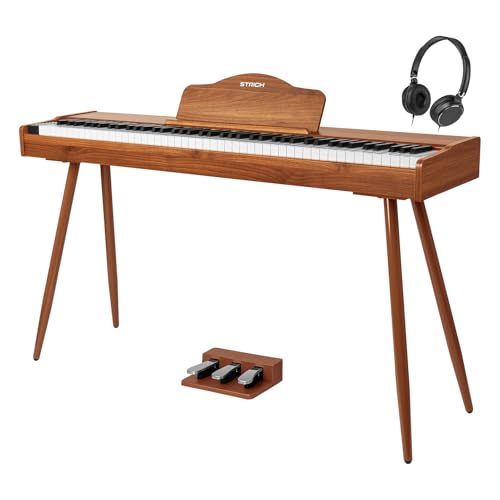
The STRICH SDP-300S is an integrated home digital piano and sound system designed to merge traditional piano feel with modern audio performance. Featuring a full-size 88-key weighted hammer-action bed and an integrated 50W stereo monitor setup, this unit acts as both a serious musical instrument and a dedicated living room speaker console. It serves beginner to intermediate pianists, music educators, and home audio fans seeking an attractive, multi-functional furniture piece.
In day-to-day use, the instrument balances practical utility with musical expression. The twin 25W speakers produce clean, full-bodied resonance that fills open floor plans, giving both grand piano samples and paired audio tracks room to breathe. Setup is straightforward thanks to the included matching mahogany stand, transforming any corner into a dedicated performance space with minimal cable clutter.
Beyond standard solo playing, the SDP-300S shines in educational and collaborative environments. Dual-keyboard functionality lets instructors and students play side by side across identical pitch ranges, while USB-MIDI and wireless support link easily with tablets and digital audio workstations. The onboard auto-chord accompaniment and layer features also make casual composition fast and rewarding.
Overall, the STRICH SDP-300S delivers exceptional value for home musicians who prioritize strong internal amplification, authentic key resistance, and classic aesthetics. While not intended as a mobile stage rig, its robust build and capable sound projection make it a reliable centerpiece for everyday practice and casual entertainment.
Sound delivery on the SDP-300S is driven by a twin 25W speaker array configured for wide stereo dispersion. Low frequencies exhibit satisfying acoustic warmth, giving left-hand bass runs and lower-octave chords substantial weight without sounding muffled. Midrange frequencies remain articulate and crisp, ensuring that vocal tracks streamed through the audio-in jack and nuanced piano leads maintain distinct separation across all 128 polyphony voices.
At higher volume thresholds, the system pushes ample sound pressure to comfortably handle family gatherings or small recital spaces without harsh harmonic breakup. Wireless audio connectivity establishes a stable link with smart devices, maintaining clear signal transfer across typical domestic ranges of up to 30 feet. Whether you are rehearsing alongside backing stems or simply streaming high-fidelity tracks through the line-in circuit, the onboard drivers maintain clean dynamic balance.
Constructed with a refined mahogany-wood-grain exterior, the SDP-300S emphasizes structural rigidity and vintage living room style over outdoor ruggedness. Weighing over 50 pounds when assembled with its companion stand, the unit stays firmly planted during energetic performances, resisting wobble and unwanted mechanical sway. The full-size chassis measures roughly 51 inches wide by 29 inches tall, making it a purposeful indoor fixture rather than a portable carry-along.
In terms of power architecture, this speaker system operates exclusively on continuous AC wall power using an included 12V 3A DC adapter. While the absence of an internal rechargeable battery means you cannot take it off-grid to the park, it completely eliminates battery degradation and runtime limits, ensuring reliable, uninterrupted power during all-day practice sessions or background listening marathons.

Pros
- Extremely lightweight and travel-ready at under one pound
- True driver-free plug-and-play setup for Mac, Windows, and iOS devices
- Feature-packed interface with arpeggiator, octave shift, and pitch rocker
- Includes 40 educational lessons tailored for novice music producers
- Responsive velocity-sensitive keys for expressive playing
Cons
- Mini-sized keys can feel cramped for players accustomed to full-size piano keyboards
- Requires an OTG adapter sold separately to connect to smartphones or tablets
- Does not produce standalone sound and must be connected to host software
The Donner N-25 is an ultra-portable 25-key USB MIDI keyboard controller engineered to bridge the gap between creative inspiration and desktop audio production. Designed specifically for aspiring beatmakers, traveling producers, and home studio enthusiasts, this compact unit serves as a versatile input companion to your digital audio workstation and studio monitor speaker setup. It strips away the clutter of oversized studio gear to deliver essential music-making capabilities in a streamlined format that fits effortlessly into any modern creative workflow.
Equipped with 25 scaled-down, velocity-sensitive keys, the N-25 gives musicians the freedom to record dynamic synth leads, bass riffs, and drum patterns with natural articulation. Even if you have minimal formal music theory training, the built-in arpeggiator, sustain toggle, octave shift, and tap tempo buttons make generating complex musical phrases remarkably intuitive. The four user-programmable banks allow quick preset switching, while the multifunctional pitch-bend rocker adds expressive slide effects to your sound libraries.
In real-world testing, the controller shines through its straightforward plug-and-play design. Connecting to a Mac or PC requires zero driver installations, and it pairs smoothly with iOS and Android devices via an OTG adapter for mobile track sketching. Compatibility is broad across major DAWs like Ableton Live, Logic Pro, Cubase LE, and FL Studio. Novice producers will also appreciate the included 40 interactive keyboard courses, which provide practical guidance on arrangement and composition right out of the box.
Overall, the Donner N-25 stands out as an exceptional value for beginners and mobile musicians looking to expand their audio production capabilities without crowding their desktop space. While experienced pianists might find the compact mini keys tight for complex two-handed play, its intuitive layout, expressive controls, and featherlight footprint make it a compelling creative tool for any mobile rig or desktop studio setup.
When hooked up to virtual instrument plugins through your studio speakers, the Donner N-25 delivers responsive control across the entire frequency spectrum. The velocity-sensitive keybed allows you to accurately shape bass depth when playing sub-bass patches or synth basslines, responding reliably whether you tap lightly for subtle low-end rumble or strike firmly for hard-hitting punch. Triggering sampled vocal tracks and lead instruments showcases clean velocity scaling, ensuring vocal clarity and melodic articulation remain nuanced without sudden volume spikes.
Dynamic volume levels are easily managed directly from your performance thanks to the consistent velocity curves across the 25 mini keys. The illuminated pitch-bend rocker allows you to sweep frequencies smoothly, giving synth leads and vocal samples an expressive, organic feel. You can seamlessly switch octaves to access deep sub-bass registers or crystalline high-frequency leads with the touch of a dedicated button, maintaining balanced playback output through your connected monitors.
In terms of connectivity stability, the direct USB-MIDI interface ensures rock-solid, ultra-low latency transmission to your host computer or mobile device. While wireless Bluetooth range limitations can sometimes introduce timing jitter in portable audio gear, the direct wired USB connection on the N-25 eliminates input lag entirely. Notes trigger instantly through your audio interface and sound system, ensuring that every drum hit, arpeggiated synth sequence, and chord progression plays back in tight synchronization.
Weighing just 0.99 pounds and measuring 13.39 inches long by 3.86 inches wide, the Donner N-25 is built with extreme portability in mind. Its slim profile slips easily into a laptop sleeve or backpack alongside your mobile tech gear. Despite its featherlight weight, the matte black chassis exhibits solid structural integrity that resists daily flex on the road. However, as an electronic studio instrument, it does not carry an official IP waterproof or dustproof rating, so it should be kept safely away from pool parties, beach spray, and heavy outdoor weather.
Power management is completely hassle-free thanks to its bus-powered USB architecture. Unlike portable gear that requires monitoring actual playback time versus charging time, the N-25 draws minimal electrical current directly from your connected computer, tablet, or smartphone. This means you never have to worry about an internal battery running out in the middle of an inspired recording session, granting unlimited creative playtime as long as your host device remains powered.
The physical controls are thoughtfully arranged for durability and tactile feedback. The velocity keys have a solid bounce-back action, while the light-up buttons provide immediate visual confirmation of active functions such as arpeggiator rates and octave shifts. Its compact footprint makes it an exceptional space-saving solution for cramped dorm desks, home offices, and portable workstation setups where every inch of surface area counts.

Pros
- Ultra-compact and lightweight footprint makes it the ultimate travel companion for mobile music creators
- Velocity-responsive keys paired with dedicated octave and sustain controls offer wide dynamic expression
- Instant plug-and-play USB connection operates reliably with zero software drivers or battery charging needed
- Broad compatibility out of the box with popular DAWs like Ableton Live, Logic Pro, and FL Studio
Cons
- Does not produce standalone sound, requiring tethering to a computer and monitor speakers
- Compact mini keys can feel narrow for producers accustomed to full-sized keyboard instruments
- Lacks wireless Bluetooth connectivity for creators seeking a completely cable-free mobile setup
The Akai Professional LPK25 is a dedicated 25-key USB MIDI controller engineered to bring immediate, tactile music creation to modern audio production setups. Designed as a bridge between your musical ideas and your sound system, this compact hardware unit allows songwriters, producers, and beatmakers to trigger virtual instruments, synthesizers, and drum kits with precision. Its sleek black profile is tailored specifically for creators who need full expressive capability without sacrificing precious desk space alongside their studio speakers and audio monitors.
Built for mobile music producers, traveling composers, and home recording artists, the LPK25 fits naturally into active creative workflows. Whether you are producing in a compact bedroom studio, laying down demo tracks in a hotel room, or jamming during a daily commute with your laptop, this keyboard eliminates technical friction. Its universal compatibility ensures effortless operation with industry-standard digital audio workstations such as Ableton Live, Logic Pro, FL Studio, and GarageBand.
In real-world testing, the keyboard delivers a surprisingly capable and expressive performance. The 25 velocity-sensitive mini keys respond faithfully to dynamic finger playing, allowing you to alternate between soft, delicate piano passages and energetic synth stabs. Dedicated octave transpose buttons provide immediate access to the full pitch spectrum, while the built-in arpeggiator and sustain switch expand creative possibilities during songwriting and live jamming sessions without requiring complex external MIDI mapping.
Ultimately, the Akai Professional LPK25 stands out as an exceptional value for anyone looking to build or expand a portable audio workstation. It avoids unnecessary complexity in favor of reliable, plug-and-play execution that lets you focus entirely on your music. If you need a durable, featherlight controller to command your software instruments and drive sound through your studio monitors, this keyboard is a dependable companion for everyday creative sessions.
When routing your favorite virtual sound modules through reference speakers, the Akai Professional LPK25 offers immediate and precise dynamic control across the frequency spectrum. Triggering deep bass lines and rich sub-bass synthesizers feels tight and punchy thanks to the velocity-sensitive keybed, which accurately translates touch into velocity data for your sound engine. The dedicated octave-down button lets you instantly access sub-frequencies without diving into software menus, allowing you to audition booming low-end bass patches with complete physical control.
For upper-register lead melodies, crisp vocal chops, and articulate arpeggios, the controller ensures clear and consistent dynamic response at any playback volume. The onboard arpeggiator features multiple modes and sync clock options that keep fast melodic runs strictly on beat, helping vocal leads and synth lines sit cleanly in your mix alongside your primary monitors. Because the unit utilizes a direct wired USB connection rather than wireless Bluetooth, producers avoid the signal drops, interference, and frustrating latency issues that can often disrupt timing during critical recording passes.
Weighing barely over one pound and measuring under 14 inches in width, the LPK25 is engineered for rugged everyday portability. The sturdy plastic chassis is robust enough to survive being tossed into a commuter backpack or laptop sleeve without fear of loose knobs or broken switches. While it does not carry an IP waterproof or dustproof rating and should be kept safely away from outdoor rain or pool deck splashes, the enclosed switches and low-profile mini keys provide dependable protection against standard desktop dust and everyday studio wear.
Power management is refreshingly simple because the controller runs entirely on direct USB bus power, completely removing the hassle of calculating playback time against charging time. Without an internal rechargeable battery to wear out, recharge, or add dead weight, the unit remains perpetually ready to perform as long as your laptop or powered hub has juice. This streamlined approach guarantees unlimited continuous runtime during marathon mixing and beat-making sessions without the worry of unexpected battery depletion.

Pros
- Crisp stereo speakers offer rich instrument definition and distortion-free wireless audio playback
- Access to over a thousand professional-grade sounds straight from Roland flagship synthesizers
- Effortless Bluetooth pairing for jamming alongside streamed songs from smartphones and tablets
- Lightweight and compact profile makes it easy to transport and play anywhere on battery power
Cons
- Built-in speakers are tuned for personal monitoring and small rooms rather than loud outdoor events
- Requires standard AA batteries for portable operation instead of featuring an integrated rechargeable lithium-ion pack
- Lacks an outdoor-rated water resistance certification, requiring protection from rain and moisture
The Roland GO:KEYS 3 reimagines portable music creation by pairing expressive keyboard performance with an integrated stereo audio system. Engineered for aspiring musicians, bedroom producers, and casual creators, this sleek dark red instrument eliminates the barrier to songcraft. Rather than requiring bulky external monitors or complex interfaces, it provides everything you need in an all-in-one package that works as easily for casual wireless music playback as it does for full multitrack composition.
At the center of the experience is Roland's renowned ZEN-Core sound engine, placing more than a thousand world-class acoustic and electronic instruments right under your fingers. With full touch-sensitive keys and intuitive chord sequencing, you can sketch out complete tracks in minutes. When you want to practice or relax, the unit functions as a wireless listening station, allowing you to stream high-quality audio directly from your smartphone through its built-in stereo drivers.
In real-world use, the system excels at spontaneous songwriting sessions, small apartment rehearsal spaces, and mobile recording rigs. The auto-accompaniment tracks respond naturally to your playing, giving solo performers the backing of a complete band. For creative workflow, the USB audio interface hooks straight into laptops and tablets without additional hardware, streamlining the recording process.
Overall, the Roland GO:KEYS 3 stands out as a uniquely versatile audio hub that bridges the gap between entertainment speaker and professional music studio. While high-volume stage performers will eventually want external amplification, it delivers an outstanding balance of tone, intuitive creation tools, and portable performance for any music lover.
The integrated stereo sound system in the GO:KEYS 3 is voiced to deliver clean separation and balanced acoustic fidelity across every genre. Midrange frequencies remain transparent and detailed, ensuring vocals in streamed music and lead piano passages cut through without becoming harsh. The bass response is tight and articulate, providing a solid low-end pulse for rhythm tracks and synths without rattling the chassis even at higher listening levels.
For personal rehearsal and living room jam sessions, the onboard speakers generate ample volume with virtually zero distortion at normal to high listening thresholds. When connected over Bluetooth, audio streaming maintains rock-solid wireless stability across standard living room distances, allowing you to stream backing tracks or your personal playlists from across the room without dropouts or latency hiccups.
Sporting a bold dark red finish and a streamlined silhouette, the GO:KEYS 3 is built with modern aesthetic appeal and travel-friendly convenience in mind. Weighing under 16 pounds, the chassis is remarkably easy to carry between rooms, take to rehearsals, or slide into a gig bag. Because it is designed primarily as an indoor instrument and creative workstation, it does not carry an IP waterproof or dustproof rating, so outdoor use should be kept to fair-weather patios and dry picnic spots.
When you want freedom from wall outlets, the unit operates efficiently on standard AA batteries, offering several hours of continuous cordless playing and streaming. While it relies on user-replaceable batteries or the included AC adapter rather than an internal rechargeable lithium cell, this setup allows for quick swaps in the field so your creative flow never gets cut short during extended songwriting sessions.

Pros
- Full-size velocity-sensitive keys offer natural, expressive keyboard response
- Zero-latency USB bus-powered operation requires no batteries or wall adapters
- Compact 4.8-pound build fits comfortably on standard production desks
- Generous included software bundle provides instant access to premium virtual instruments
- Convenient hardware controls streamline volume adjustment and DAW transport navigation
Cons
- Does not feature built-in audio speakers and requires connected monitors or headphones
- Synth-action keys do not offer the resistance of fully weighted piano hammer action
- Connection to iOS mobile devices requires an Apple camera adapter sold separately
The M-Audio Keystation 49 MK3 is a purpose-built audio input controller engineered to bridge the gap between creative musical ideas and digital audio workstations. Although frequently searched alongside studio monitors and desktop audio gear, this unit is a dedicated 49-key USB MIDI keyboard controller designed to drive virtual synths, acoustic instruments, and samplers. It delivers intuitive musical expression directly to your Mac, PC, or iPad workstation without complicated hardware setups.
This controller is tailored for aspiring music producers, songwriters, and desktop beatmakers who need a compact yet expressive keyboard for home recording spaces. The 49 full-size, velocity-sensitive keys provide an authentic, natural touch that easily accommodates chord progressions, melodic lead lines, and intricate basslines. Because it integrates cleanly with leading production suites, it serves beginners learning keyboard technique as well as seasoned musicians sketching out quick song arrangements.
In daily studio sessions, the Keystation 49 MK3 delivers reliable, low-latency responsiveness. The ergonomic pitch bend and modulation wheels allow for fluid pitch glides and real-time filter sweeps, while the assignable volume fader and directional transport buttons streamline your recording workflow. Bundled software like Ableton Live Lite, MPC Beats, Velvet, and Mini Grand provides immediate access to professional-grade piano and synthesizer tones straight out of the box.
Overall, the M-Audio Keystation 49 MK3 stands out as a dependable, accessible cornerstone for modern audio creation. It trades standalone speaker functionality for precision MIDI performance and deep software integration, giving digital creators the exact tactile tools needed to arrange and produce polished tracks.
While the Keystation 49 MK3 does not feature internal speaker drivers, its performance directly shapes the bass depth and vocal clarity produced by your connected speaker monitors and software synthesizers. The velocity-sensitive keybed translates subtle dynamic variations into realistic acoustic piano attacks and punchy sub-bass hits. Utilizing the included Velvet and XPand!2 virtual instruments, creators can sculpt deep lows, articulate midrange chords, and sparkling vocal-style synth leads with high-definition realism.
Managing audio output and track levels is simple thanks to the assignable hardware volume fader, which maps directly to your master stereo bus or individual mixer channels. Unlike wireless systems that can suffer from Bluetooth range limitations, latency delays, or dropped signals, this controller relies on a high-speed wired USB connection. This wired link guarantees instantaneous signal transmission, zero latency during rapid playing, and rock-solid stability during crucial recording sessions.
Engineered for desktop music production rather than outdoor environments, the Keystation 49 MK3 features a slim, durable black chassis built to endure daily studio keystrokes. It does not carry an outdoor IP waterproof or dustproof rating, meaning it is designed specifically for indoor desk setups and protected stage environments. Weighing just 4.8 pounds and measuring under 33 inches across, its lightweight form factor makes it easy to slide into a gig bag for rehearsals or collaborative studio sessions.
When it comes to power, the unit skips internal rechargeable batteries in favor of seamless USB bus power. This design completely eliminates charging downtime, battery degradation, and playback limits, allowing for endless continuous music creation as long as your computer is running. For mobile producers using an iPad, power and data transfer are handled smoothly through a standard camera adapter, delivering reliable mobile performance without needing a dedicated AC outlet.

Pros
- Integrated stereo speaker system produces clean, articulate audio without distortion at practical volumes
- Seamless Bluetooth audio and MIDI connectivity connects instantly to mobile devices and tablets
- Massive sound library powered by Roland's flagship ZEN-Core synthesizer engine
- Expressive 61-note touch-sensitive keybed allows for nuanced dynamic performance
Cons
- Onboard speakers prioritize balanced clarity and do not produce deep sub-bass frequencies
- Lacks an IP waterproof or dustproof rating, requiring careful indoor or protected use
- Requires standard AA batteries for off-grid use rather than featuring a built-in rechargeable lithium pack
The Roland GO:KEYS 3 is a versatile, standalone music creation instrument engineered around a built-in stereo speaker system and Roland's flagship ZEN-Core sound engine. Tailored for aspiring producers, hobbyist keyboardists, and creative songwriters, it bridges the gap between a portable audio entertainment center and an expressive studio instrument.
Featuring 61 velocity-sensitive keys, this unit delivers an immediate hands-on playing experience without requiring external amplifiers, complex cabling, or secondary audio monitors. Engaging the auto-accompaniment styles and chord sequencer unlocks effortless song arrangement on the fly, while built-in Bluetooth audio allows you to stream reference tracks right through the front-facing speakers as you compose.
In daily practice, the integrated stereo drivers easily fill living rooms, bedrooms, and home offices with articulate, rich sound across classic pianos, vintage analog synthesizers, and modern electronic beats. Whether you use it as an interactive study station or an everyday multimedia speaker system, it transforms any desk into an inspiring music lab.
Ultimately, the GO:KEYS 3 stands out as a joyful and capable all-in-one instrument that streamlines the music-making process. For modern creators seeking a portable, great-sounding keyboard speaker solution with genuine studio-grade sound heritage, it offers exceptional creative value.
The internal stereo speakers deliver a balanced and detailed acoustic profile, reproducing clear high frequencies, transparent midrange tones, and snappy synth transients without harsh distortion at high volumes. While the compact drivers are tuned for acoustic definition rather than earth-shaking sub-bass, lower piano registers and synthesized basslines remain remarkably punchy and focused across typical room distances.
Wireless connectivity is exceptionally stable, maintaining a strong Bluetooth connection across standard 30-foot ranges without audio dropouts or annoying artifacts. Streaming playlists and practice tracks from a smartphone or tablet is seamless, allowing you to jam alongside top tracks with crisp vocal articulation and minimal wireless audio delay.
Sporting a stylish Midnight Blue finish, the GO:KEYS 3 combines contemporary tabletop design with dependable build quality. Weighing approximately 15.5 pounds and measuring just 3.5 inches thick, the sleek frame is easy to reposition around your living space or carry in a padded gig bag to rehearsals. Because it lacks an IP waterproof or dustproof rating, it is best kept indoors and protected from moisture, spills, and harsh weather.
For true cordless portability, the system runs on standard AA batteries in addition to the supplied AC power adapter, delivering several hours of continuous cord-free speaker playback and music creation. While an internal lithium-ion battery is not built in, pairing the unit with high-capacity rechargeable AA cells gives you the flexibility to play out on the patio or wherever inspiration strikes.

Pros
- Full 88-key velocity-sensitive layout with expressive semi-weighted feel
- Instant plug-and-play USB connection with zero driver installation
- Bus-powered design eliminates the clutter of external power cords
- Built-in master volume fader, directional controls, and modulation wheels
- Robust bundled software package including Ableton Live Lite and virtual pianos
Cons
- Semi-weighted action lacks the heavier resistance of true acoustic hammer keys
- Substantial 54-inch width demands ample dedicated desk space
- Requires an external camera adapter to connect with iOS mobile devices
The M-AUDIO Keystation 88 MK3 is an expansive 88-key USB MIDI controller engineered to act as the primary control center for software instruments, digital audio workstations, and stage rigs. Designed with full-size, velocity-sensitive semi-weighted keys, this unit bridges the gap between lightweight synth action and authentic piano feel, making it an essential tool for modern audio production.
This controller is built primarily for music producers, keyboardists, sound designers, and home studio enthusiasts who need complete pitch range without octave-shifting compromises. Whether tracking orchestral string libraries, composing complex chord progressions, or laying down drum beats in Ableton Live, it delivers reliable responsiveness for both beginner beatmakers and seasoned musicians.
In real-world workflow tests, the Keystation 88 MK3 excels thanks to its true plug-and-play functionality. Connecting directly to a Mac or PC without driver installations, the controller delivers lightning-fast communication with your recording software. The hardware transport controls and volume fader streamline session tracking by letting you play, record, and adjust sound levels without reaching for a computer mouse.
Overall, the Keystation 88 MK3 stands out as a high-value studio piece that combines full-scale keyboard access with intuitive physical controls. While it requires dedicated desk space, its straightforward integration and included software package make it a dependable workhorse for serious music creators.
When driving virtual instruments such as Mini Grand, Velvet, and Xpand!2, this controller delivers an expressive sound signature characterized by wide dynamic range and articulate touch response. Bass depth comes alive when striking low-octave piano chords or synth sub-bass patches, where the velocity sensitivity accurately triggers rich, resonant low-end tone without unexpected volume jumps.
Higher-register leads, melodic riffs, and vocal sample chops ring out with pristine clarity and transparent note separation. The semi-weighted keybed provides sufficient tactile feedback to execute delicate velocity changes, ensuring that soft piano accents remain intimate while forte strikes punch cleanly through the overall audio mix.
Hardware volume levels and performance dynamics are easily manipulated using the smooth master fader alongside responsive pitch bend and modulation wheels. Rather than relying on wireless Bluetooth connections that can suffer from latency, interference, and dropped signals, the Keystation utilizes a high-speed wired USB connection that guarantees rock-solid stability and zero audio lag during critical recording sessions.
The Keystation 88 MK3 features a slimline, matte black chassis constructed to withstand constant playing pressure in home and commercial studio environments. Lacking an outdoor IP waterproof or dustproof rating, this equipment is engineered strictly for indoor desk setups and clean performance stages, meaning it should be shielded from moisture and liquid spills.
Weighing 13.75 pounds and measuring just under 55 inches in length, the controller offers reassuring tabletop stability that keeps it firmly anchored during energetic playing. Its slender depth of 8.5 inches allows it to tuck easily behind computer monitors or slide onto second-tier keyboard stands without consuming excess real estate.
Power management is refreshingly simple because the unit operates entirely on USB bus power straight from your computer. This eliminates the need for bulky AC adapters, internal battery charging time, or worries about battery degradation over time, giving you virtually unlimited playback time during marathon production sessions. For portable iPad workflows, pairing through an external camera adapter keeps power delivery smooth and steady.

Pros
- Long-lasting 16-hour battery life provides outstanding wireless freedom during travel
- Compact footprint and lightweight chassis make it exceptionally travel-friendly
- Velocity-sensitive keys and RGB drum pads deliver responsive tactile feedback
- Stable Bluetooth connectivity offers low latency across iOS, Android, Mac, and PC
Cons
- Mini keys can feel tight for players with larger hands or classical piano backgrounds
- Windows Bluetooth MIDI configuration may require extra setup steps compared to plug-and-play USB
- Does not include an integrated digital screen for immediate preset viewing
The M-VAVE 25-Key wireless MIDI controller serves as a versatile mobile production hub that integrates smoothly with digital audio workstations and desktop speaker setups. Engineered for traveling songwriters, beatmakers, and home producers, this compact keyboard bridges tactile hardware performance with virtual instruments. It eliminates cable clutter so you can draft arrangements in a cafe, hotel room, or studio without compromising on core production features.
In real-world studio environments, the device connects quickly via wireless Bluetooth or USB to trigger virtual synths and sample libraries through your monitor speaker system. The 25 velocity-sensitive mini keys deliver responsive dynamic control, allowing you to articulate delicate acoustic piano chords or hammer out driving synth basslines. The 8 RGB backlit drum pads provide solid tactile resistance for finger drumming, while dual capacitive touch strips offer smooth modulation and pitch bending.
Hardware integration across platforms is remarkably versatile. The unit pairs smoothly with Windows, Mac, Android, and iOS devices, functioning seamlessly inside major software suites like Ableton Live, FL Studio, Logic Pro X, and GarageBand. While the mini keybed requires some manual adjustment if you are accustomed to full-sized keyboard keys, the tactile encoders and smart chord features significantly accelerate production speed on mobile setups.
Overall, this unit represents an outstanding companion for creators seeking a truly portable beat-making workflow. Delivering reliable connectivity and intuitive layout controls, it seamlessly directs high-energy sound through your audio monitors and studio speakers wherever inspiration strikes.
When routing audio through your studio monitors or reference speakers, the M-VAVE controller allows precise expression across your sound library. The velocity-sensitive keybed provides nuanced dynamic control over bass depth, enabling you to articulate warm acoustic uprights or heavy sub-bass synth lines with consistent velocity tracking. The 8 assignable rotary knobs allow real-time filter sweeps, letting you sculpt resonant low-end frequencies without audible stepping.
For lead instruments and vocal samples, the dynamic response preserves clarity and presence across mid and high frequencies. Mapping velocity curves directly to your software plugins ensures balanced vocal clarity and uniform volume levels, preventing unexpected volume spikes during aggressive finger-drumming sessions on the RGB pads. The capacitive touch strips provide smooth pitch and modulation control, keeping melodic transitions clean and expressive.
Wireless connectivity remains solid with low-latency Bluetooth transmission up to 30 feet away from your host device. The signal remains stable and responsive without dropped MIDI triggers or connection stutter, which is vital when recording timing-sensitive drum tracks. Whether jamming wirelessly in a living room or connected at your production desk, the audio timing matches wired performance effortlessly.
Built with a lightweight matte-black chassis, the controller balances daily ruggedness with excellent mobility. Weighing approximately 2.36 pounds and measuring under 13 inches long, it slides easily into any standard laptop bag or studio backpack. While the unit does not carry an official IP waterproof rating and should be protected from direct water exposure, the sealed rubberized pads and recessed encoders offer decent resistance against ambient dust and tabletop spills during mobile sessions.
Battery endurance is a standout feature for mobile creators. The integrated 2,000 mAh lithium-ion battery provides up to 16 hours of continuous wireless operating and playback time on a single charge. This exceptional stamina lets you power through multiple recording sessions and outdoor songwriting retreats without searching for a power outlet.
When the battery is depleted, the unit charges back to full capacity in about 2.5 hours using a standard USB-C cable. The controller supports pass-through charging, meaning you can continue producing music and running playback through your speaker monitors while plugged into a laptop, external power bank, or wall adapter.

Pros
- Semi-weighted keys deliver responsive tactile feedback for expressive playing
- Immediate plug-and-play operation requires no external power adapter or drivers
- Extensive software package provides instant access to studio-quality instrument sounds
- Streamlined profile integrates neatly into compact desktop production spaces
Cons
- Requires a computer or sound module setup since it has no built-in speaker output
- Connecting to an iPad or iPhone requires a separate camera adapter
- Semi-weighted key action may feel lighter than a traditional acoustic piano
The M-AUDIO Keystation 61 MK3 is a versatile 61-key USB MIDI keyboard controller designed to serve as the creative command center for modern music makers. Engineered for producers, composers, and live performers, this unit bridges the gap between hardware playability and software-based virtual sound libraries. Whether you are sequencing beats in a bedroom studio or tracking complex chord progressions, it provides the essential tactile connection needed for inspired composition.
In real-world creative sessions, the Keystation 61 MK3 stands out for its effortless workflow integration. Its full-size, semi-weighted keybed strikes a balanced middle ground between synth-action agility and acoustic piano resistance, giving players expressive dynamic range without fatiguing hands during extended sessions. The dedicated volume slider, octave buttons, and directional transport controls let you operate your recording software without constantly reaching for your mouse.
Connecting the unit to your computer is completely painless thanks to universal USB class-compliance. Mac and Windows machines recognize the hardware instantly without requiring specialized driver downloads, and iOS compatibility ensures mobile producers can track ideas on an iPad with an optional camera adapter. Included virtual instruments like Mini Grand and Velvet deliver lush, convincing audio tones straight out of the box.
Overall, the Keystation 61 MK3 provides exceptional utility for any audio creator looking to upgrade their production setup. It offers dependable physical controls, full keybed coverage, and generous software tools that streamline recording workflows from the first note to final mixdown.
Although the Keystation 61 MK3 functions as a master input controller rather than a standalone acoustic sound generator, its performance through connected monitor speakers and studio headphones is immediate and highly responsive. When triggering the bundled Mini Grand virtual instrument, the semi-weighted velocity response delivers rich bass depth on lower registers and pristine vocal-range clarity across melodic leads. The velocity curve captures delicate pianissimo nuances as effectively as high-volume fortissimo passages without unnatural digital compression.
Performance stability is guaranteed through a high-bandwidth USB connection, eliminating the lag, interference, and dropouts often experienced with consumer Bluetooth audio links. Hardware controls such as the ergonomic pitch bend and modulation wheels allow for dynamic pitch glides and real-time filter sweeps, translating every artistic gesture directly to your monitor speaker output with zero latency.
Built with studio durability in mind, the Keystation 61 MK3 features a sturdy matte-black chassis that measures under three inches tall and weighs just over 9.2 pounds. While it is not designed with an outdoor IP waterproof or dustproof rating for extreme weather, its compact frame withstands regular studio travel and rehearsals. The low-profile footprint fits comfortably on standard studio desks, keyboard stands, or sliding workstation trays without dominating your creative space.
When it comes to power delivery, the device avoids the limitations of internal rechargeable batteries by operating entirely on USB bus power. This design bypasses battery wear, slow recharge cycles, and runtime limits, providing endless playback time as long as your host laptop or desktop is powered. By eliminating heavy internal battery cells, M-AUDIO keeps the controller lightweight, reliable, and always ready to perform.
Everything You Need to Know About MIDI Keyboards and Speaker Requirements
Connecting musical gear can feel confusing when an instrument produces no sound out of the box. Pure MIDI controllers require an external sound engine and an audio playback system, whereas digital pianos and keyboard synthesizers often feature integrated tone generation and built-in speakers. Understanding how MIDI data differs from analog audio will help you make the right equipment choices for your workspace.
The Direct Answer: Why Pure MIDI Controllers Make No Sound
Pressing a key on a dedicated MIDI controller produces absolutely no acoustic sound by itself. The basic answer to whether you need speakers for a MIDI keyboard depends on what specific hardware you own, but pure controllers require an audio playback device connected to your host computer or sound module. Musical Instrument Digital Interface, commonly known as MIDI, transmits only digital performance commands such as note pitch, key velocity, and duration. Without a software synthesizer, digital audio workstation, or sound generator interpreting those commands, the controller cannot produce an audible signal.
Once your computer, mobile tablet, or external sound module receives and processes those incoming performance commands, it creates an audible audio stream. That generated audio stream must be amplified and projected through physical transducers so that your ears can register the music. Because a pure controller lacks internal amplification and audio output jacks, you never connect speakers directly into the keyboard itself. Instead, your speakers, studio monitors, or headphones connect directly to the computer headphone output or a dedicated audio interface.
How the Complete Signal Chain Functions
Understanding how sound moves from your fingertips to your ears makes troubleshooting studio silence much simpler for any music creator. The process begins when your physical touch on a key triggers an internal sensor that registers note velocity, pitch, and key release speed. That mechanical movement is instantly converted into standard binary MIDI messages that travel over a USB cable or wireless connection. Those digital data packets arrive at your computer operating system and enter your chosen recording software or standalone virtual instrument.
Inside your digital audio workstation, a virtual synthesizer, sampler, or physical modeling instrument translates the incoming numerical instructions into digital audio waveforms. Next, your computer digital-to-analog converter or an external audio interface transforms those software waveforms into continuous electrical voltages. Those analog electrical signals then travel along balanced or unbalanced audio cables to the internal amplifier of your powered speakers. Finally, the amplifier drives the speaker voice coils and cones, moving air in the room to create the acoustic sound waves you hear.
Standalone MIDI Controllers Versus Keyboards with Built-In Speakers
Keyboard buyers often run into confusion because manufacturers produce both silent MIDI controllers and standalone electronic keyboards that look quite similar on the surface. Popular production tools like the Akai Professional MPK Mini MK3 25-Key USB MIDI, the Akai Professional LPK25 25-Key USB MIDI Keyboard, and the Donner Mini MIDI Keyboard N-25 belong entirely to the dedicated controller category. These portable units feature velocity-sensitive mini keys, assignable knobs, and pitch controls, but they contain zero onboard sound libraries and zero speaker cones. They are purpose-built to operate alongside production software like MPC Beats, Ableton Live Lite, or GarageBand.
Full-size studio controllers follow the same silent operating principle while offering expanded key ranges for traditional two-handed playing. Models such as the M-AUDIO Keystation 49 MK3 USB MIDI Controller, the M-AUDIO Keystation 61 MK3 USB MIDI Controller, and the M-AUDIO Keystation 88 MK3 USB MIDI Controller provide semi-weighted keybeds, octave shift buttons, and volume faders without generating sound. Similarly, compact portable options like the M-VAVE 25 Key USB MIDI Keyboard Controller With 8 offer wireless Bluetooth connectivity, drum pads, and rotary encoders, yet still require a host device to produce audible tones.
In stark contrast, digital home pianos and portable arranger keyboards feature integrated sound generation hardware and physical speaker grilles. For example, the STRICH Digital Piano 88 Keys includes dual twenty-five watt internal speakers alongside full-size hammer-action keys, one hundred twenty-eight preset timbres, and rhythm accompaniments. Creative portable keyboards such as the Roland GO:KEYS 3 Music Creation Keyboard also house built-in stereo speakers paired directly with the Roland ZEN-Core sound engine. If you invest in an instrument equipped with internal sound engines and onboard speakers, you can practice immediately without connecting external monitors or opening computer software.
Evaluating Speaker Options: Studio Monitors, Desktop Speakers, and PA Systems
Selecting the best speaker type for your musical setup depends on your creative goals, available room space, and production ambitions. Active studio monitors represent the benchmark choice for desktop beatmakers and digital audio composers because they deliver an uncolored, acoustically flat frequency response. Unlike standard home entertainment speakers that intentionally boost lower bass and sharpen high frequencies for excitement, studio monitors reveal precise dynamic nuances and genuine tonal balance. When pairing keyboards with dedicated sound hardware, many home musicians rely on active powered speakers to achieve consistent room projection and reliable clarity across every octave.
Budget-conscious beginners often start out using standard desktop computer speakers connected directly to the headphone output of a laptop or desktop computer. While consumer computer speakers can handle casual melody practice and basic chord exploration, they usually lack deep low-frequency extension and accurate midrange separation. Compact speaker cabinets with tiny drivers struggle to reproduce the heavy fundamental resonance of acoustic grand pianos or thick sub-bass patches. When managing multiple playback systems across a multi-monitor desk, some studio setups integrate dedicated speaker routing accessories to easily switch signals between primary mixing monitors and casual secondary reference speakers.
Musicians who plan to rehearse with bandmates or perform live on stage generally require dedicated keyboard amplifiers or compact portable public address systems. These robust live sound speakers handle intense dynamic transients without clipping or distorting when heavy synth bass lines or loud piano chords are struck. You should generally avoid running keyboards through electric guitar amplifiers because guitar cabinets are intentionally voiced with heavy midrange peaks and steep treble roll-offs. A clean, full-range powered speaker preserves the natural upper harmonics and deep bottom end of virtual acoustic instruments far more faithfully.
Audio Interfaces and Connection Routing
While plugging consumer speakers directly into an integrated computer headphone jack works for casual playing, adding a dedicated audio interface substantially upgrades your sound quality. Integrated computer soundcards often suffer from internal motherboard electromagnetic interference, which introduces faint hum, buzzing, or hiss into your powered speakers. A dedicated USB audio interface provides clean digital-to-analog conversion, generous headroom, and dedicated balanced audio outputs that resist stray radio and electrical noise. Balanced quarter-inch TRS or three-pin XLR output cables ensure that the audio signal arriving at your active monitors remains transparent and hum-free.
Setting up the hardware connections in this configuration follows a simple and tidy path. Your USB MIDI controller connects directly to your computer using a standard USB data cable, drawing bus power and sending keystrokes simultaneously. The external audio interface connects to another available USB port on the same computer, handling all sound rendering and monitor amplification tasks. High-quality audio interfaces also feature dedicated physical volume knobs, allowing you to quickly lower speaker levels without clicking through computer menus or software master faders.
Managing Latency and Audio Buffer Settings
Audio latency refers to the brief mechanical delay between the instant you press a key on your controller and the moment sound radiates from your speakers. If this delay stretches beyond fifteen or twenty milliseconds, your brain registers an irritating lag that disrupts musical rhythm and natural playing intuition. This processing latency occurs because your computer operating system must collect the incoming MIDI data packets, synthesize the virtual sound, and fill an audio buffer before sending sound to the speakers. Installing low-latency drivers like ASIO on Windows machines or using the native CoreAudio framework on Apple computers helps keep this audio pipeline swift.
Adjusting your software buffer size to one hundred twenty-eight or sixty-four samples reduces latency down to an imperceptible delay of roughly three to six milliseconds. However, demanding extremely tiny buffer sizes places heavy computational stress on your computer central processing unit, which can cause crackles, pops, or dropped notes during complex chords. Dedicated external audio interfaces manage small buffer sizes far more efficiently than standard onboard motherboard sound chips. Finding the sweet spot between low latency and smooth processor performance allows your external speakers to respond the instant your fingers touch the keys.
Headphones Versus External Studio Speakers
Studio reference headphones offer an excellent and economical alternative to external desktop speakers, especially for musicians working in untreated bedrooms or shared living spaces. Closed-back or open-back headphones isolate keyboard sound completely, keeping high-volume synthesizer patches or repetitive scales from disturbing roommates, family members, or neighbors. In addition, listening through headphones eliminates the acoustic distortions, room resonance, and standing waves caused by bare walls and desktop reflections in an uncalibrated room. Many home beatmakers choose to begin their musical journey using comfortable over-ear headphones before eventually investing in desktop monitors and isolation stands.
Despite the convenience of headphones, external studio speakers provide distinct physical advantages that enhance long-term playing comfort and spatial perception. Listening through desktop monitors reduces the physical pressure and ear fatigue often associated with wearing clamped headphone pads during hours of songwriting. Speakers also project sound into the physical room naturally, simulating the broad soundstage and binaural acoustic cues experienced when sitting at an acoustic grand piano. Furthermore, external speakers allow collaborative recording sessions, vocal tracking, and casual jamming with other musicians where multiple people need to hear the output simultaneously.
Practical Checklist for Choosing Your Keyboard and Monitoring Setup
Determining your exact monitoring equipment starts with defining how and where you plan to use your musical keyboard most frequently. If your primary objective is mobile beat-making in coffee shops or hotel rooms, a compact twenty-five key controller paired with a lightweight laptop and headphones provides an ultra-portable studio. If your goal is learning classical piano repertoire or playing expressive chord progressions in your living room, a full-size weighted keyboard with built-in speakers eliminates technical friction entirely. Checking product specifications before purchasing ensures you do not inadvertently buy a silent controller when you expected an all-in-one standalone instrument.
When positioning external speakers on your studio desk, implementing basic acoustic setup practices will dramatically improve your listening experience. Set your desktop monitors on elevated stands or angled foam decoupling pads so the high-frequency tweeters align closely with your ear height. Arrange the left and right speakers to form an equilateral triangle with your seated playing position, angling them inward slightly toward your ears. Taking time to align your controllers, sound libraries, audio interfaces, and speakers creates an inspiring musical environment where every note resonates with crisp definition and effortless response.




Write Your Review
No reviews yet. Be the first to share your experience!