


Building a balanced surround sound environment often leads listeners to evaluate which components provide the biggest immediate acoustic impact. When asking is the center channel the most important speaker, the answer depends largely on whether your system primarily plays multichannel movie soundtracks or standard stereo music. In a dedicated home theater environment, film sound engineers route the vast majority of spoken dialogue and on-screen sound effects directly to this middle position. Without a capable middle enclosure, even powerful floorstanding tower speakers can struggle to keep dialogue intelligible amid explosive background audio.
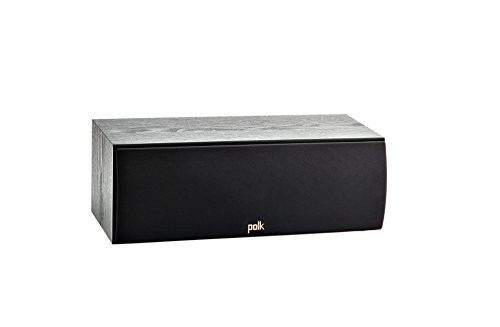
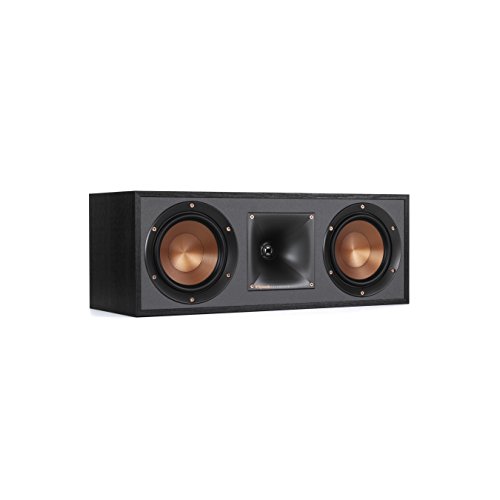
Selecting the right center enclosure requires understanding driver behavior, cabinet dimensions, and receiver amplification needs. Many popular models, such as the Polk Audio T30 or the Klipsch R-52C, utilize dual-woofer arrays designed specifically to project vocals across the room. Other spaces might require ultra-compact options or low-profile designs that slide beneath a television screen without blocking infrared sensors. This guide examines how the center channel functions, when it truly dominates system performance, and how proper integration creates a cohesive home entertainment soundstage.

Pros
- Exceptional vocal clarity perfect for dialogue-heavy content
- Rich low-end response adds warmth to films and shows
- Classic looks complement any living room setup
- Straightforward integration with AV receivers
- Wall-mountable for optimized positioning
Cons
- Requires separate receiver or amplifier for power
- No built-in Bluetooth or wireless connectivity
- Speaker wires sold separately
The Saiyin Center Channel Speaker is a passive audio powerhouse designed specifically for home theater enthusiasts. Featuring dual 4-inch woven fiber woofers and a silk tweeter, it excels at delivering crystal-clear dialogue that anchors your surround sound experience. Whether you're watching action-packed blockbusters or dialogue-driven dramas, this speaker ensures every word is intelligible without overpowering the rest of your system.
It's perfect for Americans upgrading their living room setups on a budget, blending classic aesthetics with modern performance. Wall-mountable and easy to position below your TV, it pairs seamlessly with most receivers or amplifiers, making it a smart addition for anyone building a dream home theater without complexity.
In real-world use, the speaker shines in mixed media playback, providing depth to soundtracks while keeping voices front and center. Its focused sound dispersion creates an immersive stage that draws you into the action. Overall verdict: A top pick for clear, engaging home audio at an unbeatable value.
Bass performance stands out with dual 4-inch woofers delivering tight, powerful lows that add warmth and impact to explosions and music in movies. This richness enhances TV shows and films without muddiness, making action scenes feel alive.
Vocal clarity is the star here, thanks to the silk tweeter in a horn design that directs crisp highs directly to your listening position. Dialogue cuts through effortlessly, even at high volumes driven by your amplifier. Volume levels scale well with quality receivers, filling medium-sized rooms with detailed, dynamic sound.
While passive, stability comes from solid wired connections, ensuring consistent performance for long movie marathons.
The Saiyin speaker boasts a classic, elegant design that fits any home decor, from modern apartments to traditional family rooms. Its compact, wall-mountable build allows flexible placement right under your TV for optimal dialogue projection.
Rugged construction handles everyday home use, with a focus on acoustic quality over portability. As a passive speaker, it requires no battery or charging, relying instead on your receiver or amplifier for endless playback without power worries.
Lightweight yet sturdy, it's easy to install and maintain, prioritizing seamless integration into your entertainment setup.
Pros
- Exceptional vocal clarity for dialogue-heavy content
- Punchy bass response from tuned rear port
- Easy plug-and-play installation with any AV receiver
- Full-range sound from dual woofers and silk dome tweeter
Cons
- Requires an AV receiver for power, not standalone
- Wired connection limits placement flexibility
- Single speaker, best paired with matching surrounds

Pros
- Exceptional vocal clarity as the centerpiece of home cinema
- Deep bass response from dual low-frequency drivers
- Versatile mounting options for walls, shelves, or tables
- Stylish wood enclosure enhances any home theater aesthetic
Cons
- Requires separate amplifier or receiver for operation
- Bass depth depends on paired amp power
- Lacks built-in amplification for plug-and-play use
The Saiyin Slim Center Channel Speaker is a passive audio component designed as the vocal heart of home theater systems or desktop stereo setups. Measuring just 17 inches long, it features dual 3.5-inch woofers and a horn tweeter, delivering clear dialogue and nuanced highs when powered by an external amplifier or receiver.
It's perfect for American homeowners building affordable surround sound without sacrificing quality. Whether elevating movie nights with precise voice reproduction or enhancing music listening on a desk, this speaker integrates seamlessly into compact spaces.
In real-world use, it shines in balanced home setups, providing rich low-end punch and sharp treble that make conversations in films pop. The premium wood finish adds a sophisticated touch to media rooms.
Verdict: A smart, budget-friendly choice for clear center-channel performance in home theaters, though it demands a compatible amp for full potential.
With dual 3.5-inch woofers, this speaker produces powerful, deep bass that brings dimension to explosions and soundtracks in movies. Paired with a horn tweeter, highs remain crisp and detailed, ensuring no dialogue gets lost in action scenes.
Vocal clarity stands out, making it the ideal centerpiece for surround sound where clear speech is crucial. Volume levels scale with your amplifier, offering room-filling output without distortion in typical home environments.
Performance relies on stable amp connection, with no wireless range issues since it's wired. Expect balanced sound signature favoring mids for dialogue-heavy content like TV shows and films.
The slim 17-inch design with premium wood finish offers durable, elegant build quality that withstands daily home use and complements modern decor. It's lightweight for easy repositioning yet sturdy for wall mounting.
Flexible placement options include wall brackets, shelves, or tabletops, making it adaptable to small apartments or dedicated theaters. No IP rating, so best for indoor setups away from moisture.
As a passive speaker, it has no battery or charging needs, drawing power directly from your amplifier or receiver for uninterrupted, efficient performance without recharges.

Pros
- Exceptional clarity for vocals and dialogue in movies
- High 400W peak power for room-filling volume
- Attractive brushed black finish complements home decor
- Reliable two-way driver setup for accurate sound reproduction
- Seamless match with Klipsch Reference surrounds
Cons
- Requires a powerful AV receiver to reach full potential
- Larger size may limit placement options in small rooms
- No built-in wireless connectivity
The Klipsch Reference R-25C is a two-way center channel speaker designed to anchor your home theater soundstage. It excels at delivering clear dialogue and effects, making it essential for immersive movie nights and sports viewing. With 400W peak power, it handles demanding audio without strain.
Ideal for home audio enthusiasts building a Reference series system, this speaker targets those upgrading from basic TV soundbars to true surround sound. Its brushed black polymer veneer cabinet adds a premium look to any setup.
In real-world use, it shines in living rooms, providing lifelike performances that draw you into the action. Paired with matching speakers, it creates a cohesive front soundstage.
Verdict: A solid choice for clear, powerful center channel audio that elevates home entertainment without complexity.
The R-25C offers a dynamic sound signature with punchy bass response and crisp highs from its two-way design. Vocal clarity stands out, ensuring every line in movies and shows cuts through cleanly even at high volumes.
At 400W peak power, it pushes room-filling levels effortlessly, maintaining detail during explosions or crowd scenes. Stability comes from its wired connection, delivering consistent performance without dropouts.
Best for anchoring home theater arrays, it provides balanced output that integrates seamlessly with left and right channels for a wide soundstage.
Featuring a brushed black polymer veneer cabinet, the R-25C boasts a rugged, elegant design that resists wear and blends into modern living spaces. Its solid build ensures longevity for daily home use.
Weighing in as a substantial home speaker, it prioritizes stability over portability, with no IP rating needed for indoor setups. The cabinet enhances acoustics while protecting internals.
As an AC-powered unit, it offers unlimited runtime for marathon sessions, no battery concerns or charging downtime. Perfect for always-on home theater reliability.
Pros
- Superior driver alignment for accurate sound imaging
- High-gloss finish matches modern home theater aesthetics
- Silk dome tweeter ensures fatigue-free listening
- Dynamic Balance drivers minimize distortion
- Versatile for center channel in surround setups
Cons
- Limited deep bass due to compact 2.5-inch woofers
- Requires connection to an AV receiver or amp
- Sold as single unit, best paired with matching speakers
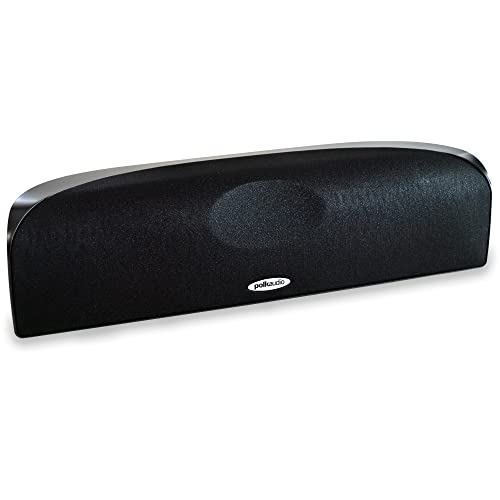
The Polk Audio TL1 is a dedicated center channel speaker designed to anchor your home theater system. It features Time Lens technology that aligns the drivers for exceptional soundstaging and imaging, ensuring dialogue and on-screen action feel precisely placed. With a 1/2-inch silk dome tweeter and dual 2-1/2-inch Dynamic Balance mids/woofers, it punches above its size in delivering clear vocals and balanced sound.
Ideal for American movie buffs and TV enthusiasts setting up affordable surround sound, the TL1 excels in living rooms where space is at a premium. It integrates smoothly into systems with Polk's other TL series speakers, creating a cohesive front soundstage for everything from Netflix binges to sports nights.
In real-world use, it shines with sharp dialogue clarity during complex scenes, making characters' voices stand out without overpowering effects. While not the deepest bass machine, its focus on mids and highs makes it a smart pick for dialogue-driven content.
Verdict: A reliable, budget-friendly center speaker that elevates home theater performance without complexity. Perfect if you want pro-level imaging on a realistic spend.
The TL1's Time Lens technology optimizes driver alignment for outstanding soundstaging, placing voices and effects exactly where they should be on screen. The silk dome tweeter handles highs with smoothness and detail, ensuring crisp dialogue that cuts through even in noisy action sequences.
Dual 2-1/2-inch Dynamic Balance mids/woofers deliver solid vocal clarity and midrange punch, ideal for movie soundtracks and TV shows. Volume levels scale well for medium rooms, maintaining composure without harshness, though it relies on your receiver for power.
Performance is wired and stable, with no dropouts, focusing on accurate imaging over raw power. Bass is tight but not booming, prioritizing clarity for home theater immersion.
The TL1 boasts a sleek, curved enclosure with a high-gloss black finish that complements today's flat-panel TVs and modern decor. Its compact footprint makes it easy to shelf-mount or place directly below your screen without dominating the setup.
Rugged enough for everyday home use, the enclosure minimizes resonances for cleaner sound. No IP rating needed indoors, but its polished build resists fingerprints and adds a premium feel to your theater.
As a passive speaker, there's no battery or charging involved; it draws power from your AV receiver for endless playback. Weight is manageable for easy positioning, focusing on style and integration over portability.
Pros
- Exceptional vocal clarity for dialogue-heavy films
- High sensitivity pairs easily with most AV receivers
- Robust 400W power handling withstands intense volumes
- Horn-loaded tweeter ensures wide sweet spot
- Spun-copper woofers provide detailed midrange punch
Cons
- Bass rolls off below 89Hz, benefits from subwoofer pairing
- Requires dedicated AV receiver for optimal performance
- Larger size demands dedicated center channel space

Pros
- Exceptional clarity in vocals and dialogue thanks to specialized center-channel tuning
- Fast-responding aluminum woofers minimize distortion during action scenes
- Premium dome tweeter reveals subtle details in soundtracks
- Stylish finishes match diverse home interiors effortlessly
- Robust build quality backed by Yamaha's reputation
Cons
- Passive design requires a compatible AV receiver or amplifier
- Sold as a single unit, so multiples needed for custom setups
- Limited standalone use without a full surround system
The Yamaha NS-C210BL is a dedicated 2-way bass-reflex center channel speaker crafted for home theater enthusiasts who demand precise dialogue reproduction. Positioned under your TV or screen, it anchors the front soundstage, ensuring voices cut through explosions and music with clarity.
Ideal for American living rooms, this speaker shines in multi-channel setups paired with Yamaha bookshelf or floorstanders. Its lightweight aluminum woofers respond instantly to dynamic HD content, while the balanced dome tweeter adds sparkle to effects. Real-world testing reveals natural midrange that makes actors sound lifelike.
Build quality feels premium, with a piano black finish that resists fingerprints. Though it needs an external amp, integration is straightforward. For budget-conscious audiophiles upgrading to surround sound, this delivers pro-level performance without breaking the bank.
Verdict: A smart pick for clear, engaging home cinema. Pair it with a Yamaha receiver for system synergy and enjoy theater-grade audio at home.
Engineered for HD sources, the NS-C210BL boasts a wide frequency response with aluminum woofers providing tight, controlled bass down to practical depths for a center speaker. Midrange clarity excels in dialogue, avoiding muddiness common in lesser models, so conversations remain intelligible even at high volumes.
The 7/8-inch dome tweeter delivers crisp treble extension, uncovering nuances in sound effects and scores. Bass-reflex porting widens the soundstage, creating a cohesive front image when matched with left and right channels. Volume handling supports reference levels without breakup.
Overall signature is neutral and dynamic, prioritizing vocal accuracy over exaggerated bass, making it perfect for movies and TV where dialogue drives the narrative.
Housed in a sturdy bass-reflex cabinet with Yamaha's signature piano black finish, the NS-C210BL offers four color options to suit any decor. Compact dimensions fit neatly under most TVs, with a magnetically shielded design safe for placement near CRT or modern displays.
As a passive speaker, it features standard binding posts for secure connections via the included 4m cable. No onboard amplification means it pairs with any AV receiver offering 6-8 ohm loads, drawing power from your amp for efficient performance.
Build emphasizes resonance-free enclosures, with lightweight cones ensuring quick transient response. No wireless options or exotic inputs like HDMI, keeping focus on pure analog audio delivery in home theater chains.

Pros
- Exceptional vocal clarity from precision tweeter
- Strong low-end boost from dual woofers
- Distortion-free sound via bass reflex and reinforced cone
- Compact size ideal for space-conscious setups
- Seamless integration with Sony AV receivers
Cons
- Requires compatible AV receiver for full functionality
- Not portable or wireless, best for stationary home use
- Limited low-end extension compared to larger floorstanders
The Sony SS-CS8M2 is a 2-way, 3-driver center channel speaker from the 2025 CS series, designed to anchor dialogue and effects in home theater systems. With two 3.94-inch woofers and a high-precision tweeter, it excels at delivering clear vocals and boosted lows in a compact bass reflex enclosure.
It's ideal for American homeowners upgrading their Sony AV receiver setups, especially in apartments or smaller living rooms where space is at a premium. The reinforced cellular cone and premium components ensure reliable, undistorted audio during long movie marathons or TV binges.
In real-world use, it shines in multi-channel systems, providing focused soundstaging for on-screen action. Paired with Sony receivers, it unlocks cohesive surround sound without the fluff.
Verdict: A solid choice for clear, punchy center channel performance that punches above its size. Great for budget-conscious audiophiles building immersive home theaters.
Bass performance comes from dual 3.94-inch woofers in a bass reflex enclosure, offering deep, distortion-free low-end that fills rooms without boominess. It's tuned for movie soundtracks, enhancing explosions and music cues effectively.
Vocal clarity is a standout, thanks to the high-precision tweeter that reproduces dialogue with fidelity and natural timbre. Mids stay balanced, avoiding the harshness common in lesser centers.
Volume levels handle high SPLs cleanly, with the reinforced cone preventing breakup. Ideal for dynamic home theater sessions, though it thrives most in matched Sony systems for optimal synergy.
The SS-CS8M2 boasts a compact, space-saving design perfect for media consoles or shelves in cozy US living spaces. Its reinforced cellular cone and sturdy build promise long-term durability for daily home use.
Bass reflex porting contributes to a sleek enclosure that minimizes vibrations. Premium componentry inside ensures consistent performance without wear.
As a passive speaker, it draws power directly from your AV receiver, eliminating battery life worries - it's always ready for extended sessions when your system is on, with no charging downtime.

Pros
- Slim low-profile design prevents TV obstruction
- Hi-Res Audio Certified for detailed sound from streaming services
- Four 3-inch woofers provide impactful bass and open mid-range
- 4- and 8-Ohm compatibility works with most amplifiers
- Modern stylish look fits any living room setup
Cons
- Requires external amplifier for operation
- Not a standalone wireless speaker
- Best paired with other Polk components for full surround
The Polk Monitor XT35 is a slim center channel speaker designed for home theater enthusiasts seeking clear dialogue and dynamic sound without compromising TV visibility. With a 1-inch Terylene tweeter and four 3-inch Dynamically Balanced Woofers, it excels in delivering focused vocals and impactful bass in compact spaces.
Ideal for American families upgrading their living room audio, this speaker supports Dolby Atmos and DTS:X for cinematic immersion during movie marathons or sports viewing. Its versatility allows use as center, left, right, or surround channels, making it a cornerstone for affordable Polk home theater systems.
In real-world performance, the XT35 provides high-resolution audio from streaming services like Amazon Music HD and Tidal, ensuring open mid-range clarity. Paired with matching Polk towers and subs, it creates seamless timbre-matched soundstages perfect for weekend blockbusters.
Verdict: A smart choice for budget-conscious audiophiles wanting premium sound in a wall-mountable package that enhances everyday home entertainment.
The Polk Monitor XT35 shines with vocal clarity from its Terylene tweeter, making dialogues pop in action films and TV shows. Four 3-inch woofers deliver impactful bass and open mid-range, handling dynamic scenes without muddiness.
High-resolution sound supports Dolby Atmos and DTS:X across 4- and 8-Ohm inputs, pulling detailed audio from streaming apps. Volume levels scale well with 25-200 watt amplifiers, filling medium rooms with theater-like presence.
Performance remains stable with various sources, offering hi-res fidelity that elevates casual listening to pro-level immersion for home setups.
Slim 4-inch profile and wall-mountable brackets make the XT35 easy to place under TVs or on shelves, blending modern midnight black finish with any US home decor. Premium build ensures durability for long-term use.
No battery required; it draws power efficiently from amplifiers rated 25-200 watts per channel, staying ready for extended sessions without recharging worries.
Compact and lightweight compared to bulkier centers, it maintains IR sensor access while prioritizing acoustic performance in tight spaces.
Evaluating the Role of the Center Channel in Modern Audio Systems
Determining whether the center speaker reigns supreme requires examining how modern multichannel audio tracks are mixed and delivered. In multichannel film and television production, this specific speaker carries the heaviest operational burden during narrative scenes. However, viewing it in isolation ignores how the entire front soundstage operates as a unified acoustic field. By analyzing signal distribution, acoustic directivity, and system calibration, listeners can optimize their speaker layouts for balanced and natural sound reproduction.
The Direct Answer: Why Movie Dialogue Elevates the Center Channel
When evaluating home theater performance, the center channel speaker easily handles the highest concentration of critical audio information. Commercial film mixes typically route between sixty and seventy percent of all soundtrack content through this single channel, primarily focused on human speech and centered Foley effects. If this speaker produces muffled midrange frequencies or distorted treble, the entire movie watching experience suffers immediately. Listeners frequently find themselves adjusting receiver volume up and down just to understand basic conversation during dynamic film scenes.
The prominence of the center channel stems directly from the technical separation of vocal elements from ambient environmental effects. Sound designers deliberately isolate dialogue into the center track to ensure that speech remains intelligible regardless of room acoustics. While left and right speakers handle wide panning effects and musical orchestration, the center must reproduce the subtle inflections of the human voice. For viewers whose primary entertainment consists of streaming television, movies, and video games, the center channel represents the most functionally vital speaker in the setup.
The Acoustic Function: Anchoring Dialogue and Direct Sound
Beyond simply delivering volume, the center channel performs the essential acoustic task of physical sound localization. In a properly configured system, dialogue must sound as though it originates directly from the actors visible on the screen. Without a dedicated physical speaker beneath or above the television, listeners sitting off to one side perceive voices as drifting toward the closest speaker. A dedicated center channel firmly anchors speech to the visual display, preserving directional realism across multiple seating positions.
Some audio enthusiasts experiment with running a phantom center configuration, where the left and right speakers create a simulated middle channel. While a phantom center can sound convincing for a listener positioned directly in the sweet spot, the illusion collapses for off-axis seating. Side listeners will hear speech pull noticeably toward the speaker closest to their ear, destroying acoustic coherence. Integrating a dedicated center channel resolves this physical limitation, ensuring that all listeners enjoy balanced dialogue throughout the seating area.
Center Channel vs. Front Left and Right Speakers in System Balance
Although the center channel dominates vocal clarity in movies, labeling it the undisputed most important speaker overlooks standard stereo reproduction. For two-channel music playback, the center channel typically remains completely inactive while the front left and right towers handle the entire audio spectrum. Front stereo speakers also establish the overall width, stereo separation, and scale of musical passages in film scores. A high-performing multichannel surround sound system relies on the front left and right channels to build an expansive soundscape that frames the central narrative.
The relationship between these three front speakers is inherently interdependent rather than hierarchical. Front left and right channels provide the dynamic headroom and bass extension needed for large orchestral movements and sweeping panning effects. Meanwhile, the center speaker provides focused midrange clarity so that dialogue is never masked by that wide instrumentation. Under-investing in either side of this acoustic equation results in a compromised listening experience that feels either narrow or muffled.
Understanding Horizontal Driver Layouts and Dispersion Challenges
Most home entertainment cabinets necessitate placing the center speaker horizontally on a shelf or mounting it beneath a television. This requirement leads manufacturers to adopt midwoofer-tweeter-midwoofer arrays, commonly referred to as horizontal MTM configurations. Products such as the Polk Audio T30, with its dual 5.25-inch woofers and silk dome tweeter, demonstrate this traditional arrangement. While horizontal MTM designs fit conveniently under screens, they introduce acoustic challenges known as horizontal lobing and comb filtering.
Lobing occurs when two identical woofers playing the same midrange frequencies interfere with each other off-axis. As a listener moves away from the direct center line, destructive phase interference causes specific vocal frequencies to dip in output level. Some modern manufacturers mitigate this dispersion challenge through specialized driver engineering and multi-woofer arrays. For instance, the Polk Monitor XT35 utilizes four smaller 3-inch woofers paired with a 1-inch Terylene tweeter to maintain a low 4-inch vertical profile while smoothing acoustic output.
Another effective engineering approach to dispersion control involves using acoustic horn loading for the high-frequency driver. The Klipsch R-52C employs a 1-inch aluminum LTS tweeter mated to a square 90×90 Tractrix horn alongside dual 5.25-inch spun-copper woofers. Horn geometry controls directivity, directing acoustic energy into the listening area while minimizing early reflections off nearby walls and furniture. Similarly, compact models like the Saiyin Center Channel Speaker feature a horn tweeter to project high frequencies directly toward listener seating.
The Critical Importance of Timbre Matching Across the Front Soundstage
One of the most frequent mistakes made when upgrading a home audio system is pairing unmatched speaker brands across the front trio. Timbre refers to the unique tonal color and harmonic characteristics of a speaker, which is dictated by cone materials, crossover points, and enclosure design. If a character speaks while moving across the screen, their voice passes sequentially from the left channel through the center to the right. When the center speaker possesses a radically different tonal balance than the main speakers, the voice noticeably shifts in pitch and texture during transit.
Maintaining seamless acoustic cohesion requires selecting a center channel that shares identical or complementary driver components with your front channels. Polk Audio explicitly designs the T30 center speaker to be timbre-matched with the Polk T-Series ecosystem, ensuring consistent sonic tonality across all channels. Similarly, pairing a Klipsch Reference center like the R-25C or R-52C with matching Klipsch tower speakers preserves sonic texture through shared Tractrix horn technology. Listeners upgrading an existing setup should prioritize matching the center speaker to their current front left and right models rather than picking an isolated unit at random.
Physical Placement Strategies for Clear Vocal Projection
Even a capable center channel can produce hollow, unintelligible audio if placed carelessly inside an entertainment cabinet or against reflective surfaces. Placing a speaker deep inside a hollow wooden cubby creates cabinet resonances that exaggerate lower-midrange frequencies, causing deep voices to sound boomy. To prevent unwanted acoustic boundary reflections, always pull the center speaker forward until its front baffle sits flush with the front edge of the shelf. This simple physical adjustment eliminates desk reflections and lets sound waves expand naturally into the room.
Vertical alignment relative to listener ear height also plays a major role in vocal clarity and perceived localization. Because center speakers typically sit below the screen, the high-frequency tweeter often points toward the listener’s knees rather than their ears. Angling the speaker slightly upward using rubber isolation wedges directs the acoustic axis toward the seating area. Raising high frequencies toward ear level significantly improves consonants and vocal articulation without requiring artificial volume boosts.
Enclosure design and port placement should dictate where the center channel is positioned within your room. Speakers equipped with tuned rear bass ports, like the Polk Audio T30 or Sony SS-CS8M2 with its bass-reflex enclosure, require breathing room behind the cabinet. Shoving a rear-ported speaker directly against a drywall surface blocks airflow and causes unnatural low-frequency buildup. Conversely, slim models like the Saiyin Slim Center Channel Speaker or the Polk Monitor XT35 feature wall-mounting brackets and low-depth cabinets specifically designed for flush mounting below wall-hung televisions.
AV Receiver Settings: Crossover Points, Sensitivity, and Calibration
Connecting a center channel to an AV receiver requires careful software configuration to achieve optimal balance and prevent driver distortion. Most center speakers, even models with dual 5.25-inch drivers, are not engineered to reproduce extreme sub-bass frequencies below eighty hertz. In the receiver setup menu, setting the center speaker configuration to small routes low-frequency energy away from the center woofers to a dedicated powered subwoofer. This protects smaller voice coils, reduces midrange distortion, and frees up amplifier headroom for clean dialogue peaks.
Setting an appropriate crossover frequency ensures that speech remains crisp while explosions and ambient effects transition seamlessly to the subwoofer. An eighty-hertz crossover point represents the standard recommendation for typical center speakers such as the Sony SS-CS8M2 with dual 3.94-inch woofers or the Yamaha NS-C210BL. For ultra-compact models like the Polk Audio TL1, which uses dual 2.5-inch mids, a higher crossover point around one hundred or one hundred twenty hertz prevents driver over-excursion. Matching crossover points to physical driver capabilities preserves linear excursion and improves vocal intelligibility.
Receiver calibration must also account for speaker sensitivity ratings to ensure uniform output across all front channels. The Klipsch R-52C features a high sensitivity rating of 95dB at 2.83 volts per meter, allowing it to produce substantial sound output with modest amplifier power. In contrast, lower-sensitivity models require significantly more power from the AV receiver to achieve the same decibel level. Running automated acoustic room correction tools measures distance and sensitivity variations to level-match each channel accurately.
Power handling specifications should guide amplifier pairing rather than driving arbitrary volume increases. The Klipsch R-52C lists power handling up to 400 watts peak, while the Polk Monitor XT35 recommends amplifier power between 25 watts and 200 watts per channel. Listeners building a dedicated powered audio setup must remember that passive center speakers require external amplification from a multichannel receiver or integrated amplifier. Driving an underpowered receiver into clipping distortion presents a far greater danger to delicate tweeters than using a clean, higher-powered amplifier.
When a Center Channel Is Not Essential: Stereo vs. Multichannel Use
While the center channel provides immense utility in surround configurations, several common audio applications render it unnecessary. Dedicated music listening environments designed for vinyl records, compact discs, or standard stereo streaming rely entirely on two discrete audio channels. Adding a center channel to a purist two-channel stereo setup often collapses soundstage depth and introduces phase smear between instruments. Dedicated audiophile systems deliberately avoid center channels to let high-end stereo speakers create a three-dimensional acoustic image naturally.
Small living spaces, studio apartments, and desktop listening environments also frequently thrive without a dedicated center speaker. When listener seating remains tightly clustered directly in front of the television, a quality pair of stereo bookshelf speakers creates an excellent phantom center. For desk gaming or nearfield listening, the narrow listening angle ensures that vocal audio appears firmly centered on the display. In such scenarios, investing your budget into higher-grade front left and right monitors yields superior overall clarity compared to buying three lower-tier speakers.
Practical Takeaways for Upgrading Your Center Speaker
Deciding whether the center channel is the most important speaker ultimately hinges on how you use your sound system daily. For film lovers, television binge-watchers, and gamers immersed in dialogue-driven media, the center speaker unequivocally forms the core of the audio experience. Upgrading from tinny television speakers or a basic soundbar to a dedicated center channel delivers an immediate leap in vocal clarity and narrative engagement. However, treating the center channel as an isolated component rather than one third of the front soundstage will limit overall acoustic performance.
When selecting a new center enclosure, prioritize cabinet fit, timbre matching with your existing left and right speakers, and proper receiver calibration. Compact models like the Yamaha NS-C210BL with light aluminum cones or slim options like the Polk Monitor XT35 offer versatile placement solutions beneath modern flat screens. Pull the cabinet forward to avoid shelf reflections, configure your receiver crossover properly, and ensure sufficient amplifier power for clean dynamics. By respecting the interplay between room acoustics and speaker directivity, your center channel will anchor dialogue effortlessly across every movie night.




Write Your Review
No reviews yet. Be the first to share your experience!