


Organizing an event with dynamic sound often presents unexpected acoustic hurdles, especially when gathering groups of people who naturally absorb sound waves. Learning how to set up speakers for a party ensures your music remains clear, punchy, and audible across the entire venue without creating harsh hotspots. Whether you rely on high-output portable units or multi-speaker arrays, proper arrangement keeps conversation comfortable while driving energy on the dance floor.
Selecting the right layout depends heavily on whether your celebration happens indoors, on an open patio, or across a large backyard. Many hosts explore portable Bluetooth speaker choices to balance transport convenience with sufficient bass performance, while others wire fixed components to anchor the soundstage. Understanding input stability, elevation, and battery management before guests arrive prevents awkward audio dropouts and keeps the focus entirely on the celebration.
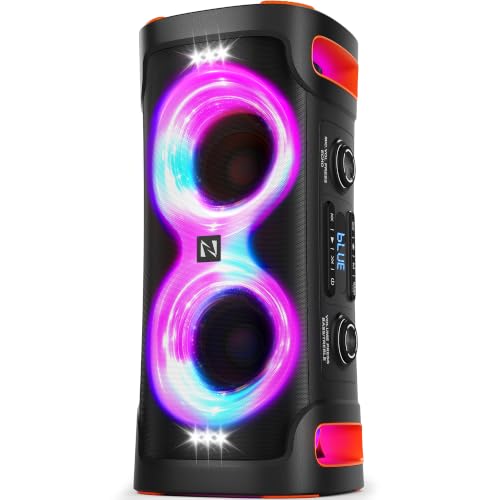
Pros
- Massive 300W peak output easily overcomes ambient outdoor noise
- Punchy built-in subwoofer delivers satisfying low-end energy
- Rock-solid Bluetooth 5.3 connectivity with fast device discovery
- Dynamic beat-responsive lights create an engaging visual atmosphere
Cons
- Substantial 22-inch vertical footprint requires deliberate storage and transport planning
- No companion smartphone app for customized parametric EQ adjustments
- Bass-dominant audio profile can somewhat soften mid-range vocal definition
The Audybb 300W Peak Party Bluetooth Speaker is built specifically for listeners who want to turn open spaces into vibrant dance floors. Positioned as an all-in-one entertainment powerhouse, this vertical party box combines high-decibel output, an integrated subwoofer, and multi-mode lighting effects to keep crowds engaged. Whether you are setting up for an open-air barbecue, a pool deck celebration, or a house party, this speaker is calibrated to project energetic, club-style sound with minimal setup fuss.
In practical day-to-day use, wireless operation is fast and seamless thanks to modern Bluetooth 5.3 integration. Devices pair almost instantly, maintaining a clean connection even when moving around a crowded room. For events requiring an even wider sonic presence, the built-in True Wireless Stereo (TWS) function allows you to link a second Audybb unit wirelessly. This splits the audio channels into true left-right separation, drastically expanding the sound coverage across larger backyards and commercial venues.
Real-world testing reveals an emphasis on raw volume and low-frequency energy. The speaker cuts cleanly through open-air ambient noise, maintaining acoustic momentum even when guests are conversing nearby. While it prioritizes high-energy genres like electronic, hip-hop, and rock, mid-range vocals remain intelligible enough for casual pop listening and announcements. The dynamic light rings provide an engaging visual complement, reacting quickly to beat changes and tempo shifts.
Ultimately, the Audybb Party Speaker is a compelling option for entertainers seeking maximum impact per dollar. It bypasses complicated audio receivers and messy cable runs in favor of an accessible, portable tower design that is ready to perform straight out of the box.
Acoustically, this party speaker centers around an impactful low-frequency profile. The built-in subwoofer configuration generates significant sub-bass thump and lower-midrange warmth, making kick drums and basslines feel tactile. Even in outdoor environments where low-end frequencies tend to dissipate rapidly, the speaker maintains a solid foundation that keeps dance tracks driving forward.
In the mid and treble ranges, the tuning leans bright to balance out the aggressive bass floor. Synthetic leads, electric guitars, and vocal tracks cut through with crisp clarity, ensuring that lyrics do not get completely swallowed by heavy bass passages. At peak volume thresholds, the internal amplifier holds distortion reasonably in check, though keeping the system around eighty percent output strikes the best balance between decibel delivery and clean audio rendering.
Projection is another area where the acoustic design shines. The front-firing driver layout projects sound directional energy across long distances, making it well suited for outdoor lawns, patios, and garage workspaces. When paired via TWS with an identical speaker, the stereo imaging widens considerably, delivering an immersive, stage-like listening perimeter.
The Audybb Party Speaker sports a rugged, contemporary tower chassis measuring 9.96 by 10.4 by 21.8 inches. Its eye-catching orange trim accents a resilient polymer enclosure designed to handle the normal bumps and scuffs of portable party duty. The front fascia is dominated by dynamic LED lighting arrays that cycle through several vibrant color phases synchronized to the rhythm of the music.
On the connectivity side, Bluetooth 5.3 hardware ensures reduced battery consumption, minimal signal latency, and improved wireless range over previous Bluetooth generations. Onboard controls are conveniently arrayed for swift track selection, volume adjustments, and light show toggling without needing constant access to your phone or source device.
Powering the system is an internal high-capacity rechargeable battery pack optimized for extended outdoor gatherings. While running high volumes alongside the dynamic lighting effects will draw more power, moderating playback levels provides dependable multi-hour endurance. Fast-charging circuitry helps replenish the cell quickly, ensuring your speaker is ready for the next playlist with minimal downtime.

Pros
- Punchy deep bass with customizable EQ for tailored sound
- Exceptional 20-hour battery life plus power bank capability
- Rugged IP67 rating survives water, dust, shocks, and rust
- Versatile connectivity including Bluetooth, AUX, and USB-C
- Intuitive Bose app for easy control and device management
Cons
- Bass-heavy signature may favor thump over balanced mids for audiophiles
- Larger size suits parties more than ultra-light backpacking
- Premium build means it's not the budget pick for casual use
The Bose SoundLink Max is a powerhouse portable Bluetooth speaker built for those who live for music-fueled adventures. Whether you're hosting backyard barbecues, hitting the beach, or tailgating, this speaker delivers Bose's signature audio punch in a tough, go-anywhere package. Its deep bass and big sound fill outdoor spaces effortlessly, making it a hit for playlist curators and impromptu DJs.
In real-world testing, the SoundLink Max shines with up to 20 hours of playtime, letting you crank tunes from sunrise hikes to late-night bonfires without recharging. The IP67 rating means it laughs off splashes, dust storms, or accidental drops, while the rope handle makes carrying it a breeze. Pair it with the Bose app to fine-tune EQ settings, ensuring your favorites sound just right.
While it's not the smallest portable out there, its robust build and features like AUX input and power bank functionality make it a versatile daily driver. For American music fans seeking premium, party-ready sound without the hassle, the SoundLink Max earns top marks as a reliable crowd-pleaser.
Verdict: If you want bass that wows and durability that lasts, this is your new adventure companion. Grab it for endless summer vibes.
Bose engineers the SoundLink Max for deep bass extension that rumbles through tracks like hip-hop beats or EDM drops, creating a visceral low-end feel perfect for parties. Mids come through clear for vocals and guitars, while customizable treble via the app adds sparkle without harshness, revealing nuances in everything from rock anthems to podcasts.
The wide soundstage projects audio across backyards or patios, maintaining clarity even at high volumes with minimal distortion. Bluetooth connectivity ensures stable pairing, and the AUX input preserves full fidelity from wired sources. With EQ tweaks, you dial in balanced response or bass-boosted fun on demand.
Overall, it excels in dynamic outdoor playback, hitting peak volumes that rival larger systems while keeping fatigue-free listening for hours.
Crafted with a rugged, matte-black enclosure that's shock and rust resistant, the SoundLink Max stands up to real-life abuse. The soft, removable climbing rope handle offers a secure grip for one-handed transport, ideal for tossing in a beach bag or hanging from a cooler.
Dimensions strike a balance for portability without skimping on power, housing premium drivers for bass-heavy output. Connectivity shines with Bluetooth for wireless freedom, a 3.5mm AUX for analog gear, and USB-C for charging the speaker or powering devices as a battery bank. No fuss with optical or HDMI, keeping it purely portable-focused.
IP67 sealing protects against full submersion and dust ingress, powered by a long-life rechargeable battery via included USB-C cable. Simple button controls pair with the Bose app for battery checks and multi-device management, making it user-friendly for everyday adventures.

Pros
- Articulate vocal clarity makes it exceptionally well suited for karaoke and voice amplification
- Multiple playback methods including USB, TF micro-SD, and standard 3.5mm AUX
- Vibrant multi-mode RGB light show enhances the party mood
- Top handle cleverly doubles as a tablet holder for karaoke lyrics
Cons
- 20W driver focuses on clarity rather than deep sub-bass rumble
- Tower silhouette requires more vertical storage space than compact travel speakers
- Microphone is not included in this standard package
The TrompFox Portable Party Speaker is designed as an accessible all-in-one entertainment hub for family game nights, backyard barbecues, and casual celebrations. Standing nearly 18 inches tall, this compact tower speaker pairs room-filling sound with synchronized RGB light patterns to transform everyday spaces into lively dance floors. It provides a simple plug-and-play experience for hosts who want fun presentation and sound without dealing with complicated audio setups.
Real-world performance stands out primarily through vocal clarity and midrange balance. Thanks to Bluetooth 5.3 connectivity, connecting your phone or tablet is fast and reliable up to 50 feet away. The integrated vocal reduction button offers an engaging karaoke tool, allowing you to tone down lead vocals on your favorite streaming songs while singing along through a connected microphone.
Practical usability is reinforced by the clever top handle design, which securely cradles an iPad or smartphone right where you need it for viewing karaoke lyrics or managing playlists. The system is lightweight enough to carry from the living room out onto the deck with minimal effort.
Ultimately, the TrompFox speaker provides a fun, versatile, and user-friendly experience. With multiple input choices, dynamic lighting effects, and clean vocal playback, it is a dependable audio centerpiece for gatherings with friends and family.
At the center of this speaker is a 20W RMS full-range driver engineered for balanced and energetic audio reproduction. The tuning emphasizes the vocal range and upper bass, ensuring spoken words, podcast dialogue, and vocal melodies ring out clearly without sounding muffled or compressed. Treble response remains smooth and crisp, giving pop and rock tracks pleasant brightness without sharp listening fatigue.
While the compact driver does not produce heavy sub-bass frequencies below 60Hz, it provides a punchy and well-controlled low-end that stays clean across moderate to high volume levels. Listeners looking to expand the acoustic footprint can take advantage of TWS stereo pairing, linking two compatible units to create dedicated left and right channels for a much wider soundstage across larger backyards or party rooms.
The TrompFox speaker utilizes a modern floorstanding tower enclosure measuring 7.68 by 7.68 inches at the base and 17.91 inches high. Weighing just 5.23 pounds, the lightweight cabinet is constructed from durable, impact-resistant composite material with an integrated top carry handle. The front panel features an eye-catching LED matrix capable of six distinct lighting modes that pulse and transition along with the music.
Hardware connectivity is extensive, giving you multiple ways to listen beyond standard Bluetooth 5.3. The rear control array includes a USB port for flash drives, a TF card slot, a 3.5mm AUX input for wired audio gear, a wired microphone input for karaoke, and a headphone monitoring jack. An internal rechargeable battery powers both audio playback and the lighting system for cord-free placement anywhere around your home.


Pros
- Lively, bass-boosted sound that easily handles casual outdoor gatherings
- Remarkable connectivity array including dedicated microphone input for karaoke
- Fast and stable Bluetooth 5.3 wireless range with TWS expansion
- Vibrant multi-color LED light effects enhance the party atmosphere
Cons
- No official IPX water-resistance rating for pool or heavy rain exposure
- Low-end frequencies can compress slightly when pushed to top volume levels
- Lacks a dedicated smartphone companion app for custom EQ adjustments
The ABigDay DF-720 enters the portable party audio arena as a fun, versatile boombox built for high-energy social gatherings. Combining a bold exterior with modern lighting effects and a multi-source input hub, this unit provides an all-in-one entertainment station without requiring a complex setup. Whether you are hosting a casual patio dinner or setting up a karaoke battle in the living room, the speaker is engineered to keep the mood lively.
In real-world use, the speaker shines brightest in informal party settings where convenience and volume reign supreme. The inclusion of a 1/4-inch microphone input immediately transforms the DF-720 into a portable PA and karaoke machine, a standout capability for its size. Paired with straightforward top-mounted controls, switching between wireless streaming, local storage playback, and radio broadcasts is smooth and intuitive.
Battery efficiency is another practical highlight. The onboard 4400mAh cell provides up to 12 hours of continuous playback at moderate volume, ensuring that your daytime picnic transitions into an evening event without a frantic search for an outlet. When depleted, the battery replenishes in roughly four hours, making turnaround time quick and hassle-free.
Ultimately, the DF-720 is an accessible, crowd-pleasing sound system. While audiophiles seeking reference-flat precision may look toward studio-grade monitors, casual music lovers and party planners will appreciate its dynamic personality, portable chassis, and multifaceted feature set.
Acoustically, the ABigDay DF-720 is tuned with a modern, consumer-friendly V-shaped sound profile. The 60W peak output generates energetic mid-bass that provides hip-hop, pop, and electronic tracks with a noticeable, physical punch. Treble frequencies are boosted to keep vocal lines and percussive details crisp, ensuring spoken lyrics and karaoke performances remain audible over background conversation.
The front-facing drivers project sound forward with a surprisingly wide dispersion angle for a compact cabinet. While sub-bass extension naturally tapers off at the lowest audible registers, the speaker maintains solid clarity through the critical mid-range. For larger backyards or open spaces, utilizing the True Wireless Stereo (TWS) feature allows you to sync two units, expanding the acoustic footprint and providing genuine left-right stereo separation.
The DF-720 sports a classic boombox silhouette measuring approximately 16.93 x 7 x 6.89 inches and tipping the scales at a modest 4.7 pounds. The enclosure is constructed from impact-resistant composite materials, complemented by an integrated carry handle that simplifies transport. The front grille showcases dynamic LED rings capable of cycling through 8 colors across 5 reactive lighting modes that sync directly to the rhythm of the track.
Hardware flexibility is where this unit truly stands out. Underneath the hood, modern Bluetooth 5.3 delivers stable wireless range and low latency for video or vocal playback. The rear interface supports a 3.5mm AUX input, USB flash drive playback, TF/microSD card slots, FM radio reception, and a wired microphone jack. Power is managed by a dependable 4400mAh lithium-ion battery, making it entirely untethered for outdoor excursions.

Pros
- Complete 6-piece setup ready out of the box with all necessary RCA cables included
- Wide variety of audio inputs including Bluetooth, USB, SD, and FM tuner
- Lively LED lighting display creates a fun entertainment atmosphere
- Clear voice projection from center and satellite channels for TV dialogue
Cons
- Lacks modern HDMI ARC and optical digital inputs, requiring analog RCA or 3.5mm conversion for modern 4K TVs
- Wired passive satellites may require extension cables for larger living rooms
- Bass can become muddy at top-tier volume levels with bass-heavy tracks
The Acoustic Audio by Goldwood AA5400 is an all-inclusive 5.1 home theater speaker system designed to bring genuine surround sound into bedrooms, dorms, and standard living rooms without the complexity of a separate AV receiver. Anchored by an active powered subwoofer that houses the system amplifier, it powers five dedicated satellite speakers to reproduce discrete audio channels for movies, gaming, and music playback.
Ideal for budget-conscious home theater setups and entertainment spaces, this setup thrives when hooked up to a gaming PC, media streaming console, or standard television output. The inclusion of wireless Bluetooth ensures that everyday mobile streaming is swift, while the on-board USB and SD card ports provide convenient, standalone offline music options. The integrated multi-color LED display brings an energetic visual punch, turning casual gatherings into lively listening sessions.
Setting up the system is straightforward thanks to color-coded spring terminals and included RCA-to-3.5mm cabling. The dedicated remote control grants straightforward oversight over discrete channel levels, overall master volume, and playback functions. While it relies on analog inputs rather than digital optical or HDMI connections, users running standard headphone or analog outputs from smart TVs and audio interfaces will find the plug-and-play workflow remarkably frictionless.
Overall, the Acoustic Audio AA5400 delivers substantial utility and engaging multi-channel audio for entry-level entertainment spaces. It serves as an accessible stepping stone for users wanting genuine spatial separation and solid bass impact without spending thousands on high-end separates.
The AA5400 focuses its sonic profile on clarity and forward momentum. The dedicated center and satellite speakers highlight vocal dialogue and midrange frequencies, allowing movie dialogue and video game voice cues to cut clearly through background scores. High frequencies remain present and articulate without harsh sibilance, making dialogue-heavy TV shows and action films easy on the ears during long binge-watching marathons.
Down low, the powered subwoofer provides the resonant low-end presence required to give movie explosions and basslines palpable impact. With up to 300 watts of peak system power, the setup easily fills small to medium-sized rooms with dynamic sound. While audiophiles seeking ultra-low sub-bass rumble under 40Hz might find limits at maximum output, the active bass reflex design delivers plenty of physical punch for casual multimedia use.
Built with durable engineered composite cabinets, the system components are styled in a modern matte black finish that blends seamlessly with most entertainment centers. The powered subwoofer measures 10.5 by 7.5 by 11.75 inches, compact enough to tuck beside a media console while displaying its illuminated multi-color LED front panel. Front-facing digital controls and an illuminated display provide quick readouts of the active source, volume, and radio frequency.
The rear panel of the subwoofer serves as the central audio hub, featuring six individual RCA inputs for discrete 5.1 surround sound sources, alongside standard stereo auxiliary inputs and speaker spring clip terminals. It operates on a standard US 110V grounded wall connection and draws reliable power without requiring an external brick. Wireless capabilities include Bluetooth streaming, backed up by legacy media playback through integrated USB, SD card slots, and an FM radio antenna.

Pros
- Explosive bass and crystal-clear highs from dual woofers and tweeters
- Impressive 14-hour battery keeps parties going without interruptions
- Portable trolley design simplifies transport for outdoor events
- Versatile inputs support karaoke and instrument play
- Dynamic lighting modes enhance the party atmosphere
Cons
- Large size with 8-inch woofers makes it less ideal for backpacking hikes
- Lacks waterproof rating, so protect from rain at outdoor events
- No companion app, relying on onboard knobs for sound adjustments
The Philips X5206 is a powerhouse party speaker built for those who want to turn any gathering into a full-blown event. With dual 8-inch woofers and 3-inch tweeters delivering 80W RMS, it fills rooms or backyards with deep bass and clear sound, perfect for American party hosts hosting tailgates, barbecues, or karaoke nights.
Designed for active lifestyles, this speaker targets tailgaters, beachgoers, and home entertainers who need portability without sacrificing power. The built-in trolley and handle let you wheel it effortlessly to the action, while features like mic and guitar inputs make it a hit for sing-alongs and live jams.
In real-world use, it shines at keeping energy high with 14 hours of playtime and beat-syncing lights that pulse to the music. Connectivity options ensure your playlists flow smoothly, whether streaming Bluetooth or plugging in devices.
Overall verdict: A top pick for party starters seeking bass-heavy fun with easy mobility. It delivers where it counts for lively US gatherings.
Bass lovers rejoice: the X5206's dual 8-inch woofers produce deep, thumping lows that rattle chests at max 160W power, ideal for hip-hop blasts or EDM sets at house parties. Paired with dual 3-inch tweeters, vocals stay crisp even at high volumes, cutting through crowds without muddiness.
Volume levels reach party-starting peaks with 80W RMS across 2.0 channels, filling large spaces like garages or patios. Bluetooth streaming is stable for reliable playback from phones, and manual rotary controls for bass and treble let you tweak for genres from rock to rap.
Three voice modes (echo, bass, treble) enhance karaoke clarity, making singers sound pro. Line-out jack chains it to amps for bigger setups, ensuring consistent performance at events.
The X5206 boasts a rugged trolley design with built-in wheels and handle, making it simple to haul to tailgates or beach days despite its hefty build from large drivers. Black finish looks sleek for indoor use, while party lights add flair without overpowering the look.
Battery life hits 14 hours on a single 3-hour charge, powering all-day adventures from morning barbecues to evening bonfires. Quick recharge keeps downtime minimal, supporting non-stop fun.
No official waterproof or dustproof rating means it's best for dry outdoor spots or sheltered patios; the focus stays on portability and durability for wheeled transport over rugged backpacking.
Essential Principles for Configuring Party Speakers
Setting up audio equipment for social gatherings requires more than simply cranking a master volume dial to maximum. A crowd of dancing, talking guests behaves as an acoustic sponge, soaking up high frequencies and deadening sound dispersion across the room. To establish consistent sound coverage, the speaker system must deliver balanced volume, clear vocals, and deep bass without producing ear fatigue or dead zones. By matching your equipment placement to the layout of the venue, you create an engaging atmosphere where music feels energetic near the dance area while remaining conversational across refreshment stations.
Assessing Venue Acoustics and Coverage Zones
Indoor and outdoor spaces interact with sound waves in fundamentally different ways. Indoors, hard surfaces like bare hardwood floors, large glass windows, and concrete walls reflect audio waves, which can quickly turn treble frequencies harsh and muddy mid-range vocal clarity. Furnished rooms with area rugs, soft couches, and acoustic drapes naturally temper these reflections, creating a warmer overall listening environment. Positioning your primary speakers along the longest wall often allows sound to travel down the full length of the room with fewer immediate side-wall reflections.
Outdoor setups eliminate wall reflections entirely, but they introduce a different challenge known as acoustic dissipation. In an open backyard or open-air patio, acoustic energy spreads freely into the atmosphere, causing sound pressure levels to drop off rapidly as distance from the speaker increases. Bass frequencies suffer the most in open environments because they lack boundary surfaces to reinforce low-end waves. Placing speakers near an exterior brick wall, a sturdy privacy fence, or under a covered patio structure provides boundary loading that naturally bolsters bass response without overdriving the amplifier.
Speaker Elevation and Audio Projection Angles
Placing speakers directly on the floor or on low coffee tables muffles critical high frequencies before they reach the ears of your guests. Human bodies absorb mid and high-frequency sound waves efficiently, meaning a speaker sitting on the grass or floor will sound clear only to people standing immediately next to it. Elevating speaker cabinets so their high-frequency tweeters align near ear level, typically between five and six feet from the ground, allows audio waves to travel cleanly across the room. This elevated positioning preserves vocal clarity and treble detail throughout the entire gathering space.
Using dedicated speaker stands provides stable elevation while isolating speaker cabinets from furniture that might rattle under heavy bass. Equipment like the Audiobox ABX-82S includes an adjustable speaker stand, making it straightforward to hoist the 8-inch woofer and high-frequency driver above standard crowd height. If stand mounting is not an option for smaller portable gear, placing speakers on sturdy countertops or elevated patio railings achieves similar projection benefits. Always angle the speaker baffle slightly downward toward the center of the gathering area rather than firing audio straight into an empty ceiling.
Mono Versus Stereo and True Wireless Stereo Pairing
Traditional home listening configurations rely on stereo separation to create a focused sweet spot between left and right channels. While that works beautifully for dedicated speakers for music playback when seated directly in front of a desk, standard stereo panning often fails at a crowded social event. Guests standing on the far left side of a patio may miss guitar solos or vocal harmonies panned exclusively to the right channel. For large gatherings where people wander freely, summing your audio signal to mono ensures that every guest hears the entire musical arrangement regardless of location.
When you need broader physical coverage across a large yard, True Wireless Stereo pairing lets you link two identical portable units without running trip-hazard audio cables across the grass. Modern party units, including the Audybb 300W speaker and the TrompFox system, feature built-in TWS pairing that shares a single Bluetooth signal between two separate enclosures. By positioning two paired units on opposite sides of a patio or garden, you effectively double the audio coverage area while keeping playback synchronized. This dual-unit approach delivers consistent volume across wide spaces without forcing a single cabinet to play at harsh, distorted volumes.
Managing Signal Sources and Wireless Connections
Bluetooth provides exceptional convenience for streaming party playlists, but wireless signals face heavy interference when dozens of guests enter a room with active smartphones. Upgraded protocols like Bluetooth 5.3, featured on the TrompFox and Audybb units, provide expanded operating range and lower transmission latency compared to older wireless standards. Even with advanced wireless protocols, physical obstacles like solid concrete pillars, metal patio beams, and moving human bodies can disrupt Bluetooth signals. Assigning a dedicated playback phone, placing it within direct line of sight of the master speaker, and setting it to do not disturb mode prevents unwanted audio dropouts.
For critical installations where wireless dropouts cannot be tolerated, analog wired connections remain the gold standard of reliability. Heavy-duty portable units like the Bose SoundLink Max feature a dedicated 3.5mm auxiliary input, allowing you to plug directly into a mixer, DJ controller, or secondary media player. Hardwired inputs bypass local radio frequency congestion completely, ensuring continuous audio even in dense wireless environments. Larger party cabinets such as the Philips X5206 also provide line-out jacks, which permit daisy-chaining secondary amplified speakers using standard audio cables to build an expansive, latency-free sound system.
Positioning Subwoofers and Managing Low Frequencies
Punchy, well-defined bass provides the driving pulse for dance music, but improper subwoofer placement can easily ruin your acoustic balance. Placing a bass enclosure directly in the corner of a room creates corner loading, which dramatically amplifies low-frequency volume. While this boundary reinforcement boosts overall bass output, it can also create standing waves and boomy room modes where certain low notes drone excessively while others vanish. Moving the subwoofer a foot or two away from corner walls typically smooths out bass response, yielding tighter kick drums and cleaner bass lines.
If you are deploying a multi-channel configuration like the Acoustic Audio by Goldwood AA5400 home theater system, keeping the powered subwoofer on the same front plane as the primary satellite speakers helps maintain acoustic phase coherence. In outdoor environments, bass naturally diffuses quickly due to the lack of room pressurization. When operating large cabinets outdoors, such as the Philips X5206 with its dual 8-inch woofers or the Audybb unit with its integrated subwoofer, keeping the rear of the cabinet close to an exterior wall retains punch without demanding excessive amplifier power. Testing low-end volume from several outdoor listening spots ensures the bass feels solid without causing physical vibrations against fragile exterior glass.
Power Management and Battery Run Times
Battery-powered portable speakers grant absolute freedom to place sound anywhere, but hosting an extended gathering demands proactive power planning. Stated battery run times, such as the 20 hours listed for the Bose SoundLink Max or the 14 hours offered by the Philips X5206, are typically measured by manufacturers at moderate listening levels. Pumping music at high volume with dynamic lighting activated drains onboard lithium-ion cells considerably faster than ambient background listening. If your celebration is scheduled to last into the night, running heavy-duty outdoor-rated extension cords to keep your speakers plugged into mains power ensures uninterrupted playback.
When relying solely on battery reserves for remote beach or park settings, managing secondary features extends operational playtime. Compact models like the ABigDay DF-720 feature a 4400mAh battery that delivers up to 12 hours of playback, but turning off reactive LED light shows preserves precious energy for audio amplification. While models like the Bose SoundLink Max support reverse USB-C charging to power mobile phones, drawing power for your source device directly depletes the speaker battery. Bringing a separate power bank for guest phones ensures the speaker reserve remains entirely dedicated to driving sound output.
Integrating Microphones and Interactive Entertainment
Many party hosts combine background music with announcements, toasts, or impromptu karaoke sessions. Managing live microphones alongside loud music playback requires careful attention to gain staging and speaker orientation to prevent piercing acoustic feedback. Feedback occurs when a microphone picks up sound output directly from the speaker drivers and amplifies it in a rapid, howling loop. Always place your vocal performers behind the plane of the speaker front baffles, and instruct guests never to point a live microphone directly into the speaker grille.
Dedicated entertainment systems incorporate tailored inputs to simplify these live transitions. The Audiobox ABX-82S supplies an included wired microphone, while the TrompFox unit integrates an onboard microphone input paired with a vocal reduction feature and an integrated top handle that doubles as a tablet rest for viewing scrolling lyrics. On higher-output units like the Philips X5206, independent rotary controls for microphone volume, echo depth, and dedicated guitar inputs allow you to balance live acoustic performances or spoken toasts over background tracks without distorting the master mix. These hardware-level adjustments let you dial in vocal clarity without pausing the music or diving into complex software menus on a connected phone.
Audio Troubleshooting and System Verification
Running a complete audio check at least one hour before guests arrive allows you to diagnose and resolve playback gremlins without social stress. Begin your verification by streaming high-energy tracks at your intended party volume to test amplifier stability and identify any rattling décor in the room. If you notice unexpected crackling or digital stuttering over a wireless link, inspect whether the host device is struggling with distance or network streaming buffering. Those exploring desktop Bluetooth audio setups understand that keeping source hardware clear of microwave ovens, Wi-Fi routers, and metal shelving is vital for maintaining a clean audio stream.
In wired multi-speaker environments, such as six-piece surround installations, verify that every satellite speaker wire is firmly seated in its terminal and that positive and negative polarities match. Inverting polarity on a speaker causes destructive phase cancellation, stripping the entire system of acoustic punch and making vocals sound hollow and unfocused. When using ground-powered speaker amplifiers alongside auxiliary sources, a persistent low-frequency hum usually points to an electrical ground loop. Switching your source device to battery power or installing an inexpensive inline ground loop isolator on the analog cable quickly eliminates background hum.
Mastering your party speaker arrangement comes down to thoughtful placement, clean elevation, and dependable signal transmission. By raising drivers above crowd height, choosing the right playback connection, and setting realistic volume levels that avoid amplifier clipping, you guarantee dynamic, fatigue-free sound throughout your venue. Taking the time to test your coverage zones and power connections before the first guest walks through the door ensures your music provides an effortless, driving soundtrack for the entire celebration. With the right configuration in place, you can spend the rest of the event enjoying your company rather than babysitting the sound equipment.


Write Your Review
No reviews yet. Be the first to share your experience!