


Running long audio cords across a living room, workbench, or outdoor patio quickly becomes messy and limits where you can place your sound gear. Many listeners struggle with traditional passive boxes or powered desktop monitors that lack native wireless streaming capabilities. Understanding how to make a speaker wireless allows you to modernize classic audio hardware without replacing high-performing drivers. By integrating compact Bluetooth receivers, dedicated auxiliary adapters, or even near-field induction hardware, you can liberate your audio chain from fixed device tethers.
Upgrading your existing gear saves money while retaining the acoustic resonance of well-built wooden cabinets or heavy-duty outdoor enclosures. Modern wireless solutions support reliable pairing protocols, low-latency playback, and clean auxiliary routing that preserves stereo separation. Listeners exploring balanced acoustic coverage often integrate these wireless adapters into broader dual speaker setup configurations for expanded coverage. Learning the proper connection paths, signal requirements, and power management habits ensures your updated audio gear delivers smooth, uninterrupted sound.

Pros
- Reliable IPX7 water protection holds up to heavy shower steam and direct splashes
- Dual side passive radiators deliver clean low-end punch for a micro-sized cabinet
- True Wireless Stereo pairing enables expanded two-channel sound
- Extremely lightweight and compact for travel, hiking, or commuting
- Bluetooth 5.3 connection pairs instantly and maintains a solid signal
Cons
- Lacks sub-bass extension below 80Hz due to compact form factor
- No dedicated companion mobile app for custom EQ adjustments
- Omits an analog 3.5mm auxiliary input for wired audio connections
The Bobtot Portable Bluetooth Speaker is an ultra-compact audio companion designed for listeners who want to upgrade their daily sound without lugging around heavy gear. Built to solve the tinny, strained output typical of smartphones and slim laptops, this palm-sized unit brings acoustic presence and natural warmth to personal listening spaces. Whether resting on a cramped desk, sitting on a kitchen counter, or hanging from a shower caddy, it provides a reliable, grab-and-go sonic upgrade.
This speaker is engineered particularly for students, outdoor adventurers, and busy professionals who need durable versatility. Thanks to its certified IPX7 waterproof chassis and drop-tested build, it thrives in hostile listening environments where conventional electronics fail. From morning shower playlists and podcasts by the sink to relaxed days by the lake or backyard barbecues, the speaker handles continuous moisture, wet hands, and sudden splashes with zero hesitation.
In real-world use, the speaker performs admirably within its acoustic class. The Bluetooth 5.3 connection synchronizes quickly with mobile devices, maintaining a reliable wireless link with virtually no dropout. Everyday voice calls come through distinctly via the integrated microphone, saving you from digging out your phone mid-task. For those wanting a wider listening field, the True Wireless Stereo capability lets you connect a second unit to project authentic stereo sound across a patio or living space.
Ultimately, the Bobtot Portable Bluetooth Speaker delivers genuine utility and solid daily audio performance. While it naturally cannot replace a multi-driver boombox for high-output party needs, its combination of dependable ruggedness, pocketable dimensions, and clear vocal presentation makes it an outstanding everyday audio partner for active lifestyles.
At the heart of the Bobtot Portable Bluetooth Speaker lies a dedicated 2-inch full-range dynamic driver complemented by opposing dual side passive radiators. This acoustic arrangement is tuned to maximize vocal presence and midrange definition, ensuring that dialogue, acoustic guitars, and podcast narrations sound immediate, articulate, and natural. The passive radiators extend the low-frequency output just enough to give kick drums and rhythm sections a perceptible bounce without overwhelming the mids.
Given its compact dimensions, the speaker manages volume levels efficiently without harsh distortion at moderate listening levels. Highs remain crisp and fatigue-free, avoiding the piercing sibilance that frequently plagues miniature speakers. While low-end sub-bass under 80Hz is physically limited by cabinet volume, the overall frequency balance remains pleasingly coherent for daily pop, indie, jazz, and spoken-word media.
When paired in TWS mode with a matching unit, the soundstage transforms dramatically. Instead of a single point-source mono feed, listener immersion expands into a true dual-channel stereo image with notable channel separation and directional detail. This feature makes the setup remarkably capable for small-room movie watching, desktop PC audio, or relaxed outdoor gatherings.
The Bobtot speaker showcases a modern, triangular profile measuring roughly 4.3 by 3.1 by 2.8 inches and weighing merely half a pound. Its structural architecture features an impact-resistant frame sheathed in an acoustically transparent, heavy-duty woven fabric that repels scuffs and prevents dirt intrusion. A built-in braided lanyard adds practical carry versatility, allowing the unit to hang easily from shower fixtures, tent poles, or backpack carabiners.
Engineered to an IPX7 standard, the enclosure provides complete immersion protection against water up to 1 meter deep for up to 30 minutes. The exterior rubberized push-button controls provide tactile feedback for volume adjustment, playback control, power, and TWS linking, remaining fully operable even when your fingers are wet or soapy in the shower.
Internal hardware is centered around a low-energy Bluetooth 5.3 chipset that delivers reliable wireless audio transmission alongside reduced power consumption. Power is supplied by an integrated rechargeable lithium-ion battery, easily topped up via a protected USB-C charging interface that keeps internal components hermetically sealed against moisture and debris.


Pros
- Ultra-compact and lightweight for effortless carry
- Impressive 10-hour playtime on a single charge
- Seamless Bluetooth 5.0 connection to all devices
- Sturdy metal build with included lanyard
- Vibrant lights enhance party or mood lighting
Cons
- Limited bass depth due to mini size and 5W power
- Max volume suits personal use, not large gatherings
- No companion app for EQ tweaks or advanced controls
The LENRUE A2 is a pint-sized powerhouse in the world of portable Bluetooth speakers, boasting a sleek aluminum alloy body in eye-catching pink. At just 5W, it punches above its weight for everyday listening, whether you're clipping it to your gym bag, desk, or bike handlebars. Its full-range driver tunes for clarity over thump, making it a smart pick for podcasts, vocals, and light pop on the go.
Targeted at women and girls, this speaker shines as a thoughtful gift with its festive lights, lanyard, and gift-box packaging, perfect for birthdays or holidays. In real-world tests, it holds steady connections via Bluetooth 5.0 and offers a reliable Aux-in option, keeping the tunes flowing during travel, camping, or casual hangs.
Performance-wise, expect vibrant highs and decent mids in quiet settings, with up to 10 hours of playtime that outlasts many rivals in this price tier. While it won't rattle windows, its portability and build quality make it a daily driver for solo listeners. Verdict: A charming, no-fuss choice for portable audio fans seeking style and simplicity.
Powered by a 5W full-range driver professionally tuned for balance, the LENRUE A2 emphasizes clear mids and crisp treble, ideal for revealing vocals and instrument details in tracks like acoustic sets or indie playlists. Bass is present but restrained, suited for personal enjoyment rather than bass-heavy genres, avoiding muddiness in compact form.
Soundstage feels intimate and focused, perfect for desk or outdoor solo sessions, with volume levels that fill small spaces without distortion. Bluetooth 5.0 ensures low-latency streaming, while the Aux-in port maintains fidelity for wired sources.
Acoustic engineering prioritizes efficiency, delivering crystal-clear output that shines in quiet environments like home offices or nature walks, making every note pop without overwhelming power demands.
Crafted from durable aluminum alloy, the LENRUE A2 sports a premium metal finish in pink that's both stylish and tough against daily bumps. Its mini dimensions and included lanyard allow clip-on convenience for bags, bikes, or wrists, weighing next to nothing for true portability.
Connectivity centers on Bluetooth 5.0 for broad device compatibility (iPhone, Android, iPad) plus a 3.5mm Aux-in jack for non-Bluetooth gear. Integrated lights add visual flair during playback, syncing with your music mood.
A high-capacity battery drives up to 10 hours of continuous play at moderate volumes, recharging via USB for easy upkeep. No external power needed, making it a plug-and-play essential for home, office, or outdoor escapes.
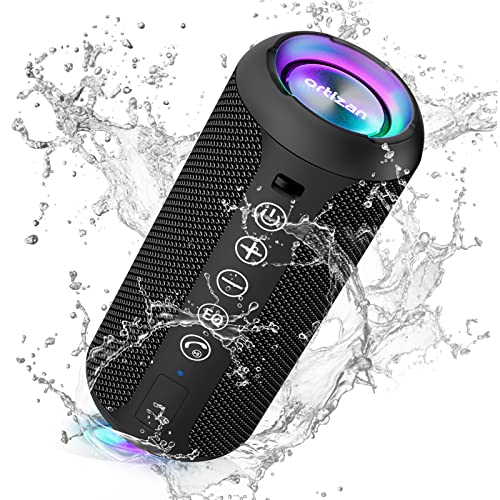
Pros
- Powerful 24W output with DSP for distortion-free sound at high volumes
- Exceptional 30-hour battery life on a single charge
- Seamless Bluetooth 5.3 pairing and stable long-range connectivity
- IPX7 waterproofing handles rain, splashes, and submersion
- Dual pairing for true stereo surround sound
Cons
- RGB lights may feel gimmicky for serious listening sessions
- No companion app for EQ customization or firmware updates
- Compact size limits maximum bass depth compared to larger models
The Ortizan Portable Bluetooth Speaker (1st Gen) is a rugged, feature-packed option for on-the-go audio enthusiasts. With 24W of power from dual 12W drivers, advanced DSP, and passive radiators, it punches above its weight in delivering balanced sound suitable for casual listening anywhere.
Targeted at party-goers, beach lovers, and gift buyers, it's ideal for men and women seeking an affordable, durable speaker for home, outdoors, or travel. Real-world tests show it excels in open spaces, maintaining clarity during hikes or poolside hangs, with TWS pairing enhancing the experience for stereo setups.
Performance shines in bass-heavy tracks and podcasts alike, though it lacks app control. Battery life impressively hits 30 hours at moderate volumes, outlasting most competitors. Overall verdict: a top value pick for versatile, waterproof portability - highly recommended for summer adventures.
Expect deep, boosted bass from the dual passive radiators, paired with crisp treble and detailed mids thanks to the 24W stereo drivers and digital signal processor. This tuning favors energetic playback, revealing punchy lows in EDM or hip-hop while keeping vocals clear in rock or pop.
Soundstage widens impressively with TWS pairing, mimicking surround sound for movies or groups. It handles high volumes without muddiness, maintaining composure up to 65dB, though extreme highs can sharpen slightly at max output.
Bluetooth 5.3 ensures low-latency streaming, with stable connections over 66 feet, making it reliable for playlists from phones, TVs, or laptops.
Built tough with IPX7 waterproofing, this cylindrical speaker (3 x 3 x 6.69 inches, 1.28 lbs) withstands submersion up to 3 feet for 30 minutes, plus dust and splashes - perfect for showers, camping, or boats. The rugged exterior includes RGB LED lights that pulse to the beat, doubling as a night light.
Connectivity covers Bluetooth 5.3, AUX jack, TF card slot, and built-in HD mic for hands-free calls. No HDMI or optical, but wireless focus keeps it simple. Power via Type-C, with 30-hour playtime at moderate levels.
Compact and lightweight, it fits in a backpack easily, with intuitive buttons for play/pause and pairing. Package includes cable and guide for quick setup.

Pros
- Exceptional portability with wider carabiner for easy attachment to gear
- Long battery life supports full-day use without recharging
- Rugged IP67 rating handles water, dust, and drops effortlessly
- Punchy bass fills outdoor spaces with vibrant energy
- Seamless Auracast for expanded sound setups
Cons
- Limited volume for very large gatherings due to compact size
- No companion app for EQ customization
- Bass depth not as profound as larger home speakers
The JBL Clip 5 is a pint-sized powerhouse in the portable Bluetooth speaker world, designed for Americans who live active lifestyles. Whether you're hitting the trails, chilling at the beach, or tailgating, this ultra-portable speaker clips right onto your gear and delivers JBL's signature Pro Sound with punchy bass that belies its small stature.
In real-world testing, it shines during outdoor escapades. The redesigned carabiner makes attachment a breeze to backpacks or belts, and the IP67 rating means it laughs off splashes, sand, and sweat. Pair two for stereo bliss or link multiples via Auracast for bigger parties, all while running up to 12 hours on a charge, extendable with Playtime Boost.
For budget-conscious adventurers seeking durability and fun sound without the bulk, the Clip 5 excels. It's not for audiophiles craving studio precision, but for everyday portable thrills, it nails the brief with eco-friendly recycled materials adding a modern touch.
Verdict: A top pick for on-the-go audio that packs serious punch. Grab it if portability and ruggedness top your list.
JBL's Pro Sound tuning gives the Clip 5 a lively signature with punchy bass that thumps on tracks like hip-hop or EDM, extending surprisingly deep for its size. Mids stay clear for vocals and guitars, while treble adds sparkle without harshness, creating an engaging listen for casual outdoor sessions.
Volume levels impress, filling medium spaces like patios or tents with room-shaking energy and minimal distortion. The soundstage feels wide for a mono speaker, enhanced by Auracast pairing for true stereo imaging and scaled-up output across multiples.
Acoustic engineering shines in its balanced response, prioritizing fun over flat neutrality, making it ideal for bass lovers blasting playlists during hikes or beach hangs.
Built tough with an IP67 waterproof and dustproof rating, the Clip 5's compact body uses recycled materials for sustainability without skimping on durability. The fully integrated, redesigned carabiner offers a wider opening for secure clips to bags, loops, or tents, enhancing everyday portability.
Connectivity relies on reliable Bluetooth with Auracast for multi-speaker linking, no wires needed. A single USB-C charge delivers up to 12 hours of playtime, plus a 3-hour boost mode for extended adventures, perfect for battery-powered freedom.
Dimensions stay ultra-pocketable, weighing next to nothing, with no extra inputs beyond wireless pairing, keeping it simple and focused on mobile use.
Transforming Traditional Wired Speakers into Modern Wireless Systems
Converting a traditional audio monitor into a wireless system requires matching the physical inputs of your speaker with the appropriate wireless receiver module. Most listeners accomplish this by connecting a standalone Bluetooth adapter to an existing line-level input or by installing a dedicated wireless amplifier. Alternative techniques, such as near-field magnetic induction, allow you to bypass wireless digital pairing altogether by resting your playback device directly on a sensor dock. Regardless of the route you select, understanding the fundamental differences between powered active speakers and unpowered passive cabinets will dictate your hardware choices.
Active Powered Cabinets Versus Passive Unpowered Drivers
Before buying any adapter cables or wireless hardware, you must determine whether your speakers are active or passive. Active speakers feature internal power amplifiers and plug directly into standard electrical wall outlets or use rechargeable batteries. These enclosures display physical volume knobs, power switches, and analog line inputs like 3.5mm auxiliary jacks or RCA ports on their rear panels. Because active speakers handle amplification internally, they only require an unamplified, line-level wireless audio signal to produce sound.
Passive speakers, on the other hand, contain raw driver cones and crossover networks without internal power amplification. You can easily identify passive units by their bare speaker wire binding posts or spring-loaded terminals on the rear chassis. Feeding a basic line-level Bluetooth receiver into passive terminals produces silence because the signal lacks the electrical wattage needed to move speaker cones. To make passive speakers wireless, you must place a compact wireless amplifier between your playback device and the speaker cabinets.
Adding a Bluetooth Audio Receiver via Auxiliary and RCA Inputs
Connecting a compact Bluetooth receiver is the most straightforward method for making powered active speakers completely wireless. These miniature receiver units receive wireless digital audio from your smartphone or laptop, convert it into an analog signal, and push it out through standard audio ports. Most active speakers offer a standard 3.5mm auxiliary port or red-and-white RCA inputs on their rear connection panels. You simply insert a compatible patch cable from the receiver output into the speaker input jack to establish an immediate physical bridge.
Cable durability and plug geometry play significant roles in maintaining clean signal transfer within tight spaces. Using a heavy-duty right-angle cable, such as a nylon-braided 3.5mm stereo patch cord with reinforced metal connectors, prevents physical strain on both the speaker port and the receiver housing. Straight connector plugs often bend or loosen when speakers rest close to walls or inside compact shelving units. Solid copper wiring and dense internal shielding further protect the low-voltage analog signal from electromagnetic interference produced by nearby household electronics.
Powering the Bluetooth receiver requires a reliable energy source to avoid unexpected playback interruptions. Most modern wireless adapters draw power via standard 5V USB connections, allowing you to use common wall chargers, power banks, or rear-panel USB service ports on your speakers. When choosing an adapter, select a model that supports continuous passthrough power so it stays energized without manual battery recharging cycles. Keeping the receiver continuously powered ensures your active speakers remain ready to receive incoming streaming connections whenever you step into the room.
Converting Passive Speakers with Compact Wireless Amplifier Modules
Passive stereo pairs require dedicated amplification to transform incoming wireless data into audible acoustic energy. Compact Class-D Bluetooth amplifiers serve as an all-in-one bridge, combining a wireless streaming receiver with speaker amplification inside a compact chassis. These micro-amplifiers typically feature built-in Bluetooth antennas alongside rear binding posts that accept bare copper speaker wire or banana plugs. By running standard speaker wire from the amplifier to your passive speakers, you turn traditional bookshelf monitors into a fully wireless audio station.
Matching electrical specifications is vital when choosing a wireless amplifier for passive speaker cabinets. You should inspect the nominal impedance rating on the back of your speakers, which typically measures between 4 ohms and 8 ohms. Pairing speakers with an amplifier that supports their specific impedance load prevents thermal overload and preserves amplifier lifespan. In addition, verifying that the continuous RMS wattage output of the amplifier matches the handling capability of your speaker drivers prevents distorted playback at elevated volumes.
Setting up a wireless mini-amplifier involves stripping a small portion of insulation from your speaker wires and inserting them into the corresponding positive and negative terminals. Maintaining correct polarity across both the amplifier and the speaker terminals ensures proper phase alignment and punchy bass response. Once you secure the speaker cables and connect the amplifier power brick to an electrical outlet, switch the unit on and initiate pairing. Your mobile device will detect the amplifier as an available Bluetooth destination, giving classic passive speakers immediate wireless capabilities.
Utilizing Near-Field Magnetic Induction for Instant Screenless Playback
Near-field magnetic induction provides an ingenious alternative for listeners who want wire-free sound without navigating Bluetooth menus or pairing codes. Induction speakers feature sensitive internal electromagnetic pickup coils that detect magnetic oscillations emitted by the internal speakers of your smartphone. When you set your phone upright on an induction cradle, the stand amplifies those electromagnetic signals in real time through its own acoustic drivers. This technology eliminates digital handshake delays, forgotten passwords, and Bluetooth software incompatibilities entirely.
Achieving clean sound with an induction speaker requires proper physical alignment between your phone and the sensor zone. You should position your smartphone so its bottom-firing speaker aligns directly over the designated induction sensor markings on the speaker stand. Removing thick protective phone cases or adjusting device volume to at least 50% helps the induction coils register strong magnetic fields without distortion. Many induction-capable docks also include secondary Bluetooth 5.3 chips, providing dual-mode flexibility when you need to stream audio from across the room.
Power Supply Architecture and Ground Loop Noise Isolation
Power delivery architecture is a critical factor when retrofitting wired audio gear with standalone wireless adapters. If you power a Bluetooth receiver using the same USB port or electrical circuit that powers your speaker amplifier, you may introduce ground loop electrical noise. This interference manifests as an annoying high-pitched whine, buzzing tone, or alternating electrical hum through the speaker drivers. The unwanted noise travels across shared electrical grounds, entering the analog audio stream between the receiver and the amplifier input.
Installing an inline ground loop noise isolator along the 3.5mm auxiliary audio cable easily breaks this electrical feedback loop. A ground loop isolator contains internal audio isolation transformers that pass pure analog acoustic signals while completely blocking rogue direct-current ground loops. Alternatively, powering your wireless Bluetooth receiver with an independent wall plug or dedicated battery pack physically separates the ground circuits. This clean electrical separation restores pitch-black background silence during quiet musical passages and podcast pauses.
For mobile or vehicle applications, managing battery conservation and parasitic power drain is equally important. Standby power consumption from always-on Bluetooth adapters can slowly deplete auxiliary power banks or vehicle starting batteries over extended parking intervals. Selecting receivers equipped with automatic sleep timers or hardware power switches guarantees that the wireless circuit powers down when inactive. Always make sure to power down aftermarket wireless adapters when leaving portable or vehicle audio installations unattended for multiple days.
Bluetooth Pairing Protocols, Discovery Sequences, and Status Indicators
Initiating a clean wireless connection requires entering pairing mode on your receiver or standalone wireless sound system. Most wireless audio adapters and portable speakers feature a dedicated pairing button or require pressing and holding the power button for three to five seconds. Once the device enters discovery mode, its status LED indicator typically transitions from a slow pulse to rapid flashing blue or alternating red and blue light patterns. This visual cue confirms that the internal radio is broadcasting its identification code to nearby source devices.
Interpreting hardware LED indicator lights prevents unnecessary setup confusion and connection delays. A rapidly blinking blue LED generally indicates active discovery mode, signaling that your smartphone or laptop can discover the device name in its Bluetooth menu. Once a secure digital handshake completes, the indicator light normally changes to a solid blue illumination, accompanied by an audible confirmation chime. If the LED flashes red or amber, the unit is signaling a low-voltage condition, an input fault, or an improper power connection that requires immediate attention.
Clearing saved connection memory becomes necessary when multiple household devices compete for control over the same wireless speaker. Most Bluetooth chips automatically reconnect to the last paired smartphone within transmission range, effectively locking out new users. Holding the pairing button down for ten continuous seconds usually purges the internal memory table and restores factory discovery status. Performing this simple memory reset frees up the adapter to link with a new primary audio source without connection conflicts.
Expanding Multi-Speaker Systems with Stereo Pairing and Broadcast Audio
True Wireless Stereo (TWS) pairing allows listeners to sync two independent wireless speakers without running physical interconnect cables between them. Under a TWS configuration, a primary speaker connects wirelessly to your playback phone while streaming the secondary audio channel to a matching satellite unit. This wireless split creates a wide stereo soundstage with distinct left and right channel separation across outdoor decks or large living spaces. Listeners who appreciate balanced audio separation often evaluate portable Bluetooth wireless speaker systems designed specifically with integrated stereo pairing capabilities.
Next-generation wireless audio protocols are expanding multi-speaker flexibility even further through Auracast broadcast technology. Auracast allows a single audio source to transmit synchronized audio streams to an unlimited number of nearby compatible wireless receivers and speakers. Unlike traditional point-to-point Bluetooth limits, Auracast functions like an open public radio transmitter across parks, gyms, and tailgate parties. Modern ultra-portable units equipped with Auracast can link effortlessly with companion speakers to deliver massive combined sound output without complex multi-button pairing rituals.
Deciding whether to adapt vintage wired cabinets or buy new wireless units often comes down to portability, setup complexity, and overall cost. When comparing standalone upgrade options against complete speaker replacements, reviewing portable speaker lineup and pricing considerations can help clarify your audio budget. Compact modern Bluetooth speakers provide built-in rechargeable batteries, rugged enclosures, and weatherproofing that converted bookshelf speakers cannot easily match. However, retrofitting existing high-end home speakers remains the most cost-effective path for stationary indoor listening rooms.
Eliminating Latency, Signal Interference, and Playback Issues
Wireless audio latency can create annoying lip-sync delays when streaming movies, television shows, or video games through converted speakers. Bluetooth transmission inherently introduces a slight delay while compressing, transmitting, and decoding digital sound packets over radio frequencies. Standard Bluetooth audio codecs such as basic SBC introduce noticeable lag, whereas advanced codecs like aptX Low Latency or modern Bluetooth 5.3 chips minimize processing delay. Selecting wireless adapters equipped with modern Bluetooth revisions ensures dialogue remains tightly synchronized with on-screen video action.
Radio frequency interference and physical obstacles can also cause intermittent audio stutter and sudden connection drops. Solid concrete walls, metal furniture, and home Wi-Fi routers operating on crowded 2.4 GHz bands can disrupt delicate wireless audio transmissions. If your speaker begins cutting out when you move around the room, elevate the wireless adapter and keep it away from dense metal surfaces. Maintaining a direct, unobstructed line of sight between your playback phone and the wireless receiver drastically improves signal stability.
Following a methodical conversion routine ensures your modified speaker delivers exceptional sound for years to come. Whether you install a compact Bluetooth receiver, set up an induction dock, or power passive cabinets with a mini-amplifier, proper setup makes all the difference. Verifying clean wiring, selecting low-latency hardware, and isolating power sources lets you enjoy modern wireless streaming on any speaker you own. Taking time to test audio clarity and connection stability guarantees an enjoyable, cable-free listening experience every day.


Write Your Review
No reviews yet. Be the first to share your experience!