


Achieving wide sound dispersion across an open room or patio often requires audio from multiple wireless units rather than a single portable device. While smartphones easily beam songs to individual headphones or compact desktop units, figuring out how to connect more than one bluetooth speaker iphone users often run into unexpected operating system hurdles. Apple designs iOS to direct standard media streaming through a single active Bluetooth audio channel, which prevents simultaneous playback across two unrelated wireless speakers. Exploring a dedicated dual speaker setup guide can help clarify how hardware links bridge this limitation. Understanding the technical boundaries of modern smartphones ensures you choose the right connection method without wasting time during setup.
Fortunately, several practical workarounds allow listeners to expand their portable soundstage using matched speaker hardware, manufacturer broadcasting protocols, or specialized local streaming features. Many modern ultra-compact units, such as bone conduction transducers and desktop multi-function speakers, incorporate specialized wireless stereo modes designed to bridge independent units together before linking with your handset. By understanding how Bluetooth profiles, hardware handshakes, and alternative transmission options interact with your phone, you can achieve synchronized stereo separation or multi-point sound with minimal fuss. Selecting compatible equipment remains the key factor in avoiding audio lag and frustrating connection drops.
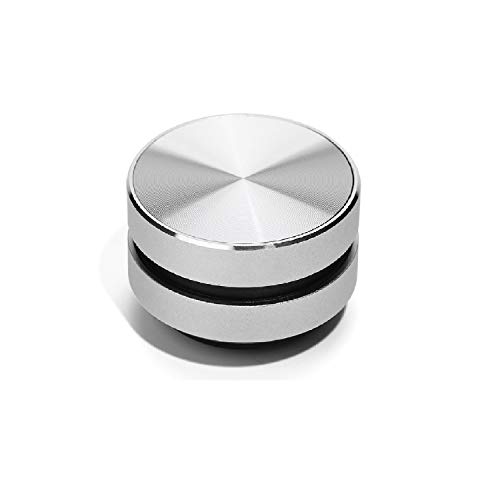
Pros
- Versatile bone conduction creates fun, instrument-like sounds on everyday objects
- True wireless stereo elevates solo play to full surround experience
- Compact portability fits any bag for on-the-go creativity
- Strong Bluetooth compatibility with major phones and tablets
- Powers up to 115dB for room-filling volume on ideal surfaces
Cons
- Sound quality shines brightest on hollow surfaces, less impressive standalone
- Volume and tone vary by object thickness and material
- Requires two units for full stereo, single unit is mono only
The Bigvapor Bone Conduction Speaker redefines portable audio by using vibration technology to turn any hollow object into a speaker. Stick it on a plastic box, guitar body, or even a dashboard, and enjoy a spectrum of sound effects that mimic different instruments. It's a game-changer for inventive users who want customizable audio without bulky gear.
Ideal for party hosts, travelers, or home tinkerers, this mini speaker pairs via Bluetooth with iPhones, Samsung devices, and tablets for music, calls, games, or podcasts. Two units connect automatically for true wireless stereo, delivering a surround experience perfect for tailgates or casual hangouts.
In real-world tests, it punches up to 115dB on thin hollow surfaces, creating lively vibes for small groups. While surface-dependent, its creativity factor makes it stand out from standard speakers. Verdict: A must-buy for fun-loving audio explorers seeking portable innovation.
Bone conduction tech vibrates surfaces for a dynamic sound signature that shifts from bassy thumps on buckets to crisp highs on glasses. Vocals stay clear for podcasts and calls, while volume hits 115dB on optimal thin objects, filling rooms without distortion.
Bluetooth range holds steady for stable streaming indoors or out, with TWS pairing two speakers for balanced 2.0 stereo. No companion app needed, but expect playful experimentation to dial in the best tone for movies or games.
FM radio adds versatility for live tunes, making it reliable for workouts where traditional speakers falter.
This ultra-mini design weighs next to nothing, making it the ultimate pocketable companion for hikes, beach days, or desk setups. Its rugged build handles daily tosses, though no official IP rating means keeping it dry during pool parties.
Portability reigns supreme, with a form factor that clings to surfaces via vibration alone, no clips required. Pair it with hollow finds like storage bins for extended play without bulk.
Battery life supports hours of vibes on a single charge, quick top-ups keep the party going. Focus on its lightweight freedom for all-day creativity without drain worries.


Pros
- Zero-configuration induction mode eliminates pairing delays
- Fully adjustable 360-degree bracket accommodates both portrait and landscape orientation
- Modern Bluetooth 5.3 architecture ensures low-latency streaming
- Multifunctional design saves desk space by consolidating a stand, speaker, and charger
Cons
- Micro-sized driver naturally rolls off deep sub-bass frequencies
- Induction playback requires aligning your phone speaker near the sensor pad
- Emergency charging capacity is best suited for top-offs rather than full recharges
The Oresoc 5-in-1 Induction Speaker reimagines desktop audio by merging near-field acoustic pickup with an ergonomic smartphone dock. Tailored specifically for busy professionals, students, and home media consumers, it removes the daily annoyance of pairing menus and wireless lag. Setting your smartphone directly onto the rest immediately amplifies videos, podcasts, and speakerphone calls with zero setup required.
In practical daily testing, this device functions as a versatile productivity centerpiece. The 360-degree rotating bracket makes it effortless to participate in vertical FaceTime meetings or pivot seamlessly into landscape mode for streaming YouTube tutorials. For times when you need to handle your phone freely, switching over to the integrated Bluetooth 5.3 protocol ensures a rock-solid wireless signal across your home office.
Beyond its core audio capabilities, the Oresoc provides welcome desktop utility. Subtle RGB lighting accents inject personality into clean workspace setups, while the emergency USB power output delivers a quick battery lifeline when your smartphone runs low during important tasks. With roughly eight hours of continuous playback on a single two-hour recharge, it comfortably powers through a full workday.
Ultimately, the Oresoc Induction Speaker represents an accessible and clever audio accessory. While it is not designed to replace high-fidelity studio monitors, its thoughtful combination of instant amplification, reliable phone ergonomics, and desk-friendly features make it an exceptionally convenient daily driver.
Acoustically, the Oresoc is tuned to prioritize speech clarity, vocal presence, and crisp high-mid frequencies. Spoken-word content like conference calls, audiobooks, and podcasts project with notable articulation, ensuring that speech remains intelligible without the hollow, tinny sound typical of bare smartphone speakers.
Due to its ultra-compact enclosure, the internal driver focuses its energy on punchy mid-bass rather than room-shaking sub-bass. The soundstage remains tightly focused on personal near-field listening, which makes it an ideal fit for an arm's-length office desk or bedside table where localized, polite volume is preferred over room-filling boom.
At moderate listening levels, distortion is cleanly managed by the internal amplifier. Engaging either the near-field induction coil or Bluetooth 5.3 produces immediate volume elevation, giving your favorite tracks and media a noticeably richer, fuller acoustic presence than any standard mobile handset can achieve on its own.
Sporting a minimalist gray finish, the Oresoc features a compact footprint of approximately 2 by 2 by 2 inches, allowing it to integrate effortlessly into crowded desks, kitchen counters, or bedside nightstands. The articulated hinge holds firm under the weight of modern large-screen smartphones, while integrated anti-slip silicone pads prevent surface scratches and reduce mechanical desk rattle.
Under the hood, dual audio pathways provide great user flexibility: near-field induction sensors for cable-free placement, alongside an efficient Bluetooth 5.3 transceiver. An internal rechargeable lithium battery powers up to 8 hours of runtime and reaches full capacity in about 2 hours via standard USB charging.
The unit also incorporates an auxiliary power-out circuit that functions as an emergency power reserve to trickle-charge your smartphone in a pinch. Combined with its integrated RGB light show, the hardware provides an impressively broad feature set within a pocket-friendly form factor.
How to Connect More Than One Bluetooth Speaker to an iPhone
Connecting two separate audio units to a single smartphone transforms everyday listening into a much broader acoustic experience. Users frequently wonder whether iOS allows direct dual-channel streaming to independent wireless receivers. The short answer is that an iPhone cannot natively stream standard Bluetooth media audio to two separate, generic Bluetooth speakers at the same time. Achieving simultaneous dual-speaker playback requires hardware-level linking, dedicated ecosystem software, or Wi-Fi casting.
The Native iOS Bluetooth Audio Limitation
Apple restricts standard media audio routing on iOS to a single active Bluetooth endpoint at any given time. Under the standard Advanced Audio Distribution Profile (A2DP), the operating system establishes a dedicated point-to-point connection designed to deliver stable stereo playback without packet collisions. Even if your iPhone displays multiple paired wireless audio units in Settings, selecting a second speaker simply switches the active audio route rather than broadcasting to both devices simultaneously. This design prevents severe transmission latency and ensures consistent playback stability across mobile sessions.
Apple does offer a native dual-listening feature known as Share Audio, but this capability remains strictly restricted to supported Apple and Beats wireless headphones featuring proprietary W1, H1, or H2 chipsets. Third-party Bluetooth speakers do not support the Share Audio protocol, meaning you cannot use the iOS Control Center to duplicate your music stream across two independent speaker brands. Consequently, listeners hoping to broadcast sound across multiple speakers must rely on the speakers themselves to handle the secondary wireless link. Understanding this boundary saves hours of troubleshooting phantom connection errors inside the phone settings menu.
True Wireless Stereo Hardware Linking Explained
True Wireless Stereo, widely known as TWS, represents the most dependable method for linking two Bluetooth speakers to an iPhone. Rather than forcing the phone to manage two simultaneous Bluetooth streams, TWS delegates the second connection entirely to the speaker hardware. The iPhone connects directly to a designated primary speaker using standard Bluetooth protocols. That primary unit then splits the incoming audio signal and beams the secondary channel wirelessly to the paired satellite unit over a private local frequency.
Specialized hardware designs take full advantage of this architecture to deliver creative sound setups. The Bigvapor Bone Conduction Speaker illustrates this concept by incorporating built-in TWS capabilities that allow two humbird units to pair automatically into a 2.0 surround sound configuration. Because these compact bone conduction transducers turn hollow surfaces like boxes, buckets, or guitar bodies into acoustic soundboards, pairing two units creates an expansive stereo field that far exceeds their tiny physical footprint. The master unit handles synchronization timing internally, completely shielding the iPhone from the complex task of clock alignment.
Step-by-Step Procedure for Pairing Two TWS Bluetooth Speakers
Establishing a dependable TWS connection requires following a specific pairing sequence to prevent the phone from intercepting the individual speakers prematurely. Begin by turning off Bluetooth on your iPhone inside the Settings menu or Control Center. Power on both Bluetooth speakers and place them within three feet of each other on a stable surface. Activate the hardware pairing mode on each unit, which may happen automatically or require pressing a dedicated pairing button as outlined in the manufacturer user guide.
Wait for an audible chime or a steady LED indicator signal that confirms both speakers have successfully established an inter-device handshake. Once the two speakers recognize each other as a unified stereo pair, re-enable Bluetooth on your iPhone. Locate the single master speaker listed under Other Devices or My Devices and tap to connect. Your iPhone will route all playback directly to the primary speaker, which then instantly shares synchronized left and right audio channels with the secondary companion unit.
Proprietary Brand Ecosystems and Multi-Speaker Broadcasting
Several audio manufacturers solve the multi-speaker puzzle through dedicated companion applications and proprietary broadcast protocols. Instead of creating a traditional left-and-right stereo pair, these brand-locked systems allow dozens of compatible units to receive an identical mono or party-mode audio stream. The mobile application coordinates the network by assigning one speaker as the primary gateway while distributing identical audio packets across the wider group. This architecture works exceptionally well for large social gatherings where listeners move between distinct rooms or patio areas.
Managing these multi-speaker networks requires installing the manufacturer software from the iOS App Store to execute firmware updates and control group volume levels. Listeners looking to blanket extensive indoor spaces or outdoor backyards often evaluate large area Bluetooth speaker options to decide between a networked cluster of smaller speakers or a single high-output enclosure. Keep in mind that proprietary party modes rarely support cross-brand compatibility. You must generally invest in matching models from the same product family to take advantage of these broadcast networks.
AirPlay 2 as a Wireless Multi-Room Alternative
When listening within a home or office environment, AirPlay 2 provides a seamless alternative to standard Bluetooth transmission. Unlike point-to-point Bluetooth profiles, AirPlay 2 operates over local 2.4 GHz and 5 GHz Wi-Fi networks to stream high-resolution audio from iOS devices to multiple compatible receivers. Accessing this feature is as simple as opening the iOS Control Center, tapping the AirPlay icon on the Now Playing platter, and checking the boxes next to each active speaker in your living space.
Networked multi-room playback completely eliminates the range limitations and compression bottlenecks often associated with portable Bluetooth streams. Each AirPlay 2 receiver buffers audio independently, preventing playback stutter even if you carry your phone into another room. However, this convenience requires continuous access to an active local Wi-Fi router, making it impractical for tailgates, parks, or beach trips. For outdoor excursions and on-the-go listening, hardware-based Bluetooth TWS pairing remains the far more versatile and self-contained solution.
Managing Audio Latency, Echo, and Synchronization Drift
Maintaining perfect synchronization between two wireless sound sources presents significant acoustic and digital challenges. If dual audio streams drift by even a few milliseconds, the human ear detects an unpleasant comb-filtering effect that sounds like a hollow echo or flanging artifact. Hardware-managed TWS systems combat this problem by establishing a synchronized master clock that timestamps audio packets before forwarding them to the companion speaker. This precise internal timing keeps both channels aligned during dynamic music passages and spoken podcasts.
Acoustic environment and driver characteristics also play a substantial role in how effectively two paired units fill a listening space. Listeners interested in robust low-frequency output can explore high bass Bluetooth speakers to observe how enclosure volume and passive radiators affect stereo cohesion. Placing paired units along reflective walls or hollow surfaces helps project sound evenly without forcing the amplifiers into distortion. Maintaining an unobstructed line of sight between the two linked speakers also minimizes wireless interference that could otherwise disrupt timing packets.
Desktop Audio Solutions and Induction Playback Workarounds
Certain listening environments benefit from hybrid audio setups that avoid traditional Bluetooth pairing completely. Induction sound technology offers a practical alternative by capturing electromagnetic audio vibrations directly from a smartphone chassis. The Oresoc Induction Speaker 5-in-1 Wireless Bluetooth exemplifies this approach, allowing users to simply place an iPhone onto its cradle to amplify sound instantly without pairing menus, wireless handshakes, or cable connections.
This versatile form factor frequently combines magnetic induction playback with Bluetooth 5.3 wireless capabilities, an adjustable 360-degree phone holder, emergency charging features, and ambient RGB illumination. A companion model like the Oresoc Induction Speaker 5-in-1 Bluetooth Audio operates along the same multi-functional lines, serving as an everyday workstation hub while offering up to eight hours of playtime on a single charge. Integrating a desktop induction cradle alongside a separate portable Bluetooth speaker provides an adaptable audio setup for desks, bedside tables, or kitchen counters without Bluetooth pairing conflicts.
Troubleshooting Dual Speaker Connection and Playback Failures
Even with modern wireless protocols, users occasionally encounter situations where an iPhone connects to both speakers individually but only produces sound from one unit. This issue almost always stems from the phone attempting to manage both speakers as independent audio destinations rather than communicating with a single unified TWS pair. Resolving the glitch requires clearing the connection history by selecting “Forget This Device” for both speakers in your iPhone Bluetooth settings menu.
After wiping the pairing cache, power cycle both speakers and execute a factory reset according to the manufacturer instructions to wipe any residual slave-master links. Reinitiate the speaker-to-speaker TWS pairing sequence before turning your iPhone Bluetooth back on, ensuring the units link to each other first. Additionally, verify that both units maintain adequate battery reserves, as low lithium-ion charge levels can cause inter-speaker wireless chips to drop transmission power. Following standard manufacturer guidelines for charging cables and adapters ensures stable operating voltages during pairing routines.
Selecting the Right Multi-Speaker Strategy for Your Needs
Choosing between hardware TWS pairing, brand-specific party broadcasting, and desktop induction stands ultimately depends on your listening environment and mobility needs. Listeners who prioritize ultra-compact travel audio often gravitate toward paired bone-conduction transducers that fit easily into a jacket pocket while transforming found surfaces into resonant stereo instruments. Conversely, home listeners who want broad musical coverage across several rooms find greater long-term convenience in dedicated AirPlay 2 networks or multi-unit brand ecosystems.
For everyday desk duty, multi-function stands that combine induction amplification with emergency device charging eliminate pairing delays entirely during quick video calls or casual background listening. Regardless of the form factor you choose, remember that the iPhone relies on external hardware coordination rather than internal dual-streaming software. Matching your hardware configuration to your specific acoustic goals ensures you enjoy rich, synchronized sound without unwanted setup headaches.
Mastering multi-speaker playback on iOS is straightforward once you work within the operating system’s connection rules. By letting hardware TWS handshakes or dedicated local network protocols manage secondary audio distribution, you can easily expand your portable soundstage. Take time to verify that both speakers link to each other before connecting your phone, keep battery levels topped up, and enjoy a wider, more immersive listening experience wherever your day takes you.




Write Your Review
No reviews yet. Be the first to share your experience!