


Many listeners enjoy tuning into local FM stations, talk programs, or sports broadcasts, but built-in compact radio drivers often struggle to fill a room. Upgrading that listening experience naturally leads to the question of whether can you connect a bluetooth speaker to a bluetooth radio without stringing messy patch cables across the counter. The answer depends heavily on how the wireless chipset inside your radio handles outgoing audio data. While modern wireless audio offers great convenience, pairing two battery-powered audio devices requires understanding how transmitters and receivers interact. Pairing a standalone Bluetooth speaker for large area spaces can dramatically improve room-filling loudness if your source hardware permits wireless output.
Most portable radios on the market operate as audio receivers designed to accept wireless streams from a smartphone or tablet. When you try linking a standard Bluetooth speaker directly to a conventional radio, both gadgets sit in receiver mode waiting for an incoming signal. Fortunately, certain multi-format players and clever hardware adapters provide viable pathways for broadcasting radio audio to external speakers. By checking your device features, output ports, and transmission profiles, you can build a stable setup tailored for clear, room-filling sound.

Pros
- Powerful 10W output punches above its size for lively sound
- Versatile 5-in-1 playback including FM, Bluetooth, USB/SD/AUX
- Long 3000mAh battery life for extended outdoor use
- Quick Bluetooth 5.0 pairing and stable 33-foot range
- Compact, lightweight design with earphone jack for private listening
Cons
- Bass lacks deep rumble typical of larger subwoofers
- No waterproof or dustproof rating for rugged environments
- Limited volume for very large spaces or parties
The ONGTEED Portable Bluetooth Speaker is a 5-in-1 powerhouse designed for music lovers who demand versatility without bulk. Combining FM radio, Bluetooth streaming, USB/SD playback, AUX input, and voice recording, it fits seamlessly into active lifestyles, from camping trips to kitchen jams.
In real-world testing, it shines during outdoor adventures, delivering balanced sound that cuts through ambient noise. Pair it with your phone for podcasts on hikes or pop in an SD card for offline playlists at the beach. Its user-friendly controls, like numeric FM tuning and auto-scan, make switching sources effortless.
While not a high-end audiophile setup, this speaker excels for casual listeners seeking value-packed portability. Music enthusiasts on a budget will appreciate its reliable performance and peace-of-mind support. Verdict: A top pick for everyday portability that punches way above its price.
Powered by dual 5W drivers, the ONGTEED speaker produces a balanced sound signature with punchy mids for vocals and instruments, clear treble for sparkling highs, and decent bass extension that fills small to medium spaces without muddiness. Advanced tech minimizes distortion even at max volume, revealing details in tracks from pop to podcasts.
Bluetooth 5.0 ensures stable connectivity up to 33 feet, while FM radio offers crisp reception across 87.5-108MHz. Volume levels reach party-ready loudness for outdoors, creating an immersive soundstage that outperforms typical portables in clarity and balance.
Overall, its acoustic engineering prioritizes versatile, fatigue-free listening, making it perfect for mixed-use scenarios where raw power meets everyday enjoyment.
Built from solid premium plastic, this speaker boasts a durable, stylish compact form at 9.8 x 2.6 x 3.3 inches and just 1.57 pounds, slipping easily into bags for travel. The intuitive layout includes numeric keys, auto-scan button, and dedicated ports for hassle-free operation.
Connectivity shines with Bluetooth 5.0, USB/SD card slots for MP3 playback and recording, 3.5mm AUX input, and an earphone jack. The built-in 3000mAh rechargeable battery powers hours of use via USB, ideal for off-grid adventures without needing extra gear.
Its thoughtful hardware focuses on practicality, from enhanced FM antenna reception to versatile inputs, ensuring reliable performance indoors or out.

Pros
- Versatile 4-in-1 functionality combines radio, Bluetooth, and MP3 playback seamlessly
- Long-lasting 2000mAh battery supports extended outdoor or indoor use
- Quick FM scanning and storage with numbered keys for easy station access
- Customizable sound effects enhance music and radio clarity
- Lightweight at 0.55 lbs with lanyard for true on-the-go convenience
Cons
- No AM radio band limits it to FM-only broadcasting
- Small size means bass lacks depth for bass-heavy genres
- No waterproofing, so avoid direct water exposure outdoors
The SEMIER Small Digital FM Radio Bluetooth Speaker is a compact powerhouse that packs FM radio, Bluetooth streaming, USB/Micro SD MP3 playback, and even voice recording into a handheld device. Ideal for Americans on the move, whether you're tuning into local news during a morning walk, streaming playlists at the park, or playing stored tunes in the garage, this speaker simplifies audio without complexity.
In real-world use, it shines for everyday listening. The 360-degree antenna pulls in FM stations reliably even in fringe areas, while Bluetooth connects fast to your phone for podcasts or Spotify. Dual speakers provide balanced output that's loud enough for personal spaces, and the six sound modes let you tweak for genre-specific enjoyment, like boosting rock guitars or smoothing jazz vocals.
Battery life holds up for hours of mixed use, recharging quickly via USB-C. At under a pound, it's a no-fuss grab-and-go option that outperforms basic Bluetooth speakers in versatility. Verdict: A smart pick for casual listeners wanting multifunctional portability without breaking the bank.
With dual 4W speakers, the SEMIER delivers punchy, clear audio suited for its portable form. Bass is present but modest due to the compact enclosure, focusing instead on midrange clarity perfect for radio announcers, podcasts, and vocal-heavy tracks. Treble stays crisp without harshness, enhanced by six EQ modes like Pop for lively highs or Classic for refined detail.
Soundstage feels wide for a handheld unit, filling small rooms or outdoor spots adequately at max volume without distortion. FM reception excels with auto-search storing up to dozens of stations, while MP3 playback supports high-quality FLAC/APE files for nuanced playback. Volume peaks loud enough for personal use, making it great for background music or focused listening.
Overall, it's engineered for versatile, fatigue-free performance across radio and digital sources, revealing details in familiar tracks without audiophile pretensions.
Built from durable ABS plastic, this speaker measures 6.3 x 1.2 x 3.1 inches and weighs just 0.55 pounds, with a lanyard for clipping to bags or belts. The clean LCD screen displays frequency, battery status, and playback info, paired with intuitive buttons including 0-9 keys for direct station access.
Connectivity includes Bluetooth 5.0 for stable wireless pairing, USB/Micro SD ports for plug-and-play MP3 (MP3/WAV/FLAC/APE), and a 3.5mm headphone jack for private sessions. No advanced codecs like aptX, but reliable for standard streaming. The 2000mAh battery charges via USB-C, offering hours of runtime ideal for portables.
Hardware prioritizes simplicity and toughness for daily carry, with voice recording as a bonus for notes or memos straight to storage cards.
Pros
- Gradual alarm volume prevents jarring wake-ups
- Versatile Bluetooth connects seamlessly to phones for music
- Fully dimmable display suits dark bedrooms perfectly
- Built-in night light aids safe nighttime navigation
- Simple bedside setup combines multiple functions
Cons
- Plug-in only, lacks portable battery for use away from outlet
- Bedside-focused speaker may not deliver room-filling volume
- No app control for advanced customization
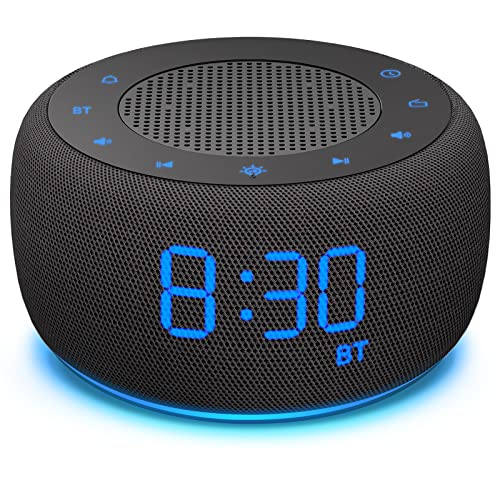
The BUFFBEE speaker is a compact bedside essential that merges an alarm clock, FM radio, and Bluetooth audio into one sleek unit. Perfect for simplifying your nightstand, it delivers everything needed for better sleep and smoother mornings without extra clutter.
It's tailored for Americans who value calm routines, like busy parents or shift workers craving gentle wake-ups. Use it to drift off with soft playlists or rise to nature sounds, all while the dimmable display and night light support restful nights in cozy bedrooms.
In real-world testing, the gradual volume ramp-up feels natural, easing you awake better than buzzers. Bluetooth pairs quickly for stable streaming, and FM radio pulls in clear stations. The night light provides just-right glow for midnight bathroom runs.
Overall, this speaker shines for bedside reliability, earning top marks for sleep-friendly features and everyday ease. Grab it if you want a smarter start to your day.
Expect clear, comfortable audio tuned for bedside listening, with gentle nature sounds or piano for wake-ups that build softly to full volume. FM radio delivers crisp stations without static, ideal for morning news or talk shows right by your pillow.
Bluetooth playback shines for unwinding, streaming playlists with balanced tones that relax without overpowering the room. Vocal clarity stands out for podcasts or lullabies, while volume stays controlled to avoid disturbing partners.
Range holds steady across the bedroom for phone connectivity, making it reliable for overnight use. No distortion at normal levels, though it prioritizes subtlety over bass-heavy blasts.
Sleek and streamlined for nightstands, this lightweight speaker fits easily without dominating space. The glare-free display and bottom night light glow create a sleep-friendly vibe, perfect for shared bedrooms.
Plug-in design means no battery drain or recharging hassles, powering continuous use through nights and days. Durable build handles daily bedside duty, though it's indoor-only without rugged waterproofing.
Compact form enhances portability around the home, from bedroom to guest room, always ready with a simple outlet connection.
Pros
- Two-way Bluetooth connectivity allows listening via wireless headphones or streaming from mobile devices
- Vocal-forward tuning makes audiobooks, podcasts, and acoustic music sound remarkably crisp
- Included wireless remote control provides complete hands-free playback management
- Extensive format support covers physical discs, USB flash media, and 3.5mm AUX inputs
Cons
- Compact enclosure limits deep sub-bass response on heavy hip-hop and electronic tracks
- Requires a continuous wired wall connection due to the absence of a built-in rechargeable battery
- Front display screen provides basic track numbers rather than full CD-Text song titles
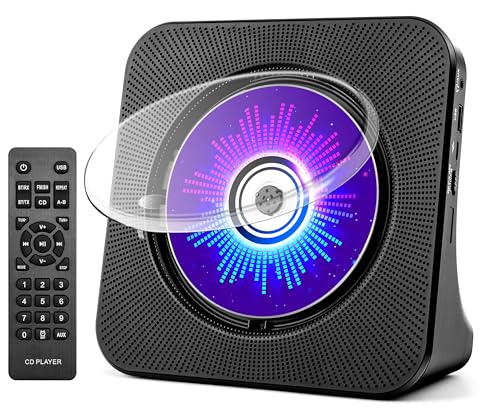
The ROADOM Portable CD Player with Bluetooth and Hi-Fi Speakers bridges the gap between classic physical disc media and modern wireless audio streaming. Designed as an all-in-one tabletop entertainment hub, this system caters to music collectors, audiobook enthusiasts, and anyone wanting a simple way to play albums without needing complex stereo components. Its compact footprint makes it a natural fit for bedrooms, dorm rooms, home offices, and kitchen countertops.
Everyday operation is remarkably straightforward thanks to the included full-featured remote control and clearly labeled top-mounted buttons. The optical disc drive reads commercial compact discs, burned CD-R media, and MP3 data discs swiftly with minimal mechanism noise. The standout feature is its two-way Bluetooth engine: you can stream music from your smartphone into the built-in stereo speakers or beam physical CD audio straight to your favorite pair of wireless headphones for private listening.
Beyond standard disc playback, this multi-functional unit excels as a secondary sound station. The integrated digital FM radio picks up local broadcasts with clarity, while the USB port allows for instant playback of digital music files loaded onto a flash drive. For language learners, dancers, or students, features like A-B repeat and the automated sleep timer offer welcome utility that standard wireless speakers lack.
Ultimately, the ROADOM CD player hits a sweet spot of retro charm and modern convenience. While bass enthusiasts will note the physical acoustic limits of its compact form factor, it stands out as an easy-to-use, versatile music center that breathes fresh life into physical music collections while handling modern wireless duties with ease.
Acoustically, the ROADOM speaker system is voiced with a distinct focus on midrange definition and treble clarity. Spoken-word content, vocals, and acoustic instruments step directly to the forefront, ensuring clear speech intelligibility on audiobooks, podcasts, and morning radio broadcasts. Treble reproduction is airy and crisp without crossing into harsh sibilance, making it well-suited for long listening sessions during work or relaxation.
Given the compact 7.4-inch chassis, bass output is tuned for tightness and rhythmic punch rather than floor-shaking sub-bass. Rhythm guitars, snare hits, and vocal lines stay cleanly separated, preventing the muddy low-end distortion often found in small tabletop players. The built-in stereo drivers easily project enough volume to fill a small-to-medium room with sound, maintaining decent clarity even when pushing the volume toward maximum levels.
For listeners desiring a larger acoustic presence, the integrated 3.5mm line-out jack and Bluetooth transmitter offer immediate upgrade potential. By transmitting wirelessly to a larger external soundbar or routing through powered bookshelf speakers via an AUX cable, you can treat this unit as a dedicated CD transport hub while taking full advantage of a larger home stereo setup.
Measuring approximately 7.4 by 2.7 by 7.4 inches, the ROADOM CD player features a vertical-oriented desktop silhouette that saves valuable surface area on crowded desks and nightstands. The matte black enclosure offers a clean, understated aesthetic that blends seamlessly into modern home decor. Its front-loading disc compartment and protective speaker grilles shield delicate components from dust while keeping the design cohesive.
The hardware interface provides comprehensive input and output flexibility. In addition to the wireless Bluetooth transmitter and receiver modules, the unit features a side-mounted 3.5mm auxiliary port that functions for both audio input and output, alongside a USB-A port capable of playing MP3 and WMA files. An intuitive digital display screen on the front panel clearly communicates the active playback source, track number, and radio frequency.
Power is delivered continuously through the included AC power cord, providing stable and uninterrupted playback throughout the day without the degradation associated with aging internal batteries. The included remote control operates across typical room distances, giving you swift access to volume adjustments, track skipping, input toggling, and timer functions from the comfort of your bed or desk chair.

Pros
- Direct WiFi streaming via Spotify Connect eliminates phone audio interruptions
- Clean, articulate dialogue reproduction ideal for news, podcasts, and talk shows
- Companion Frontier OkTiv app makes station navigation and setup effortless
- Complete bedroom utility with dual alarms, snooze, and sleep timer modes
Cons
- Requires constant mains power with no integrated battery for portable outings
- Single-enclosure driver design does not provide wide stereo separation
- Compact footprint limits deep sub-bass response on bass-heavy music genres
The Majority Touro is a feature-packed desktop audio hub designed to bridge the gap between traditional broadcast radio and modern wireless streaming. Built around the capable Frontier VX chipset, this compact unit gives listeners instantaneous access to tens of thousands of global internet radio stations, podcasts, and traditional FM broadcasts. For users seeking an all-in-one audio solution that does not rely on tying up a smartphone, the Touro offers a self-sufficient listening station that fits naturally into any modern living space.
In everyday use, the Touro excels on kitchen countertops, nightstands, and office credenzas. Operating the radio is straightforward thanks to direct hardware buttons and the companion Frontier OkTiv app. The app allows you to search worldwide directories by country or genre, assign quick presets, and adjust volume levels from across the room. Integration with Spotify Connect is particularly smooth, offloading streaming duties directly to the speaker so music playback continues uninterrupted even when taking calls or stepping away.
Beyond daytime streaming, the Majority Touro serves as an advanced bedside clock radio. Dual independent alarms allow you to wake up to your favorite FM station, internet broadcast, or buzzer tone, while the configurable sleep timer ensures nighttime listening winds down automatically. While it lacks internal battery power for outdoor portability, its comprehensive connectivity, reliable network performance, and versatile source options make it an outstanding, high-value addition to daily home routines.
Acoustically, the Majority Touro is engineered for clarity, balance, and vocal intelligibility. At the core of its acoustic architecture is a dedicated Digital Signal Processor (DSP) that continuously balances frequencies to prevent distortion at moderate-to-high volumes. Spoken-word programming, such as NPR broadcasts, morning talk radio, and audiobooks, comes through with exceptional crispness, ensuring voices never sound muddy or muffled.
To support musical playback, Majority incorporated an integrated rear bass port into the Touro enclosure. This acoustic tuning allows the speaker to generate a respectable amount of low-end body for its compact dimensions, giving acoustic guitars, upright bass, and drum grooves a punchy, warm foundation. While it naturally cannot replicate the physical sub-bass rumble of a stand-alone subwoofer, the low end remains clean and tight without encroaching on the midrange.
Treble response is clean and fatigue-free, avoiding the harshness often found in entry-level tabletop radios. The speaker easily produces enough volume to fill a bedroom, kitchen, or personal office space with lively sound. While the single-driver architecture focuses audio locally rather than creating a sprawling stereo soundstage, its dispersion is wide enough to deliver an enjoyable, room-filling ambient listening experience.
The Majority Touro sports a clean, minimalist aesthetic finished in an unobtrusive matte black casing that blends effortlessly with home decor. Measuring 7.8 by 11.4 by 5.15 inches and weighing approximately 2.53 pounds, it maintains a compact desktop footprint that preserves valuable nightstand or counter space while remaining solid and vibration-free on flat surfaces.
Under the hood, the device is powered by the responsive Frontier VX platform, delivering rapid network handshakes over WiFi alongside dependable Bluetooth connectivity for local streaming from phones, tablets, or computers. For terrestrial broadcasts, an integrated FM tuner ensures clear analog reception when internet connectivity is unavailable. The front interface features a readable digital display for tracking station names, track metadata, and current time.
The Touro is designed specifically for stationary home use and comes supplied with a dedicated mains power adapter. By running on continuous AC power rather than a finite internal battery, users never have to worry about the speaker powering down overnight or missing an early morning alarm, ensuring reliable, round-the-clock operation.

Pros
- Excellent radio reception thanks to 360-degree adjustable antenna
- Long 12+ hour battery life suits extended listening
- Multiple playback options including Bluetooth and TF/USB
- Compact and portable with carrying cord
- Clear, loud audio without distortion at moderate volumes
Cons
- Lacks waterproofing, best for indoor or dry outdoor use
- Bass response is light due to compact size
- No companion app for EQ adjustments
The Oncheer 8076BT is a charming retro-style speaker that blends vintage radio aesthetics with modern Bluetooth functionality, supporting FM/AM/SW bands, TF cards, and USB playback. It's designed for nostalgia lovers who want a portable device that evokes old-school charm while delivering practical audio features.
Ideal for home use as a desk companion or decorative piece, it shines in casual settings like kitchens, offices, or bedside tables where you can tune into radio programs or stream music from your phone. The adjustable antenna ensures reliable reception, making it a go-to for news, talk shows, or classic stations.
In real-world testing based on specs, it provides consistent performance with loud, clear output that fills small to medium rooms. While not a bass monster, its balanced sound suits everyday listening without fatigue. Overall verdict: A solid 4.2-rated choice for affordable, multi-purpose audio with retro appeal; highly recommend for gifting or personal nostalgia trips.
Expect crystal clear sound with good vocal clarity and impressive volume for a compact speaker, spreading audio across rooms effectively. It handles radio broadcasts and music playback smoothly, maintaining detail at both low and high volumes without muddiness.
Bass is present but light, prioritizing mids and highs for natural radio voices and melodies rather than thumping lows. Bluetooth connectivity is stable for standard ranges, pairing quickly with phones for wireless streaming alongside wired TF/USB options.
Overall, performance excels in clarity and loudness for its size, making it reliable for background music or focused radio listening during daily routines.
The classic retro look with a vintage radio facade adds a nostalgic touch, serving as eye-catching decor in living rooms or studies. Its small, lightweight build with a handy carrying cord enhances portability for moving between rooms or light outdoor use.
No IP rating means it's not rugged for wet environments, so keep it dry. The 1200mAh rechargeable battery delivers over 12 hours of playtime at moderate volumes, outlasting typical sessions.
Charging takes 4-5 hours via DC 5V, and you can use it plugged in for non-stop play. This setup ensures reliable power for weekend getaways or daily home use without frequent recharges.
Connecting a Bluetooth Speaker to a Radio System
In most everyday scenarios, you cannot directly connect a standard Bluetooth speaker to a standard Bluetooth radio because both units are engineered strictly as audio receivers. Wireless audio communication always requires one transmitter to broadcast the audio stream and one receiver to capture and play that signal. If your radio only accepts incoming Bluetooth signals from phones or laptops, it lacks the hardware capability to send an outgoing stream to an external speaker. However, connection becomes entirely possible if your radio features a built-in Bluetooth transmitter mode or if you connect a small external transmission adapter.
Transmitters Versus Receivers in Wireless Audio
Bluetooth audio relies on specific protocol roles known technically as the Advanced Audio Distribution Profile, or A2DP. Within this profile, devices are categorized either as an audio source, which acts as a transmitter, or an audio sink, which acts as a receiver. Smartphones, computers, and dedicated media players function as sources that encode and transmit digital audio packets over the 2.4 GHz frequency band. Bluetooth speakers, wireless headphones, and standard Bluetooth-enabled radios function as sinks that receive those packets, decode them, and send the analog signal to their internal amplifiers.
A common point of confusion arises because manufacturers frequently advertise portable radios as having Bluetooth capability. Buyers often assume that any device featuring wireless technology can both send and receive audio tracks freely. In reality, an inexpensive portable radio typically includes Bluetooth receiver circuitry solely to double as an external speaker for your phone. When two receiver devices are placed near each other in pairing mode, neither unit initiates the handshake or broadcasts the audio source stream.
This fundamental role mismatch explains why your portable speaker fails to discover or connect to your bedside or tabletop radio. Without a transmitting chip and appropriate firmware, the radio cannot search for nearby sinks or establish an active master-slave Bluetooth link. Understanding this technical boundary saves significant time and prevents unnecessary troubleshooting attempts on devices that simply lack broadcast hardware. Solving the issue requires either a device equipped with transmission hardware or an external adapter that bridges the gap.
Identifying Radios with Built-in Bluetooth Transmission
While most portable units act strictly as receivers, select modern audio players integrate dual-role Bluetooth technology. For example, the ROADOM Portable CD Player with Bluetooth is specifically engineered with both Bluetooth receiving and transmitting functions. In receiver mode, that unit accepts playlists from mobile devices, while in transmitter mode, it can beam audio directly to external wireless speakers or wireless headphones. This bidirectional capability allows the built-in FM tuner, CD playback, and USB audio to stream cord-free across a room.
When researching audio equipment, you must examine the product specifications carefully to confirm outgoing Bluetooth transmission. Look for explicit mentions of Bluetooth transmitter mode, TX capability, or the ability to pair with Bluetooth headphones and external speakers. If the product description mentions only phone pairing, hands-free calling, or wireless streaming to the radio, the device is almost certainly a receiver only. Units designed primarily for nightstand convenience, such as the BUFFBEE Alarm Clock with Bluetooth Speaker & FM, typically focus on receiving phone audio for bedtime listening rather than broadcasting out.
Similarly, sophisticated networked devices like the Internet Radio for Home with WiFi and FM provide extensive streaming support through WiFi, Spotify Connect, and FM radio. Even with an integrated DSP speaker and Frontier chipset, many internet radios treat their Bluetooth module strictly as an audio input channel. Checking user manuals for dedicated Bluetooth pairing menus or TX toggle switches will quickly verify whether native transmission is supported.
Step-by-Step Pairing Process for Transmitting Radios
Connecting an external speaker to a radio equipped with native Bluetooth transmission requires following a specific pairing sequence. First, turn off nearby Bluetooth sources, such as smartphones, tablets, or computers, that might inadvertently grab the connection. Next, place your external Bluetooth speaker into its dedicated pairing mode so its status indicator blinks rapidly. Ensuring the target speaker is fully discoverable is essential because most compact radios lack digital visual displays to browse available device names.
Once your speaker is ready, switch the radio into its dedicated Bluetooth transmitting or TX mode. Radios featuring multi-function controls often require holding a mode button or selecting TX on an included remote control. Because the radio must automatically scan and select the strongest nearby receiver, keep the speaker within three feet of the radio during initial pairing. Once the two chipsets negotiate their security handshake, the status light on both devices will turn solid to indicate an active wireless connection.
Most modern Bluetooth transmitters feature automatic reconnection memory that seeks out the last paired receiver upon power-up. If your speaker fails to reconnect after cycling power, you may need to clear the paired device list on both gadgets. When multiple saved devices compete for an active signal, the transmitter might handshake with an unintended receiver like a family member’s wireless earbuds. Resetting the connection by holding the pairing button for several seconds restores clean discovery mode and establishes a reliable audio handshake.
After pairing succeeds, test the audio output by tuning into an active FM frequency or playing a media track. Adjust the master volume on the radio first to provide a clean signal, then fine-tune your listening loudness directly on the external speaker. If the audio drops or fails to connect, clear the paired memory on both devices by cycling their power switches. Keeping other wireless devices powered down during the initial link prevents accidental pairing errors.
Hardware Workarounds for Standard Receiver-Only Radios
If your existing radio lacks an internal transmitter, you do not need to replace your entire audio setup. The most reliable workaround involves plugging an external Bluetooth transmitter adapter into the 3.5 mm headphone or AUX-out jack of your radio. Compact radios like the SEMIER Small Digital FM Radio Bluetooth Speaker and the Portable Bluetooth Speaker FM Radio include standard 3.5 mm earphone jacks. Connecting an inexpensive, battery-powered Bluetooth transmitter dongle to that analog port instantly turns the radio output into a broadcast-ready wireless signal.
When selecting an external transmitter dongle, look for models powered by USB or built-in rechargeable batteries that feature low-latency audio transmission. Plug the 3.5 mm audio male plug into the radio headphone jack, power on the transmitter, and hold its pair button. Place your external speaker into discovery mode, and the dongle will automatically negotiate the wireless link without requiring a computer or smartphone. This setup lets you carry the radio anywhere while relaying the FM broadcast to a powerful outdoor or tabletop speaker.
Many popular external audio dongles feature a physical toggle switch labeled TX and RX, allowing them to alternate between transmitter and receiver modes. When utilizing these versatile 2-in-1 adapters, you must confirm that the physical switch is set firmly to TX before powering the device on. Leaving the adapter in RX mode causes it to wait for audio from your phone rather than broadcasting the radio’s analog output. Once properly configured in TX mode, the adapter acts as a dedicated audio bridge between any analog output and your wireless speaker.
Another straightforward alternative is using a direct 3.5 mm male-to-male auxiliary cable between the radio and your external speaker. While this approach reintroduces a physical cord, it completely eliminates wireless interference, pairing hassles, and latency delay. Furthermore, if you are looking to amplify your sound across larger spaces, exploring a dual speaker setup can distribute balanced audio without relying on complex wireless daisy-chaining. Wired connections remain the most dependable choice for static placements on garage workbenches, kitchen counters, or desktop desks.
Managing Audio Latency, Signal Interference, and Static
Broadcasting live analog radio over a digital Bluetooth connection introduces unique acoustic and electronic hurdles. Analog FM signals transmit instantly at the speed of light, but a Bluetooth transmitter must sample that analog waveform, encode it into digital packets, and beam it to the receiver. Standard SBC audio codecs can introduce between 100 and 220 milliseconds of latency during this digital conversion process. If both the internal radio speaker and the external Bluetooth speaker play audio simultaneously, you will hear an unpleasant echo effect.
To prevent echo artifacts, always mute or lower the internal speaker on the radio when streaming to an external sound system. Utilizing the headphone jack automatically silences the internal drivers on models like the SEMIER Small Digital FM Radio Bluetooth Speaker, sending audio exclusively to the external transmitter. Additionally, physical proximity matters when combining high-frequency digital wireless gear with sensitive radio reception hardware. The 2.4 GHz Bluetooth transmission frequency can occasionally introduce background hiss or subtle RF static onto weak FM or AM broadcasts.
If you encounter radio static after engaging Bluetooth, extend the radio telescopic antenna fully and reorient its angle away from the transmitter. Vintage multiband tuners like the Oncheer Portable Vintage Radio Retro Bluetooth feature sensitive antennas that pick up shortwave and AM signals alongside FM. Keeping the wireless transmitter or connected speaker at least two to three feet away from the antenna minimizes electromagnetic hum. Using high-quality shielded 3.5 mm patch cables between the radio and the transmitter also blocks unwanted radio frequency leakage.
Acoustic Output and Speaker Performance Differences
Understanding why listeners want to connect external speakers highlights the acoustic trade-offs found in portable radios. Compact multi-band units provide exceptional portability and tuning flexibility, but their small enclosures often house modest drivers rated around 3W to 5W. While these compact drivers handle human speech, news broadcasts, and casual daytime listening clearly, they lack lower-frequency bass reproduction. Routing the audio to an external Bluetooth speaker with dedicated passive radiators or a larger acoustic enclosure provides fuller musical fidelity.
The acoustic advantage becomes particularly evident when listening in open outdoor areas, workshops, or noisy family kitchens. For broader entertainment systems, examining methods for connecting speakers to audio sources demonstrates how pairing external speakers can transform a modest playback deck into a rich sound environment. Even when playing classic vinyl, internet streams, or over-the-air FM stations, external speaker drivers provide greater dynamic range and reduced harmonic distortion. Higher amplifier headroom allows you to raise volume levels without encountering the harsh audio clipping typical of miniature speaker cones.
However, listeners should balance acoustic expectations against the quality of the incoming broadcast signal. An external high-fidelity speaker will accurately reproduce whatever signal it receives, including any background static or multipath interference present on an analog radio channel. For this reason, optimizing your radio tuning and antenna placement remains just as vital as upgrading the speaker hardware itself. If your local station suffers from weak reception, an amplified external speaker may simply make the static louder rather than clearer.
Power Management and Everyday Usability Considerations
Operating dual wireless devices impacts battery runtime, charging routines, and daily convenience in meaningful ways. When using battery-powered radios like the Portable Bluetooth Speaker FM Radio with its 3000mAh battery alongside an external dongle, you must track multiple charge levels. Running a radio tuner, an auxiliary transmitter, and a separate wireless speaker means keeping three distinct battery systems charged. For frequent daily listening, keeping your radio connected to a dedicated USB wall charger prevents abrupt interruptions during your favorite broadcasts.
Bedside alarm units like the BUFFBEE Alarm Clock with Bluetooth Speaker & FM bypass battery concerns entirely by relying on constant AC wall power. When building a permanent audio setup in a bedroom or office, continuous mains power ensures your morning alarm and daily radio routines function predictably. If your setup relies on portable rechargeable gear, establishing a centralized charging station makes maintaining battery levels seamless. Many modern radios utilize standardized USB-C ports, allowing you to use existing mobile chargers to power your listening equipment.
Evaluating your personal listening habits helps determine whether investing in transmission hardware or dual-mode radios makes practical sense. If you primarily listen to local morning talk shows or weather reports at low volume, the built-in dual speakers on portable radios often suffice. Conversely, if you want your morning radio program to fill a large kitchen or outdoor patio, using a transmitter adapter or a dedicated TX player delivers optimal results. Matching your hardware configuration to your daily environment ensures you enjoy effortless, dependable audio every day.


Write Your Review
No reviews yet. Be the first to share your experience!