


Streaming audio directly from a phone, tablet, or laptop often leaves listeners wanting clearer sound than built-in mobile speakers can deliver. Learning how to use echo dot 3 as bluetooth speaker allows you to repurpose Amazon’s compact hardware into a dedicated wireless desktop audio output. While smart voice commands handle cloud streaming effortlessly, a direct Bluetooth link lets you route offline tracks, video audio, or podcast apps that lack native Alexa skills directly to the device. Understanding this connection method ensures you get dependable wireless playback without relying entirely on voice-activated streaming services.
The third-generation Echo Dot houses an internal Bluetooth receiver alongside its wireless Wi-Fi hardware, enabling two-way wireless communication. Instead of replacing hardware or investing in complex dual speaker setup configurations for small spaces, a standard pairing routine turns the compact puck into an everyday audio hub. This setup gives you full control over system audio from paired computers and mobile operating systems while preserving essential volume adjustments. The process requires only basic wireless menu navigation or simple voice prompts to establish a stable, low-maintenance connection.
Pros
- Articulate midrange tuning delivers exceptional clarity for audiobooks and spoken content
- Robust parental controls with automatic explicit lyric filtering
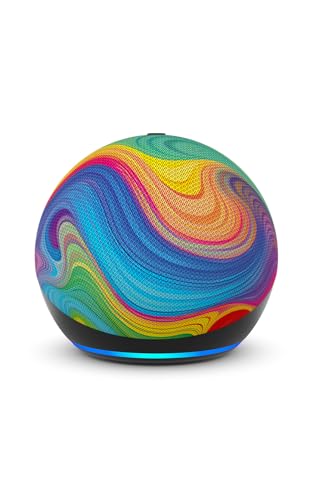
- Vibrant Rainbow Swirl fabric aesthetic brightens up kids' bedrooms
- Dedicated physical microphone mute button ensures hardware-level privacy
- Includes a generous two-year replacement guarantee against accidental breakage
Cons
- Compact driver lacks deep sub-bass response for bass-heavy music genres
- Requires continuous AC wall power with no built-in rechargeable battery
- Full audiobook and educational library requires an active Amazon Kids+ subscription
The Amazon Echo Dot Kids reimagines the compact smart speaker experience by balancing child-safe smart functionality with an audio profile tailored for bedrooms and study desks. Sporting a vibrant Rainbow Swirl fabric finish, this spherical speaker is specifically designed to fit naturally into a child's personal space while giving parents total peace of mind. It removes the visual distractions of screen-based tablets, focusing entirely on auditory engagement, independent learning, and structured daily routines.
Under the hood, the speaker leverages upgraded voice intelligence through Alexa+, empowering younger listeners to engage in interactive learning, play educational games, and co-create imaginative stories. For parents, bedtime routines become significantly less stressful thanks to the dedicated Sleep Studio, which draws on calming audio tracks from respected wellness partners including Calm and Headspace. Explicit content filters actively scrub lyrics across major streaming services, ensuring children only hear age-appropriate media.
Everyday usability is bolstered by Amazon's intuitive Parent Dashboard, which lets guardians set bedtime curfews, review audio history, and manage content access directly from their smartphones. When combined with the two-year replacement guarantee that covers accidental mishaps, this Echo Dot Kids delivers a dependable, educational, and screen-free audio hub that children genuinely enjoy using every day.
Acoustically, the Echo Dot Kids is tuned with a distinct emphasis on midrange intelligibility. The front-firing driver produces clean, distinct vocals, which is essential for spoken-word content like audiobooks, podcasts, and daily alarm interactions. Dialogue remains clear even at whisper-level volumes during quiet bedtime stories, preventing listeners from straining to follow narrative arcs.
While low-frequency bass extension is naturally limited by its ultra-compact enclosure, the speaker produces adequate lower-midrange punch to keep pop music and children's sing-alongs lively and enjoyable without distorting at moderate listening levels. Treble frequencies are smoothed out to eliminate harsh sibilance, resulting in a gentle, warm acoustic tone that is easy on young ears over extended listening sessions.
The speaker features an ergonomic spherical form factor measuring 3.94 by 3.94 by 3.53 inches and weighing a modest 0.75 pounds, allowing it to occupy minimal space on a nightstand or bookshelf. The exterior is wrapped in a durable, multi-colored woven fabric that effectively hides minor dust and smudges. Physical buttons across the top provide intuitive, tactile control for volume, action triggers, and a dedicated hardware microphone mute switch with an illuminating LED privacy indicator.
Connectivity relies on dual-band Wi-Fi for seamless cloud streaming and multi-room grouping across compatible Amazon Echo hardware, alongside standard Bluetooth support for direct playback from mobile devices. The unit is powered via an included external AC power adapter, ensuring steady and reliable performance throughout the night without the worry of battery depletion.

Pros
- Exceptional vocal intelligibility tailored for spoken-word content and podcasts
- Robust parental controls via the mobile dashboard with a dedicated mic-off privacy switch
- Automatic explicit lyric filtering across popular music streaming services
- Compact spherical footprint fits comfortably on small bedside tables
Cons
- Compact driver limits deep sub-bass response for bass-heavy music genres
- Requires an active Amazon Kids+ subscription to access the complete library of premium audiobooks
- Must stay connected to a wall outlet due to the lack of an internal battery
The newest Amazon Echo Dot Kids brings thoughtful audio curation directly into children's bedrooms and play areas. Built around a compact spherical chassis featuring the whimsical Stardust finish, this speaker bridges the gap between functional smart home hardware and child-centric entertainment. Instead of relying on screens, it encourages healthy listening habits by delivering interactive stories, guided educational challenges, and reliable morning wake-up alarms.
In everyday use, the speaker shines brightest during structured daily routines. The integrated Sleep Studio delivers soothing soundscapes, calming tracks, and bedtime narratives sourced from respected wellness services like Headspace and Calm. Parents can establish automated wind-down schedules via the Amazon Kids Parent Dashboard, effectively cutting down on bedtime negotiations while encouraging natural sleep hygiene.
Content safety remains front and center. Streaming playback through platforms like Spotify, Apple Music, and Amazon Music is automatically sanitized through active lyric filters. Children can safely discover new artists or explore ad-free podcasts from Wondery Kids without accidental exposure to inappropriate language.
Ultimately, the Echo Dot Kids is an exceptional entry point into personal audio for younger demographics. While audiophiles looking for room-rattling low end will need to look toward larger full-range drivers, this model delivers exactly what it promises: dependable vocal clarity, robust parental governance, and durable hardware backed by a two-year replacement guarantee.
Acoustically, the Echo Dot Kids is engineered with a specialized emphasis on speech intelligibility and near-field listening. Its single compact driver is tuned to boost the midrange frequencies where human speech and narrative voices reside. As a result, audiobooks from Disney or classic authors come across cleanly, without the muffled dialogue or boominess that often plagues inexpensive personal speakers.
Because the speaker measures under four inches across, physical acoustic constraints naturally limit low-end extension. Sub-bass thump is modest, prioritizing controlled, distortion-free mid-bass rather than deep subterranean punch. High frequencies remain smooth and rounded to prevent auditory fatigue during long story sessions or overnight ambient white noise playback.
Volume output is more than adequate to fill a standard child bedroom or study space without harsh breakup at moderate levels. When pushed toward its upper ceiling, onboard dynamic processing steps in to reign in peak distortion, ensuring that interactive conversations, trivia challenges, and pop songs stay pleasant and decipherable.
The Echo Dot Kids features a compact spherical silhouette measuring 3.94 inches wide by 3.53 inches tall and weighing just 0.75 pounds. Wrapped in an eye-catching Stardust motif fabric, the outer cabinet blends playfulness with modern nursery and bedroom aesthetics. A non-slip base keeps the unit stable on bedside tables, dressers, or study desks.
Physical controls on top of the dome include volume keys, an action button, and a dedicated microphone-mute switch that electronically disconnects the internal listening array for total privacy. Wireless connectivity relies on dual-band Wi-Fi for low-latency voice processing and multi-room audio streaming, alongside Bluetooth support for pairing external playback devices.
The unit operates via an included proprietary AC power adapter plugged directly into a standard 120V wall outlet, ensuring uninterrupted operation for overnight sound machines and scheduled morning alarms. Amazon also bundles a 2-year worry-free guarantee, ensuring peace of mind against typical drops and bedroom accidents.
Pros
- Exceptional vocal clarity that brings audiobooks and bedtime stories to life
- Robust parental dashboard with built-in explicit content filters and routine controls
- Compact spherical footprint fits easily on crowded nightstands and study desks
- Dedicated hardware mic-disconnect button ensures complete privacy whenever needed
Cons
- Lacks sub-bass response for bass-heavy contemporary music tracks
- Requires continuous wall power due to the absence of a built-in battery
- Full library access for premium kids content requires an ongoing subscription
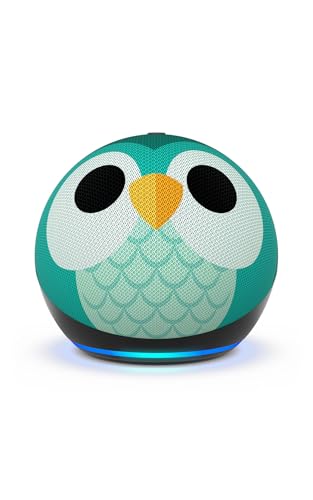
The Amazon Echo Dot Kids with the Owl design transforms modern smart audio into a kid-tailored acoustic hub. Retaining the recognizable spherical silhouette of the standard Dot platform, this edition pairs a kid-friendly visual aesthetic with proprietary software tuned specifically for young ears and curious minds. It bridges the gap between functional smart home utility and engaging, screen-free educational entertainment.
Built primarily for bedrooms, playrooms, and study areas, this speaker excels at spoken-word delivery and gentle ambient soundscapes. The curated integration with wellness platforms like Calm, Headspace, and Moshi turns chaotic bedtimes into predictable, soothing wind-down sessions. Parents gain peace of mind through an intuitive dashboard that automatically filters explicit lyrics across major streaming services while offering granular control over listening hours and active time limits.
During day-to-day playback, the speaker handles children's questions, interactive storytelling, and casual music listening with responsiveness and poise. Voice recognition proves sharp even across moderate room distances, allowing younger voices to trigger alarms, music, or educational trivia effortlessly without requiring shouted commands.
Ultimately, the Echo Dot Kids succeeds as a dedicated audio companion rather than a high-powered audiophile monitor. For families seeking an easy-to-manage, safe smart speaker that promotes daily routines and literary engagement, it stands out as one of the most cohesive solutions on the market.
From an acoustic standpoint, the Echo Dot Kids is engineered around a single front-firing dynamic driver calibrated to emphasize the vocal midrange. Dialogue in audiobooks, podcasts, and Alexa responses rings through with crisp clarity, free from boxy resonance or muffled sibilance. High frequencies remain smooth and rolled off slightly at the top end, ensuring long listening sessions remain fatigue-free during bedtime stories or afternoon study blocks.
Lower frequencies are present enough to provide warmth to acoustic instruments and pop melodies, though physical enclosure constraints prevent deep sub-bass extension. In a typical bedroom measuring 100 to 150 square feet, the speaker easily produces room-filling volume without noticeable harmonic distortion until pushed past eighty percent volume. For evening ambient noise and morning alarm duties, output levels are both pleasant and easy to dial in.
The physical construction features a sturdy spherical enclosure measuring 3.94 inches in diameter and weighing just 0.75 pounds. Wrapped in an acoustically transparent fabric bearing a detailed Owl motif, the speaker blends playful charm with resilient everyday durability. Rubberized feet on the base absorb minor driver vibrations while keeping the unit firmly anchored on smooth nightstands or bookshelves.
Physical controls sit along the top crest, including volume adjustment, action keys, and a dedicated microphone disconnect button that physically cuts power to the mic array for guaranteed privacy. Connectivity is driven by dual-band Wi-Fi and Bluetooth, supported by an external AC wall adapter for dependable, uninterrupted power delivery around the clock.
Complete Walkthrough for Using Echo Dot 3 as a Bluetooth Speaker
To operate an Echo Dot 3 as a wireless Bluetooth speaker, put the smart speaker into discovery mode and pair your host device through its native settings menu. You can activate pairing mode instantly by speaking the command “Alexa, pair” or by selecting your device inside the Amazon Alexa mobile application. Once discoverable, the Echo Dot appears in the Bluetooth list of your smartphone, tablet, or computer just like a standard wireless speaker. After completing the initial connection handshake, all system audio from your connected source plays directly through the Echo Dot driver until you disconnect.
Pairing via Voice Commands for Fast Connection
Voice pairing provides the fastest way to connect a smartphone or tablet to an Echo Dot. Stand within normal speaking range and say, “Alexa, pair” or “Alexa, Bluetooth on.” The light ring around the top perimeter will pulse blue to indicate that the internal Bluetooth radio is actively broadcasting a discovery signal. Alexa will also speak aloud to confirm that the smart speaker is actively searching for nearby mobile devices.
While the blue light pulses, open the Bluetooth settings on your mobile device. Scroll to the available devices list where the speaker displays its designated Alexa device name. Ensure your host device remains set to discoverable so both units identify each other without timing out. Tap the listed name to complete the wireless pairing process between your host device and the Echo Dot receiver.
Future reconnections do not require repeating this discovery routine once the profile is saved on your phone. You can reconnect at any time by enabling Bluetooth on your source and speaking, “Alexa, connect to my phone.” When you finish listening, simply say, “Alexa, disconnect,” to sever the stream and restore standard smart functions. This direct voice management keeps manual phone handling to an absolute minimum during daily listening routines.
Connecting Through the Amazon Alexa App Interface
Using the Amazon Alexa smartphone app is a dependable alternative when ambient noise interferes with voice recognition. Open the Alexa application on your mobile device and tap the Devices tab on the bottom navigation bar. Select the Echo and Alexa category, then tap your specific Echo Dot 3 to open its device settings menu. This menu allows you to manage hardware features directly from a visual interface without speaking verbal prompts.
Inside the device settings screen, tap the gear icon and select Bluetooth Connections. This screen lists every peripheral currently stored in memory alongside an option labeled Pair a New Device. Tapping Pair a New Device commands the Echo Dot to enter discovery mode without requiring any verbal prompt. The light ring immediately glows blue to indicate that the unit is ready for a digital handshake.
Open your mobile device’s Bluetooth menu alongside the Alexa app to complete the connection. Select the Echo Dot from the available devices list, and the mobile app will update to show the newly paired phone. This visual interface makes it easy to manage shared household speakers where several family members connect personal devices. You can also monitor active connection status directly from this screen whenever audio fails to route properly.
Pairing Windows and macOS Computers to Echo Dot 3
Connecting a personal computer transforms the Echo Dot into a dedicated desktop audio monitor for daily productivity. On Windows 10 or Windows 11, open Settings and select the Bluetooth and Devices tab. Turn on Bluetooth before instructing the Echo Dot to enter pairing mode using the voice command, “Alexa, pair.” This preparation ensures your computer scans actively while the speaker broadcasts its discovery beacon.
Click Add Device in Windows, choose Bluetooth, and select the Echo Dot once its name appears in the discovery menu. Windows will automatically configure the audio drivers and set the smart speaker as your active playback device. If audio continues playing through laptop speakers, click the sound icon on your taskbar and manually select the Echo Dot. Verify that system volume sliders are raised to moderate levels so initial test sounds register clearly.
Mac users follow a similar routine through macOS System Settings to route desktop audio wirelessly. Open System Settings from the Apple menu, select Bluetooth from the sidebar, and confirm that your wireless radio is enabled. After placing the Echo Dot into discovery mode, locate the speaker under Nearby Devices and click Connect to establish playback. Confirm that the sound output panel in System Settings lists the Echo Dot as your default output target.
Understanding Receiver Versus Transmitter Bluetooth Modes
A common source of confusion among smart speaker users is the distinction between Bluetooth receiver mode and Bluetooth transmitter mode. When you stream audio from a phone or computer to the Echo Dot, the smart speaker functions strictly as a Bluetooth receiver. In this operational role, the Echo Dot takes incoming audio data and plays the sound through its internal speaker cone. This mode represents the primary configuration for mobile playback and desktop computer monitoring.
The Echo Dot 3 can also operate as a Bluetooth transmitter when you want louder audio performance in larger rooms. In transmitter mode, the Echo Dot sends its voice responses and streaming music outward to a separate external sound system. Listeners seeking higher acoustic volume often connect their smart puck to dedicated 40-watt Bluetooth speaker options to achieve room-filling sound while keeping Alexa voice controls active. This external connection directs all internal audio playback to the secondary speaker system automatically.
Mixing up these two directional modes frequently leads to pairing errors and audio routing confusion. If the Echo Dot is currently linked to an external output speaker, it cannot simultaneously receive an incoming stream from your phone. Recognizing whether your Echo Dot is acting as an audio source or an audio receiver resolves most routing issues quickly. Always disconnect outward transmission targets before trying to stream audio into the Echo Dot hardware.
Audio Latency, Codecs, and Video Playback Expectations
Understanding the audio transmission profile of the Echo Dot 3 helps establish realistic expectations across different media types. The third-generation model uses the Subband Codec, commonly known as SBC, to decode incoming Bluetooth audio data streams. While SBC provides dependable cross-platform compatibility, it does not support advanced low-latency or ultra-high-bitrate audio protocols. Standard bitrates balance audio fidelity against signal dropouts to preserve continuous playback during everyday home use.
Because the Echo Dot prioritizes link stability over minimal transmission delay, wireless latency typically measures between 150 and 250 milliseconds. This delay is imperceptible during standard music playback or podcast listening because audio tracks do not require visual timing. However, when streaming video from web browsers, you might notice slight lip-sync discrepancies unless your media player applies automatic delay compensation. Fast-paced competitive computer games will also exhibit small audio delays that affect real-time sound cues.
General sound clarity under standard SBC decoding remains clean and balanced for everyday casual listening. Spoken-word clarity is especially strong, making audiobooks, instructional videos, and casual background playlists sound distinct and intelligible. Users who demand lossless fidelity or instant audio synchronization should consider hardwired 3.5 mm auxiliary connections rather than wireless Bluetooth paths. For desktop listening and everyday mobile streaming, the standard SBC implementation provides steady and reliable wireless performance.
Managing Reconnection, Disconnection, and Multi-Device Behavior
Managing multiple paired devices requires an understanding of how the Echo Dot handles wireless connections. The smart speaker stores several device profiles in memory so family members can reconnect without repeating initial pairing steps. However, the Echo Dot 3 does not include multipoint Bluetooth technology for simultaneous connections from two host devices. The hardware locks onto a single audio stream and refuses additional connections until that link clears.
When you enable Bluetooth on a paired smartphone, the speaker may connect automatically if its receiver channel is currently open. If another household device is already actively streaming, your phone will fail to connect until that link is severed. You can release the active connection immediately by speaking the command, “Alexa, disconnect,” or by turning off Bluetooth on the active device. Once the wireless channel clears, Alexa can accept a connection request from your primary phone.
To prevent unintended connection takeovers across a busy household, review your paired device list in the Alexa application regularly. Removing old phones or guest tablets prevents the speaker from linking to unexpected sources when you enter the room. If a specific device repeatedly grabs the connection without your permission, instruct that host device to forget the Echo Dot in its wireless menu. Clearing outdated guest profiles preserves seamless control for regular household listeners.
Troubleshooting Common Echo Dot Bluetooth Pairing Failures
Bluetooth connection problems generally arise from wireless interference, stale device memory profiles, or competing active links. If your Echo Dot fails to appear in your mobile discovery menu, verify that the light ring is actively pulsing blue. If the ring remains dark, repeat the voice command, “Alexa, pair,” to restart discovery mode before it times out. Discovery windows shut down automatically after roughly one minute to prevent unauthorized nearby connections.
Another frequent issue occurs when an Echo Dot remains connected to an idle phone located in an adjacent room. Saying, “Alexa, disconnect from all devices,” forces the internal receiver to terminate active links and clear its connection buffer. If the unit remains unresponsive, power cycling the Echo Dot by unplugging its power adapter for ten seconds resets its internal wireless cache. This brief restart clears minor firmware glitches and restores standard wireless discovery behaviors.
If you experience audio stuttering or random dropouts after connecting, physical distance and radio interference are likely causes. Bluetooth signals share the crowded 2.4 GHz frequency band with microwave appliances, Wi-Fi routers, and other consumer electronics. Keeping your transmitting phone or computer within twenty feet of the Echo Dot reduces packet loss and signal interruptions noticeably. Toggling your host device’s Bluetooth switch off and back on can also clear temporary packet transmission errors.
Hardware Acoustic Profile and Small-Room Sound Expectations
Evaluating the Echo Dot 3 as an everyday speaker requires looking closely at its internal acoustic driver construction. Amazon designed the third-generation puck with a single 1.6-inch front-firing driver housed inside a rounded, fabric-wrapped enclosure. The single driver generates enough volume to fill a home office, bedroom, or kitchen counter without harsh distortion. It offers substantial volume improvements compared to the smaller transducers found in older hardware releases.
While midrange vocals and spoken podcasts project clearly, the compact enclosure has physical limitations in low-frequency reproduction. Listeners who enjoy heavy sub-bass notes will find that deep electronic bass lines and drum kicks lack physical weight. Buyers seeking powerful low-end resonance often look at Bluetooth speakers tuned for deeper bass that incorporate passive radiators or dedicated woofers. For desk speech, acoustic songs, and video conferencing, however, the Echo Dot 3 driver delivers balanced and articulate sound.
Adjusting the software equalizer settings inside the Alexa app lets you customize frequency response for your specific room. Opening Device Settings and selecting Audio Controls reveals adjustable sliders for Bass, Midrange, and Treble frequencies. Raising the bass slightly adds warmth to low-volume desk listening, while lifting the treble enhances voice intelligibility during video calls. Moderate equalizer adjustments prevent driver overexertion and keep sound reproduction clear across all volume steps.
Practical Placement and Signal Optimization
Physical speaker placement has a direct impact on both Bluetooth signal stability and overall acoustic reproduction. Setting the Echo Dot on a solid wooden desk or shelf provides acoustic boundary reinforcement that subtly enriches lower midrange sound. Avoid placing the unit inside enclosed metal cabinets or behind dense computer monitors that can block line-of-sight radio waves. Keeping the speaker elevated slightly above surface clutter ensures the internal antennas maintain an unobstructed connection path to your phone.
Basic routine care ensures the hardware provides dependable performance over years of daily bedside or office use. Keep the top microphone array and fabric perimeter free of dust by wiping the exterior gently with a clean microfiber cloth. Never apply liquid cleaning sprays or abrasive solvents to the fabric grille, as moisture can harm internal components. Checking the rear power barrel connector occasionally confirms that it remains seated firmly, ensuring uninterrupted operation during extended listening sessions.
Using an Echo Dot 3 as a Bluetooth speaker is an easy and economical way to improve everyday audio without purchasing separate desktop gear. Whether you initiate connections through quick voice commands or manage paired hardware through the Alexa mobile app, the setup takes only moments to complete. Keeping track of active host connections and understanding single-stream receiver limitations prevents annoying pairing conflicts between multiple household devices. With thoughtful physical placement and simple equalizer adjustments, this compact smart puck serves as a dependable wireless audio hub for music, podcasts, and computer media.



Write Your Review
No reviews yet. Be the first to share your experience!