


Setting up a seamless wireless audio environment often reveals unexpected hardware limitations when attempting to bridge personal listening gear with shared room sound. Many listeners wonder how to connect bluetooth headphones to bluetooth speaker hardware directly, only to discover that standard pairing procedures fail to discover either device. Most consumer wireless speakers and personal headsets are engineered strictly as audio output endpoints rather than audio broadcasters. When you need simultaneous playback or want to reroute sound between private and open-air listening, standard pairing buttons simply cannot bridge the gap without the right intermediate audio workflow.
Bridging this hardware gap requires understanding how modern Bluetooth profiles handle transmitter and receiver roles. Whether you want to stream the same movie soundtrack to personal headphones while powering room audio, or route sound from older hardware to powerful standalone speakers, external hardware adapters and smart platform settings make the process manageable. By utilizing dedicated wireless transmitters, audio transceivers, and multi-output software features, you can achieve synchronized playback without signal dropout or frustrating handshake errors.
Pros
- Modern Bluetooth 5.3 offers reliable pairing and up to 33 feet of drop-free wireless range.
- Impressive 16-hour operational battery life with fast 2-hour USB recharging.
- Convenient on-device buttons for quick track skipping, volume tuning, and call answering.
- Simultaneous dual-device pairing prevents missed phone calls during playback.
Cons
- Integrated microphone can pick up engine and cabin noise during highway speeds.
- Basic SBC audio codec support without high-resolution aptX or LDAC codecs.
- Lightweight plastic chassis requires gentle handling when unplugging from tight aux ports.
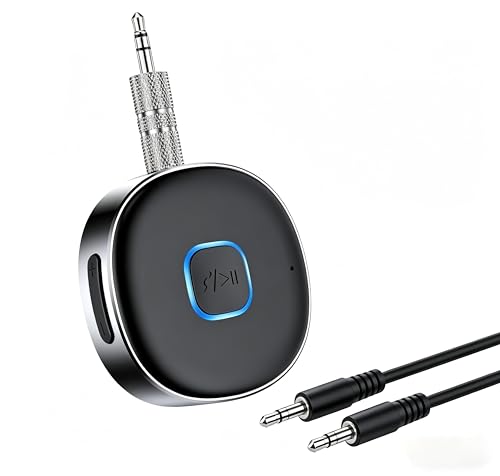
The LAICOMEIN Bluetooth 5.3 Aux Receiver is an ultra-portable audio solution tailored for motorists, audiophiles on a budget, and tech enthusiasts who want to modernize analog sound equipment. Instead of investing hundreds of dollars in a new head unit or modern active speakers, this miniature dongle bridges the gap by transforming any standard 3.5mm auxiliary input into an efficient wireless sound station. Whether you are aiming to stream playlists through a classic 2000s car stereo or add wireless convenience to a beloved set of vintage bookshelf speakers, this adapter handles the task with minimal fuss.
Setting up the device is instantaneous. Powered by an upgraded Bluetooth 5.3 chipset, it syncs rapidly with smartphones, tablets, or laptops while retaining a stable link across its 33-foot working range. A standout utility is multipoint connectivity, which permits pairing two devices simultaneously. This means you can keep navigation prompts playing from your phone while a passenger manages the playlist on their own tablet, all without annoying disconnection cycles or manual pairing resets.
In everyday driving and listening sessions, the receiver proves remarkably dependable. The multi-function button simplifies playback by letting you play, pause, answer, or reject phone calls without glancing away from the road. The internal rechargeable battery yields up to 16 hours of listening on a single charge, making it dependable for grueling daily commutes or cross-country road journeys. While audiophiles seeking high-res transmission formats like LDAC will notice standard compression limits, it remains an unbeatable, cost-effective wireless bridge for practical every day listening.
From an acoustic standpoint, the LAICOMEIN receiver transfers clean, uncolored sound that mirrors the intrinsic profile of your connected speakers or vehicle soundstage. The Bluetooth 5.3 protocol drastically minimizes signal degradation and latency, preserving full-bodied mid-bass punch and legible vocal frequencies. Instruments retain their separation well across acoustic and rock tracks, ensuring your existing car tweeters and door woofers produce lively sound without noticeable hum or background hiss under proper gain levels.
While the internal digital-to-analog conversion is calibrated for baseline consumer audio formats, it provides punchy output with decent dynamic headroom. The highs remain crisp without turning overly sibilant at elevated volumes, and the midrange sits forward enough to make audiobooks, podcasts, and spoken navigation cues intelligible. Keep in mind that call quality relies heavily on your cabin acoustics, as the built-in omnidirectional microphone works best when mounted close to the driver in quieter vehicle interiors.
Engineered for maximum portability and stealthy placement, the adapter weighs a featherlight 0.5 ounces and measures just 1.6 by 1.6 inches. Its compact squircle chassis fits flush into tight center consoles, glove boxes, or behind dense home theater setups without obstructing adjacent dials or ports. The exterior is finished in matte black plastic featuring tactile, well-spaced switches for volume adjustments and central call and playback management.
Hardware inputs and outputs center on a standard 3.5mm male-to-male auxiliary pin configuration, enabling direct plug-and-play hookup to auxiliary jacks or wired headphones. Power is supplied by a long-lasting internal lithium battery that fully charges in just 2 hours via its standard charging port. Thanks to its smart memory functionality, the unit automatically pairs to your primary device as soon as it powers on, making daily audio streaming effortless.
Pros
- Versatile 2-in-1 transmitter/receiver functionality
- Clear LCD display for easy mode and device monitoring
- TF card playback adds standalone music capability
- Long 33ft wireless range in a pocket-sized form
- Broad input/output support including RCA and AUX
Cons
- Potential minor audio latency unsuitable for strict lip-sync video watching
- Standard Bluetooth range limits in obstructed environments
- No support for advanced low-latency codecs like aptX
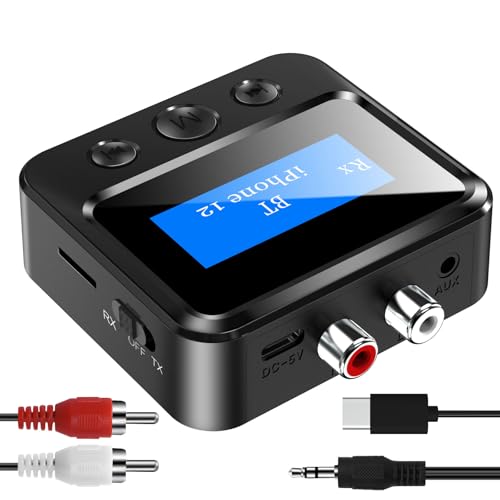
The BAISHUN Bluetooth Transmitter Receiver is a compact 2-in-1 audio adapter designed to breathe new life into non-Bluetooth devices like older TVs, home stereos, and car audio systems. It works in transmitter mode to send audio wirelessly to Bluetooth headphones or speakers, or receiver mode to pipe smartphone music to wired setups. Perfect for Americans with legacy gear who want modern wireless convenience without pricey upgrades.
In real-world use, it shines for late-night TV watching via headphones or streaming playlists to vintage receivers. Setup is straightforward: plug into RCA or AUX, pair via Bluetooth, and go. The LCD screen eliminates guesswork by displaying modes and connections clearly. It handles everyday audio tasks reliably, from PC gaming sound to airplane headphone adapters.
While not audiophile-grade, its plug-and-play nature and TF card playback make it a smart pick for casual listeners. Battery-free USB power keeps it simple. Verdict: A budget hero for wireless audio liberation, earning high marks for versatility and ease.
This adapter maintains solid audio fidelity across Bluetooth transmission, preserving mids and highs for clear dialogue in TV shows and balanced music playback. Bass response stays punchy without muddiness, thanks to efficient signal handling up to 33ft away. Stable pairing ensures dropout-free streaming in home environments.
Volume levels scale well to fill rooms via connected speakers, with no distortion at moderate settings. Soundstage feels natural for wireless, revealing details in tracks when used with quality headphones. TF card mode delivers direct digital playback, bypassing Bluetooth for pristine quality.
Ideal for home theater headphone use or stereo upgrades, it performs best in low-interference spaces, delivering reliable wireless audio without the hassle of cords.
Housed in a sleek, portable plastic chassis smaller than a credit card, this adapter prioritizes everyday carry with a clip-friendly form. The bright LCD screen provides at-a-glance info on TX/RX modes, battery status for connected devices, and volume, making it user-friendly for all ages.
Connectivity shines with dual RCA L/R inputs/outputs, 3.5mm AUX jack, and TF card slot for up to 32GB music storage. Powered via USB for constant readiness, no batteries needed. Bluetooth range hits 33ft line-of-sight, supporting headphones, speakers, and sound systems.
Build quality feels sturdy for the price, with gold-plated ports resisting corrosion. Compatible with TVs, PCs, MP3 players, and car stereos, it integrates seamlessly into US home setups.
Pros
- Eliminates audio delay when paired with aptX Low Latency compatible headphones
- Discrete A and B buttons simplify pairing two wireless devices independently
- Comes complete with all necessary optical, 3.5mm, and RCA connection cables
- Featherlight, compact build easily mounts or tucks behind thin television displays
Cons
- Requires setting TV digital optical output format to PCM instead of Dolby Digital
- Both paired headphones must support aptX Low Latency to avoid dropping down to standard codec delay
- Lacks onboard physical volume control dials
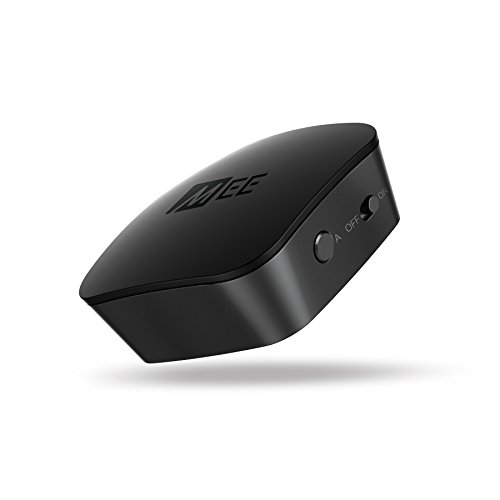
The MEE audio Connect is an ultra-compact wireless audio streamer designed to equip modern televisions, legacy stereos, and desktop computers with high-definition Bluetooth capability. Whether you live in a busy apartment, want to enjoy late-night gaming sessions while family members sleep, or simply desire freedom from tangled headphone extension cords across the living room floor, this transmitter creates a dependable wireless link between your display and personal audio gear.
A standout feature is the dual-headphone broadcast mode. Utilizing dedicated pairing buttons labeled A and B, connecting two individual pairs of Bluetooth headphones or powered speakers is straightforward and avoids frustrating connection conflicts. Both listeners enjoy synchronized audio playback at their own individual headphone volume levels, making it ideal for movie nights with a partner without waking the rest of the household.
Setup is virtually plug-and-play across a wide variety of setups. MEE audio includes all the necessary cables in the package, spanning TOSLINK digital optical, 3.5mm auxiliary, and standard RCA adapters. Users connecting through digital optical simply need to set their television sound output to stereo PCM mode rather than multi-channel Dolby Digital to ensure clear, undistorted stereo audio playback.
Ultimately, the MEE audio Connect excels by solving the frustrating audio-sync and connectivity hurdles of traditional Bluetooth adapters. With low-latency transmission, flexible power choices, and seamless multi-device pairing, it is a practical upgrade for any home media center.
Acting as an uncolored wireless audio conduit, the MEE audio Connect preserves the original frequency balance and clarity delivered by your source equipment. Dialogue in movies and vocal-heavy podcasts comes through articulate and distinct, while mid-bass warmth and low-frequency rumble remain tight and responsive when routed into high-performance headphones or subwoofers.
The centerpiece of the unit's performance is its integration of Qualcomm aptX Low Latency audio processing. Standard Bluetooth audio codecs often produce noticeable audio delay that causes frustrating mouth-to-sound mismatches on television screens. When paired with aptX Low Latency compatible headphones, delay is brought down to imperceptible levels, ensuring that gunshots, explosions, and spoken lines match on-screen movement instantaneously.
Wireless range is robust enough to cover average living rooms and home offices without dropouts. Even when broadcasting to two devices at once, the signal remains clean, exhibiting minimal background hiss and maintaining a steady stereo soundstage across everyday indoor distances.
Measuring just three inches on each side and weighing under two-tenths of a pound, the Connect sports an ultra-compact, matte black profile that sits inconspicuously on an entertainment center or adheres cleanly to the back of a wall-mounted TV. The top surface features bright, intuitive LED indicator lights and independent pairing buttons, taking the guesswork out of device synchronization.
Hardware connectivity is comprehensive on the rear panel. It houses a TOSLINK optical S/PDIF port alongside a standard 3.5mm analog input, allowing painless pairing with everything from legacy analog receivers to modern 4K smart TVs and airline entertainment jacks. A physical sliding switch lets you toggle between analog and digital inputs smoothly.
Power management is engineered for set-it-and-forget-it reliability. While an integrated rechargeable battery offers portable audio streaming for travel or gym use, the unit can also be permanently powered via its micro-USB port connected straight into your TV or wall charger, turning on and off automatically alongside your television system.

Pros
- One-button power-on with automatic Bluetooth connection
- Simultaneous pairing for two headphones or speakers
- Versatile analog and digital audio input compatibility
- Stable long-range transmission without dropouts
- Low latency tech for immersive TV experiences
Cons
- Low latency requires aptX LL compatible headphones or speakers
- Transmitter only, cannot receive Bluetooth audio
- TV must be set to digital output for optical or coaxial use
The 1Mii B06TX Bluetooth transmitter upgrades your non-smart TV to wireless audio paradise, connecting effortlessly to headphones or speakers for private viewing or home stereo bliss. It supports multiple inputs like AUX, RCA, optical, and coaxial, making it a versatile fix for any TV setup without buying a new one.
Ideal for night owls wanting undisturbed TV time or families sharing shows without cords everywhere. Late-night binge-watchers love slipping on headphones from bed, while parents pair kid headphones to keep peace during family time.
Real-world performance shines with mindless operation: plug in, press power, and it auto-pairs. Dual antennas push signal through walls for whole-home coverage, and aptX Low Latency keeps dialogue perfectly timed with video.
Verdict: This transmitter delivers big on convenience and reliability, a must-have for wireless TV freedom on a budget.
Bluetooth 5.3 and aptX HD ensure high-resolution audio transmission with crisp vocals and full bass depth straight from your TV source to speakers or headphones. No muddiness or loss in detail, perfect for dialogue-heavy dramas or music-filled scenes.
Volume control lets you dial in powerful output without touching the remote, hitting room-filling levels on connected speakers. aptX Low Latency tech syncs audio perfectly, eliminating frustrating delays in fast-paced sports or movies.
Range and stability impress with dual antennas holding steady connections across large living rooms or even to outdoor speakers, dropping out only at extreme distances.
Compact and unobtrusive design slips behind your TV with dual antennas for boosted signal, weighing next to nothing for clutter-free setups. Sturdy build handles daily family use without issues.
Lacking waterproofing, keep it indoors on a shelf or stand near your entertainment center. Input ports are clearly labeled for quick swaps between TV outputs.
USB-powered for endless runtime as long as your TV runs, no battery drains or recharge waits. Always ready for marathon viewing sessions without interruptions.

You cannot connect standard Bluetooth headphones directly to a Bluetooth speaker over a direct wireless link because both devices are engineered strictly as audio sinks. In Bluetooth terminology, an audio sink receives the Advanced Audio Distribution Profile stream, whereas an audio gateway or transmitter sends the signal. When you place both your wireless headphones and your Bluetooth speaker into pairing mode, neither device possesses the internal software or transmission chipset to broadcast audio data to the other. To achieve synchronized listening or send sound between these devices, you must introduce an intermediary audio source, a dual-link Bluetooth transmitter, or a platform-level multi-output setting.
Both consumer headphones and portable speakers rely on receiving audio from source devices like smartphones, televisions, tablets, or computers. Because neither peripheral operates as a master host capable of negotiating an outgoing digital audio pipeline, they simply ignore each other during inquiry scans. This fundamental design prevents accidental cross-pairing between peripheral accessories in crowded wireless spaces. Understanding this distinction clarifies why pressing pairing buttons repeatedly produces no connection, and it redirects your focus toward solutions that supply the required transmission hardware.
The Core Difference Between Bluetooth Transmitters and Receivers
Understanding the functional difference between transmission and reception profiles is essential for building a reliable audio bridge. A Bluetooth receiver, such as the LAICOMEIN Portable 3.5mm Aux adapter, captures wireless radio frequencies and converts them into analog electrical signals sent to a wired auxiliary jack. In contrast, a dedicated transmitter takes an analog or digital audio feed from a playback device and modulates it into a wireless broadcast. When users search for ways to connect headphones to speakers, they generally require a transmitter that broadcasts simultaneously to two distinct receiving targets.
Some specialty home theater speakers or soundbars incorporate built-in Bluetooth transmission circuits, but standard portable units lack this capability. A regular Bluetooth speaker is built exclusively to decode incoming SBC or AAC packets and feed the amplified signal to its acoustic drivers. Without a dedicated transmitter circuit, the speaker cannot route its incoming stream back into the airwaves. If your goal involves listening privately through headphones while letting others hear the room sound, the transmission task must originate upstream at the audio source.
Method 1: Using an External Dual-Link Bluetooth Transmitter
The most reliable method for sending sound to both wireless headphones and a Bluetooth speaker involves using an external dual-link transmitter. Hardware units such as the 1Mii B06TX or the MEE audio Connect plug directly into the physical audio outputs of your television, desktop computer, or media console. These adapters feature dedicated internal processing capable of maintaining two independent wireless audio streams at the same time. This hardware bypasses the limitations of your audio source by managing the Bluetooth handshakes entirely through dedicated physical buttons.
To configure this hardware setup, begin by connecting the transmitter to your audio source using a 3.5mm auxiliary cable, stereo RCA cables, or a digital optical TOSLINK connection. Power the transmitter using a stable USB power source, and place your Bluetooth headphones into their primary pairing state. Press the first pairing button on the transmitter to establish the initial wireless audio link. Once the first connection confirms through an indicator light, activate pairing mode on your Bluetooth speaker and press the transmitter’s secondary pairing button to lock in the dual-stream connection.
Adapters like the 1Mii Bluetooth 5.3 Transmitter for TV to 2 feature explicit codec indicators and visual confirmation lights that make troubleshooting straightforward. Independent pairing controls allow you to power down the speaker when private listening is required without breaking the active connection to your wireless headphones. Transmitters designed with physical volume buttons let you balance output levels directly at the hub. This physical flexibility eliminates the need to dive through software menus every time you want to switch between shared room listening and private headphone monitoring.
Method 2: Dual Audio Streaming from Modern Source Devices
If your audio originates from a modern smartphone, tablet, or personal computer, you may not require external hardware adapters to achieve dual playback. Several operating systems now feature built-in multi-device Bluetooth audio routing that broadcasts to two separate receiving endpoints simultaneously. For instance, Samsung smartphones running modern versions of One UI include a native feature known as Dual Audio. This feature allows the phone to transmit media audio to your wireless headphones and a nearby portable speaker at the exact same time.
To activate Dual Audio on a compatible mobile device, pair both your Bluetooth headphones and your speaker to the phone individually in the Bluetooth menu. Once both peripherals show as active, open your quick settings panel and tap on the Media Output button. Select the check boxes next to both connected audio devices to direct your music or video playback to both destinations. The software interface provides independent volume sliders for each output, letting you keep your headphones at a comfortable level while adjusting the room volume on outdoor Bluetooth speakers or tabletop units.
Apple devices offer a related feature called Audio Sharing, though it functions primarily with proprietary headphones sharing sound from an iPhone or iPad. For personal computers running Windows, establishing simultaneous playback across two Bluetooth devices typically requires configuring the legacy Stereo Mix recording utility or utilizing third-party audio routing software. macOS users can achieve dual playback by opening the Audio MIDI Setup utility and constructing an Aggregate Device or Multi-Output Device. These software workflows turn the computer into a dual-stream transmitter, resolving the handshake challenge without extra dongles.
While software-based multi-streaming is convenient, it heavily depends on host operating system stability and device firmware. In some configurations, background notifications or mobile calls may interrupt the dual stream unpredictably. If the processor becomes throttled, one of the two connected devices may experience intermittent buffer underruns. For stationary installations like home media centers, hardware transmitters generally deliver more consistent long-term reliability than software routing workarounds.
Method 3: Bridging Hardware with Switchable 2-in-1 Transceivers
Multifunctional audio transceivers offer another practical solution when transitioning between different listening environments. Units such as the BAISHUN Bluetooth Transmitter Receiver for TV feature a physical hardware switch that toggles the internal circuitry between transmitter mode and receiver mode. When switched to transmitter mode, the adapter plugs into a headphone jack on an older stereo receiver or speaker system and broadcasts audio to your wireless headphones. This turns an existing wired audio system into a capable wireless transmitter for private listening.
Conversely, placing the transceiver into receiver mode allows it to capture Bluetooth signals from your mobile device and output them through an auxiliary cable into a non-Bluetooth amplifier. Some audio enthusiasts connect a compact receiver like the LAICOMEIN Portable 3.5mm Aux Car Adapter directly to an analog input on their legacy home stereo. This creates an adaptable system where your source device can choose between sending audio to your wireless headphones or streaming to the newly wireless-enabled speaker system. An integrated visual LCD screen on advanced transceivers further simplifies this process by displaying nearby device names during scanning.
Using a 2-in-1 transceiver also enables creative physical passthrough configurations when dealing with television audio outputs. If your television features an analog headphone monitor output, you can plug the transmitter directly into that port to capture room sound for wireless headphones. Meanwhile, your primary soundbar or sound system can remain connected via an optical or HDMI connection, assuming the television supports concurrent audio outputs. Verifying your host display settings ensures that engaging the headphone port does not automatically mute the main optical audio feed to your speakers.
Managing Latency and Wireless Audio Codec Synchronization
Simultaneous wireless streaming introduces latency challenges that become especially noticeable when watching video content or playing games. Standard Bluetooth audio transmission over the default Subband Codec (SBC) typically incurs an audio delay between 100 and 250 milliseconds. When sound plays simultaneously through an open-air speaker and closed-back headphones, even minor latency variations create a distracting echo effect. Achieving tight audio synchronization requires compatible codec support across both the transmitter and your wireless endpoints.
Advanced transmitters like the MEE audio Connect and 1Mii B06TX incorporate Qualcomm aptX Low Latency technology to reduce wireless transmission delay down to approximately 40 milliseconds. However, both connected receiving devices must natively support the exact same low-latency codec to maintain optimal synchronization. If you pair aptX Low Latency headphones alongside standard SBC speakers engineered for deep bass, the transmitter will typically downshift both streams to standard SBC. This automatic fallback prevents buffer errors, but it increases latency across both connected audio endpoints.
Modern adapters supporting aptX Adaptive provide improved dynamic bit-rate adjustments that help balance audio fidelity against transmission latency. The 1Mii Bluetooth 5.3 Transmitter for TV to 2 includes visible codec status indicators that reveal exactly which profile is negotiated in real time. If lip-sync errors appear on your television screen while using dual streaming, check that your media player supports manual audio delay adjustments. Fine-tuning the audio track offset by a few milliseconds can quickly pull the dialogue back into perfect visual alignment.
Power Supply Cleanliness and Interference Mitigation
Power delivery plays a significant role in the overall clarity and stability of your wireless audio setup. Battery-powered portable receivers, such as the LAICOMEIN adapter offering up to 16 hours of battery life, isolate the audio path completely from alternating current line noise. Stationary transmitters that rely on continuous 5-volt USB power can pick up electrical hum if plugged into noisy USB ports on older televisions. Using an isolated wall charger rather than an unshielded television service port frequently eliminates persistent ground loop buzz.
Physical placement of your transmitter also directly influences connection stability when feeding two wireless devices at once. Positioning a dual-antenna transmitter like the 1Mii B06TX away from Wi-Fi routers and dense metal entertainment centers minimizes radio frequency congestion on the 2.4 GHz band. Transmitters with external antennas can achieve an extended operating range up to 100 feet in open areas, allowing you to walk into another room without experiencing signal drops. Maintaining an unobstructed line of sight between the transmitter and your receiving gear preserves the maximum possible transmission bandwidth.
Running dual audio streams doubles the processing burden on the transmitter’s internal radio. If the hardware is placed too close to a high-output wireless router, packet collision can cause brief audio stutters on either connected device. Ensuring that cables are neatly routed without coiling power leads around analog audio interconnects further shields the transmission chain from unwanted noise. Clean power and deliberate physical spacing create the stable environment required for sustained high-fidelity dual streaming.
Step-by-Step Diagnostic and Unpairing Reset Routine
When an external transmitter fails to pair with your wireless headphones or Bluetooth speaker, persistent device memory is usually the primary culprit. Wireless headphones and speakers are designed to automatically reconnect to the last paired smartphone or tablet within range. If your headphones latch onto your phone the moment they power on, they will refuse the pairing broadcast from the transmitter hub. To prevent this conflict, turn off Bluetooth on all nearby smartphones, tablets, and laptops before attempting to pair your equipment with the transmitter.
If a stubborn connection refuses to establish, performing a factory pairing reset on both the transmitter and your listening devices clears conflicting memory profiles. Most dedicated transmitters feature a reset sequence, often executed by holding the pairing buttons simultaneously for several seconds until the indicator flashes. Resetting your headphones and speaker to their initial discovery state forces them to broadcast fresh inquiry signals. Once reset, bring each device within three feet of the transmitter and connect them one at a time to establish a clean pairing relationship.
For users connecting transmitters to modern flat-panel televisions via digital optical TOSLINK cables, silence from the headphones often stems from digital format mismatches. Most Bluetooth transmitters cannot decode multichannel Dolby Digital or DTS audio streams delivered through an optical connection. You must open your television sound settings menu and change the digital audio output format from Auto or Bitstream to PCM. Switching the output to two-channel PCM ensures the transmitter receives an uncompressed stereo bitstream that it can instantly broadcast to your wireless gear.
Essential Hardware Considerations for Audio Adapters
Selecting the right adapter depends heavily on the physical input jacks available on your primary playback equipment. Dedicated transmitters equipped with optical, coaxial, RCA, and 3.5mm auxiliary jacks provide the greatest versatility across modern smart televisions and vintage stereo components. Having independent physical buttons for device pairing, such as the discrete A and B controls found on the MEE audio Connect, eliminates confusion when managing two separate devices. A clearly legible LCD screen or codec indicator also removes guesswork by displaying active pairing statuses and connection profiles.
Portability requirements should also influence your choice between stationary and battery-operated equipment. Compact adapters with built-in rechargeable batteries work exceptionally well for travel, car audio, or mobile listening where wall outlets are unavailable. In contrast, home theater setups benefit from permanently powered stationary hubs that turn on automatically with your entertainment center. Matching your specific input requirements, desired wireless operating range, and codec compatibility ensures that bridging your headphones and speaker delivers reliable, uninterrupted audio performance.
Resolving wireless routing challenges between personal headphones and room speakers ultimately comes down to deploying the right transmission bridge. While direct headphone-to-speaker wireless pairing is restricted by Bluetooth receiver architecture, external dual-link transmitters and operating system tools provide powerful, practical workarounds. By identifying whether your setup demands stationary home theater adapters or mobile software routing, you can enjoy flexible, multi-device listening tailored to your specific environment.





Write Your Review
No reviews yet. Be the first to share your experience!