
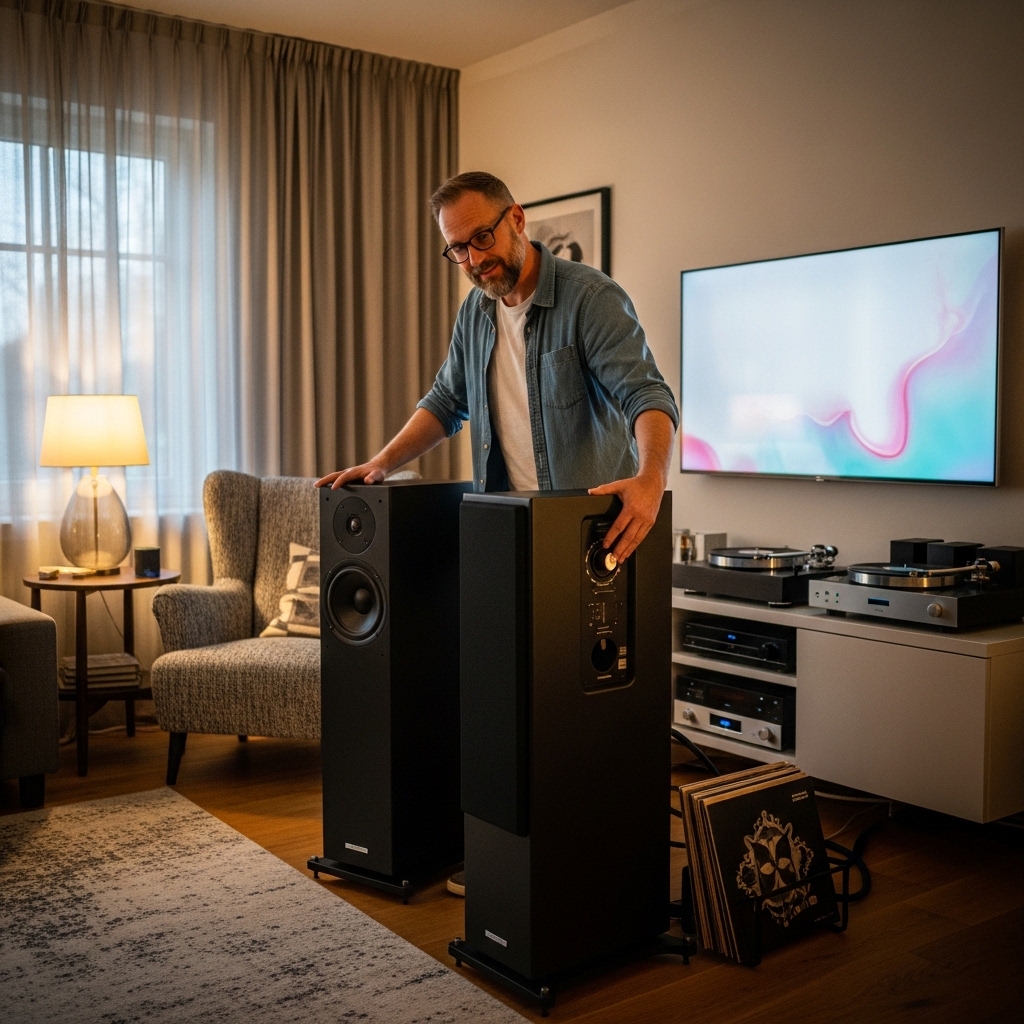

Starting out listening to music or podcasts on a small smartphone speaker often feels underwhelming when you have a capable smart speaker sitting right on your desk or counter. Most people rely on voice-activated cloud streaming for daily listening, but switching your smart speaker to an offline audio receiver gives you far more control over specialized apps, video sound, and personal media files. Learning How To Use Alexa Echo As A Bluetooth Speaker lets you redirect any audio source directly to your Echo or Alexa-enabled device without needing specific cloud skills or network streaming subscriptions. This approach turns your everyday smart hardware into a versatile wireless receiver for laptops, tablets, and mobile devices.
Unlike standalone portable units or speakers designed for deep bass, an Echo device serves a dual role by managing smart home controls while offering local wireless playback. Products like the Belkin SOUNDFORM Elite Hi-Fi Smart Speaker even combine high-fidelity acoustic design and fast wireless phone charging with Alexa voice control, giving users a versatile desktop hub. Understanding how Bluetooth handshakes work on these smart hubs makes pairing quick, minimizes audio lag, and keeps daily listening simple across all your household devices. Setting up the connection takes only a few moments whether you prefer speaking a quick voice command or tapping through the mobile settings menu.

Pros
- Devialet-tuned acoustic engineering provides deep, clean bass without rattling the enclosure.
- Integrated fast wireless charging pad saves nightstand and workspace real estate.
- Far-field microphones accurately register Alexa voice commands across the room.
- Vibration-canceling architecture keeps charging smartphones securely in place during bass-heavy playback.
Cons
- Requires constant AC wall power and lacks a built-in battery for outdoor portability.
- No auxiliary 3.5mm input or optical port for direct wired source connections.
- Cradle angle makes checking phone notifications from across the room slightly difficult.
A high-performance collaboration between Belkin and French luxury audio innovator Devialet, the SOUNDFORM Elite redefines multifunctional home audio. By integrating a fast Qi wireless charging pad directly into a high-fidelity acoustic enclosure, this smart speaker eliminates nightstand wire clutter while offering audio performance that punches far above standard bedside assistants.
For listeners tired of the muddy, hollow acoustics typical of entry-level smart speakers, this unit brings serious musical authority. Devialet's patented architecture ensures low-end impact remains clean and defined, all while physical vibration cancellation prevents your docked smartphone from buzzing or falling off the charging pad. Alexa integration is snappy, handling voice commands, multi-room playback, and smart lighting routines with ease.
In everyday use, the speaker shines brightest in bedrooms, home offices, and kitchen countertops. While audiophiles seeking wide physical stereo separation may prefer pairing multiple Alexa-compatible units, a single SOUNDFORM Elite effortlessly fills medium-to-large spaces with balanced, dynamic output. The absence of an analog aux jack means you will rely on Wi-Fi and Bluetooth streaming, but its reliable wireless performance easily covers modern streaming needs.
Ultimately, the Belkin SOUNDFORM Elite strikes an exceptional balance between lifestyle convenience and authentic audio engineering. If you want to streamline your charging station while stepping up to deep, distortion-free sound and hands-free voice control, this speaker delivers tremendous value.
At the center of the SOUNDFORM Elite's performance is Devialet's patented Speaker Active Matching (SAM) technology, paired with a dual push-push woofer configuration. This design reproduces low frequencies down to their fundamental bass depth with surgical precision. Because the woofers push in equal and opposite directions, they physically cancel out unwanted cabinet resonance, delivering tight, punchy low-end impact that avoids the boominess typical of small enclosures.
The midrange tuning is clean and upfront, allowing vocals, podcasts, and acoustic instruments to cut through the mix with realistic clarity. Treble response remains smooth and rounded at high volumes, steering clear of harsh sibilance to ensure comfortable listening over extended hours. The acoustic dispersion radiates a wide, room-filling soundstage, maintaining tonal consistency whether you are standing right next to the counter or moving across the room.
The SOUNDFORM Elite features an eye-catching, sculpted cylindrical profile wrapped in an attractive white acoustic fabric that complements modern home decor. The top of the speaker holds a dedicated wireless charging cradle lined with a soft-touch, slip-resistant surface designed to shield your smartphone from scratches. Capacitive touch buttons line the top bezel, offering immediate tactile control over volume levels, Bluetooth pairing, microphone muting, and track playback.
Under the hood, the speaker houses high-speed Wi-Fi and Bluetooth connectivity alongside a fast Qi charging coil that delivers up to 10W for compatible smartphones. Powered via an included AC power adapter, the speaker remains ready for instant voice activation and seamless continuous streaming throughout the day.
How to Route Audio and Use an Alexa Device as a Bluetooth Receiver
Using an Amazon Echo or Alexa-enabled speaker as a standard Bluetooth receiver provides a direct bridge between your handheld electronics and your home audio hardware. Once the device enters pairing mode, it accepts standard Bluetooth audio streams from phones, tablets, laptops, and smart televisions just like any wireless speaker. You do not need an active music subscription, a specific Alexa skill, or an uninterrupted internet connection to stream audio once the initial local connection is established. This flexibility allows you to stream obscure podcasts, video clips, and personal audio files that lack direct voice skill integrations.
The Core Architecture of Alexa Bluetooth Pairing and Voice Triggers
Amazon Echo devices and Alexa-compatible hardware incorporate standard Bluetooth radios that support the Advanced Audio Distribution Profile, commonly known as A2DP. In normal daily operation, the speaker pulls digital audio streams directly from cloud servers over your home Wi-Fi network, handling decoding internally. When you trigger Bluetooth mode, the internal radio switches its operating priority, acting as a dedicated sink for external audio signals sent from your phone or computer. This dual-mode design allows the hardware to toggle smoothly between internet streaming services and direct peer-to-peer device playback.
Entering pairing mode requires nothing more than a simple vocal prompt spoken directly to the speaker. Saying “Alexa, pair” or “Alexa, connect Bluetooth” immediately puts the speaker into discovery mode for nearby devices. The light ring on an Amazon Echo will typically pulse in a distinct blue pattern, indicating that the receiver is actively broadcasting its presence to local Bluetooth scanners. The speaker remains discoverable for several minutes, giving you ample time to open your source device menus and finalize the link.
Once paired, the speaker retains your device in its internal memory table for convenient automatic reconnection later on. When you walk back into the room, speaking “Alexa, connect my phone” prompts the hardware to scan and re-establish the wireless link immediately. If multiple known devices are nearby, the speaker searches sequentially through its saved pairing list until it finds an active transmitter. This automated handshake eliminates the need to repeat the discovery routine every time you want to play a quick song.
Step-by-Step Bluetooth Setup Through the Alexa Smartphone App
If you prefer visual setup or if vocal commands are inconvenient in a noisy room, the Alexa smartphone application provides full manual control. Start by opening the Alexa app on your iOS or Android mobile device and tapping the Devices tab located at the bottom of the screen. From this menu, select the Echo and Alexa icon to view every smart speaker currently registered to your Amazon account. This dashboard organizes all your household equipment so you can configure individual speakers independently.
Select the specific Echo speaker you intend to use for audio streaming to access its dedicated settings panel. Scroll down through the hardware options and tap Bluetooth Devices, which opens a management screen displaying all previously linked hardware. Selecting the Pair a New Device option instructs the speaker to broadcast its discovery beacon, matching the behavior of the vocal pairing command. A circular scanning animation will appear on your smartphone screen to confirm that the selected speaker is actively searching for transmitters.
While the app displays the search radar, open the Bluetooth settings menu on your source phone, tablet, or handheld console. Locate your Echo speaker in the list of available devices, which typically appears with the name you assigned in the Alexa ecosystem. Tap the device name to confirm the handshake, and the speaker will chime softly while Alexa confirms the connection aloud. Once connected, your source device routes all media output through the speaker until you disconnect or move out of range.
Pairing Laptops, Desktops, and Computer Audio Sources
Routing desktop or laptop sound through an Echo speaker creates an effective compact audio solution without requiring auxiliary cords. On a Windows computer, navigate to your Settings menu, select Devices or Bluetooth and Devices, and click Add Device. Make sure your Alexa speaker is already in pairing mode, then select Bluetooth from the connection prompt to scan for your speaker. Windows will detect the smart speaker within seconds and list it as ready for wireless audio pairing.
For Apple macOS devices, click the Apple menu, open System Settings, and select the Bluetooth submenu. Once your Echo speaker appears in the list of nearby hardware, click Connect to complete the digital handshake. After connecting, check your macOS Sound output menu to verify that the Echo speaker is actively selected as the primary output device rather than your internal laptop speakers. This step ensures that system notifications, browser media, and video playback route cleanly through your smart speaker.
Using a smart speaker for computer playback can occasionally introduce minor audio latency during rapid video gaming or movie playback. While music streaming remains unaffected by buffer delays, video dialogue may show a slight discrepancy if the operating system does not automatically adjust its video delay. Most modern media players on Windows and macOS handle audio sync compensation automatically, but users prioritizing zero-delay competitive gaming generally prefer wired audio configurations. For office work, video conferencing audio, and casual video viewing, the wireless connection provides a clean and clutter-free desk setup.
Connecting Bluetooth Turntables and External Media Players
Many vinyl enthusiasts now incorporate wireless record players into modern living room setups to eliminate long audio cables. When pairing a Bluetooth speaker for a turntable setup, the pairing process differs slightly because the turntable lacks a display screen. You must initiate discovery mode on both devices simultaneously and allow their automated handshakes to complete without visual menu prompts. This pairing procedure relies entirely on the internal radios finding each other across the 2.4 GHz frequency spectrum.
Place the Bluetooth turntable close to your Alexa speaker during the initial pairing sequence to ensure the strongest possible signal reception. Put the Echo speaker into discovery mode by voice or through the mobile app, and then press the dedicated pairing button on your turntable until its indicator light flashes rapidly. Within fifteen to thirty seconds, the two units will locate each other, and Alexa will announce that the audio connection is established. The flashing pairing indicator on your turntable will settle into a solid illumination once the link locks into place.
External media players such as digital audio players or standalone Bluetooth transmitters follow this exact same pairing procedure. Once paired, you can control the playback volume using the physical buttons on the top of the Echo or by issuing voice commands. If the turntable signal drops unexpectedly, power cycling the turntable while keeping the Echo active usually forces an immediate reconnection. This configuration allows you to enjoy warm analog vinyl records through modern compact smart speaker hardware with minimal wire clutter.
Managing Disconnections, Signal Drops, and Wireless Interference
Intermittent audio dropouts or unexpected disconnections often stem from radio frequency congestion in crowded living environments. Standard Echo units house both Bluetooth hardware and Wi-Fi antennas in close proximity inside a compact plastic enclosure. Because both wireless technologies frequently operate across the 2.4 GHz radio band, nearby Wi-Fi routers or household appliances can degrade signal stability. Identifying these environmental bottlenecks allows you to position your audio equipment for steady, dropout-free listening.
Positioning your transmitting phone or computer within clear line of sight of your Echo speaker significantly improves transmission reliability. Avoid placing large metal objects, thick glass dividers, or dense walls directly between the transmitter and the speaker during playback. If audio stuttering persists, switching your home Wi-Fi network over to the 5 GHz band frees up vital spectrum for clean Bluetooth streaming. Moving the speaker even a couple of feet away from your primary wireless router can also eliminate immediate radio interference.
Clearing out an overloaded pairing cache also resolves stubborn handshake failures when switching between multiple household phones. Through the Bluetooth Devices section of the Alexa application, you can systematically unpair older hardware that you no longer use. Removing obsolete pairings prevents the Echo from wasting processing cycles attempting to link with inactive devices that remain within range. A fresh pairing list ensures that the speaker connects instantly to your primary phone or laptop every time.
Playback Controls and Voice Commands During Bluetooth Streaming
Streaming over Bluetooth does not disable your smart speaker voice recognition capabilities or deactivate its built-in microphones. When you speak the wake word, the speaker temporarily attenuates the incoming Bluetooth audio stream so its microphone array can clearly isolate your voice. This capability allows you to issue volume adjustments, check the weather, or manage smart lights without interrupting your listening session. Once Alexa finishes answering your request, the background Bluetooth music volume smoothly returns to its previous level.
Basic media navigation commands pass cleanly from the Echo back to your connected phone or tablet using the Audio/Video Remote Control Profile, known as AVRCP. You can say commands like “Alexa, pause,” “Alexa, resume,” “Alexa, next,” or “Alexa, previous” to control tracks inside apps like Spotify or Apple Music. This hands-free control proves remarkably convenient when your phone is charging across the room or tucked inside a bag. You can also command specific volume increments by asking Alexa to set the volume to a particular number on its standard ten-point scale.
Handling telephone calls introduces specific privacy behavior depending on your source device operating system. In most configurations, the Echo acts strictly as an audio playback device and does not route cellular phone conversations through its external speaker. When an incoming call arrives, your phone typically pauses the music stream and routes voice audio to your handset, preserving personal call privacy automatically. Once you conclude or dismiss the call, your music stream resumes playing through the smart speaker without manual intervention.
Audio Quality, Codec Support, and Hardware Capabilities
Standard Amazon Echo hardware processes Bluetooth audio primarily through standard SBC and AAC codecs. These lossy compression protocols deliver solid dynamic range and vocal clarity that perfectly suit casual background listening, podcasts, and digital radio. However, they do not match the uncompressed bitrates provided by native Wi-Fi streaming directly through Alexa cloud skills. For most listeners using phones and laptops, AAC provides reliable audio fidelity that minimizes obvious compression artifacts.
Buyers seeking premium acoustic reproduction often look beyond standard smart speakers toward high-end integrated designs. The Belkin SOUNDFORM Elite Hi-Fi Smart Speaker illustrates how advanced acoustic engineering elevates smart audio performance. Featuring sound technology by Devialet, this speaker incorporates vibration-canceling dual woofers that generate deep bass impact while keeping the integrated wireless charging dock rock steady for smartphones. It supports fast wireless charging for Apple devices at 7.5W, Samsung devices at 9W, and Google phones at 10W while simultaneously filling a room with clear sound.
While specialized dedicated subwoofer Bluetooth speakers are tuned specifically for high-output bass in open outdoor spaces, high-fidelity indoor smart speakers focus on tonal balance and low distortion. The vibration-canceling architecture found on premium smart speakers allows substantial low-frequency resonance without displacing a charging phone or rattling tabletop items. Selecting the right speaker hardware depends entirely on whether your priority is portable outdoor sound or refined stationary home playback. Matching the driver configuration to your listening environment guarantees that your local Bluetooth streaming sounds balanced across vocal, instrumental, and bass frequencies.
Understanding Multi-Room Audio and Stereo Pairing Restrictions
One of the most frequent points of confusion among smart speaker owners involves multi-room playback over Bluetooth. In the Alexa ecosystem, multi-room audio groups rely entirely on synchronized cloud streams distributed across local Wi-Fi networks. When you route audio via Bluetooth from an external phone, the incoming signal remains strictly confined to the single receiving speaker. The Alexa software will not re-broadcast an analog-converted Bluetooth stream out to other speakers grouped in different rooms.
Stereo pairing between two identical Echo devices follows a similar functional boundary. While two Echo speakers can form a wireless stereo pair for Wi-Fi streaming, they generally do not split incoming Bluetooth audio into discrete left and right channels without noticeable latency. The internal processing overhead required to receive, decode, and retransmit a synchronized Bluetooth stream across two speakers exceeds standard Bluetooth sink design parameters. As a result, users wanting a dedicated stereo stage over Bluetooth usually pair two portable speakers engineered specifically with True Wireless Stereo linking.
If whole-home audio distribution is your primary objective, native Wi-Fi streaming via the Alexa app or supported Cast protocols remains the superior route. Reserving Bluetooth connectivity for individual room listening, video watching, or localized computer audio provides the smoothest and most dependable user experience. Recognizing these operational boundaries prevents configuration headaches and ensures realistic expectations for your smart home sound system. Keeping each audio mode dedicated to its intended task lets you take full advantage of both cloud smart features and local wireless streaming.
Everyday Usability and Power Setup for Stationary Smart Speakers
Unlike portable wireless speakers designed with rechargeable lithium batteries, Amazon Echo units and the Belkin SOUNDFORM Elite require continuous AC wall power. This stationary design means the speaker is always listening, always powered on, and instantly accessible to paired Bluetooth devices whenever you enter the room. You never have to worry about battery degradation, charging cycles, or unexpected power-offs during extended listening sessions. Leaving the speaker plugged into an outlet makes it an ever-ready playback destination for household members and guests alike.
Placement plays a decisive role in both audio projection and reliable microphone pickup. Setting your speaker on a flat, sturdy surface away from corners prevents excessive bass boominess while keeping the far-field microphones clear of acoustic reflections. For speakers featuring integrated wireless charging pads, positioning the unit on a nightstand, kitchen island, or desk surface maximizes daily convenience for both audio and device power. This dual-purpose placement keeps your smartphone fully powered while it transmits your favorite playlists across the room.
Disconnecting your phone is just as straightforward as the initial setup procedure when you need to switch audio back to your phone receiver. Simply say “Alexa, disconnect” to sever the wireless handshake instantly without turning off your phone Bluetooth radio. Mastering these quick voice triggers and input settings transforms any Alexa Echo device into an adaptable audio hub for all your home media needs. With minimal configuration, your smart speaker becomes a reliable daily audio companion that handles everything from voice queries to rich local Bluetooth music.


Write Your Review
No reviews yet. Be the first to share your experience!