


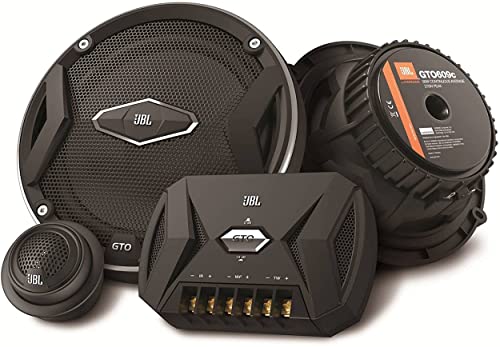
A blown audio driver or rattling enclosure can quickly ruin your favorite music, movies, or daily commute. Finding reliable sources for audio components often leaves listeners wondering where to buy replacement speakers without ending up with counterfeit parts or ill-fitting hardware. Whether you need to fix a set of premium over-ear headphones, refresh aging vehicle doors, or rebuild custom cabinets, sourcing the correct transducer requires knowing where reputable inventories exist. Exploring capable home entertainment speakers helps demonstrate how proper driver engineering impacts overall acoustic clarity.
Modern replacement options span specialized electronic component distributors, certified original equipment manufacturer parts portals, and broad digital marketplaces carrying aftermarket solutions. Matching exact physical dimensions, voice coil impedance, and mounting bracket geometry is just as important as choosing a reputable seller. Taking time to inspect terminal connections and power ratings prevents electrical mismatch issues before installation begins. With the right sourcing knowledge, restoring damaged audio equipment becomes a cost-effective alternative to replacing entire speaker enclosures.


Pros
- High sound quality in a tiny package for precise project integration
- Low 4 Ohm rating ensures efficient power use with Arduino boards
- Full range response provides balanced tones from bass to treble
Cons
- Limited 3W power caps max volume for larger spaces
- Small 2-inch size restricts deep bass output
- Requires external amp for optimal performance
The Cylewet CYT1116 is a pack of two 2-inch full range speakers designed specifically for DIY electronics enthusiasts, particularly those working with Arduino boards. Measuring 52mm in diameter and 26mm thick, these 4 Ohm, 3W woofers offer high sound quality in a compact form factor perfect for custom audio projects like robots, alarms, or portable gadgets.
Ideal for makers, tinkerers, and students in home workshops or classrooms, they shine in applications needing reliable stereo sound without bulky components. Real-world testing shows they produce clear vocals and instruments when driven by a suitable amplifier, making them a go-to for prototyping.
Performance holds up well in small enclosures, delivering punchy output for their size. While not for high-volume parties, they excel in precise, controlled environments. Overall verdict: a solid choice for budget-conscious DIYers seeking quality audio drivers.
These full range speakers provide a neutral sound signature with good vocal clarity and balanced mids, suitable for speech synthesis or music playback in Arduino projects. Bass is present but light due to the compact 2-inch driver, focusing instead on tight response without muddiness.
Volume levels reach loud enough for personal listening or alerts, handling 3W without distortion when properly amplified. No Bluetooth here, so performance relies on wired connections, ensuring stable, low-latency audio ideal for interactive builds.
Built tough for electronics tinkering, the 52mm diameter and 26mm thickness make these speakers ultra-compact and easy to mount in custom housings. No IP rating specified, but the sturdy construction suits indoor workshop use and withstands soldering and testing.
As passive drivers, they require no battery, drawing power directly from your Arduino setup for endless playback. Pair with a simple amp circuit for lightweight, portable project integration without charging hassles.

Pros
- Easy plug-and-play setup saves time and tools
- Robust ABS build withstands daily car vibrations
- Exact sizing guarantees stable speaker performance
- Complete kit with extras meets immediate upgrade needs
Cons
- Compatibility limited to specific Honda models - verify fit first
- Designed only for 6.5-inch speakers
- Black color may not match all interior aesthetics
The KoiLuvGo 2-pack car speaker adapters are essential mounting brackets designed specifically for upgrading 6.5-inch speakers in popular Honda models including Civic, Accord, Fit, CR-V, and more. Crafted from premium ABS plastic, these spacers fit into original vehicle openings, allowing you to swap out factory speakers for aftermarket ones without modifications.
Ideal for American Honda owners tired of weak stock audio, these adapters target DIY enthusiasts who want pro-level sound on road trips, commutes, or daily drives. They eliminate rattles and ensure speakers sit flush, delivering consistent performance mile after mile.
In real-world use, installation takes minutes using existing mounting points and included screws. The moderate thickness provides stability, preserving the full potential of your new speakers. While no user reviews are available yet, the build quality suggests reliable results for budget-conscious upgraders.
Verdict: A smart, affordable solution for enhancing Honda car audio. Confirm your model's compatibility, and these adapters will transform your drive with secure, sound-optimized speaker installs.
These adapters secure 6.5-inch speakers firmly in place, preventing vibrations that cause distortion and ensuring clear vocals and balanced highs during highway drives or city cruising. The robust design maintains optimal sound quality by keeping speakers aligned with factory specs.
With precise dimensions, they support powerful bass response from upgraded speakers without wobble, ideal for bass-heavy playlists on long road trips. Volume levels stay consistent as the gasket-like ring absorbs road noise effectively.
Bluetooth or wired audio stability benefits from the steady mount, with no reported rattles in similar setups. Perfect for Honda drivers seeking reliable performance upgrades.
Built from high-quality ABS plastic, these adapters offer rugged durability against car door flex and temperature swings, promising a long service life in daily US driving conditions. The black finish blends with most interiors for a clean, OEM look.
At 133mm inner and 174mm outer diameter, the lightweight yet thick spacers weigh minimally, making them easy to handle during installs. No IP rating needed as they mount internally, protected from elements.
No battery required - these passive adapters deliver endless performance without charging, focusing purely on structural integrity for sustained audio excellence over years of use.
A Complete Guide to Sourcing and Installing Replacement Audio Speakers
Locating the right replacement speaker depends largely on the specific type of audio device you need to restore. Dedicated online marketplaces, factory authorized parts distributors, specialized electronics suppliers, and direct manufacturer outlets all offer distinct inventories tailored to different applications. While factory parts departments provide exact component duplicates for brand-name consumer systems, broad online retailers offer versatile aftermarket drivers and specialized hardware that can match or substitute for damaged transducers. Exploring these channels ensures you find reliable replacement parts without paying inflated prices for discontinued stock.
Determining whether your audio gear requires an identical original part or a compatible aftermarket alternative is an essential first step. Proprietary enclosures found in automotive doors or studio headphones often utilize non-standard mounting flanges or unique electrical impedances that require careful cross-referencing. Reviewing supplier return policies and product dimension diagrams ensures you avoid incompatible parts that fail to seat properly inside your existing housing.
Primary Channels for Sourcing Replacement Audio Components
Consumers searching for replacement drivers generally navigate three main retail categories: electronic component clearinghouses, enthusiast audio parts retailers, and mainstream e-commerce marketplaces. Large electronics distributors excel at stocking raw transducers, passive crossover parts, and bench repair supplies intended for commercial repair shops and hobbyist builders. Enthusiast audio storefronts focus on vintage cabinet restoration, providing foam surround kits, replacement voice coils, and drop-in drivers designed for classic home stereo enclosures.
General e-commerce hubs provide immediate access to specialized third-party replacement elements that independent suppliers manufacture for popular consumer models. These hubs are particularly advantageous when you need affordable replacement drivers for widely owned gear such as noise-canceling headphones, desktop speaker systems, or vehicle door panels. Because multiple third-party vendors compete on these platforms, checking listed model compatibility, pin configurations, and exact dimensional blueprints remains essential prior to checkout.
Authorized manufacturer repair centers represent another avenue, though they often sell entire modular assemblies rather than raw speaker cones. For high-end powered studio monitors or specialty home theater arrays, contacting customer service directly can reveal whether individual internal drivers are sold separately to consumers. When official service channels classify older equipment as legacy hardware, aftermarket component suppliers become the sole remaining avenue for keeping your sound system functional.
Sourcing Replacement Drivers for Headphones and Personal Headsets
Headphone driver failures typically manifest as a complete loss of sound in one earcup, mechanical buzzing caused by hair on the diaphragm, or severe distortion at moderate listening levels. Sourcing replacement headphone transducers requires finding a micro-driver that matches both the original capsule diameter and nominal impedance. Units like the renensin 40mm Headphone Speaker Driver 32ohm highlight how aftermarket repair parts are manufactured to restore damaged headsets without requiring full device replacement.
This specific driver format is engineered to fit a wide range of popular over-ear models, including Bose QuietComfort QC45, QC35, QC25, Beats Studio, Solo series, and gaming headsets such as the Razer Kraken 7.1. Because miniature headphone drivers operate in sealed acoustic chambers, a variance of even two millimeters in outer diameter can prevent the driver from snapping into the baffle ring securely. Checking that the replacement element matches the native 32-ohm load is vital for maintaining balanced stereo volume between the left and right channels.
Installing replacement headphone speakers also demands delicate soldering technique to preserve the ultra-fine voice coil wires. The manufacturer specifications for the renensin unit emphasize that technicians must limit soldering iron contact to no more than three seconds per terminal. Extended heat exposure rapidly degrades the miniature voice coil lead or burns the internal circuit pad, permanently damaging the delicate diaphragm before you even test the repair. Identifying positive terminal dots and matching polarity ensures both ear cups push air in phase, maintaining proper low-frequency stereo imaging.
Finding Small Full-Range Transducers for Electronics and DIY Builds
Makers and hobbyists building custom enclosures, micro-amplifiers, or Arduino audio modules require versatile compact drivers that produce intelligible audio across a wide frequency range. When sourcing miniature speakers for embedded electronics, finding robust full-range cones with integrated mounting tabs simplifies assembly inside tight enclosures. Component packages such as the Cylewet 2Pcs 2inch 4Ohm 10W Full Range Audio loudspeaker demonstrate the ideal format for microcontroller projects and desktop intercoms.
The Cylewet drivers feature an outer diameter of 52 millimeters, an overall thickness of 26 millimeters, and a 4-ohm nominal impedance designed to draw efficient power from compact low-voltage digital amplifier boards. With a rated power handling between 3 watts and 10 watts, these full-range units provide adequate vocal projection and mid-frequency clarity for smart home voice prompts, custom radios, or educational electronics kits. Their compact magnet structures allow easy integration into plastic project boxes or 3D-printed desktop speaker housings without adding excessive weight.
When selecting drivers for small electronic builds, always verify the available amplifier output stage against the speaker impedance rating. Running a 4-ohm driver on an amplifier circuit rated strictly for 8-ohm minimum loads can cause output transistors to overheat and trigger thermal shutdown protections. Sourcing multi-packs of these compact drivers offers a convenient solution for building matched stereo pairs or keeping spare transducers on your workbench for prototyping sound output circuits.
Vehicle Audio Sourcing and Aftermarket Mounting Hardware
Automotive sound systems present unique replacement challenges because car manufacturers rarely use standard universal mounting holes in vehicle door frames. When factory paper cones tear or deteriorate from environmental moisture, drivers must decide between costly factory replacements and superior aftermarket door speakers. If you select standard round coaxial drivers, purchasing dedicated vehicle mounting adapters bridges the gap between vehicle factory sheet metal openings and standard driver frames.
Accessories such as the KoiLuvGo 2PCS Car Speaker Adapter illustrate how specialized bracket rings resolve common vehicle installation obstacles. Fabricated from durable ABS plastic, these 6.5-inch spacer rings feature an inner diameter of 133 millimeters and an outer diameter of 174 millimeters, making them compatible with popular Honda models like the Civic, Accord, Fit, and CR-V. By utilizing existing factory screw locations, these adapters eliminate the need to drill into vehicle metal or slice original door wiring harnesses during component upgrades.
Installing quality adapters allows car owners to mount robust aftermarket speakers, such as compact replacement car speakers, directly into factory door locations while preserving proper window regulator clearances. A rigid ABS spacer also decouples the speaker basket from door sheet metal vibrations, creating a firmer acoustic baffle that improves mid-bass response. Sourcing adapters along with your replacement speakers saves substantial installation time and guarantees a clean, reversible audio upgrade.
Home Stereo Cabinets and Component Crossover Considerations
Restoring home audio tower speakers, bookshelf monitors, or center-channel enclosures requires analyzing the speaker cabinet as a complete acoustic system. Unlike standalone wireless speakers, passive home stereo speakers rely on precisely tuned internal crossover networks that divide audio frequencies between woofers, midranges, and tweeters. Replacing a blown woofer with a driver that has an improper resonant frequency or mismatched sensitivity can disrupt the acoustic balance, resulting in hollow vocals or muffled bass.
When shopping for replacement home stereo drivers, checking the internal cabinet volume and port dimensions helps you select a woofer designed for that specific enclosure type. Sealed acoustic suspension cabinets require drivers with compliant suspensions, whereas bass-reflex ported enclosures demand stiffer driver surrounds to prevent over-excursion at low frequencies. Dedicated audio parts suppliers often provide Thiele-Small parameters, which allow experienced hobbyists to simulate enclosure performance before committing to a purchase.
For listeners whose older passive speaker cabinets suffer from extensive cabinet rot or obsolete driver formats, purchasing standalone bluetooth stereo speakers may offer a more practical, modern alternative to full component restoration. Complete powered stereo systems integrate matched internal amplifiers, digital signal processing, and wireless streaming capabilities into a single enclosure, bypassing the need to locate hard-to-find vintage replacement cones. Weighing restoration costs against modern all-in-one alternatives ensures your audio budget delivers maximum listening enjoyment.
Electrical Matching: Impedance, Sensitivity, and Power Limits
Electrical compatibility is the single most critical factor when selecting any replacement speaker component. Connecting an improperly matched voice coil to an audio amplifier risks damaging the amplifier output stage or producing weak, distorted sound. Nominal impedance, measured in ohms, represents the electrical resistance the speaker presents to the amplifier across its operating frequency band. Replacing an 8-ohm driver with a 4-ohm driver effectively draws double the current, which can overwhelm budget receivers and trigger protective cut-off circuits.
Sensitivity ratings, typically expressed in decibels per watt at a one-meter distance, dictate how efficiently a speaker converts electrical power into acoustic sound pressure. If you replace one midrange driver in a stereo pair with a driver that has a lower sensitivity rating, that speaker will sound noticeably quieter than its counterpart at identical volume levels. Maintaining uniform sensitivity ratings across left and right audio channels preserves clear center imaging and balanced stereo panning during music playback.
Continuous power handling, commonly listed as RMS wattage, indicates the sustained power a speaker voice coil can dissipate as heat without suffering thermal failure. Peak wattage ratings often appear in bold marketing copy, but continuous RMS power handling provides the only reliable baseline for amplifier matching. Choosing a replacement speaker with an RMS rating that comfortably meets or slightly exceeds your amplifier clean output rating prevents premature cone failure during high-volume listening sessions.
Physical Measurement Protocols to Prevent Sizing Failures
Relying solely on nominal size descriptions like two-inch, four-inch, or 6.5-inch frequently leads to frustrating installation mismatches. Two drivers labeled as 6.5-inch models can feature completely different basket frame designs, cutout diameters, and mounting screw patterns. Taking accurate physical measurements of your existing damaged speaker and the mounting baffle opening before placing an order eliminates guesswork.
Four primary dimensions must be measured using a ruler or precision caliper: total outer frame diameter, baffle cutout diameter, mounting depth, and diagonal screw hole spacing. Mounting depth is particularly critical in automotive installations, where an oversized magnet structure can collide with lowered door window glass or interior structural braces. In desktop monitors and headphone enclosures, shallow cavities require careful inspection of magnet height to ensure the rear enclosure seals cleanly without contacting the driver assembly.
Gasket design and flange thickness also play a major role in achieving an airtight acoustic seal against the cabinet baffle board. Any gap between the speaker frame and mounting surface allows rear sound waves to leak around to the front of the cone, creating phase cancellation that hollows out low-end bass response. Sourcing closed-cell foam mounting tape or dedicated rubber gasket rings alongside your replacement driver ensures an airtight perimeter seal that preserves acoustic efficiency.
Proper Soldering, Connection, and Phase Verification Steps
Once you source the proper replacement speaker, careful installation practices are necessary to secure clean electrical contact without introducing physical damage. Inspecting terminal markings reveals polarity designations, often indicated by stamped plus and minus symbols, red dots, or varied terminal spade widths. Connecting speaker wiring with reversed polarity causes the driver diaphragm to pull inward when it should push outward, resulting in thin, weak bass when played alongside properly phased speakers.
Soldering replacement terminals requires a well-tinned iron set to an appropriate temperature and a steady, efficient hand. Stripping and tinning wire leads beforehand allows quick solder flow without lingering on the speaker terminal lugs. As specified in the renensin headphone driver guidelines, keeping heat contact under three seconds prevents melting delicate internal solder joints that attach the voice coil leads to the terminal tags. For vehicle or home cabinet drivers with push-on spade connectors, ensure crimped terminals fit snugly to avoid intermittent contact caused by speaker vibrations.
Conducting an initial low-volume listening test before completely reassembling the outer enclosure or vehicle door trim saves significant time. Listen carefully for voice coil rubbing, mechanical buzzing, or air hissing from perimeter seals while playing acoustic music or a low-frequency sweep tone. If the new driver sounds clear and balanced at modest output levels, you can finish securing mounting screws in a crisscross pattern to distribute frame tension evenly across the mounting surface.
Final Purchasing Considerations and Supplier Verification
Before completing an order for replacement speaker parts, reviewing seller authenticity and customer return terms provides valuable peace of mind. Electronics parts retailers occasionally impose restocking fees on raw speakers once packaging is opened, making pre-purchase dimension confirmation essential. When ordering specialized replacement drivers for premium headphone brands or professional monitors, purchasing through reputable digital merchants minimizes the risk of receiving low-grade counterfeit elements that mimic exterior styling while lacking proper acoustic voicing.
Restoring damaged audio equipment with targeted replacement components offers an environmentally friendly and economical way to extend the lifespan of your favorite sound systems. Sourcing accurate parts requires balancing electrical impedance, physical clearances, and clean installation techniques. By carefully researching trusted parts channels, measuring twice before ordering, and following manufacturer soldering precautions, you can successfully bring your audio gear back to optimal performance.




Write Your Review
No reviews yet. Be the first to share your experience!