


Connecting large audio gear to an existing compact setup often seems like a convenient way to expand home sound without purchasing entirely new electronics. Many listeners wonder whether can a shelf stereo system power floor standing speakers without running into electrical damage or severe sound degradation. While a compact micro unit can physically send audio signals through standard speaker cables, the acoustic results depend heavily on electrical resistance, power ratings, and driver designs. Exploring well-matched passive stereo speaker options reveals that physical cabinet size alone does not determine how hard an amplifier must work to deliver clean audio.
Small desktop receivers and shelf systems typically include internal amplifiers tailored for compact matching drivers with limited bass demands. Floorstanding tower enclosures, however, often feature multiple woofers, complex crossover networks, and deeper cabinets designed to reproduce substantial low-frequency energy. Evaluating whether can a shelf stereo system power floor standing speakers safely requires understanding amplifier output limits, nominal impedance ratings, and listener volume expectations. Balancing these specifications prevents unnecessary amplifier strain while ensuring everyday playback remains crisp, dynamic, and distortion-free.

Pros
- Powerful low-end extension for immersive soundstages
- Premium build with corrosion-resistant gold terminals
- Effortless compatibility with home theater and stereo systems
- Sophisticated design enhances any room decor
- Stable 4-Ohm impedance pairs well with most amps
Cons
- Requires separate external amplifier for operation
- No wireless Bluetooth connectivity
- Large tower size best for spacious rooms
The Elimavi Passive Floorstanding Stereo Speakers are tower-style powerhouses designed for serious home audio lovers. With a classic two-way system featuring a 1-inch tweeter and dual 6.5-inch woofers, they deliver uncolored sound from a sturdy MDF cabinet that doubles as stylish furniture.
Perfect for Hi-Fi enthusiasts, vinyl collectors, and home theater fans who already own an amplifier, these speakers shine in setups craving authentic stereo imaging. Connect them to your turntable for warm analog playback or your TV for cinematic surround effects without fuss.
In real-world use, expect stable output with minimal resonance, thanks to the woodgrain enclosure and gold-plated banana plugs. They handle 120W RMS effortlessly, filling living rooms with detail-rich audio.
Verdict: A smart pick for wired audio purists building a high-end system on a budget, offering pro-level performance that punches above its weight.
Bass performance stands out with dual 6.5-inch woofers providing deep, controlled low frequencies that extend smoothly, ideal for action movies and bass-heavy tracks. The MDF cabinet ensures tight response without boominess.
Vocal clarity shines through the 1-inch tweeter, rendering highs with sparkle and precision for dialogue and lead vocals. At 120W RMS and 4-ohm impedance, volume levels reach room-filling peaks without strain.
Gold-plated terminals deliver stable, low-resistance signal transfer, maintaining sound quality across long cable runs in home setups.
The sleek black woodgrain finish gives a timeless, furniture-quality look that integrates into any living room or media space. Sturdy MDF construction minimizes vibrations for clean playback.
Built tough with premium materials, these towers resist wear while the gold-plated ports protect against corrosion for lasting reliability. No IP rating needed for indoor home use.
As passive speakers, there's no battery to charge; they draw power directly from your external amp, ensuring uninterrupted sessions without recharge worries.
Pros
- Balanced frequency response from 55Hz to 20kHz for full-range audio without distortion
- Flexible inputs and sub-out for easy integration into home or studio systems
- Included remote and onboard controls for quick adjustments from anywhere in the room
- High 85 dB SPL handles loud volumes suitable for small rooms or desks
- Durable build with quality woofer and tweeter for reliable daily use
Cons
- Wired connectivity only, no Bluetooth for wireless streaming
- Requires AC power outlet, not portable for outdoor use
- Limited bass depth without adding a subwoofer for larger rooms
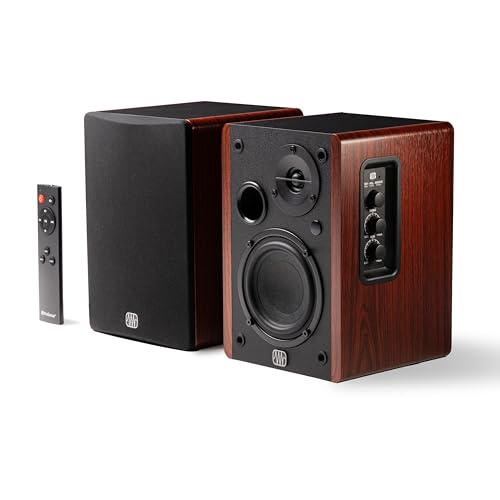
The PreSonus Eris Accent powered bookshelf speakers bring studio-quality audio to your home desk, turntable setup, or gaming station. With 50W of power split across stereo channels, these speakers feature a 4-inch woofer and half-inch silk dome tweeter, delivering a balanced sound profile from 55Hz to 20kHz. They're designed for users who want precise, customizable listening without the complexity of larger systems.
In real-world use, they excel at filling small to medium rooms with clear, immersive sound for music playback, movie watching, or casual production work. The onboard controls for volume, treble, and bass let you fine-tune the audio to match your space or preferences, while multiple inputs make switching between sources like a record player or computer effortless. The included remote adds convenience for adjustments without getting up.
Overall, these speakers stand out for their value in wired home audio setups, offering professional-grade performance for everyday enjoyment. They're a smart pick for audio beginners or enthusiasts building a dedicated listening area.
Verdict: Highly recommended for desk-based listening and turntable enthusiasts seeking reliable, tweakable sound on a budget.
The Eris Accent shines with punchy bass from its 4-inch woofer starting at 55Hz, paired with crisp highs up to 20kHz from the silk dome tweeter and a smooth 2.8kHz crossover. Vocals come through with rich mids, making them ideal for detailed music genres, podcasts, or gaming dialogue without muddiness.
At 85 dB peak SPL, they push impressive volume for bookshelf size, maintaining clarity even at higher levels. Customizable treble and bass controls allow dialing in the perfect signature for rock tracks with thump or acoustic sets with nuance. While wired inputs ensure stable, lossless audio from USB-C or RCA sources, performance thrives in controlled desk environments rather than open spaces.
Connectivity supports steady playback from turntables or PCs, with sub-out ready for deeper low-end when needed.
Sporting a sleek wood grain finish, the Eris Accent speakers have a compact bookshelf form factor that blends into home offices, studios, or living spaces without dominating the area. The left-right paired design connects easily with included speaker wire, and onboard controls keep the front panel intuitive for quick tweaks.
As AC-powered units, they offer unlimited playback time as long as plugged in, eliminating battery concerns for stationary desk or shelf use. The power cable ensures consistent performance without recharges, perfect for long sessions of music or work. Weighing in at a manageable size for two units, they're easy to position on stands or directly on surfaces.
Rugged enough for daily home use, the build prioritizes stability over portability, with a remote enhancing usability from across the room. No IP rating means keeping them indoors away from spills.

Pros
- Dual bass radiators deliver powerful low-end response
- 1-inch tweeter provides clear, detailed high frequencies
- Versatile for stereo pairs or surround sound setups
- Quick connection to receivers or stereos
- Compatible with Dolby and DTS for cinematic audio
Cons
- Single speaker requires purchase of pair for stereo imaging
- Large floorstanding design may overwhelm small rooms
- Needs powerful AV receiver to unlock full potential
The Polk Audio T50 is a single floorstanding tower speaker designed to elevate home theater and stereo systems with its robust build and balanced audio profile. Featuring a 1-inch tweeter, a 6.5-inch Dynamic Balance driver, and dual 6.5-inch bass radiators, it delivers warm, room-filling sound ideal for American households craving immersive entertainment.
Perfect for movie buffs, music lovers, and gamers, the T50 shines in setups where deep bass and clarity matter most. Connect it effortlessly to an AV receiver or stereo amp, and it transforms ordinary living rooms into cinematic spaces. Start with this tower and expand to a full 5.1 system using matching Polk components like T15 surrounds or T30 center channel.
In real-world use, it handles action films with punchy lows that rumble during explosions, while vinyl playback reveals detailed mids for a hi-fi experience. Though best with quality amplification, its straightforward setup makes it accessible for beginners building their first home theater.
Verdict: A solid choice for those seeking high-value tower speakers that punch above their weight in bass and versatility, delivering lasting value for home audio upgrades.
The T50 excels with deep bass from its dual 6.5-inch radiators, providing effortless low-end extension that enhances movie explosions and gaming impacts without muddiness. Paired with the 6.5-inch Dynamic Balance driver, it offers detailed mids for clear dialogue and instrument separation in music.
Crisp highs from the 1-inch tweeter ensure vocals cut through in busy scenes, supporting Dolby and DTS surround formats for true cinematic immersion. Volume levels scale impressively for large rooms, maintaining balance across frequencies for hours of fatigue-free listening.
As a wired tower, it thrives in stable home setups, delivering consistent performance tied to your receiver's power, making it a backbone for bold, engaging audio experiences.
The T50 boasts a sleek black tower design that blends into modern American living rooms, with a tall, stable footprint housing premium drivers and radiators for enduring build quality. Its floorstanding form ensures optimal sound dispersion without wall-mount hassles.
Rugged construction handles daily home use, though as a powered speaker, it draws from your AV receiver rather than batteries, offering unlimited playback tied to your system's power supply. No charging needed, just reliable wired performance.
At a substantial size suited for dedicated spaces, it prioritizes audio prowess over portability, making it ideal for permanent home theater installations where design meets function.

Pros
- Powerful punchy bass in a bass reflex cabinet
- Detailed, non-harsh treble from large silk dome
- High 150W power handling for dynamic volumes
- Real hi-fi crossovers for balanced frequency response
- Sturdy build with quality binding posts
Cons
- Requires a capable amplifier for full potential
- Bass depth benefits from a subwoofer addition
- Large size suits medium to large rooms best
The Dayton Audio Classic T65 is a pair of full-size floor-standing tower speakers in a handsome wood finish, standing over 39 inches tall to position the tweeter at perfect ear level. Designed for true hi-fi enthusiasts on a budget, these speakers excel in home theater systems or dedicated music listening rooms, delivering versatile performance from explosive movie soundtracks to nuanced tracks.
With dual 6.5-inch poly bass drivers in a bass reflex cabinet, the T65 produces punchy, room-filling lows that bring energy to every scene. The 1-inch silk dome tweeter adds stunning detail to highs without harshness, while real crossovers ensure seamless signal distribution for a cohesive soundstage. Gold-plated binding posts support high-quality cables, making setup straightforward for optimal audio transfer.
In real-world use, these towers handle 150W effortlessly, scaling from intimate sessions to lively gatherings. They shine for American families upgrading their AV setup without breaking the bank, offering pro-level sound at entry prices. Verdict: A smart pick for immersive home audio that punches above its weight.
Bass depth comes alive with dual 6.5-inch drivers and a large bass reflex port, generating punchy lows that fill rooms without muddiness, ideal for bass-heavy genres or cinematic rumbles. The cabinet's ample volume ensures tight, controlled response that keeps up with fast-paced content.
Vocal clarity shines through the silk dome tweeter's accurate treble reproduction, rendering lyrics and dialogue with stunning detail and smoothness. True hi-fi crossovers blend mids seamlessly, creating a wide soundstage for realistic imaging during concerts or films.
Volume levels scale impressively up to 150W handling, maintaining composure at high outputs for party vibes or intense action. Stability is rock-solid with proper wiring, delivering consistent performance across sessions.
The T65 boasts a classic wood cabinet finish that blends into any home decor, with a towering 39-inch height for stable floor placement and ear-level listening. High-quality gold-plated binding posts ensure secure, optimal connections for banana plugs or spades.
Build feels sturdy and premium, with no rattles during heavy play, though its size demands space in living rooms or dens. As passive speakers, they draw power directly from your amplifier, offering unlimited playback without battery concerns.
No charging downtime means continuous audio whenever your system is on, perfect for all-day movie marathons or weekend music binges. Weight provides solid footing, enhancing bass resonance without portability trade-offs.
Pros
- Exceptional high-frequency extension to 50kHz
- Powerful peak handling for loud, distortion-free playback
- Sturdy build enhances acoustic performance
- Versatile 3-way design suits music and movies
Cons
- Requires external amplifier or receiver
- Large floorstanding size needs ample space
- No built-in wireless connectivity
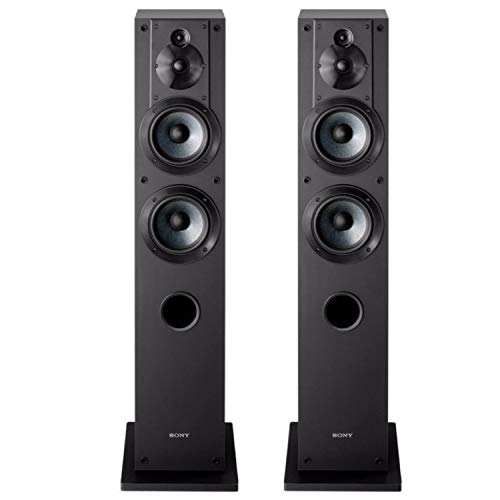
The Sony SS-CS3 is a pair of 3-way floorstanding speakers featuring four drivers, including a 1-inch polyester main tweeter and a 3/4-inch super tweeter. Designed for home audio enthusiasts, they excel in delivering high-resolution sound up to 50kHz, making them perfect for those upgrading their living room stereo or home theater system.
In real-world use, these speakers produce rich acoustics thanks to their robust cabinet and 145W peak power handling. Paired with a quality receiver, they fill medium to large rooms with clear, detailed sound ideal for music listening or movie nights.
Targeted at US buyers seeking wired hi-fi performance without portability needs, the SS-CS3 stands out for its value in immersive home setups. Overall verdict: A solid choice for balanced, high-fidelity audio that punches above its weight.
The 3-way design ensures deep bass from the woofer, clear mids, and extended highs up to 50kHz from the dual tweeters, creating a wide soundstage with excellent vocal clarity and instrument separation.
With 145W peak power and 6 Ohm impedance, these speakers handle high volumes without distortion, performing best with powerful amps for rock concerts or action films at home.
Stable wired connectivity via standard speaker terminals delivers reliable performance, outperforming budget bookshelf options in room-filling dynamics.
The strong cabinet design reduces resonances for purer sound, while the floorstanding form provides a stable base with a sleek black finish that blends into modern US living rooms.
At 6 Ohms, they match most home receivers easily, with no battery required as passive speakers draw power from your amp for unlimited playback.
Large footprint suits dedicated audio spaces but may overwhelm small apartments; rugged build promises longevity in home environments.

Pros
- Exceptional digital and analog input selection including modern HDMI ARC and dedicated sub out.
- Smooth, non-fatiguing treble reproduction thanks to dedicated silk dome tweeters.
- Warm, furniture-grade medium maple MDF cabinet that elevates room decor.
- Onboard analog tone controls allow rapid sound tailoring without menus or software.
Cons
- Four-inch woofer naturally limits extreme sub-bass reproduction without an external subwoofer.
- Active-to-passive wired link between speakers limits maximum separation distance.
- Lacks a dedicated smartphone companion app for parametric EQ adjustments.
The Pyle 80W Powered Bookshelf Speaker System provides a versatile, self-amplified stereo solution engineered for listeners who want modern digital flexibility without sacrificing classic acoustic warmth. Whether you are aiming to enhance your television audio via HDMI ARC, hook up a turntable through analog RCA jacks, or stream playlists directly from your mobile device using Bluetooth 5.3, this pair handles multiple roles effortlessly.
In practical everyday use, these speakers punch well above their compact footprint. The internal DSP digital processing and 12dB crossover slope cleanly separate the audio spectrum, keeping vocals intelligible during movie dialogues and instruments distinct in complex musical mixes. The rear bass reflex port enhances low-end impact without inducing muddy distortion at moderate to high listening levels.
For apartment dwellers, home office professionals, and media room setups, this system provides tremendous value. You do not need to purchase a separate receiver or external amplifier, making integration clean and uncluttered. While bass-heavy audio enthusiasts might want to attach an external sub to the dedicated pre-out, the native output is rich and well-balanced.
Ultimately, Pyle has crafted an intuitive, highly functional desktop and entertainment sound system. It bridges the gap between budget multimedia speakers and serious hi-fi hardware, making it a reliable and smart investment for anyone looking to revamp their everyday listening experience.
Acoustically, this system is anchored by a pairing of a 4-inch mid-bass driver and a refined silk dome tweeter. The high frequencies come across sweet and airy rather than harsh or fatiguing, making acoustic tracks and dialogue clarity stand out. The integrated 12dB crossover slope ensures seamless frequency transitions between the drivers, preventing the mid-range clutter that often plagues entry-level powered monitors.
Low-end delivery is tight and punchy, driven by the bass reflex cabinet design. While a 4-inch driver naturally faces physical limitations below 50Hz, the included dedicated subwoofer output gives you an immediate upgrade path to ground-shaking low frequencies. Thanks to independent hardware knobs for treble and bass, listeners can quickly tune the output to match their room acoustics or specific musical genres.
Crafted from dense MDF wood in an attractive medium maple aesthetic, the cabinets measure a compact 7.95 by 6.18 by 9.92 inches. This rigid wood enclosure drastically reduces cabinet coloration and unwanted vibration compared to common plastic housings. Removable fabric mesh grills protect the drivers while allowing you to choose between a minimalist furniture look or an exposed speaker aesthetic.
Hardware connectivity is where this active pair truly shines. The master speaker features HDMI ARC for seamless integration with your television remote, standard Optical and Coaxial inputs for digital decoders or game consoles, and dual RCA jacks for analog sources like record players. Powered by a standard AC wall connection, the master unit pushes clean 80W RMS amplification across both speakers via standard speaker wire connections.
Technical Realities of Driving Tower Speakers with a Shelf Stereo
A standard shelf stereo system can power floorstanding speakers in many common listening situations, but overall success depends on electrical compatibility rather than cabinet height. While speaker wire allows an immediate connection between an amplifier and speaker terminals, compact shelf stereos feature modest internal power supplies. Understanding how impedance, wattage, speaker sensitivity, and room acoustics interact helps determine whether your existing stereo can drive floorstanding towers cleanly without distortion or hardware strain.
Feasibility Versus Acoustic Performance
Connecting floorstanding speakers to a compact shelf stereo will usually produce audible sound right away. The primary difference lies in the clarity and authority of that sound at normal listening levels. While the shelf unit sends an amplified signal down the wire, a low-wattage amplifier may sound thin when controlling heavy woofer cones. Moderate background music might sound completely acceptable, but turning up the volume quickly exposes the limitations of the internal power supply.
Floorstanding tower enclosures are generally designed to produce an expansive soundstage with substantial low-end extension across a room. A modest shelf stereo often lacks the reserve electrical current necessary to articulate dynamic peaks in movie soundtracks or bass-heavy music tracks. Instead of deep, resonant bass, listeners often notice loose, muffled low frequencies and compressed vocal ranges. Evaluating the acoustic goals of your room helps clarify whether a basic mini system will satisfy your daily listening expectations.
Another practical consideration is the size of the room where the audio setup operates. Small bedrooms or home offices require far less electrical power to achieve comfortable volume levels than open-plan living rooms. If you place tower enclosures in a compact space and listen at modest levels, a shelf system may perform reliably without stress. In larger listening spaces, however, demanding higher sound pressure levels will push a micro stereo amplifier toward its electrical limits.
Understanding Impedance and Why Ohms Matter
Nominal impedance, measured in ohms, represents the electrical resistance a speaker presents to an amplifier. Most modern shelf stereo systems are engineered specifically for loads rated between 6 ohms and 8 ohms. Connecting a floorstanding model with a lower nominal impedance, such as 4 ohms, draws significantly more electrical current from the amplifier. If the shelf system lacks robust thermal design, that extra current draw can cause overheating, protective shutdowns, or permanent component failure.
Manufacturers often specify impedance requirements directly on the rear panel of the stereo receiver or in the technical manual. For instance, the Elimavi Passive Floorstanding Stereo Speakers feature a 4-ohm impedance rating, requiring an amplifier capable of handling heavy electrical current. In contrast, the Sony SS-CS3 3-Way 4-Driver Floor-Standing Speaker is designed with a 6-ohm nominal impedance, making it a safer electrical match for shelf systems rated down to 6 ohms. Checking these numbers before connecting cables prevents pushing a small internal power transformer beyond its safe operating envelope.
Impedance is not a flat, static number across all sound frequencies during audio playback. A speaker rated nominally at 6 or 8 ohms can easily dip to 3 or 4 ohms during complex, low-frequency passages. When an amplifier encounters these impedance dips, its power supply must supply sudden surges of current. Compact shelf stereos rarely feature the oversized capacitors or heavy heat sinks found in dedicated stereo components, making them vulnerable to distortion during intense musical sequences.
Amplifier Power Output: Continuous RMS Versus Peak Ratings
Power ratings printed on shelf stereo packaging can often mislead consumers seeking transparent audio specifications. Marketing materials frequently highlight peak wattage or maximum instantaneous output, which only reflects bursts lasting fractions of a second. Continuous RMS power, measured across the standard audible frequency spectrum, provides the only reliable baseline for driving large passive enclosures. Many consumer shelf stereos provide between 15 and 30 watts RMS per channel, despite advertising peak figures in the hundreds.
Floorstanding towers such as the Dayton Audio Classic T65 Floor-Standing Tower are engineered with high power handling capabilities up to 150 watts. While high power handling does not require you to supply 150 watts constantly, it demonstrates the substantial thermal capacity built into the crossover and voice coils. Feeding these larger designs with a clean 25-watt signal at moderate volume will not harm the drivers. Problems only arise when listeners crank up a small amplifier in an effort to reach concert-level volume.
When an underpowered amplifier reaches its maximum output limit, it flattens the peaks of the audio waveform into a square wave. This phenomenon, known as amplifier clipping, sends harsh harmonic distortion directly to delicate high-frequency tweeters. Clipping is responsible for destroying more tweeters than excessive clean power ever causes. Keeping the volume dial on a shelf stereo well below maximum is essential for protecting your speaker components from irreversible thermal damage.
Speaker Sensitivity and Driver Demands
Speaker sensitivity, commonly expressed in decibels at one watt of power measured from one meter away, determines how efficiently a speaker converts electrical wattage into sound. A high-sensitivity speaker requires remarkably little power to produce room-filling sound, whereas low-sensitivity models demand much more amplification. Understanding sensitivity explains why some large tower speakers actually play louder on a small shelf system than compact bookshelf units. Cabinet volume and driver efficiency play a massive role in acoustic output.
Consider tower designs like the Polk Audio T50 Home Theater and Stereo Floor speaker, which utilizes a tuned driver array alongside passive bass radiators. Because passive radiators utilize internal air pressure generated by the main active driver, they enhance low-end output without placing additional electrical load on the amplifier. This mechanical efficiency allows modest amplifiers to produce satisfying bass response without demanding enormous wattage. Selecting floorstanding speakers with efficient driver configurations makes shelf system amplification far more practical.
In contrast, floorstanding towers that incorporate multiple active woofers wired together can present a difficult mechanical and electrical load. Moving multiple 6.5-inch driver cones simultaneously requires prompt damping factor control from the connected amplifier. When a low-damping shelf amplifier attempts to control multiple heavy cones, bass notes may sound flabby and overhang rather than sharp and articulate. Matching efficient, well-balanced tower speakers with a modest receiver ensures the cleanest possible musical presentation.
Passive Towers Versus Powered Enclosures
Audio shoppers frequently confuse passive speakers, which require an external amplifier, with powered or active speakers that house their own internal electronics. Floorstanding tower speakers in standard hi-fi systems are almost universally passive, relying entirely on the shelf stereo for amplification. However, modern desktop solutions like the PreSonus Eris Accent Powered Bookshelf Speakers integrate their own 50-watt internal power system. Connecting an amplified speaker output from a shelf stereo into a powered speaker input would instantly destroy the active circuitry.
Similarly, active systems such as the Pyle Powered Bookshelf Speaker System operate independently using direct wall power and specialized line-level inputs. If your shelf stereo includes line-level auxiliary audio outputs or pre-out jacks, you can send an unamplified signal directly to powered speakers without utilizing the shelf unit’s internal amplifier. This alternative setup route bypasses the wattage constraints of the mini system altogether. It allows you to use the shelf stereo as a convenient source selector for radio or CD playback while relying on external amplification for sound.
When planning to pair genuine floorstanding towers with an audio source, confirming the speaker type remains a necessary step. Passive floorstanding designs accept raw speaker wire or banana plugs through dedicated binding posts or spring clips. Powered models, on the other hand, feature power switches, volume dials, and line-level RCA or optical connections on their rear panels. Clarifying whether your chosen speakers require amplified signal feeds or line-level feeds eliminates costly installation errors.
Speaker Wiring, Gauge Selection, and Terminal Connections
Delivering clean electrical current from a shelf stereo to distant floorstanding speakers requires appropriate speaker wire selection. Because tower speakers typically sit several feet away from audio equipment, using thin wire can introduce noticeable electrical resistance into the circuit. Standard 16 AWG or 14 AWG copper speaker wire provides an ideal balance of low resistance, flexibility, and signal integrity for runs under thirty feet. Thinner wire gauges, such as 22 AWG bundled with some micro systems, should be discarded when running floorstanding cabinets.
Connection terminals on both the amplifier and the speakers also require careful inspection during the setup process. Many tower speakers feature gold-plated five-way binding posts that accept bare wire, spade connectors, or banana plugs. The Elimavi Passive Floorstanding Stereo Speakers, for instance, utilize gold-plated banana plug terminals designed to resist oxidation and maintain secure electrical contact. In contrast, shelf stereos often use spring-loaded clips that only accept bare wire leads, meaning you may need bare wire on one end and banana plugs on the other.
Maintaining proper electrical polarity during connection is fundamental to achieving balanced stereo imaging and full bass response. Each channel features a positive terminal, usually colored red, and a negative terminal, colored black. Connecting positive to positive and negative to negative on both channels keeps speaker cones moving outward in unison during audio playback. Reversing polarity on one speaker creates acoustic phase cancellation, causing bass frequencies to vanish and muddying vocal clarity across the room.
Signs of an Overworked Shelf Stereo System
Recognizing when an amplifier is working past its comfortable operating limits helps prevent permanent hardware failure. The most immediate audible indicator is harsh, raspy distortion that increases in severity as you turn up the master volume knob. When vocals begin to sound scratchy and bass drum hits produce muffled thumps rather than clean thuds, the amplifier has exhausted its dynamic headroom. Continuing to increase volume past this threshold risks overheating the output transistors.
Physical heat is another clear warning sign that an audio component is struggling under an excessive electrical load. While all power amplifiers generate some warmth during normal playback, the chassis of a shelf stereo should never become uncomfortably hot to the touch. Placing the shelf unit in an open space with proper ventilation allows heat to dissipate naturally from internal heatsinks. Stacking other equipment directly on top of a hard-working mini system traps thermal energy and drastically accelerates component wear.
Modern micro stereos often feature internal protection circuits designed to prevent catastrophic thermal failure. If your shelf unit abruptly shuts down, clicks off, or displays an error code during loud passages, the protection circuit has engaged. This behavior usually indicates an impedance mismatch, an excessive current draw, or a microscopic strand of speaker wire shorting the rear terminals. Inspecting speaker connections and dialing back listening volume allows the system to recover safely.
Evaluating Dedicated Amplification and Long-Term Setup
While a shelf stereo can serve as an interim solution, investing in quality floorstanding speakers often justifies dedicated amplification over time. Dedicated integrated amplifiers and AV receivers feature robust power supplies, discrete output stages, and substantial current reserves engineered for low-impedance dynamic loads. Exploring dedicated audio components for clear sound reveals how proper power unlocks the full frequency potential of tower cabinets. A more capable receiver transforms restrained, thin sound into an expansive, room-filling stereo experience.
Upgrading to a standalone receiver also provides modern connectivity options that older shelf systems lack, such as optical digital audio, HDMI eARC, and dedicated subwoofer outputs. When you connect floorstanding speakers to an amplifier with sufficient headroom, the drivers operate with lower distortion and superior transient speed. Bass notes become tight and defined, while high-frequency percussion retains its natural sparkle without edge. The speakers perform as their acoustic designers intended, providing effortless dynamics even during demanding audio passages.
If you decide to keep your existing shelf stereo for daily listening, setting realistic volume boundaries remains your best practice. Keep the volume dial below the point where audible distortion starts, and verify that your speaker impedance aligns with the receiver’s specifications. High-efficiency floorstanding models with 6-ohm or 8-ohm ratings can provide years of enjoyable sound on modest hardware when managed responsibly. Monitoring operating temperatures and wiring integrity ensures that your audio journey stays enjoyable, reliable, and completely safe.


Write Your Review
No reviews yet. Be the first to share your experience!