


Pairing an amplifier with demanding loudspeakers requires a careful look at electrical impedance, continuous wattage, and real-world current delivery. Audio enthusiasts frequently ask if can marantz 5010 power kef speakers without running into distortion, thermal shutdown, or lack of dynamic punch. KEF speakers often feature intricate crossover networks and distinctive driver geometries that reveal every nuance of the connected source equipment. Matching them with capable amplification ensures balanced bass response, detailed midrange reproduction, and transparent high frequencies across diverse music tracks and home theater audio.
Before connecting speaker wire to terminal posts, listeners need to identify the exact equipment being paired. While modern audio receivers and integrated amplifiers handle complex electrical loads, older audio equipment or source-only components operate under completely different hardware constraints. Enthusiasts who invest in resolving audiophile loudspeakers expect dynamic headroom and clean transient response. Examining the specific model numbers, driver requirements, and physical amplifier specifications helps prevent unexpected hardware mismatches.

Evaluating Power Delivery and Compatibility for Marantz and KEF Systems
A direct answer to whether the hardware can power KEF speakers depends entirely on whether the system uses a modern Marantz AV receiver, an integrated stereo amplifier, or vintage equipment sharing a similar numeric designation. If the device in question is the Marantz SR5010 audio video receiver or the modern Marantz Model 50 integrated amplifier, it can reliably drive most KEF bookshelf and moderate floorstanding models in standard listening environments. If the equipment is the vintage Marantz 5010 cassette deck from the late 1970s, it cannot power passive KEF speakers because it is an audio source without an internal power amplifier. Clarifying the exact device classification establishes the baseline for safe electrical operation.
Clarifying the Marantz Hardware: Receiver, Integrated Amp, or Source
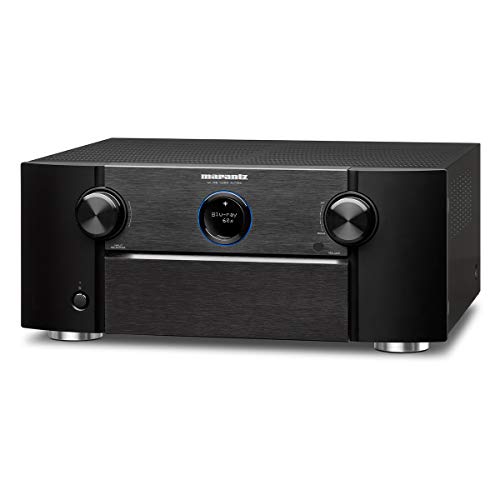
Model nomenclature in the audio industry occasionally causes confusion among hobbyists searching through secondary markets or upgrading existing stereo components. The Marantz SR5010 is a seven-channel network AV receiver designed to output clean power to multi-channel surround sound configurations or two-channel stereo systems. In contrast, the vintage Marantz Model 5010 represents a classic front-loading stereo cassette deck engineered solely to record and play magnetic tape. Because tape decks deliver line-level audio through analog RCA outputs, they lack the amplification stages and output transformers required to move passive speaker cones.
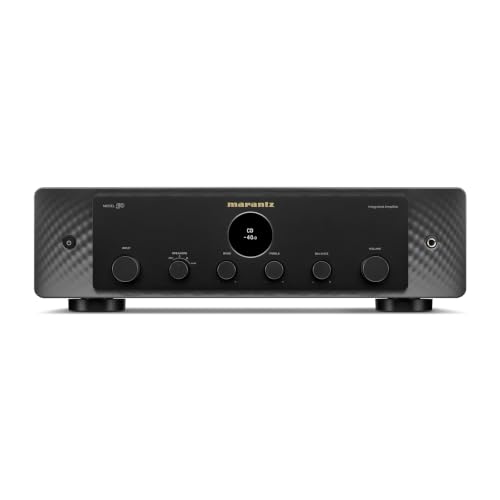
Modern buyers might also encounter the Marantz Model 50, a dedicated integrated stereo amplifier built with analog signal paths and custom discrete circuitry. Integrated amplifiers combine preamplifier source switching with robust internal power stages, allowing them to power passive bookshelf or floorstanding speakers directly. Conflating a tape deck, an AV receiver, and an integrated amplifier leads to setup errors or mismatched expectations. Checking the rear panel of the unit confirms the presence of heavy-duty binding posts designed for raw speaker wire or banana plugs rather than line-level RCA jacks alone.
Electrical Demands and Impedance Behavior of KEF Speakers
KEF speakers have earned widespread acclaim for their proprietary Uni-Q driver array, which places the tweeter directly in the acoustic center of the midrange cone. This point-source acoustic arrangement creates uniform dispersion, wide stereo imaging, and exceptional vocal clarity across the listening room. However, the sophisticated crossover networks required to blend these concentric drivers often create demanding electrical impedance curves. Even when a KEF model lists a nominal impedance of eight ohms, the actual impedance curve frequently dips into four-ohm or three-ohm territory during demanding low-frequency passages.
Popular models such as the Q150, Q350, and the LS50 Meta present nominal ratings between four and eight ohms, but their minimum impedance ratings reveal the true load on the amplifier. For instance, an impedance dip down to 3.2 ohms in the lower midrange forces the amplifier to deliver significantly more electrical current to maintain output voltage. Many compact KEF speakers also exhibit moderate sensitivity ratings between 85 decibels and 87 decibels when measured at 2.83 volts at one meter distance. Lower sensitivity means the loudspeaker requires substantially more wattage to achieve the same perceived acoustic volume as an ultra-efficient horn speaker.
Marantz Power Architecture and Real-World Current Delivery
Marantz has historically engineered audio equipment with a focus on warm tonal balance, broad dynamic range, and discrete internal circuitry. The Marantz SR5010 receiver provides discrete high-current power amplifiers across all seven channels, rated to drive low-impedance speaker loads effectively. Its internal power supply incorporates substantial filter capacitors and a robust transformer capable of handling dynamic swings without immediate voltage sag. This design allows the receiver to maintain grip over speaker woofers, producing controlled low-end frequencies and smooth treble reproduction.
In dedicated two-channel configurations, the Marantz Model 50 integrated stereo amplifier utilizes proprietary Hyper Dynamic Amplifier Modules, commonly known as HDAM. These discrete circuit boards replace off-the-shelf integrated operational amplifiers, offering faster slew rates, lower background noise, and superior transient response. The Model 50 is specifically rated to deliver seventy watts per channel into eight-ohm loads and roughly one hundred watts per channel into four-ohm loads. This linear power increase as impedance drops confirms that the internal power supply possesses the current reserves necessary for demanding loudspeaker loads.
Safe Impedance Matching, Cabling, and Thermal Management
Operating an amplifier into a four-ohm or dipping impedance load naturally generates heat within the internal output transistors. When an audio receiver drives low-impedance speakers at elevated sound levels, internal temperatures rise in direct proportion to current draw. Modern AV receivers often feature a software-based speaker impedance selector in their setup menus, offering settings for four-ohm, six-ohm, or eight-ohm operation. Many audio specialists recommend leaving receiver impedance settings at their default eight-ohm position while ensuring the chassis maintains at least three to four inches of top ventilation clearance.
Confining an amplifier to an enclosed wooden media console without airflow invites thermal protection shutdowns during sustained playback. Speaker cabling also plays a measurable role in maintaining proper electrical resistance between the amplifier terminals and the speaker crossover. Running high-purity oxygen-free copper wire in 14-gauge or 12-gauge thickness preserves signal integrity and ensures optimal power transfer without excessive resistance. Terminating cable ends with quality banana plugs or spade connectors creates a clean contact that eliminates stray wire strands from bridging adjacent terminals.
Room Dimensions, Listening Distance, and Acoustic Clipping
Acoustic demands vary dramatically depending on room volume, boundary reflections, and the physical distance between the listener and the speakers. In a compact office or desktop listening space, an amplifier only needs to deliver a fraction of a watt to produce conversational listening levels. Listeners setting up dedicated stereo speakers for music in small rooms rarely encounter power limitations because the listening position is often within a few feet of the baffle. In these nearfield conditions, moderate amplifier wattage easily yields full, articulate sound without approaching hardware limits.
Conversely, placing compact KEF bookshelf speakers in an expansive open-concept living room dramatically increases power requirements. Sound pressure levels decrease by approximately three to four decibels for every doubling of distance in a standard reflective domestic space. Pushing a moderate amplifier to fill a large space at elevated volume risks driving the output transistors into electrical clipping. Clipping flattens audio peaks into distorted square waves, introducing harsh harmonic distortion that can rapidly overheat and damage delicate KEF tweeter voice coils.
Speaker Placement, Boundary Gain, and Port Tuning
Physical placement of the speakers relative to room boundaries influences how much amplifier power is needed to produce satisfying low-frequency energy. KEF bookshelf models often feature rear-firing bass reflex ports engineered to extend low-end response down into the forty or fifty hertz range. Positioning a rear-ported cabinet too close to a solid back wall creates artificial boundary reinforcement, making the bass sound bloated and boomy. Pulling the speakers away from the back wall by at least twelve to twenty-four inches allows the rear reflex port to breathe naturally.
If room layout restrictions require placing the speaker cabinets closer to a wall, KEF often supplies two-stage foam bungs for acoustic tuning. Inserting the outer foam ring reduces port output while maintaining linear airflow, while inserting the full solid plug converts the enclosure into an acoustic suspension design. Coaxial Uni-Q drivers offer wide, even dispersion, but slight toe-in toward the central listening sweet spot sharpens stereo imaging and deepens the phantom center channel. Elevating the speakers on rigid, mass-loaded speaker stands brings the acoustic center of the driver array to seated ear level.
Expanding Power Capability with Dedicated Components
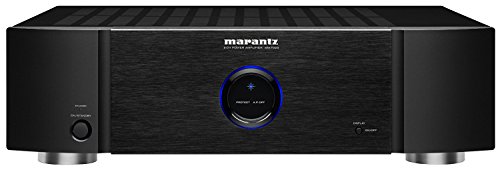
When listening preferences require higher continuous volume levels in large rooms, upgrading beyond standard receiver amplification provides tangible sonic benefits. The Marantz SR5010 features multi-channel preamplifier outputs, allowing users to route line-level audio signals to a separate two-channel or multi-channel power amplifier. Connecting a dedicated amplifier such as the Marantz MM7025 stereo power amplifier unloads the receiver from driving the demanding front left and right channels. The MM7025 delivers one hundred forty watts per channel, providing ample current reserves to control low-impedance KEF drivers effortlessly.
For audiophiles assembling a reference system, using a dedicated processor like the Marantz AV7706 pre-amplifier allows complete separation of delicate digital decoding from high-current power stages. System longevity also involves maintaining existing speaker hardware over years of continuous playback across diverse environments. While modern KEF speakers utilize durable rubber surrounds, vintage speaker drivers often require physical maintenance over time. Utilizing specialized edge repair kits, such as the Marantz 15-inch speaker foam surround edge repair kit from Springfield Speaker, allows audio restorers to recondition vintage cabinets and preserve authentic acoustic performance.
Diagnostic Troubleshooting and System Verification
System assembly should always follow a structured diagnostic routine to verify electrical safety before powering on the equipment. If an amplifier shuts down immediately and displays a flashing red standby indicator, the internal protection circuitry has detected a short circuit, an overcurrent condition, or excessive heat. The first troubleshooting step involves inspecting the speaker terminals on both the amplifier back panel and the loudspeaker binding posts. A single rogue strand of bare copper wire bridging the positive and negative terminals can trigger protection circuits instantly to prevent catastrophic transistor failure.
Verifying absolute acoustic polarity across all channels ensures the speakers produce proper stereo imaging and cohesive bass response. Connecting the positive red terminal on the Marantz amplifier to the positive red terminal on the KEF speaker, and repeating the process for the black negative connections, preserves correct phase. Source gain staging must also be evaluated when diagnosing audio problems or unexpected distortion. If using automated room calibration tools such as Audyssey on an SR series receiver, setting bookshelf speaker crossovers to eighty hertz directs deep bass to a subwoofer and relieves the amplifier from driving power-hungry sub-bass frequencies.
Practical Guidance for Long-Term System Synergy
Combining Marantz electronics with KEF loudspeakers produces an engaging, musically balanced partnership when matched with proper electrical understanding. The slightly warm, smooth character of Marantz discrete amplification complements the clinical, revealing accuracy of the KEF Uni-Q driver array. This pairing tames potential high-frequency harshness while delivering articulate vocal reproduction and spacious stereo depth across a broad range of acoustic genres. Whether enjoying vinyl records, high-resolution streaming, or immersive movie audio, the combination rewards careful setup and proper ventilation.
Before finalizing any equipment purchase or system configuration, verify the exact model numbers of your audio components and check the manufacturer specification sheets. Confirming that your Marantz unit is an active power-delivering amplifier rather than a vintage line-level source guarantees that your KEF speakers will receive the current they need. Providing generous chassis ventilation, running robust oxygen-free copper speaker cabling, and maintaining reasonable listening levels ensures reliable, dynamic, and musically satisfying performance for years to come.






Write Your Review
No reviews yet. Be the first to share your experience!