


Many home theater enthusiasts and vintage audio collectors ask whether legacy floorstanding towers can still deliver cutting-edge modern surround sound. If you are wondering, can i use atmos on klipsch chorus speakers, the answer is an enthusiastic yes, provided you understand how spatial audio decoding actually functions. Vintage horn-loaded cabinets feature massive output capability, exceptional dynamic range, and high sensitivity that rival modern high-end home audio speakers. However, Dolby Atmos relies on discrete overhead spatial metadata rather than standard stereo channel routing, which means your legacy towers cannot produce height effects completely on their own.
To unlock genuine three-dimensional spatial sound, you must integrate these legendary floorstanders into a modern multichannel layout as primary front channels. By pairing your existing cabinets with an updated audio video receiver and dedicated height channels, you can bridge classic two-channel engineering with modern object-based surround sound. Add-on elevation toppers or mounted height speakers can sit directly atop your cabinets or mount high on adjacent walls to bounce or project height cues. Exploring the right balance of crossover settings, amplification matching, and driver dispersion ensures your vintage soundstage blends seamlessly into an expansive modern listening environment.

Pros
- Exceptional Dolby Atmos immersion with height channels front and back
- Tractrix 90° x 90° horns for wide dispersion and precise imaging
- High-efficiency subwoofer for deep, controlled bass response
- Aluminum tweeters excel in high-end clarity and extension
- Compact satellites blend into home setups while packing big sound
Cons
- Requires dedicated home theater space for full 5.1.4 setup
- Wired connections may limit placement flexibility
- Satellite speakers need secure mounting for optimal height effects
The Klipsch Reference Cinema Dolby Atmos 5.1.4 System is a complete surround sound solution featuring four satellite speakers with built-in Dolby Atmos for height effects from both front and back. Paired with a powerful subwoofer, it transforms any living room into a cinematic powerhouse, delivering realistic 360° audio for movies, TV shows, and gaming.
Perfect for audio enthusiasts and home theater fans who crave immersive sound without compromise, this system shines in setups where space allows for proper speaker placement. It excels during action-packed films where overhead effects like rain or explosions feel strikingly real, pulling viewers deeper into the action.
In real-world use, the Tractrix horn-loaded technology ensures wide sound dispersion and clarity even off-axis, while the all-digital sub amp maintains tight bass control. Setup is straightforward for AV receivers supporting 5.1.4 channels, yielding pro-level performance at home.
Verdict: A top pick for anyone upgrading to Atmos-enabled surround sound, offering premium Klipsch dynamics that rival much pricier systems.
Bass performance comes from the built-in all-digital subwoofer amplifier, providing ample power and high efficiency for deep, accurate low-end that anchors explosions and soundtracks without muddiness. It handles dynamic peaks effortlessly, ensuring true-to-source fidelity across genres.
Vocal clarity and highs shine thanks to aluminum tweeters and exclusive Tractrix 90° x 90° horn technology, delivering impressive extension and detail. Dialogues cut through mixes cleanly, while cymbals and effects sparkle with precision.
Volume levels scale impressively for room-filling sound, maintaining composure at reference levels. The 360° immersive field, enhanced by Dolby Atmos height channels, creates a seamless bubble of audio ideal for movies and games.
Sleek satellite speakers feature a compact design with Tractrix horn fronts, making them easy to wall-mount or place on stands for optimal Atmos height positioning. The subwoofer boasts a robust build with efficient digital amplification for reliable, cool-running operation.
While not portable, the system's high-efficiency components minimize power draw, supporting long movie marathons without strain. No battery needed; it plugs directly into your AV setup for continuous performance.
Overall build quality reflects Klipsch's premium standards, with durable enclosures that withstand regular home use and deliver consistent acoustics over time.

Pros
- Exceptional vocal clarity from updated Tractrix horn
- Versatile Atmos/surround switching for flexible setups
- Low distortion tweeter and woofers for high-fidelity sound
- Simple on-wall installation with keyhole mounts
- Premium build with removable magnetic grille
Cons
- Requires a compatible AV receiver for power and integration
- Best suited for dedicated home theater rooms, not casual portable use
- Larger size may require planning for wall or shelf placement
The Klipsch Reference Premiere RP-500SA II Ebony speakers are a pair of versatile surround sound units designed for elevating home theater experiences. They excel as Dolby Atmos height channels or traditional rear surrounds, thanks to a simple switch that adapts performance on the fly. With furniture-grade finishes and magnetic grilles, they add a stylish touch to any living space while delivering pro-level audio.
Perfect for movie buffs and gamers seeking immersive soundscapes, these speakers shine in setups with modern AV receivers. The larger Tractrix horn and advanced LTS titanium tweeter produce pinpoint dialogue and effects, making explosions and whispers equally vivid. On-wall mounting via keyhole slots ensures optimal positioning without hassle.
In real-world use, they integrate seamlessly into Klipsch ecosystems or mixed setups, offering efficiency that punches above their size. The Cerametallic woofers handle dynamics with precision, minimizing distortion even during intense scenes. Verdict: A top pick for serious home theater builders wanting flexible, high-clarity surrounds.
Bass response from the all-new Cerametallic woofers is tight and efficient, providing impactful low-end support for action films without muddiness. Paired with the vented tweeter design, highs remain detailed and airy, ensuring every sound effect lands with precision.
Vocal clarity stands out, courtesy of the bigger 90° x 90° Tractrix horn, which focuses dialogue like a spotlight for natural, intelligible speech. Volume levels scale effortlessly, filling rooms with authoritative sound thanks to high sensitivity and low distortion across the LTS titanium diaphragm.
The switchable crossover tailors output for Atmos heights or surrounds, maintaining stability and coherence in multi-channel systems for a cohesive soundstage.
Sleek ebony finishes and premium materials give these speakers a furniture-grade look that complements modern decor. The removable magnetic grille offers a clean, discreet profile or a bold statement, while the compact form factor suits on-wall elevation without dominating the room.
Keyhole mounting simplifies installation, allowing secure placement at ideal listening angles for immersive effects. Built for durability in home environments, they handle daily use with robust construction focused on longevity.
No battery required; these powered speakers draw from your AV receiver for continuous playback during marathon movie nights or gaming sessions, eliminating recharge worries and enabling all-day performance.

Pros
- Exceptional clarity and dynamics from horn-loaded technology
- Perfect for Dolby Atmos height channels in home theaters
- Sturdy build with flexible grilles for custom looks
- High sensitivity pairs well with most AV receivers
- Complete bundle simplifies installation
Cons
- Requires an AV receiver or amp - not powered standalone
- Wired connection limits placement flexibility
- Best as part of a full surround system, not solo use
The Klipsch Reference R-41SA is a pair of high-performance elevation surround speakers designed for Dolby Atmos setups, featuring horn-loaded technology for powerful, detailed sound from compact bookshelf-sized enclosures. Ideal for home theater owners upgrading to immersive audio, they mount easily on walls via keyhole brackets to create overhead sound effects that bring movies to life.
In real-world use, these speakers excel at delivering precise height channels for rain falling from above or helicopters soaring overhead, thanks to their 1-inch Linear Travel Suspension aluminum tweeters and 4-inch spun-copper IMG woofers. The black textured wood grain vinyl finish blends seamlessly into any room decor, while the included magnetic grilles offer a clean, professional look.
Bundled with 5 pairs of banana plugs and 50 feet of 18 AWG speaker wire, setup is straightforward for connecting to your AV receiver. Whether filling out a 5.1.2 or 7.1.4 system, they punch above their size with efficient output that doesn't demand excessive power.
Verdict: A top choice for Atmos enthusiasts wanting authentic overhead immersion without breaking the bank - highly recommended for serious home cinema builds.
Horn-loaded design ensures high sensitivity and dynamic range, pushing loud volumes with low distortion for explosive movie soundtracks. The 1-inch LTS tweeter delivers sparkling highs and precise imaging, while the 4-inch woofer provides tight, impactful bass that anchors surround effects.
Vocal clarity shines in dialogues and music, with the aluminum tweeter's linear travel reducing harshness during long sessions. Expect stable performance across frequencies, making them versatile for both films and gaming where directional audio cues matter.
Paired with a quality receiver, they handle high SPL effortlessly, creating a wide soundstage that envelops your listening space in realistic Atmos layers.
Compact bookshelf form with keyhole mounts allows secure on-wall placement for optimal elevation angles, perfect for ceiling-challenging Atmos configs. The strong, flexible removable grille protects drivers while maintaining a premium black textured wood grain aesthetic that fits modern or traditional rooms.
Built tough with durable vinyl finish to resist fingerprints and wear, these passive speakers draw power directly from your AV receiver - no batteries or charging needed for endless playback during marathon movie nights.
Lightweight yet rigid enclosures minimize vibrations for cleaner sound, and the bundle's heavy-duty wire ensures reliable connections without signal loss over distance.

Pros
- Exceptional clarity and dynamics from hybrid Tractrix horn technology
- Versatile setup for both Dolby Atmos elevation and surround duties
- Durable, premium build with cerametallic woofers resisting cone breakup
- Precise on-wall mounting for perfect height channel placement
- High sensitivity for efficient pairing with most AV receivers
Cons
- Requires a compatible AV receiver for power and processing
- Keyhole mounting limits options without additional hardware
- Best results demand careful room calibration for Atmos effects
The Klipsch RP-500SA are a pair of premium Dolby Atmos-enabled surround speakers designed to elevate your home theater experience. Featuring 1-inch titanium LTS vented tweeters with hybrid Tractrix horns and 5.25-inch spun copper cerametallic woofers, they deliver the brand's signature lively sound with precise imaging and dynamic range.
Perfect for cinephiles and gamers wanting true overhead sound effects in compatible systems, these speakers shine in multi-channel setups. The switchable crossover allows flexible use as elevation modules for Atmos or traditional surrounds, making them versatile for various room sizes.
In real-world performance, they excel at creating a three-dimensional soundstage, with explosive effects raining down during action scenes and clear dialogue anchoring the mix. While they need an AV receiver to thrive, their efficiency ensures compatibility with everyday amps.
Verdict: A top choice for immersive home audio, offering pro-level detail and impact that transforms ordinary viewing into blockbuster events.
Expect vibrant, detailed highs from the titanium tweeters paired with Tractrix horns, providing wide dispersion and low distortion for crystal-clear vocals and sparkling effects. The cerametallic woofers deliver tight, articulate bass that punches without boominess, ideal for explosive soundtracks.
Volume levels scale effortlessly up to 75-watt handling, filling medium rooms with authority. In Dolby Atmos mode, the switchable crossover ensures seamless integration, placing sounds precisely above the listener for rain, helicopters, or debris in movies.
Performance stability comes from the efficient design, maintaining composure at high volumes without fatigue, though optimal results require a quality receiver for processing and power.
Sleek ebony finish with premium scratch-resistant coating ensures durability in home environments, resisting fingerprints and wear for a high-end look that complements any setup.
Compact design with keyhole mounts allows simple on-wall installation at ear-height or ceiling level, optimizing Atmos elevation without stands. Weighing in at a manageable size for pairs, they blend discreetly yet command presence.
As passive speakers, there's no onboard battery; they draw power from your AV receiver, offering unlimited playback tied to your system's capabilities and eliminating recharge worries for marathon sessions.
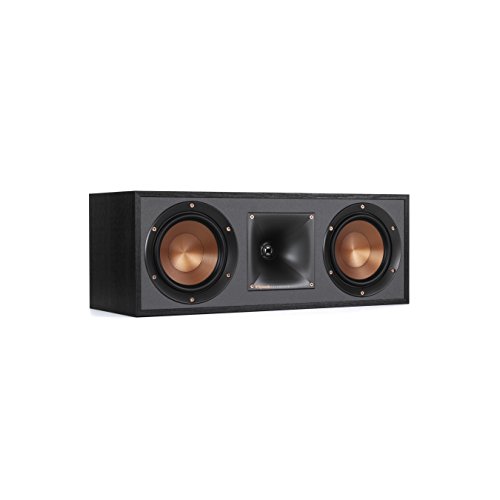
Pros
- Exceptional vocal clarity for dialogue-heavy films
- High sensitivity pairs easily with most AV receivers
- Robust 400W power handling withstands intense volumes
- Horn-loaded tweeter ensures wide sweet spot
- Spun-copper woofers provide detailed midrange punch
Cons
- Bass rolls off below 89Hz, benefits from subwoofer pairing
- Requires dedicated AV receiver for optimal performance
- Larger size demands dedicated center channel space

Pros
- Exceptional detail and power from Tractrix horn and LTS tweeter
- Rigid IMG woofers provide punchy bass without distortion
- High efficiency excels in home theater surround setups
- Durable, stylish design with scratch-resistant finish
Cons
- Requires an AV receiver or amp for power, not standalone
- Focused on surrounds, best paired with front towers for full system
- Limited deep bass as dedicated Atmos height channels
The Klipsch R-41SA is a pair of powerful Dolby Atmos-enabled surround speakers designed to transform your home theater. Mounted above or behind your listening position, they create immersive sound from all directions, including overhead effects that make movies and music feel alive.
Ideal for audio enthusiasts building a high-end setup, these speakers shine when added to existing monitor or tower fronts. Their Tractrix horn and LTS tweeter deliver the clarity and dynamics of live performances, while the IMG woofer handles lows with precision. In real-world use, they excel in spacious living rooms, pulling you into action scenes or orchestral swells.
With a contemporary black finish and magnetic grilles, they integrate seamlessly into modern decor. Though they demand a capable AV receiver, the payoff is a hemisphere of detailed, emotional sound that rivals pricier systems.
Verdict: A top pick for upgrading to Atmos on a budget, offering pro-level performance for cinematic nights at home.
Powered by the 90x90 Tractrix horn, the R-41SA speakers produce clean, natural sound with outstanding detail across highs and mids. The LTS aluminum tweeter with Kapton suspension ensures minimal distortion, making vocals crystal clear and instruments vivid even at high volumes.
The spun copper IMG woofers deliver impressive low-frequency response for surrounds, providing punchy bass reinforcement without cone breakup. With 50W continuous and 100W peak handling, they maintain composure in dynamic home theater scenes, filling rooms with immersive Dolby Atmos height effects.
Paired with a quality receiver, expect stable, wired performance that outperforms basic surrounds in clarity and power, perfect for explosive movie soundtracks and detailed music playback.
These speakers boast a sleek, contemporary appearance with exposed fasteners and low-profile magnetic grilles for a polished look. The MDF cabinets feature scratch-resistant textured wood grain vinyl, ensuring durability and seamless integration into any living room decor.
Reinforced construction minimizes vibration for pure sonic accuracy. As passive home speakers, they rely on your AV receiver for power, with no onboard battery, allowing continuous operation during long movie marathons without recharging worries.
Compact and wall-mountable, they weigh in lightly for easy installation, prioritizing rugged build quality over portability for reliable long-term home use.

Pros
- Effortless addition of Atmos elevation without new mains
- Exceptional clarity and dynamics from Klipsch horn technology
- Sturdy build quality for long-term home use
- Wide compatibility with popular AV receivers
- Compact design fits most speaker tops
Cons
- Requires separate amplifier and receiver for operation
- Mounting may need secure placement on uneven speaker tops
- Limited to elevation role, not standalone use
The Klipsch RP-140SA is a Dolby Atmos-enabled elevation speaker designed to elevate your home theater experience by adding height channels to existing floorstanding or bookshelf speakers. It mounts directly on top, bouncing sound off the ceiling for realistic overhead effects like rain, helicopters, or explosions in movies.
Perfect for audio enthusiasts with a solid 5.1 or 7.1 setup looking to upgrade to Dolby Atmos without buying a complete new system. It pairs seamlessly with Klipsch Reference Premiere towers or bookshelves, delivering the brand's signature lively, detailed sound.
In real-world use, it shines in medium to large rooms, creating a true 3D soundstage that pulls viewers into the action. Setup is straightforward with included hardware, though precise aiming toward the listening position maximizes immersion.
Verdict: A smart, cost-effective way to unlock Atmos potential, earning high marks for performance and value in home cinema builds.
Expect punchy bass response and sparkling highs thanks to the 1-inch titanium LTS tweeter with Tractrix horn, paired with a 4-inch Cerametallic woofer. Vocals and effects remain crystal clear even at reference volumes, with minimal distortion.
Volume levels scale effortlessly to fill rooms up to 300 square feet, while the high 89.5 dB sensitivity means it thrives on modest receiver power. Ideal for action films where height effects add depth without overpowering mains.
Performance stability is rock-solid in wired setups, delivering consistent Atmos precision across content from streaming services to Blu-ray.
Sleek black cabinet with magnetic steel grille offers a premium, unobtrusive look that blends into any home theater. At 7.5 pounds each, it's lightweight yet rigid with internal bracing to reduce vibrations.
Compact dimensions (5.9 x 9.9 x 5.3 inches) make it easy to position on speaker tops, with threaded inserts for wall or stand mounting if preferred. No IP rating, but built for indoor durability with quality MDF construction.
As a passive speaker, it draws no battery power, relying on your AV receiver for endless playback without recharges. Focus on timeless design over portability suits dedicated home setups.
Integrating Klipsch Chorus Speakers Into a Modern Dolby Atmos Setup
Clarifying the fundamental setup question immediately clears up common audio confusion. You cannot convert an existing standalone vintage cabinet into an overhead height channel through rewiring alone, but you can certainly deploy your classic cabinets as the foundational front stage in a comprehensive Dolby Atmos system. Modern spatial audio formats demand separate audio channels explicitly dedicated to vertical height cues, which traditional two-channel speakers were never wired to output independently. By maintaining your vintage floorstanders as front left and right bed channels while adding compatible height speakers, you retain the expansive dynamic impact of classic horn drivers while enjoying genuine three-dimensional soundscapes.
Understanding Bed Channels Versus Height Channels in Dolby Atmos
Dolby Atmos relies on an object-based sound structure that fundamentally differs from traditional channel-based surround formats. In older five-channel or seven-channel surround systems, audio mixers assigned specific sounds directly to discrete physical speaker locations around the room. Modern spatial audio treats individual sounds as independent audio objects positioned in a 3D coordinate field, accompanied by precise directional metadata. Your audio video receiver decodes this information in real time, steering effects across your speaker layout according to physical room coordinates.
Within this modern architectural framework, speakers are strictly divided into ear-level bed channels and overhead height channels. Bed channels deliver the horizontal layer of sound, handling primary dialogue, ambient environmental audio, and sweeping front-to-back panning effects. Height channels handle discrete vertical information, such as low-flying aircraft, falling rain, or soaring orchestral notes. Because your classic floorstanders sit directly on the floor at listener ear level, they fulfill the role of high-output front bed channels with remarkable acoustic authority.
The Acoustic Profile of Heritage Horn Speakers in Home Theater
Vintage horn-loaded floorstanders offer distinctive acoustic attributes that make them formidable contenders for modern cinema playback. Built with large woofers, compression horn midranges, and horn tweeters, these vintage cabinets provide sensitivity ratings that often exceed one hundred decibels with a single watt of input. This extreme efficiency translates to effortless dynamic range, reproducing sudden cinematic explosions and delicate ambient whispering without taxing your amplifier. Many enthusiasts who transition from smaller multi-speaker packages find that large vintage enclosures provide a physical realism that smaller satellites struggle to replicate.
Controlled dispersion is another primary advantage of vintage horn enclosures. Horn drivers direct sound energy toward the primary listening area rather than scattering it across side walls, which minimizes early room reflections and sharpens dialogue intelligibility. Furthermore, large woofers and expansive cabinet volumes generate visceral mid-bass punch that grounds explosive cinema sequences. While modern systems often route sub-bass to a powered subwoofer, retaining full-range front towers creates an authoritative acoustic foundation that makes spatial soundtracks feel physically engaging.
Selecting and Integrating Dolby Atmos Elevation Modules
To generate the necessary height layer alongside your vintage front stage, you must introduce dedicated elevation modules into your audio system. Dedicated upward-firing speakers, such as the Klipsch Reference Premiere RP-500SA II Ebony, feature angled baffles designed to bounce sound waves off a flat ceiling down to your listening position. The wide top surface of a vintage floorstanding cabinet provides a remarkably stable and convenient platform for positioning these add-on toppers. Alternatively, listeners can choose the Klipsch RP-500SA Dolby Atmos Surround Sound to achieve similar acoustic elevation with a switchable crossover circuit.
If physical space or budget constraints require a more compact footprint, options like the Klipsch Reference R-41SA Dolby Atmos provide reliable overhead rendering in a smaller cabinet. You can also deploy the Klipsch R-41SA Powerful Detailed Home Speaker Set to cover both front elevation and rear height duties across your listening space. Another proven solution is the Klipsch RP-140SA Dolby Atmos Speaker, which incorporates horn-loaded titanium tweeters engineered to maintain high-frequency directional precision. These upward-firing modules rely on integrated acoustic notch filters that mimic human head-related transfer functions to fool your ears into perceiving overhead sounds.
Wall mounting offers an effective alternative if your ceiling construction prevents predictable upward sound reflection. Many modern elevation speakers feature integrated keyhole mounting brackets on their rear panels, allowing you to secure them high on your front wall directly above your main towers. When installed near the ceiling junction and angled down toward your listening chairs, these speakers function as direct front height channels. This direct-radiating configuration bypasses ceiling absorption issues entirely, delivering clean height cues directly into your home theater seating area.
AV Receiver Requirements and Multi-Channel Processing
Upgrading to modern spatial audio requires an audio video receiver equipped with dedicated Dolby Atmos decoding and sufficient onboard amplification channels. A standard five-channel receiver cannot produce height effects because it lacks the internal digital signal processing necessary to unpack spatial metadata. For an entry-level immersion setup, you need at least a seven-channel AVR configured in a 5.1.2 layout, which powers five bed channels, one subwoofer, and two height speakers. Enthusiasts seeking complete hemispheric coverage typically invest in nine-channel or eleven-channel receivers to support 5.1.4 or 7.1.4 configurations.
Balancing output sensitivity is an essential step when pairing vintage high-efficiency towers with modern elevation speakers. Your vintage towers produce substantial acoustic volume with minimal amplifier wattage, while smaller elevation modules typically possess lower sensitivity ratings. Modern surround sound receivers solve this disparity through individual channel trim adjustments, which compensate for sensitivity differences during initial system calibration. Just as listeners fine-tune dedicated music listening setups for tonal balance, home theater calibrators must level-match disparate speaker sensitivities to achieve smooth panning.
Preamplifier outputs on advanced receivers offer an additional performance advantage for owners of large vintage floorstanders. Connecting external power amplifiers to your receiver pre-outs allows you to feed your main front towers with dedicated, clean power while freeing the internal receiver amplification for surround and height duties. High-sensitivity horn speakers reveal background hiss or amplifier strain easily, so pairing them with clean amplification yields remarkably quiet noise floors during subtle movie scenes. This separated amplification strategy safeguards overall dynamic headroom when aggressive cinema action demands peak power across all channels simultaneously.
Center Channel Integration and Surround Matching
Dialogue anchoring represents one of the most critical elements in any surround sound environment. While your vintage floorstanders deliver a vast stereo soundstage, multi-channel cinema mixes route the vast majority of spoken dialogue directly to a dedicated center speaker. Adding a competent center unit like the Klipsch R-52C Powerful Detailed Center Channel keeps on-screen voices firmly pinned to your display screen. Without a matched center channel, voices can wander or become masked when heavy sound effects erupt from the left and right speakers.
Surround sound expansion can also incorporate complete pre-matched packages when outfitting a multi-purpose entertainment room. Some homeowners choose a comprehensive compact setup, such as the Klipsch Reference Cinema Dolby Atmos 5.1.4 System, for secondary rooms while keeping heritage cabinets in their main listening space. Alternatively, incorporating satellite speakers from established series ensures that side and rear surround effects remain responsive and articulate. Maintaining brand consistency across your surround drivers ensures seamless acoustic handoffs as sound effects rotate around your viewing area.
Setting Crossovers, Levels, and Room Calibration
Proper bass management within your receiver software determines how smoothly your vintage cabinets integrate with the rest of your system. In your receiver setup menu, you will encounter the choice to designate your front speakers as either Large or Small. Setting massive floorstanders to Large sends them full-range audio signals, allowing their native woofers to reproduce deep bass without redirection. However, designating them as Small with a crossover frequency set between 60 Hz and 80 Hz can significantly reduce amplifier strain and improve overall system clarity.
Elevation modules require very different crossover considerations due to their specialized acoustic function and smaller driver cones. Most Atmos elevation speakers feature four-inch or five-inch drivers engineered to operate above eighty or one hundred hertz. Setting elevation module crossovers between 100 Hz and 150 Hz prevents driver over-excursion and protects them from distorting during heavy low-frequency action sequences. Diverting low frequencies away from height modules ensures that vertical sound effects remain clean, punchy, and sharply localized overhead.
Automated room calibration systems such as Audyssey, Dirac Live, or YPAO play a pivotal role in harmonizing vintage and modern hardware. During calibration, the receiver microphone measures speaker distance, acoustic delay, room boundaries, and individual driver output levels. The software automatically applies precise equalization curves to tame room resonances, which is particularly beneficial for large floorstanders operating in medium-sized spaces. Review the calculated results after running calibration to verify that the software did not assign an excessively high crossover frequency to your main towers.
Physical Placement and Upfiring Reflection Conditions
Room geometry directly influences how effectively upward-firing Atmos modules create the illusion of ceiling speakers. Upfiring modules require a flat, acoustically reflective ceiling surface made of drywall, plaster, or hardwood, typically situated between eight and twelve feet in height. Sound waves emit upward at a calculated angle, strike the hard ceiling surface, and bounce downward toward the listener ears. If your room features vaulted, cathedral, or heavily textured acoustic drop ceilings, upward reflections will scatter unpredictably, severely degrading the intended three-dimensional effect.
Positioning your large floorstanding cabinets also demands thoughtful room planning to avoid unnatural bass boom. Vintage cabinets equipped with passive radiators or rear ports perform best when positioned at least eighteen to twenty-four inches away from back and side walls. Placing them directly into room corners exaggerates low-frequency energy, which can muddy midrange dialogue and overwhelm subtle height cues. Slight toe-in toward the central listening position aligns horn dispersion directly with your ears, improving stereo imaging and center stage coherence.
Stable placement of elevation modules atop your vintage cabinets protects your furniture while ensuring accurate acoustic alignment. Because vintage cabinets feature smooth wood veneer finishes, placing rubber isolation pads or felt feet beneath your Atmos modules prevents cabinet scratching and acoustic vibration transfer. Ensuring the module sits completely level allows the internal angled baffle to project its acoustic beam at the exact trajectory intended by the manufacturer. If you also enjoy immersive gaming surround sound, this precise physical alignment dramatically improves your ability to pinpoint directional sound cues during gameplay.
Wiring Configurations and Electrical Considerations
Establishing clean, secure wiring connections prevents intermittent audio dropouts and protects your audio equipment from accidental short circuits. High-efficiency vintage speakers operate comfortably on standard sixteen-gauge or fourteen-gauge oxygen-free copper speaker wire for typical residential cable runs. Terminators such as gold-plated banana plugs or spade connectors ensure solid physical contact with both the receiver binding posts and speaker terminals. Loose wire strands that bridge adjacent terminals can trigger your receiver protection circuitry or cause severe channel distortion during high-volume transients.
Never attempt to wire an Atmos elevation module in parallel or series directly into the same terminal posts as your floorstanding cabinet. Each elevation module requires its own dedicated channel of amplification connected to the corresponding height speaker terminals on the rear of your AVR. Wiring speakers together on the same output terminal drops electrical impedance dangerously low while stripping the receiver of its ability to isolate height audio objects. Independent channel wiring preserves the discrete digital spatial separation that makes modern spatial audio formats so captivating.
Troubleshooting Multichannel Spatial Audio Issues
When an Atmos setup fails to deliver expected vertical immersion, the root cause usually stems from source settings or digital signal routing. Media streaming devices, game consoles, and Ultra HD Blu-ray players must be configured to output uncompressed bitstream audio via HDMI rather than decoded multichannel PCM. If the source device decodes audio internally, it frequently discards the underlying Dolby Atmos spatial metadata, reducing your audio playback to standard 5.1 surround. Verifying that your receiver front panel displays the Dolby Atmos logo confirms that height metadata is actively decoding.
Another frequent issue involves an audible volume imbalance where vintage front towers completely overpower smaller elevation modules. Because vintage floorstanding horns deliver high sound pressure with very little power, height effects can sound quiet or distant by comparison. To rectify this disparity, enter your receiver manual speaker setup menu and increase the channel trim levels for your front height speakers by two or three decibels. Manually boosting elevation channels slightly above calibration baselines compensates for ceiling absorption and brings subtle atmospheric effects into clear audible focus.
Core Takeaways for Building an Immersive Heritage Rig
Retaining your classic floorstanding towers within a modern Dolby Atmos layout offers the best of both audio worlds. You preserve the visceral dynamics, effortless sensitivity, and physical presence of classic horn engineering while embracing modern object-based surround sound. With an updated multichannel AV receiver handling digital processing and dedicated elevation modules projecting height effects, your theater achieves stunning spatial realism. Rather than replacing beloved vintage equipment, integrating it intelligently allows you to enjoy modern cinema soundtracks with timeless acoustic power.






Write Your Review
No reviews yet. Be the first to share your experience!