


Drivers seeking more intimate acoustic performance or struggling with muffled door speakers often wonder about alternative mounting locations inside a cabin. The concept of placing sound drivers closer to the listener is appealing, which frequently prompts the question of whether Can Speakers Be Installed On Car Seat setups are practical, safe, or even possible. While dedicated car audio enthusiasts have experimented with custom seat builds for decades, integrating drivers directly onto or inside vehicle seating requires balancing mechanical packaging, electrical routing, and critical occupant safety regulations.
Modern car seats are far more than simple foam cushions wrapped over a steel skeleton. Today’s automotive seats house complex restraint components, occupant detection sensors, and motorized adjustment assemblies that complicate custom modifications. Upgrading vehicle sound often involves deciding whether to modify seating, install tactile transducers to the floor structure, or select well-engineered aftermarket car audio speakers that optimize existing factory enclosures. Understanding the engineering realities of car seats helps audio builders achieve excellent sound without introducing dangerous safety compromises or electrical hazards.

Feasibility, Safety, and Practical Realities of Car Seat Audio
The short answer is that speakers can physically be mounted to or inside a car seat, but doing so on a modern daily-driven road vehicle is rarely advisable. Early automotive designs and dedicated show cars frequently incorporated speakers into headrests or custom center bolsters. However, modern safety engineering introduces severe technical obstacles that make modifying contemporary passenger seats risky, difficult, and potentially illegal depending on regional vehicle safety standards.
The Core Feasibility Dilemma for Vehicle Seating
Mechanically, an installer can fasten a speaker driver to almost any rigid surface with appropriate screws, backing plates, or fiberglass enclosures. Crafting a custom fiberglass pod or cutting away seat foam to insert a compact driver is physically achievable in a workshop. The real challenge rests in acoustic coupling, structural durability, and passenger protection during daily driving. A car seat undergoes constant mechanical compression, vibration, and occupant movement that standard speaker frames were never designed to endure.
Automotive seats must flex to absorb road shocks and support driver ergonomics over hundreds of miles. Placing rigid magnet assemblies and metal speaker baskets inside cushion foam can create painful pressure points for the occupant. Foam compression can also push directly against speaker cones, tearing surrounds or causing voice coils to rub against the motor gap. Unless a dedicated acoustic enclosure is built into a rigid subframe, drivers inside upholstery simply lack the acoustic sealing required to generate balanced sound.
Acoustic efficiency also suffers when a speaker is buried beneath layers of vinyl, leather, or dense seat padding. High frequencies produced by tweeters are directional and easily absorbed by soft textiles, resulting in a dull, muffled tonal balance. Midbass drivers require a sealed or vented chamber of specific air volume to produce controlled excursion and clean mid frequencies. Without an engineered enclosure, a driver mounted in seat foam operates as an open-air baffle with significant acoustic cancellation and premature distortion.
Historic and Factory Precedents for Seat-Mounted Audio
Factory-installed seat speakers are not an entirely new concept in automotive design. The first-generation Mazda Miata famously included small speakers embedded inside the driver and passenger headrests to overcome highway wind noise in an open-top convertible. The Pontiac Fiero and select specialty vehicles also utilized headrest-integrated audio drivers during the nineteen-eighties. These classic vehicles featured relatively simple mechanical seats with zero electronics, no side airbags, and hollow headrest cavities that could safely house small acoustic pods.
In those vintage applications, automotive engineers designed the seat frame from the factory to isolate the speakers from passenger head impact. The headrests featured molded plastic internal chambers that protected the drivers while allowing sound waves to escape through perforated upholstery. Wiring was integrated directly through hollow seat back posts and routed down through the floor carpet during assembly. These dedicated designs demonstrated that nearfield listening could provide clear voice reproduction and personal stereo imaging in loud open cabins.
Modern luxury manufacturers have recently revived this concept with advanced nearfield systems like Bose Personal Plus. In these contemporary factory systems, compact lightweight neodymium drivers are encased in ultra-rigid, crash-tested composite shells embedded in the headrest structure. Digital signal processing applies precise delay, equalization, and phase correction to prevent the nearfield sound from collapsing the wider stereo soundstage. Replicating this level of integrated acoustic and safety engineering in an aftermarket DIY garage project is exceptionally difficult.
Critical Safety Hazards: Airbags and Restraint Systems
The primary barrier to installing speakers on modern car seats is the vehicle’s supplemental restraint system. Nearly every passenger vehicle manufactured over the last two decades features side-impact airbags embedded directly inside the outboard seat bolsters. Modifying the seat frame, cutting upholstery seams, or drilling mounting holes anywhere near these modules can cause catastrophic malfunction. An accidental puncture, altered seam bursting pressure, or compromised deployment path can lead to fatal consequences in a collision.
Airbag deployment generates explosive force within milliseconds to cushion occupants against side-impact intrusion. If a heavy metal speaker magnet, plastic grille, or aftermarket bracket is mounted in or near the seat cover, that hardware can transform into high-velocity shrapnel during airbag expansion. Even if the driver is positioned away from the module, alterations to the seat foam can redirect the explosive gas charge in unintended directions. Insurance adjusters and safety inspectors will routinely flag altered seat upholstery as a total safety compromise.
Vehicle seats also contain sensitive occupant detection systems located within the lower cushion assembly. These sensor mats measure pressure, weight distribution, and electrical capacitance to determine whether an adult, child, or empty space occupies the seat. The vehicle computer uses this continuous data to decide whether to arm passenger-side front and side airbags. Altering seat cushions, adding structural hardware, or introducing magnetic fields from speaker voice coils can disrupt these calibration tables, causing warning lights or complete airbag deactivation.
Mechanical Challenges: Adjustment Tracks and Cable Fatigue
Vehicle seating is dynamic, moving forward, backward, upward, and reclining along precision steel tracks. Running speaker wiring into an active seat assembly introduces severe mechanical vulnerabilities. Every time a driver adjusts the seat, connected cables are subjected to pulling, bending, and potential shear forces. Without specialized automotive-grade flexible wiring harnesses, standard copper speaker strands rapidly develop metal fatigue, leading to crackling audio, intermittent connections, or complete open circuits.
The steel track mechanisms and motorized worm gears underneath modern seats present severe pinch hazards for custom wiring. If an unshielded audio wire slips between the sliding rails or catches in a recline pivot hinge, the insulation will eventually strip. A severed wire can cause a direct short circuit to the vehicle chassis ground or cross-circuit with power seat motors. This can immediately blow amplifier output stages or generate dangerous thermal events under the upholstery.
Avoiding these mechanical failures requires generous service loops, nylon anchor clamps, and abrasion-resistant braided sleeving. Professional harness builders ensure that audio cables move smoothly through the exact articulation envelope of the seat without binding at maximum travel. However, routing cables past yellow airbag harnesses and seat heater elements requires extreme caution to prevent electromagnetic interference or accidental disruption of safety connectors. For many builders, the complexity of managing moving harnesses outweighs any perceived acoustic benefit.
Under-Seat Alternatives: Compact Subwoofers and Transducers
Rather than embedding traditional mid-range drivers inside the seat cushions, many vehicle owners achieve satisfying physical bass by mounting audio hardware beneath the seat. Compact powered subwoofers feature slim cast-aluminum enclosures engineered specifically to slide under standard seat frames. These units bolt securely to the steel vehicle floor pan rather than the moving seat structure. This setup delivers low-frequency reinforcement to the vehicle cabin while completely bypassing the seat cushion, upholstery, and internal airbag modules.
Another popular solution is the installation of tactile transducers, commonly known as bass shakers. Instead of moving an acoustic cone to create air pressure waves, a tactile transducer utilizes an internal magnetic piston to transfer mechanical vibrations directly into solid structures. When securely bolted to the rigid steel underframe of a seat, a transducer translates low-frequency signals into tactile energy felt directly by the occupant. This creates the perception of deep, thunderous bass response at modest amplifier volume levels without disturbing exterior traffic.
Mounting hardware under a seat still demands careful spatial measurement before installation. The moving seat bracket, heating vents, and motorized adjustment motors must clear the top of the subwoofer enclosure across the entire range of seat movement. Builders must also maintain adequate ventilation space around heat sinks to prevent amplifier thermal protection shutdowns during prolonged listening. Securing under-seat audio to the structural floor pan ensures that heavy equipment will not become loose during sudden emergency braking maneuvers.
Using Custom Adapters in Factory Locations Instead of Modifying Seats
When the goal is simply achieving louder, cleaner sound, modifying factory speaker locations is far more effective than attempting custom seat installations. Vehicle doors, kick panels, and dashboard corners provide rigid mounting baffles and dedicated acoustic airspace that seats cannot offer. In many vehicles, factory speaker openings are restricted to small five-and-a-quarter-inch drivers that lack midbass punch. Installing aftermarket hardware allows enthusiasts to upgrade driver sizes significantly without altering structural interior components.
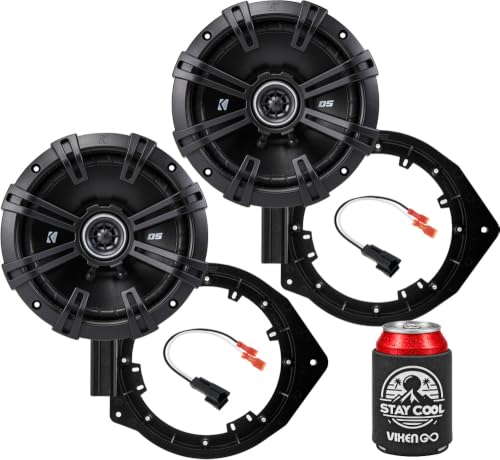
Precision adapter rings, such as the Custom Install Parts motorcycle speaker adapter, demonstrate how mechanical converters solve packaging limitations cleanly. Although designed primarily for Harley-Davidson fairing openings, the engineering principle applies broadly across custom audio projects. An adapter converts a smaller factory opening, such as a five-and-a-quarter-inch mounting circle, into a wider opening capable of seating a six-and-a-half-inch aftermarket driver. This mechanical conversion allows listeners to step up to larger cone surface areas for significantly improved acoustic output.
Using dedicated adapter brackets utilizes existing factory mounting holes rather than requiring builders to drill into chassis metal or cut interior fabrics. Before purchasing larger replacement speakers, installers must always measure the available mounting depth behind the panel. Larger aftermarket speakers frequently carry bulkier motor structures and deeper magnets that may interfere with window regulator mechanisms, fairing braces, or factory wiring harnesses. Verifying physical depth and cone clearance ensures a clean installation that preserves all factory vehicle functionality.
Wiring Logistics, Electrical Protection, and Amplifier Loads
Any custom audio installation, whether mounted in doors or placed near seating, demands strict attention to electrical fundamentals. Audio enthusiasts exploring complex multi-driver setups must understand speaker impedance and wiring methods to avoid overloading the source amplifier. Wiring additional drivers in parallel lowers total system resistance, which can drive an amplifier beyond its safe thermal threshold and cause catastrophic output transistor failure. Matching voice coil impedance to the amplifier manufacturer specifications ensures stable, undistorted sound delivery.
Power routing requires dedicated circuit protection to prevent vehicle fires. Whenever running power leads to under-seat amplifiers or active subwoofers, a main fuse must be placed within eighteen inches of the positive battery terminal. The fuse rating must match the current-carrying capacity of the chosen power wire gauge rather than the amplifier draw alone. Running heavy-gauge copper through vehicle firewalls demands rubber grommets to prevent sharp metal sheet edges from slicing through protective insulation over time.
Grounding points beneath car seats also require thorough mechanical preparation. Ground wires must connect to bare, unpainted structural chassis metal rather than seat slider bolts. Seat tracks are often isolated from the main vehicle body by plastic bushings, painted brackets, or grease layers that introduce high electrical resistance. A poor chassis ground causes ground loop alternator whine, amplifier overheating, and erratic voltage drops that degrade acoustic fidelity.
Acoustic Staging and Cabin Sound Staging Performance
Beyond safety and electrical logistics, positioning primary speakers on or inside a car seat often degrades high-fidelity sound staging. Psychoacoustic perception relies on sound waves reaching both ears from a realistic forward soundstage, mimicking the acoustics of a live concert or home stereo. When high-frequency speakers are positioned directly beside or behind an occupant’s ears, the acoustic image collapses inward. The sound appears localized entirely inside the listener’s head rather than across the front windshield dashboard.
Nearfield seat speakers also create an unbalanced acoustic experience between passengers. A driver mounted in the left headrest bolster will sound overwhelmingly loud to the driver while remaining virtually inaudible to the front passenger. Attempting to balance volume levels across different seating positions becomes an acoustic nightmare. Dedicated automotive sound designers prefer placing component tweeters on A-pillars or upper door sails, using the windshield glass to diffuse sound evenly across the cabin.
Applying sound deadening material inside door cavities offers vastly superior acoustic gains compared to seat-mounted drivers. Applying butyl-based vibration damping sheets to door skins eliminates panel resonance and turns hollow doors into rigid speaker enclosures. Combined with properly sized adapter plates and quality component drivers, a well-sealed door produces tight midbass, transparent vocals, and natural dynamic headroom. Investing installation effort into factory acoustic locations yields far better fidelity than struggling against the ergonomic limitations of seat padding.
Decision Guidelines and When to Seek Professional Installation
Determining whether to attempt custom audio placement comes down to vehicle type, safety risk, and audio goals. In vintage hot rods, custom classic cruisers, or off-road vehicles lacking factory side-impact airbags, custom headrest or seat box audio can be a rewarding custom project. In modern street vehicles equipped with complex occupant sensors and side airbags, attempting to cut or modify seating is strongly discouraged. Preserving factory safety restraint architecture must always take precedence over experimental audio mounting.
Vehicle owners unsure about airbag wiring boundaries or complex interior disassembly should consult professional car audio installation services before cutting panels. Certified installation technicians possess the tools, wiring diagrams, and diagnostic scanners needed to navigate restraint electronics safely. Professionals can identify safe under-seat floor mounting zones, route high-current wiring away from sensitive data networks, and recommend vehicle-specific adapter brackets that maximize factory speaker bays.
The practical answer is that while speakers can physically be attached to a car seat, the modern vehicle environment makes dedicated factory locations and floor-mounted under-seat subwoofers far superior choices. Using precision adapter plates, clean electrical routing, and acoustic door treatments delivers rich, powerful sound without risking airbag deployment, wire shearing, or personal discomfort. Prioritizing safety and proper acoustic staging ensures an exceptional listening experience for every journey on the road.




Write Your Review
No reviews yet. Be the first to share your experience!