


Flat television panels often struggle to produce full, intelligible dialogue during movies and daily broadcasts. Figuring out %how to connect bose speakers to vizio tv% helps you bypass thin built-in television drivers in favor of rich, articulate audio. Whether you own an all-in-one soundbar or want to evaluate portable Bose speaker options for casual listening, matching your hardware ports correctly is the first step toward better performance. Choosing between digital optical cables, HDMI connections, and analog auxiliary lines depends largely on the specific jacks available on both pieces of equipment. Getting the connection right eliminates static, prevents annoying audio delays, and makes volume management straightforward.
Modern television menus can complicate audio routing if internal settings conflict with your external sound system. Connecting a dedicated soundbar such as the Bose Solo 5 or Bose TV Speaker requires adjusting the television sound output settings to avoid duplicate audio streams or muted signals. Once you identify whether your television supports HDMI ARC or optical audio out, you can set the proper digital audio format for seamless playback. Proper preparation prevents unnecessary troubleshooting and ensures that features like dialogue enhancement work as intended. Taking a systematic approach to cabling and menu adjustments gives you dependable sound every time you turn on the display.
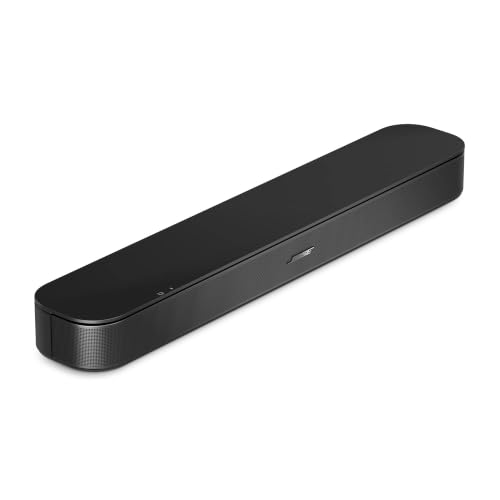

Pros
- Exceptional vocal clarity that solves the problem of muffled TV speech
- Extremely compact and lightweight design suitable for small spaces
- Comprehensive universal remote controls multiple entertainment devices
- Effortless single-cable setup with included digital optical cable
Cons
- Lacks an HDMI ARC connection, relying instead on optical or coaxial inputs
- Limited deep sub-bass output due to the absence of a dedicated subwoofer
- Narrow soundstage that is best suited for small to medium rooms rather than large spaces
Modern flat-screen televisions feature razor-thin designs, but their slim profiles leave virtually no room for capable speaker drivers. The Bose Solo 5 TV Sound System is built specifically to address this issue by replacing hollow, tinny TV audio with rich, intelligible sound. Measuring just under 22 inches wide, this standalone soundbar delivers a plug-and-play acoustic upgrade that immediately enhances everyday viewing, from morning news broadcasts to late-night prestige dramas.
Designed with practicality in mind, the Solo 5 excels in scenarios where understanding spoken lines is paramount. Activating the signature Dialogue Mode isolates and elevates vocal frequencies, ensuring whispers and complex conversations remain distinct without forcing you to constantly ride the volume controls. Beyond television duty, integrated Bluetooth functionality allows the unit to double as a dependable wireless speaker for streaming playlists and podcasts throughout the day.
In everyday use, the soundbar proves remarkably intuitive thanks to its clean single-cable setup and full-sized universal remote. While it is not designed to replace a multi-channel home theater with floor-shaking bass, the Bose Solo 5 provides an effective, stress-free audio lift that is perfectly tailored for bedrooms, apartments, and secondary living spaces.
Acoustically, the Bose Solo 5 focuses its tuning on the midrange spectrum where traditional television speakers consistently fall short. Dual proprietary drivers are strategically angled to disperse sound evenly across the listening area, creating a focused and coherent audio sweet spot. Treble remains crisp without venturing into harsh sibilance, ensuring sound effects and musical scores never mask critical spoken lines.
Low-end reproduction is punchy and tight considering the soundbar's modest cabinet dimensions. While it cannot replicate the subterranean rumble of a dedicated external subwoofer, the onboard bass adjustment control lets you add a noticeable layer of depth to movie soundtracks and acoustic instruments. For small to mid-sized rooms, the Solo 5 generates ample, distortion-free output to fill the space cleanly.
The Bose Solo 5 sports a discreet, minimalist aesthetic that integrates smoothly with any entertainment console. Measuring 3.4 x 21.5 x 2.8 inches and weighing just 3.7 pounds, the soundbar tucks cleanly beneath desktop displays or mounted televisions without blocking remote IR receivers. The sturdy matte black exterior and full-metal grille present a durable, clean finish that resists fingerprints and dust buildup.
Connectivity options located on the rear panel include optical digital, coaxial digital, and a 3.5mm analog auxiliary input. While it bypasses HDMI ARC, Bose includes both optical and coaxial cables in the box to guarantee immediate out-of-the-box operation. The accompanying universal remote is a notable hardware highlight, offering pre-programmed backlit controls that can manage your television, streaming box, and Blu-ray player alongside the soundbar itself.

Pros
- Pre-installed battery allows instant out-of-the-box operation without extra trips to the store
- Ultra-responsive 0.2-second transmission latency with zero lag on volume or mute controls
- Extended 45-foot operating range easily covers spacious living areas and open-concept home theaters
- Ergonomic handheld design with durable, tactile buttons that resist daily wear
Cons
- Requires direct line-of-sight to your soundbar IR sensor to register button presses
- Lacks backlit illumination, which can make nighttime viewing adjustments tricky in dark rooms
- Dedicated strictly to compatible Bose audio systems and will not control television power or streaming boxes
Losing or breaking the original clicker for your Bose TV Speaker can instantly bring movie night to a halt, leaving you trapped with flat audio and no way to tweak dialogue or bass levels. The SYNCYANS Replacement Remote is purpose-built to solve that frustration immediately. Designed as an exact-fit replacement for the Bose TV Speaker, Solo Soundbar Series II, and legacy Solo models, this accessory seamlessly restores full operational control over your home theater audio.
This unit is crafted specifically for TV lovers and home audio enthusiasts who demand simplicity. There is no tedious programming, Bluetooth pairing rituals, or universal code searching required. Thanks to an included, pre-installed battery, it works the exact second you take it out of packaging, making it an accessible solution for anyone in the household to pick up and use.
In real-world everyday television use, the remote demonstrates consistent reliability. Its high-sensitivity infrared sensor reliably registers inputs from across large family rooms, letting you quickly mute commercials or ramp up the volume for dramatic movie scores. Button presses feel distinct and tactile, eliminating the mushy feel common among generic third-party remotes.
Overall, this replacement controller is an indispensable companion for owners of compatible Bose sound systems. It flawlessly bridges the gap between your seating area and your soundbar, returning effortless control to your everyday listening experience at an accessible value.
While this unit functions as the command center rather than the acoustic driver itself, its performance directly impacts the sound signature of your Bose TV Speaker. It unlocks essential audio commands, letting you toggle speech enhancement for pristine vocal clarity during dialogue-heavy dramas and boost low-end bass depth for thunderous action scenes. Having instant access to audio adjustments ensures your living room speaker produces well-balanced highs and punchy lows exactly to your preference.
Wireless performance is rock-solid thanks to a high-sensitivity infrared transmission chip. Boasting a rapid 0.2-second response time and a reliable operating range of up to 45 feet, volume levels change seamlessly without audio dropouts or perceptible delay. As long as you maintain an unobstructed line of sight to the soundbar receiver, you can adjust acoustic output smoothly from the couch or dining area.
Built for everyday living room durability, this controller features an ergonomic, lightweight plastic shell that fits naturally in the hand. The tactile rubberized buttons are designed to resist oil and routine wear, ensuring responsive feedback through countless movie marathons and binge-watching sessions. While it is engineered for indoor home entertainment rather than outdoor waterproof conditions, its solid construction protects sensitive internal circuitry against routine accidental coffee table drops.
Battery longevity is another significant advantage. Because it arrives with a pre-installed coin cell battery and relies on energy-efficient infrared technology, there is no need for frequent charging or initial battery shopping. You get months of dependable audio playback control before ever needing to replace the cell, ensuring your home theater speaker setup remains permanently ready for entertainment.

Pros
- Exceptional vocal clarity focused on speech enhancement
- Quick and simple setup with included optical cable
- Bluetooth connectivity supports up to three devices
- Included remote for easy control of key sound modes
- Compact dimensions ideal for small spaces
Cons
- Deep bass requires separate Bose module purchase
- HDMI cable and wall brackets sold separately
- Limited to first powered-on device for auto Bluetooth connect
The Bose TV Speaker is a compact all-in-one soundbar designed to solve the common issue of muffled TV audio. With its focus on simplicity, it delivers clearer speech and more natural sound from a small footprint, making it perfect for anyone tired of straining to hear dialogue over background noise during evening binge sessions or family movie nights.
Targeted at everyday TV enthusiasts, this speaker shines in living rooms where space is at a premium. Its two angled full-range drivers create a wider soundstage, pulling you into the action without needing a full home theater system. Real-world use reveals reliable performance for daily viewing, with Bluetooth adding versatility for casual music streaming.
Setup is a breeze with the included optical cable or optional HDMI-ARC, and the remote lets you tweak settings on the fly. While it excels at clarity, pairing it with a Bose bass module unlocks even more potential. Overall, it's a smart, no-fuss upgrade for better TV sound that punches above its size.
Verdict: Highly recommended for straightforward TV audio improvement, especially if dialogue clarity is your top priority.
Bose prioritizes vocal clarity with dedicated dialogue enhancement, ensuring crisp pronunciation even in noisy scenes. The two angled full-range drivers produce wide, natural sound that feels spatial and realistic, elevating standard TV broadcasts to a more engaging level without distortion at normal volumes.
Bass is present but leans light for a compact unit; adding a Bose Bass Module 500 or 700 via a simple cable delivers the depth needed for action movies. Volume levels fill small to medium rooms effectively, and Bluetooth connectivity is stable for streaming music or podcasts from up to three devices, auto-connecting to the first one powered on.
HDMI-ARC and optical inputs ensure low-latency TV sync, making lip-sync issues a thing of the past for seamless viewing.
At just over 2 inches tall, 23 inches wide, and 4 inches deep, this sleek black soundbar slips easily in front of most TVs or mounts to walls with optional brackets. Its minimalist build complements modern setups, staying out of sight while delivering big audio improvements.
No battery here; it plugs into a standard outlet with a 5-foot power cord for continuous operation, perfect for stationary home use without recharging worries. The included compact remote measures 4.1 by 1.6 inches, fitting comfortably in hand for quick adjustments.
Durability suits everyday living room placement, with expandability via bass modules using a standard 3.5mm cable. Weight is light at under a pound, making repositioning effortless.
Step-by-Step Guide to Connecting Bose Speakers to a Vizio TV
Connecting an external audio device from Bose to a Vizio television significantly improves speech intelligibility and overall dynamic range. Most Bose compact sound systems, including the Bose TV Speaker and the Bose Solo 5, are engineered to integrate smoothly with modern flat-panel displays. Achieving the best listening experience requires choosing the appropriate cable, seating connections securely, and adjusting the television audio output menu. Following a structured setup path prevents common communication errors between the two devices and gives you clean, uninterrupted sound.
Identifying Audio Ports on Your Vizio TV and Bose Hardware
Before running any wiring, you must inspect the connection panel on the back or side of your Vizio television. Most Vizio models feature several labeled ports, including HDMI inputs, an optical digital audio output, and occasionally a 3.5 mm analog audio jack. One of the HDMI ports is typically designated as HDMI ARC or eARC, which is specifically designed to send audio back to an external sound system. Identifying these ports early helps you determine whether your setup will rely on digital audio transmission or an analog signal path.
The connection panel on your Bose unit determines which cable option will deliver the most reliable results. Compact units like the Bose TV Speaker feature an HDMI ARC input, an optical digital audio port, and an auxiliary input for analog signals. Older soundbars such as the Bose Solo 5 TV Soundbar Sound System rely on optical digital audio or coaxial digital inputs rather than HDMI. While dedicated stereo loudspeakers often require separate amplifier channels and speaker wire runs, these powered Bose soundbars handle amplification internally through their dedicated input jacks.
Connecting via HDMI ARC for Streamlined Control
Connecting via HDMI ARC represents the most convenient installation method if both your Vizio television and Bose speaker support it. Models such as the Bose TV Speaker (2nd Gen) and the original Bose TV Speaker include an HDMI port designed specifically for this purpose. Start by powering down both the Vizio television and the Bose soundbar to ensure safe cable insertion. Locate the HDMI port on your Vizio television that is clearly labeled with the letters ARC or eARC.
Insert one end of a high-speed HDMI cable firmly into the HDMI ARC port on the television, then connect the opposite end into the Bose speaker. Ensure the cable rests comfortably without excessive tension or sharp bends behind your entertainment furniture. Using HDMI ARC enables Consumer Electronics Control, which allows your Vizio television remote to adjust the speaker volume directly. It also synchronizes power states so the soundbar turns on and off alongside the television display, making daily viewing straightforward.
Connecting via Optical Digital Audio Cable
An optical digital audio cable is the primary connection method for the Bose Solo 5 and serves as an excellent alternative for other Bose soundbars. Optical cables transfer multichannel digital audio without interference from nearby power cords or wireless transmitters. Begin by inspecting the optical cable and removing the small plastic protective caps from both ends. Forgetting to remove these transparent protective tips is a frequent mistake that prevents the cable from seating properly.
Locate the port labeled Optical Audio Out on your Vizio television and align the beveled shape of the connector with the port. Gently push the connector into the port until you feel or hear a soft click, confirming that the internal clasp is engaged. Repeat this exact process on the optical input port located on the back panel of your Bose speaker. Optical connections provide rock-solid reliability across virtually every Vizio model produced, though volume adjustments must be managed using the Bose remote or a programmed universal remote.
Connecting via 3.5 mm AUX Analog Audio
If your television lacks an optical output or an available HDMI ARC port, an analog auxiliary connection serves as a practical backup. Soundbars like the Bose TV Speaker include a 3.5 mm AUX input that accepts analog stereo signals from external sources. To use this method, you will need a standard 3.5 mm stereo audio cable or an RCA-to-3.5 mm adapter cable. Inspect your Vizio television to see if it features a 3.5 mm headphone jack or red and white RCA analog audio outputs.
Plug one end of the cable into the audio output jack on your Vizio television, then insert the other end securely into the AUX input on your Bose speaker. Make sure the plugs are pushed all the way into their respective jacks to avoid hum, channel dropout, or buzzing. Analog connections carry a two-channel stereo signal, which Bose soundbars process internally to optimize vocal frequencies. When using a headphone jack output, set the Vizio television volume to a clean middle level to avoid overdriving the soundbar input and causing distortion.
Bluetooth Connection Limitations for TV Audio
Many Bose systems include Bluetooth functionality for wireless audio streaming from mobile phones, tablets, or compatible smart televisions. Some modern Vizio televisions also offer Bluetooth transmitter capabilities for sending television audio wirelessly. You can initiate this link by placing the Bose speaker into pairing mode and scanning for available audio devices in the Vizio Bluetooth settings menu. The speaker confirms the connection with an audible chime or a dedicated status light on the front grille.
While Bluetooth pairing eliminates physical wires between devices, it introduces significant compromises for television viewing. Standard Bluetooth codecs introduce noticeable latency between the on-screen video and the accompanying dialogue. This timing delay results in distracting lip-sync discrepancies where actors mouths move before their voices are heard. Because of these performance drawbacks, Bluetooth connections are best reserved for casual music streaming, while physical cables remain mandatory for movies and television broadcasts.
Configuring Vizio TV Audio Settings
Plugging in the physical cable is only the initial phase of setting up your sound system. You must navigate into the Vizio television settings menu to direct the audio output away from internal drivers and toward the external speaker. Press the Menu or Settings button on your Vizio remote control and select the Audio submenu. From there, locate the TV Speakers setting and switch it to the Off position to eliminate conflicting echo effects.
Next, look for the Digital Audio Out setting within the same Vizio audio menu. This setting offers choices such as Auto, PCM, Bitstream, or Dolby Digital, depending on your television model. For the most dependable results with compact Bose soundbars, selecting PCM is generally recommended because it delivers a clean, decoded stereo signal. If you select Bitstream and experience complete silence, switching immediately back to PCM resolves the digital format mismatch and restores clear sound.
Enabling Vizio HDMI-CEC for Volume Sync
If you connected your speaker via HDMI ARC, you must enable CEC protocol inside the Vizio system settings. Press the Menu button on your remote, navigate to System, and select the CEC option. By default, some televisions have this feature disabled or set to ARC-only detection. Changing the CEC setting to Enabled allows the television to communicate bidirectionally with the connected Bose soundbar over the single HDMI wire.
After enabling the setting, run the Device Discovery option located within the same CEC menu to register the Bose audio device. Once discovered, the television transfers volume control commands over the HDMI cable whenever you press the volume buttons on the Vizio remote. The television will also instruct the Bose speaker to enter standby mode whenever you power down the television display. If the television fails to discover the soundbar, a sixty-second power cycle of both units clears cached handshake errors.
Remote Control Setup and Audio Features
Operating your Bose speaker requires understanding the features available on its dedicated remote control. Bose soundbars come equipped with remotes that manage volume levels, input switching, Bluetooth pairing, and audio sound modes. The dialogue mode button raises vocal frequencies while softening aggressive background sound effects, making whispered lines clear. The bass button allows listeners to trim or elevate low-frequency response according to room acoustics and personal taste.
If you lose your original remote or the buttons become unresponsive, an aftermarket accessory like the Replacement Remote Control for Bose TV Speaker provides an easy solution. Replacement remotes designed for the Bose TV Speaker and Solo Soundbar Series II function straight out of the box using standard infrared signals without complicated programming codes. Having a functional remote is essential for accessing dialogue mode or toggling between optical and AUX inputs. If your television remote controls master volume over HDMI ARC, the dedicated remote remains valuable for adjusting speaker-specific sound profiles.
Resolving Common Audio and Handshake Problems
Encountering zero sound after completing the physical setup is a common issue that usually traces back to an incorrect input selection. Ensure that the source input on your Bose soundbar matches the physical cable you installed. If you used an optical cable, the soundbar indicator light must show the optical input mode rather than Bluetooth or AUX. Press the corresponding input button on the Bose remote to cycle through available sources until audio begins playing through the drivers.
Lip-sync discrepancies occur when video processing inside the television takes longer than the audio processing inside the soundbar. To correct this timing mismatch, navigate to the Audio menu on your Vizio television and locate the Lip Sync adjustment slider. Adjusting the slider slightly delays or advances the audio stream until spoken words match the actor on-screen mouth movements. Running known tracks for testing speaker clarity or watching evening news broadcasts makes it simple to dial in precise audio alignment.
Buzzing, static, or popping sounds typically point to a loose cable connection or digital format conflict. Check both ends of your audio cable to confirm that they sit completely flush inside their respective ports. If the sound remains distorted over an optical or HDMI connection, navigate back into your Vizio audio settings and force the digital output format to PCM. Certain streaming applications output advanced audio formats that compact soundbars cannot decode, resulting in loud digital noise or absolute silence.
Verification and Final System Checklist
Completing your installation requires a final verification pass to confirm that all audio paths and settings function reliably. Turn on both your Vizio television and the Bose soundbar, selecting a variety of media sources including live cable, streaming video, and movie content. Listen closely to verify that dialogue sounds centered, distinct, and free from background hiss or distortion. Confirm that the television internal speakers remain completely silent across all inputs and streaming applications.
Test the volume adjustment responsiveness by using both the Vizio television remote and the Bose soundbar remote. If you configured HDMI ARC and CEC properly, the television remote should raise and lower the soundbar volume smoothly. Check that powering down the television display also places the soundbar into its low-power standby state. Taking a few moments to verify these operations ensures long-term enjoyment without unexpected interruptions during family movie nights.
Solid cable management wraps up a professional installation and protects your equipment from accidental disconnections. Bundle excess cable lengths neatly with velcro ties and secure them behind your television stand away from foot traffic. Keeping power cords separated from analog audio lines minimizes electromagnetic hum and keeps your entertainment center organized. With your Bose speaker properly configured to your Vizio television, you can look forward to years of clear, dependable audio performance.


Write Your Review
No reviews yet. Be the first to share your experience!