


A sudden drop in vehicle audio quality can turn an everyday drive into an irritating commute. Rattling door panels, muffled vocals, or complete silence from one side of the cabin usually point to an issue somewhere between the head unit and the speaker cones. Knowing how to check car speakers allows drivers and DIY builders to pinpoint whether a dead channel stems from a blown voice coil, broken wiring, or an amplifier issue. Taking a methodical approach prevents you from buying replacement hardware before confirming where the audio chain actually failed, especially when comparing standard factory units against aftermarket setups.
Diagnosing these vehicle audio issues does not require professional installation credentials or expensive specialized equipment. A basic visual inspection paired with simple electrical measurements often reveals whether the problem is mechanical or electrical. Drivers who regularly spend time on the road or consider installing truck speakers can benefit from learning basic diagnostic techniques. Before tearing down the entire interior, playing dynamic tracks to demo audio systems while adjusting balance and fader settings helps isolate which specific speaker location needs hands-on testing.
Pros
- Exceptional call clarity from built-in noise-reducing microphone
- High-definition sound with strong vocal emphasis despite compact size
- Long 22-hour battery supports all-day drives
- Automatic reconnect and power management via motion sensor
- Versatile 2-in-1 speaker and FM transmitter functionality
Cons
- FM transmission may face interference in urban areas with many stations
- Lacks waterproofing for outdoor use beyond the car
- No companion app for advanced customization
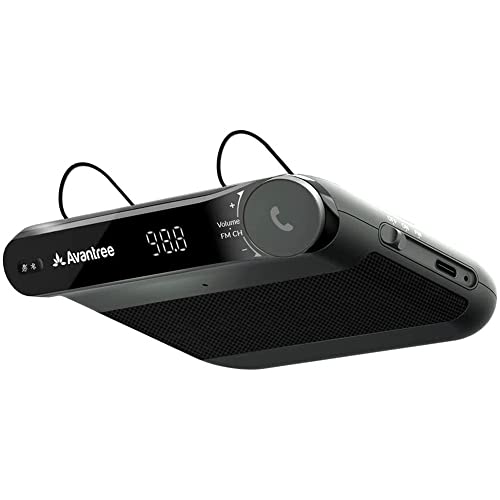
The Avantree Roadtrip is a 2-in-1 car speaker and FM transmitter designed for American drivers who want to stream phone audio to their vehicle's stereo without wires. It excels at hands-free calls, navigation directions, and music playback, making it perfect for commuters, road trippers, and families on long drives.
In real-world use, it powers on automatically when you enter the car via its motion sensor, reconnects to your phone instantly, and delivers clear audio through dual 3W speakers. The built-in mic ensures your voice cuts through road noise, while the FM mode broadcasts to any car radio for full-volume enjoyment.
Its rotary dial simplifies volume control and voice assistant access, reducing distractions. With 22 hours of playtime, it handles multi-day trips reliably. Overall verdict: a must-have for safer, louder drives - highly recommended for tech-savvy US motorists.
The Roadtrip punches above its size with dual 3W speakers providing high-definition audio focused on vocal clarity and detailed highs, ideal for calls, podcasts, and GPS voices. Bass is present but tuned for car cabins rather than deep thumps, ensuring balanced output without muddiness.
Volume reaches car-filling levels without distortion, and the noise-reducing mic delivers crisp transmission even on highways. Bluetooth connectivity is stable up to 30 feet, with quick pairing, while FM transmission offers reliable streaming to your car's radio in open areas.
Performance shines for hands-free use, making it a top pick for daily drives where clear communication trumps party bass.
Compact and car-optimized, the Roadtrip features a rugged clip-on design that mounts securely to sun visors or dashboards, weighing little for easy portability between vehicles. Its intuitive rotary dial and simple buttons prioritize driver safety with minimal glances needed.
The 22-hour battery life supports weekend road trips, powering off automatically when you leave to save juice, and reactivating via motion sensor on return. Charging takes a few hours via USB, keeping it ready for daily commutes.
No IP rating means it's best kept in the car, but its durable build handles vibrations and temperature swings on US highways effortlessly.

Pros
- Smooth, non-fatiguing high-frequency response courtesy of silk dome construction.
- Extremely compact size fits effortlessly into tight factory vehicle speaker locations.
- Four individual tweeters included, delivering outstanding value for full-cabin upgrades.
- Simple flush or surface mounting options speed up DIY vehicle installation.
Cons
- Advertised 500-watt rating represents peak output; continuous RMS handling is much lower.
- Requires in-line crossover capacitors or active filtering to block bass frequencies.
- Included double-sided mounting adhesive can soften during extreme summer dashboard heat.
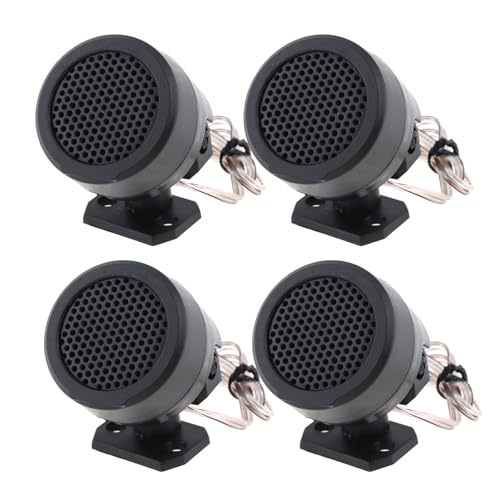
The QWORK Neodymium Silk Dome Tweeter Set is an ultra-compact audio upgrade engineered to bring definition and clarity to dull, factory-installed car sound systems. Designed for drivers who miss the crisp details in their favorite playlists, this package delivers two complete pairs of high-frequency speakers. By dedicating reproduction to the highest audio registers, these tweeters lift vocals, acoustic strings, and cymbal strikes out of muddy door speakers and project them clearly across your cabin.
In everyday driving environments, the silk dome architecture provides an immediate acoustic advantage over entry-level plastic or harsh metallic tweeters. Rather than creating piercing high-pitched glare at elevated listening volumes, silk diaphragms naturally smooth out treble frequencies for a warm, balanced soundstage. The neodymium motor structure ensures prompt transient response, maintaining crisp separation across fast rock beats, pop vocals, and complex orchestral recordings.
Installation flexibility is a highlight for DIY car audio hobbyists. With an outer diameter of just 1-3/8 inches and a lightweight housing, each speaker can be installed flush into interior door panels or mounted directly on dash surfaces with the provided angled pods and adhesive. This versatility lets you orient high frequencies toward the listener, significantly expanding stereo imaging inside compact cars, trucks, or utility vehicles.
Ultimately, this four-tweeter package serves as an accessible, high-reward upgrade for drivers seeking cleaner audio without overhauling an entire car stereo. When paired with proper crossover protection, these tweeters deliver clear highs and an elevated soundstage that makes daily highway commutes and weekend road trips much more enjoyable.
Engineered strictly for high-frequency sound reproduction, this tweeter set focuses entirely on treble articulation and vocal clarity rather than low-end bass depth. Functioning as dedicated high-frequency drivers, they take the strain off standard full-range door speakers, creating a balanced multi-way audio environment with defined instrument separation and a broader soundstage.
Vocal presence is where these silk dome speakers shine brightest. Spoken-word podcasts, audiobooks, and subtle vocal harmonies easily cut through ambient road noise, passing traffic, and exhaust rumble without forcing you to max out system volume. The natural damping of silk prevents the sharp sibilance common in budget audio hardware, keeping the upper register smooth and easy on the ears during long drives.
Volume output remains clean and stable across normal vehicle listening levels. Built with standard 4-ohm impedance and responsive neodymium magnets, these speakers draw power efficiently from stock factory head units or moderate aftermarket amplifiers, delivering punchy high-end dynamics without demanding extra electrical modifications.
Constructed from lightweight, heat-resistant composite materials and durable silk diaphragms, these mini car speakers are built to withstand the wide temperature swings typical of automotive interiors. Operating passively from your vehicle 12-volt audio wiring, they require no internal battery and draw power with high efficiency, ensuring zero parasitic battery drain when your car engine is turned off.
Weighing only a fraction of a pound, their miniature profile mounts securely to A-pillars, dashboard tops, or door cards without loosening or rattling over rough roads. The housing design accommodates both flush-mount brackets and surface-mount adhesive setups, giving you total freedom to tailor the installation to your car interior aesthetics.
The dependable motor structure and synthetic casing resist cabin humidity, sunlight exposure, and chassis vibration, maintaining proper driver alignment over years of daily driving. With an efficient neodymium design that dissipates voice coil heat effectively, this speaker set delivers reliable high-frequency performance season after season.


Pros
- Stable Bluetooth 5.3 with automatic reconnection for hassle-free pairing
- Strong battery life supports full-day drives without recharging
- Simple visor clip and magnetic base for secure, instant setup
- Voice assistant support enhances driving safety
- TF card playback adds flexibility for music on the go
Cons
- Not suited for fast charging; use normal plug to avoid IC damage
- Designed primarily for car visor mounting, less versatile outdoors
- Lacks waterproof rating, best kept dry during use
The AGPTEK Car Speaker is a compact hands-free solution that clips to your sun visor, perfect for American drivers juggling calls, GPS navigation, and music on busy commutes or family road trips. With Bluetooth 5.3, it connects instantly to your phone, delivering clear audio without tying up your hands, making it a must-have for staying legal and safe behind the wheel.
In real-world use, it shines during long highway drives, where the noise-canceling mic cuts through road noise for crisp conversations, and the speaker provides enjoyable music playback via Bluetooth or TF card. Double-click to activate Siri or Google Assistant for hands-free replies to texts or route guidance, keeping your focus on the road.
Its portability extends beyond the car to home or office setups, though it excels in vehicles. Battery life holds up for extended journeys, and the straightforward design appeals to busy parents, professionals, and anyone prioritizing safety. Overall, this affordable speaker earns high marks for practical, everyday driving enhancements.
Expect clear vocal clarity and solid call quality from the 3W microphone with advanced noise reduction and echo cancellation, ideal for open-road conversations or urban traffic. Music playback offers pleasant sound without distortion at moderate volumes, suitable for background tunes during drives rather than audiophile listening.
Bluetooth 5.3 ensures stable connectivity up to a reliable range inside the car, with automatic shut-off and reconnection for seamless transitions. Double-tap activation for Siri or Google Assistant integrates smoothly, handling calls, SMS, and navigation prompts without lag, enhancing overall performance for hands-free operation.
The sleek black design features a magnetic back clip for effortless attachment to car sun visors, with a portable form factor that also works at home or the office. Its lightweight build prioritizes convenience over ruggedness, making it easy to toss in a bag for travel.
Battery performance impresses with 9-10 hours of music playback or 16 hours of hands-free talk time after just 2 hours of charging via the included cable. For best results, stick to standard plugs to preserve longevity on those cross-country family hauls.
Comprehensive Guide on How to Check Car Speakers
Troubleshooting automotive sound systems begins with isolating symptoms to determine whether the issue lies in the speaker cone, the voice coil, the audio source, or the vehicle wiring harness. A failing driver often exhibits subtle signs before going completely silent, including harsh rasping during bass peaks, sudden volume dropouts, or an asymmetrical soundstage. Following an organized inspection process ensures you solve the actual root cause rather than replacing functional components. Here is how you can systematically diagnose every speaker in your vehicle from the comfort of your driveway.
Initial Audio Isolation: Using Head Unit Controls
Before unbolting door cards or dismantling interior trim, start your diagnosis using the audio adjustment menus on the head unit. Set all equalizer bands, tone controls, bass boost functions, and surround effects to flat or zero to eliminate artificial distortion. Use the stereo fader and balance controls to direct audio exclusively to one corner of the cabin at a time. This simple listening check quickly identifies which individual channel suffers from buzzing, reduced output, or total silence.
Listen closely while playing a clean audio track across different source modes, including the radio, an auxiliary input, and Bluetooth. If static occurs only while streaming through a phone, the issue may stem from wireless interference or a software glitch rather than a blown speaker driver. Conversely, if a single door speaker consistently distorts across every input medium at moderate volume, the physical driver or its direct wiring demands hands-on inspection. Isolating the exact channel early saves significant time during physical teardown.
Physical Inspection for Cone and Surround Damage
Physical inspection requires removing the protective speaker grille or unfastening the interior door panel to access the speaker frame. Automotive environments expose speakers to extreme temperature swings, moisture leaking past window seals, and road vibration, all of which degrade standard materials over time. Examine the foam or rubber surround connecting the outer edge of the cone to the metal basket. Look for tears, dry rot, or separation from the frame, as even tiny perimeter splits cause prominent buzzing during low-frequency reproduction.
Inspect the dust cap and center cone assembly to ensure they have not loosened or collapsed inward into the magnet structure. A manual cone movement test provides immediate feedback about the mechanical health of the internal voice coil. With the car audio system turned off, place your fingertips symmetrically around the center dust cap and apply gentle, even inward pressure. The cone should travel backward and spring forward smoothly without resistance, whereas gritty friction or scraping indicates that the voice coil has warped or charred from excessive heat.
The 9-Volt Battery Pop Test for Coil Continuity
The 9-volt battery test remains one of the fastest bench methods for verifying basic voice coil continuity without specialized diagnostic gear. Disconnect both wiring leads from the speaker terminals so that DC voltage does not backfeed into the factory amplifier or head unit. Take a standard household 9-volt or 1.5-volt AA battery and attach two short test lead wires to its poles. Momentarily brush these bare wire ends across the positive and negative terminals of the disconnected speaker.
A functioning speaker produces a brief, crisp clicking sound as the magnetic field excites the voice coil. If you hear this distinct audible pop, the coil winding maintains electrical continuity and is not completely severed. Observing cone movement during this test also visually reveals speaker polarity when wiring diagrams are unavailable. When the positive battery lead touches the positive speaker terminal, the cone should pop visibly outward toward the listener rather than retracting inward toward the magnet.
Measuring Impedance with a Digital Multimeter
While a battery pop test confirms continuity, it cannot tell you if a voice coil has partially shorted and dropped its electrical resistance. Using a digital multimeter provides precise data about the health of the voice coil and protects your vehicle amplifier from destructive low-impedance loads. Set your multimeter to measure DC resistance in the lowest ohms range, usually indicated by the Greek omega symbol at the 200-ohm setting. Calibrate your tool by touching the black and red test probes together, noting any internal meter lead resistance.
Disconnect the vehicle harness from the speaker terminals and place the multimeter probes firmly against the positive and negative speaker posts. Most factory and aftermarket vehicle door speakers feature a nominal impedance rating of 4 ohms, although some systems operate at 2 ohms or 8 ohms. The displayed DC resistance should read slightly lower than the nominal rating, typically between 3.2 and 3.8 ohms for a healthy 4-ohm driver. A reading of infinite resistance indicates a broken voice coil, while a reading near zero ohms reveals an internal short circuit that can damage your amplifier.
Testing Polarity and Acoustic Phase Alignment
Speakers can be mechanically intact and show expected resistance yet still sound hollow and thin inside the car cabin. This frustrating issue frequently results from acoustic phase cancellation, which occurs when two opposing door speakers are wired with opposite polarity. When one speaker pushes outward while the other pulls inward, the opposing sound waves cancel each other out, especially in low-frequency ranges. The resulting audio often sounds diffuse, with vocals lacking a focused center image on the dashboard.
Dedicated diagnostic phase meters eliminate the guesswork associated with tracking down polarity mismatches across complex vehicle interiors. An instrument such as the Eaglerich Black Auto Audio Speaker Horn Tester is designed specifically for auto vehicle audio troubleshooting. This tool pairs a handheld detection meter with test tones played directly through your car sound system. Flashing green lights indicate positive phase alignment, while red lights alert you to reversed speaker leads that require immediate terminal swapping to restore rich bass response.
Inspecting Speaker Wiring Harnesses and Chassis Shorts
When bench testing confirms that a speaker driver is functional but produces no sound inside the car, the wiring harness becomes the primary suspect. Automotive audio wiring is subject to constant flexing, particularly inside the rubber accordion boot running between the vehicle chassis and the door frame. Over years of opening and closing doors, copper conductors inside the harness can fatigue, stretch, and break while the outer insulation remains visually intact. In severe cases, exposed copper strands touch vehicle sheet metal, creating an intermittent ground fault.
To test harness continuity, switch your multimeter to the audible continuity setting and test the circuit from the head unit plug to the door terminal. Gently wiggle the door harness boot while monitoring the meter to catch intermittent fractures that cause audio cutouts over road bumps. Corrosion around terminal clips is another frequent culprit, particularly in wet climates or during rugged off-road audio installations where water ingress degrades electrical contacts. Cleaning corroded spade plugs or crimping fresh weatherproof connectors often restores stable signal delivery.
Diagnosing Signal Flow and Line Output Adapters
Complex factory audio systems often route audio through external multichannel amplifiers or specialized processing modules before reaching door speakers. When diagnosing an unresponsive channel, you must verify that an active audio signal actually reaches the speaker location. Connecting a known working test speaker or measuring AC voltage with a multimeter confirms whether the amplifier channel outputs variable AC audio voltage during music playback. If no voltage appears across the leads, the fault resides upstream in the amplifier, DSP module, or head unit.
In upgraded aftermarket audio installations, signal integration hardware bridges the factory source unit to auxiliary amplifiers. Hardware like the FUSINOWIS Car Stereo Audio High to Low Speaker converter transforms speaker-level high voltage signals into clean RCA preamp outputs for amplifiers or subwoofers. When diagnosing low volume or distorted subwoofer output, inspect this high-to-low adapter to ensure solid ground connections and correct input tap wiring. A loose line-level connection or damaged converter module can easily mimic a dead speaker or failed amplifier channel.
Testing High-Frequency Drivers and Component Tweeters
Testing dedicated high-frequency tweeters in component car audio systems requires a modified diagnostic strategy compared to larger midbass door drivers. Tweeters operate with small voice coils and delicate domes designed to reproduce frequencies above several kilohertz. Because human ears are less sensitive to subtle high-frequency dropouts, a blown tweeter often manifests merely as dull cabin sound rather than overt buzzing. Drivers may mistakenly assume their main door speakers are failing when the tweeters have actually burnt out.
Standard DC resistance measurements with a multimeter may fail on tweeters if an inline passive crossover capacitor blocks DC current. To measure voice coil resistance accurately, test directly at the tweeter solder terminals before the passive high-pass capacitor. When upgrading or replacing damaged high-frequency units, compact drivers such as the QWORK 2 Pairs High-Power Neodymium Silk Dome set provide a 4-ohm impedance profile that pairs smoothly with mini car audio systems. Upgrading tweeters or installing four-inch coaxial car speakers restores vocal articulation and crisp treble definition across the dashboard soundstage.
Standalone and Hands-Free Alternatives for Cabin Audio
Extensive door disassembly, harness tracing, and factory amplifier troubleshooting may not always align with your immediate budget or vehicle ownership timeline. In older commuter vehicles or leased cars where modifying factory door wiring is undesirable, standalone audio devices offer an effective workaround for communication and navigation. When factory front speakers fail and leave you unable to hear incoming phone calls or GPS directions clearly, dedicated visor-mounted speakerphones provide an immediate, non-invasive alternative. These compact units operate independently of the car internal wiring architecture.
Drivers seeking hands-free call clarity and voice assistant interaction can consider standalone kits like the Avantree Roadtrip – Car Bluetooth Speaker, which features dual 3W drivers and an integrated FM transmitter. Similarly, the AGPTEK Car Speaker with Bluetooth 5.3 mounts securely to the sun visor, delivering clear vocal audio through dedicated noise-reduction microphones without tapping into vehicle door panels. These devices bypass factory head unit wiring failures entirely, ensuring safe mobile communication while you plan permanent cabin audio repairs.
Final Verification Steps Before Speaker Replacement
Before investing money in replacement vehicle speakers, complete a final review of your diagnostic findings to ensure accurate part selection. Verify that the head unit equalizer settings are centered, wiring harnesses show zero continuity to vehicle ground, and the speaker voice coil measures within the correct DC resistance range. Confirming physical cone integrity and smooth manual travel eliminates mechanical rubbing as the source of cabin rattles. A methodical process prevents premature hardware purchases and guarantees that any replacement drivers integrate smoothly with your vehicle electrical system.
Carefully match replacement driver impedance, physical mounting depth, and power handling specifications to your existing audio source before final reassembly. Secure all door panel clips, reattach water vapor barriers tightly, and test sound reproduction before snapping trim panels back into place. Following sensible troubleshooting steps ensures your vehicle audio system delivers clean, dynamic sound across every mile of road ahead.





Write Your Review
No reviews yet. Be the first to share your experience!