


Finding reliable sound gear often leads audio buyers to look closely at brand heritage and manufacturing backgrounds before making an investment. A detailed who makes samson speakers guide helps unpack the company behind these popular live sound systems, desktop monitors, and portable public address units. Many listeners looking for home music speakers or public speaking setups wonder whether Samson designs its own components or operates under a larger parent firm. Understanding the engineering roots of Samson Technologies provides helpful context on whether their hardware matches your performance expectations.
Samson has built an extensive catalog that bridges professional audio utility with approachable desktop and portable designs. Whether you need compact active monitors for multimedia editing or battery-powered PA systems for mobile events, evaluating the parent company helps ensure you choose the right sound gear. Exploring budget-friendly Bluetooth audio solutions alongside dedicated studio gear clarifies where Samson fits within the broader speaker market. Taking time to review manufacturer specifications, connectivity options, and cabinet designs guarantees that your final sound choice aligns with your specific listening environment.


Everything You Need to Know About Samson Technologies and Speaker Manufacturing
Samson speakers are designed and distributed by Samson Technologies Corporation, an American audio equipment manufacturer headquartered in Hicksville, New York. Founded over four decades ago, the company established itself by developing accessible audio gear for musicians, presenters, podcasters, and sound technicians. Rather than operating as an anonymous badge for white-label contract factories, Samson maintains dedicated engineering teams that develop proprietary acoustic designs, integrated mixers, and wireless transmission systems. Understanding who stands behind the Samson badge helps clarify what buyers can expect regarding audio quality, system longevity, and technical support.
The Origins and Corporate Heritage of Samson Technologies
Samson Technologies entered the audio industry in 1980 with a clear mission to provide reliable wireless microphone systems for working musicians. Founders Doug Bryant and Scott Goodman recognized that wireless gear at the time was prohibitively expensive for local performers and small venues. By designing cost-effective VHF wireless systems, Samson quickly gained significant traction across the live performance landscape. The success of their wireless technology established a foundation that allowed the company to expand into signal processors, power amplifiers, and professional mixers throughout the late 1980s and 1990s.
As the brand matured, Samson broadened its product offerings to address complete signal chains from the microphone element to the front-of-house loudspeaker. The company also formed close associations with legendary bass amplifier brand Hartke, cementing its status within the musical instrument and pro-audio communities. In recent decades, Samson transitioned from focusing strictly on traditional stage gear to creating desktop audio monitors, USB microphones, and portable public address systems. Today, the company remains an independent American pro-audio entity committed to utilitarian, high-value audio reinforcement.
Where Samson Speakers Are Engineered and Manufactured
Product conceptualization, industrial design, and acoustic engineering for Samson speakers take place primarily at the company headquarters on Long Island, New York. Samson engineers determine driver specifications, crossover slopes, amplifier topology, and cabinet resonance characteristics to meet specific performance targets. These technical parameters ensure that every model, whether a compact desktop reference monitor or a high-output stage loudspeaker, operates safely within its design limits. Developing products in-house gives the brand strict control over voicing, connectivity features, and functional aesthetics.
To maintain competitive market positioning, physical fabrication and assembly are handled through specialized manufacturing partners located in Asia. This global production model mirrors the standard operating procedures of major pro-audio competitors across the industry. Samson implements quality assurance protocols and component inspection standards to verify that factory runs conform to engineering tolerances. While components like voice coils, power supplies, and molded polypropylene enclosures are fabricated overseas, overall design authority remains firmly rooted in New York.
The Portable PA Category: Unpacking the Samson Expedition Line
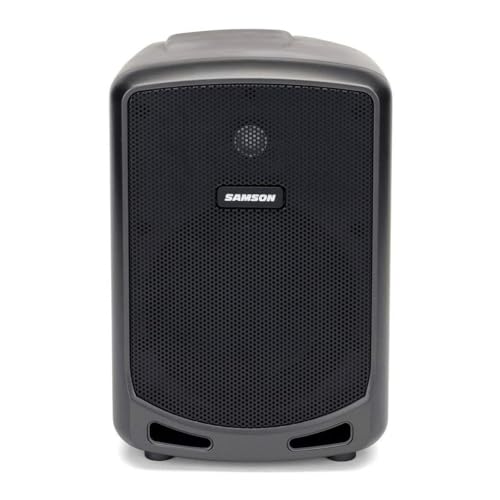
The Samson Expedition series represents one of the brand’s most recognizable contributions to mobile sound reinforcement. Models such as the SAMSON Expedition Escape Plus Rechargeable Speaker and the Samson Expedition XP106w 100 Watt Rechargeable serve mobile presenters, fitness instructors, outdoor educators, and buskers. These compact all-in-one public address units integrate active amplification, onboard multi-channel mixers, and rechargeable internal batteries into a single lightweight enclosure. By eliminating the requirement for external power outlets, the Expedition line provides immediate acoustic coverage in unconventional environments.
Integrated wireless microphone support sets many Expedition systems apart from standard consumer Bluetooth speakers. Samson incorporates proprietary USB wireless receiver ports into units like the XP106w, allowing seamless integration with handheld wireless transmitters without tangled patch cables. Listeners who often compare these commercial PA rigs against conventional portable outdoor audio options will notice that Samson prioritizes microphone intelligibility and mixing flexibility over pure consumer bass enhancement. The focus remains squarely on projecting clear vocal articulation across open spaces and crowded gathering rooms.
Studio Reference and Desktop Audio: The MediaOne Series
For content creators, bedroom producers, and multimedia enthusiasts, Samson developed the MediaOne series of powered reference monitors. Models like the SAMSON MediaOne M30 Powered Studio Monitors (Pair) and the Samson MediaOne BT3 Active Studio Monitors deliver balanced frequency output in small footprints. Unlike consumer computer speakers that heavily hype sub-bass or artificially inflate high frequencies, studio monitors aim for honest sound reproduction. This neutral response allows audio editors to identify unwanted background noise, correct equalization imbalances, and balance dialogue levels effectively.
The architecture of the MediaOne range typically uses a master-and-slave configuration where one active cabinet houses the stereo amplifier and power supply while the second cabinet is passive. Rear-panel RCA inputs accommodate external audio interfaces or mixing consoles, while front-panel 3.5mm headphone jacks facilitate private monitoring. Some models feature a dedicated bass boost switch, granting users the ability to tailor low-end warmth depending on room acoustic conditions. Incorporating Bluetooth streaming on select units provides the convenience of wireless casual listening alongside wired editing tasks.
High-Output Live Reinforcement: The Samson RS Active Series
When acoustic demands exceed the reach of desktop monitors or portable battery units, Samson provides high-power live sound cabinets such as the Samson RS115a Powered Speaker. These two-way active loudspeakers feature robust internal power amplification paired with substantial low-frequency woofers and high-frequency compression drivers. Designed for club gigs, houses of worship, rehearsal halls, and mobile DJ setups, RS series cabinets project sound effectively across larger audiences. Integrated bi-amplified designs ensure that low and high frequencies receive dedicated amplification stages, minimizing intermodulation distortion at elevated volumes.
The physical enclosures of the RS series utilize impact-resistant molded polypropylene, engineered with angled sides for dual-purpose operation as main front-of-house speakers or floor wedge monitors. Integrated carry handles and standardized pole-mount sockets make physical setup and transport straightforward for solo operators. Rear connection panels include versatile combo XLR and quarter-inch inputs capable of accepting either microphone or line-level signals. Samson also equips these active enclosures with variable signal limiters, protecting voice coils from accidental overload during aggressive audio peaks.
Connectivity Protocols and Source Matching Across Models
Understanding how to properly interface Samson speakers with modern audio sources ensures optimal dynamic range and low noise floors. Desktop models like the MediaOne M30 rely primarily on unbalanced analog RCA connections, making them compatible with computer soundcards, turntables with built-in preamps, and portable recorders. Active live speakers such as the RS115a require balanced XLR or quarter-inch TRS connections when linked to outboard mixing boards to prevent electromagnetic interference over long cable runs. Matching output impedance and signal level prevents unwanted hiss and guarantees adequate headroom.
Wireless connectivity on modern Samson units generally relies on standard Bluetooth profiles, enabling rapid pairing with smartphones, tablets, and laptops. While Bluetooth offers tremendous convenience for playing backing tracks or casual music playlists, critical monitoring tasks benefit from direct wired analog connections to eliminate latency. Additionally, Samson’s digital wireless microphone systems utilize dedicated 2.4 GHz frequency bands that bypass mobile device wireless channels. This design separation prevents interference between background music streaming and live vocal feeds during critical presentations.
Cabinet Construction, Enclosure Acoustics, and Driver Design
Acoustic performance in any speaker relies heavily on cabinet rigidity and driver material selection. In Samson desktop monitors like the MediaOne BT3, cabinets are constructed from medium-density fiberboard (MDF) wrapped in protective vinyl. Dense fiberboard enclosures dampen internal cabinet resonances that could otherwise color midrange frequencies or muddy vocal clarity. Tuned rear-firing bass reflex ports allow these compact enclosures to produce clean low-frequency extension without stressing the small copolymer woofers.
In contrast, portable PA systems and stage loudspeakers from Samson employ heavy-duty molded polypropylene cabinets with internal structural bracing. Polypropylene resists moisture, scuffs, and impact shocks far better than painted wood when transported frequently between performance locations. Perforated steel grilles protect delicate woofer cones and compression driver horns from physical damage during transit. By pairing custom-wound copper voice coils with lightweight neodymium or ferrite magnet assemblies, Samson achieves a reliable balance between thermal heat dissipation and overall cabinet weight.
Gain Staging and Audio Optimization for Samson Systems
Proper gain staging is essential when operating any active Samson sound system to prevent harsh clipping and component damage. Users should always set source devices, such as mixing consoles or mobile phones, to a healthy output level before raising the input sensitivity on the speaker. Running a weak source signal and compensating by maxing out the speaker volume knob introduces noticeable background hiss from the amplifier circuitry. Conversely, sending an overdriven signal into an active cabinet forces the internal preamplifier into square-wave distortion, risking voice coil overheating.
When balancing active speakers for acoustic testing or casual listening, evaluating your room acoustics makes a dramatic difference. You can cue up dedicated tracks to test sound clarity to evaluate how cleanly the drivers articulate transient percussion and deep bass notes. Placing desktop monitors at ear level on dedicated isolation pads prevents desk surface vibrations from muddying lower midrange frequencies. For live sound cabinets, elevating speakers on stable tripod stands above audience head height ensures uniform high-frequency dispersion across the listening area.
Troubleshooting Common Performance and Operational Issues
When experiencing sound issues with Samson speakers, systematically isolating the signal chain resolves most operational complaints without hardware repairs. If a powered speaker produces no sound, begin by verifying that the AC power cable is firmly seated and checking the rear-panel fuse holder where applicable. For battery-powered Expedition units, inspect whether the internal lead-acid or lithium battery holds a charge, as prolonged storage without recharging can deplete battery cells beyond recovery. Connecting the unit to wall power for several hours frequently revives dormant battery management circuits.
Distorted audio or unexpected dropouts typically stem from mismatched signal levels, low battery reserves, or wireless interference. When using Bluetooth streaming, ensure the source device remains within line-of-sight range and clear of large metal obstructions or crowded Wi-Fi routers. If a wireless handheld microphone cuts out on an Expedition PA, replace the transmitter batteries and confirm that the USB wireless dongle is seated completely in its port. Checking patch cables with a secondary audio source quickly identifies whether signal loss originates in a damaged cable or the speaker input jack itself.
Practical Selection Criteria: Matching Samson Gear to Your Needs
Choosing the right Samson speaker model requires balancing acoustic output capacity, transportability, and input connectivity against your specific operational environment. Classroom instructors, tour guides, and outdoor speakers benefit most from all-in-one rechargeable units like the Expedition Escape Plus, which deliver self-contained vocal projection without setup complexity. Home recording hobbyists and desktop video editors find greater value in nearfield monitors like the MediaOne M30, which provide spatial imaging and accurate tonal balance for critical mixing tasks.
For mobile entertainers, bands, and venue managers, high-power active enclosures like the RS115a provide the acoustic headroom and physical durability needed for demanding stage applications. Evaluating whether you require battery portability, wireless microphone receivers, or balanced professional line inputs narrows down the ideal solution quickly. Samson Technologies continues to occupy a distinctive niche in the pro-audio ecosystem by engineering practical, problem-solving sound reinforcement systems. Taking the time to assess your venue dimensions and input sources ensures your chosen Samson speaker delivers clear, dependable sound for years to come.





Write Your Review
No reviews yet. Be the first to share your experience!