


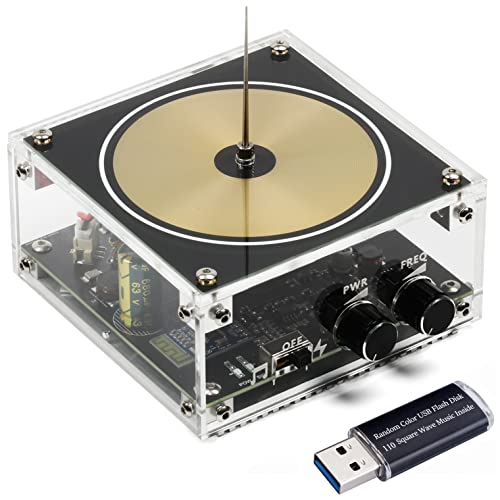
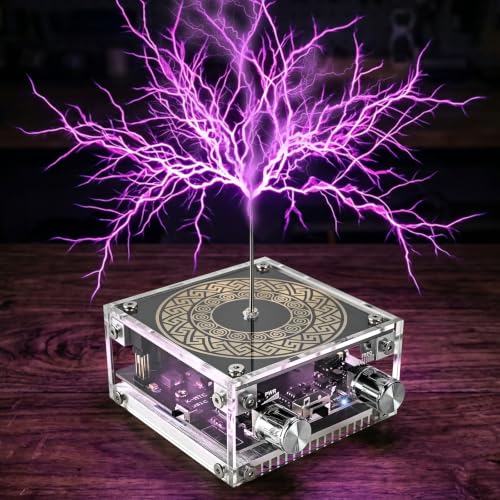
Watching high-voltage electrical arcs snap in rhythm with music offers a captivating visual and acoustic demonstration of applied physics. Unlike conventional speaker cabinets that rely on dynamic cone drivers and voice coils to vibrate air, plasma loudspeakers modulate open high-voltage discharges to produce sound. Because open electrical arcs can look intimidating, many curious buyers ask if are tesla coil speakers dangerous for routine desktop use or science demonstrations. Solid-state Tesla coil technology has become increasingly accessible through compact Bluetooth kits, making it essential to understand the real electrical and environmental behaviors of these singing arc devices.
While standard home music speakers generate sound safely behind protective grilles, a singing Tesla coil ionizes ambient atmospheric gases into thermal plasma. Operating an exposed high-frequency electrical spark introduces specific hazards, including contact burns, ozone gas accumulation, and potent electromagnetic interference that can disrupt sensitive household electronics. By examining the exact operational mechanisms of consumer solid-state coils from brands such as Joytech, Yoqanr, and DIDODI, audio hobbyists can enjoy singing arc technology while maintaining rigorous electrical and fire safety.




Understanding Tesla Coil Speaker Safety and Operational Hazards
Consumer-grade solid-state Tesla coils marketed as plasma speakers are not inherently lethal when operated responsibly, but they present tangible hazards that conventional audio equipment does not share. While traditional audio gear encapsulates electrical currents entirely within insulated wiring and speaker cabinets, a singing Tesla coil deliberately discharges raw, high-voltage electricity into the open air. This operational difference introduces electrical shock potential, localized burn hazards, electromagnetic disruption, and gaseous emissions into the immediate environment. Assessing whether these devices are dangerous requires looking closely at discharge power levels, physical clearances, and workspace safety practices.
Most compact desktop models, including solid-state coils from manufacturers such as Joytech, Yoqanr, and DIDODI, operate at modest power inputs that strictly limit current output. These desktop models prioritize visual spark demonstrations and audio novelty rather than continuous acoustic fidelity. However, treating a high-voltage plasma generator like an ordinary consumer gadget can lead to ruined smartphones, minor skin burns, or indoor air quality issues. Knowing how these devices interact with the human body, ambient air, and nearby electronics is essential for maintaining a safe listening environment.
How Plasma Loudspeakers Generate Sound Through Open Arcs
Traditional dynamic speakers produce acoustic waves by passing an alternating electrical signal through a voice coil suspended within a magnetic field. That voice coil drives a paper or polypropylene cone back and forth, compressing and rarefying the surrounding air to create audible sound waves. In contrast, a singing Tesla coil eliminates physical moving parts entirely by using an open plasma arc as the acoustic transducer. The solid-state driver modulates the electrical arc frequency and duration, causing the ionized air channel to expand and contract rapidly in response to the audio waveform.
Because plasma has virtually zero mechanical mass compared to a physical speaker cone, it can reproduce rapid transient signals and high-frequency details with remarkable speed. However, generating pressure waves entirely through air heating requires significant electrical energy and yields very low thermodynamic acoustic efficiency. Most desktop plasma speakers require square-wave audio files to achieve intelligible sound, since complex musical arrangements often sound harsh or distorted through an unshielded spark. For listeners accustomed to balanced fidelity from standard Bluetooth speakers, singing Tesla coils serve primarily as educational science demonstrations rather than practical audio solutions.
Electrical Shock Hazards and High-Frequency Arc Contact
The most immediate concern for anyone observing an open electrical arc is the danger of severe electrical shock or electrocution. In commercial utility circuits, high-voltage contact carries lethal danger because utility grids supply substantial amperage capable of disrupting the human heart rhythm. Desktop solid-state Tesla coils operate on a fundamentally different electrical principle by trading current for voltage. While the discharge needle may reach potentials between twenty thousand and fifty thousand volts, the secondary current remains restricted to a few milliamperes, significantly reducing the probability of fatal ventricular fibrillation.
Operating frequency also plays a critical role in human biological safety when interacting with singing plasma coils. Desktop solid-state drivers typically switch at radio frequencies ranging between several hundred kilohertz and several megahertz. At these high frequencies, electrical currents tend to travel along the outer surface of conductive materials rather than penetrating deeply into internal organs, a phenomenon known in physics as the skin effect. Consequently, accidental brush contact with a low-power arc rarely stimulates deep motor nerves or induces muscular tetany in the manner of household wall outlet current.
Although the risk of cardiac arrest from a low-power desktop unit is exceptionally low, touching an active discharge terminal is far from harmless. The ionized plasma arc carries intense localized thermal energy, which can cause instantaneous pinpoint burns on the skin upon direct contact. The sensation often feels like a sharp prickling heat accompanied by a mild electrical sting, and prolonged contact will carbonize epidermal tissue. Furthermore, bringing ungrounded metal objects near the coil can induce secondary sparks that jump to nearby fingers, making clear separation from the discharge point essential.
Electromagnetic Interference and Damage to Nearby Electronics
While physical shock hazards on small coils are often manageable, electromagnetic interference represents the most frequent cause of actual property damage associated with singing Tesla coils. Solid-state coils act as powerful, unshielded radio-frequency transmitters that radiate broad-spectrum electromagnetic fields into the surrounding room. These high-frequency electromagnetic bursts can induce unwanted electrical currents within nearby wiring, circuit boards, and integrated microchips. Unshielded consumer electronics located within several feet of an active coil can experience erratic behavior, sudden lockups, or permanent component failure.
Smartphones and tablets used as Bluetooth audio transmitters are particularly vulnerable when placed too close to the secondary discharge needle. High-frequency electromagnetic radiation can couple into the sensitive touchscreen digitizers, audio codecs, and Bluetooth antennas of connected source devices. Many user reports document frozen touchscreens, dropped wireless connections, and damaged charging circuits caused by operating an unshielded coil within inches of a phone. To protect source hardware, users should maintain several feet of separation between transmitting devices and the high-voltage terminal.
The risk of electromagnetic disruption also extends to household power lines and critical personal medical equipment. High-frequency noise radiating from the switching circuitry can feed back into alternating current wiring, disrupting Wi-Fi routers and nearby appliances on the same branch. Testing unfamiliar audio files or demo tracks for speaker testing should always be conducted with consumer hardware kept safely outside the primary radiation field. Most critically, individuals with pacemakers, insulin pumps, or other active medical implants must never be present in the room during operation, as strong radio-frequency fields can disrupt life-supporting electronic leads.
Air Quality Considerations: Ozone and Nitrogen Oxides
A frequently overlooked hazard of singing Tesla coils is their chemical impact on indoor air quality. When an electrical spark jumps through atmospheric air, the high-voltage discharge provides sufficient energy to break the molecular bonds of ambient oxygen and nitrogen. Dissociated oxygen atoms quickly bond with diatomic oxygen molecules to form ozone, a triatomic molecule characterized by a sharp, pungent odor reminiscent of an electrical storm. Simultaneously, high temperatures in the plasma channel facilitate the reaction between atmospheric nitrogen and oxygen, creating various nitrogen oxides.
Ozone is a strong oxidizing agent that can cause respiratory irritation, coughing, and chest tightness when inhaled in confined spaces. Even low concentrations of ozone can irritate mucous membranes in the eyes, nose, and throat, posing elevated risks for individuals with asthma or chronic bronchitis. Operating an arc speaker in a small, closed bedroom or an unventilated office quickly elevates these chemical byproducts to uncomfortable levels. Demonstrations should always take place in well-ventilated spaces with open windows or exhaust fans, and operation should be limited to short intervals of five to ten minutes.
Thermal Energy, Fire Risks, and Workspace Management
The core of an electrical plasma discharge operates at thousands of degrees Celsius, creating an immediate fire hazard if flammable materials come into contact with the spark. Although desktop singing coils produce compact arcs measuring between one and ten centimeters in length, the thermal energy within that channel is easily high enough to ignite paper, cardboard, fabrics, and dry foliage. An errant spark jumping to a nearby curtain or loose paperwork can start a structural fire in seconds. Safe operation requires treating the discharge needle with the same caution given to an open gas flame.
Establishing an uncluttered clearance zone around the Tesla coil is the most effective way to eliminate fire hazards. The surface beneath the unit should be entirely non-conductive and fire-resistant, such as a heavy wooden workbench, ceramic tile, or glass tabletop. Flammable liquids, aerosol sprays, alcohol cleaners, and synthetic textiles should be completely removed from the room before powering the unit. In addition, observers should monitor chassis temperature and adhere strictly to manufacturer duty cycles, allowing internal heatsinks to cool thoroughly between demonstrations.
Acoustic Output and Auditory Safety in Desktop Demonstrations
While plasma speakers generate fascinating visual effects, their acoustic output presents specific auditory considerations. The sound produced by an unshielded electrical arc is naturally biased toward high frequencies, characterized by bright, metallic transients and a sharp upper-register rasp. Because desktop units lack the physical volume displacement required to reproduce low-frequency bass, the resulting sound pressure concentrates entirely in the mid and high audio bands. Listening to continuous high-frequency arc noise at close range can cause rapid auditory fatigue and temporary ear ringing.
The acoustic pressure generated by singing arcs fluctuates sharply depending on the input audio file structure and modulation depth. Square-wave audio files generate clean, recognizable melodic lines, but they also produce prominent harmonic distortion across the audible spectrum. Standard analog audio signals often produce intense crackling, erratic popping, and sudden volume spikes when the audio peaks exceed the coil modulation threshold. Maintaining a physical distance of at least five to six feet reduces perceived harshness, and observers should avoid turning audio input levels to maximum.
Power Differences Across Consumer Desktop Coils and DIY Kits
The inherent hazard level of a singing Tesla coil varies substantially depending on whether the unit is an entry-level DIY kit or an integrated desktop system. Low-power DIY mini kits, often built around single-transistor circuits, operate at low direct-current voltages and produce sparks measuring only a few millimeters. These miniature kits generate negligible heat, faint acoustic output, and minimal ozone, making them relatively benign educational projects under adult supervision. Their restricted power reserves fundamentally limit both their acoustic capability and their capacity to cause harm.
Mid-range desktop units, such as solid-state coils from Joytech and Lumenrix, step up the available power to generate arcs reaching several inches in length. These units incorporate sophisticated primary driver boards, dedicated heatsinks, and Bluetooth receivers capable of playing modulated music files with audible volume. Because these models deliver substantially higher energy densities, their potential for skin burns, electromagnetic interference, and fire ignition increases accordingly. In contrast, massive dual-resonant or spark-gap coils used in large stage shows operate at lethal power levels requiring Faraday cages and dedicated earthing.
Step-by-Step Safe Operating Protocol for Plasma Speakers
Operating a desktop singing Tesla coil safely begins with thorough workspace preparation and inspection. Place the base unit on a clean, level, heat-resistant surface completely clear of papers, metallic desk organizers, and flammable liquids. Inspect the secondary coil winding for any visible cracks in the protective varnish, and ensure the top discharge needle is firmly seated in its mounting socket. Verify that all nearby electronic equipment, including computers, laptops, and mobile phones, is stationed at a safe distance outside the active field radius.
Establish your wireless audio connection before energizing the high-voltage primary stage whenever the model allows. Pair your source device via Bluetooth or connect the auxiliary cable while keeping the source volume slider set to a low initial level. Once the audio stream is playing, connect the coil power supply to a grounded outlet and flip the primary power switch. Gradually increase the input volume until a clean, steady arc establishes itself, keeping demonstration sessions short and disconnecting mains power before making any adjustments.
Summary of Practical Safety Precautions
Desktop Tesla coil speakers offer an extraordinary look at high-voltage physics and acoustic modulation, bridging the gap between electrical engineering and sound reproduction. When operated conscientiously by informed users, low-power desktop models present manageable risks that do not threaten life or limb. However, the presence of open electrical arcs, localized thermal energy, high-frequency electromagnetic radiation, and ozone emissions means these devices require far more caution than traditional home audio gear. Respecting physical clearances, providing ample ventilation, and protecting sensitive electronics ensures that your plasma speaker demonstrations remain exciting, educational, and safe.



Write Your Review
No reviews yet. Be the first to share your experience!