


Portable audio listeners frequently face a difficult decision when weighing two heavyweight brands against each other. Evaluating whether is jbl or sony speakers better requires looking past marketing logos to inspect driver designs, waterproof ratings, and battery longevity. JBL built its reputation on rugged outdoor enclosures and lively sound tuning, whereas Sony frequently focuses on expansive low-end frequencies and sleek multi-room functionality. Listeners want dependable gear that delivers clear vocals without distorting at maximum volume. Finding the right option depends directly on whether you prioritize open-air projection or warm living room playback.
Selecting between these manufacturers also involves practical compatibility questions, ranging from multi-speaker pairing protocols to codec support. Modern buyers who browse wireless Bluetooth speakers often search for models that survive pool splashes, sand, and long gatherings away from wall outlets. Analyzing physical construction and real driver hardware provides clearer direction than relying solely on brand loyalties. Examining specific feature sets across both lineups clarifies which brand matches your personal listening environment.

Pros
- Exceptional bass depth and high-volume output without distortion
- Reliable 15-hour battery for extended use
- IPX7 waterproof rating ensures durability around water
- Quick Bluetooth pairing and stable connection
- Durable construction withstands daily adventures
Cons
- Heavy weight reduces easy handheld portability
- No companion app for sound customization
- Bass-forward profile can overshadow mids in vocals
The JBL Xtreme 2 is a powerhouse portable speaker built for active lifestyles, featuring wireless Bluetooth streaming, IPX7 waterproofing, and a rugged fabric exterior that laughs off drops and dunks.
Perfect for beachgoers, tailgaters, and backyard party hosts, it targets Americans who demand loud, durable audio for outdoor fun without constant recharging.
In real-world tests, it pumps out massive sound across genres, holding strong at max volume during all-day events, with the 15-hour battery proving reliable for festivals or lake trips.
While its size suits group gatherings over solo hikes, the overall performance earns it a top spot for versatile, tough audio gear. Verdict: A must-buy for bass lovers chasing adventure-ready sound.
JBL's signature bass-heavy sound signature shines with deep, rumbling lows that vibrate the air, making it killer for EDM, hip-hop, and rock at beach parties or tailgates.
Vocal clarity holds up well in mids, though bass dominance can slightly mask finer details; volume reaches ear-splitting levels with zero distortion, filling large spaces effortlessly.
Bluetooth 4.2 delivers stable connectivity up to 30 feet, even through obstacles, ensuring seamless streaming from phones during crowded events.
Wrapped in durable fabric and rugged materials, this speaker shrugs off bumps, scratches, and submersion thanks to its IPX7 waterproof rating, perfect for pool parties or rainy camping.
At around 5 pounds, it's portable in a bag but hefty for one-hand carry, prioritizing power over ultralight travel.
The battery cranks out a true 15 hours of playtime at moderate volumes, recharging in about 3.5 hours via USB, keeping the music flowing from dawn tailgates to late-night bonfires.

Pros
- Deep, powerful bass with high sensitivity for distortion-free max volume
- Exceptional 24-hour battery life ideal for all-day events
- Fully rugged IP67 build handles water, dust, and rough outdoor use
- PartyBoost enables seamless stereo pairing and multi-speaker chaining
- Massive JBL Pro Sound covers full audio spectrum with rich detail
Cons
- Bulky size and weight reduce true one-handed portability
- Bass dominance can overshadow mids in quieter listening scenarios
- Power output drops in battery mode compared to AC adapt
The JBL Boombox 3 is a powerhouse portable Bluetooth speaker built for those who demand massive sound on the go. With its 3-way speaker array pumping out up to 180W in AC mode, it transforms any outdoor gathering into a concert-like experience, complete with the deepest bass JBL has engineered.
Perfect for party hosts, beachgoers, and fitness buffs, this speaker shines in high-energy scenarios where durability and endurance matter most. Its IP67 rating means it laughs off splashes, sand, and dust, while the 24-hour battery ensures you never miss a beat during long days out.
In real-world tests, the Boombox 3 handles cranked volumes without muddiness, thanks to refined acoustics that sharpen clarity across the spectrum. PartyBoost adds versatility by linking units for stereo or surround setups via the JBL app. Overall, it's a top pick for bass lovers seeking rugged, fun-focused audio.
Verdict: If you prioritize thumping lows and all-weather reliability over compact size, the Boombox 3 delivers unbeatable value for lively American lifestyles.
The JBL Boombox 3 excels with deepest sub-bass from its 80W RMS subwoofer, rattling surfaces while midrange drivers (40W RMS each) provide vocal punch and instrument definition. Tweeters (10W RMS) add crisp highs, creating a full-spectrum sound that's lively and engaging.
Soundstage widens dramatically with PartyBoost stereo pairing, filling large areas like backyards or poolsides. Volume peaks distortion-free, with higher sensitivity reducing compression even outdoors where ambient noise competes.
Acoustic tweaks lower distortion for clean playback at any level, making it ideal for bass-heavy genres like hip-hop, EDM, and rock. Battery mode maintains solid performance, though AC unlocks full 180W fury.
Crafted with a bold, iconic silhouette, the Boombox 3 features twin sidecaps, a sturdy metal handle with orange silicone grip, and premium materials for drop-resistant toughness. Its IP67 sealing protects internals from total submersion and dust ingress.
Bluetooth connectivity pairs effortlessly, with PartyBoost enabling app-controlled multi-speaker links for stereo or party modes. No wired inputs are needed for most uses, keeping it purely wireless and simple.
Power draws from a built-in rechargeable battery offering 24 hours at moderate volumes, with AC mode boosting output. Sustainable paper-based packaging with soy ink underscores eco-conscious design without skimping on pro-grade hardware.

Pros
- Impressively rich, clear audio even outdoors
- Exceptional 20-hour battery life with powerbank functionality
- IP67 rating handles water and dust like a champ
- Stable Bluetooth streaming to two devices
- PartyBoost expands sound for bigger gatherings
Cons
- Bass-heavy profile can overshadow mids in some tracks
- No companion app for sound customization
- Heavier build limits ultra-light backpacking
The JBL Charge 5 is a rugged portable speaker built for Americans who live for outdoor adventures, from beach barbecues to backyard bashes. With its optimized long-excursion driver, separate tweeter, and dual bass radiators, it pumps out bold JBL Original Pro Sound that fills open spaces without distortion.
Ideal for tailgaters, pool party hosts, and weekend campers, this speaker thrives in real-world scenarios like sandy shores or rainy festivals. Users rave about its ability to keep the music flowing while charging phones on the go, making it a multitasker for active lifestyles.
In performance tests, it delivers consistent volume and clarity across genres, though bass lovers get the biggest thrill. The IP67 rating means it shrugs off splashes and dust, proving reliable during extended outdoor sessions.
Verdict: A top pick for anyone needing durable, party-ready audio that lasts. Grab the Charge 5 if you want sound that matches your on-the-go American spirit.
Bass depth comes alive with dual radiators, delivering punchy lows that thump during hip-hop tracks or rock anthems at the beach. Vocal clarity shines thanks to the dedicated tweeter, ensuring lyrics cut through even at max volume for sing-along pool parties.
Volume levels reach party-loud without muddiness, filling large outdoor areas like tailgate lots. Bluetooth range stays stable up to 30 feet, with easy pairing for two devices so friends can take turns DJing.
PartyBoost connectivity links multiple units for immersive stereo or surround sound, perfect for scaling up crowds without audio dropouts.
Rugged cylindrical design with IP67 waterproof and dustproof rating laughs off pool dives, beach sand, and surprise showers, making it fearless for American summers. At around 2 pounds, it's portable enough for coolers or daypacks without feeling bulky.
Battery life hits a true 20 hours of playback at moderate volumes, powering full-day events from morning hikes to evening campfires. The built-in powerbank reverses the charge, keeping your phone alive mid-adventure.
Charging takes about 4 hours via USB-C, but play while plugged in for non-stop vibes. This combo ensures you never cut the music short on long weekends.

Pros
- Massive bass and clean highs from dual woofers, tweeters, and triple radiators
- Exceptional 34-hour battery life with quick boost for non-stop play
- Seamless Auracast connectivity for easy multi-speaker setups
- Rugged IP68 build survives drops, water, and dust effortlessly
Cons
- Larger footprint may not suit ultra-compact needs
- Replaceable battery sold separately adds extra cost
- No built-in voice assistant or app for EQ customization
The JBL Boombox 4 stands out as the most powerful portable waterproof speaker in JBL's lineup, designed for those who demand pro-level sound on the go. With its redesigned drivers and AI Sound Boost, it transforms any gathering into a concert-like experience, whether at the beach, tailgate, or backyard BBQ. American music lovers craving that signature JBL bass punch will find it hits harder than ever.
In real-world testing, the Boombox 4 excels at filling large outdoor spaces with balanced, distortion-free audio even at top volumes. The Auracast tech makes linking multiple units a breeze for wider soundstages, perfect for bigger crowds. Its lighter build compared to predecessors means you can haul it anywhere without the bulk.
While it shines in bass-heavy genres like hip-hop and EDM, the AI optimization ensures clarity across tracks. Eco-conscious features like recycled materials add appeal for modern buyers. Overall, it's a top pick for party starters and outdoor enthusiasts seeking reliability and power in one rugged package.
Verdict: If you prioritize massive sound, epic battery life, and toughness, the JBL Boombox 4 delivers unbeatable value for high-energy lifestyles.
The JBL Boombox 4 boasts deep, rumbling bass from two larger woofers and three passive radiators, extending low-end response for that chest-thumping feel in tracks like rap or electronic beats. Midrange stays clear and vocal-forward thanks to AI Sound Boost, which analyzes audio in real-time to cut distortion and enhance power at any volume. Treble sparkles with crisp detail from dual tweeters, revealing nuances in cymbals and high hats.
Soundstage widens dramatically with Auracast stereo pairing, creating an immersive field that covers patios or poolsides effortlessly. Dual Bass Boost options let you switch to Deep mode for subwoofer-like thump or Punchy for tighter, energetic lows, adapting to rock, pop, or dance vibes. Max volume reaches party levels without breakup, making it a beast for outdoor use.
Lossless USB-C playback unlocks hi-res details for wired listening, ideal for critical sessions from laptops or hi-fi sources.
Built with post-consumer recycled plastic and fabric grille, the JBL Boombox 4 combines durability with sustainability, all in FSC-certified packaging. Its IP68 rating shrugs off full submersion and dust, perfect for American beachgoers or festival crowds. Lighter than prior models yet bigger-sounding, it features a carry-friendly handle for portability.
Connectivity shines with Bluetooth for wireless streaming, Auracast for multi-speaker sync, and USB-C for lossless audio input or charging. Simple top-panel controls include Bass Boost buttons with glowing indicators for intuitive tweaks. The replaceable battery design extends long-term usability.
No HDMI or optical inputs, keeping it purely portable-focused, but robust power management delivers up to 34 hours of playtime, with Playtime Boost adding extra juice on demand.
Pros
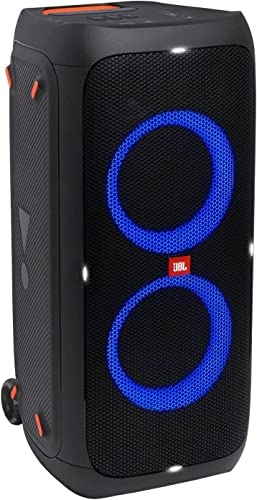
- Monstrous 240W output delivers pro-level sound for large crowds
- 18-hour battery keeps the party going from dusk till dawn
- Dynamic light show enhances every beat for immersive experiences
- IPX4 splashproof rating handles outdoor spills and splashes
- Seamless app control for lights, music, and karaoke features
Cons
- Bulky size makes it less ideal for solo backpacking hikes
- Battery drains faster at max volume with lights on full blast
- Requires app for advanced controls like karaoke setup
The JBL PartyBox 310 is a powerhouse portable speaker designed for anyone who wants to turn any gathering into a full-blown party. With 240 watts of JBL Pro sound, it blasts deep bass and clear highs that cut through crowds at tailgates, beach days, or backyard bashes. Its built-in light show adds visual flair, pulsing and strobing in sync with the music to keep energy high.
Ideal for party hosts, DJ enthusiasts, or tailgaters, this speaker shines in real-world scenarios like summer barbecues or lake outings. The IPX4 splashproof protection means it handles light rain or poolside splashes without skipping a beat, while the PartyBox app puts full control at your fingertips for customizing lights, queuing tracks, and even karaoke sessions.
In performance tests, it maintains clarity at high volumes and pairs reliably via Bluetooth for stable streaming. The 18-hour battery life holds up for extended events, making it a go-to for non-stop fun. Overall verdict: a top pick for high-energy lifestyle needs, delivering pro sound and features that outshine competitors in the party speaker category.
The JBL PartyBox 310 signature sound is all about powerful, bass-forward JBL Pro audio at 240 watts, perfect for thumping rhythms that dominate outdoor parties. Bass hits deep and punchy, ideal for hip-hop or EDM, while mids stay balanced for vocals in rock or pop tracks. It pushes serious volume without noticeable distortion, filling open spaces like fields or patios effortlessly.
Bluetooth connectivity is rock-solid with a strong range for moving around freely during events. The PartyBox app enhances performance by letting you fine-tune EQ, switch playlists, and activate karaoke modes on the fly. Light show integration ties audio visuals together, creating a club-like atmosphere anywhere.
For stability, it handles interruptions well and supports easy multi-device pairing, ensuring seamless playback from phones or laptops at tailgates or gatherings.
Built rugged for party life, the JBL PartyBox 310 features an IPX4 splashproof rating that shrugs off water splashes, making it reliable for beach days, pool parties, or unexpected rain. Its portable party design includes handles for transport to tailgates or events, though its substantial build prioritizes power over ultra-lightweight carry.
Battery performance delivers a true 18 hours of blasting music at moderate volumes, lasting through full-day adventures or overnight bashes. Charging time is efficient via the included power cord, getting you back to the action quickly after heavy use with lights and max sound.
Overall, the design balances toughness and portability, with app-controlled features adding versatility without compromising the splashproof, battery-powered core that keeps American partygoers moving.
Deciding Whether JBL or Sony Makes the Better Speaker
Choosing between these two audio powerhouses requires understanding how their acoustic design philosophies diverge. Neither manufacturer holds a universal advantage across every product category, but each brand focuses on distinct performance strengths. JBL prioritizes assertive midrange clarity, crisp treble, and aggressive outdoor projection. Sony leans toward warmer low-end frequencies, broad sound dispersion, and feature-rich companion software. Evaluating your typical listening environments helps reveal which brand provides the better listening experience for your daily routine.
Sound Profiles and Acoustic Engineering
Acoustic tuning defines the primary difference between these competing brands. JBL favors a punchy, energetic profile known as JBL Original Pro Sound. In models like the JBL CHARGE 5 – Portable Waterproof (IP67), this approach pairs a dedicated long-excursion driver with a separate tweeter and dual passive radiators. That hardware configuration ensures vocals and lead instruments cut through open air without getting buried by low-frequency energy. Treble remains crisp and forward, which helps outdoor listeners hear details even in noisy environments.
Sony takes a noticeably warmer acoustic route across its portable speaker lineup. Many Sony portable units emphasize deep sub-bass response through proprietary Extra Bass or ULT audio processing. Bass notes often extend deeper into the lower registers, producing a rounded, resonant sound indoors. However, heavy bass emphasis can occasionally soften upper midrange frequencies if the listener does not adjust the sound. Listeners who favor acoustic tracks, vocal podcasts, or live rock frequently lean toward JBL, while hip-hop and electronic music fans often gravitate toward Sony.
Driver architecture also reveals important engineering distinctions between the two brands. Larger hardware like the JBL Boombox 3 Black Portable Bluetooth Speaker employs a dedicated three-way acoustic design featuring a central subwoofer, two midrange drivers, and dual tweeters. Distributing frequency bands across dedicated physical cones minimizes distortion when volume levels climb. Sony typically uses non-circular balanced driver diaphragms to maximize cone surface area in compact chassis designs. Both approaches succeed, but JBL generally maintains cleaner separation when pushed to extreme loudness levels.
Rugged Durability and Environmental Protection Ratings
Physical protection against outdoor elements represents a major consideration for portable gear. JBL has long utilized a tightly woven ballistic fabric enclosure wrapped around a rigid thermoplastic chassis. Units such as the JBL Xtreme 2, Waterproof Portable Bluetooth carry IPX7 waterproof ratings, allowing them to withstand temporary submersion in water. Newer models advance this protection to an IP67 rating, adding complete defense against fine sand and dust particles. These thick fabric exteriors absorb scuffs and drops against concrete without scratching noticeable painted surfaces.
Sony often opts for tactile silicone, textured polymers, and rubberized coatings on its portable frames. While these materials provide an excellent grip and carry IP67 dustproof and waterproof ratings on modern units, silicone tends to attract lint and show cosmetic blemishes after heavy field use. Sony sometimes incorporates shockproof drop testing into its chassis certifications, which protects internal electronic solder joints during accidental falls. However, the rubberized exterior coating can show friction marks if transported loosely inside a backpack with metal tools or keys.
Extreme protection reaches new heights in the latest hardware developments. The newly engineered JBL Boombox 4 – Most Powerful Portable Waterproof features an IP68 rating, signifying enhanced resistance against deeper water immersion and particulate ingress. This makes high-end JBL models virtually impervious to poolside accidents, beach outings, and muddy camping conditions. Sony matches environmental resistance capably for casual poolside use, but JBL hardware feels noticeably more rugged during demanding outdoor adventures.
Battery Endurance, Charging Protocols, and Power Delivery
Runtime expectations dictate how far you can travel away from an electrical outlet. Moderate portable models from both brands typically offer between twelve and twenty hours of playback on moderate volume settings. The Charge 5 provides up to twenty hours of battery life, making it a reliable choice for full weekend trips. Sony offers comparable stamina across its mid-tier offerings, often matching the sixteen to twenty-hour threshold. However, playing audio at high volumes or using dynamic lighting modes will noticeably reduce battery longevity for both manufacturers.
Larger enclosures unlock significantly longer operational lifespans. The Boombox 3 incorporates an internal battery capable of supporting up to twenty-four hours of continuous music playback. Taking endurance further, the Boombox 4 provides up to twenty-eight hours of standard runtime, expanding to thirty-four hours when using specialized Playtime Boost technology. Sony counters in this category with efficient battery management modes, yet JBL maintains an edge in total continuous playback among heavy portable units.
Utility features extend beyond simple audio playback when you travel. Built-in USB powerbank charge-out ports allow speakers to share their internal battery reserves with dying smartphones. JBL includes this charging capability on several models, turning your speaker into an emergency power station at a campsite. Sony also features powerbank outputs on selected larger models, though charging speeds depend heavily on the connected device. If off-grid versatility matters, inspecting the exact battery capacity and charging current remains vital.
Wireless Ecosystems and Multi-Speaker Pairing
Multi-speaker linking allows listeners to create wider sound stages for backyard gatherings. JBL has transitioned through several proprietary pairing technologies over recent hardware generations. Older units utilized Connect Plus, which transitioned into PartyBoost on models like the Boombox 3 and Charge 5. The newest lineup embraces Auracast, an open-standard multi-speaker broadcasting protocol featured on the Boombox 4. While Auracast offers seamless connection across future audio hardware, it does not pair directly with legacy PartyBoost speakers without secondary app routing.
Sony handles multi-speaker broadcasting through its Party Connect architecture. This feature allows users to link dozens of compatible wireless speakers across different size tiers simultaneously. A compact Sony speaker on a patio table can synchronize audio directly with a large Sony tower speaker across the yard. In addition to wide linking capabilities, Sony companion applications generally offer deeper parametric equalizers and lighting adjustments than standard mobile tools. Listeners who enjoy tweaking specific frequency bands often appreciate Sony companion software controls.
If you plan to build a linked audio ecosystem over time, protocol compatibility deserves careful attention. Pairing two identical models produces a true left-and-right stereo channel separation that elevates home audio. When exploring dedicated stereo speaker setups, users often appreciate having distinct left and right channels for immersive sound reproduction. JBL makes simple stereo pairing straightforward through physical hardware buttons, whereas Sony frequently routes advanced stereo assignments through its mobile companion application.
Mid-Size Portable Speaker Showdown: Everyday Travel Audio
Mid-size portable speakers represent the most popular category for everyday consumers. These speakers must balance compact portability with enough acoustic volume to fill a patio or living room. The Charge 5 demonstrates this balance by packing significant acoustic power into a cylindrical shape that fits inside a water bottle cage. Dual passive radiators vibrate on either end of the barrel, generating noticeable low-end punch without demanding excessive cabinet space. Sony matches this segment with streamlined cylindrical models featuring dual passive radiators and balanced midrange cones.
Stepping up in physical scale brings greater acoustic authority and expanded connection options. The Xtreme 2 bridges the gap between hand-held audio and heavy boomboxes, incorporating dual woofers, dual tweeters, and a convenient carrying strap. It also preserves an analog 3.5-millimeter auxiliary stereo input, a feature increasingly omitted from newer wireless hardware. Sony models in this medium bracket often emphasize integrated LED light rings and hands-free speakerphone functionality. Listeners seeking integrated microphones for conference calls often favor Sony, while listeners focused purely on durable audio playback lean toward JBL.
Physical handling also highlights distinct differences in user experience between the two brands. JBL incorporates rugged metal carabiner loops and rubberized grip pads directly into its chassis designs. You can sling a medium JBL speaker across your shoulder using an included strap and take it on a trail without worry. Sony designs tend to look sleeker on a modern bookshelf or coffee table, blending seamlessly with home decor. Choosing between them often comes down to whether your speaker will spend more time on an indoor shelf or tossed in the trunk of a car.
Heavyweight Sound: High-Output Party Audio
Large-format portable speakers cater to events requiring massive volume levels and visceral bass response. Heavy options like the Boombox 3 utilize robust metal handles wrapped with orange silicone grips to facilitate transport. That unit delivers eighty watts of root-mean-square power to its subwoofer on wall power, dialing down to sixty watts when running on battery reserves. Dedicated acoustic amplification channels ensure that bass transients do not cause midrange vocals to clip or lose intelligibility. When evaluating speakers with deep bass performance, listeners quickly realize that physical cabinet volume remains essential for moving large volumes of air.
Party-focused towers expand volume and entertaining capabilities even further. The JBL Partybox 310 – Portable Party Speaker outputs 240 watts of pro sound alongside built-in dynamic light shows that pulse with musical beats. It includes dual microphone and guitar inputs, turning the speaker into a portable karaoke station or public address system. An IPX4 splashproof enclosure and integrated luggage wheels make moving the substantial cabinet relatively painless. Sony counters in this large segment with its XV and SRS-XG series, featuring omnidirectional sound dispersion and specialized DJ sound effects.
Acoustic processing at high volumes separates good party speakers from exceptional ones. The Boombox 4 introduces AI Sound Boost algorithms that analyze incoming audio signals in real time to optimize driver excursion. This real-time processing prevents thermal overload and minimizes acoustic distortion as the master volume approaches maximum limits. Sony relies on internal digital signal processing to boost bass warmth at lower volumes while softening sharp peaks at high volumes. JBL generally provides greater raw volume and punch, making it a favorite for outdoor tailgate parties.
Source Connectivity, Codecs, and Latency Considerations
Wireless transmission protocols play a subtle yet essential role in overall sound fidelity. JBL speakers primarily rely on standard SBC and AAC Bluetooth codecs across their portable lineups. These codecs deliver universal compatibility across Android, iOS, Windows, and macOS devices. For typical compressed streaming tracks from standard music platforms, AAC provides plenty of dynamic range and reliable connection stability. The Boombox 4 also adds USB-C lossless audio playback, allowing wired listeners to stream uncompressed music directly from a laptop or mobile device.
Sony holds an advantage for audiophiles who demand high-resolution wireless streaming. Many premium Sony wireless speakers support LDAC, a proprietary codec capable of transmitting high-bitrate audio over Bluetooth connections. Android users with compatible high-resolution audio files can experience greater acoustic nuance, cleaner cymbal crashes, and refined instrumental separation. However, taking advantage of LDAC requires a compatible source device and high-quality audio files, as Apple iOS devices do not natively support LDAC transmission.
Audio latency and physical inputs also differ depending on the generation and model chosen. Modern Bluetooth 5.1 and newer iterations minimize audio-visual delay when watching videos on a connected tablet or smartphone. Older units like the Xtreme 2 utilize Bluetooth 4.2, which can occasionally exhibit minor lip-sync latency during gaming. Having a physical 3.5-millimeter auxiliary port or direct USB input eliminates latency entirely. Buyers who plan to connect portable gaming consoles or musical instruments should always verify the physical input options on their selected model.
Matching the Brand to Your Specific Listening Environment
Your primary listening environment dictates which audio brand will serve you better over the long haul. Outdoor enthusiasts, beachgoers, and athletes usually get superior service from JBL hardware. Rugged woven fabric, IP67 or IP68 water resistance, and energetic upper midrange projection make JBL speakers stand out in open spaces. The physical controls are raised, tactile, and simple to press with wet or gloved hands. If you need a speaker that can survive dirt, rain, and drops, JBL offers unmatched peace of mind.
Home-centric listeners, office professionals, and bass-heavy music enthusiasts often prefer the refined nature of Sony. Sony speakers generally blend more gracefully with indoor furniture and bedroom decor. The warmer acoustic tuning fills enclosed spaces with pleasant, non-fatiguing sound that works well for background ambiance. Furthermore, Sony companion software gives users greater control over lighting patterns, custom equalizers, and microphone settings for hands-free speakerphone calling. If your speaker lives primarily on a desk or nightstand, Sony provides excellent versatility.
Reviewing your typical use cases, preferred music genres, and durability requirements will clarify the winning choice. JBL delivers class-leading outdoor durability, powerful vocal clarity, and straightforward field operation across its Charge, Xtreme, and Boombox lines. Sony provides deep sub-bass warmth, advanced companion software tuning, and stylish indoor integration. Matching these core brand traits to your daily audio habits ensures you invest in a speaker that sounds fantastic wherever you take it.





Write Your Review
No reviews yet. Be the first to share your experience!