


Moving into a home with existing architectural wiring or trying to route sound through integrated room hardware often brings unexpected setup hurdles. Many listeners discover bare speaker wires terminating in a blank wall plate or wonder how modern streaming devices interface with hardware installed throughout the ceiling and walls. Knowing how to connect built in speakers requires identifying whether your audio hardware is passive or self-powered, tracing the signal path, and matching your equipment with the correct amplifier or receiver. Exploring proper on-wall speaker installations can clarify how physical placement influences the type of hardware and wiring terminations you will encounter.
A successful installation relies on matching electrical impedance, securing solid wiring contacts, and selecting compatible source inputs such as RCA, 3.5mm auxiliary jacks, or digital connections. Overlooking amplifier specifications or polarity alignment can cause thin playback, low volume output, or unexpected equipment shutdown. Once you map the audio channels and select appropriate distribution or amplification components, getting clean sound from your integrated setup becomes straightforward and reliable. Careful inspection of your hardware before powering on prevents damage to delicate voice coils.

Pros
- Punchy deep bass with customizable EQ for tailored sound
- Exceptional 20-hour battery life plus power bank capability
- Rugged IP67 rating survives water, dust, shocks, and rust
- Versatile connectivity including Bluetooth, AUX, and USB-C
- Intuitive Bose app for easy control and device management
Cons
- Bass-heavy signature may favor thump over balanced mids for audiophiles
- Larger size suits parties more than ultra-light backpacking
- Premium build means it's not the budget pick for casual use
The Bose SoundLink Max is a powerhouse portable Bluetooth speaker built for those who live for music-fueled adventures. Whether you're hosting backyard barbecues, hitting the beach, or tailgating, this speaker delivers Bose's signature audio punch in a tough, go-anywhere package. Its deep bass and big sound fill outdoor spaces effortlessly, making it a hit for playlist curators and impromptu DJs.
In real-world testing, the SoundLink Max shines with up to 20 hours of playtime, letting you crank tunes from sunrise hikes to late-night bonfires without recharging. The IP67 rating means it laughs off splashes, dust storms, or accidental drops, while the rope handle makes carrying it a breeze. Pair it with the Bose app to fine-tune EQ settings, ensuring your favorites sound just right.
While it's not the smallest portable out there, its robust build and features like AUX input and power bank functionality make it a versatile daily driver. For American music fans seeking premium, party-ready sound without the hassle, the SoundLink Max earns top marks as a reliable crowd-pleaser.
Verdict: If you want bass that wows and durability that lasts, this is your new adventure companion. Grab it for endless summer vibes.
Bose engineers the SoundLink Max for deep bass extension that rumbles through tracks like hip-hop beats or EDM drops, creating a visceral low-end feel perfect for parties. Mids come through clear for vocals and guitars, while customizable treble via the app adds sparkle without harshness, revealing nuances in everything from rock anthems to podcasts.
The wide soundstage projects audio across backyards or patios, maintaining clarity even at high volumes with minimal distortion. Bluetooth connectivity ensures stable pairing, and the AUX input preserves full fidelity from wired sources. With EQ tweaks, you dial in balanced response or bass-boosted fun on demand.
Overall, it excels in dynamic outdoor playback, hitting peak volumes that rival larger systems while keeping fatigue-free listening for hours.
Crafted with a rugged, matte-black enclosure that's shock and rust resistant, the SoundLink Max stands up to real-life abuse. The soft, removable climbing rope handle offers a secure grip for one-handed transport, ideal for tossing in a beach bag or hanging from a cooler.
Dimensions strike a balance for portability without skimping on power, housing premium drivers for bass-heavy output. Connectivity shines with Bluetooth for wireless freedom, a 3.5mm AUX for analog gear, and USB-C for charging the speaker or powering devices as a battery bank. No fuss with optical or HDMI, keeping it purely portable-focused.
IP67 sealing protects against full submersion and dust ingress, powered by a long-life rechargeable battery via included USB-C cable. Simple button controls pair with the Bose app for battery checks and multi-device management, making it user-friendly for everyday adventures.
Pros
- Exceptional treble detail from high-quality silk dome tweeters
- Balanced bass response enhanced by reflex port and 4-inch drivers
- Convenient built-in wall-mount for flexible home theater placement
- Low 6-ohm impedance ensures compatibility with standard amps
- Attractive wood finish complements modern home decor
Cons
- Requires separate amplifier or receiver - no built-in power
- Wired connection only, lacks wireless Bluetooth convenience
- Bass depth fully depends on amp quality and power output
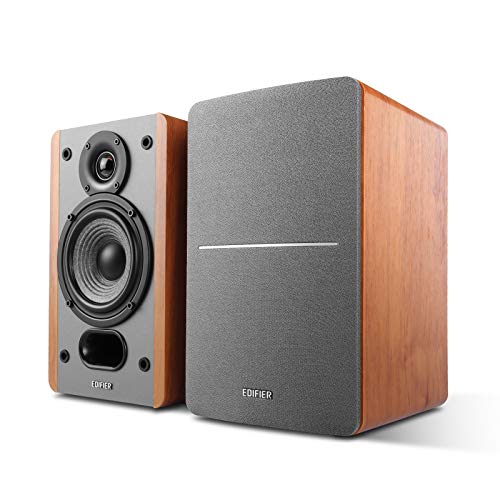
The Edifier P12 are passive bookshelf speakers designed for users who want high-fidelity audio without built-in amplification. This pair features 19mm silk dome tweeters for precise highs and 4-inch drivers with a bass reflex port for natural, balanced sound. Ideal for audiophiles building a custom setup, they shine as rear surrounds in home theaters or mains on a desktop when paired with an amplifier.
In real-world use, connect them to your receiver via included speaker wires, and they fill rooms with immersive audio for music or movies. The wood enclosure adds a premium aesthetic, while the built-in wall-mount brackets make installation straightforward for surround sound systems. They handle detailed playback well, reproducing vocals and instruments with clarity.
Targeted at budget-savvy listeners who prioritize sound quality over convenience, the P12 excel in controlled environments like living rooms or offices. Their 6-ohm impedance ensures broad amp compatibility. Verdict: A smart choice for wired audio enthusiasts seeking value-packed passive speakers that punch above their price.
The Edifier P12 deliver a balanced sound signature with silk dome tweeters providing exceptional treble detail, capturing cymbals, hi-hats, and high vocals with finesse. The 4-inch bass drivers, aided by a rear reflex port, produce natural low-end extension suitable for rock, jazz, or movie soundtracks, avoiding muddiness in mids.
Volume levels scale impressively with amplifier power, filling medium rooms without distortion when driven properly. Vocal clarity stands out, making dialogue in films sharp and engaging. Performance hinges on your amp choice, rewarding quality sources with immersive, room-filling audio.
As passive speakers, they offer stable, wired connectivity with no dropouts, outperforming wireless options in fidelity for critical listening sessions.
The Edifier P12 boast a sleek wood finish that blends seamlessly into home decor, with a compact bookshelf form factor perfect for shelves or stands. Built-in wall-mount brackets allow secure hanging as rear speakers, saving floor space and enabling true surround setups without extra hardware.
Build quality feels solid, with the enclosure tuned for resonance-free sound. At 6-ohm impedance, they pair efficiently with amps, drawing power as needed for sustained performance. No battery means unlimited playback - simply keep your amplifier powered for all-day listening without recharges.
Rugged enough for indoor use, they resist everyday knocks better than plastic rivals, though not rated for outdoor exposure. Weight supports stable mounting, prioritizing audio purity over portability.

Pros
- Simple setup with removable terminals for easy wiring
- Handles up to 8 speaker pairs from a single input
- Reliable signal distribution for whole-home audio
- Durable build for long-term AV rack use
Cons
- Lacks built-in impedance matching, requires external controls
- No volume adjustment per zone included
The Monoprice 8 Zone Single Input Speaker Distribution Hub is a straightforward solution for audio lovers wanting to connect multiple speakers to one amplifier or receiver. It supports up to eight pairs of speakers, making it perfect for distributing sound throughout a home, office, or custom install without buying extra amplification gear.
Designed for users with existing speaker setups, this hub shines in multi-room applications like background music in living rooms, kitchens, patios, and more. Real-world use shows it handles everyday listening sessions cleanly, keeping audio synced across zones as long as your amp can drive the load.
While it prioritizes simplicity over advanced features, the hub delivers on its promise for basic distribution needs. Pair it with impedance-matching volume controls, and you get a safe, effective way to amplify your lifestyle audio.
Verdict: A solid pick for budget-conscious builders of distributed audio systems, offering great value for expanding speaker coverage.
This hub ensures clean signal passthrough to all eight zones, maintaining audio fidelity from your amplifier without introducing distortion or loss. Volume levels and clarity depend on your source amp and speakers, but it excels at even distribution for consistent sound across rooms.
Bass response and vocal clarity stay true to your amplifier's output, with no degradation noted in standard wired setups. It supports stable connections via secure terminal blocks, ideal for fixed installations where reliability matters over wireless range.
Best for setups prioritizing wired precision, like home theaters or background music systems, where multi-zone sync keeps parties or daily listening immersive.
The black hub features a compact, rack-friendly design with removable terminal blocks for straightforward speaker wire connections. Its sturdy build suits permanent AV installations, resisting wear in home entertainment centers.
No onboard battery or power supply needed; it draws from your amplifier, eliminating charging hassles and enabling always-on multi-zone audio. Weight is minimal for easy mounting, focusing on functional simplicity over portability.
While not ruggedized for outdoors, its impedance-safe design (with recommended controls) protects gear during extended use, powering weekend gatherings or daily home sound without downtime.


Pros
- Cord-free outlet mounting keeps desks, kitchens, and bathrooms completely decluttered
- Clear, articulate mids make podcasts and vocal-heavy tracks sound great
- Party Mode pairing expands audio easily across multiple rooms
- Pass-through USB-A charging port preserves outlet functionality
- Award-winning minimalist design seamlessly blends with home decor
Cons
- Lacks deep low-end sub-bass due to the compact driver and enclosure size
- Must stay plugged into an AC wall socket, limiting true outdoor portability
- Can partially obstruct access to the second outlet on standard vertical wall plates
The OC Acoustic Newport Plug-in Outlet Speaker offers a refreshing alternative to standard portable Bluetooth units by trading rechargeable batteries and cables for direct AC wall integration. Engineered for homeowners, apartment dwellers, and office workers seeking a tidy aesthetic, this speaker mounts directly into standard wall receptacles. By removing charging docks and dangling wires, it transforms any empty socket into a dedicated listening station while preserving valuable countertop surface area.
Setup is refreshingly straightforward. Once plugged in, the unit quickly pairs to your phone, tablet, or computer using Bluetooth 5.1. A standout feature is Party Mode, which allows you to wirelessly daisy-chain multiple Newport speakers throughout the house. This lets you construct an intuitive, budget-friendly multiroom sound setup without wrestling with complicated Wi-Fi apps or smart home hubs.
While it is not designed to rival massive floorstanding hi-fi speakers, the Newport succeeds brilliantly within its intended category. It reliably fills kitchens, hallways, and home offices with morning news podcasts, radio streams, and background acoustic playlists. For listeners prioritizing clean living spaces and reliable daily audio, this speaker offers a remarkably smart and functional design.
At the heart of the Newport is a custom-engineered 2-inch dynamic driver specifically voiced for articulate vocal reproduction and clean upper frequencies. Dialogue, vocals, and speech-heavy formats like podcasts and audiobooks project cleanly into the room without sounding muffled or boxy. Treble frequencies stay crisp and open, avoiding the harsh metallic sibilance common in budget miniature speakers.
Given its compact dimensions, the acoustic design prioritizes upper-bass punch and midrange fullness over deep sub-bass rumble. Low-end heavy genres like hip-hop or electronic music will not shake the walls, but rhythm sections remain lively and coherent. The volume output is surprisingly robust for such a small profile, easily filling small to mid-sized rooms without noticeable clipping or distortion at moderate listening levels.
Recipient of a Red Dot Design Award, the Newport features a sleek, two-tone Light Gray and White aesthetic that harmonizes nicely with modern home finishes. Measuring just 2.48 by 3.64 by 3.35 inches and weighing under half a pound, the durable plastic chassis features built-in rear prongs that plug securely into wall sockets, staying snug without sagging or loosening over time.
On the hardware side, OC Acoustic thoughtfully integrated a front-mounted USB Type-A port, ensuring you do not lose the ability to charge your phone, smartwatch, or accessories while using the outlet. Bluetooth 5.1 ensures stable signal reception across typical household distances. Because the speaker runs continuously on standard 120V alternating current, there are no internal lithium-ion cells to degrade, swell, or recharge, resulting in superior product longevity.

Pros
- Natural, well-balanced sound signature with warm tones
- Multiple inputs including Bluetooth 5, RCA, and Aux for easy versatility
- Classic retro wood build adds style to any setup
- Built-in amplifier powers effortless listening without extras
- Compact size fits desks, shelves, or TV stands perfectly
Cons
- Bass response limited by compact 3-inch drivers for larger rooms
- No companion app for EQ adjustments or advanced controls
- Lacks subwoofer output for deeper low-end extension
The Electrohome Huntley powered bookshelf speakers bring retro charm and modern convenience to everyday listening. With built-in amplification and 3-inch drivers, they excel in small to medium spaces like home offices, bedrooms, or living room corners, connecting effortlessly to turntables, TVs, PCs, or phones via Bluetooth 5, RCA, or Aux.
Targeted at vinyl enthusiasts, casual streamers, and budget audiophiles, these speakers punch above their weight with warm, natural sound that avoids harshness. In real-world tests, they handle podcasts with clear dialogue, rock tracks with punchy rhythms, and movies with balanced dialogue and effects, making them a go-to for versatile setups.
Build quality shines through handcrafted wood cabinets that minimize vibrations for cleaner audio. While not for bass-heavy genres in big rooms, their intimate soundstage and easy setup make them a smart entry into quality bookshelf audio.
Verdict: A compelling choice for affordable, all-in-one speakers that blend nostalgia with reliability. Grab a pair if you want warm tones without complexity.
Expect a warm sound signature with natural midrange clarity that brings vocals and instruments to life. The 3-inch drivers produce balanced frequency response, emphasizing smooth highs and detailed mids without fatigue during long sessions.
Bass gets a lift from the rear-ported wood enclosure, offering decent low-end punch for acoustic tracks or light electronic beats, though it tightens up rather than booms. Soundstage feels intimate and focused, perfect for desktop or near-field listening up to moderate volumes.
Bluetooth 5 delivers stable streaming with low latency for videos, while wired RCA/Aux inputs ensure hi-fi purity from turntables or PCs. Overall, acoustic engineering prioritizes musicality over raw power.
Handcrafted wood cabinets with a classic retro finish provide resonance-free enclosures and visual appeal on any shelf or stand. Rear porting optimizes bass airflow in these compact powered speakers, complete with built-in amplification for direct wall-power operation, no external amp needed.
Connectivity shines with versatile inputs: stereo RCA for turntables, 3.5mm Aux for PCs or phones, and Bluetooth 5 for wireless freedom supporting music, podcasts, and TV audio. No optical or HDMI, keeping it simple and analog-focused.
Dimensions suit tight spaces, with sturdy construction that handles daily use. Power draw stays efficient for continuous playback, making them reliable for home setups.
Complete Guide to Connecting Built-In Audio and Architectural Speakers
Connecting built-in speakers starts with understanding your audio path from the source device to the speaker terminals. Whether working with architectural in-wall speakers, powered desktop units, or compact plug-in modules, the fundamental electrical principles remain consistent. You must establish clean signal transmission, supply adequate power, and prevent impedance mismatches that could degrade playback quality or harm equipment. Taking a methodical approach ensures your setup operates reliably for music, movies, and daily listening.
Identifying Your Speaker Type: Passive Versus Powered Audio Hardware
The first step is determining whether your built-in speakers are passive or powered. Architectural in-wall and in-ceiling speakers are almost universally passive, requiring an external amplifier to deliver power over dedicated speaker wire. Dedicated passive units, such as the Edifier P12 bookshelf pair with built-in wall brackets, rely entirely on an outboard receiver to drive their internal crossovers. Connecting a line-level source directly from a phone or television into passive terminals will produce virtually inaudible sound.
Powered speakers incorporate their own internal power supplies and amplification circuits directly inside the cabinet. Hardware like the Electrohome Huntley features built-in amplification and accepts analog audio or wireless Bluetooth connections directly from playback devices. These active units plug into a standard wall outlet and operate without a separate receiver. Connecting the speaker-level output of an external amplifier into a powered speaker can destroy its internal circuitry, making accurate hardware identification vital.
Decoding Architectural Wiring, Wall Plates, and Terminal Connections
Architectural built-in speakers typically route speaker wire through wall cavities, terminating at a multi-gang wall plate or bare leads. Most installations use 16-gauge or 14-gauge in-wall rated wire protected by an outer PVC jacket. Stripping back the outer jacket reveals paired conductors, traditionally colored red for positive and black for negative. When four-conductor cable is present, green and white wires usually represent the second channel, with green serving as positive and white as negative.
Terminating these wire ends correctly ensures consistent electrical contact and prevents signal loss. Wall plates often feature five-way binding posts or spring-loaded clips designed to accept bare wire, spade lugs, or banana plugs. Banana plugs provide the cleanest and most durable connection, reducing the risk of stray copper strands touching adjacent terminals. Inspecting the wire ends for oxidation, fraying, or damaged insulation before making final connections will save considerable troubleshooting time later.
Connecting Passive Built-In Speakers to an AV Receiver or Integrated Amplifier
Connecting passive built-in speakers to a standard receiver requires matching channel outputs to the correct room locations. Most modern receivers feature dedicated binding posts labeled for front left, front right, center, surround, and multi-zone listening areas. Maintaining proper polarity during this step is crucial; positive on the receiver must connect to positive on the speaker. Reversing polarity will not damage the hardware, but it causes acoustic phase cancellation that eliminates bass and blurs vocals.
Impedance compatibility is another essential technical specification to verify between your amplifier and passive speakers. Many home receivers are rated to drive speakers between 6 ohms and 8 ohms safely. For example, the Edifier P12 specifies a 6-ohm nominal impedance, which pairs comfortably with common home theater receivers. Driving lower impedance loads below an amplifier’s rated threshold can cause excessive heat buildup and trigger thermal protection circuits.
Integrating proper wall placements also changes how you route these cables from the amplifier to your listening area. When setting up dedicated surround channels, consulting recommendations for wall hanging speaker setups can help you position terminals and brackets at optimal acoustic heights. Securing cables neatly along baseboards or inside wall channels prevents accidental snagging and maintains a clean environment. Taking time to label each wire run eliminates confusion whenever you reconfigure or upgrade components.
Managing Multi-Room and Multi-Pair Setups with Distribution Hubs
Homes with multiple pairs of in-ceiling or in-wall speakers distributed across several rooms often connect back to a single central location. Powering multiple speaker pairs from a single amplifier output requires a dedicated distribution device, such as the Monoprice 8 Zone single input speaker distribution hub. This hub accepts a single stereo amplifier input and branches the signal out across up to eight individual speaker pairs. It utilizes removable terminal blocks, allowing installers to secure wire leads cleanly.
However, running multiple speakers in parallel drastically reduces the total electrical resistance seen by the amplifier. If four pairs of 8-ohm speakers are connected directly in parallel without resistance control, the net impedance drops to a dangerous 2 ohms. Because distribution hubs of this type often do not include built-in impedance matching circuitry, you must pair them with external impedance-matching volume controls. Setting these in-wall controls to the appropriate multiplier preserves a safe load at the amplifier terminals.
Planning zone distribution also requires matching amplifier wattage to total listening demand across your home. While background audio in hallways requires modest output, driving several zones simultaneously increases current draw on the receiver. Using dedicated multi-room amplifiers or inserting impedance-stabilizing selectors guarantees steady current delivery across every listening space. Always verify that all terminal blocks are screwed down securely so vibrations or physical tension do not pull wires free.
Integrating Powered Speakers with Direct Source Devices
Active speakers eliminate the need for external amplifiers by packing amplification directly into the enclosure. The Electrohome Huntley powered bookshelf pair exemplifies this versatile approach, offering direct connections for turntables, televisions, gaming consoles, and computers. Because the primary speaker houses the stereo amplifier and control board, you simply connect your source device to its analog RCA jacks, 3.5mm auxiliary port, or pair over Bluetooth 5. A single multi-conductor cable then bridges the active primary speaker to the secondary speaker.
When connecting analog sources like turntables to powered speakers, confirming signal level is vital. Turntables produce delicate phono-level signals that require a phono preamplifier to reach the line-level strength expected by standard RCA inputs. Many modern turntables include built-in preamps, but if yours does not, an external preamplifier must sit between the turntable and the active speaker. For broader audio arrangements, reviewing balanced stereo speaker configurations provides helpful perspective on how powered speakers blend stereo separation with dedicated low-frequency reproduction.
Desktop and Compact In-Room Setups Using USB or Outlet Power
Not all built-in audio setups involve extensive wall wiring; compact systems often solve localized listening needs in small rooms and workspaces. The Manhattan USB powered stereo speaker system demonstrates a streamlined desktop approach by drawing electrical power directly from a computer USB port. Audio transmission occurs through a standard 3.5mm auxiliary connector, while an in-line volume controller allows quick manual adjustments without navigating software menus. This configuration eliminates bulky wall adapters, making it suitable for temporary workstations.
Direct outlet designs take space saving a step further by removing countertop footprints entirely. The OC Acoustic Newport plug-in outlet speaker mounts directly over standard electrical wall receptacles, utilizing a custom two-inch driver to provide clear sound without dangling power cords. Equipped with Bluetooth 5.1 and an integrated USB Type-A charging port, it can operate as a standalone source or link with additional units in party mode. This design works exceptionally well in kitchens and corridors.
Connecting External Audio Sources to Speakers with Built-In Aux Inputs
Many versatile modern speakers integrate convenient input ports directly into their cabinets to handle varied listening scenarios. High-performance portable models like the Bose SoundLink Max feature a built-in 3.5mm auxiliary input alongside wireless Bluetooth streaming. Having a physical auxiliary port allows listeners to connect analog gear such as legacy MP3 players, portable CD decks, or analog synthesizers without signal compression or wireless latency. The speaker also provides mobile app support to customize equalization levels for bass, midrange, and treble.
Using physical auxiliary inputs requires choosing quality shielded patch cables to minimize electromagnetic interference from nearby appliances. When routing audio from a phone, laptop, or portable player, setting the source device volume to roughly seventy-five percent establishes a healthy signal-to-noise ratio. You can then use the speaker’s internal volume control to govern listening levels cleanly without introducing distortion. In addition, using the onboard USB-C port allows you to keep playback devices charged during extended listening sessions.
Step-by-Step Procedure for Making Safe Physical and Electrical Connections
Executing a secure connection begins with turning off and unplugging all audio components to eliminate short-circuit hazards. If you are working with bare speaker wire, use a precision wire stripper to remove approximately three-eighths of an inch of insulation from each conductor. Inspect the exposed copper strands carefully, twisting them tightly in a clockwise direction to ensure no loose filaments stick out sideways. Stray strands can easily bridge positive and negative terminals, triggering amplifier protection circuits.
Next, loosen the terminal posts or release the spring clips on both your amplifier and the speaker connection plate. Insert the twisted copper wire fully into the terminal hole or clamp, making sure the metal clamp grips bare copper rather than pinching plastic insulation. Tighten the binding post nut firmly by hand, avoiding excessive tool torque that could strip plastic threads. Give each wire a gentle tug to verify that the physical connection is mechanically stable.
Double check your polarity labeling across the entire signal run before reconnecting power cords. Verify that the conductor originating from the red positive terminal on your amplifier reaches the red positive terminal on the speaker wall plate or distribution box. Once all connections are confirmed, turn on the source device first, set the master volume to its lowest level, and power on the amplifier. Slowly increase the volume while playing a known audio track to confirm that sound emerges clearly.
Troubleshooting Common Connection Problems and Sound Irregularities
Encountering unexpected silence or distorted audio after completing a setup usually points to a few common wiring oversights. If your receiver powers on but produces no sound, check whether the speaker output selector is enabled for the correct speaker terminals, such as Speaker A or Speaker B. Modern receivers also feature digital input assignment menus where optical, HDMI, and analog inputs must be manually mapped. Verifying that the receiver is not muted or displaying a protection warning isolates the issue.
When sound plays but bass feels completely absent and dialogue sounds hollow, inverted polarity is almost always the cause. When one speaker pushes forward while the opposite speaker pulls backward, low-frequency sound waves cancel each other out in the room. You can diagnose this easily by listening to a bass-heavy track while sitting between the speakers, then switching the positive and negative leads on just one speaker. If low-end punch and center imaging suddenly improve, your channels were out of phase.
Audible hum or persistent buzzing through built-in speakers typically stems from ground loops or analog signal interference. Running unshielded audio interconnects parallel to high-voltage AC electrical lines inside wall cavities can induce electrical noise into the signal path. To resolve this, separate audio interconnects from power cords or cross them at ninety-degree angles when crossings are unavoidable. If a turntable is the source of the buzz, confirm that its dedicated ground wire is tightly secured to the amplifier ground post.
Practical System Verification and Long-Term Operation
After confirming basic audio playback, testing your built-in setup across a variety of source material establishes proper system balance. Play tracks featuring distinct stereo panning to verify that the left and right audio channels match their physical room positions. If you are operating a multi-zone system through a distribution hub, walk through each room individually to confirm that local volume controls attenuate sound smoothly without causing crackling. Taking time to balance room levels prevents one space from overpowering adjacent rooms.
Maintaining your audio hardware over the long term requires keeping connection points clean and ensuring proper amplifier ventilation. Check terminal blocks and wall plate posts periodically to confirm that screw terminals have not loosened due to temperature changes or cable tension. Ensure that amplifiers and receivers stored in media cabinets have at least a few inches of clearance on all sides to dissipate heat generated during sustained playback. A properly wired and well-ventilated built-in speaker system will deliver clean, dependable audio performance.


Write Your Review
No reviews yet. Be the first to share your experience!