


Planning an immersive home theater setup often leads listeners to ask specific questions about floorstanding towers and multidimensional surround audio. Many surround sound builders wonder about cabinet designs, driver layouts, and whether traditional stereo towers handle height channels directly. Clarifying whether Are The Jbl 580 Atmos Speakers Guide clarifies how tower speakers function within modern surround environments. Premium floorstanding models offer substantial dynamic headroom and soundstage width, yet they operate differently from dedicated height speakers designed specifically to bounce audio off ceilings.
Understanding the physical architecture of floorstanding units and Dolby Atmos hardware prevents mismatched amplifier channels and unrealistic audio expectations. Traditional stereo towers deliver ear-level sound stages, while multidimensional surround mixes require overhead or angled height drivers to produce vertical spatial cues. Listeners exploring dedicated music speakers can determine whether their existing components support 3D audio or require secondary height modules. Selecting the right speaker configuration ensures seamless integration, balanced frequency response, and accurate surround decoding across movie soundtracks and high-resolution music tracks.

Pros
- Deep, impactful bass from dual 8-inch woofers
- Exceptional high-frequency clarity with anodized tweeter
- Wide soundstage thanks to advanced HDI horn design
- Robust build quality for long-term home use
- Flexible 5-way binding posts for easy setup
Cons
- Requires a separate amplifier for operation
- Large floorstanding size may overwhelm small spaces
- Wired connectivity limits placement flexibility
The JBL Stage 2 280F is a premium floorstanding loudspeaker designed for serious home audio enthusiasts. Featuring dual 8-inch polycellulose ribbed cone woofers, it excels in delivering powerful low-end response perfect for filling large living rooms with music or cinematic soundtracks.
Ideal for home theater setups or hi-fi stereo systems, this speaker suits American families who prioritize immersive audio for weekend movie marathons or casual listening parties. Its precision 2.5-way crossover and next-generation HDI horn ensure balanced sound without harshness.
In real-world use, the 1-inch anodized aluminum tweeter provides detailed highs that make vocals and instruments stand out. Paired with a quality amp, it transforms ordinary spaces into concert-like environments.
Overall verdict: A top choice for those building a high-performance home audio system, offering pro-level sound at an accessible level.
Bass depth is standout with dual 8-inch woofers producing tight, authoritative lows that handle everything from rock beats to orchestral scores without muddiness. The ribbed cone design minimizes distortion for clean playback even at high volumes.
Vocal clarity shines through the 1-inch tweeter and HDI horn, creating a wide soundstage where dialogue in movies cuts through effortlessly. The 2.5-way crossover blends midrange smoothly, avoiding gaps in frequency response.
Volume levels reach theater-rivaling peaks, making it perfect for open-plan homes, with stable performance that maintains detail across the room.
The espresso finish gives a sophisticated, furniture-like appearance that integrates into contemporary US living rooms, with a sturdy floorstanding cabinet that reduces vibrations for purer sound.
Build emphasizes durability with high-quality polycellulose cones and anodized components, ensuring longevity in everyday home use. Its tall profile optimizes bass reflex for deeper extension.
As a passive speaker, it offers unlimited playback when connected to an amplifier, eliminating battery concerns for continuous home entertainment sessions.

Pros
- Exceptional bass depth from patented Plus One cones
- Smooth high-frequency response from silk dome tweeter
- High power handling for cranking up volume on long drives
- Efficient 3 Ohm impedance works great with factory amps
Cons
- No grill included, requiring separate purchase for protection
- Component design needs proper installation for best results
- Larger size may require dash or door modifications
The JBL Club 522F is a 5-inch two-way component speaker system designed to transform your car's audio experience. Unlike basic coaxial speakers, this setup separates the woofer and tweeter for superior sound staging, making it perfect for audiophiles tired of weak factory speakers.
Targeted at US drivers who spend hours commuting or road-tripping, these speakers excel in delivering JBL's signature Pure Bass. Install them in your sedan, truck, or SUV to enjoy music that feels live, with vocals front and center and bass that thumps through highways.
In real-world use, the bigger magnet and 3 Ohm design handle power surges effortlessly, pushing high volumes without breakup. Whether blasting rock on tailgates or podcasts in traffic, they outperform stock setups.
Verdict: A top pick for budget-conscious upgrades, offering pro-level sound that punches above its price for everyday American drivers.
Bass is the star with JBL Pure Bass and Plus One woofer cones that move more air for deeper, tighter lows ideal for hip-hop or EDM during drives. No more muddy factory sound; these deliver controlled punch that you feel in your chest.
Vocal clarity shines via the edge-driven silk dome tweeter, rendering lyrics and instruments with precision across genres. High output 3 Ohm efficiency means max volume with minimal power draw, perfect for stock stereos.
Power handling supports amps up to demanding levels, maintaining stability for distortion-free listening on long hauls. Expect immersive staging that makes your car cabin a concert hall.
Sleek 5-inch component design fits most US vehicles with some tweaks, featuring durable cones and magnets built for daily vibration and heat. No frills like grills, keeping it lightweight for easy install.
Rugged construction handles road abuse, from potholes to temperature swings, without compromising sound. As a car-powered system, it draws directly from your vehicle's electrical setup for unlimited playtime on the go.
Compact footprint suits door panels or dashes, enhancing interior aesthetics while prioritizing performance over portability gimmicks.
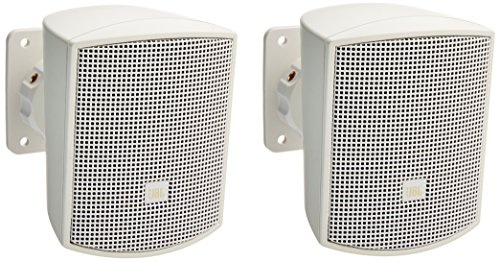
Pros
- Included wall-mount brackets simplify installation
- Unobtrusive design fits any modern interior
- Versatile compatibility within JBL Control ecosystem
- Professional-grade frequency response for clear sound
- Efficient 16-ohm impedance pairs well with amps
Cons
- Requires separate subwoofer and amplifier for full performance
- Limited low-end bass below 140Hz without sub pairing
- Wired design not suited for portable or wireless use
The JBL Control 52-WH are professional surface-mount satellite speakers sold as a pair in sleek white, designed specifically for subwoofer-satellite loudspeaker systems. They excel in distributed audio setups, providing focused sound coverage for home theaters, restaurants, or retail spaces where discreet, high-quality audio is needed.
Targeted at AV professionals and home enthusiasts, these speakers feature a 140Hz-20kHz frequency range and 16-ohm impedance, making them efficient and easy to integrate with amplifiers. Their unobtrusive design and included wall-mount brackets allow for straightforward installation in various environments.
In real-world use, they deliver crisp mids and highs that complement a subwoofer, filling rooms with balanced detail without drawing attention. The ability to mix with other JBL Control models adds flexibility for custom systems.
Verdict: A top choice for installers building pro-grade satellite arrays, offering reliability and style at an accessible level.
With a 140Hz-20kHz range, the Control 52 satellites shine in vocal clarity and high-frequency detail, making dialogue and music sparkle in multi-speaker setups. Paired with a subwoofer, they create immersive sound without muddiness, ideal for background music or home cinema surrounds.
Volume levels scale efficiently thanks to 16-ohm impedance, handling moderate to high output from standard pro amps without strain. Expect stable performance in fixed installs, though bass depth relies on a dedicated sub like the JBL Control 50S/T.
Frequency balance favors mids and treble for natural clarity, ensuring even coverage across rooms when mounted strategically.
The white finish and compact form factor make these speakers highly unobtrusive, blending into walls or ceilings in homes, offices, or venues. Included brackets enable secure, adjustable surface mounting for optimal angling.
Built for permanent installs, they feature no battery, relying on wired connection to a professional amplifier for unlimited runtime without recharging concerns. This passive design ensures consistent power delivery.
Rugged enough for commercial use, their lightweight construction simplifies handling during setup, prioritizing durability in fixed positions over portability.

Pros
- Truly wireless rear surrounds eliminate speaker wire clutter across the room.
- Massive 10-inch subwoofer delivers deep, visceral low-frequency impact.
- Automated room calibration easily tunes acoustics to match your unique space.
- Dedicated PureVoice center processing guarantees pristine vocal clarity.
- Comprehensive Wi-Fi streaming options including AirPlay and Chromecast.
Cons
- Detachable rear speakers require regular recharging or dedicated USB-C cables.
- Lacks DTS:X decoding, focusing primarily on Dolby Atmos and multichannel PCM.
- Subwoofer cabinet has a substantial physical footprint that needs dedicated floor space.
The JBL Bar 800 redefines convenience in the mid-to-high tier home theater segment by solving the persistent challenge of rear channel cable management. Built around a capable 5.1.2-channel architecture, this system is engineered for entertainment enthusiasts who want authentic Dolby Atmos surround sound without drilling holes in walls or snaking extension cords across the floor. By combining a sleek central soundbar with completely wire-free, battery-powered detachable satellite speakers and a potent 10-inch wireless subwoofer, it effectively bridges the gap between conventional plug-and-play soundbars and complex component audio setups.
In real-world testing with modern film soundtracks and immersive video games, the JBL Bar 800 immediately demonstrates its capabilities. Dual up-firing drivers bounce vertical height cues off standard ceilings, creating a credible three-dimensional audio hemisphere that makes thunderstorms, aircraft passes, and ambient environment details feel lifelike. When detached and placed behind the main listening position, the rear speakers supply genuine discrete surround separation, giving you an edge in competitive multiplayer games and pulling you deeper into cinematic set pieces. Meanwhile, JBL's PureVoice processing ensures that quiet dialogue remains crisp and intelligible, preventing the common frustration of muffled voices during explosive scenes.
Beyond cinematic media, the soundbar functions as an exceptional daily smart audio hub thanks to built-in Wi-Fi, Apple AirPlay, Chromecast, and Alexa multi-room support. The automated sound calibration routine takes only moments to assess room boundaries, automatically adjusting speaker phase and levels to compensate for off-center seating or asymmetric wall layouts. While remembering to dock the satellite speakers for recharging requires a slight habit change, the clean, cable-free aesthetic is well worth the effort. For anyone wanting authentic 3D surround sound with minimal living room intrusion, the JBL Bar 800 stands out as a powerful, versatile home theater solution.
Acoustic performance on the JBL Bar 800 is anchored by a commanding low-end response courtesy of its 10-inch down-firing wireless subwoofer. Bass frequencies plunge deep into sub-bass territory, providing tactile, room-shaking rumble during action movies without descending into muddy resonance. Mid-bass hits with satisfying speed and punch, lending real authority to contemporary music genres and cinematic sound effects alike.
Midrange and high-frequency reproduction are equally well-engineered. The dedicated center-channel driver array, paired with JBL's proprietary PureVoice voice-enhancement algorithm, keeps spoken dialogue front and center, even against dense orchestral scores or layered sound mixes. High-frequency transients, such as glass shattering or metallic ricochets, remain sharp, airy, and articulate without introducing listener fatigue or harsh sibilance at elevated listening levels.
The system's true strength lies in its expansive soundstage. Because the rear channels are physically placed behind the listener and upward-angled drivers reflect sound overhead, audio objects move fluidly through horizontal and vertical dimensions. With 720 watts of total system amplification on tap, the Bar 800 maintains low distortion and composure even when pushed to volume levels suitable for hosting game day parties or immersive movie nights.
Finished in an understated matte black, the JBL Bar 800 features a sleek, low-profile form factor designed to slide beneath modern flat-panel televisions without obstructing screens or IR sensors. The main soundbar measures 34.8 inches wide when the rear modules are detached, sporting a durable metal grille and a clean, minimalist top panel with tactile controls. The detachable rear satellite speakers dock securely via strong magnetic alignment pins, recharging automatically when seated on the soundbar, and they also feature individual USB-C ports for permanent power setups.
Connectivity options are well-appointed for modern living room setups. The system features an HDMI eARC output that reliably accepts uncompressed multichannel audio directly from eARC-compatible TVs, along with a dedicated HDMI input offering full 4K Dolby Vision pass-through for gaming consoles or 4K Blu-ray players. An optical audio input is also included for legacy connectivity.
On the wireless side, the system integrates dual-band Wi-Fi and Bluetooth connectivity, allowing seamless multi-room streaming and convenient smartphone playback. Configuration, firmware updates, and custom 3-band EQ settings are easily managed through the intuitive JBL One mobile app, giving users effortless control over system balance from the comfort of the couch.
Understanding Dolby Atmos Capabilities in JBL Speakers
The straightforward answer to whether the JBL 580 qualifies as a Dolby Atmos speaker is no. The JBL Studio 580 is a passive floorstanding loudspeaker engineered for standard stereo channels or base layer front channels in a multichannel setup. Dolby Atmos requires dedicated height or overhead audio channels to render three-dimensional object-based sound. While the 580 tower excels at delivering wide dynamics and clean ear-level reproduction, it lacks integrated up-firing height drivers. Achieving true Dolby Atmos performance with floorstanding speakers requires supplementing them with separate height modules, in-ceiling speakers, or choosing an integrated Atmos sound system.
The Fundamental Architecture of Dolby Atmos Audio
Dolby Atmos differs fundamentally from legacy channel-based audio formats like traditional 5.1 and 7.1 surround sound. Standard surround mixes assign specific sounds directly to individual ear-level channels such as front left, center, and surround right. In contrast, Dolby Atmos treats audio elements as discrete objects positioned within a virtual three-dimensional sphere. Audio processors calculate precisely where each object should emanate based on room dimensions and speaker placement. To reproduce vertical trajectory such as overhead aircraft or falling rain, the system requires dedicated height channels positioned above ear level.
Height channels can be implemented through several physical speaker configurations depending on the room environment. In-ceiling loudspeakers provide accurate overhead projection because the acoustic energy originates directly above the seating position. Up-firing speakers offer an alternative solution by directing sound upward at a calculated angle to bounce reflections off a flat ceiling. Standard horizontal or forward-facing loudspeakers cannot simulate this vertical dimension on their own without height-specific audio routing. Consequently, placing a traditional floorstanding tower in a room only addresses the horizontal plane of sound reproduction.
Dolby Atmos home configurations typically use a three-number notation such as 5.1.2 or 7.1.4 to describe channel counts. The first digit represents the number of traditional ear-level bed channels distributed around the room. The second digit indicates the number of dedicated low-frequency subwoofer channels. The third digit specifies the quantity of dedicated overhead or upward-firing height channels in the system. A system incorporating traditional floorstanding towers handles the first digit exclusively unless separate height drivers are introduced into the signal chain.
Floorstanding Loudspeaker Design and Ear-Level Performance
Floorstanding loudspeakers like the JBL Studio 580 or modern alternatives like the JBL Stage 2 280F serve a specific acoustic purpose in home audio systems. These large cabinets house substantial internal air volume alongside multiple bass drivers and high-frequency horn assemblies. The JBL Stage 2 280F, for example, incorporates dual 8-inch polycellulose ribbed cone woofers paired with an anodized aluminum tweeter mounted in a Next Generation HDI horn. This driver configuration produces deep bass extension and broad horizontal dispersion across the listening area. Horn-loaded designs focus sound toward the listening position while reducing unwanted side-wall reflections.
Forward-firing compression drivers and horn waveguides are optimized to keep acoustic energy directed toward listener ears. This focused dispersion works well for front left and right soundstage imaging where clarity and vocal localization are paramount. However, this same directional focus makes traditional towers unsuitable for reflecting sound off ceilings. Dolby Atmos up-firing modules rely on custom acoustic filters and specific upward angles to achieve an overhead illusion. Using a standard floorstanding cabinet without dedicated height modules keeps all acoustic information anchored firmly at ear level.
Listeners building a dedicated home theater can still utilize high-performance towers as the foundation of an Atmos setup. In a 5.1.2 arrangement, floorstanding speakers occupy the critical front left and front right channel positions. Their high power handling and wide dynamic range handle intense movie soundtracks with minimal compression. To add the height layer, listeners place standalone upward-firing topper speakers on top of the cabinet or mount satellite speakers high on the front wall. This hybrid approach pairs the visceral impact of full-range towers with the dimensional realism of modern spatial audio.
Integrated Dolby Atmos Systems Versus Component Separates
Component audio systems offer incredible flexibility, but they demand significant physical space and complex wire management. An audio enthusiast assembling a system around floorstanding towers must invest in a multichannel AV receiver, individual speaker cables, and separate height modules. While this route provides maximum output power and granular acoustic control, room aesthetics or spatial limitations often complicate the installation. Running wire across baseboards or up walls to height channels requires planning and physical labor. For many living spaces, a simpler integrated solution provides an attractive alternative without sacrificing spatial immersion.
All-in-one home theater solutions like the JBL Bar 800 resolve spatial routing challenges through integrated driver geometry. The JBL Bar 800 operates as a 5.1.2-channel soundbar system featuring two dedicated up-firing drivers built directly into the main enclosure. These angled transducers project height cues upward toward the ceiling, creating an overhead soundfield without separate wall-mounted speakers. Furthermore, the system includes detachable battery-powered surround speakers that place rear channels behind the listener without running speaker cables across the room. A wireless 10-inch subwoofer supplies dedicated low-end punch to complete the full-frequency surround experience.
Choosing between component floorstanders and an integrated soundbar system depends primarily on room layout and listening priorities. Floorstanding speakers provide superior stereo separation, raw acoustic power, and unmatched fidelity for critical two-channel music listening. Listeners who prioritize musical authenticity often favor passive towers matched with high-current amplification. Conversely, an integrated Atmos soundbar delivers convenience, minimal visual clutter, and plug-and-play spatial audio decoding via HDMI eARC. Evaluating how often you watch multichannel movies versus listening to stereo recordings helps clarify which hardware platform best suits your home.
The Role of Satellite and Wall-Mounted Speakers in Atmos Systems
Dedicated surround sound setups frequently incorporate compact satellite speakers to handle surround or height duty without dominating room aesthetics. Models such as the JBL Professional Control 52-WH demonstrate how surface-mount satellite speakers fit into multi-speaker environments. These compact units include wall-mount brackets and deliver a frequency response from 140 Hz to 20 kHz with a 16-ohm nominal impedance. Their compact physical profile allows them to be positioned discreetly high on side walls or near ceiling junctions. In an Atmos configuration, surface-mount satellites can be angled toward the listening position to serve as dedicated height presence channels.
Mounting satellite speakers at ceiling height provides a clean alternative to upward-firing bounce modules. Up-firing modules depend heavily on room acoustics, requiring flat, non-porous ceilings between eight and twelve feet in height. Vaulted, textured, or acoustic-tile ceilings scatter upward sound waves, weakening the spatial height effect. High-mounted direct-radiating satellite speakers bypass ceiling reflections entirely by firing sound directly down toward the listening area. This direct-radiating method produces reliable spatial imaging regardless of ceiling material or room irregularities.
Integrating commercial or surface-mount speakers into a consumer surround system requires attention to impedance and power ratings. The 16-ohm impedance of models like the Control 52-WH demands adequate voltage swing from the amplifier channels. Most consumer AV receivers are designed to drive loads between 4 and 8 ohms, meaning higher-impedance satellites may require careful level matching during receiver calibration. Properly configuring crossover frequencies ensures that compact satellites receive only frequencies above their mechanical limits, directing deep bass to dedicated subwoofers instead.
AV Receiver Configuration and Signal Processing Essentials
Operating an Atmos system with floorstanding front speakers requires an AV receiver with onboard Dolby Atmos decoding and sufficient amplifier channels. A minimum of seven amplified channels is required to power a standard 5.1.2 configuration with five bed speakers and two height speakers. Connecting source devices like streaming boxes, Blu-ray players, or gaming consoles requires high-speed HDMI cables capable of passing uncompressed audio. Using the HDMI eARC port on your television ensures lossless Dolby TrueHD and Atmos bitstreams transfer directly to the audio processor.
Speaker configuration menus within the receiver require careful calibration to establish proper acoustic balance. When floorstanding towers like the JBL Stage 2 280F are used, users can set front speaker sizes to either large or small within receiver management. Setting the front speakers to small with an 80 Hz crossover frequency directs demanding sub-bass frequencies to the powered subwoofer. This configuration frees up receiver amplifier power, allowing cleaner headroom during explosive movie sequences. Receiver distance settings must also be calibrated so that sounds from front towers and overhead speakers reach listener ears simultaneously.
Automated room correction systems measure room acoustics through an included setup microphone to correct frequency anomalies. These systems analyze boundary gain, standing waves, and treble reflections caused by bare floors or large windows. Proper calibration smooths out the transition between heavy floorstanding front speakers and smaller height or surround modules. Listeners exploring Bluetooth home speaker system options often discover that physical calibration is what truly separates immersive multichannel theaters from casual listening setups. Fine-tuning channel levels manually after auto-calibration ensures that height effects remain audible without overwhelming essential dialogue channels.
Automotive and Custom Audio Distinctions
Confusion around speaker models sometimes stems from cross-category branding across home, commercial, and automotive product lines. Products like the JBL Club 522F represent two-way coaxial automotive speakers engineered specifically for vehicle door or dash installations. The Club 522F utilizes a 3-ohm high-output voice coil design and Plus One woofer cones to maximize efficiency from low-power factory car stereos. These automotive components serve an entirely different electrical and acoustic purpose than home theater loudspeakers. They cannot be wired directly into standard residential AV receivers without risking amplifier thermal overload due to their low impedance.
Automotive audio systems focus on near-field listening within an enclosed, acoustically challenging vehicle cabin. Car stereos use multi-channel time alignment and digital signal processing to simulate soundstage staging, but they do not utilize consumer Dolby Atmos height channel processing. Attempting to integrate car speakers into a residential Atmos system creates mounting difficulties, aesthetic mismatches, and potential electrical faults. Understanding the intended application of each product line prevents expensive purchasing errors and ensures each component operates within its designed electrical parameters.
Home theater audio demands components built specifically for residential power delivery, cabinet dampening, and acoustic dispersion. Passive home floorstanders use 5-way binding posts, heavy wooden enclosures, and high-frequency wave guides designed for room-filling sound. Meanwhile, multi-purpose sound systems, including high-output party speaker setups, emphasize high sound pressure levels and portability rather than precise 3D object rendering. Recognizing these distinctions ensures you invest in components tailored to your specific listening objectives.
Final Practical Recommendations for Atmos Shoppers
If you already own or are considering traditional floorstanding towers like the JBL Studio 580 or Stage 2 280F, plan to build a component-based system. Pair those front speakers with a matching center channel, capable surround satellites, and dedicated height speakers driven by a modern Atmos-enabled receiver. This path demands more equipment and setup effort, but it delivers unmatched dynamic range, scale, and high-fidelity stereo reproduction.
If your primary goal is hassle-free Dolby Atmos surround sound without running miles of speaker wire, an integrated system like the JBL Bar 800 offers superior practicality. Its dedicated up-firing drivers, wireless detachable surrounds, and wireless subwoofer provide genuine 3D audio straight out of the box. Assess your room dimensions, aesthetic tolerance for visible hardware, and installation budget before making a final decision on your surround sound upgrade.


Write Your Review
No reviews yet. Be the first to share your experience!