


Understanding Powered and Traditional Audio Setups
Setting up a home audio system often brings immediate confusion over power requirements, component matching, and speaker cables. Many listeners struggle to decide whether an all-in-one powered unit or an external amplifier setup better fits their listening space. This practical active vs passive speakers comparison guide breaks down how signal paths and amplification affect your daily listening experience. Passive units give you the flexibility to select your own receiver, while active models integrate the amplifier directly inside the cabinet. If you want a compact setup, evaluating small shelf speakers helps narrow down whether modular power fits your room.
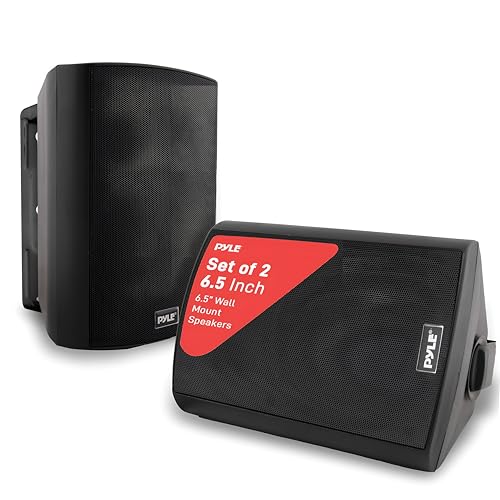
Audio gear like the Audio Express Koe’ B102 – 100 Watt Home Theater illustrates the core advantages of passive design through dedicated power handling and modular stereo imaging. These passive bookshelf speakers require a standalone stereo amplifier or home theater receiver to drive sound, allowing listeners to fine-tune equalization and source inputs. Stated features highlight matched pairs tested for frequency response accuracy, giving hobbyists reliable stereo balance across music or film tracks. Comparing these models alongside other capable speakers under 150 clarifies whether standalone amplification matches your physical desk space and overall budget. Knowing these hardware distinctions prevents unexpected expenses on external hardware while ensuring your system delivers clean sound.

Pros
- Factory-verified acoustic matching with individualized frequency response documentation
- Remarkably transparent midrange clarity ideal for acoustic tracks and movie dialogue
- Flexible placement options with a compact footprint and wall-mountable design
- Solid power handling that resists distortion during dynamic audio peaks
Cons
- Passive design requires a separate stereo amplifier or AV receiver to operate
- Compact cabinet volume naturally rolls off sub-bass frequencies, requiring a subwoofer for deep rumble
- Lacks integrated Bluetooth or digital inputs found on powered alternatives
The Audio Express Koe’ B102 passive bookshelf speakers bring studio-grade quality control to the consumer HiFi realm. Designed for critical listeners, desktop audio enthusiasts, and home theater hobbyists, these compact monitors focus on delivering balanced acoustic fidelity without unnecessary digital gimmicks. Because they are passive monitors, you retain total freedom over your source components and amplification stage, allowing you to shape your system to your exact preference.
What genuinely sets the Koe’ B102 apart in its category is the manufacturer's commitment to verifiable quality control. Each pair is individually tested and ships with its own unique SPL frequency response graph right in the box. This ensures that your left and right speakers are precisely level-matched, resulting in a stable center image, distinct instrument separation, and a transparent presentation that stays true to the artist's original mix.
In everyday use, the B102 excels across a diverse range of applications. Connected to a compact desktop amplifier, they serve as revealing near-field monitors for editing, gaming, and critical music listening. In a living room environment, their clean styling and versatile dimensions make them superb front stereo speakers for intimate spaces or responsive rear surround satellites in a larger multi-channel theater configuration.
For listeners who appreciate verified audio metrics and prefer the tactile versatility of traditional component HiFi, the Audio Express Koe’ B102 is an outstanding value. It skips the built-in digital processing shortcuts of modern wireless boxes in favor of solid component selection, low-resonance construction, and genuine acoustic honesty.
Acoustically, the Audio Express Koe’ B102 focuses on linear reproduction, clarity, and stereo imaging. The high frequencies are crisp and well-extended, capturing the natural shimmer of cymbals and the delicate overtone decay of strings without veering into harsh sibilance. The midrange presentation is particularly notable, rendering vocals and dialogue with a forward, intelligible warmth that keeps speech legible even at lower listening levels.
Bass response is tight, controlled, and fast, making it ideal for tracking rhythmic basslines and percussive transients without muddying the lower midrange. Because of the compact enclosure dimensions, the lowest octave of sub-bass is gently rolled off, making the addition of an active subwoofer recommended for home theater users demanding room-shaking cinematic impact. When powered by a quality amplifier up to 100 watts, the speakers display remarkable composure, maintaining clear separation without audible cabinet resonance during complex passages.
The Koe’ B102 features a purposeful, understated aesthetic that complements both modern studio environments and classic home entertainment centers. Measuring approximately 7.25 by 6.5 by 10.68 inches, the cabinets are constructed from low-resonance materials engineered to suppress unwanted internal vibrations. The clean black finish allows them to blend discreetly into home decor, while integrated mounting provisions on the rear panel simplify wall installation for multi-channel surround setups.
On the rear of each cabinet, robust binding posts accommodate bare speaker wire, spade connectors, or standard banana plugs for a dependable, high-integrity audio connection. As purely passive speakers, the B102 requires a separate power source, pairing well with standard stereo integrated amplifiers, mini desktop class-D amps, or multi-zone AV receivers rated to handle up to 100 watts of power.
Frequently Asked Questions
What is the main difference between active and passive speakers?
Active speakers have built-in power amplifiers, while passive speakers require an external amplifier or receiver to produce sound. In an active setup, you connect your audio source directly to the speaker enclosure. Passive designs, like standard bookshelf pairs, connect via speaker wire to a dedicated power source. This separation gives passive users greater control over component upgrades and sound processing.
Do passive speakers sound better than active speakers?
Sound quality depends on the drivers, enclosure engineering, and amplification rather than the speaker type alone. Passive systems allow you to choose high-grade amplifiers and external digital-to-analog converters tailored to your preferences. Active models provide amplification specifically matched by the manufacturer to internal drivers. Both formats can deliver excellent fidelity when built with quality crossovers and sturdy cabinets.
What equipment is needed to run passive bookshelf speakers?
You need an integrated stereo amplifier, a stereo receiver, or a home theater receiver along with standard speaker wire. The amplifier sends both the audio signal and electrical power through the cables to each cabinet. Some listeners also integrate a standalone DAC or turntable preamp depending on their audio source. Checking power ratings ensures your amplifier delivers clean wattage within the speaker handling limits.
Are active speakers easier to set up in a modern living space?
Yes, active speakers typically require less space and simpler cabling because the power amplification lives inside the cabinet. Many modern active designs function as a standalone Bluetooth home speaker system with wireless streaming and auxiliary inputs built right in. That all-in-one build eliminates the need for separate amplifier shelves and bulky wire runs. However, if an internal amplifier fails, the entire speaker enclosure often requires service.
How does this active vs passive speakers comparison guide help in 2026?
This active vs passive speakers comparison guide clarifies the trade-offs between simplicity and long-term modular flexibility for 2026 audio buyers. Listeners seeking plug-and-play convenience often favor active speakers for desktops and small rooms. Hobbyists planning multi-channel home theaters or customized stereo systems usually benefit from the modularity of passive speakers. Evaluating your room layout and component preferences will guide the best investment.




Write Your Review
No reviews yet. Be the first to share your experience!