


Factory automotive sound systems can create confusion when drivers experience rattling door cards or muddy audio reproduction. Anyone researching what speakers does mazda use will quickly notice that the automaker splits its sound packages across two distinct equipment tiers. Base trim vehicles rely on standard non-Bose factory drivers engineered to specific vehicle dimensions, while upper trim levels showcase branded Bose premium surround systems. Understanding which hardware sits inside the doors helps determine whether an audio issue stems from torn paper cones, factory amplifier limitations, or model-specific wiring constraints.
Factory drivers in standard models utilize lightweight paper basins and matched four-ohm voice coils designed to run efficiently on modest head unit power. While these factory components deliver balanced voice prompts and everyday radio playback, owners seeking richer low-end response often compare them against dedicated bass door speakers to eliminate unwanted cabinet vibration. Identifying whether a vehicle carries the base setup or the multi-speaker premium configuration ensures that any repair or aftermarket upgrade matches the exact electrical load and mounting depth required by the cabin.



A Complete Guide to Mazda Audio Systems and Factory Speaker Configurations
Mazda equips its vehicle lineup with two distinct audio tiers depending on the trim level and year of manufacture. Base configurations use unbranded OEM drivers produced by tier-one automotive manufacturers, while premium packages feature branded Bose surround sound hardware. Drivers researching what speakers does mazda use will discover that standard models rely on four-ohm paper cone speakers tuned for everyday clarity. Premium packages introduce multi-speaker arrangements, specialized woofer enclosures, and digital signal processing to expand cabin sound staging.
Factory Standard Drivers Versus Branded Bose Systems
Standard audio packages in base and mid-tier trims deliver sound through unbranded factory drivers wired directly to the infotainment receiver or a compact tuner module. These door and dash locations lack external logos, presenting a uniform appearance with molded plastic grilles. Mazda engineers these entry-level units to provide clear vocal reproduction and reliable performance for voice navigation and standard radio listening. Because mass efficiency and affordability guide standard vehicle assembly, these speakers use lightweight plastic frames, modest magnets, and standard cone materials.
Upper trims showcase custom systems developed in partnership with Bose, featuring prominent badging on door grilles or A-pillar speaker garnishes. These premium audio packages increase total driver counts to ten or twelve speakers strategically positioned around the passenger compartment. Outboard digital amplifiers beneath the front seats or cargo flooring provide active equalization tailored to interior seat fabrics and cabin volume. This pairing creates immersive staging through Centerpoint surround algorithms and AudioPilot ambient noise compensation.
Technical Specifications of Factory Non-Bose Mazda Speakers
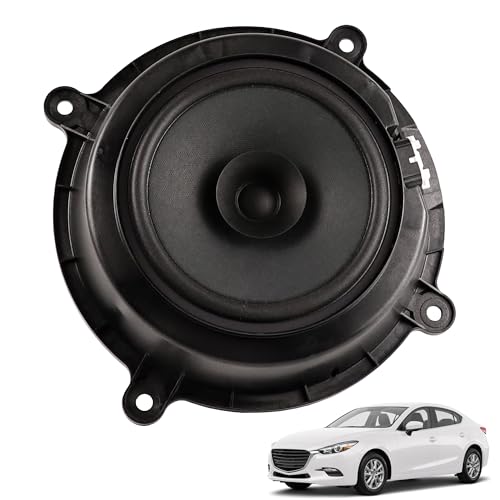
Standard front door locations across models like the Mazda 3, Mazda 6, and CX-5 typically feature 6.5-inch or 6.75-inch full-range drivers. Common factory units like part numbers BHN9-66-960 and KF01-66-960 operate at a nominal impedance of four ohms with a 25-watt continuous power rating. These drivers mount using vehicle-specific three-tab plastic frames designed to snap and screw directly into the inner steel door skin. Their coated paper basins provide responsive sound reproduction while keeping overall door assembly weight low.
Rear door locations frequently feature related four-ohm units, including factory part number BHP1-66-960, to deliver balanced rear-seat fill. These speakers share matching four-ohm voice coils to ensure steady electrical loading across all output channels of the factory head unit. Coated paper cones and flexible surrounds deliver high acoustic sensitivity, allowing reasonable volume without heavy amplifier power. However, prolonged exposure to moisture running down window channels can degrade paper fibers and surround adhesives as vehicles age.
Cabin Architecture and Mazda Harmonic Acoustics
Recent generations of Mazda vehicles feature an engineered acoustic layout called Mazda Harmonic Acoustics. In older interior designs, large bass speakers located in the lower door cards often produced distracting trim buzzes during deep low-frequency playback. To resolve this vibration, engineers moved the primary bass woofers into rigid cowl side cavities near the front kick panels. Sealing the low-frequency enclosures directly against the structural chassis creates tighter bass response while isolating doors from physical distortion.
Within this updated architecture, the lower door cavities now house dedicated midrange drivers, positioning vocal frequencies closer to ear level. Upgraded Bose editions incorporate specialized trunk-mounted subwoofers or spare-tire-mounted bass enclosures to reproduce deep notes without rattling interior plastics. Center channel speakers located atop the dashboard help anchor vocal imaging across both front seats. This deliberate physical separation between low-frequency and midrange reproduction elevates overall sound clarity regardless of driving speed.
Identifying the Audio System in Your Specific Mazda
Confirming which audio setup sits inside your car requires inspecting a few key cabin details. The most obvious indicator is metallic Bose badging placed on lower door grilles or tweeter pillar trim pieces. If the speaker grilles are plain molded plastic with no branding, the vehicle utilizes standard factory hardware. Checking the original window sticker or the vehicle build sheet also reveals whether an optional premium sound package was installed at the factory.
Navigating the digital infotainment display provides additional confirmation of the underlying audio components. Powering on the center screen and accessing sound settings displays dedicated Bose controls when premium hardware is detected. Features like Centerpoint surround staging and AudioPilot noise management only appear on vehicles with the upgraded amplifier package. Standard systems limit sound adjustments to straightforward bass, treble, fade, and balance controls.
Symptoms and Causes of Failing Mazda Door Speakers
Automotive door speakers operate in demanding environments subject to extreme temperature swings, humidity, and constant physical vibration. Over time, original Mazda door speakers frequently produce buzzing, rattling, or raspy distortion during low-frequency playback. This distortion commonly stems from voice coil rubbing caused by sagging or degraded cone surrounds. Moisture weeping past outer window weatherstripping can also warp paper cones or corrode delicate electrical connection terminals.
Total silence from an individual speaker channel indicates an open electrical circuit rather than simple cone fatigue. While owners might initially suspect a blown head unit fuse, physical inspection often reveals broken tinsel leads near the speaker basket. Continuous door slamming and thermal stress can fracture these thin braided wires over years of driving. Manually pressing gently on the speaker cone reveals whether the voice coil moves smoothly or has locked up inside the magnet gap.
Direct OEM-Style Replacement Options and Part Numbers
Drivers looking to eliminate speaker distortion without altering factory vehicle wiring often choose direct-fit drop-in replacements. Units designed to replace OEM part numbers BHN9-66-960 and KF01-66-960 match factory mounting holes and harness sockets perfectly. Brands such as ATAXTRA, Leezhen, and YzusGomumu offer front door replacements compatible with 2014 to 2018 Mazda 3 models, as well as selected Mazda 6 and CX-5 vehicles. These components allow owners to restore factory audio output without drilling metal or splicing wires.
For rear door positions, single-driver replacements matching part number BHP1-66-960 restore rear passenger audio in models like the CX-3, CX-5, and MX-5 Miata. These units maintain the factory four-ohm impedance and 25-watt power thresholds, keeping electrical draw completely aligned with head unit specifications. Using matched direct replacements ensures that the audio system retains balanced volume levels across all cabin channels. The installation process remains straightforward, requiring only basic hand tools to swap the aged driver for a fresh unit.
Upgrading with Aftermarket Adapter Brackets and Wiring Harnesses
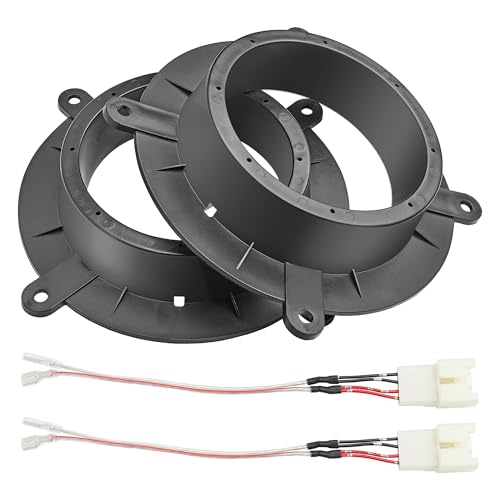
Owners seeking greater audio fidelity and extended dynamics often choose to upgrade beyond factory paper cone speakers. However, Mazda uses proprietary three-point door mounts that cannot accept standard four-hole universal aftermarket speakers. Installing aftermarket 6.5-inch or 6.75-inch speakers requires specialized spacer adapters, such as the 82-7501 bracket design. These durable ABS plastic adapters bolt into the vehicle’s original door holes, creating a solid flat mounting ring for aftermarket drivers.
Pairing adapter brackets with plug-and-play wiring harnesses like the 72-5602 connector preserves factory automotive wiring. The harness adapter plugs directly into the car harness and terminates in standard spade connectors for simple attachment. This prevents cutting factory wires, keeping the vehicle wiring intact for future ownership or warranty protection. If you plan to expand your audio setup with dedicated low-end bass reinforcement, pairing upgraded door drivers with aftermarket speaker box enclosures creates a balanced, full-range listening environment.
Electrical Matching: Impedance, Power, and Sensitivity
Maintaining proper impedance matching prevents damage to factory audio electronics when replacing door speakers. Standard Mazda audio systems require four-ohm nominal impedance across all door channels to match factory amplifier limits. Connecting low-impedance two-ohm drivers can overload head unit output stages, triggering thermal shutdown or permanent circuit failure. Installing eight-ohm drivers, on the other hand, reduces output volume significantly and produces thin, unengaging sound.
Speaker sensitivity is equally critical when operating components on factory head unit amplification. Factory systems typically supply between 15 and 25 watts of continuous power per channel, which requires efficient drivers to produce adequate volume. Selecting replacement speakers with sensitivity ratings of 90 dB or higher ensures clean volume levels without pushing the amplifier into clipping distortion. Efficient voice coils make the most of modest factory power, delivering clear dynamics during everyday highway driving.
Door Panel Disassembly and Installation Precautions
Removing interior door panels requires deliberate care and plastic pry tools to prevent cosmetic damage to cabin trim. Begin by disconnecting the negative battery cable to eliminate the risk of accidental electrical shorts during panel removal. Technicians must locate hidden screws behind the interior door latch cover and beneath the armrest pull pocket liner. Once the retaining fasteners are removed, prying around the panel perimeter pops the plastic retaining clips out of the steel door frame.
Before installing a replacement driver, clean road dust and moisture residue from the mounting surface to ensure a tight acoustic seal. Always lower the door window completely before securing the new speaker to verify that the magnet structure clears the regulator glass path. Inspecting the plastic vapor barrier behind the door card ensures that water shedding off window seals stays out of the cabin. Testing audio output before snapping the trim clips back into place saves time and avoids redundant panel removal.
Tuning and Preserving Cabin Acoustics After Replacement
Completing a speaker swap offers an ideal opportunity to recalibrate infotainment sound settings for clean acoustic balance. Drivers should reset bass and treble tone controls to flat baseline positions before evaluating newly installed speakers. Past adjustments made to compensate for a rattling or blown speaker can cause fresh drivers to sound boomy or overly bright. Centering fader and balance controls allows the newly installed drivers to blend seamlessly with remaining factory speakers.
Applying small patches of butyl sound-damping material around the speaker ring reduces metal panel resonance and enhances mid-bass punch. Placing foam acoustic baffles or closed-cell foam rings around the speaker face directs sound energy through the door grille into the cabin. This barrier prevents acoustic back-waves from canceling forward sound waves inside the door card cavity. These minor installation refinements ensure that both direct OEM-style replacements and aftermarket upgrades deliver clean, rattle-free audio playback.
Choosing the right replacement or upgrade path depends on whether your vehicle carries standard four-ohm factory audio or an advanced Bose package. Direct-fit drop-in speakers provide an immediate solution for voice coil rattle, while adapter brackets open the door to premium aftermarket audio components. By checking system specifications, respecting impedance limits, and taking care during panel disassembly, drivers can enjoy clear, reliable sound across every mile.




Write Your Review
No reviews yet. Be the first to share your experience!