


Setting up background music across multiple dining areas, retail floors, or large commercial spaces often presents severe signal transmission challenges. Traditional low-impedance audio lines suffer substantial power loss over extended distances, leaving distant speakers muffled or underpowered. Learning how to wire 70 volt speakers provides an efficient method for distributing consistent audio across dozens of listening points without overloading your central amplifier. Whether you are outfitting an indoor hospitality space or planning audio for weather-exposed perimeters similar to marine sound installations, constant-voltage architecture keeps signal delivery balanced and dependable.
This commercial audio method relies on step-up and step-down transformers to send higher voltage and lower current across long cable runs. The architecture allows installers to tap individual speakers at specific wattage levels while wiring all units along a unified parallel line. Using reliable 16-gauge conductors and maintaining clean polarity ensures that each speaker produces clear audio without overheating your equipment. Understanding the fundamental math, connection sequence, and testing practices will help you execute a professional setup that operates reliably for years.

Pros
- True 20-gauge oxygen-free copper provides superior conductivity over cheap copper-clad aluminum alternatives
- Clear polarity marking prevents out-of-phase speaker connections and bass cancellation
- Sturdy molded RCA plugs fit securely into amplifier ports without wobbling
- Comes in a convenient two-pack to wire a complete stereo pair right out of the box
Cons
- 20AWG gauge is optimized for small to medium power loads rather than high-wattage long-distance setups
- Fixed 6.6-foot length cannot be adjusted without cutting or splicing additional cable
- Stripped wire ends may require tinning or pin connectors for heavy-duty binding post security
Connecting vintage audio components with modern equipment often creates cabling headaches, especially when bridging legacy spring-clip speaker terminals with RCA amplifier outputs. The BERLAT RCA to Speaker Wire Adapter 2-Pack solves this interface dilemma cleanly and affordably. Instead of cutting up vintage patch cords or settling for thin, mystery-gauge wiring, this pair provides a plug-and-play pathway crafted specifically for hi-fi stereo applications and custom home theater rigs.
Designed for audiophiles, retro audio restorers, and home audio hobbyists, this adapter eliminates the guesswork in DIY wiring. Each 6.6-foot cable features a molded RCA male plug on one end and pre-separated bare leads on the other. Polarity is strictly defined with the red lead mapped to the center tip (positive) and the black lead mapped to the outer shell (negative), ensuring your speakers remain in phase for correct acoustic imaging.
In practical listening tests, the cables perform transparently without introducing unwanted resistance, ground hum, or frequency choking. Music signals pass effortlessly into bookshelf speakers and subwoofers, maintaining dynamic range across everything from acoustic jazz to punchy electronic tracks. For anyone seeking a dependable, properly gauged connection between RCA gear and loudspeaker terminals, this cable set stands out as an indispensable audio problem solver.
Audio fidelity over short interconnect runs relies heavily on conductor purity and adequate thickness. The BERLAT adapter employs true 20AWG oxygen-free copper (OFC) cores, which dramatically minimize electrical resistance compared to cheap copper-clad aluminum (CCA) alternatives. This robust conductive path preserves full-range frequency response, delivering punchy, articulate bass notes alongside smooth, non-fatiguing high frequencies.
Because the internal conductors retain their integrity without choking high-current audio impulses, the soundstage remains open and natural. Whether you are running audio to vintage desktop monitors or hooking up an active subwoofer via high-level inputs, the cable prevents inductive roll-off and keeps channel separation crisp and well-defined across all volume levels.
Durability meets flexibility in the construction of these 6.6-foot (2-meter) interconnects. The outer jacket is built from a resilient yet supple PVC blend that snakes cleanly through media console grommets without kinking. At the business end, the precision-molded alloy RCA plug offers a snug, friction-fit grip that resists accidental unplugging and protects against oxidation over years of use.
Underneath the hood, the genuine 20AWG oxygen-free copper wiring provides the right balance of flexibility and current capacity for modest amplifier channels, rear surround channels, and desktop setups. The bare wire leads come pre-split for swift stripping and immediate insertion into traditional spring-loaded terminals, spade lugs, or standard speaker screw binding posts.

Pros
- High conductivity preserves sound quality across lengths
- Frosted jacket aids polarity identification
- Soft and flexible for simple routing
- Built tough for home or car environments
- Great value for DIY audio projects
Cons
- CCA slightly less conductive than pure copper for ultra-long runs
- Basic jacket lacks premium thickness
The Install Link 16 AWG Speaker Wire is a 30-foot, double-conductor cable crafted from copper-clad aluminum (CCA) for reliable audio connections. Ideal for DIYers and pros wiring home theaters, car stereos, or studio monitors, it combines affordability with solid performance for everyday audio setups.
In real-world use, this wire shines in home theater systems where it connects speakers to receivers without noticeable signal degradation, delivering clear sound for movie nights or music sessions. For car audio, its flexibility makes routing through tight spaces a breeze, ensuring stable performance on road trips.
Users appreciate the easy stripping and polarity markings that speed up installs. Overall verdict: A smart pick for anyone needing dependable speaker wire that punches above its price point for clean, distortion-free audio.
Whether upgrading your living room setup or outfitting a vehicle, this cable supports outstanding fidelity without complexity.
Copper-clad aluminum construction provides strong conductivity, minimizing signal loss to maintain bass depth and high-frequency detail in stereo systems. It handles home theater demands, keeping vocals clear and instruments precise even at higher volumes.
Perfect for car audio where road noise tests connections, this 16-gauge wire supports adequate power for speakers without degradation. Bluetooth range stays stable as it focuses on pure analog transmission from amp to speaker.
Stranded design reduces resistance, ensuring consistent performance across 30 feet for immersive listening in any setup.
The Softflex jacket offers a sleek frosted red/black look with maximum durability and flexibility, resisting kinks during installs in walls, cars, or studios. No IP rating needed as it's built for indoor/outdoor audio wiring.
Lightweight 30-foot spool weighs little, making it portable for jobsites or garage projects. No battery required, as this passive cable draws zero power and lasts indefinitely.
Rugged yet pliable, it survives bends and pulls common in home or vehicle retrofits, prioritizing easy handling over bulk.

Pros
- High-grade copper-clad aluminum ensures minimal signal loss
- Stranded design provides outstanding flexibility and easy handling
- Frosted jacket offers great appearance and polarity identification
Cons
- CCA construction has slightly higher resistance than pure copper
- Requires careful coiling to avoid kinks during long runs
The Install Link 16 AWG speaker wire is a premium 100-foot spool of double-conductor cable designed for stereo, home theater, and car audio applications. Built with copper-clad aluminum (CCA) for cost-effective performance, it combines an aluminum core with a copper coating to deliver reliable conductivity without breaking the bank.
Ideal for DIY enthusiasts and professional installers alike, this wire shines in setups demanding clean signal transfer, from surround sound systems to vehicle speakers. Its stranded construction ensures flexibility for navigating corners and tight spaces, while the frosted red and black jacket makes polarity identification foolproof.
In real-world use, it handles everyday audio demands with ease, supporting amplifiers and receivers without noticeable degradation. The Softflex jacket adds durability for repeated handling during installs.
Verdict: A top pick for budget-conscious audio upgrades, offering pro features and simple installation for superior sound everywhere.
This wire's CCA composition provides excellent conductivity, minimizing signal loss to keep your audio pure and dynamic across home theaters or car systems. The 16-gauge thickness supports adequate power handling for most setups, ensuring bass stays punchy and highs remain crisp.
Polarity is crystal clear with color-coded insulation, preventing phase issues that muddy vocals or imaging. It excels in stereo pairs or multi-channel runs, delivering stable performance up to 100 feet without dropouts.
Perfect for connecting speakers to AV receivers or amps, it unlocks full potential in any audio environment, from living rooms to vehicles.
The Softflex jacket gives this wire a sleek, frosted red/black look while offering maximum flexibility and durability for long-term installs. It resists cracking or stiffening, making it rugged enough for car under-dash routing or wall runs in home setups.
At 100 feet per spool, it covers extensive projects without splicing, and the stranded build keeps it lightweight and manageable. Easy stripping reveals conductors ready for quick terminations.
No bulk or rigidity means smooth pulls through conduits, ensuring reliable, lasting connections that endure vibrations and environmental stress.

Pros
- Foot markers stamped directly on the sleeve streamline cutting precise cable lengths.
- Highly pliable jacket makes maneuvering through tight spaces and car trim remarkably simple.
- Clear polarity indicator prevents out-of-phase acoustic cancellation.
- Exceptional price-to-length ratio for multi-channel home audio and DIY stereo builds.
Cons
- Copper Clad Aluminum (CCA) conductors have higher resistance than pure oxygen-free copper on long runs.
- Not rated for in-wall CL2 or direct-burial outdoor installations.
- Best suited for modest power applications rather than heavy commercial or high-wattage subwoofer setups.
Finding dependable, budget-friendly wiring is often one of the most overlooked aspects of building a home audio or car stereo system. The Kinter 16-Gauge Audio Speaker Wire fills this role effectively, providing 100 feet of clean, two-conductor cable tailored for DIY audio enthusiasts, multi-channel surround setups, and everyday stereo rigs. Wound onto a compact dispensing spool, this cable targets users who need reliable signal delivery without paying excessive audiophile markups for secondary or rear speakers.
In real-world installation, the physical handling of this wire stands out. The outer PVC jacket is exceptionally soft and pliable, resisting kinks and unspooling cleanly. One of the handiest features is the sequential foot marking along the clear insulation. Instead of fumbling with a tape measure across living room baseboards or vehicle floorboards, you can cut precise lengths on the fly. The jacket strips cleanly without snagging or severing inner strands, pairing quickly with standard spring terminals, screw posts, or banana plugs.
Performance-wise, the cable delivers a transparent signal across typical consumer distances. In home theater setups running satellite surround channels or secondary stereo zones, there is zero audible degradation, buzzing, or hiss when properly terminated. While audiophile purists running high-current amplification over long distances may lean toward pure oxygen-free copper, Kinter provides solid, dependable fidelity for everyday stereos and AV receivers.
Ultimately, the Kinter 100-foot 16-gauge speaker wire is an outstanding utilitarian cable for budget-conscious builders. Between its clear polarity markings, flexible construction, and thoughtful measurement markers, it delivers a smooth installation experience and consistent audio performance right out of the box.
When evaluating speaker wire, electrical integrity and resistance control are paramount to acoustic fidelity. The Kinter 16-gauge cable utilizes a multi-strand Copper Clad Aluminum (CCA) conductor geometry that provides stable conductivity for typical residential listening levels. For runs under 40 to 50 feet paired with standard 6-ohm or 8-ohm speakers, the wire maintains balanced frequency response across the spectrum, preserving crisp treble details and clean midrange reproduction.
Bass response remains tight and articulate under moderate amplifier loads, making this wire a strong candidate for bookshelf monitors, center channel speakers, and surround sound satellites. Because signal transmission remains balanced, stereo imaging stays centered and focused, allowing dialogue in movies and localized instrumentation in music tracks to project accurately.
Phase integrity is vital for maintaining a convincing soundstage and solid low-end impact. Thanks to the distinct red stripe running along one conductor, maintaining correct polarity from amplifier outputs to speaker terminals is straightforward. This prevents phase inversion, ensuring that multiple speakers work in acoustic harmony rather than cancelling out each other's low frequencies.
The Kinter cable features a 100-foot (30.48-meter) continuous spool of 16 AWG, 2-conductor speaker wire engineered for high flexibility and easy handling. The protective outer jacket is composed of clear, flexible PVC that resists cracking while allowing the internal conductors to remain visible. Its slender profile allows it to slide cleanly beneath carpets, tuck neatly behind molding, or weave through automotive dashes and door jambs.
The physical conductors consist of high strand-count Copper Clad Aluminum, striking a balance between lightweight flexibility and structural integrity. The wire ends take solder well and clamp down firmly into screw-down posts, spring-loaded push pins, or crimp-on spade connectors. For those who prefer plug-and-play connections, the 16-gauge thickness fits snugly into standard pin-type or compression banana jacks.
Convenience is built directly into the exterior hardware. The wire spool includes center dispensing holes for fast pulling without snarls, and the continuous foot increments printed directly onto the PVC insulation save significant prep time during multi-speaker layout planning. Combined with the red polarity tracer stripe, this cable is designed from the ground up for seamless, error-free wiring jobs.
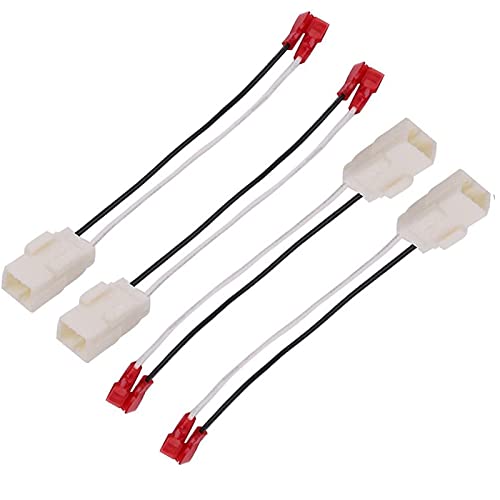
Pros
- Eliminates wire splicing to preserve factory vehicle harnesses and trade-in value
- Pre-configured positive and negative spade leads prevent acoustic phase cancellation
- Secure snap-lock tabs keep audio connections tight on rough terrain and bumpy roads
- Four-pack kit provides everything required for front and rear speaker installations
Cons
- Spade terminal sleeves may need a gentle squeeze with pliers to fit narrower aftermarket speaker pins
- Designed strictly for select Chrysler, Dodge, and Jeep factory speaker plugs
Upgrading the factory sound system in modern Dodge, Jeep, or Chrysler vehicles often runs into an immediate roadblock inside the door cavities. Automakers utilize specialized plug-in connectors that do not naturally mate with standard aftermarket coaxial or component speakers. The Danbojit 4-Pack 72-6514 Speaker Wire Harness resolves this issue cleanly, providing a precision-molded bridge between your vehicle original factory wiring and any standard aftermarket speaker tabs.
For DIY audio enthusiasts and weekend mechanics, this adapter completely eliminates the mess and long-term failure points of wire tapping, cutting, and electrical tape. Vehicle door cavities endure constant slamming, road vibration, and seasonal moisture buildup. By locking straight into the factory harness with OEM-style snap pins, these connectors protect electrical stability while allowing you to easily return the vehicle to factory condition if you ever decide to sell or trade it in.
Ultimately, this four-pack provides an effortless, professional foundation for sound upgrades across a vast spectrum of vehicles, including Dodge Ram pickups, Jeep Wranglers, and Chrysler sedans. It turns what used to be a tedious wiring chore into a fast, twenty-minute plug-and-play project that delivers reliable sound quality from day one.
In any mobile audio installation, maintaining pristine signal flow and correct electrical phase is critical to unlocking true acoustic potential. When door speakers are accidentally wired out of phase, sound waves cancel each other out, leading to hollow midranges and severely diminished bass output. The Danbojit 72-6514 harness eliminates this risk with properly oriented, color-coded quick-disconnect leads that preserve absolute polarity for deep, rhythmic low-end thump and articulate vocal presence.
Internally, the flexible stranded copper wiring provides low electrical resistance, ensuring zero signal throttling or dynamic range compression across the full 20 Hz to 20 kHz spectrum. Whether running high-efficiency speakers directly off a stock head unit or feeding more demanding aftermarket drivers, these harnesses pass clean, uninhibited audio power without introducing interference, hiss, or intermittent dropouts.
Each connector is manufactured from heavy-duty, heat-resistant ABS plastic that mimics the exact pin layout of original Chrysler and Dodge factory sockets. A dependable integrated locking clip clicks securely onto the car native connector, preventing disconnections caused by deep road ruts, off-road trails, or high-excursion door subwoofers. The low-profile profile sits flush, allowing wiring to rest comfortably inside the door skin without rattling against interior plastic trim.
The harness leads terminate in standard insulated slide-on spade terminals, featuring sized negative and positive connectors designed to fit aftermarket speaker posts right out of the box. With four identical adapters included in the package, installers have all the hardware needed to update both driver and passenger sides along with the rear cabin in one comprehensive setup.

Pros
- Extremely flexible jacket bends easily through tight car panels and along baseboards
- Molded round and square geometry makes polarity matching quick, even in dim lighting
- Clean, distortion-free signal delivery on short to medium distance speaker runs
- Strips easily without fraying or cutting the interior conductor strands
Cons
- Copper Clad Aluminum Magnesium build has higher electrical resistance over very long distances than pure OFC
- Not certified for in-wall or in-ceiling installations
The Sinus Live 16 AWG Speaker Wire is designed for practical audiophiles, home theater hobbyists, and car audio builders who need flexible, dependable speaker interconnects without high markup. Offered in a continuous 50-foot spool, this cable delivers the length needed to wire a living room surround sound system, a pair of desktop studio monitors, or multi-channel vehicle door speakers.
At the center of this wire is Copper Clad Aluminum Magnesium (CCAM) conductor technology. While ultra-expensive high-purity copper is often considered the baseline for exotic high-end audio, CCAM provides an impressive balance of conductive efficiency, weight reduction, and value. When paired with standard consumer amplifiers and receivers, it handles moderate power loads reliably, ensuring your speakers receive steady output without unwanted signal loss.
Where this cable truly excels during real-world installation is in its handling characteristics. The outer PVC jacket is formulated to be soft and elastic, resisting the stiff coil memory that makes unspooling other cheap cables frustrating. It strips cleanly, sits firmly into push terminals, and clamps down securely inside aftermarket banana plugs or spade lugs for a neat and professional finish.
In active listening setups, the Sinus Live 16-gauge wire provides transparent audio performance with no noticeable veil or frequency coloration. Midrange clarity comes through cleanly, keeping movie dialogue intelligible and vocal tracks focused. Meanwhile, the treble remains crisp and balanced, letting cymbals and high-frequency textures sparkle without inducing unnecessary listener fatigue.
Bass response remains tight and articulate across typical bookshelf and car audio installations. Because 16 AWG is adequately thick for standard room dimensions, the cable minimizes resistance, preventing unwanted damping factor degradation in four-ohm and eight-ohm speakers. For everyday music streaming, gaming, and cinema watching, it supports a wide soundstage and consistent dynamic punch.
The physical construction of the Sinus Live speaker cable emphasizes convenience and longevity. The frosted red and black jacket not only delivers a clean look behind your equipment rack, but also incorporates tactile polarity identification. One strand is rounded while the adjacent strand is square, allowing you to trace positive and negative leads simply by touch when working behind deep entertainment centers or vehicle dashes.
The 16 AWG stranded gauge strikes the sweet spot for hardware versatility. It is slim enough to slide effortlessly into spring-loaded speaker clips, yet thick enough to ensure a rock-solid mechanical connection with screw-on binding posts and crimp connectors. With 50 continuous feet on the spool, you have plenty of wire to tackle complete four-channel or five-channel audio layouts with confidence.
Planning and Executing a 70-Volt Speaker System Installation
Understanding how to wire 70 volt speakers begins with recognizing how constant-voltage audio architecture solves the physical limits of traditional stereo sound. When standard consumer audio runs through hundreds of feet of speaker wire, electrical resistance saps amplifier power and degrades high-frequency detail. A 70-volt distributed line resolves this bottleneck by stepping up voltage at the amplifier output and stepping it down at each speaker through dedicated transformers. This approach allows dozens of speakers to share a single speaker cable run while maintaining clean sound and stable amplifier performance.
Core Principles of Constant-Voltage Audio Distribution
Standard home audio systems operate on low impedance, typically driving loads between four and eight ohms. While traditional residential subwoofers or custom speaker enclosure designs rely on heavy current over short low-impedance cables, commercial distributed audio raises the line voltage to keep operating current low. By minimizing the current traveling through the wire, power loss through heat and conductor resistance drops significantly over long distances. This basic electrical principle allows a single commercial amplifier to push clean audio across hundreds of feet of cable to multiple rooms or hallways.
Each speaker in a 70V network incorporates an integrated step-down transformer mounted directly behind the driver. This transformer converts the high-voltage, low-current line signal back into a low-impedance audio signal suitable for moving the speaker cone. Because the transformer isolates the speaker voice coil from the main feed, you do not have to calculate complex series-parallel impedance networks. Installers simply treat each speaker as an individual electrical load that draws a preset amount of power from the unified line.
Step-down transformers also protect the central amplifier from impedance overload when multiple drivers share the circuit. In a conventional system, adding speakers in parallel causes the overall resistance to drop, which forces the amplifier to generate dangerous amounts of current. In a 70V constant-voltage configuration, adding another speaker simply adds its transformer impedance to the total load. As long as the total tapped wattage does not exceed the amplifier output capacity, the system operates in a safe and stable condition.
Calculating Amplifier Load and Transformer Tap Settings
Proper system design requires matching total transformer wattage to the power capabilities of your commercial amplifier. Every 70V speaker features selectable wattage taps, commonly offering settings such as one watt, two watts, five watts, or ten watts. To determine the total electrical demand on your line, you simply sum the wattage ratings of all connected speaker taps. If you connect ten speakers tapped at five watts each, the entire speaker chain draws fifty watts of total power from the amplifier output.
Amplifier headroom serves as a critical safety buffer to prevent distortion and amplifier thermal shutdown during sustained playback. Audio equipment manufacturers and commercial installation standards recommend maintaining at least twenty percent spare capacity above your calculated speaker load. For example, a speaker chain totaling eighty watts of cumulative tap settings should be paired with an amplifier rated for at least one hundred watts. Operating below this headroom threshold prevents signal clipping, preserves musical dynamic range, and protects both transformer cores and amplifier output stages from excessive heat.
Transformer taps also function as zone-specific volume presets across different architectural spaces. A speaker installed in an intimate conference room or quiet private office can be tapped at one or two watts for subtle background listening. Meanwhile, an identical speaker mounted in a noisy retail hallway or warehouse space can be set to five or ten watts to cut through ambient noise. This flexibility allows you to balance room volume purely through transformer selection without requiring separate amplifier channels for each room.
Over-tapping speakers is one of the most frequent design missteps in commercial background sound systems. Tapping a speaker higher than necessary wastes available amplifier power and causes harsh, localized hotspots that disrupt conversation. Conversely, selecting lower wattage taps allows the sound to disperse evenly throughout a facility without creating uncomfortably loud areas directly under individual ceiling grilles. Taking the time to calculate realistic acoustic needs for each zone prevents costly amplifier upgrades down the road.
Selecting Proper Speaker Wire Gauge and Conductor Materials
Selecting appropriate speaker wire ensures that your distributed audio network delivers clean, uninterrupted audio without excessive signal degradation. While 70-volt systems tolerate thinner conductors much better than low-impedance home stereo systems, physical distance still dictates proper wire gauge. For cable runs under two hundred feet with modest wattage loads, sixteen-gauge wire such as 16 AWG gauge speaker wire cable stereo provides an ideal balance of conductivity, physical strength, and pulling flexibility. Extended runs stretching past five hundred feet often benefit from stepping up to fourteen-gauge conductors to maintain signal integrity.
Conductor composition plays an important practical role in overall system budget and handling characteristics. High-purity oxygen-free copper provides maximum electrical conductivity, minimal resistance, and superior long-term corrosion resistance for permanent commercial installations. Alternatively, copper-clad aluminum conductors offer an economical, lightweight solution that performs reliably when wire gauges are sized generously for the expected run length. Regardless of conductor material, choosing a cable with a flexible, durable PVC jacket simplifies pulling through commercial ceiling grids, wall studs, and electrical conduits.
Visual polarity identification on the wire jacket is another vital feature to look for during selection. Quality speaker wire commonly features frosted color coding, a molded ridge, or a printed stripe along one conductor. Using clearly marked conductors prevents installer confusion when splicing wires inside junction boxes or behind recessed ceiling baffles. Clear physical markings ensure that the positive signal path remains unbroken across dozens of individual speaker drops.
Parallel Wiring Architecture and Daisy-Chain Connections
The physical layout of a 70V audio network relies entirely on parallel wiring, often referred to as daisy-chaining. Unlike individual point-to-point connections used in multichannel home ceiling systems, 70V runs connect every speaker along a single continuous pair of conductors. The positive terminal of the amplifier feeds the positive terminal of the first speaker transformer, which then links directly to the positive terminal of the next speaker. This parallel chain continues from speaker to speaker until reaching the final unit at the end of the line.
Maintaining consistent polarity across every single speaker connection is essential for clear, robust audio reproduction. The negative or common terminal must run continuously from the amplifier output to the negative lead of each speaker transformer. Reversing polarity on even a single speaker will cause that unit to operate out of phase with surrounding drivers. Out-of-phase speakers create acoustic cancellation that hollows out low frequencies, thins vocal clarity, and causes uneven sound pressure levels across the listening room.
Secure terminal connections prevent intermittent audio drops and hazardous short circuits inside junction boxes or ceiling spaces. Many commercial ceiling speakers utilize screw terminals, push-in euroblock connectors, or wire nuts for tying the incoming and outgoing cable pairs together. Stripping the insulation cleanly to expose approximately three-eighths of an inch of bare conductor prevents stray wire strands from contacting adjacent metal chassis parts. Twisting conductors firmly and securing them with properly sized terminal blocks creates a durable mechanical and electrical junction that resists vibration over years of use.
Connecting Source Devices and Line-Level Audio Inputs
Feeding high-quality audio into a commercial 70V mixer-amplifier requires careful routing of line-level sources. Most business audio systems receive input signals from media players, streaming receivers, paging microphones, or commercial audio tuners. Connecting these sources requires matching consumer or professional line-level outputs to the amplifier input sensitivity. Using dedicated adapters such as the BERLAT RCA to speaker wire adapter 2-pack 20AWG helps bridge unbalanced RCA outputs into screw-terminal auxiliary inputs on commercial head units.
Gain staging between your source player and the 70V amplifier output stage directly influences audio clarity and background noise levels. Setting source output levels near seventy percent allows the mixer-amplifier preamp to operate in its cleanest operational window without introducing hiss. Pushing source volumes to maximum often introduces analog clipping before the signal even reaches the master power stage. Balancing input gain controls carefully ensures that background music and voice paging remain crisp, articulate, and completely free from annoying audible buzz.
Pre-Power Testing and System Impedance Verification
Verifying the electrical safety of your completed speaker line before flipping on the amplifier power switch prevents costly equipment damage. A standard handheld digital multimeter set to DC resistance should never show a dead short between the positive and negative conductors. However, measuring a 70-volt speaker line with a standard DC ohmmeter will not reveal total operational wattage because transformers present dynamic AC impedance rather than simple DC resistance. A dedicated audio impedance meter is the proper tool for testing commercial lines, as it measures AC impedance at one kilohertz.
Calculating the expected AC impedance allows you to verify that your speaker chain matches your initial design before applying amplifier power. The formula divides the square of the line voltage by your total tapped wattage, meaning forty-nine hundred divided by your sum of taps. For instance, a speaker line tapped at a total of one hundred watts should register approximately forty-nine ohms of AC impedance on a test meter. If the measured impedance is significantly lower than calculated, you likely have an incorrectly tapped transformer or a partial short along the cable route.
Testing each wire branch independently before tying them into the main amplifier terminal strip isolates faults before they cause system-wide issues. If an impedance reading varies substantially from your mathematical calculations, dividing the line in half helps pinpoint the problematic section quickly. Checking ground isolation is equally important, as neither speaker conductor should display continuity with building ground or conduit metal. Taking ten minutes to perform these basic meter tests prevents blown amplifier fuses and damaged output stages.
Diagnosing and Correcting Common 70V Wiring Faults
When a newly installed 70-volt system produces weak, muffled, or heavily distorted sound, identifying the root cause requires a systematic troubleshooting sequence. Severe audio distortion across all speakers usually indicates that total tapped wattage exceeds the continuous output capacity of the amplifier. In this situation, the amplifier clips continuously as its power supply struggles to satisfy the heavy current demand from the transformer primaries. Lowering the transformer taps across the entire chain or upgrading to a higher-capacity amplifier instantly relieves this strain and restores clean reproduction.
If an isolated speaker along the chain produces no sound while others perform normally, inspect the local transformer wiring first. A loose tap selector switch, a detached lead, or an improperly seated euroblock connector commonly disconnects the driver from the main feed. If the connection appears physically sound, temporarily disconnect the speaker and check the transformer primary winding for continuity. Replacing a failed step-down transformer or reseating the tap wire quickly resolves individual dropouts without requiring disruption to the rest of the operational line.
Persistent sixty-cycle hum or buzzing noises frequently stem from ground loops or running speaker lines parallel to high-voltage building wiring. Never run unshielded 16-gauge speaker cables inside the same conduit or within six inches of alternating-current power lines. If speaker cables must cross electrical conduit, route them perpendicularly at a ninety-degree angle to minimize electromagnetic induction. Ensuring that your commercial amplifier and all connected audio sources share a common, properly grounded electrical circuit further suppresses unwanted background hum.
Long-Term Maintenance and System Expansion Considerations
One of the greatest operational benefits of 70V audio is the effortless capacity for future system expansion. If a facility expands into adjacent rooms, you can easily tap into the existing speaker run and splice in additional speakers. Before adding new hardware, always calculate your new cumulative tap wattage to confirm that the amplifier still maintains twenty percent operating headroom. If your planned additions push the total load beyond safe capacity, you must either retap existing speakers to lower wattage settings or introduce a secondary power booster amplifier.
Performing routine inspections of physical wiring junctions and volume attenuators helps preserve clear audio performance over decades. In commercial spaces where ceiling tiles shift or building maintenance occurs regularly, inspect accessible junctions annually for wire strain or loose wire nuts. Verifying that wall-mounted rotary attenuators operate smoothly without crackling or intermittent signal dropouts keeps individual zone controls dependable. Taking proactive care of your physical cable plant ensures that your constant-voltage audio installation delivers reliable background music and emergency paging every single day.


Write Your Review
No reviews yet. Be the first to share your experience!