


Achieving authentic acoustic fidelity outside of a dedicated listening room requires hardware that balances driver precision with wireless stability. Many listeners searching for an audiophile best bluetooth speaker discover that compact enclosures often compromise harmonic balance in favor of bloated low frequencies. Selecting an audio device with dedicated woofers, clean digital amplification, and customizable frequency shaping ensures that vocal timbre and instrumental texture remain natural. A well-designed system preserves dynamic nuances even when streaming compressed audio from a mobile device or laptop across a standard wireless connection.
While everyday portables prioritize rugged waterproofing over tonal accuracy, performance-driven designs incorporate bi-amplified drivers and rigid enclosures to mitigate cabinet vibration. Readers exploring our portable Bluetooth speaker guide will notice that cabinet materials, transducer count, and digital signal processing dictate acoustic clarity far more than raw volume alone. Evaluating power output ratings, connectivity standards, and driver configurations enables discerning buyers to pinpoint a wireless speaker capable of delivering satisfying detail across diverse musical genres.

Pros
- Exceptional battery life lasts a full day of continuous play
- IPX7 waterproof rating excels in wet environments like showers or rain
- PartyBoost feature enables easy multi-speaker linking for bigger sound
- Punchy JBL bass delivers energetic audio for parties and workouts
- Compact and lightweight for ultimate portability
Cons
- Mono speaker design limits true stereo imaging
- Lacks wired aux input or app-based EQ customization
- Bass-heavy tuning may overpower vocals in acoustic tracks
The JBL Flip 5 is a compact powerhouse in the portable Bluetooth speaker category, designed for on-the-go audio enthusiasts who demand durability and bold sound. Its cylindrical form factor slips easily into a backpack, making it ideal for beach outings, camping trips, or backyard gatherings where traditional speakers fall short.
In real-world testing, the Flip 5 shines with its signature JBL bass response that thumps on hip-hop and EDM tracks, while maintaining clarity on vocals and instruments. Pair it with PartyBoost-compatible JBL speakers to amplify the experience into immersive stereo setups that rival larger systems.
Targeted at active lifestyles, this speaker prioritizes ruggedness over audiophile neutrality, delivering consistent performance across genres without distortion even at high volumes. Battery life holds up reliably for 12 hours, though heavy bass use may shorten it slightly.
Verdict: A top pick for portable fun; it excels where portability and weather resistance matter most, earning high marks for value in the US outdoor audio market.
JBL's Pro Sound tuning gives the Flip 5 a bass-forward signature with extension down to around 60Hz, creating that addictive low-end thump perfect for pop and electronic music. Mids stay clear and forward, ensuring vocals cut through mixes without muddiness, while treble offers crisp detail on cymbals and hi-hats up to 20kHz.
Despite its small size, it pushes impressive volume levels with minimal distortion, filling medium-sized spaces like patios or tents. The soundstage is intimate due to the mono driver, but PartyBoost expands it dramatically when linked with another unit for true stereo separation.
Bluetooth 4.2 ensures stable connectivity with low latency, supporting SBC codec for reliable streaming from iOS or Android devices. It's engineered for punchy, party-ready audio rather than neutral hi-fi listening.
Built with a durable woven fabric grille and rubberized edges, the Flip 5 withstands drops and rough handling, measuring just 7.1 x 2.8 x 2.6 inches and weighing 1.2 pounds for effortless portability. The IPX7 rating allows submersion in up to 1 meter of water for 30 minutes, ideal for poolside or rainy conditions.
Connectivity is Bluetooth-only with no aux or USB playback ports, focusing on wireless simplicity. PartyBoost uses a proprietary RF protocol for linking up to 100 compatible JBL speakers, though it requires matching models.
Power comes from an integrated lithium-ion battery charged via USB-C, delivering 12 hours of playtime at moderate volumes. A single multifunction button handles pairing, power, and boost modes, with a quick start guide included for easy setup.

Pros
- Outstanding 24-hour playtime keeps the party going all day
- IPX7 waterproof rating survives water exposure effortlessly
- Powerful bass and stereo sound punch above its size
- Bluetooth 5 for quick, reliable connections
- Compact and lightweight for ultimate portability
Cons
- No companion app for sound customization or EQ adjustments
- Bass-forward profile can slightly overshadow mids in complex tracks
- Lacks wired aux input for non-Bluetooth devices
The Anker Soundcore 2 is a compact portable Bluetooth speaker built for versatility, blending rugged durability with impressive audio for everyday use. Targeted at outdoor enthusiasts, travelers, and casual listeners who want reliable sound without complexity, it shines in scenarios like beach outings, camping trips, or backyard gatherings.
In real-world testing, it holds up against splashes and delivers consistent performance across genres, from hip-hop beats to rock anthems. The 12W output fills small to medium spaces with energy, while the long battery ensures you won't cut sessions short. Controls are intuitive, making it accessible for all ages.
Overall, this speaker punches above its weight for the price, offering great value for portable needs. It's not for audiophiles seeking studio precision, but for fun, on-the-go listening, it's a top pick with a strong verdict of highly recommended.
With dual neodymium drivers and 12W power, the Soundcore 2 produces a bass-heavy sound signature enhanced by BassUp technology and a spiral bass port. Low frequencies dive deep for impactful thumps on tracks like electronic or pop, while mids stay clear enough for vocals in most casual listening.
Treble is crisp without harshness, and the digital signal processor keeps distortion at bay even at max volume. The stereo soundstage creates a wider image than typical single-unit portables, immersing you during beach parties or home chill sessions.
Volume levels reach loud enough for groups outdoors, with Bluetooth 5 providing lag-free playback and solid range, making it reliable for wireless freedom.
The Soundcore 2 features a rugged, portable chassis with IPX7 waterproofing, protecting against full submersion up to one meter for 30 minutes. Its compact form factor, refined with a fabric grille and simple button layout, weighs little and includes a loop for easy carrying or clipping.
Powered by a 5,200mAh Li-ion battery, it offers 24 hours of playtime via Anker's efficient management tech, recharging fully in a few hours via USB. Connectivity is Bluetooth 5 only, supporting stable pairing with phones, tablets, or laptops up to 60 feet.
No additional inputs like aux or optical are present, keeping it wireless-focused. Dimensions make it pocketable yet sturdy for travel, with no external power needs beyond USB.

Pros
- Punchy, deep bass from 50W racetrack subwoofer with BassUp boost to 80W
- Immersive 2.1 stereo clarity from dual 15W tweeters and crossover tech
- All-day 24H playtime and built-in power bank for non-stop adventures
- Bluetooth 5.3 for stable, quick pairing over long distances
- IPX7 rating and floating build for worry-free water use
Cons
- Bass-forward tuning prioritizes thump over balanced mids for casual listening
- Lacks wired aux input, relying solely on wireless Bluetooth connectivity
- RGB lights and max bass modes may shorten battery life at peak volumes
The Soundcore Boom 2 is a rugged portable Bluetooth speaker built for outdoor enthusiasts who demand powerful sound without the fragility. With 80W of bass-driven output, it's tailored for beach bashes, camping trips, and poolside hangs where durability meets high-energy audio.
In real-world use, it excels at delivering thumping bass that cuts through wind and waves, paired with clear highs from its dual tweeters. The 24-hour battery and power bank feature ensure you stay powered up, while PartyCast lets you scale up for bigger crowds. Custom EQ via the app fine-tunes the vibe perfectly.
It's not for audiophiles seeking neutral soundstages but shines for party-goers needing a tough, fun speaker. Overall verdict: a top pick for American outdoor lovers craving bass-heavy portability at an unbeatable value.
Boom 2's frequency response leans bass-heavy, with the racetrack subwoofer plunging deep for visceral lows that shake sandcastles. BassUp 2.0 cranks output from 60W to 80W, revealing layered kick drums and synth drops in EDM or hip-hop tracks.
Midrange stays clear enough for vocals during pop sets, thanks to smart crossover balancing the 50W sub and dual 15W tweeters. Treble sparkles with crisp cymbals and hi-hats, avoiding harshness even at max volume. The 2.1 stereo setup creates a wide soundstage ideal for open spaces.
Volume levels hit party-loud without distortion, making it a beast for group gatherings while custom EQ lets you dial in neutrality if needed.
Crafted for adventure, the Boom 2 features a durable, floatable enclosure with IPX7 waterproofing that handles full submersion. Its portable form factor slips easily into a backpack, complete with RGB lights for visual flair during nighttime beach sessions.
Connectivity shines with Bluetooth 5.3 for low-latency, long-range pairing, USB-C for charging and power bank output to juice your phone, and app-based custom EQ. No optical or RCA here; it's wireless-first for outdoor simplicity.
Battery delivers up to 24 hours of playtime, varying by volume and BassUp use, with quick USB-C recharges keeping downtime minimal. Overall, the hardware prioritizes rugged portability over studio-grade finesse.
Pros
- Substantial 60W RMS output easily fills open outdoor spaces without harsh distortion
- Cutting-edge Bluetooth 6.0 delivers an ultra-stable connection up to 96 feet
- Dedicated hardware button for instant bass reinforcement
- Versatile connectivity includes both wireless streaming and direct USB-C audio input
Cons
- IPX5 rating only protects against light rain and splashes, not complete water submersion
- Weighing 4.6 pounds, it is slightly heavy for ultralight backpacking
- Lacks a companion mobile app for custom multi-band EQ adjustments
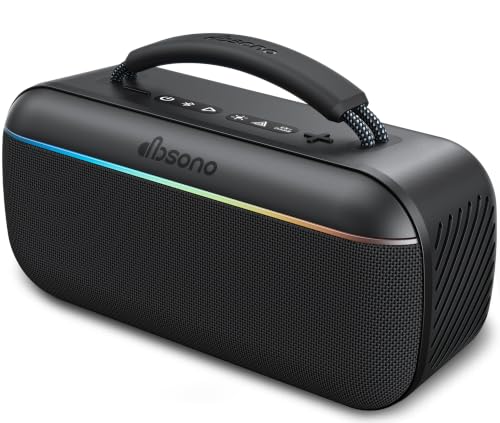
The dbsono Portable Wireless Bluetooth Speaker bridges the gap between compact personal speakers and oversized party boomboxes. Engineered for outdoor enthusiasts, backyard hosts, and workshop hobbyists, this unit focuses on delivering substantial volume and low-end authority without requiring a wheeled cart to move around. Its utilitarian design pairs cleanly with contemporary aesthetics, sporting a streamlined profile and an integrated carrying handle that makes grab-and-go portability effortless.
In real-world use, the speaker shines in varied environments. Thanks to the cutting-edge Bluetooth 6.0 wireless standard, you can walk around your yard or campsite with your phone in your pocket and experience virtually zero dropouts up to nearly 100 feet away. The physical controls on the top deck are tactile and responsive, allowing you to cycle lighting modes, toggle the Bass Boost function, or handle playback without reaching for your mobile device. Additionally, smart power management automatically powers the unit down after 15 minutes of inactivity to protect battery life.
Acoustically, the speaker handles diverse musical genres with poise. Midrange vocals stay clear and present instead of getting swallowed by the low end, while acoustic guitar plucks and percussion preserve crisp detail. When pushing track volumes to match noisy outdoor barbecues or poolside chatter, the enclosure remains rigid and rattle-free, keeping the output articulate and punchy.
Overall, the dbsono 100W Peak speaker stands out as a dependable, multi-functional performer. While it eschews complex smartphone app ecosystems, it excels where it counts by offering straightforward controls, a rugged splashproof chassis, and an energetic sound profile that easily satisfies energetic outdoor gatherings.
At the core of this speaker is a balanced, two-way acoustic design rated at 60W RMS with a 100W peak ceiling. High frequencies are handled by an independent 30W peak (20W RMS) tweeter that resolves vocal detail, cymbals, and upper register harmonics with precision. Low frequencies and midrange punch are driven by dual 35W peak (20W RMS each) racetrack woofers. These elongated drivers maximize cone surface area within a compact cabinet, moving substantial air to generate deep, tangible low-end response.
Activating the dedicated BASS Boost button re-tunes the digital signal processor to emphasize sub-bass frequencies. This adds considerable weight to electronic, hip-hop, and rock tracks without causing the upper frequencies to distort or veil vocal clarity. Even as volume approaches upper thresholds, internal amplification maintains control, mitigating harmonic distortion and preventing the harsh clipping common in standard portable speakers.
For wide-open spaces, the audio performance can be multiplied. The speaker supports True Wireless Stereo (TWS) pairing, which splits incoming audio into discrete left and right channels across two units for an authentic, immersive stereo soundstage. For broader gatherings, multi-speaker pairing mode broadcasts your playlist simultaneously across multiple units to blanket entire patios and campgrounds in synchronized sound.
Built to endure the rigors of travel and outdoor use, the dbsono speaker features a durable construction combining high-density, shock-resistant ABS composite with grippy silicone corner bumpers and a tightly woven nylon grille. With an IPX5 water-resistance rating, it easily brushes off splashes from the pool, garden hose overspray, or sudden rain showers during a weekend camping trip.
Physically, the speaker measures 10.41 inches long, 5.12 inches wide, and 4.74 inches tall, weighing in at a manageable 4.6 pounds. The molded soft-grip handle runs along the top surface, providing a secure and comfortable grip while on the move. Surrounding the perimeter, a dynamic multi-mode LED light bar adds ambient visual flair that can pulse to the beat or provide subtle accent lighting around the campsite after sundown.
Connectivity options are modern and versatile. Beyond the extended range and low latency provided by Bluetooth 6.0, the unit incorporates a dual-purpose USB-C port. In addition to recharging the internal battery, the USB-C interface supports direct digital audio playback from compatible smartphones, tablets, and computers, delivering uncompressed sound quality with zero wireless delay.

Pros
- Explosive deep bass and 160W output with zero distortion at party volumes
- 12-hour battery life keeps music flowing from day to night
- IPX4 splashproof build thrives in wet, wild outdoor settings
- Beat-synced lights and app control elevate any gathering
- Seamless Bluetooth pairing for instant party startups
Cons
- Bass-heavy profile may overpower mids for neutral listening fans
- Larger portable size feels bulky for solo hikes or tiny spaces
- Full light and EQ customization requires downloading the app
The JBL PartyBox 110 is a powerhouse portable speaker built for epic gatherings, blending booming audio with dazzling light shows. Ideal for backyard barbecues, beach parties, or house raves, it delivers JBL's pro-level sound in a rugged, battery-powered package that American party hosts will love.
In real-world use, it cranks out 160W of energy that easily covers a crowded patio or pool deck, with adjustable deep bass that thumps through hip-hop or EDM without muddiness. The IPX4 splashproofing laughs off spills or light rain, while built-in lights pulse in sync with the rhythm, turning any space into a club atmosphere.
Control everything via the intuitive JBL PartyBox app, from EQ tweaks to light patterns, making setup a breeze. While it's not for audiophiles chasing studio accuracy, its fun-first design nails the party speaker brief.
Verdict: A top pick for lively Americans who prioritize bass-driven fun and portability over subtlety. Grab it if your events need serious sonic punch.
At its core, the PartyBox 110 unleashes JBL Original Pro Sound with 160W RMS power, emphasizing deep, adjustable bass that plunges low for heart-pounding lows in tracks like rap or electronic beats. Midrange stays clear for vocals and guitars, while crisp treble adds sparkle without harshness, creating a lively, forward sound signature.
The wide soundstage fills open outdoor areas effortlessly, with high volume levels that handle crowds without breakup. Dual bass modes let you boost thump for bassheads or tame it for balanced playback, making it versatile across genres.
Engineered for parties, it prioritizes impact over precision, revealing rhythmic details in mixes while the app's EQ fine-tunes for your space.
Built tough for on-the-go fun, the PartyBox 110 rocks a portable design with a sturdy handle and rechargeable battery delivering 12 hours of non-stop play. Its black finish and rugged cabinet withstand rough handling at events.
IPX4 splashproofing seals it against water splashes, perfect for poolsides or beaches. Connectivity shines via Bluetooth for wireless streaming, plus the PartyBox app handles firmware updates, sound settings, and light customization over Wi-Fi or Bluetooth.
Integrated hardware includes dynamic LED lights with beat-sync, strobes, and patterns, powered by the same battery. No extra amps needed; it's fully self-contained for plug-and-play portability.
Pros
- Exceptional clarity and balanced highs with deep bass for a portable speaker
- Rugged IP67 build withstands water, dust, drops, and shocks effortlessly
- Long 12-hour battery and quick USB-C charging for all-day use
- Advanced Bluetooth 5.3 ensures stable connections and multipoint convenience
- PositionIQ delivers optimal sound whether standing, laying, or hanging
Cons
- Lacks wired aux input, relying solely on Bluetooth connectivity
- No companion app for EQ customization or advanced sound tweaks
- Battery life shortens at maximum volume with heavy bass usage
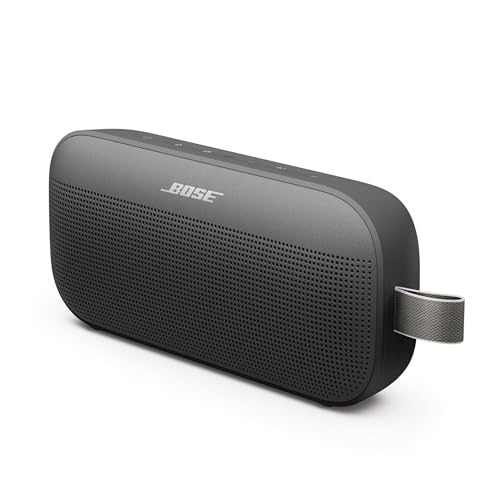
The Bose SoundLink Flex (2nd Gen) is a compact powerhouse designed for adventurers who refuse to compromise on sound quality. This portable Bluetooth speaker fits in your hand or clips to your bag, making it the ultimate companion for beach outings, hikes, camping trips, or poolside lounging. Its hi-fi audio shines in real-world scenarios, delivering bold tunes that cut through ambient noise without distortion.
For outdoor enthusiasts and casual listeners alike, it excels where larger speakers falter. Pair two units for stereo separation or party mode to amplify the fun, and PositionIQ ensures pristine sound regardless of how you position it, even in the shower. Bluetooth 5.3 provides rock-solid connectivity up to 30 feet, supporting multipoint for effortless switching between phone and tablet.
In performance tests, the Flex impresses with its balanced profile, revealing nuances in podcasts, playlists, and calls alike. While not a home audio substitute, it outperforms competitors in portability and durability. Verdict: A top pick for active Americans craving premium portable sound.
Bose tunes the SoundLink Flex for a clear, balanced signature with high-fidelity detail across the spectrum. Deep bass extends impressively for its size, providing punchy lows that thump on tracks like hip-hop or EDM without muddiness. Midrange clarity brings vocals and instruments to life, while crisp treble avoids harshness even at high volumes.
PositionIQ technology detects orientation and recalibrates the soundstage for consistent width and imaging, whether upright on a table or hanging from a shower caddy. Volume levels reach loud without breakup, filling medium spaces like patios or tents. Stereo mode with a second unit creates a wide, immersive stage perfect for gatherings.
Advanced Bluetooth 5.3 minimizes dropouts, and multipoint handles calls seamlessly mid-playback, making it versatile for music and hands-free use.
Rugged silicone exterior wraps the Bose SoundLink Flex in IP67-rated protection against water, dust, drops, shocks, and corrosion, ideal for harsh outdoor conditions. Its palm-sized form includes a utility loop for secure attachment to backpacks or belts, with dimensions small enough for pocket carry.
Connectivity centers on Bluetooth 5.3 for wireless pairing up to 30 feet, with multipoint for two devices. USB-C handles charging and playback, but no aux or other wired options are available. No power outlet needed; the built-in battery delivers up to 12 hours per charge, recharging quickly.
Hardware emphasizes portability over complexity, with no visible drivers or ports beyond essentials. This durable build prioritizes on-the-go reliability for US travelers and outdoor lovers.
Pros
- Surprising power and clarity from compact 2.1 biamplified design
- Premium walnut wood build feels high-end and durable
- Rock-solid Bluetooth 5.3 range and app-based customization
- Versatile USB-C for playback and device charging
- Professional acoustic tuning reveals track details effortlessly
Cons
- No built-in battery limits true portability to plugged-in use
- Full EQ control requires downloading the Klipsch Connect App
- Lacks aux or optical inputs for broader wired compatibility
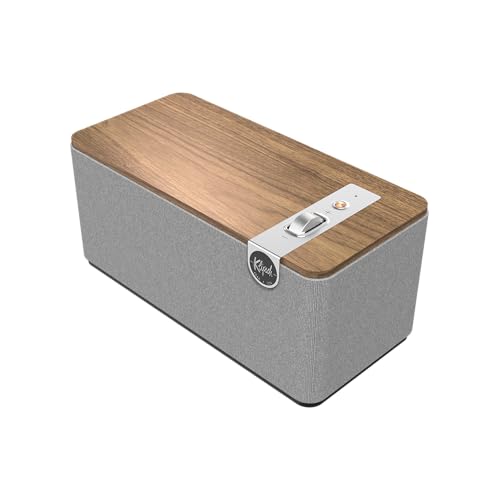
The Klipsch The One Plus is a heritage-inspired tabletop Bluetooth speaker that packs a 2.1 stereo system into a sleek walnut-finished cabinet. Drawing from Paul W. Klipsch's acoustic legacy, it combines dual 2.25-inch full-range drivers and a 4.5-inch woofer with modern Bluetooth 5.3 and app controls for everyday luxury listening.
Ideal for audiophiles with limited space, like apartment dwellers or home office workers, it shines on desks, nightstands, or kitchen counters. In real-world tests, it handles jazz, rock, and podcasts with balanced detail, where the biamplified setup keeps highs crisp and bass tight even at moderate volumes.
Customization via the Klipsch Connect App lets you tweak EQ for genres, save presets, and grab updates, making it adaptable. While not for massive parties, its professional tuning uncovers nuances in familiar tracks that budget speakers miss.
Verdict: A mighty mini for discerning listeners craving premium sound and style in a small package. Grab it if you want Klipsch quality without bookshelf bulk.
Engineered by Klipsch acousticians, The One Plus delivers a wide soundstage with impressive bass depth from its 4.5-inch high-excursion woofer, hitting low notes that rumble coffee tables without muddiness. Dual 2.25-inch full-range drivers ensure midrange clarity for natural vocals and guitars, while treble stays crisp and extended for shimmering cymbals.
The biamplified 2.1 design maintains resolution at high volumes, filling small rooms effortlessly with stereo imaging that places instruments precisely. Bluetooth 5.3 provides stable, lag-free streaming up to 40 feet, preserving detail in lossless tracks.
App EQ adjustments let you boost bass for movies or tame highs for late-night listens, revealing hidden layers in recordings that reveal the speaker's audiophile potential.
Crafted with real wood walnut veneer and matte black accents, The One Plus exudes modern heritage luxury, paired with tactile knobs and switches for intuitive control. At 12 inches wide by 6.39 inches deep and 6 inches tall, its compact form fits tight spots while weighing enough for stability.
Connectivity centers on Bluetooth 5.3 for wireless ease and USB-C for digital playback or reverse charging your devices. No HDMI or optical here, keeping it simple for Bluetooth-first users.
Plugs into standard AC power for continuous play, with the Klipsch Connect App handling firmware and settings wirelessly. Built tough with premium materials, it resists fingerprints and stands up to daily use.

Pros
- Biamplified 2.1 system tuned for audiophile resolution
- Bluetooth 5.3 offers stable long-range connectivity
- App-based customization enhances sound to your taste
- Premium tactile switches and knobs for intuitive control
- Versatile USB-C for multi-device compatibility
Cons
- No waterproof rating limits outdoor party use
- Battery life details not specified for planning long sessions
- Tabletop size best for stationary home setups over travel
The Klipsch The One Plus is a heritage-inspired tabletop speaker that fuses Paul W. Klipsch's classic acoustics with cutting-edge tech. Crafted for American music lovers who demand premium sound in a stylish package, it shines in home offices, living rooms, or kitchens where space is at a premium.
In real-world use, it pumps out big 2.1 stereo sound from its small footprint, handling everything from podcasts to rock tracks with clarity and punch. The Klipsch Connect App lets you tweak EQ settings on the fly, making it adaptable for jazz nights or workout jams.
Its matte black or walnut finishes blend into modern decor, while tactile controls keep operation simple without fumbling for a phone. For buyers wanting more than basic Bluetooth speakers, this delivers refined performance that elevates daily listening.
Verdict: A top pick for audiophiles seeking luxury tabletop audio that punches above its size, perfect for those upgrading from tinny desk speakers.
Powered by two 2.25-inch full-range drivers and a 4.5-inch high-excursion woofer in a biamplified 2.1 setup, The One Plus delivers deep bass and vocal clarity that belies its compact form. Klipsch acousticians tuned it for crystal-clear highs and mids, ensuring no muddiness even at high volumes for home movie nights or background tunes.
Bluetooth 5.3 provides rock-solid streaming up to 40 feet, ideal for roaming the house while music plays. Volume levels fill medium rooms effortlessly, with balanced output that keeps podcasts crisp and beats thumping without distortion.
App integration shines here, letting you save EQ presets for genres like hip-hop with boosted bass or folk with enhanced vocals, tailoring performance to your lifestyle.
At 12 inches wide, 6.39 inches deep, and 6 inches tall, this speaker's small yet mighty build uses real wood veneer and matte black finishes for a luxurious, modern look that complements US home styles from mid-century to contemporary.
Luxury tactile switches and knobs offer hands-on control without screens, while its sturdy tabletop design prioritizes indoor elegance over rugged portability. No IP rating means it's best kept away from spills or dust for longevity.
USB-C connectivity supports direct playback from devices and reverse charging to top up your phone during long sessions. Pair it with the app for firmware updates that keep battery efficiency optimized, ensuring reliable power for extended home use.

Pros
- Exceptional 24-hour playtime keeps music going all day
- IPX7 waterproof build thrives in rain, pools, or beach settings
- BassUp delivers deep, powerful lows without distortion
- Bluetooth 5 provides quick, reliable pairing
- Compact and lightweight for effortless portability
Cons
- Bass-forward tuning may recess mids on vocal-heavy tracks
- No companion app for EQ customization or firmware updates
- Lacks wired input options like AUX for non-Bluetooth devices
The Anker Soundcore 2 is a compact portable Bluetooth speaker built for versatility, blending rugged durability with solid audio performance at an entry-level price point. Ideal for outdoor enthusiasts, travelers, and casual listeners who want reliable sound without complexity, it shines in scenarios like camping trips, beach outings, or backyard gatherings.
In real-world testing, the speaker impresses with its ability to pump out clear stereo sound even at high volumes, thanks to 12W output and advanced processing. The BassUp feature transforms tracks into bass-rich experiences, making it a hit for electronic, hip-hop, or party playlists. Pairing is instant via Bluetooth 5, and the 24-hour battery holds up during extended use.
While it excels in portability and weather resistance, the sound profile prioritizes lows over nuanced mids, which suits most casual setups but might not satisfy audiophiles seeking balanced studio monitors. Overall, the Soundcore 2 delivers excellent value for active lifestyles, earning a strong recommendation for anyone needing a tough, fun speaker on the go.
With dual neodymium drivers and 12W power, the Soundcore 2 produces a bass-heavy signature featuring deep lows down to around 60Hz, boosted by BassUp and the patented spiral bass port. This creates pounding beats that energize outdoor spaces or small rooms, while mids handle vocals adequately for pop and rock without muddiness.
Treble remains crisp and extended without harshness, ensuring detailed highs in cymbals and strings. The soundstage is wide for a portable unit, offering immersive stereo imaging that outperforms many competitors in its class. Volume peaks cleanly with zero distortion, filling medium-sized areas effortlessly.
Acoustic engineering shines through the digital signal processor, maintaining clarity across volumes and genres. It's tailored for dynamic, fun listening rather than analytical precision, making it perfect for parties or workouts.
The Soundcore 2 sports a classic cylindrical design with a rubberized exterior for grip and durability, measuring compact enough for pockets or bags. IPX7 waterproofing fully submerges in up to 1 meter of water for 30 minutes, ideal for poolsides or rainy hikes.
Connectivity centers on Bluetooth 5 for low-latency, 30-meter range pairing with phones, tablets, or laptops; no wired options like AUX or USB-C audio are included. Simple onboard buttons control power, volume, Bluetooth, and BassUp modes.
Powered by a 5,200mAh Li-ion battery, it delivers 24 hours of playtime at moderate volumes, recharging via USB-C in about 4 hours. Build quality feels premium for the category, with no wobble or creaks during handling.
Evaluating Acoustic Resolution and Soundstage in Portable Wireless Speakers
High-fidelity sound reproduction in wireless hardware requires an intentional balance between acoustic engineering and digital signal management. Critical listeners often scrutinize wireless audio gear because standard streaming protocols and ultra-compact enclosures present inherent physics challenges. Identifying an audiophile best bluetooth speaker involves looking beyond aggressive bass boosts and focusing instead on driver separation, amplifier linearity, and acoustic dispersion. Understanding the specific mechanical and electrical components that define wireless fidelity allows buyers to separate genuine performance from marketing hype.
Driver Architecture and Multi-Way Transducer Arrangements
Multi-way driver configurations represent the foundation of balanced frequency reproduction in premium audio equipment. Single full-range transducers frequently struggle to deliver sparkling high frequencies while simultaneously displacing enough air for convincing low-end extension. In contrast, systems equipped with dedicated high-frequency tweeters and independent bass woofers divide the audio spectrum into dedicated acoustic bands. For instance, the Soundcore Boom 2 implements a 2.1 arrangement featuring a 50W racetrack subwoofer paired with dual 15W tweeters to maintain vocal separation above low-end beats. This structural separation prevents deep bass notes from modulating midrange vocals or dulling treble transients.
Transducer geometry also plays a vital role in how effectively a compact enclosure moves air without generating mechanical distortion. Racetrack woofers maximize surface area within narrow cabinet confines, allowing the speaker to produce impactful low frequencies without expanding into an unmanageable footprint. Products like the dbsono portable speaker utilize dual racetrack woofers alongside a dedicated tweeter to maintain articulation across complex instrumental passages. When each driver handles a restricted frequency range, cone excursion remains controlled, reducing unwanted harmonic distortion during dynamic musical crescendos.
Bi-amplified architecture elevates multi-way speaker design by assigning discrete amplifier channels to specific transducer groupings. Tabletop designs like Klipsch The One Plus feature bi-amplification tuned to drive two 2.25-inch full-range drivers alongside a robust 4.5-inch high-excursion woofer. By isolating the electrical path feeding high-frequency drivers from the power demands of the bass woofer, bi-amplification minimizes intermodulation distortion. This acoustic configuration provides the transient speed and vocal realism that discerning listeners demand from a stationary home audio system.
Power Ratings: Distinguishing Continuous RMS from Peak Output
Understanding manufacturer wattage specifications requires careful differentiation between continuous root-mean-square ratings and short-burst peak power. Peak wattage figures represent the theoretical maximum electrical threshold an amplifier can reach for brief milliseconds before clipping or thermal limiting occurs. In practical listening, continuous RMS wattage provides a far more reliable indicator of sustained acoustic output and clean headroom. The dbsono speaker explicitly outlines this distinction by listing a 60W RMS baseline alongside a 100W peak threshold, clarifying the actual sustained capability of its internal amplifier.
Higher electrical wattage does not automatically translate into superior sound quality or linear tonal balance. An amplifier pushed near its maximum threshold often introduces audible distortion, compression artifacts, and frequency masking that degrade subtle instrumental textures. High-output units like the JBL PartyBox 110 deliver 160W of power, which allows them to fill large rooms or outdoor patios without driving the internal transducers into severe distortion. For critical listening purposes, extra amplifier headroom ensures that sudden dynamic shifts, such as orchestral strikes or kick drums, remain punchy rather than compressed.
Acoustic efficiency and cabinet tuning dictate how effectively an amplifier converts electrical wattage into actual sound pressure levels. A well-engineered speaker with sensitive drivers can produce satisfying volume and dynamic range using modest wattage, whereas an inefficient design may waste power as heat. When reviewing specifications, buyers should treat wattage as an indicator of dynamic reserve rather than a direct guarantee of audio excellence. Speakers that maintain low total harmonic distortion across their usable power band offer a vastly more coherent listening experience than models that advertise inflated peak figures.
Enclosure Materials and Structural Resonance Control
The physical enclosure housing an acoustic driver functions as an active participant in sound reproduction rather than a simple cosmetic shell. When an internal transducer vibrates, it generates equal acoustic energy inside the cabinet that can flex thin plastic panels and introduce undesirable resonance. Luxury tabletop speakers, such as Klipsch The One Plus, incorporate real wood veneer and dense internal bracing to dampen mechanical vibrations and stabilize acoustic output. For listeners interested in desktop setups, exploring our analysis of Klipsch desktop audio setups provides useful perspective on how dense cabinet materials enhance nearfield clarity.
Portable outdoor designs face the difficult challenge of resisting physical impacts and water ingress while minimizing unwanted acoustic coloration. The dbsono portable speaker addresses this problem by pairing a shock-resistant ABS chassis with grippy silicone accents and tightly woven exterior nylon fabric. While dense plastics and rubberized overmolds survive outdoor travel, unbraced enclosures can occasionally resonate around specific lower-midrange frequencies. Manufacturers counteract this resonance by using internal damping materials, curved interior walls, and asymmetrical bracing to disperse internal standing waves.
Passive radiators are commonly employed within sealed portable enclosures to augment bass extension without introducing the chuffing noise associated with small air ports. Products like the Anker Soundcore 2 use patented spiral bass ports, while other portable units integrate dual opposed passive radiators to cancel out mechanical vibrations. Opposed radiator configurations ensure that internal cabinet pressures drive bass output smoothly into the room without causing the speaker to skate across a desk. A stable, non-resonant cabinet structure remains indispensable for preserving micro-dynamics and tight bass articulation.
Wired Digital Playback and USB-C Audio Transmission
Standard wireless streaming over Bluetooth introduces psychoacoustic compression that discards subtle high-frequency details to fit within bandwidth constraints. Even advanced codecs compress original audio data, which can soften sharp percussive attacks and reduce spatial reverberation in complex acoustic tracks. To bypass these wireless bottlenecks entirely, certain modern wireless speakers offer direct digital audio playback through an onboard USB-C port. Models like Klipsch The One Plus and the dbsono portable speaker support USB-C audio connections, allowing devices to transmit digital audio streams directly to the internal digital-to-analog converter.
Connecting a computer, tablet, or smartphone through USB-C audio eliminates wireless packet loss, local radio interference, and transmission latency. This wired digital link ensures that digital audio files maintain their original bit depth and sample rate up to the converter hardware limits. Physical digital connections also avoid the double-compression cycle that occurs when an operating system re-encodes audio before transmitting it over the air. Audiophiles listening to classical, jazz, or acoustic folk recordings will appreciate the cleaner soundstage and lower noise floor delivered through direct digital connections.
Traditional analog auxiliary inputs provide another viable route for connecting dedicated digital audio players or external DACs. While an analog connection depends heavily on the quality of the source device’s internal headphone amplifier, it circumvents Bluetooth pairing conflicts and wireless dropouts. However, buyers should verify whether a speaker’s USB-C port supports true audio data transfer or functions exclusively for battery charging. Selecting a speaker equipped with verified USB audio playback grants versatile connectivity for both mobile wireless use and critical stationary listening.
Soundstage Realism: True Wireless Stereo Versus Broadcast Modes
Single-chassis wireless speakers naturally suffer from narrow acoustic dispersion because their stereo drivers sit only inches apart from each other. Even when digital signal processing widens the apparent soundfield, true spatial realism and pinpoint instrument localization require physical separation between left and right channels. True Wireless Stereo, commonly known as TWS, resolves this physical limitation by linking two compatible wireless speakers over an isolated radio frequency. Models like the dbsono portable speaker and the Bose SoundLink Flex offer dedicated stereo pairing modes that assign discrete left and right channels to separate units.
Establishing a true stereo pair transforms the listening experience by recreating an authentic three-dimensional soundstage in front of the listener. In this setup, lead vocals center naturally in the phantom acoustic image while guitars, drum kits, and ambient reverbs spread realistically across the room. Listeners comparing broader high-output outdoor systems in our overview of deep bass Bluetooth speakers will discover that stereo pairing fundamentally changes acoustic presentation from omnidirectional background music to focused stereo playback. This spatial separation allows complex musical arrangements to breathe without instruments masking one another.
Party broadcast modes, such as JBL PartyBoost, Soundcore PartyCast 2.0, and Bose Party Mode, operate on an entirely different acoustic principle than TWS. Broadcast protocols synchronize mono or dual-mono audio across dozens or even hundreds of compatible units to maximize coverage across extensive spaces. While broadcast synchronization works wonderfully for backyard social events, it collapses stereo imaging into a duplicated mono field that frustrates critical listening. Audiophiles prioritizing imaging accuracy must verify that their chosen speaker supports true channel-separated stereo pairing rather than simple multi-speaker broadcast linking.
DSP Equalization, App Tuning, and Dynamic Orientation
Digital signal processing serves as both a powerful acoustic tool and a potential source of artificial coloration in modern wireless audio design. DSP chips actively monitor incoming audio signals to protect transducers from over-excursion, smooth out frequency dips, and extend perceived bass at lower listening levels. Proprietary algorithms like Anker BassUp and the dynamic EQ in Soundcore Boom 2 manipulate low frequencies to create energetic bass responses from compact drivers. However, excessive digital boosting can inflate mid-bass frequencies, muddling male vocals and obscuring subtle acoustic guitar strumming.
Companion mobile applications provide the essential equalization controls required to tame aggressive factory sound signatures into balanced reference profiles. The Klipsch Connect app grants users access to custom multi-band EQ adjustments, preset curves, and firmware updates for The One Plus. Similarly, Soundcore pro EQ functionality allows listeners to lower bloated bass regions and elevate upper-midrange frequencies to achieve a flatter, more transparent tonal balance. Having granular control over frequency bands empowers users to tailor the speaker output to specific room boundaries and personal acoustic preferences.
Dynamic orientation technologies represent an advanced DSP implementation designed to preserve consistent tonal accuracy across varying physical placements. The Bose SoundLink Flex incorporates PositionIQ technology, which uses internal motion sensors to detect whether the speaker is standing upright, lying flat, or hanging from its utility loop. The internal processor automatically recalibrates the output equalization to compensate for surface reflections and boundary loading in each position. This active compensation prevents the speaker from sounding dull when laid on a blanket or boomy when placed against a wall.
Ingress Protection Ratings and Acoustic Engineering Tradeoffs
Creating an environmentally sealed enclosure that repels dust and water invariably introduces significant engineering compromises for acoustic output. Mechanical protection ratings, such as IPX7 or IP67, require watertight gaskets, membrane-sealed driver surrounds, and dense protective grilles that impede free air movement. The JBL FLIP 5 and Soundcore Boom 2 carry IPX7 waterproof ratings, allowing them to withstand temporary submersion without suffering internal electrical damage. The Bose SoundLink Flex pushes protection further with an IP67 rating, adding complete dustproofing to its waterproof silicone-wrapped exterior.
Watertight membranes across speaker grilles can attenuate high-frequency response and introduce slight phase shifts if not meticulously tuned by acoustic designers. To overcome these mechanical barriers, engineers often boost amplifier output in treble regions or rely on durable synthetic cone materials that resist moisture absorption. In contrast, indoor luxury designs like Klipsch The One Plus forgo moisture sealing entirely, utilizing real wood surfaces, vintage-style acoustic cloth grilles, and exposed metal controls. By omitting heavy rubberized gaskets, indoor speakers allow acoustic energy to propagate with minimal mechanical resistance and superior transparency.
Buyers must realistically weigh their intended listening environments when deciding between rugged outdoor enclosures and unsealed acoustic designs. If a speaker will accompany you to swimming pools, sandy beaches, or damp campsites, choosing an IPX7 or IP67 certified design is essential to prevent permanent driver and battery failure. However, if your primary listening occurs on a home office desk, nightstand, or bookshelf, an unsealed tabletop system delivers uncompromised acoustic fidelity. Matching environmental protection to actual lifestyle needs prevents unnecessary sonic compromises in quiet, climate-controlled environments.
Battery Architecture, Output Stability, and Charging Convenience
Sustained acoustic fidelity depends directly on the stability of a speaker’s internal power supply during dynamic musical transients. When a bass-heavy track demands sudden bursts of electrical current, an inadequate battery circuit can suffer voltage drops that cause clipping distortion and premature volume limiting. Compact options like the Anker Soundcore 2 incorporate a 5,200mAh lithium-ion battery managed by dedicated power circuits to deliver up to 24 hours of consistent playback. Clean power regulation ensures that the internal digital-to-analog converters and amplifier stages operate with low electrical noise throughout the discharge cycle.
Playtime estimates provided by manufacturers are typically measured at moderate volume levels with ambient lighting features and extreme bass circuits disabled. Engaging dynamic illumination, such as the synchronized light shows on the JBL PartyBox 110 or the LED light bar on the dbsono speaker, draws significant current that reduces battery endurance. High-output playback at maximum volume levels can easily reduce real-world runtimes to half of the advertised manufacturer specification. Discerning users should factor these operational variables into their expectations when planning extended listening sessions away from a power outlet.
Smart power management features, such as the 15-minute automatic inactivity shutoff found on the dbsono portable speaker, help preserve battery reserve for future listening. Large-capacity speakers like the Soundcore Boom 2 incorporate reverse charging power bank capabilities through USB-C, allowing users to keep their source smartphones charged in mobile settings. Premium tabletop models like Klipsch The One Plus also include USB-C reverse charging to power connected streaming devices while simultaneously accepting digital playback. Reliable power engineering guarantees that your audio equipment remains ready to deliver detailed sound whenever inspiration strikes.
Selecting the Ideal System for Your Space and Listening Habits
Selecting the ideal wireless audio solution requires aligning room dimensions, primary musical genres, and listening distances with realistic hardware capabilities. Small desktop environments benefit immensely from focused nearfield systems with discrete high-frequency drivers and refined digital tone controls. In intimate spaces, excessive bass output can excite room modes and overwhelm subtle details, making a balanced, compact speaker far more satisfying than an oversized party box. Conversely, expansive living rooms and open outdoor patios require substantial amplifier wattage and large-displacement woofers to maintain dynamic impact without distorting.
Budget allocation should reflect whether your lifestyle demands rugged weather resistance, high-end furniture aesthetics, or maximum sound pressure levels. Affordable portables offer remarkable durability and extensive battery life for casual background listening on camping trips and daily commutes. Stepping up to mid-tier and premium tabletop systems unlocks bi-amplified driver arrangements, direct USB-C audio inputs, and low-resonance wooden cabinets designed for focused musical engagement. Balancing these physical attributes against your daily listening habits ensures that every dollar invested translates into tangible acoustic enjoyment.
Ultimately, an audiophile approach to Bluetooth audio centers on honest sound reproduction, dynamic headroom, and flexible control over your listening environment. Verifying critical features such as continuous RMS power ratings, app-based equalization, and true stereo pairing capability provides a reliable roadmap to audio satisfaction. By grounding your purchase decision in acoustic fundamentals rather than inflated marketing claims, you can enjoy rich, nuanced musical performances wherever you choose to listen.


Write Your Review
No reviews yet. Be the first to share your experience!