


Designing a clean living room entertainment space often forces tough compromises between acoustic performance and interior decor. Traditional rear and side surround speakers require bulky cabinets, floor space, or visible wall brackets that may disrupt high-traffic living areas. Many audio enthusiasts wonder if can you use ceiling speakers as surround without destroying directional movie effects or surround sound immersion. While purists often favor ear-level audio, modern multi-channel configurations frequently adapt to architectural constraints by routing background audio overhead.
Standard multi-channel audio tracks in 5.1 and 7.1 formats are mixed with the expectation that surround effects originate around the listener rather than above them. However, pairing capable in-ceiling models with proper amplifier calibration can provide an elegant layout that saves floor space while maintaining convincing ambient realism. Comparing these options with traditional surround sound speaker systems reveals distinct trade-offs between physical convenience and spatial imaging. Understanding receiver settings, driver dispersion, and room layout helps determine if overhead surrounds fit your audio goals.

Pros
- Includes both round and square interchangeable grills to match existing architectural fixtures.
- Ten-inch driver delivers noticeably deeper bass compared to standard six-inch in-wall alternatives.
- Provided cut-out template and quick-connect terminals streamline the DIY installation process.
- Stain-resistant paintable mesh grills blend smoothly into living rooms, offices, or home theaters.
Cons
- Substantial mounting depth requires verified stud spacing and deep wall or ceiling cavities.
- Requires connection to an external amplifier or home theater receiver to produce audio.
- Large drywall cutout requires precise measurement with no room for cutting errors.
The Pyle PDIC16106 in-ceiling and in-wall speaker system delivers an accessible way to install dedicated architectural sound into any room. Featuring an oversized 10-inch reinforced polypropylene woofer paired with a half-inch high-compliance polymer tweeter, this pair is designed to disappear into your drywall while dispersing rich stereo sound. By mounting directly into ceilings or walls, it frees up valuable floor and shelf space, making it a functional upgrade for living rooms, finished basements, and dedicated media spaces.
This speaker system is engineered specifically for homeowners, DIY renovators, and home theater enthusiasts who want immersive sound without the clutter of freestanding floor towers. Setting up the system is made accessible through the included cut-out template, which assists with clean framing cuts. The built-in spring-loaded terminals allow you to insert bare speaker wire securely without needing specialty crimping tools, helping streamline what is often an intimidating ceiling project.
In everyday use, the system functions seamlessly as either primary stereo channels in a distributed whole-house audio layout or as overhead surround and height channels in a multi-channel theater rig. The swappable round and square grills ensure you can match overhead lighting cans, HVAC vents, or wall switches. For anyone searching for an economical route to big-driver architectural audio, this speaker set offers a dependable and discreet solution.
Performance on this system is anchored by the 10-inch polypropylene driver, which displaces far more air than the common 6.5-inch or 8-inch drivers found in budget in-wall setups. This allows the speaker to produce deeper, more resonant low frequencies that give movie sound effects and basslines solid weight without demanding an immediate subwoofer addition in moderate-sized rooms.
The high end is handled by a half-inch high-compliance polymer tweeter positioned to distribute clear acoustic detail across a wide listening area. Vocals, dialogue, and instrumental tracks stay distinct from the bass foundation, preventing the soundstage from becoming muddy when playing complex movie scores or high-energy playlists at higher volume levels.
Capable of supporting up to 300 watts of peak power, these passive units maintain composure when driven by standard multi-channel AV receivers or compact stereo amplifiers. They provide dependable dynamic range for lively movie scenes and background house audio alike, delivering clean audio coverage across the entire room.
Constructed for flush architectural installation, the speaker uses an integrated mounting frame with secure clamping dog-ears that grip drywall panels firmly. Measuring roughly 13 inches across with a total pair weight approaching 14 pounds, each speaker boasts heavy-duty build quality that dampens unwanted baffle resonance when driven at substantial volume levels.
A standout design highlight is the inclusion of both round and square stain-resistant grills in the box. This provides total flexibility to complement round recessed lighting trims or square architectural features in modern homes, with paintable surfaces that let you camouflage the grills to match your wall or ceiling paint.
Because these are passive architectural units, they eliminate internal batteries entirely. You never have to worry about charging cycles, degraded battery life, or power sleep timers interrupting your audio, as continuous power flows reliably through direct in-wall speaker wiring connected straight to your central amplifier.

Pros
- Exceptional clarity and dynamics from premium titanium tweeter
- Pivoting woofer allows targeted sound dispersion
- Attenuation switches for easy room-matching
- Robust build quality for long-term reliability
- Seamless in-ceiling integration hides speakers cleanly
Cons
- Requires professional installation for best results
- Passive design needs a compatible AV receiver or amp
- Single speaker purchase means buying multiples for full setups
The Klipsch CDT-5800-C II is a premium in-ceiling speaker designed for audiophiles building high-end home theater or whole-home audio systems. Featuring a 1-inch titanium tweeter mated to a Tractrix horn and an 8-inch pivoting Cerametallic woofer, it brings Klipsch's signature dynamic sound to any room without visible speakers cluttering your decor.
Ideal for surround channels in home theaters or ambient music in kitchens and living rooms, it excels in spaces where discretion meets performance. The Controlled Dispersion Technology (CDT) allows the tweeter to pivot independently, optimizing high-frequency coverage even off-axis.
In real-world use, it handles everything from explosive action scenes to nuanced vocals with authority, thanks to horn-loading that boosts efficiency. Treble and midbass attenuation switches provide customization for room acoustics.
Verdict: A top choice for serious listeners wanting powerful, precise audio from the ceiling. Pair it with a quality AV receiver for stunning results that elevate everyday listening.
Bass from the 8-inch Cerametallic woofer is deep and controlled, pivoting up to 15 degrees for focused low-end delivery right to your ears. It punches through in movies and anchors music rhythms without boominess.
Vocal clarity shines via the titanium tweeter's silky highs and the horn-loaded design, which extends response for detailed mids. Volume levels scale effortlessly with your amp, maintaining composure at reference levels.
Controlled Dispersion Technology ensures stable performance across wide listening areas, with attenuation switches refining treble brightness and midbass weight to match furnishings or preferences.
Sleek white paintable grille blends invisibly into ceilings, with a low-profile bezel for flush mounting. The rugged Cerametallic woofer and titanium tweeter stand up to years of daily use in home environments.
Weighing in at a manageable size for installers, it fits standard joist spacing and includes a template for precise cutouts. No battery needed as a passive speaker; it draws power efficiently from your AV receiver.
Build prioritizes durability with magnetic grille attachment and weather-resistant materials suited for indoor humidity, ensuring reliable performance without frequent maintenance.
The Mechanics and Acoustic Realities of In-Ceiling Surround Sound
Homeowners often choose architectural speakers because traditional floorstanding cabinets or wall mounts crowd everyday living areas. You can certainly use in-ceiling speakers as surround channels in a 5.1 or 7.1 home theater setup, and thousands of multi-channel systems operate this way successfully. However, moving surround channels to the ceiling changes how sound waves travel to your ears compared to conventional horizontal speaker arrays. Understanding the acoustic differences, receiver adjustments, and driver designs allows you to make an informed choice that balances room aesthetics against cinematic realism.
Soundstage Geometry and Multi-Channel Mixing Standards
Audio engineers mix commercial soundtracks around industry standards established by organizations like Dolby Laboratories and DTS. In standard 5.1 and 7.1 channel layouts, rear and side sound effects are specifically engineered to arrive from roughly ear height or slightly above. When a movie sound designer pans an approaching vehicle or footsteps across the soundstage, the signal relies on horizontal panning across the front, side, and rear channels. Placing surround speakers in the ceiling shifts that horizontal axis upward, causing lateral sound effects to originate from above rather than around you.
Human hearing relies on complex psychoacoustic cues to pinpoint the exact direction of a sound source. Our ears detect minute differences in arrival time, volume levels, and frequency coloration caused by the outer ear, a mechanism known as the head-related transfer function. When high-frequency sound enters your ear from the ceiling, your brain immediately recognizes the vertical elevation. This vertical localization can occasionally create a slight disconnect when on-screen action is happening directly at eye level on your television screen.
The severity of this directional disconnect depends heavily on the type of audio content playing through the system. Ambient atmospheric sounds such as falling rain, rushing wind, musical scores, and reverberant room echoes sound remarkably convincing from overhead speakers. In contrast, sharp directional pans, such as a bullet flying past or a car speeding across the room, will feel elevated rather than grounded. Many casual listeners find this compromise completely acceptable in exchange for a clean, uncluttered living room.
Distinguishing Surround Channels from Dolby Atmos Height Speakers
A frequent point of confusion in modern audio design involves the difference between traditional surround channels and dedicated height channels. In an immersive format like Dolby Atmos or DTS:X, audio is divided into a horizontal bed layer and a distinct overhead elevation layer. Height speakers are specifically designed to handle vertical effects, such as overhead thunder, helicopters, or falling debris. When you assign in-ceiling speakers as your primary side or rear surrounds, your AV receiver treats them as the standard horizontal bed layer.
Problems typically arise when listeners attempt to combine in-ceiling surround speakers with in-ceiling Dolby Atmos elevation speakers in the same room. If both your surround channels and your height channels share the ceiling plane, the spatial separation between the layers completely vanishes. The receiver cannot create convincing vertical separation when every surround signal originates from overhead. For this reason, home theater designers strongly recommend keeping surround channels at ear level if you plan to install dedicated overhead Atmos speakers.
If architectural restrictions prevent ear-level surrounds entirely, sticking to a dedicated 5.1 or 7.1 base configuration without Atmos height channels is usually the cleanest approach. Setting up a standard five-channel system allows the AV receiver to route all surround ambient content to the ceiling without conflicting with overhead metadata. This compromise delivers a wide, enveloping soundfield while avoiding the acoustic confusion of competing overhead layers.
Minimizing Acoustic Elevation Through Pivoting and Directional Drivers
Driver orientation plays a critical role in how well an in-ceiling speaker can simulate traditional surround sound. Standard down-firing ceiling speakers project sound straight down toward the floor, creating a narrow sweet spot directly beneath the fixture. This perpendicular projection increases early floor reflections and makes it very obvious that sound is coming from above. In-ceiling models engineered with angled baffles or pivoting components help direct acoustic energy downward and forward toward your primary seating position.
Advanced architectural speakers, such as the Klipsch CDT-5800-C II, address this exact placement challenge through specialized hardware. This model features an eight-inch pivoting Cerametallic woofer along with a one-inch titanium tweeter mounted inside a horn-loaded structure. The brand refers to this configuration as Controlled Dispersion Technology, which allows the installer to aim both low-frequency and high-frequency output directly at the listener. By angling the drivers toward the primary couch, the direct sound reaches your ears before excessive ceiling reflections can muddy the soundstage.
Other architectural designs, like the Pyle PDIC16106, utilize a flush-mount two-way architecture featuring a large ten-inch reinforced polypropylene cone and a half-inch polymer tweeter. This design emphasizes a wide, broad-dispersion sound field that fills larger open-concept rooms with ambient energy. The pair includes interchangeable round and square grilles, allowing the physical look to integrate cleanly into square ceiling tiles or standard circular cutouts. While broad-dispersion models cannot be physically aimed like pivoting designs, their expansive output spreads background effects evenly across wider seating arrangements.
Fine-tuning driver output using built-in acoustic switches further refines overhead performance. The Klipsch model provides onboard treble and midbass attenuation switches directly on the front baffle. These switches allow you to boost or cut specific frequency bands to counteract boundary loading caused by adjacent ceiling joists and drywall corners. Attenuating harsh high frequencies prevents the overhead speakers from sounding too bright or distracting during intense action sequences.
AV Receiver Calibration and Boundary Equalization
Modern AV receivers include sophisticated automated room calibration tools, such as Audyssey MultEQ, Yamaha YPAO, or Dirac Live. Running the setup microphone from your primary listening position is essential when using ceiling-mounted surround channels. The calibration software measures the acoustic response of each speaker and calculates precise distance delays and volume trims. These automated adjustments ensure that the sound from your overhead surrounds arrives in precise time alignment with your front left, center, and right channels.
Manual fine-tuning following automated calibration can significantly improve the perceived height of the surround soundfield. Automated systems often increase the volume of ceiling speakers because they detect high-frequency roll-off caused by off-axis listening angles. If the surround channels sound too loud or draw your eyes upward toward the ceiling, reducing the surround channel trim levels by two to three decibels can help. Lowering the volume slightly pushes ambient effects into the background, allowing your front speakers to anchor the main action.
Ceiling boundary effects can also introduce unwanted midbass resonance that thickens dialogue and musical cues. Because ceiling speakers mount directly flush against large sheets of drywall, the surrounding ceiling acts as an infinite baffle that amplifies lower frequencies. Setting your receiver’s crossover frequency to eighty hertz or one hundred hertz prevents deep bass from muddying the ceiling drivers. Routing those low frequencies to a dedicated powered subwoofer keeps the surround channels sounding crisp, clean, and well-defined.
Strategic Placement and Angle Calculations for Overhead Surrounds
Selecting the right mounting locations on your ceiling drywall makes the difference between an immersive surround experience and a distracting distraction. In a 5.1 setup, surround speakers should ideally be placed slightly behind and to the sides of the primary listening position. You should avoid installing ceiling speakers directly above where you sit on the couch. Positioning the speakers two to three feet behind the seating area creates a more natural sensation of sound wrapping around the room.
Distance spacing between the left and right surround channels also requires careful planning. Placing the speakers too close together collapses the width of the rear soundstage into a mono-sounding point source. Conversely, mounting them too close to perimeter side walls introduces heavy acoustic reflections that distort tonal clarity. Aiming for an angular separation of roughly ninety to one hundred and ten degrees relative to the center seating position provides optimal coverage.
In wide open-concept living rooms where side walls are absent, ceiling placement often becomes the only practical alternative to using dedicated speaker stands in high-traffic pathways. While heavy floor stands place drivers at optimal ear level, they create trip hazards and present tipping risks around children and household pets. Ceiling installations eliminate physical clutter completely, providing safe, permanent placement while preserving open walkways across the home.
Structural Installation, Cutouts, and Fire-Safe Wiring
Installing in-ceiling speakers involves permanent physical modifications to your home drywall and framing. Before making any cuts, using a stud finder to map out ceiling joists, HVAC ductwork, and electrical conduit is mandatory. Products like the Pyle pair include cardboard cutout templates to guide your drywall saw accurately during installation. Ensuring that the mounting hole clears framing members allows the rotating dog-leg mounting clamps to grip the back of the drywall securely.
Wiring selection is another critical detail that affects both performance and home safety. Audio cable routed behind walls and through ceiling crawlspaces must carry proper safety certifications, typically designated as CL2 or CL3 fire-rated speaker wire. Using sixteen-gauge or fourteen-gauge oxygen-free copper wire minimizes signal loss over long cable runs to your entertainment console. Models featuring quick-connect spring terminals simplify the process of making secure electrical connections while working on a ladder.
Open-back architectural speakers naturally radiate sound energy into the wall or floor cavity above them. If your living room sits directly below a second-story bedroom, sound leakage through the floor joists can easily disturb family members upstairs. Adding acoustic back boxes or mineral wool insulation behind the speaker dampens rear sound transmission significantly. These enclosures also help control back-wave resonance, yielding tighter, more accurate midrange response inside the listening room below.
Timbre Matching Across Mixed Architectural and Box Speakers
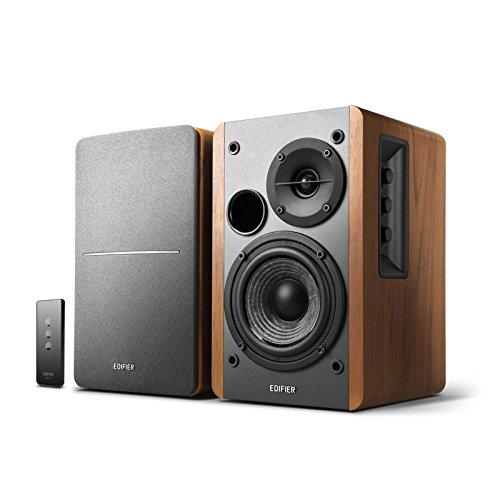
Maintaining a cohesive sonic character across all channels in a home theater is known as timbre matching. When a sound effect pans from your front left speaker to your surround channels, noticeable shifts in tone can break immersion. Front speakers with warm soft-dome tweeters may sound noticeably different from an overhead architectural speaker featuring a titanium horn or a polymer cone. Critical listening environments like recording studios rely on neutral active studio monitors to maintain strict tonal consistency across every channel.
Achieving perfect tonal matching is less critical for ambient surround channels than it is for the front soundstage. Because side and rear speakers primarily handle atmospheric sounds, subtle tonal variations often go unnoticed by most movie viewers. However, pairing speakers from the same manufacturer or with similar cone materials helps smooth out panning transitions. If your front speakers feature high-efficiency horn technology, selecting an in-ceiling surround with matching horn-loaded architecture preserves consistent dynamic punch.
Evaluating your personal listening habits helps clarify whether minor acoustic differences will impact your enjoyment. Audiophiles who frequently listen to multi-channel audio tracks or complex orchestral recordings will notice the elevation and timbre shifts of ceiling speakers quickly. In contrast, casual family movie nights, sports broadcasts, and gaming sessions rarely suffer from overhead surround placement. Matching your hardware choices to your actual listening priorities prevents unnecessary frustration and overspending.
Making the Final Decision for Your Room Layout
Choosing whether to mount surround speakers in the ceiling ultimately comes down to balancing acoustic ideals against everyday practicalities. Traditional ear-level speakers provide superior spatial imaging, authentic horizontal panning, and easy future repositioning. However, architectural constraints, open floor plans, and modern interior aesthetics frequently make traditional speaker placement impossible or visually unappealing. In-ceiling speakers offer a durable, clutter-free alternative that keeps floors completely clear of wires and cabinets.
If you decide that an in-ceiling layout best suits your living space, investing in directional or pivoting models yields the most satisfying acoustic results. Taking the time to run automated receiver calibration, fine-tune channel trims, and install proper CL-rated wiring ensures reliable, long-term performance. By acknowledging the acoustic compromises and applying smart setup techniques, you can enjoy an expansive and entertaining surround sound experience that harmonizes effortlessly with your home decor.




Write Your Review
No reviews yet. Be the first to share your experience!