

Holding your phone close while listening to music or watching a video often leads to an unexpected discovery about your device’s audio hardware. Many users wonder why does iphone sound only come out of one speaker when they inspect the bottom edge and notice sound escaping from only the right-hand holes. While this layout looks like a dual-speaker configuration at first glance, the internal design of Apple devices actually assigns entirely different jobs to those bottom openings. If you are comparing mobile playback against portable Bluetooth speaker options, understanding how your phone routes sound can save you unnecessary troubleshooting time.
In most situations, this single-sided output at the bottom is an intentional hardware feature rather than a mechanical failure. True stereo playback on modern devices relies on a combination of one bottom acoustic driver and the top receiver speaker near the front camera. However, software balance settings, accumulated lint, or audio processing bugs can also silence one channel and create genuine listening problems. Exploring how your phone manages audio output helps you determine whether your phone is working properly or if a quick audio setting adjustment is required.
Pros
- Versatile bone conduction creates fun, instrument-like sounds on everyday objects
- True wireless stereo elevates solo play to full surround experience
- Compact portability fits any bag for on-the-go creativity
- Strong Bluetooth compatibility with major phones and tablets
- Powers up to 115dB for room-filling volume on ideal surfaces
Cons
- Sound quality shines brightest on hollow surfaces, less impressive standalone
- Volume and tone vary by object thickness and material
- Requires two units for full stereo, single unit is mono only
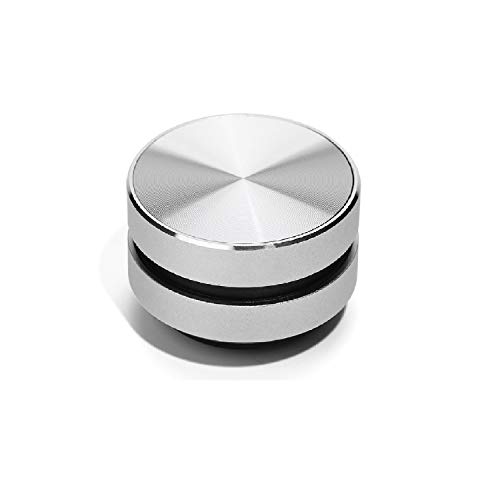
The Bigvapor Bone Conduction Speaker redefines portable audio by using vibration technology to turn any hollow object into a speaker. Stick it on a plastic box, guitar body, or even a dashboard, and enjoy a spectrum of sound effects that mimic different instruments. It's a game-changer for inventive users who want customizable audio without bulky gear.
Ideal for party hosts, travelers, or home tinkerers, this mini speaker pairs via Bluetooth with iPhones, Samsung devices, and tablets for music, calls, games, or podcasts. Two units connect automatically for true wireless stereo, delivering a surround experience perfect for tailgates or casual hangouts.
In real-world tests, it punches up to 115dB on thin hollow surfaces, creating lively vibes for small groups. While surface-dependent, its creativity factor makes it stand out from standard speakers. Verdict: A must-buy for fun-loving audio explorers seeking portable innovation.
Bone conduction tech vibrates surfaces for a dynamic sound signature that shifts from bassy thumps on buckets to crisp highs on glasses. Vocals stay clear for podcasts and calls, while volume hits 115dB on optimal thin objects, filling rooms without distortion.
Bluetooth range holds steady for stable streaming indoors or out, with TWS pairing two speakers for balanced 2.0 stereo. No companion app needed, but expect playful experimentation to dial in the best tone for movies or games.
FM radio adds versatility for live tunes, making it reliable for workouts where traditional speakers falter.
This ultra-mini design weighs next to nothing, making it the ultimate pocketable companion for hikes, beach days, or desk setups. Its rugged build handles daily tosses, though no official IP rating means keeping it dry during pool parties.
Portability reigns supreme, with a form factor that clings to surfaces via vibration alone, no clips required. Pair it with hollow finds like storage bins for extended play without bulk.
Battery life supports hours of vibes on a single charge, quick top-ups keep the party going. Focus on its lightweight freedom for all-day creativity without drain worries.
Diagnosing iPhone Speaker Behavior, Hardware Design, and Stereo Sound Delivery
The immediate answer to why does iphone sound only come out of one speaker on the bottom edge is that Apple designs the device with only a single speaker located at the bottom. The matching set of holes on the other side of the charging port houses the primary microphone and an internal barometric vent rather than a second sound driver. When listening in stereo, your phone pairs that bottom speaker with the top earpiece receiver near the front camera rather than using two bottom ports. If sound fails to play from either the top earpiece or the bottom driver, a software setting or physical obstruction is typically responsible.
Physical Grille Architecture: The Microphone Versus Speaker Distinction
Apple builds the lower chassis of the iPhone with visual symmetry to create a balanced appearance. When looking at the bottom rim, you will observe a row of drilled holes on the left and an identical or similar set of holes on the right of the Lightning or USB-C port. Many users naturally assume that each cluster of holes corresponds to an individual stereo speaker channel. In reality, the internal components behind these two grilles perform completely different hardware functions.
The right-hand grille on modern iPhone models covers the acoustic chamber for the primary lower loudspeaker. This acoustic driver handles media audio, ringtones, system alerts, and speakerphone calls with substantial output. In contrast, the left-hand grille conceals the primary voice microphone responsible for capturing your voice during standard cellular calls and voice memos. The left side also houses a barometric vent that helps equalize internal pressure with ambient atmospheric conditions.
Placing your finger over the left-hand grille while playing media produces no change in volume because no audio waves escape from that section. Covering the right-hand grille, however, noticeably muffles or silences the lower audio playback immediately. Recognizing this hardware layout resolves the initial confusion for most users who suspect a manufacturing defect. The presence of sound on only one side of the charging port confirms that the bottom speaker is performing exactly as engineered.
How Modern iPhones Deliver True Stereo Playback
Earlier generations of mobile phones relied strictly on monophonic sound that traveled outward solely through the bottom opening. Beginning with the iPhone 7, Apple overhauled the acoustic architecture to introduce genuine two-channel stereo sound separation. This modern design transforms the top earpiece speaker, traditionally used only for private phone calls, into an active secondary media channel. When you watch a movie or listen to audio tracks, the device activates both drivers simultaneously.
The two internal drivers are tuned to handle different portions of the frequency spectrum to maximize clarity. The lower loudspeaker features a larger acoustic cavity and handles mid-range tones along with low-frequency energy. Meanwhile, the top earpiece driver focuses primarily on upper mid-range and high frequencies to deliver clear vocal articulation. This division of labor creates an expansive soundstage that gives the illusion of balanced stereo output despite the physical size difference of the speakers.
Orientation also plays a vital role in how the operating system routes audio between these internal transducers. When holding the device in portrait orientation, the software distributes sound to keep dialogue centered while maintaining balanced volume. Rotating the phone into landscape mode triggers the accelerometer to assign distinct left and right channels based on how you hold the display. If you hear audio coming strictly from the bottom driver in landscape mode, the earpiece channel may be disabled or clogged.
Inspecting iOS Accessibility and Audio Balance Settings
When audio genuinely disappears from either the top or bottom speaker during media playback, the first place to investigate is the iOS Accessibility menu. Within the system settings, Apple provides an audio balance slider designed to accommodate listeners with hearing differences in one ear. If this slider is accidentally nudged toward the extreme left or right, the system diverts all audio signals to a single channel. This redirection effectively silences either the top earpiece or the lower loudspeaker during normal use.
You can inspect this setting by navigating to Settings, tapping Accessibility, and selecting the Audio and Visual menu. Look for the balance slider positioned between the letters L and R, and confirm that the indicator sits precisely in the center at 0.00. Even a slight offset can cause one speaker to sound significantly quieter than the other. Centering this slider instantly restores balanced two-channel playback across both physical speakers.
Another setting worth reviewing in the same menu is the Mono Audio toggle switch. Enabling Mono Audio combines the left and right stereo channels into a single identical signal played through both speakers. While this toggle does not silence a speaker on its own, it eliminates the dimensional separation found in stereo music and video tracks. Disabling Mono Audio ensures that distinct left and right channel details remain active across both internal transducers.
Identifying Grille Obstructions, Dirt, and Physical Debris
Smartphones spend substantial time inside pockets, purses, and backpacks where microscopic debris constantly accumulates. Over months of everyday carrying, fabric lint, pocket dust, skin oils, and makeup naturally settle into the fine acoustic mesh. Because the top earpiece grille is extremely narrow and recessed, it is especially prone to becoming completely blocked. When debris forms an airtight barrier over the mesh, sound waves cannot escape into the room.
Cleaning these microscopic openings requires careful technique to prevent damaging the sensitive acoustic membranes underneath. You should use a clean, dry toothbrush with soft bristles to gently sweep across the surface of the speaker mesh. Hold the phone with the grilles pointing downward so dislodged particles fall away from the device rather than deeper into the housing. Avoid using compressed air cans because intense air pressure can rupture the internal water-resistant seals and driver diaphragms.
Protective accessories can also cause artificial sound blockages that mimic a failed speaker. Certain heavy-duty phone cases feature narrow acoustic cutouts that may misalign with the lower speaker holes or muffle sound output. Similarly, full-coverage glass screen protectors sometimes lack an open cutout for the top earpiece or shift slightly during installation. Removing the protective case and inspecting the screen protector edge helps confirm whether an accessory is obstructing your audio pathway.
Software Hang-Ups, Bluetooth Routing, and Headphone Mode Glitches
Operating system glitches can occasionally disrupt audio playback by misidentifying the active output destination. A common scenario involves the phone becoming trapped in headphone mode after disconnecting wired earbuds or a Lightning adapter. When this glitch occurs, the system continues sending audio signals to a non-existent accessory while muting the built-in speaker drivers. The volume display slider may even display a headphone icon despite no physical accessory being attached.
Bluetooth connectivity conflicts represent another frequent cause of unexpected single-speaker or missing playback. Your smartphone may remain connected in the background to a nearby wireless speaker, car audio system, or wearable device in another room. Swiping down to open the Control Center allows you to tap the AirPlay audio card and verify the active output device. Selecting the internal phone speaker forces the operating system to release external connections and restore local playback immediately.
Testing audio across multiple applications provides valuable diagnostic clues when tracking down software-related silence. If ringtones and system timer alarms play loudly through the speakers but a specific streaming app remains silent, the application itself is likely corrupted or muted. Performing a standard device restart often clears temporary cache errors and audio daemon stalls. Keeping your operating system updated to the latest available iOS release also eliminates known audio routing bugs.
Expanding Sound Capabilities with External Audio Solutions
While internal phone speakers provide practical convenience for quick videos, their compact acoustic enclosures limit bass response and overall volume. Listeners who want fuller audio often turn to innovative external accessories that expand mobile sound without requiring bulky equipment. An example of this creative approach is the Bigvapor Bone Conduction Speaker, which uses bone conduction technology to transform hollow surfaces into resonant acoustic soundboards. Placing this compact transducer on materials like hollow boxes, plastic buckets, or guitar bodies allows users to experiment with customizable sound textures.
The manufacturer highlights that two matching units can pair together through True Wireless Stereo technology to produce a 2.0 surround sound experience. Under optimal acoustic conditions on thin hollow objects, the listed specifications indicate the device can reach output levels up to 115dB while offering an integrated FM radio function. This type of accessory illustrates how external hardware can bypass the physical acoustic constraints of smartphone speaker grilles. Listeners can achieve genuine stereo separation by physically placing two paired units several feet apart across a workspace.
For outdoor environments or larger gatherings, users often step up to dedicated portable Bluetooth speakers that offer larger driver enclosures and robust weather protection. Unlike internal micro-speakers, dedicated enclosures utilize passive radiators and reinforced woofer cones to reproduce deeper low-end frequencies. Connecting an external wireless speaker completely frees your phone from handling acoustic amplification, preserving battery life and eliminating speaker grille vibration. Exploring these external alternatives ensures you have the proper sound coverage for any listening scenario.
Diagnosing Physical Hardware Damage and Receiver Failures
If cleaning the grilles and resetting software settings fails to restore sound from both speakers, physical component damage must be evaluated. Liquid ingress is one of the most common catalysts for sudden speaker failure in smartphones. Even though modern devices possess splash and water resistance ratings, liquid exposure can degrade the adhesive bonds holding the driver cone or corrode the voice coil wiring. When moisture enters the acoustic cavity, sound often becomes severely muffled, tinny, or completely inaudible.
Hard impacts from accidental drops can also dislodge internal acoustic components or fracture the ceramic driver elements. A damaged speaker driver typically exhibits audible buzzing, distinct distortion at moderate volumes, or periodic cutouts when the chassis flexes. In severe cases, the voice coil burns out entirely, severing the electrical circuit and leaving that specific channel permanently silent. Under these circumstances, software adjustments cannot correct the physical disruption of the transducer.
Determining whether a hardware repair is necessary requires contacting an authorized Apple service technician or certified repair facility. Professional diagnostic tools can isolate whether the issue originates from the audio amplifier chip on the logic board or the individual speaker capsule. Replacing an internal speaker capsule is a routine repair that restores full two-channel stereo operation without requiring whole-device replacement. Relying on professional service ensures that internal water seals and acoustic gaskets are properly reinstalled.
Practical Sound Verification and Audio System Optimization
Verifying your device’s acoustic performance is straightforward once you know which speakers should be producing sound. You can open a web browser and search for an online stereo audio test that isolates the left and right channels individually. While playing the test track, rotate your device into landscape orientation and bring each speaker close to your ear sequentially. You should hear distinct, clean audio emanating from the top earpiece during the designated channel and from the lower right grille during the opposite channel.
For users seeking high-fidelity music playback at a desk, pairing mobile devices with powered desktop audio systems provides a superior listening experience compared to mobile transducers. Desktop speakers feature dedicated tweeters, rigid bass drivers, and substantial internal power supplies that reproduce complex musical arrangements with accurate stereo imaging. Wireless Bluetooth or wired DAC connections allow your mobile device to function seamlessly as an audio source while desktop drivers deliver dynamic acoustic range. This setup eliminates the need to rely on phone hardware for serious music listening.
Understanding the intentional acoustic architecture of your phone gives you peace of mind whenever you inspect the bottom grilles. Knowing that the left opening serves as a microphone prevents unnecessary concern over missing audio, while basic maintenance keeps the active drivers clear of debris. Should you desire greater acoustic depth or higher volume, external wireless accessories and powered home systems stand ready to elevate your listening. Regular checks of your audio balance settings will keep your mobile sound performing reliably for every call, video, and song.




Write Your Review
No reviews yet. Be the first to share your experience!