

Immersive gaming feels significantly more engaging when personal audio stays locked to head movements, but room guests often feel left out when the virtual world remains completely silent. Virtual reality setups frequently isolate sound directly to integrated earphones or a connected pair of over-ear headphones, cutting off everyone else in the room. Many gamers and home entertainment enthusiasts ask how do i play sound through my vr headset and speakers at the same time to let friends hear the action or capture fuller room bass. Resolving this issue requires understanding how your audio hardware routes digital signals across multiple physical output paths.
Operating systems and mobile smartphones typically prioritize a single active playback device, which automatically disables external audio once an auxiliary cable or headset connects. Configuring dual playback can be achieved through software audio mirroring on desktop computers or through physical splitters, audio casting, and adapters on mobile smartphone setups. Pairing your virtual reality rig with reliable active desktop studio monitors or home stereo gear bridges the gap between solitary gameplay and shared living room entertainment. Exploring the right audio routing settings ensures every explosion, soundtrack cue, and dialogue line plays clearly across both devices without annoying lag or distracting distortion.
Pros
- Rich 3D acoustic positioning creates an enveloping soundstage for movies and video games.
- No charging cable required for the headset, offering unlimited entertainment runtime.
- Lightweight 0.9-pound build minimizes neck fatigue during extended entertainment sessions.
- Adjustable focal and pupil distance dials accommodate glasses wearers with up to 600 degrees of myopia.
Cons
- Requires a lightning or USB-C headphone adapter for modern phones without a 3.5mm audio jack.
- Included Bluetooth remote controller offers limited functionality on newer iOS operating systems.
- Lacks water resistance ratings, making it strictly suited for indoor environments.
The SENYHPHC 3D Audio VR Headset Speaker bridges the gap between wearable video displays and personal surround sound units. Designed to cradle smartphones ranging from 4.7 to 7 inches, this device delivers a private cinema experience straight to your living room couch or travel seat. By incorporating dedicated, adjustable ear-cup speakers right into the frame, it eliminates the clutter of tangled external earbuds while wrapping your ears in high-fidelity 3D spatial acoustics.
In real-world use, setting up the system takes only moments. Simply launch your favorite split-screen 3D video or VR application, slide your phone into the front retention cradle, and connect the integrated 3.5mm audio cable. The chassis features multi-function buttons along the rim, allowing you to tweak volume, advance video tracks, or pick up incoming phone calls without having to dismantle your phone setup mid-session. The dual 42mm spherical optical lenses work in tandem with the acoustic drivers to deliver an impressive 100-degree field of view matched with panoramic audio.
For everyday buyers, the biggest advantage is pure convenience. Because it relies on passive audio passthrough, you never have to charge an internal speaker battery before catching a weekend movie double-feature. While users with newer smartphones will need a basic lightning or USB-C to 3.5mm dongle, the overall audio-visual synergy provides outstanding entertainment value for movie enthusiasts, mobile gamers, and tech-curious teens.
The sound performance of this headset speaker relies on proprietary 3D phase acoustic technology engineered to simulate multi-channel home theater setups. Low-frequency impact is noticeably energetic, giving action movie explosions and punchy soundtrack drops a warm, resonant presence. Acoustic isolation around the soft ear cushions keeps outside ambient noise at bay while preventing your media audio from leaking out into the room.
Midrange vocals remain clear and well-articulated, ensuring dialogue does not get buried underneath heavy background scores or sound effects. High frequencies are tuned smoothly to prevent harsh listening fatigue during longer playback sessions. The physical connection guarantees zero audio latency, avoiding the lip-sync lag often found in wireless audio products.
For navigation, the system pairs with an included wireless controller that maintains a reliable Bluetooth connection up to standard indoor ranges. While Android devices take full advantage of the controller button mapping, Apple users should note that iOS system restrictions limit some remote shortcuts, though the onboard headset controls handle primary sound adjustments reliably.
Constructed with comfort in mind, the unit weighs a mere 0.9 pounds, keeping facial and neck strain remarkably low. The headband incorporates flexible, adjustable straps that balance the phone payload evenly across your forehead and crown. Soft, breathable face padding reduces heat accumulation, while independent pupil and focal distance knobs provide seamless viewing adjustment for users with myopia up to 600 degrees.
Because the speaker operates without an internal lithium-ion battery cell, there is zero degradation over time and no charging downtime to worry about. Playback time is dictated entirely by your smartphone battery, allowing you to binge entire TV seasons uninterrupted. The companion Bluetooth remote runs on standard accessible batteries that provide months of intermittent navigation without routine recharging.
In terms of durability, the matte ABS plastic construction handles everyday handling and backpack travel with ease. While the unit does not carry an official IP waterproof rating and should be kept away from pools and rain, its enclosed internal speaker housings shield the acoustic elements from household dust and minor splashes.

Pros
- Dynamic 3D audio reproduction with satisfying bass response for action movies
- Passive audio system requires no recharging for uninterrupted entertainment
- Direct 3.5mm wired input ensures zero audio latency during video playback
- Convenient physical volume and track control keys built directly onto the headset
Cons
- Requires a lightning or USB-C adapter for modern smartphones lacking a 3.5mm jack
- Companion Bluetooth controller offers limited functionality on iOS devices
- Soundstage focuses heavily on low frequencies which can slightly soften upper treble clarity
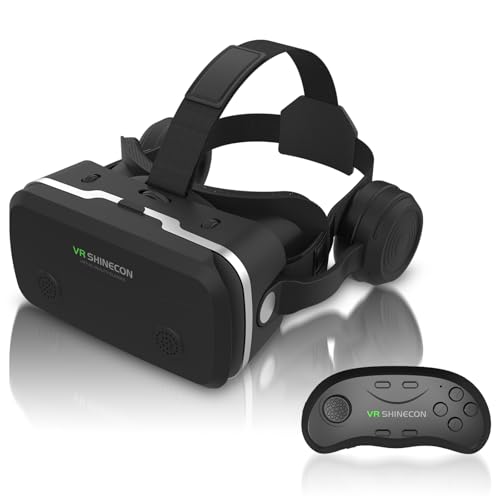
The VR SHINECON immersive audio headset represents an intriguing union of wearable theater optics and built-in personal speaker acoustics. Designed specifically for smartphone-driven entertainment, this system houses dedicated 3D sound drivers directly inside comfortable earcups connected to an adjustable headset chassis. If you want a private theater setup for streaming movies, mobile gaming, or virtual media without disturbing nearby family members or roommates, this unit provides a uniquely focused experience.
In practical day-to-day use, the integrated audio system provides a substantially wider stereo field than generic earbuds. The proprietary 3D phase sound design focuses acoustic energy right toward your ears, lending a cinematic sense of space to action scenes, racing games, and concert recordings. Setting up your smartphone is straightforward: snap any device measuring between 4.7 and 6.0 inches into the front cradle, plug in the integrated audio jack, and you are ready for a private viewing session.
Operational convenience is bolstered by integrated physical playback keys located along the bottom rim. These tactile buttons let you adjust volume, skip tracks, and answer incoming phone calls without having to unmount your smartphone. While the included handheld Bluetooth remote provides convenient navigation for Android users, Apple enthusiasts should keep in mind that iOS system permissions limit remote functionality.
Overall, this headset speaker makes an affordable, entertaining addition to any tech lover's entertainment toolkit. It delivers respectable sound isolation, onboard acoustic controls, and an all-in-one private listening environment that easily slips into a backpack for travel or dorm life.
Acoustically, the integrated stereo drivers deliver a fun, bass-forward sound signature that suits action cinema and arcade gaming. Low-frequency impacts such as explosions, engine rumbles, and cinematic bass drops resonate with convincing presence. The closed-back acoustic ear cushions provide substantial passive noise isolation, preventing audio leakage while helping deeper bass frequencies maintain their punch inside the earcup chamber.
Midrange vocals remain clear and intelligible during dialogue-heavy movies, allowing spoken speech to stay anchored in the center channel while ambient sound effects sweep laterally across the soundstage. Volume output reaches solid, room-filling levels straight from standard smartphone headphone output stages without inducing harsh harmonic distortion at elevated listening levels.
Because the primary audio delivery utilizes a direct 3.5mm wired connection, you enjoy completely latency-free sound synchronization, which is vital for gaming and matching lips to dialogue on screen. For users pairing the bundled Bluetooth remote, navigation signals remain stable across typical room distances, ensuring responsive media control without wireless dropouts during your listening sessions.
Built with lightweight polymers and soft perforated face padding, the headset speaker emphasizes balanced wearability and portability. Adjustable three-way head straps distribute weight evenly across your crown and forehead, keeping the audio drivers aligned over your ears without causing uncomfortable pressure spots during a full-length movie.
One of the biggest functional advantages is the battery-free architecture of the main unit. Because the acoustic drivers run entirely on the passive audio signal from your connected smartphone, you never have to worry about charging cycles, degraded internal lithium cells, or dead batteries interrupting your listening experience mid-film. As long as your phone has power, your personal sound system is ready to perform.
The companion wireless controller operates on standard AAA batteries, offering weeks of casual navigation without tethering you to a wall outlet. For on-the-go media consumers looking for a durable, maintenance-free personal entertainment rig, this hardware package delivers dependable usability wherever you travel.

Pros
- Strong passive noise isolation blocks ambient room noise for deep acoustic immersion.
- Plug-and-play design requires zero charging or battery maintenance for the headset.
- Tactile on-unit audio buttons offer quick volume adjustments on the fly.
- Comfortable, lightweight chassis reduces neck fatigue during long listening sessions.
Cons
- Requires a 3.5mm adapter for modern smartphones that lack a dedicated headphone jack.
- Included Bluetooth handheld remote has limited compatibility with newer iOS updates.
- Audio output quality relies in part on your phone's internal digital-to-analog converter.
The SENYHPHC Virtual Reality Headset is an innovative personal entertainment system that bridges the gap between wearable visual displays and dedicated personal audio. Designed to house smartphones ranging from 4.7 to 7.0 inches, this unit transforms everyday mobile content into an expansive private theater experience. By combining high-definition 42mm double spherical lenses with built-in adjustable stereo ear cups, it delivers a synchronized audiovisual experience that is well-suited for movie buffs, students engaging in virtual learning, and casual mobile gamers.
In real-world use, the integration of 3D phase sound technology makes a noticeable difference compared to listening through standard mobile phone speakers. Ambient background sounds are effectively sealed out by the padded ear cushions, allowing dialogues and sound effects to take center stage. The headset also features independent focal and pupil distance adjustments that cater to users with myopia up to 600 degrees, eliminating the need to wear prescription glasses inside the chassis for most listeners.
Navigating media playback is simplified by physical controls located directly on the chassis. Users can adjust sound levels, pause scenes, and accept phone calls without having to remove their mobile device from the cradle. While modern smartphones without a 3.5mm port will need an auxiliary adapter, the setup process remains straightforward and accessible to users of all technical skill levels.
Ultimately, the SENYHPHC unit stands out as an affordable, all-in-one entertainment accessory. It removes the friction of managing separate wireless earbuds and visual goggles, providing a neat, lightweight solution that excels in personal movie streaming and light gaming.
The integrated sound system on this unit utilizes 3D phase sound processing engineered to simulate a wide, three-dimensional soundstage. Low-end frequencies come through with satisfying presence, delivering tactile rumble during action movies and bass-heavy gaming sequences without muddying the vocal range. Midrange tones remain crisp and forward, ensuring that movie dialogue and in-game communication remain distinct even during loud orchestral passages.
Because the speaker system relies on a direct 3.5mm physical connection to the smartphone, it avoids the audio latency and compression issues commonly found in entry-level wireless gear. Sound travels directly into the closed-back ear cups with virtually zero lag, providing perfect lip-sync accuracy for fast-paced video content. The ear cushions also act as an effective physical barrier against ambient room distractions, preserving dynamic range at moderate listening levels.
The package includes an auxiliary Bluetooth handheld controller to assist with menu navigation and app interaction. While the controller provides responsive pairing on Android devices, iOS users should note that Apple operating system restrictions limit some remote functions, making the physical on-unit audio buttons the preferred method for adjusting volume and handling playback.
Weighing in at just 0.9 pounds, the headset is crafted from impact-resistant lightweight polymers designed to keep front-heavy pressure off the bridge of the nose. The adjustable three-way head strap evenly distributes weight around the crown of the head, while breathable face cushioning prevents heat accumulation during extended viewing sessions. The side-mounted ear speakers slide along a track, accommodating different head shapes and ear heights for a custom, fatigue-free fit.
One of the strongest practical advantages of this audio design is the complete absence of an internal headset battery. Because audio is driven directly through the wired auxiliary line and the visual optics are purely mechanical, there is no internal battery pack to degrade, overheat, or recharge. Users never have to worry about finding an outlet before watching a two-hour movie, as runtime is entirely dictated by the host smartphone.
The companion Bluetooth remote operates on standard consumer batteries, drawing minimal power and providing weeks of intermittent use before requiring replacements. For travelers, commuters, and dorm residents looking for an ultra-portable personal entertainment setup that never needs an overnight charge, this durable and straightforward design proves exceptionally convenient.

Pros
- Built-in 3D phase sound earcups provide strong passive noise isolation and punchy bass response.
- Battery-free plug-and-play operation eliminates the constant hassle of recharging the headset.
- Independent pupil and focal distance dials easily accommodate users with myopia up to 600 degrees.
- Convenient tactile bottom buttons allow quick volume adjustments and playback control.
- Lightweight construction ensures balanced, comfortable wear during full-length movie sessions.
Cons
- Requires a 3.5mm headphone jack or an auxiliary adapter for modern smartphones lacking a dedicated audio port.
- Included Bluetooth remote controller features limited functionality on newer iOS operating systems.
- Audio volume ceiling depends directly on your smartphone's internal audio output capabilities.
The VR SHINECON 3D Virtual Reality Headset bridges the gap between private cinema viewing and wearable spatial audio. Engineered to house smartphones ranging from 4.7 to 6.0 inches, this all-in-one entertainment headset combines panoramic optics with integrated stereo earphones. It serves as an accessible gateway for tech enthusiasts, movie lovers, and mobile gamers who want a personal theater encounter without investing in expensive standalone hardware.
In day-to-day use, setup is remarkably straightforward. Users slide their smartphone into the front compartment, plug in the integrated 3.5mm audio cable, and adjust the independent pupil distance dials to match their eyesight. The headset comfortably accommodates users with myopia up to 600 degrees, often eliminating the need to wear prescription glasses during use. The included handheld remote pairs smoothly with most Android setups to make navigating 360-degree videos and side-by-side 3D movies convenient.
Multimedia performance delivers an engaging visual and auditory environment. The Japanese PMMA optical lenses generate an expansive 100-degree field of view that places you front row in a virtual auditorium. Supported by the built-in stereo audio cups, background room noise fades away while sound effects remain closely synchronized with on-screen action, creating a genuinely captivating personal bubble for gaming or streaming.
For mobile users craving an intimate, big-screen audio-visual experience on a budget, this headset punches well above its weight class. While iOS users face minor remote control navigation quirks, the hassle-free maintenance and solid sound delivery make it a compelling personal entertainment accessory for travel, dorm living, or cozy nights at home.
The integrated audio system utilizes 3D phase sound technology engineered to simulate acoustic depth and directional positioning. Low-end frequencies present a pleasant rumble with punchy bass notes during action-heavy cinematic sequences, while vocal clarity remains crisp and front-and-center for dialogue-heavy scenes. The closed-back earcups clamp comfortably around the ears, providing effective passive noise isolation that keeps ambient household distractions from spoiling your content.
Maximum volume output is driven directly by your smartphone auxiliary connection, ensuring clean amplification with minimal distortion even when pushed to higher listening levels. Tactile bottom-mounted buttons allow you to quickly fine-tune volume levels, skip chapters, or answer incoming phone calls on the fly. For wireless input, the companion Bluetooth remote provides a stable operational range across several feet, giving you responsive command over media playback without having to touch your docked phone.
Weighing roughly 1.25 pounds, this personal media unit emphasizes balanced weight distribution across the face and crown with soft foam facial cushioning and flexible head straps. The ABS chassis resists daily handling bumps, making it a dependable companion for travel or bedside entertainment. While it is strictly built for indoor living spaces rather than rugged outdoor moisture conditions, the physical materials are simple to wipe down after extended viewing sessions.
When it comes to power, this unit features a battery-free architecture that requires zero charging downtime for the headset itself. Audio and video drive entirely off your mobile device, allowing your entertainment marathon to run as long as your phone battery holds out. The lack of an internal rechargeable battery cell keeps the device noticeably lighter on your neck and guarantees that your gear will never lose charge in the middle of a movie.

Pros
- Clear directional stereo audio enhances gaming and movie immersion
- Adjustable pupil and focal distances make it easy to use without wearing prescription glasses
- Broad compatibility across various 4.0 to 6.0 inch iOS and Android smartphones
- Included Bluetooth controller simplifies media navigation on supported devices
Cons
- Bluetooth remote has limited functionality on newer iOS versions above 11.2.5
- Lacks active noise cancellation, allowing loud ambient room noise to filter through
- Bass response lacks deep sub-bass impact during intense cinematic explosions
The VR SHINECON personal theater headset speaker bridges visual reality with personal spatial audio, turning your standard smartphone into a private 3D cinema. Tailored for casual gamers, movie lovers, and tech enthusiasts who want an accessible entry point into virtual entertainment, this device houses your mobile phone while channeling synchronized stereo acoustics directly to your ears. By combining an optical visor with dedicated audio drivers, it eliminates the need to hold a screen or balance external sound equipment on your lap.
In everyday use, the unit provides an engaging sensory setup for watching 3D side-by-side videos and playing interactive mobile games. The integrated optical assembly pairs with the built-in sound system to create a genuine theater simulation where dialogue stays centered and environmental audio pans cleanly from left to right. While the accompanying handheld controller simplifies volume and track changes on Android and legacy iOS devices, users will appreciate how straightforward it is to load popular platforms like YouTube 3D and FullDive without complex calibration.
Comfort remains a critical factor during longer viewing sessions, and this model holds up well thanks to its lightweight construction and adjustable head straps. The independent focal and pupil dials allow users with myopia up to 500 degrees to achieve a crisp picture without wearing bulky eyeglasses inside the chassis. The audio chambers sit comfortably against the ears, isolating personal playback from the rest of the household so you can stream action movies late at night without disturbing family members.
Ultimately, this device stands out as a budget-friendly all-in-one entertainment accessory that punches above its weight class for casual media consumption. It avoids the heavy cabling and expensive computing hardware required by premium rigs while delivering dependable stereo separation and crisp visuals. For anyone eager to transform their smartphone into a personal media room on a weekend afternoon, this speaker headset delivers solid value and reliable fun.
The audio drivers in this personal audio unit are tuned to deliver clean vocal clarity and crisp high-frequency detail, making dialogue in movies and podcast tracks easy to understand. Midrange frequencies remain articulate even during busy action sequences, ensuring that spoken lines never get buried beneath background orchestral scores. While the lower registers offer enough punch to keep video games lively, deep sub-bass frequencies are somewhat restrained, prioritizing acoustic balance and speech clarity over bone-rattling rumble.
Volume output reaches satisfying levels without producing harsh clipping or buzzing distortion, allowing you to immerse yourself fully in your favorite virtual worlds. The accompanying controller maintains a solid wireless connection over standard household distances up to thirty feet, ensuring that responsive playback controls and audio adjustments remain lag-free. Whether streaming a concert video or navigating an interactive VR world, the synchronized audio feed keeps pace with on-screen action for an enjoyable sensory experience.
Engineered for lightweight indoor convenience, the unit weighs in at approximately 1.25 pounds, distributing mass evenly across the forehead and crown to prevent pressure points. The durable matte plastic casing resists everyday scuffs and dust buildup, while the cushioned face padding provides a soft seal that blocks external light leakage. Although it is not built with outdoor waterproof ratings for poolside splashing, the enclosure easily handles routine indoor use and keeps internal components clean and protected.
Because the primary audio and visual rendering relies directly on your docked smartphone, overall playback time corresponds with your phone battery health and display brightness settings. The wireless remote uses minimal power, delivering weeks of intermittent navigation on standard batteries before needing replacement. This passive and semi-active hybrid configuration ensures that you never have to wait hours for a dedicated internal headset battery to recharge, letting you swap phones or plug in a compact power bank to keep your entertainment going all evening.
Routing Virtual Reality Audio to Headsets and External Speakers
Playing simultaneous audio across a virtual reality headset and external room speakers requires directing a single sound stream into two distinct output endpoints. The exact configuration depends heavily on whether you are running a PC-connected VR system or using a smartphone-based VR viewer that relies on mobile hardware. By selecting the correct software mirroring settings, physical audio splitters, or digital casting methods, you can easily share your gameplay with everyone in the room.
Understanding the Operating System Audio Routing Barrier
Modern desktop and mobile operating systems are engineered to assign audio output to a single primary playback device by default. Plugging in a 3.5mm headphone jack or USB audio cable automatically redirects the audio stream away from external speakers. This default behavior prevents acoustic feedback and protects battery life on portable gear, but it creates an immediate barrier for dual playback. Bypassing this restriction requires either an operating system feature that duplicates the digital stream or hardware that physically splits the electrical signal.
The architecture of the virtual reality system determines which path provides the cleanest signal without introducing distracting processing delays. Dedicated computer systems handle complex software audio routing smoothly because desktop operating systems support multiple concurrent audio drivers, virtual mixers, and hardware outputs. Mobile smartphone VR viewers, by comparison, lack complex sound card routing utilities and rely primarily on physical headphone jacks or screen-casting protocols. Recognizing the structural differences between desktop sound drivers and mobile operating systems saves substantial time during setup.
Audio latency represents another critical factor when attempting to duplicate sound across personal earphones and room loudspeakers. Sound travelling to integrated headset drivers must remain precisely synchronized with visual head-tracking to prevent disorientation and motion fatigue. External room speakers must receive that same signal without noticeable lag, or the resulting echo will ruin the acoustic environment for everyone nearby. Balancing high-fidelity spatial cues inside the headset with clear room audio requires careful hardware selection and proper driver configuration.
Configuring Audio Mirroring in Desktop and PC VR Environments
Desktop virtual reality platforms provide integrated software utilities specifically designed to duplicate audio output to external computer speakers. SteamVR features a built-in audio mirroring setting that routes primary game audio to the headset while sending an identical clone to your standard sound card. Opening the SteamVR dashboard, navigating to the audio settings menu, and selecting your primary desktop speakers under the audio mirroring dropdown immediately solves the problem. This native implementation ensures that both playback devices receive clean digital feeds without requiring cumbersome third-party mixer applications.
Oculus Link and Meta Quest desktop software also include a dedicated toggle to route sound through computer speakers. Inside the desktop companion application, selecting device settings allows users to enable the feature labeled as hearing VR audio from computer. When activated, the software keeps the headset earphones active while simultaneously outputting the stereo mix to your default Windows playback device. Connecting that Windows output to a high-performance multichannel desktop speaker system produces deep room bass while keeping the player immersed in positional sound.
Windows sound settings provide a secondary software method through the native Stereo Mix recording device for applications lacking built-in mirroring. Accessing the legacy Windows sound control panel reveals the recording tab where the Stereo Mix option can be enabled and configured. Checking the box to listen to this device and designating your external speakers as the destination forces Windows to copy all audio playing through the headset. While this method requires occasional volume balancing between the two devices, it works reliably across nearly all desktop VR gaming applications.
Third-party digital audio routing applications like Voicemeeter offer even greater control for users managing complex multi-speaker configurations. These virtual mixing tools accept a single audio input from the game engine and distribute it independently to multiple physical hardware drivers. You can adjust the equalization, volume trim, and buffer sizes for each output channel to ensure complete acoustic clarity. This level of software control prevents volume clipping and allows room spectators to enjoy rich audio while the player maintains safe listening levels.
Connecting Mobile Smartphone VR Headsets to External Speakers
Mobile smartphone virtual reality viewers, including models from VR SHINECON and SENYHPHC, house a mobile phone between 4.7 and 7 inches directly in front of optical lenses. These headsets contain no internal computing hardware or operating systems, relying entirely on the docked phone for visual and sound processing. Models like the VR Headset with Remote Controller,HD 3D VR Glasses or the SENYHPHC Virtual Reality Headset for iPhone feature integrated adjustable earphones and a 3.5mm auxiliary audio cable. Because the phone generates all sound, routing audio to both the headset earphones and external speakers requires mobile-specific solutions.
A practical analog method for mobile phone headsets involves using a 3.5mm Y-splitter cable connected directly to the phone. The male plug connects to the phone’s auxiliary jack or lightning/USB-C adapter, while the two female ports accept the headset’s built-in 3.5mm lead and an external speaker cable. This passive split sends identical stereo signals to the integrated earcups and your external powered room speakers. Because smartphone headphone amplifiers have finite output, passive splitting may slightly reduce listening volume, making powered external speakers with independent volume controls ideal.
Smartphone screen mirroring offers a convenient wireless alternative that completely eliminates extra cables running from the mobile headset. Modern mobile devices can cast their screen and audio feed simultaneously to a smart television, streaming stick, or wireless receiver using Apple AirPlay or Google Cast. The television or AV receiver then reproduces the game audio through room speakers while the player relies on the phone’s built-in sound or connected Bluetooth audio. While wireless casting introduces slight visual and audio delay to the room speakers, it provides an easy viewing and listening experience for passive spectators.
Handheld Bluetooth controllers included with mobile VR headsets, such as those paired with SENYHPHC and VR SHINECON units, focus purely on navigation rather than audio streaming. Audio remains handled exclusively by the smartphone’s primary sound circuits, whether sent through the integrated 3.5mm jack or transmitted wirelessly. When pairing external Bluetooth speakers directly to the phone while using wired headset earphones, mobile operating systems frequently disconnect the wired port. Verifying your specific smartphone’s dual-output Bluetooth capabilities prevents unexpected audio dropouts during gaming sessions.
Hardware Audio Splitters, DACs, and Switching Solutions
Dedicated hardware splitters and digital-to-analog converters provide the cleanest audio reproduction when splitting signals between headphones and powered speakers. A USB desktop DAC equipped with both a dedicated headphone amplifier output and line-level RCA pre-outs can drive both loads simultaneously without signal degradation. The headphone amplifier circuit provides adequate current for low-impedance headset drivers, while line outputs deliver a stable signal to active bookshelf speakers. This hardware separation avoids impedance mismatches and prevents the distortion commonly associated with cheap passive splitters.
Physical switcher boxes offer convenient control when transitioning between private immersive listening and open room entertainment. Integrating a dedicated hardware switch such as a stereo speaker selector switch into your audio chain allows instant routing management without navigating complex software menus. These selector units protect connected amplifiers from erratic impedance drops and maintain balanced signal paths across all connected gear. A quick press of a mechanical button silences room speakers when private communication is needed during competitive online play.
Ground loop isolators should be considered whenever an external speaker system shares a wall outlet or power strip with your computer or phone charger. Splitting analog audio lines between two AC-powered devices often creates an audible low-frequency hum or buzzing sound in the speakers. Installing an inexpensive inline ground loop isolator between the splitter and the external speaker input breaks the ground loop without altering audio frequencies. This simple hardware addition guarantees silent backgrounds and crystal-clear dialogue during quiet cinematic sequences.
Managing Audio Latency, Echo, and Microphone Feedback
Routing sound through external loudspeakers introduces significant acoustic feedback risks if you are using a virtual reality headset with an active microphone. When room speakers reproduce in-game dialogue or gunshots at high volume, the headset microphone picks up those room reflections and transmits them back to online teammates. This acoustic coupling produces distracting echo loops and annoying static for everyone in the voice chat channel. Lowering room speaker levels or configuring software noise-suppression filters like directional microphone gating effectively prevents voice channel corruption.
Latency differences between wired connections and wireless Bluetooth speakers can disrupt the cohesion of your gaming environment. Direct wired 3.5mm connections and USB cables deliver audio instantaneously with sub-millisecond delay, maintaining perfect synchronization with the visual display. Standard Bluetooth protocols, on the other hand, frequently introduce between 100 and 250 milliseconds of latency unless specialized low-latency codecs are active. If external room speakers lag behind the headset audio, the room will be filled with a disorienting comb-filtering echo that detracts from the experience.
Spatial audio processing behaves differently on headphones compared to standard stereo speaker pairs. Virtual reality titles utilize head-related transfer functions to simulate sound origins above, behind, and around the player through binaural headphone cues. When this complex spatialized signal is mirrored directly to external stereo speakers, certain directional frequencies may sound hollow or phase-cancelled in the open room. Setting the mirrored output to a standard downmixed stereo profile resolves phase cancellation issues and ensures external listeners hear a balanced, full-bodied presentation.
Troubleshooting Common Dual-Audio Mirroring Failures
Sudden audio cutouts often occur when games use exclusive audio modes that bypass operating system mixer settings entirely. Certain virtual reality applications request exclusive control over the sound card driver to minimize latency, which silently disables secondary mirrored outputs. You can fix this issue by opening Windows sound device properties, navigating to the advanced tab, and unchecking the box that allows applications to take exclusive control. Disabling exclusive mode forces the game engine to route through the shared Windows audio engine, restoring dual-playback functionality.
Uneven volume levels between headset earphones and external speakers represent another frequent operational complaint. Mobile headsets with integrated volume buttons, such as those on SENYHPHC or VR SHINECON units, allow physical volume adjustment directly on the headset frame. On desktop setups, operating system audio mixers permit independent volume slider adjustments for primary and mirrored audio devices. Setting the external speaker amplifier to a moderate baseline gain and balancing the headset output via software ensures comfortable listening for both the player and spectators.
Missing audio channels or mono playback typically point to poorly seated 3.5mm connectors or incompatible four-pole TRRS headphone plugs. Many smartphone VR headsets utilize four-pole plugs to accommodate microphone circuits and inline remote buttons, which may not seat properly in standard three-pole stereo splitters. Using a dedicated TRRS to TRS adapter ensures that left and right channels maintain clean electrical contact without dropping entire frequency bands. Inspecting cable connections and ensuring full insertion into auxiliary jacks resolves most silent channel issues immediately.
Practical Setup Checklist for Seamless Dual-Audio VR Sessions
Setting up a smooth dual-audio session starts with verifying your hardware connections and audio routing settings prior to putting on the VR goggles. Launch your desktop VR software or mobile application and play a test video to confirm that sound emerges clearly from both the headset and the external monitors. Adjust the room speaker volume so that it fills the listening area without overwhelming the player’s personal headphone isolation. Testing these elements beforehand avoids the frustration of removing the headset repeatedly during gameplay to tweak settings.
Positioning external room speakers away from the VR play boundary helps prevent accidental cable snagging and improves acoustic separation. Keeping powered speakers elevated on stands or sturdy shelves projects clear dialogue across the seating area while minimizing floor vibrations. If you are using physical splitters, secure the cables along the headset strap using hook and loop ties to prevent tugging on the phone or computer audio jack. A tidy, well-planned audio configuration protects your equipment and ensures every virtual reality session is engaging for the player and spectators alike.
Choosing between software mirroring and hardware splitters ultimately comes down to your primary gaming platform and available equipment. Desktop users enjoy the convenience of native SteamVR and Oculus audio mirroring, while mobile phone headset owners benefit from analog Y-splitters and wireless screen casting. Whichever method fits your entertainment space, configuring dual audio transforms solitary VR gaming into a lively, shared multimedia event. Follow the appropriate routing steps, keep microphone sensitivity balanced, and enjoy seamless, immersive sound across all your audio gear.





Write Your Review
No reviews yet. Be the first to share your experience!